DC’s Frog Vouchers Becoming Princely

June 19, 2012

(Guest post by Greg Forster)

We interrupt this discussion of Prince lyrics to bring you an important announcement about another kind of prince!

You may have seen the news that a bipartisan coalition of voucher champions in Congress have once again saved the D.C. voucher program. What you may not have heard is the amazing news buried in the story:

The 1,615-student cap on enrollment will now be lifted and as many children as meet the income threshold will be able to apply.

Wow! The D.C. program has long been one of the biggest frogs of the voucher universe. What would it be like if it became a prince?

No opinion about who is the “princess” in this story is expressed or implied. But Boehner did tear up on TV that one time. Just saying.

We now return you to your regularly scheduled discussion of Prince lyrics.


School Choice and the Greenfield School Revolution

June 5, 2012

(Guest post by Greg Forster)

Today, the Friedman Foundation is releasing a study I did with James Woodworth: The Greenfield School Revolution and School Choice. We know from previous research that vouchers (and equivalent programs like tax credits and ESAs) consistently deliver better academic performance, but the size of the impact is not revolutionary. Meanwhile, the whole world is watching as charter school operators (Carpe Diem, Rocketship, Yes Prep, etc.) reinvent the school from the ground up.

It’s ironic that these schools are charters, not voucher schools. A properly designed (i.e. universal) choice program would do a better job than charters of supporting these highly ambitious “greenfield” school models. But existing choice programs are not properly designed, so our impression was that they’re excluding these educational entrepreneurs, instead simply transferring students from one existing set of schools (public) to another (private).

We wanted to test our theory and make sure it was true, not just an accident of publicity or media bias, that the reinvention of the school wasn’t being supported by existing choice programs. We combed through twenty years’ worth of federal data (CCD and PSS) to see if we could find any evidence of disruption in the structure of the private school sector in places that had school choice programs.

We found that while existing school choice programs may be delivering moderately better academic outcomes, they aren’t disrupting the private school sector the way they need to be. In one or two places we found visible impacts, but nothing like a reinvention of schooling. The only impact of any considerable size is the dramatic change in racial composition in the private school population of Milwaukee.

In addition to the empirical findings, the study outlines 1) why radical “greenfield” school models are essential to drive the kind of education reform we need, and 2) why universal school choice would do a better job than charter schools of sustaining it.

Special thanks to Rick Hess, from whom we borrow the term “greenfield,” and Jay Greene for giving us their comments and insights as we developed this study!


Jay Mathews Comes Back for More

May 29, 2012

(Guest post by Greg Forster)

True story: At the house of some friends from church, the elder son (about six years old) was explaining the big bandage he was wearing. He told us he had climbed up on the stove in order to reach the cookies that were on top of the refrigerator, accidentally turned on the range with his foot, fell over, and was badly burned.

The following exchange occurred:

ME: Did you learn a lesson from what happened?

HIM: Uh . . . no.

Apparently Jay Mathews didn’t learn anything either after getting badly burned on the stove of my wrath last year.

He’s once again up to his typical stove-climbing antics, still trying to reach the cookies of bipartisan acceptability on top of the refrigerator of political ambiguity. Over the weekend, he wrote:

Instead, the two parties pound each other with an education issue that makes them look tough to their most partisan supporters. That convenient weapon is vouchers, tax-supported scholarships for students who want to attend private schools. Obama has cut funds for a voucher program in the District, so Romney embraces it. “It will be a model for parental choice programs across the nation,” he said in the speech.

The split doesn’t affect the bipartisan approach to schools much because vouchers have no chance of ever expanding very far. There aren’t nearly enough available spaces in good private schools to meet the demand. Any significant growth in vouchers would lead to heavy government interference in private schools and kill any allegiance conservative Republicans had to it.

Let’s take these claims one by one:

vouchers have no chance of ever expanding very far

Uh, yeah, let me just go ahead and link this again. Thanks. If Mathews wants to lose another bet on vouchers’ legislative prospects, he’s welcome to as much pain as he wants.

He links that statement to an older article of his on the DC voucher program, which serves under 2,000 kids. Compare that to the gargantuan sizes of the new Indiana and Louisiana programs (400,000 kids eligible in Louisiana!).

I’m not saying we’ve reached the promised land, but the political trend is very obviously up and not down.

There aren’t nearly enough available spaces in good private schools to meet the demand.

William F. Buckley once asked, speaking about a person whose name escapes me: “What do you think he would do if the devil removed the blinders from his eyes and showed him the world of economics? I say the devil, because God would never be so cruel.”

What do you think Jay Mathews would do if the devil removed the blinders from his eyes and showed him that quantity supplied can change in response to demand?

Any significant growth in vouchers would lead to heavy government interference in private schools and kill any allegiance conservative Republicans had to it.

Yeah, except for the part where there are now 34 school choice programs serving 212,000 students, and this story Mathews is telling hasn’t happened anywhere.

Keep reaching for those cookies, Jay. You’ll get them someday.

(Edit: In the first version of this post, the devil made me write the wrong name in the WFB quote above.)


CCSS = Cargo Cult State Standards

April 30, 2012

(Guest post by Greg Forster)

Over the transom this weekend came the latest “research” from Common Core advocates:

New Research Links Common Core Math Standards to Higher Achievement

Pretty amazing since CC hasn’t even been implemented yet! I’ve seen some impressive research design accomplishments in my time, but this is a whole new level. This is “pre-search!”

So how’d they manage to pull off this amazing feat?

Schmidt’s work focuses on the strong resemblance of the CCSS for mathematics to the standards of the highest-achieving nations; the improvement in focus, coherence and rigor of the CCSS for mathematics beyond the state standards they replaced; and the link between higher National Assessment of Education Progress (NAEP) mathematics scores and states with standards closely aligned to the CCSS for mathematics.

Fascinating!

And now, on a totally unrelated topic:

The term “cargo cult” has been used metaphorically to describe an attempt to recreate successful outcomes by replicating circumstances associated with those outcomes, although those circumstances are either unrelated to the causes of outcomes or insufficient to produce them by themselves.

But wait – it gets better!

The metaphorical use of “cargo cult” was popularized by physicist Richard Feynman…[who] coined the phrase “cargo cult science” to describe science that had some of the trappings of real science (such as publication in scientific journals) but lacked a basis in honest experimentation.

Or as Jay put it just the other day:

There is a cynical habit in the education policy world to fund and promote analyses that people know or should know to be faulty as long as those analyses advance their cause.  Shaming those who engage in this cynical practice by revealing the obvious flaws in Tucker’s work was the purpose of my review.

Image HT Roy Spencer


Pass the Popcorn: It’s All Greek to Me

April 27, 2012

(Guest post by Greg Forster)

The earliest reviews of Joss Whedon’s Avengers are not debating whether or not it’s a good movie. They’re debating whether or not it’s the best superhero movie ever made.

This debate is the opposite of Aliens Versus Predator. Whoever wins, we win!

The real debate, in my mind, is whether or not Joss Whedon is the greatest storyteller of our time. There are other contenders to the throne, of course. We’ve written about a few folks who could vie for that title here on Jay P. Greene’s Blog from time to time.

Why pick only one winner? Here’s a much more interesting way to look at things:

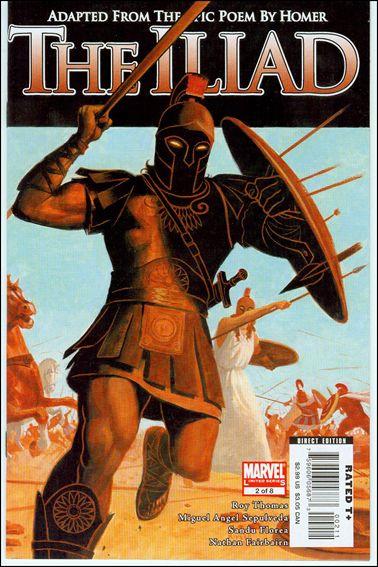
Who Is Our Homer?

Candidate: Chris Nolan

Job Qualifications: High-stakes conflicts between titanic characters who evoke or represent transcendent forces; the essential passivity of man under the power of cosmic forces greater than himself. (Wars between champions loom large.)

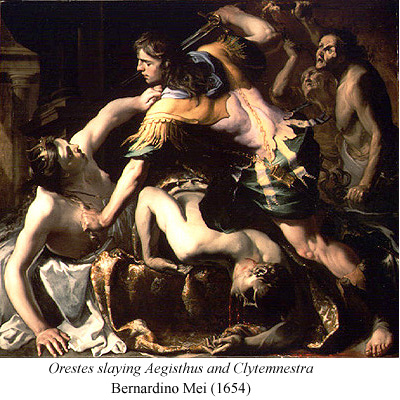
Who Is Our Aeschylus?

Candidate: Joss Whedon

Job Qualifications: Illuminates the nobility of the human struggle against the essentially tragic nature of the human situation; the hunger for justice that we can never ignore without sacrificing part of our humanity, but can also never satisfy without sacrificing part of our humanity. (Vengeance and justice loom large.)

Who Is Our Sophocles?

Candidate: J.J. Abrams

Job Qualifications: The dynamic interdependence between our choices and our character; we can only act based on who we already are, but can only be who we are through how we act. (Daddy issues loom large.)

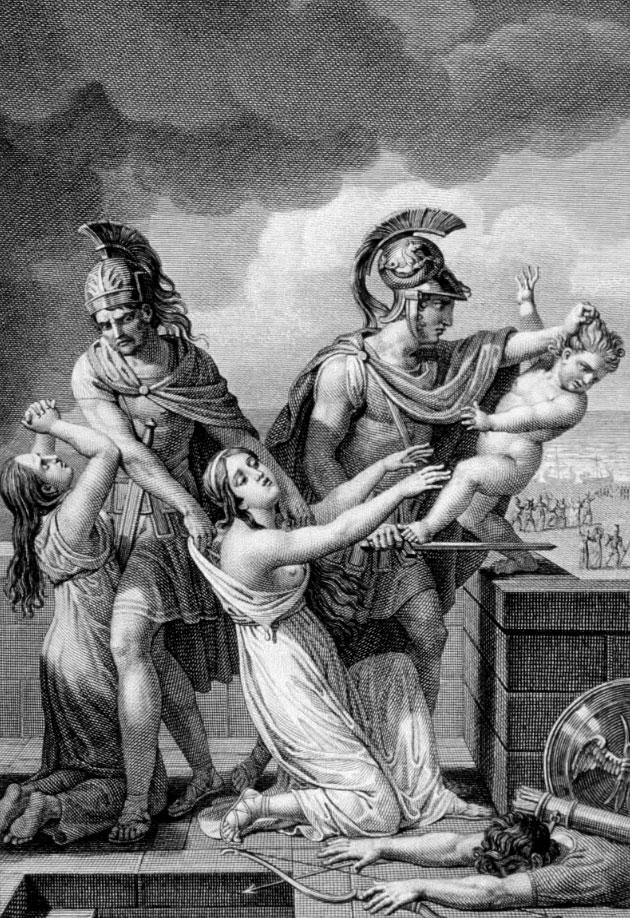
Who Is Our Euripides?

Candidate: (I hate to say it since I’m a Watchmen hater, but…) Alan Moore

Job Qualifications: Ecstatic confrontation with chaos and meaninglessness; deconstruction of cherished myths. (Mass atrocities loom large.)

Discuss among yourselves! 🙂


Favorites from Four Years in the Rearview

April 9, 2012

(Guest post by Greg Forster)

Jay P. Greene’s Blog turns four years old on April 19. To mark the occasion, Jay, Matt and I are each going to pick our favorites from one another’s posts. I’m glad Jay decided that where there are three major contributors to an accomplishment, all three should be honored – unlike some people I could mention.

It has been a real joy and a huge privilege to be part of all we’ve accomplished in the past four years. And it has been as fun as just about anything I’ve ever been part of.

Picking only these posts out of the dozens I wanted to include was tough. I’m still so, so close to reopening this and adding a couple more. But no – here are my picks.

Greg’s Favorite Jay Posts

Gates Foundation Follies, Part 1 and Part 2, July 25-26, 2011

The fight over national standards has consistently brought out the very best of Jay, both on the intellectual side and the humor side. To me, though, this two-parter is the keystone. More or less all the important issues are touched on here, and in a form that shows the broader applications of these insights for education reform generally. My favorite of my own “bigthink” posts (see below), which ended up bringing together the intellectual strands I had been strugling to integrate over numerous previous posts, was basically just my philosophical ruminations in response to Gates Foundation Follies.

The Dead End of Scientific Progressivism, January 18, 2011

Though occasioned by the fight over national standards (see above re “brought out the very best of Jay”) this post has much wider relevance. The nature of science and how it relates to policy is an issue of perennial importance for those in our line of work.

Al Copeland: Humanitarian of the Year, December 15, 2008

The post that started it all! One of the best things about JPGB has to be the annual Al Copeland award, and all of that got rolling because Jay did such a great job with this initial post. I can’t wait for the fall – I’m already working on my nominees for this year!

We Won!, September 29, 2010

When you get way down into the weeds, it can be hard to see the forest for the trees. (Hey, that’s not even a mixed metaphor!) At a moment when many in the movement were starting to lose confidence, Jay saw the big picture. Subsequent events have only vindicated his predictions.

Build New Don’t Reform Old, August 2, 2011

A great statement of an important point. Smart policies and quality personnel are not all that matters – institutions themselves have their own importance. And they’re really, really, really hard to change. I predict this point is only going to become more relevant to the ed reform discussion in the years ahead.

Gimme! Gimme! Gimme!, February 17, 2011

“It’s over for the little guy.”

Greg’s Favorite Matt Posts

The Way of the Future in American Schooling, May 12, 2008

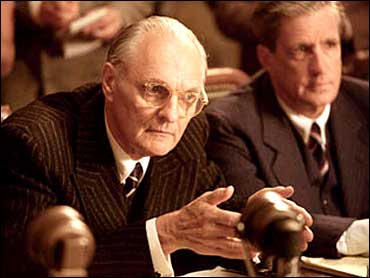
Matt has given this blog almost all of its most powerful images: Meg Ryan and “I’ll have what Florida is having”; Jack Black and “Rock star pay for rock star teachers”; Kenneth Branagh and “The Democratic Party of story, myth, and song.” But no image has been more powerful than Leo DiCaprio’s Howard Hughes pointing us toward “the way of the future in American schooling.” The thing that has always come back to my mind, even four years later, is Matt’s edu-appropriation of Alan Alda’s sneering senator: “It’s not me, Howard. It’s the United States government. We just beat Germany and Japan. Who the hell are you?” He’s an entrepreneur. He makes this country. People like you just live in it.

AFT Suggests LBO for Public Schools, December 11, 2008

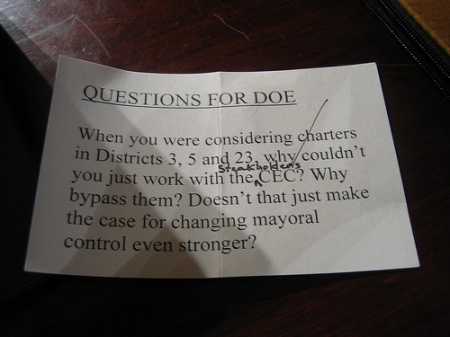
Matt has also given us some of our most powerful well-deserved mockeries. He dubbed Diane Ravitch “Little Ramona” and kicked off the notorious “Questions for Leo” and “Famous Steakholders” series. But no mockery has ever shamed its target more delightfully than Matt’s appointing of this blog’s first and only Sith apprentice, Darth Leo.


Checker Says RELAX!, July 29, 2010 and The Gates Foundation and the Rise of the Cool Kids, October 28, 2011

As great as Jay’s skewerings of Fordham have been, and as much as I’ve enjoyed my own forrays into that genre, Matt’s “Don’t Worry, Be Happy” themed post still sticks out in my mind as the leading entry. But Matt also brought some much-needed balance and perspective to the discussion of national standards in his wise reflections on the good work Gates has done and the deeper sources of our anxieties about their role. The final sentence of “Gates and the Rise” took guts and was very well said.

Al Copeland Humanitarian Nominee: Herbert Dow, October 8, 2010

Inspiring tale of a man who stuck his neck out to destroy an exploitative system and make the world a better place for everyone – except the leeches. Goosebumps!

Clousseau vs. Cato (Institute) and Cateaux!, April 22, 2011

Sometimes a pop culture reference fits so perfectly in every way that it’s hard to view it as anything but divinely ordained. “I rescind zee ordeur! CATEAUX?!?!?”

Greg’s Favorite Greg Posts

Command v. Choice, Part 1 and Part 2, July 26-27, 2011

When you get past all the details to look at the big picture, this is the best summary of what I want to say about education reform, nicely wrapped up in a two-part post. It feels good to finally get it off my chest! In my earlier four-part series on “Academics v. the Practical” I was struggling to integrate a lot of intellectual strands that had been developing over four years of writing for JPGB. Then I read Gates Foundation Follies (see above) and pieces began falling into place.


“No, I’m Not Going to Stand Somewhere Else,” October 14, 2010.

What Wim Nottroth did just blows me away. I’m honored to think that I’ve helped introduce more people to his story. And I still hold out hope that somewhere, Molly Norris (who left a comment on my “Nobody Draw Mohommad” post) read it and felt challenged by it. I’m also honored to have submitted a winning entry in the legendary Al Copeland competition! My most important contribution to “The Al” before that was another post I’m really proud of, but one that couldn’t have won because I was explaining why the inventor of the video game, William Higginbotham, was unworthy of the award.

City of the Dark Knight, Issue 0, Issue 1, Issue 2, Issue 3, Issue 4 and Issue 5, July 25-September 5, 2008

Of all the stuff I’ve done on JPGB, my favorites are heavily clustered in my pop culture coverage. Going all the way back to Speed Racer Is Better than Iron Man and including the James Bond posts, Ponyo, All Time Great Summer Movies, and Favorites of the Aughts. Good times! But the Dark Knight series remains my top pick of the lot.

The UFT’s “Cue Card Check,” April 15, 2009

The post that launched a thousand richly deserved mockeries. We’re still getting mileage out of it.

Vouchers: Evidence and Ideology, May 8, 2008

My first “bigthink” post, and emblematic of what would become a major theme here at JPGB – getting into protracted fights with purveyors of nonsense.

Here’s to the next four years of data, logic, deep thoughts, Al Copeland awards, pop culture apocalypses and general hilarity!

“Four more years! Four more years!”


Swedish Education Irony Alert!

April 4, 2012

Meet the two coolest things ever made in Sweden.

(Guest post by Greg Forster)

In the new issue of NR, the invaluable Kevin Williamson profiles Massachussetts Senate candidate Elizabeth Warren. He writes that in a book they co-wrote, Warren and her daughter “offer an array of policy prescriptions ranging from the mild (decoupling public-school assignments from geography) to the Swedish (subsidizing stay-at-home parents)…”

Oops! It’s actually “decoupling public-school assignments from geography” that’s the Swedish idea here. Sweden has had a national system of universal school vouchers since 1993. They’ve even developed economically sustainable for-profit school companies. It’s so successful that about a year ago the Social Democratic Party, which I’m tempted to describe as Sweden’s socialist party but will instead describe as its more socialist party, decided not to try to kick the for-profit schools out of the system.

Williamson does have a number of good words for Warren, including this nugget, which ed reformers will particularly enjoy reading:

Warren taught public school briefly and then quit rather than go through the obligatory, despair-inducing credentialing rigmarole (a fact that speaks better of her than almost anything else you’ll learn).


Ed Week on Distorted Special Ed Counts

March 15, 2012

(Guest post by Greg Forster)

Ed Week dives into details on the difficult issue of how special education counts get distorted by a variety of factors. The article gets into a lot of interesting issues that make it difficult to get a clear picture of how many disabled students are served by the program. See also here for the researchers’ take on the issue.

One factor not canvassed in the Ed Week story – unsurprisingly – is the role of financial incentives in public school special education programs. Public schools are incentivized to label studnets as disabled in order to access additional funding. Study after study after study after study has confirmed the empirical relationship between the presence and strength of these incentives and rising rates of special education diagnosis in public schools. Private schools have no such distorting incentive and will thus report lower numbers of disabled students. (All this is true regardless of whether you think the true rate of disabilities is higher, as in the public system, or somewhat lower, as in the private system.)


Here’s Why Victory Looks Like This

March 7, 2012

(Guest post by Greg Forster)

Jay points to the way Democrats and progressives are now saying all the same things we’ve been saying for a decade, but acting like they thought of them, and remarks that this is What Victory Looks Like.

He’s right, and here’s why. To large extent, you have to let people “steal” your ideas in order to get victory. It’s not just a price we need to be willing to pay if necessary. It’s always necessary.

Major reform of a cultural system has to start with ideas and practices germinating outside the core institutions of that system. If major reform were welcome inside the core institutions, it wouldn’t be necessary in the first place. The incubators of reform can’t be seen as fringe groups – this is why organized libertarianism has had much less influence than its intellectual seriousness and devotion of financial resources might lead you to expect. But the reform incubators are never going to be inside the core, either. You need something that’s a happy medium between credibility and independence.

Now, for a long time in America, the Democratic party and the progressive ideological movement have been the “core” institutions governing education. When you ask the American people whom they trust to do the right thing about education, they overwhelmingly say Democrats and progressives. That makes them the core.

The key to victory is to get the core groups to adopt the ideas that incubated in institutions outside the core. The greatest challenge is that the core groups want to defend their “core” turf against outsiders. They want to keep control of the core, and they can’t do that if they admit that outsiders have superior ideas. The solution is to get the core groups to co-opt (i.e. steal) the ideas and pretend they thought of them.

So you’re never going to get (very many) Democrats and progressives saying, “Why, yes, as a matter of fact the conservatives were right about education all along!” Admitting that would require them to sacrifice their status as the cultural core institutions of American education. Instead they’re going to say, “What American schools need are good, liberal, progressive ideas like choice, competition, and accountability.”

That’s what victory looks like.


This Deal Is Getting Worse All the Time

February 23, 2012

(Guest post by Greg Forster)

Shorter Arne Duncan: The U.S. Department of Education is not pressuring states to adopt Common Core. However, any state that takes action to resist Common Core will be immediately singled out by the Education Secretary for an extremely harsh public denunciation of its education system – which will obviously make it effectively impossible for the Department to look favorably upon that state when doling out grants and waivers for the foreseeable future.