Four Years

April 11, 2012

I started the JPGB four yeas ago in part out of frustration with the inability of the Manhattan Institute to place and promote my work and in part out of recognition that one no longer needed to go through traditional media outlets to engage in policy discussions.  I figured I could do this myself and on my own terms by blogging.

But I quickly realized I couldn’t do this all by myself.  People advised me that blogs needed regular postings of fresh content, about once every weekday, and I knew that I was not up to writing five posts per week.  So I asked Greg and Matt if they would be willing to post once a week as guest bloggers to ease my burden and keep the blog active and enticing.  Little did I realize how long-running and important their involvement would be.  I feel like they are full partners in this effort and blogging with them has deepened and strengthened our friendship more than I can say.

Very early on it was Greg who proposed the Prime Directive that guides us in this enterprise:  The purpose of the blog is to amuse ourselves.  I started the blog with grand thoughts that it would promote my work and influence policy discussions, but once we adopted the Prime Directive we lowered our ambitions.  How could a crappy little blog change the world?  So we just decided to write whatever we felt like, with no agenda, no inhibitions, and no delusions of influence.

The irony is that perhaps because of our devil-may-care approach, we have probably had more impact on policy discussions than if we were trying to do so.  Our blog posts have spawned news articles, editorials, internet debates, reactions from public officials, and — most importantly from our perspective — a whole lot of fun.

All of this is especially amusing given that all we have is  a domain name, some computers, and a few people devoting their spare time.  Other organizations have paid bloggers working full time, expensive web-designs, and carefully orchestrated PR campaigns and still  can’t gain traction.  Matt, Greg, and I have regular jobs for which we receive no credit or pay for blogging.  We do it because we believe in what we write and enjoy describing the truth as best as we can see it.  The moment this blog becomes affiliated with an organization seeking to advance a particular agenda is the moment it will suck.

Greg and Matt have already done an excellent job of picking some of the best posts from the last four years.  Rather than repeat their good taste, I’d like to use this occasion to describe some of the different types of posts we have on JPGB and illustrate each type with some excellent examples.

Over the last four years we’ve had posts in almost all shapes, sizes, and flavors.  In total we’ve had 1,576 posts, which works out to a little more than one per day.  I’ve written about 642 of them, Matt has written 527, and Greg has 383, with a smattering written by others.  These posts have been viewed more than 718,379 times by readers and have elicited 7,512 comments.  I think I could categorize most of these posts into 7 types:

1) Mocking — I think we are often at our best when we are mocking the sloppy language, sloppy thinking, and herd-like behavior of advocacy groups, bloggers, and journalists.  Some excellent examples of mocking sloppy language include The Fordham Report Drinking GameFamous SteakholdersBloggers Shouldn’t Have Rapper Names, Fordham and the Use of Passive Voice, and Buzzword Bingo.  Some excellent examples of mocking sloppy thinking include Hemisphere Fallacy SightingLittle Ramona’s Gone Hillbilly Nuts, and Gates Foundation Follies (Parts 1 and 2).  And my favorite mocking of faddish herd-behavior includes The Heathers Think-Tanks,  Kevin Carey’s Too Cool for Vouchers… and Cooler Than You, and Valerie Strauss is the Lou Dobbs of Education.

2) Pop Culture — I don’t think I’ve ever seen better and more entertaining analyses of movies, music, and TV than the posts by Matt and Greg on this blog.  In particular, Greg’s marathon examination of the Batman movie, Pass the Popcorn: City of the Dark Knight (Issue #0 through #5) is a masterpiece.  And who could forget his write-up of great summer movies and sequels?  Matt has made his contributions to the movie discussion, notably with his praise of Inglourious Basterds (which I agreed was one of the best movies I’ve ever seen).  But Matt’s bigger pop culture contribution has been in the area of music and kitsch, with posts like Random Pop Culture Apocalypse: Cover Songs,  Random Pop Culture Apocalypse: The Decade in Pop Music and this mashup.  And our pop culture post list couldn’t be complete without mentioning our running commentary on the TV show, Lost.  If only a new series could take its place.  Oh, and then there are lightsabers.  Simply. Awesome.

3) Original Empirical Analyses —  Obviously, a blog is not a place for serious empirical work.  But blogs can feature some interesting facts derived from simple analyses that reveal patterns about the world that were not obvious.  Newspapers used to do this type of simple descriptive work, but now reporters are too busy covering government and Gates Foundation press releases when they aren’t working on their resumes in anticipation of the next round of layoffs.  I did more of these quick and dirty empirical analyses early in the history of the blog and am especially proud of Proximity and Power and Priest and Teacher Sex Scandals in Perspective, which were the two first posts on JPGB.  I was wrote Political Donations from Academia and Arabian Gulf Money and US Universities in the first month of the blog.  More recently I analyzed patterns in school mascot names in a series of Mascot Mania posts.  Matt has also made very very good use of simple charts to illustrate issues we should consider, including on edujobsalternative certification, teacher quality, and progress in Florida.

4) Recognizing the Unrecognized —  This category can be summed up in two words: Al Copeland.  My favorite winner was Greg’s nomination of Wim Nottroth. But Brian’s nomination of Mary Quant, who did not win, also nicely captures the spirit of The Al.
5) Summarizing Research Findings — We’ve had a number of very useful posts that summarize the research literature, such as this one on participant effects from vouchers, this one and this one on systemic effects, this one on vouchers effects in general, and this one on charter participant effects.  We’ve also highlighted a number of important individual studies, including this one on Head Start, this one on small schools, this one and this one on the Gates Measuring Effective Teachers study, this one on merit pay, and this one on administrative bloat in higher education.  We’ve also notes the foolishness of having a government effort, like the What Works Clearinghouse, attempt to summarize the research literature.

6) Big Think Visions for the Future — Greg and Matt have really excelled in these Big Think pieces.  Matt has a running series on The Way of the Future in American Schooling that describes how digital learning could fundamentally alter (and improve) our system of education.  Matt also has a series of Big Think posts applying Rawls’ ideas of justice to the education system as well as a series advocating Rock Star Pay for excellent teachers (while getting rid of bad teachers and increasing average student teacher ratios).  Greg has some Big Think series that address the philosophical underpinnings of reform strategies, including his series on Command v. Choice and his analysis of incentives and motivation, as well as on the role of science in education policy, such as Vouchers: Evidence and Ideology and The Value-Add Map Is Not the Teaching Territory, But You’ll Still Get Lost without It.   I have my own effort at Big Think pieces, with posts like Build New, Don’t Reform OldThe Dead End of Scientific Progressivism, and Replication, The True Test of Research Quality.

7) Rile Up and Cool Down — This last category consists of two opposite types of posts: those that rile us up against some outrage and those that cool us down to put issues in perspective.  I put them together because they blog really needs both in an appropriate balance.  I tend to get riled up and Matt tends to cool things down (and Greg does some of both, although he tends to do more riling up than cooling down).  For example, I’ve led the blog’s charge against Common Core national standards, lamented the inability of DC folks to generalize beyond their immediate experience, and puzzled over the inability of reporters to accurately summarize research.  Matt, on the other hand, takes a more positive approach, praising the progress that Florida has made and recognizing gains made under Michelle Rhee in DC (while acknowledging the limitations of the  heroic reformer approach).  Greg helps bring balance to The Force by joining the riling up or cooling down side as is necessary.

————————————————————————————-

I want to thank you readers for coming along on this ride.  But I have to tell you that I would be happy to keep blogging even if my only readers were Greg and Matt.  They are the audience I usually imagine when I write a post.  And after posting the first thing I do, quite often, is pick up the phone to ask them, “Did you see what I wrote on the blog?”

It has been an honor blogging with Matt and Greg over the last four years.  And I look forward to keep on doing so as long as the Prime Directive continues to be satisfied.


Set Your Proton Packs to Ridicule: The First Four Years of Jayblog

April 9, 2012

(Guest Post by Matthew Ladner)

I remember a few years ago Dan Lips asked me if I would ever consider blogging. My reaction was something along the lines of “Naaaah, why would I want to do that?”

Four years in now, it is hard to imagine doing policy work without blogging. Blogging is a great way to test-drive ideas, get feedback, and have fun doing it. Nothing else moves with the speed of the modern conversation.

The story of this blog can be told using images as guideposts. Some images are associated not with a single post but rather a series of posts, starting with this one:

Blogs of course are the media equivalent of a pea-shooter, but with a careful aim you can put out an eye here and there.

The finest hour of the JPGB, in my opinion, came when Senator Durbin accepted marching orders from the NEA and attempted to pillow smother the DC Opportunity Scholarship Program. The strategy was to not reauthorize the law, and not to allow new students to enter the program, killing it by attrition. Similar to the British strategy to give arms to bloodthirsty loyalist hillbillies in the American South during the Revolutionary War, this strategy seemed shrewd at the time but backfired badly.

Once the dirty work was (temporarily) done, the Department of Education made a clumsy attempt to deep six the Congressionally mandated program evaluation by releasing it on a Friday with a spin doctored press release. That probably seemed like a great idea at the time as well.

One problem- the study itself was written in English and available online, and Jay reads English and blogs. Jay read the study and leapt into the fray, dubbing the incident “the Friday Night Massacre.” The Wall Street Journal and the Denver Post made inquiries regarding the handling of the study and let’s just say that the administration’s reaction subtracted from their already waning credibility on the matter.

From there, things just kind of got better and better. The Washington Post and the Wall Street Journal editorial pages administered regular beat-downs from both the left and the right. NRO’s Jim Geraghty summed up the Obama’s new position on D.C. vouchers:

We know our stance is indefensible; please make this issue go away.”

Eventually President Obama made the issue go away by reauthorizing the program in a budget deal, the best strategic course after bumbling into a sideshow that is costing more than it was worth. Many people deserve credit for saving the program, and Jay is one of them.

In the end, the underdogs won the debate in resounding fashion, kind of like this:

The next image is this one:

Greg’s bet with Washington Post columnist Jay Mathews proved to be great fun. Mathews wrote a piece opining that private choice was simply too politically difficult so he was sticking to charter schools.

Greg bet Mathews dinner that ten legislative chambers would pass either expansions or new choice programs in 2011.

Being a good sport, Greg raised the bar for himself to 7 enactments rather than legislative chambers when he blasted past 10 chambers in 3.6 seconds or so.

Greg ran up the score like John Heisman in 2011. I’m not sure whether he tripled up on Mathews in the end or not. He probably narrowly missed doing so, but the momentum carried over to 2012. So far we have a new tax credit program in Virginia, a tax-credit expansion in Arizona, a tax-credit expansion in Florida, and a major new voucher program in Louisiana. Greg’s original 2011 bet has already been exceeded in 2012, and even his higher bar bet of 7 enactments isn’t inconceivable this year. I now think of Greg’s original bet as the over/under for a good/bad year for the parental choice movement.

No word yet on where Mathews took Greg for dinner nor how much effort it took not to gloat.

Big Think Pieces

I like Greg’s listing of favorite Big-Think pieces, and there are some common threads between them. Greg for instance did an outstanding job laying out why most education reform efforts tend to go nowhere under the current system.

My favorite Jay Big Thinker came when Goldstein-Gone-Wild asked Jay what he would do if he ran the Gates Foundation in the comments section. Jay replied: build new, don’t reform old. If someone appointed me King, I’d make that post required reading for philanthropists as my first official act.

My second official act would probably involve a redirected asteroid and College Station Texas. If they promised to stop the belly aching about the Longhorn Network, I could be persuaded to allow an evacuation.

The Big Thinkers I had the most fun writing both came early in the blog: The Way of the Future in American Schooling and Indiana Jones and the Teacher Quality Crusade. Reasoning by pop-culture analogy got to be a fun habit, which leads us to…

Parodies

A friend of mine once asked me if I had ever noticed that people tend to think of people just to the left of them as communists, and people just to the right of them as fascists. Only the self stands in exactly the correct spot of thoughtful perfection.

I’ve always kept this jest in mind as a pretty powerful argument in favor of being broad-minded and open to the possibility of needing to perform an occassional mental update.

Nevertheless, the opportunity to unleash a good parody now and then certainly can liven up an otherwise dry discussion.

For instance, the desirable degree of state oversight of a private school choice program is an important topic, but usually a bit on the dry side. Okay, more than a bit.

Despite the fact that I have more than a little sympathy for the point of view parodied, I never laughed so hard at a blog post as I did with with Greg’s AWWWW FREAKOUT!!!  post regarding attacks from the Cato Institute on the new Indiana voucher program.

No, I take it back-Greg’s post on the UFT Card Check, while not a parody itself (more like the documentary of the UFT performing an unintentional self-parody) was the inspiration of so many lampoons that it has to stand as the funniest post of the first four years. Jay’s Fordham Drinking is up there as well.

Of the lampoons I have written, Little Ramona’s Gone Hillbilly Nuts, AFT suggests LBO for Public Schools and JK Rowling: The Jeb Bush of NEPC’s Florida Fantasy were the most fun to write.

What’s Next?

Facing a cannon barrage from a gigantic Turkish army, Baron Munchausen declared to his bedraggled henchmen “They are inviting us to defeat them! We must oblige them!”
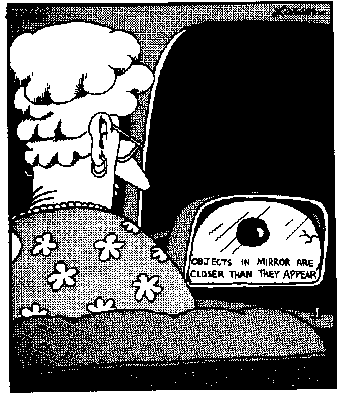
No one knows what will happen around the next bend, but my advice is to grab your pea-shooter and take aim. It’s been a blast for us so far, and it isn’t like the bad guys show any sign of slowing the rate of demonstrably false claims.


Favorites from Four Years in the Rearview

April 9, 2012

(Guest post by Greg Forster)

Jay P. Greene’s Blog turns four years old on April 19. To mark the occasion, Jay, Matt and I are each going to pick our favorites from one another’s posts. I’m glad Jay decided that where there are three major contributors to an accomplishment, all three should be honored – unlike some people I could mention.

It has been a real joy and a huge privilege to be part of all we’ve accomplished in the past four years. And it has been as fun as just about anything I’ve ever been part of.

Picking only these posts out of the dozens I wanted to include was tough. I’m still so, so close to reopening this and adding a couple more. But no – here are my picks.

Greg’s Favorite Jay Posts

Gates Foundation Follies, Part 1 and Part 2, July 25-26, 2011

The fight over national standards has consistently brought out the very best of Jay, both on the intellectual side and the humor side. To me, though, this two-parter is the keystone. More or less all the important issues are touched on here, and in a form that shows the broader applications of these insights for education reform generally. My favorite of my own “bigthink” posts (see below), which ended up bringing together the intellectual strands I had been strugling to integrate over numerous previous posts, was basically just my philosophical ruminations in response to Gates Foundation Follies.

The Dead End of Scientific Progressivism, January 18, 2011

Though occasioned by the fight over national standards (see above re “brought out the very best of Jay”) this post has much wider relevance. The nature of science and how it relates to policy is an issue of perennial importance for those in our line of work.

Al Copeland: Humanitarian of the Year, December 15, 2008

The post that started it all! One of the best things about JPGB has to be the annual Al Copeland award, and all of that got rolling because Jay did such a great job with this initial post. I can’t wait for the fall – I’m already working on my nominees for this year!

We Won!, September 29, 2010

When you get way down into the weeds, it can be hard to see the forest for the trees. (Hey, that’s not even a mixed metaphor!) At a moment when many in the movement were starting to lose confidence, Jay saw the big picture. Subsequent events have only vindicated his predictions.

Build New Don’t Reform Old, August 2, 2011

A great statement of an important point. Smart policies and quality personnel are not all that matters – institutions themselves have their own importance. And they’re really, really, really hard to change. I predict this point is only going to become more relevant to the ed reform discussion in the years ahead.

Gimme! Gimme! Gimme!, February 17, 2011

“It’s over for the little guy.”

Greg’s Favorite Matt Posts

The Way of the Future in American Schooling, May 12, 2008

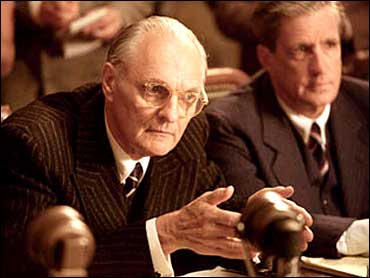
Matt has given this blog almost all of its most powerful images: Meg Ryan and “I’ll have what Florida is having”; Jack Black and “Rock star pay for rock star teachers”; Kenneth Branagh and “The Democratic Party of story, myth, and song.” But no image has been more powerful than Leo DiCaprio’s Howard Hughes pointing us toward “the way of the future in American schooling.” The thing that has always come back to my mind, even four years later, is Matt’s edu-appropriation of Alan Alda’s sneering senator: “It’s not me, Howard. It’s the United States government. We just beat Germany and Japan. Who the hell are you?” He’s an entrepreneur. He makes this country. People like you just live in it.

AFT Suggests LBO for Public Schools, December 11, 2008

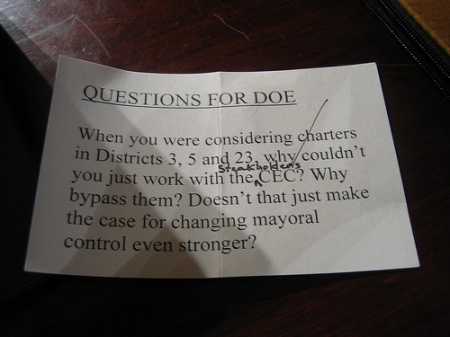
Matt has also given us some of our most powerful well-deserved mockeries. He dubbed Diane Ravitch “Little Ramona” and kicked off the notorious “Questions for Leo” and “Famous Steakholders” series. But no mockery has ever shamed its target more delightfully than Matt’s appointing of this blog’s first and only Sith apprentice, Darth Leo.

Checker Says RELAX!, July 29, 2010 and The Gates Foundation and the Rise of the Cool Kids, October 28, 2011

As great as Jay’s skewerings of Fordham have been, and as much as I’ve enjoyed my own forrays into that genre, Matt’s “Don’t Worry, Be Happy” themed post still sticks out in my mind as the leading entry. But Matt also brought some much-needed balance and perspective to the discussion of national standards in his wise reflections on the good work Gates has done and the deeper sources of our anxieties about their role. The final sentence of “Gates and the Rise” took guts and was very well said.

Al Copeland Humanitarian Nominee: Herbert Dow, October 8, 2010

Inspiring tale of a man who stuck his neck out to destroy an exploitative system and make the world a better place for everyone – except the leeches. Goosebumps!

Clousseau vs. Cato (Institute) and Cateaux!, April 22, 2011

Sometimes a pop culture reference fits so perfectly in every way that it’s hard to view it as anything but divinely ordained. “I rescind zee ordeur! CATEAUX?!?!?”

Greg’s Favorite Greg Posts

Command v. Choice, Part 1 and Part 2, July 26-27, 2011

When you get past all the details to look at the big picture, this is the best summary of what I want to say about education reform, nicely wrapped up in a two-part post. It feels good to finally get it off my chest! In my earlier four-part series on “Academics v. the Practical” I was struggling to integrate a lot of intellectual strands that had been developing over four years of writing for JPGB. Then I read Gates Foundation Follies (see above) and pieces began falling into place.


“No, I’m Not Going to Stand Somewhere Else,” October 14, 2010.

What Wim Nottroth did just blows me away. I’m honored to think that I’ve helped introduce more people to his story. And I still hold out hope that somewhere, Molly Norris (who left a comment on my “Nobody Draw Mohommad” post) read it and felt challenged by it. I’m also honored to have submitted a winning entry in the legendary Al Copeland competition! My most important contribution to “The Al” before that was another post I’m really proud of, but one that couldn’t have won because I was explaining why the inventor of the video game, William Higginbotham, was unworthy of the award.

City of the Dark Knight, Issue 0, Issue 1, Issue 2, Issue 3, Issue 4 and Issue 5, July 25-September 5, 2008

Of all the stuff I’ve done on JPGB, my favorites are heavily clustered in my pop culture coverage. Going all the way back to Speed Racer Is Better than Iron Man and including the James Bond posts, Ponyo, All Time Great Summer Movies, and Favorites of the Aughts. Good times! But the Dark Knight series remains my top pick of the lot.

The UFT’s “Cue Card Check,” April 15, 2009

The post that launched a thousand richly deserved mockeries. We’re still getting mileage out of it.

Vouchers: Evidence and Ideology, May 8, 2008

My first “bigthink” post, and emblematic of what would become a major theme here at JPGB – getting into protracted fights with purveyors of nonsense.

Here’s to the next four years of data, logic, deep thoughts, Al Copeland awards, pop culture apocalypses and general hilarity!

“Four more years! Four more years!”


Teacher union protestor: Why didn’t white folks keep charter schools for themselves?

April 8, 2012

(Guest Post by Matthew Ladner)

Wow-background here.

That has got to be the best teacher union protestor since…


Pauline Dixon on Private Schools in Developing Countries

April 6, 2012

Jindal Triumphs in Louisiana, Brewer vetoes in Arizona

April 4, 2012

 (Guest Post by Matthew Ladner)

Louisiana Governor Bobby Jindal got both his tenure reform and his voucher/charter school expansion bills through the Louisiana Senate tonight. The bills will either go to the House for concurrence or to a conference committee, but they are getting close.

On a far more disappointing note, Arizona Governor Jan Brewer vetoed a bill expanding Arizona’s Empowerment Scholarship Program.

Her veto message noted the fact that Arizona public schools get funded on last year’s student count, and raised concerns over first year double counting of students in the transfer year.

Time will tell whether Governor Brewer and the Arizona legislature are able to work things out. For now, Governor Jindal is to be congratulated for his strong leadership and courage in taking action to improve Louisiana’s public school system.

UPDATE: The Louisiana House concurred with the Senate 60-42- the choice bill is off to Governor Jindal’s Desk.


Swedish Education Irony Alert!

April 4, 2012

Meet the two coolest things ever made in Sweden.

(Guest post by Greg Forster)

In the new issue of NR, the invaluable Kevin Williamson profiles Massachussetts Senate candidate Elizabeth Warren. He writes that in a book they co-wrote, Warren and her daughter “offer an array of policy prescriptions ranging from the mild (decoupling public-school assignments from geography) to the Swedish (subsidizing stay-at-home parents)…”

Oops! It’s actually “decoupling public-school assignments from geography” that’s the Swedish idea here. Sweden has had a national system of universal school vouchers since 1993. They’ve even developed economically sustainable for-profit school companies. It’s so successful that about a year ago the Social Democratic Party, which I’m tempted to describe as Sweden’s socialist party but will instead describe as its more socialist party, decided not to try to kick the for-profit schools out of the system.

Williamson does have a number of good words for Warren, including this nugget, which ed reformers will particularly enjoy reading:

Warren taught public school briefly and then quit rather than go through the obligatory, despair-inducing credentialing rigmarole (a fact that speaks better of her than almost anything else you’ll learn).


Review of Marc Tucker’s Book in Ed Next

April 3, 2012

I have a review of Marc Tucker’s bookSurpassing Shanghai, in the new issue of Education Next.  It’s a general critique of “best practices” in education as well as a particular critique of Tucker’s ability to sell band instruments — er, I mean, sell Common Core — based on picking and choosing among the practices of high-achieving countries, like Finland, China, Canada, and Singapore.

Oh we got trouble.  Right here in the US.  And that starts with “T,” whose solution rhymes with “C,” and that stands for Common Core.


More Perspective on McKay

April 3, 2012

Abused: Two teachers taunted and told off Jose, who has celebral palsy, for drooling

Late last year there was a big brouhaha about misconduct in Florida’s McKay Scholarship program, which allows disabled students to use public funds to choose a private school if they prefer.  At that time the Miami New Times, a free weekly newspaper that features investigative reporting that sometimes hits the spot and sometimes just provides the filler between naughty personal ads and club listings, repeated claims about incompetence and fraud among some operators of private schools participating in McKay.

Even though the Miami New Times article was just a re-hash of an article they had run during the summer before, critics of special ed vouchers seized upon the piece as proof of the need to stop the rapid expansion of that type of program to other states, impose heavy regulations on Florida’s program to ensure that nothing bad could ever happen, or just shut down special ed programs because only public provision of services to disabled students could be trusted.

Diane Ravitch, in her usual scholarly and measured way, responded to the article by tweeting “Legalized child abuse in Florida?” Sara Mead, Andy Rotherham, and Ed Sector all circulated the New Times piece as proof of their earlier criticisms of McKay.  When I attempted to put the scandal in perspective relative to misconduct and incompetence that is all too common in traditional public schools, Sara Mead clucked that I was like a child trying to excuse misbehavior by crying “he did it first!”

Well, I wonder if a story out of Alabama might help put things in perspective without sounding like an unreasonable child.  It’s a story about a boy named Jose Salinas, or Little Joe, who has cerebral palsy.  His mother wondered why he was acting unusually and repeatedly claiming that he couldn’t go to school because he wasn’t feeling well.  So, she decided to attached a secret audio recording device to his wheelchair to find out what was going on at school.

Here is what she discovered:

“You drooled on the paper,” teacher’s aide Drew Faircloth could be heard saying impatiently. “That’s disgusting.”

“Keep your mouth closed and don’t drool on my paper,” teacher Alicia Brown said on the tape. “I do not want to touch your drool. Do you understand that? Obviously, you don’t.”

Over the three days of recordings, Salinas said Jose received about 20 minutes of actual instruction and spent almost the entire day sitting in silence with no one speaking to him.

“I could not believe someone would treat a child that way, much less a special needs child,” Melisha Salinas told ABCNews.com. “The anger in his voices … and the thing he was getting angry about, [Jose] just can’t help.”

“Why is my paper wet?” Brown demanded. “Look at me and answer. That’s not an answer. That’s not even a word.”

“Do you seen anybody else at this table drooling? Then, stop,” she said. “You have got drool all over your face and it is gross.”

Little Joe’s mom took the recording to school officials who suspended the teachers with pay.  But within days the teachers were back working in the school, although no longer assigned to Little Joe.  Angry parents protested the return of the teachers, who were then once again placed on administrative leave with pay.

Houston County Schools superintendent Tim Pitchford helped explain:

“I made a poor decision and re-assigned them back to school,” he said. “It was the wrong decision and I accept full responsibility.”

Alabama state law does not allow superintendents to fire teachers on the spot, Pitchford said. He has to make a recommendation to the board, which makes the final decision.

“From day one, it was obvious where this was going to end with the employees,” he said. “We knew where this process was going to end, but the process does not allow it to be immediate.”

Salinas was shocked to hear the teacher and aide were back at school.

“They were back at the school and my children were there so I got them out of school and so did several angry parents,” Salinas said. “I just lost all hope. Nobody was listening to me.”

Of course, if Alabama had a special ed voucher program, like McKay, Mrs. Salinas would not have had to secretly record misconduct, prove it to school officials, and then organize a protest to ensure that those teachers were not still in the school with her son.  She could have just followed her good mother’s perception that things were going very badly and switched her child to another school with the same amount of public funding.  How many Little Joe’s are out there without having their mistreatment recorded or protests organized?

Of course, examples of misconduct in traditional public schools is no more proof of the merits of McKay-like programs than examples of misconduct are proof of the need to regulate or eliminate special ed vouchers.  For more systematic evidence on the merits of McKay, readers may wish to read the article that Marcus Winters and I published in Educational Evaluation and Policy Analysis, the leading AERA empirical journal, which finds that McKay competition increases student achievement for disabled students who remain in traditional public schools and lowers the rate at which students are newly identified as disabled.

But some people prefer mindless tweets over systematic evidence.  And somehow I don’t expect Diane Ravitch, Sara Mead, or Andy Rotherham now to tweet that Little Joe proves the wisdom of McKay or that traditional public schools are equivalent to child abuse.  They prefer to be selective in the anecdotes they tweet.

UPDATE — Andy Rotherham sent me a link to a Time Magazine piece he wrote last year  in which he indicated a shift in views on McKay.  He and Sara Mead once thought the program would skim less disabled students, but in the Time piece her writes:

So while vouchers don’t generally serve the absolute poorest of the poor, they do not skim off the most affluent or easiest-to-educate students either. Policymakers are learning as they go and these programs haven’t always operated as analysts assume. For example, in 2003, educational analyst Sara Mead and I wrote a paper outlining potential problems with vouchers for special education students in Florida. Largely, those issues, like skimming the easiest to serve students, have not come to pass.

Andy deserves credit for changing his mind based on empirical evidence and saying so publicly.

And while Andy did tweet the New Times reports of scandals (“And here @saramead and I thought the problem with McKay Scholarships in FL would be bad policy incentives…how quaint!”) I did not mean to suggest that tweeting selective anecdotes is his standard communication tactic.  Andy is hardly a Diane Ravitch.  I was disappointed by his tweet on the New Times piece but it is definitely not emblematic of his policy analysis.

(edited)


Why I Now Support Common Core

April 1, 2012

untitled

I don’t know how I could have been so foolish for so long.  It just struck me today that I really should support Common Core national standards. Here are the reasons I’ve changed my mind:

1) I learned from Diane Ravitch and Sol Stern that dramatic reversals in views generate a lot of attention.  For some reason my new support for Common Core will have credibility and influence no matter how weak my reasoning for switching is.

2) If I play my cards right, there may be big money to be made with my new support for Common Core.  In addition to book royalties and lecture fees, I see a big grant from the Gates Foundation in my future.  Evil pays better than good.

3) I won’t get blacklisted by the U.S. Department of Education for opposing their favored policy positions.  Yippee! I’ll get a piece of a big evaluation whose findings they can delay or distort.

4) Standards probably don’t matter anyway, so little harm can come from supporting mediocre standards being imposed on all states.

5) Did I say imposed?  Darn, I have to get used to saying it’s voluntary.

6) Being bothered by the empty and manipulative language used to support Common Core has driven me to drink.  Switching my view on Common Core will give my liver a much needed break.