(Guest Post by Matthew Ladner)

Read it and weep K-12 reactionaries.
P.S.
Somewhere, John Rawls is smiling.
(Guest Post by Matthew Ladner)
Read it and weep K-12 reactionaries.
P.S.
Somewhere, John Rawls is smiling.
 3 Comments |
  charter schools, politics, teacher union | Tagged: charter schools, Democrats and Education, New York Times, Nicholas Kristoff |
  Permalink
 Posted by matthewladner
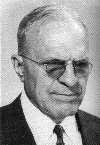
(Guest post by Greg Forster)
After careful consideration of various possibilities, including:
. . . I have at last settled on my nomination:
Ralph Teetor, inventor of cruise control.
Cruise control makes driving far less burdensome, which not only makes our lives more enjoyable on a day-to-day basis, it also facilitates a great increase in long-distance travel and reduces shipping costs by reducing not only the labor burden but also the cost of gas (since cruise control is more fuel-efficient). The truckers have a bumper sticker showing a stork delivering a baby, with the tagline “everything else you have arrived by truck.” Well, if that’s true, then anything that lowers the cost of trucking must have tremendous reverberations throughout the economy – which is to say, we’ll never know just how much our lives have been enriched by it.
Oh, and it saves lives. Lots of them. The professional safety narcs strongly resisted the introduction of cruise control on grounds that it would lead to inattentive driving and more deaths. But in fact it led to more uniform driving, with everyone going the same speed and therefore a big drop in the frequency of cars passing each other, and thus a dramatic drop in deaths.
P.J. O’Rourke contacted some of the professional safety narcs to ask them whether they were sorry for having opposed something that turned out to dramatically increase safety. If memory serves, I believe they were unrepentant. No doubt they were worried they’d have to give back the Nobel Peace Prizes they’d won for opposing it.
I chose to focus on cruise control because I thought it fit the values of the Al Copeland award most closely, but it’s worth noting that Teetor was a prolific engineer and inventor – he and his cousin built their first car, with a one-cylinder engine, at age 12 – and contributed far more to our lives than cruise control. In his first job out of college he developed a better way to balance steam turbine rotors in the torpedo boat destroyers we used to kick the Kaiser’s kiester in WWI. Later he ran a company that made piston rings for car engines, supplying Packard, General Motors, Chrysler and Studebaker.
Teetor got the idea for cruise control after a jerky and uncomfortable car ride. His lawyer, driving the car, was an incessant talker and paid more attention to the conversation than the car’s speed, letting the car speed up and slow down as his attention wandered.
Teetor secured the patent for automatic car speed control in 1945, dubbing it Controlmatic. It would later be called Touchomatic, Pressomatic and Speedostat before finally being christened cruise control. The technology was first offered on three Chrysler models in 1958. By 1960 it was available on all Cadillac models.
Oh, and did I mention that Teetor did all this after being blinded in a shop accident – at age five?
I proudly nominate Ralph Teetor for the Al Copeland award.
Now if only he had developed a control for this kind of Cruise:

HT Symon Sez
4 Comments | Al Copeland Humanitarian Award, tributes | Tagged: Al Copeland, Al Copeland Humanitarian of the Year Award, cruise control, Greg Forster, Ralph Teetor | Permalink
Posted by Greg Forster
(Guest Post by Matthew Ladner)
The Arizona Republic ran a complex story with an unfortunately simplistic headline: Tuition tax credits drain state money.
The reporter made a serious effort to bean-count the individual and corporate tax credit programs. The headline is all the more unfortunate given the fact that by the Republic’s own estimation the program results in a $3 million savings to taxpayers.
I wish someone would “drain” my bank account in a similar fashion.
The corporate tax credit, which makes only those switching from public schools eligible, was designed to generate savings, and obviously does so. The individual credit does not have the same eligibility requirements, and thus is a good deal more complex.
The Republic reporter, Ronald Hansen, made a good faith attempt to estimate the potential costs and/or savings of the individual program by looking at the National Center for Education Statistics figures on private school enrollment from before and after the tax credit passed. Making the assumption that the increase can be attributed to the credit, Hansen then made estimates regarding the number of kids who would not have gone to private school without the credit (savings generators) versus the number benefiting from the program but who would have gone to private school anyway (cost generators from the state’s perspective).
In short, this is an incredibly complex task- an attempt to estimate the price elasticity of demand for private schools. Hansen has made a serious attempt at estimation, but it is fraught with peril.
For starters, there are more than one estimate of private school attendance in Arizona. The estimation technique is highly dependent on this, and the Arizona Private School Directory lists more than 3,000 more private school students than the NCES. It would not shock me if they both underestimate the true number, which would generate larger savings.
Second it is also important to note that several other things happened during the same period of history. Arizona, for instance, is closing in on 500 charter schools being in operation. Ron Zimmer of the RAND Corporation and two colleagues studied the impact of charters in Michigan and that private schools lost one student for every three students gained in the charter schools.
There are over 100,000 students attending Arizona charter schools. In the absence of the tax credit program, there would have been a substantial overall decline in private school enrollment. Whether those kids went to charter or district schools, they would have cost you money. More to the point, they will have led the Republic to seriously underestimate the number of private school children who would otherwise be attending public schools without the tax credit program.
If private choice opponents are scandalized by the thought that the credit might cost the state money, I’d like to call their bluff. Arizona lawmakers can create a personal use tax credit for students switching from public to private school (i.e. my kid switches to a private from a public school, I take a tax credit). We can set the maximum credit at $3,000, and taxpayers will save thousands upon thousands of dollars every time a kid switches. Such a program would help close the state’s yawning structural budget deficit.
Any STO critics willing to cut out the middle man for the next generation of parental choice reform and save big money in the process? Or is generating savings not the real issue? If not, let’s keep our focus on real issues. Email me at mladner@goldwaterinstitute.org and let me know.
2 Comments | tax-credit scholarships | Tagged: Arizona Republic, Arizona scholarship tax credit | Permalink
Posted by matthewladner

After triumphing over Nazism and Communism in the 20th century, liberty faces a new threat in this century — radical Islam. This threat is being counteracted (we hope) by diplomacy with potential allies, force against enemies, and high-minded speeches to remind all that the cause of liberty is right and the cause of tyranny is wrong.
In addition to all that, there is another essential element in the arsenal of liberty — ridicule. Tyrants of all stripes, in addition to being monstrously cruel and evil, are also almost always laughably, pathetically, and outrageously ridiculous.
Charlie Chaplin realized this when he mocked Hitler in The Great Dictator. In Dr. Strangelove, Stanley Kubrick portrayed the communist leader as a weepy drunk and the war-mongering general as a paranoid suffering from ED. South Park has portrayed Osama Bin Laden as the slapstick LooneyTunes villain, Wile E. Coyote. The Daily Show and Colbert Report make their living off of puncturing the pomposity of politicians. Humor may not be the best weapon against tyrants, crooks, fools, and all other kinds of politicians, but it is a very important one.
But Chaplin, Kubrick, Parker, Stone, Stewart, and Colbert have mocked tyrants from the safety of the free world. Fasi Zaka does it from the front lines. Zaka is a Pakistani radio DJ — a shock-jock — and host of a TV news parody show, News, Views, and Confused. Given long stretches of military rule, government censorship, and death threats from extremists, Zaka can’t and doesn’t address oppression in Pakistan head-on. Instead, he flirts with the issues, poking fun at the Taliban and corrupt and incompetent Pakistani leaders with social satire more than political criticism.
For example, Zaka mocks the Taliban for smelling bad rather than for beheading opponents and suicide bombings. As an LA Times profile described his approach:
So when a guest host, a character named Mr. Enlightened Moderations, poked fun at fundos , slang for Islamic fundamentalists, it was not for any extreme religious views but for poor dress sense, aversion to after-shave and limited use of deodorant. “You sound like a fundo,” he’d say accusingly to callers. “You doesn’t even wears a deo, smelly boy.”
By mocking tyrants and their followers Zaka makes them seem uncool. Making them uncool may limit their power more than a speech on their logical errors. Remember that young men were drawn to Nazism in part because they wore shiny boots and neat brown shorts. It was a struggle whether people would perceive fascism as the trend of the future or a group of buffoons singing Springtime for Hitler. Buffoons who smell bad don’t attract girls, so young men are much less interested in movements that are uncool.
Not everyone agrees with Zaka’s humorous approach:
Some critics say Zaka is squandering a golden opportunity to be constructive and foster moderation in a confused younger generation. “It bothers me when people do silly entertainment shows when we really need people to make a difference,” says Mani, another radio host.
Radio hosts don’t have to be boring and didactic to get their message across, counters Zaka, pointing to frequent discussions on extremism, women’s equality and the violence sweeping Pakistan. “They presume preaching is the way for change,” he says. “It isn’t.”
Zaka can be serious. He is, after all, a Rhodes Scholar who was educated at Oxford. And he regularly writes op-eds with more standard political criticism. But it is his humor and ridicule that are really advancing the cause of liberty.
I make no claim that Fasi Zaka is as funny as Charlie Chaplin, Steven Colbert, and the others. The parts not in English seem even less funny, but you can check out a clip of his TV show here:
And like Chaplin, not all of Fasi Zaka’s political views are necessarily desirable. Again, Zaka is worthwhile because he mocks bad guys, not because he’s a sound political analyst.
While Zaka may not be the funniest of these satirists for freedom, he is clearly one of the most courageous. Making crap of the Taliban and military dictators is a real contribution to improving the human condition and makes Fasi Zaka worthy of a nomination for the Al Copeland Humanitarian of the Year Award.
(edited for clarity)
6 Comments | Al Copeland Humanitarian Award, politics, tributes | Tagged: Al Copeland Humanitarian of the Year Award, Charlie Chaplin, Fasi Zaka, Jay Greene, Jay P. Greene, Jon Stewart, Stanley Kubrick, Steve Colbert | Permalink
Posted by Jay P. Greene
 (Guest Post by Matthew Ladner)
Debrilla M. Ratchford, an airline stewardess, received U.S. Patent #4, 094, 391
for her invention of a suitcase with wheels and transporting hook in 1978.
Ratchford must surely stand as the most underrated inventor of the late 20th Century.
Some JPGB readers must be old enough to remember the bad old days when going to the airport meant lugging around a heavy bag. I remember a trip I made to England in the early 1990s, and my suitcase was just killing me. I happened across a store in London that sold a primitive add on device merely to emulate a modern suitcase with wheels and a telescoping handle (with elastic bands to bind the case).
I happily shelled out whatever it took to buy that contraption. My life as a tourist instantly improved. Mind you, it was terrible compared to a modern bag, but it beat the living daylights out of suffering as a human pack animal.
Strangely enough, America had sent a man to the Moon before inventing a decent roller bag. I’m all for guys jumping around in low gravity and planting flags, but to me, the roller bag is much more important advance in human civilization.
I can scarcely imagine modern business travel without the carry-on roller bag. Hop on the plane, stow your bag, land and hit the ground running. For you strange people still checking bags, **ahem**, catch a clue. You’ll be suprised how much you can stuff into a carry-on with a suiter for hanging clothes.
Sometimes it is the little improvements that make a big difference in life. Companies guided by the invisible hand of the market popularized and improved upon the Ratchford design, and now I don’t have to sit around bored out of my mind waiting for luggage. Better yet, luggage can now be renamed “rollage.”
If someone can name a Nobel Peace Prize winner that has had a more beneficial impact on my life than Debrilla Ratchford, I’d love to hear who and how. I’m sure there are some wonderful people on that list but amidst all those grandees, they will have had to have done something very special for me to appreciate them more than Ratchford.
I’m talking about something on the order of inventing Tex-Mex or College Football to even get in the neighborhood.
7 Comments | Al Copeland Humanitarian Award | Tagged: Al Copeland Humanitarian of the Year Award, Debrilla M. Ratchford, roller suitcase | Permalink
Posted by matthewladner

We here at JPGB are proud to announce nominees for the Al Copeland Humanitarian of the Year Award. The award is meant to honor a person who has made a significant contribution to improving the human condition.
The criteria of the Al Copeland Humanitarian of the Year Award can be summarized by quoting our original blog post in which we sang the praises of Al Copeland and all that he did for humanity:
“Al Copeland may not have done the most to benefit humanity, but he certainly did more than many people who receive such awards. Chicago gave Bill Ayers their Citizen of the Year award in 1997. And the Nobel Peace Prize has too often gone to a motley crew including unrepentant terrorist, Yassir Arafat, and fictional autobiography writer, Rigoberta Menchu. Local humanitarian awards tend to go to hack politicians or community activists. From all these award recipients you might think that a humanitarian was someone who stopped throwing bombs… or who you hoped would picket, tax, regulate, or imprison someone else.
Al Copeland never threatened to bomb, picket, tax, regulate, or imprison anyone. By that standard alone he would be much more of a humanitarian. But Al Copeland did even more — he gave us spicy chicken.”
With that introduction, I would like to present the following nominee for the Al Copeland Humanitarian of the Year Award — Steve Henson, the inventor of ranch dressing.
Brian Kisida has submitted this nomination with the following support:
Like the man who the Al Copeland Humanitarian of the Year Award is named after, this year’s first nominee has also benefited humanity by stimulating our taste-buds.
The first nominee for 2009 is: The creator of ranch dressing, Steve Henson!
Steve and Gayle Henson opened the horseback-riding tourist attraction Hidden Valley Ranch in Santa Barbara, California in 1954. One of the things guests at the ranch enjoyed was a special salad dressing Steve developed, and soon visitors were being sent home with to-go bottles of the tasty goodness we have all come to love. After starting a side business for the sole purpose of manufacturing his invention, Steve sold the recipe to Clorox for $8 million in 1972. At this time Hidden Valley Ranch was nothing more than a packet of seasoning that consumers had to mix with mayonnaise and buttermilk.
It wasn’t until the 1980’s that a non-refrigerated formula hit grocery store shelves in bottle form, and by 1987 the emergence of Cool Ranch Doritos signaled just how far Steve’s recipe had come. In 1992, ranch overtook Italian and remains the nation’s top-selling salad dressing.
Today, ranch dressing is not only the most popular salad dressing, its pervasiveness as an all around condiment is nearly unmatched. It’s splendid as a dip for fresh vegetables, fried vegetables, French-fries, and chicken-wings. And it’s not uncommon for ranch to add some zing to baked potatoes, hamburgers, and even pizza. In fact, I dare you to think of something that isn’t better with ranch.
Thank you Steve Henson, for the gift you have given to all of humanity.
(edited for clarity)
2 Comments | Al Copeland Humanitarian Award | Tagged: Al Copeland, Bill Ayers, Brian Kisida, Steve Henson, Yassir Arafat | Permalink
Posted by Jay P. Greene
I know, I know. I’ve been writing a lot recently about special ed vouchers. But if you’ve missed it or are just looking for a convenient one-stop place to get the latest info, arguments, and evidence on special ed vouchers, check out the piece Stuart Buck and I wrote for the current issue of Education Next. It’s filled with links, so it should be a useful resource for anyone interested in special ed vouchers.
Leave a Comment » | special ed, vouchers | Tagged: Jay Greene, Jay P. Greene, McKay, special ed | Permalink
Posted by Jay P. Greene

Controversies surrounding the celebration of Columbus Day raise a number of interesting questions. Unfortunately, many of the new answers offered are at least as simplistic and historically false as the established answers they are meant to replace.
It is true that Europeans confiscated land on which other people lived, sometimes intentionally killed those people through war or disease, and more often unintentionally killed those people with disease (this was, afterall, before the development of the germ theory of disease or any practical means to control its spread).
While there is no doubt that Europeans confiscated land in the Americas from other people, we almost always fail to ask how those people came to possess that land. We regularly refer to the people from whom Europeans confiscated lands as Indigenous Peoples or First Nations, but those terms are clearly inaccurate.
Indigenous means “having originated in and being produced, growing, living, or occurring naturally in a particular region or environment” and first is defined as “preceding all others in time, order, or importance.” Neither term correctly describes the connection between the people whom the Europeans displaced and the land from which they were displaced. Those peoples neither “originated” from nor preceded “all others in time” on that land. Instead, those peoples confiscated that land from other groups of people who preceded them, often through war and disease. And those displaced people confiscated the land from people before them, and so on.
It would be more accurate to describe the people from whom the Europeans confiscated land as the “T-1” Peoples because they were the people in possession of the land in the prior time period. And those T-1 Peoples confiscated the land from T-2 Peoples, who in turn took it from T-3 Peoples, etc….
This all raises some very messy and complicated questions about how a People can have a legitimate claim to a land. You can’t just declare that history starts whenever it suits you. Being a T-1 People does not make them the “first” or “indigenous.” There was a history before that with its own prior claims of ownership.
Just to illustrate this messiness — much of the land around the Dakotas was in the possession of a group of Sioux known as the Lakota when large number of European descendants arrived in the area. The struggle between these European-Americans and Lakota culminated in the massacre of Lakota at Wounded Knee and their confinement to reservations. This chain of events was filled with suffering and cruelty inflicted on the Lakota and has been cited by activists to justify claims of expanded control over land in that area by the Lakota descendants.
But how did the Lakota come into possession of that land before large numbers of Europeans arrived? The Lakota can be traced to the Great Lakes area (and almost certainly came from somewhere else before that). They were pushed west by the Ojibwe as the Ojibwe were pressured by the westward expansion of the fur trade. The Mandan and Hidatsa blocked the Lakota from crossing the Missouri river, but eventually their resistance was weakened by disease and the Lakota were able to conquer the grassland in the Dakotas. In doing so they also pushed west the Shoshone, who were struggling for that same valuable grassland.
So, who has the rightful claim to that land? Is it the Lakota, because they were in possession of it before large-scale arrival of Europeans? What if descendants of the Shoshone, Mandan, or Hidatsa showed up, could they legitimately claim the land as their own? What about the descendants of the various peoples who preceded all of these groups?
Only simple-minded college students and slogan-shouting activists could say that Europeans stole that land from the indigenous people, massacred its people, and ought to give it back. The problem is that all land has been stolen countless times, with round after round of massacres, and an endless string of confusing claims to rightful ownership. Being the T-1 People is hardly a sufficient justification for the legitimate possession of land.
If college students want to think seriously about these issues, they should discuss multiple, practical criteria for legitimate ownership of land, which might make them appreciate some of the messy compromises that explain status quo arrangements.
23 Comments | politics | Tagged: Columbus Day, Indigenous Peoples Day, Jay Greene, Jay P. Greene | Permalink
Posted by Jay P. Greene


18 Comments | Al Copeland Humanitarian Award, politics | Tagged: Al Copeland, Barack Obama, Jay Greene, Jay P. Greene, Nobel Peace Prize, Rigoberta Menchu, Yassir Arafat | Permalink
Posted by Jay P. Greene

(Guest Post by Matthew Ladner)
Fascinating analysis from Stratfor.com (you can sign up for free content) makes the case that it is almost showtime on the issue of Iranian nuclear weapons.
The Israelis have presented evidence to the Russians of Russian scientists being deeply involved in the Iranian bomb development program. It looks like what is being set up here is a red pill/blue pill scenario where the Russians will either have to support crippling sanctions or Israel and/or USA will take action on their own. You take the red pill, and we try sanctions. You take the blue pill, and we’ll see how much bombing the Iranians can take.
Given that much of the Iranian people already hate their regime with a well-deserved purple passion, why not try an intermediate approach? The U.S. Navy could blockade the Persian Gulf for Iranian oil shipments, and announce that the Iranian people have a set amount of time to accept U.N. weapons inspectors before a catastrophic bombing campaign begins aimed at not only destroying any nuclear capacity but also the Iranian military.
The President could tap the Strategic Oil Reserve here in the United States to ease the pain. The Iranian economy and body politic would be thrown into chaos, and there would be a chance that the Iranian military would make a rational decision regarding self-preservation.
If we had to bomb anyway, no one could say that President Obama failed to go the extra mile to avoid war.
For those of you who are instinctive multilateralists, don’t forget that Iran signed the Nuclear Nonproliferation Treaty. If such treaties are to have any meaning, they must be enforced.
14 Comments | politics | Tagged: Iranian nuclear crisis, STRATFOR | Permalink
Posted by matthewladner

 Jay P. Greene's Blog