Pass the Clicker: Joe Pera is the Greatest Thing on TV

November 3, 2019

I just discovered Joe Pera Talks With You, a series of short films appearing on Adult Swim, and I can already declare that it is the best thing currently on TV. As Joe himself says, “It’s not the Sopranos,” which I think is the whole point.  Instead, it is sweet and amazingly funny in a dry, northern Midwest style. Watching these shorts fits perfectly with our recent theme on JPGB of trying to find and emphasize the good, like Rice Krispie Treats or the publication of Blood Heir.

Since today is the Sunday after Halloween and the perfect time to go for a fall drive, I urge you to watch Joe Pera Takes You on a Fall Drive. After extolling the virtues of his 2001 Buick Park Avenue automobile, Joe learns that you place 1/16 of your soul in a Jack-O-Lantern when you carve it. To regenerate that portion of his soul, he goes for a fall drive to give his pumpkin a proper Michigan UP final resting place. Since WordPress will not let me embed videos from Adult Swim, I urge you to click on the hyperlink above to watch the entire episode, But if you need to see a clip of it right now, here you go:

In the episode, Joe Pera Reads You the Church Announcements, Joe can’t help but tell his Church about the wonder of hearing The Who’s Baba O’Riley. Despite being the choir teacher at the local school, Joe heard The Who for the first time Thursday night and hasn’t slept since. If this doesn’t capture the joy of discovering and sharing a song you love, I don’t know what does.  Again, I can’t embed the whole episode, but you can see it by clicking on the link above.  And here’s a taste:

Well, we are headed off on a drive for this beautiful fall Sunday after Halloween.  Enjoy Joe Pera.  And if you have any trouble falling asleep, watch Joe Pera Talks You to Sleep.


Blood Heir Triumphs

November 2, 2019

(Guest post by Greg Forster)

Jay suggested in his Al award post we might be in need of some positive vibes. So check out this trailer for Blood Heir, which is about to be published in spite of the best efforts of Higgy winner Kosoko Jackson. (Meanwhile, no sign of Jackson’s own book, cancelled by the same kind of dishonest wokescold mob that Jackson tried to help against Blood Heir; Amazon’s review of Jackson’s book: “We don’t know when or if this item will be back in stock.”)

It’s not as good as Autumn Thomasson’s trailer, but then again, nothing is.

So what did Jackson and his woke vigilantes accomplish in the end? They put “the most talked-about fantasy of 2019” on the front of that trailer. 

I hope the publisher makes One Billion Dollars and buys a Blood Heir billboard across the street from Jackson’s house.


And the Winner of the 2019 “Al” is… Mildred Day

November 1, 2019

We had a thin set of nominees for this year’s Al Copeland Humanitarian AwardI nominated Chad Kroeger and JT Parr, who speak during public input periods during local government meetings to reveal the impotence of public input — whether as part of government fora or on social media. Greg nominated Bob Fletcher, who heroically saved farms for Japanese Americans who had been sent to internment camps during World War II.  Sensing that the field was small, Greg added at the last minute Mildred Day, the inventor of the Rice Krispie Treat.

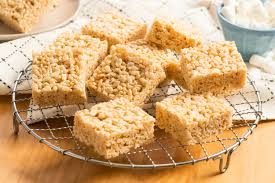
Perhaps our shortage of Al Award nominees is a reflection of a glum mood that has gripped public discourse of late, making it difficult to think of how the human condition is being improved. This is precisely why Mildred Day is the person we need to recognize with this year’s Al Copeland Humanitarian Award.  In the fine tradition of Al Copeland himself, Day made the human condition better by giving us a delicious treat, the Rice Krispie Treat.  Those treats aren’t just wonderful because of their gooey while also crunchy sweetness. Rice Krispie Treats are also so easy to make that they are often among the first cooking projects that parents do with their children. Parents connecting with their children over something yummy is just about the best thing.

Chad and JT are amusing in the fine tradition of Al honorees Ken M, Fasi Zaka, and Lazlo Toth. But their goal is to mock, which while necessary, may contribute further to the sour popular mood.  Bob Fletcher is certainly admirable in the fine tradition of Al recipient, Wim Nottroth.  But right now we could use more of a sweet reward than a harsh reminder of the need to stand up to evil, as important as that reminder is.

So thank you, Mildred Day. As you celebrate her selection as the Al Copeland Humanitarian, I hope you are enjoying some candy from yesterday’s haul and perhaps adding a Rice Krispie Treat or two.


For the Al: Mildred Day

October 31, 2019

(Guest post by Greg Forster)

Food is one of the most basic human experiences, so improving food has huge leverage for serving humanity. Even the act of eating, while it can be done alone, is better when done together – expressing the same basic harmony of human flourishing reflected in The Al’s commitment to the idea that one can benefit oneself and others at the same time.

The very first person ever nominated for The Al after Copeland himself was Steve Henson, inventor of ranch dressing. In the ten years since then, we’ve nominated people who invented ways to make wine more efficiently, invented ways to experience the magic of great food and great movies together, and invented ways to protect kids who sell lemonade. Yet somehow, we have never again nominated another person who invented a food item – which would seem to be a pretty basic prerequisite for all the other stuff.

Why not give The Al to the woman who invented the single greatest food of all time?

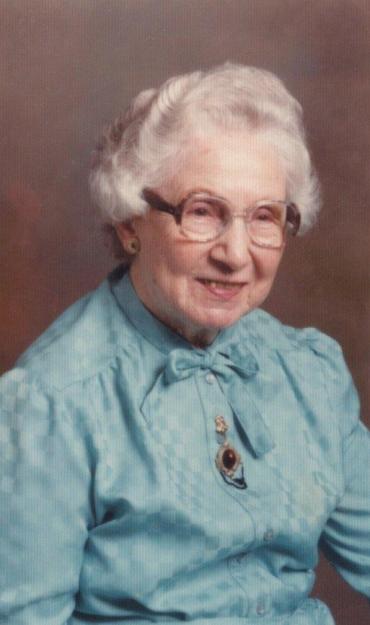
Rice Krispies were introduced in 1928. But the apotheosis of the Rice Krispie – the apotheosis of food itself – did not emerge for over ten years. Then in 1939, Mildred Day (with an assist from Kellogg’s coworker Malitta Jensen) cooked up the enchanted confection now known as Rice Krispie Treats.

download.jpg

Day first worked at Pillsbury under noted chef Mary Ellis Ames (in the picture of Ames’ kitchen above, Day is the woman standing on the left). Day was then employed by Kellogg’s as a recipe tester (doesn’t that sound like a nice gig?) and a traveling cooking instructor who trained chefs in Kellogg’s kitchens as well as giving demonstrations to customers. She and Jensen cooked up the idea in the mad science lab of the Kellogg’s mothership (I’m picturing lots of oddly colored liquids bubbling in cauldrons and test tubes).

Curiously, the invention of Rice Krispies was not the main contributing factor in the invention of Rice Krispies Treats. Earlier recipes for similar kinds of treat squares had used puffed rice or puffed wheat. But they had never used marshmallow, relying instead on other sticky confections such as molasses. Day’s main contribution was to realize that marshmallow would work much better.

Six months after the first treats were baked (“Live! Live, my creation!” I envision Day crying out, as a bolt of lightning activates the oven), Day got a request from a Camp Fire Girls chapter in Kansas City looking for a baking idea for a fundraiser. Day headed to Kansas City, and thus the greatest food ever known to humanity became . . . known to humanity.


Newspaper ad, 1941; newspaper recipe, 1940

Kellogg’s did not sell premade treats until the 1990s, but that doesn’t mean Kellogg’s didn’t profit hugely from Day’s invention. They hawked the dickens out of the recipe from the beginning, offering the irresistible Krispie Treats as a primary selling point for the cereal. The recipe first appeared on boxes of Rice Krispies in 1941. Back in those days, cooking the magic confections at home was part of the charm.

Well, it was for most people. Day herself never made them for her daughter Sandra; Sandra didn’t even find out about Rice Krispie Treats until she was an adult. She asked her mother why (I mean, wouldn’t you?) and Day replied: “If you’d made them for two weeks from 6:30 in the morning until 10:30 at night, you wouldn’t want to make them again, either!”

Okay, that’s fair enough. Day’s contribution can’t be contested.


Newspaper ads, 1942 & 1941

For contributing the greatest treat, and therefore the greatest food, ever invented by human ingenuity, while making untold millions for Kellogg’s, I nominate Mildred Day for Al Copeland Humanitarian of the Year.

Image HTs: Mildred Day images, Des Moines Register; Krispie Treat image, Kellogg’s; newspaper images, Cook’s Info.


Bob Fletcher for Al Copeland Humanitarian

October 25, 2019

DqiexIbWwAU9cA0

(Guest post by Greg Forster)

The Al is no stranger to grape-growers, having nominated innovative winemakers Thibaut Scholasch and Sébastien Payen in 2014. But Bob Fletcher grew grapes in a way more reminiscent of Wim Nottroth or Roddie Edmonds.

A lot of Japanese-Americans in California during World War II were farmers. Most of them lost their farms to foreclosure when they found themselves interned in camps in 1942 because Franklin Roosevelt was a bonkers-racist-pseudoscience-freakazoid-weirdo who thought Japanese people were inherently violent because of the shape of their skulls. (“The president wrote back asking whether the ‘Japanese problem’ could be solved through mass interbreeding.”)

Bill Taketa’s mother had paid off 85% of the mortgage on her 32-acre farm, and lost it all. “She didn’t have anywhere to come back to because they took it,” he recalls.

Bill Taketa even joined the U.S. Army and served in the Pacific theater, fighting Japanese forces on behalf of the stars and stripes. But that didn’t get him his family farm back.

Bill’s wife Doris Taketa, however, can tell a better story. She was 12 when she was shipped off to a camp in Arkansas with her parents and two sisters. But when she came back, the farm was still there for them. And two other families in her hometown of Florin, California had farms waiting for them, too.

Thanks to Bob Fletcher.

Fletcher, himself the only child of a walnut-farming family, watched the disastrous injustices being inflicted on California’s Japanese-American farm owners from his perch as a state agricultural inspector. He knew from the start that the whole thing was crazy, and that Japanese-Americans “were the same as everybody else – it was obvious they had nothing to do with Pearl Harbor.”

So he decided not to remain a California agricultural inspector. The time had come to try his hand at grape-growing.

Fletcher

Fletcher quit his job and took over operating three grape farms – a total of 90 acres of Tokay grapes – belonging to three interned families in danger of foreclosure: the Tsukamotos, Okamotos and Nittas. For three years, he was able to do just enough work to keep up the mortgage payments on all three farms. By agreement with the families, after paying the mortgage bills he kept half the remaining farm income to live off of, and stored the other half away to hand over to the families when they returned.

“I was born on that land. He took really good care of it,” Doris Taketa would later say.

Many Florin residents were less appreciative. He was jeered in Florin, and called a “Jap lover.” At one point some fine specimen of American bravery actually came out and shot a gun at Fletcher while he was working the Tsukamotos’ property.

There were about 2,000 Japanese-Americans living around Florin before the war. Doris Taketa estimates about 80% of them chose not to return. And who can blame them?

“Few people in history exemplify the best ideals the way that Bob did,” said Marielle Tsukamoto, who was five when she was interned. “He was honest and hard working and had integrity. Whenever you asked him about it, he just said, ‘It was the right thing to do.’ ”

After returning, Doris said to Fletcher: “We owe you everything.”

The rest of us owe him a debt as well. In partial repayment, I’m proud to nominate Bob Fletcher for 2019 Al Copeland Humanitarian of the Year.

Photo HTs: Top photo, Florin, Ca. historical society, via the California Sun; middle photo, AARP.


Nominated for the Al Copeland Humanitarian Award: Chad Kroeger and JT Parr

October 24, 2019

For this year’s Al Copeland Humanitarian Award I would like to nominate Chad Kroeger and JT Parr. Chad and JT take advantage of the public comment sessions that virtually all local governments offer to express their views.  And like the 2015 Al winner, Ken M, Chad and JT show us exactly how important those opportunities for public comment really are. In the video above they speak to the LA City Council in defense of house parties.  They note all of the ways that house parties had helped them, with JT observing: “I could play beer pong and compete with real integrity. In short, I fulfilled my potential.” And then sounding like an economist (with about the same level of influence over policy), JT warns that there are “externalities” associated with banning house parties, such as the loss of bonding, emphasizing, “America needs bonding.”

In this second video, Chad and JT ask the City Council of Laguna Beach to “boke” their “shmole.” As Chad explains, a shmole is “someone with a good heart who kinda sucks.” They claim that one of the members of their squad, Kevin, is a shmole and the city needs to help them boke him, or remove him from their crew. But they don’t wan’t Kevin to go “homie-less,” so they want the city to enact a shmole relocation program and adopt Kevin to rehabilitate him. Chad and JT estimate that this program would cost about $75,000 per shmole, which could be paid by increasing taxes on their parents’ houses.

In this third video, Chad and JT propose to the Manhattan Beach City Council that they rename their wastewater plant “The Britney Spears ‘Toxic’ Water Center.” Chad mentions that he almost went to a Britney Spears concert when he was 14 but his Dad said, “No. You have to do math.” JT then sings the song “Toxic” to the council.

In our modern age in which leading academics waste countless hours sending messages of 280 characters to each other in “an effort to democratize access to knowledge,” or boast about being a “subtweet aficionado,” Chad and JT reveal this activity for what it really is — a world in which everyone is on the stage and no one is in the audience and where all forms of expertise and authority are degraded.  People active in Edu-Twitter and Econ-Twitter may imagine that they are shaping the world because they have thousands or even tens of thousands of followers, but remember that Chad and JT’s videos have been viewed well over a million times. Chad and JT have no more influence over local government policy than academic Twitter has over public policy. And by wasting so much energy on social media, academics place themselves on the same level as people like Chad and JT who have no shortage of proposals, opinions, and even evidence such as a a large graph with “metrics” proving that Kevin is a shmole.

But Chad and JT don’t just reveal the silliness that has gripped much of academia, they also reveal the phoniness of democratic input in public policymaking.  Governments create public comment opportunities to give people the illusion that they have control over government policy.  In actuality, public influence over policymaking has always been indirect and mostly channeled through the activities of organized interests.  This is not a bad thing to be lamented.  It is simply a reality to be accepted. The Voice of the People as expressed on social media or in public comment times is more about catharsis than it is about control.

If people are going to waste their time on social media or in public comment periods, it might as well be amusing rather than the self-important and over-earnest stuff typically found in academic Twitter or local government meetings. For taking this useless activity and making it entertaining, Chad and JT have significantly improved the human condition and therefore are worthy of the Al Copeland Humanitarian Award.


Don’t Overregulate Choice

October 24, 2019

classroom-2787754_640

(Guest post by Greg Forster)

OCPA carries my article on the dangers of overregulating choice programs:

Recent proposals have suggested imposing new burdens on these programs in Oklahoma. One of the most common approaches is to demand that schools compile and turn over to the state extensive personal data on every participating student. This raises important student-privacy concerns. But lawmakers should also be asking what this or other proposed regulations has to do with helping parents hold their schools accountable. More power for regulators is less power for parents.

Your freedom to tell me what you think in the comments is regulated, but not overregulated, so fire away!


Nominations Solicited for the 2019 Al Copeland Humanitarian Award

October 14, 2019

HotBiscuits2

(Guest post by Greg Forster)

It! Is! That Time!

Time once again for us to solicit nominations for the Al Copeland Humanitarian Award, that is! The Nobel Peace Prize has been awarded, so by immemorial custom it is time to begin considering which non-Nobel-esque humanitarian we will honor.

As our thoughts turn Al-ward this October, recall that this has been a banner year for fast-food chicken joints bringing joy to the world. Scott Lincicome elegantly captured the moment back in August:

There’s a full-on chicken sandwich war underway, yet some lunatics still question capitalism.

Words for the ages, Scott. America has problems, many and serious. But lack of an economic system that delivers goods and services to the people who need and want them is not one of them – thanks to heroes like Al Copeland.

In September, a local KFC tried to top everyone by giving a free car to a single-mom worker who had walked to work for a year. Josh Jordan suggested Popeye’s could do KFC one better by giving that mom the last of their new chicken sandwiches!

But you want to hear about The Al. Nominations can be submitted by emailing a draft of a blog post advocating for your nominee. If Jay likes it, he will post it with your name attached. A winner will be announced after Halloween.

The criteria of the Al Copeland Humanitarian Award can be summarized by quoting our original blog post in which we sang the praises of Al Copeland and all that he did for humanity:

Al Copeland may not have done the most to benefit humanity, but he certainly did more than many people who receive such awards.  Chicago gave Bill Ayers their Citizen of the Year award in 1997.  And the Nobel Peace Prize has too often gone to a motley crew including unrepentant terrorist, Yassir Arafat, and fictional autobiography writer, Rigoberta Menchu.   Local humanitarian awards tend to go to hack politicians or community activists.  From all these award recipients you might think that a humanitarian was someone who stopped throwing bombs… or who you hoped would picket, tax, regulate, or imprison someone else.

Al Copeland never threatened to bomb, picket, tax, regulate, or imprison anyone.  By that standard alone he would be much more of a humanitarian.  But Al Copeland did even more — he gave us spicy chicken.

The 2018 winner of The Al was Joy Morton. Like Al Copeland, Morton promoted good by doing well. It was known that small amounts of iodine could prevent goiters, but no one was doing anything about this until Morton saw a way to gain a competitive advantage for his salt company: adding iodine to salt, and advertising its health benefits. The bumper crop of nominees in 2018 also included Elizabeth VandiverLeo Moracchiloli, Richard Garfield, Eric LundgrenAdam Butler and Autumn Thomasson and George Henry Thomas.

The 2017 winner of The Al was Stanislav Petrov, who literally saved the world from nuclear destruction by refusing to follow Soviet orders to retaliate against what he suspected (as was later confirmed) was a false warning of a US strike. It’s not quite spicy chicken, but it’s close. Petrov was selected from an excellent set of nominees, including Whittaker ChambersJustin Roiland and Dan Harmon and Russ Roberts.

The 2016 winner of The Al was Master Sergeant Roddie Edmonds, who prevailed over a very competitive field of nominees, including Tim and Karrie LeagueRemy Munasifi, and Yair Rosenberg.  Edmonds stood up against fascists at considerable risk to himself by declaring that he and all of his fellow prisoners of war were Jews to foil the Nazis’ effort to separate Jewish prisoners.  It is this type of courage in the face of illiberalism that we need more of in these times.

The 2015 winner of The Al was internet humorist Ken M.  Ken M did more to improve the human condition than just make us laugh by making idiotic comments on social media (although that would have been enough).  His humor reveals the ridiculousness of people trying to change the world by arguing with people on the internet.  Given how much time ed reformers waste on social media, especially Twitter, Ken M’s humor is a useful reminder that many of the people reading your posts are probably not much swifter or influential than the Ken M persona.  Ken M beat a set of strong nominees, including Malcolm McLeanGary Gygax, and John Lasseter.

The 2014 winner was Peter DeComo, the inventor of the Hemolung Respiratory Assist System.  To save a life, DeComo tricked border control officials to bring a model of his artificial lung machine into the US from Canada, because the device had not yet been fully approved by the FDA.  DeComo won over a worthy field, including Marcus Persson, the inventor of Minecraft, Ira Goldman, the developer of the “Knee Defender,”  Thomas J. Barratt, the father of modern advertising, and Thibaut Scholasch and Sébastien Payen, wine-makers who improved irrigation methods.

The 2013 winner of The Al was Weird Al Yankovic. Weird Al beat an impressive set of nominees, including Penn and TellerKickstarter, and Bill Knudsen.

The 2012 winner of The Al was George P. Mitchell, a pioneer in the use of fracking to obtain more, cheap and clean natural gas. Mitchell won over a group of other worthy nominees: BanksyRansom E. OldsStan Honey, and Alfred Fielding and Marc Chavannes.

In 2011, The Al went to Earle Haas, the inventor of the modern tampon. Thanks to Anna for nominating him and recognizing that advances in equal opportunity for women had as much or more to do with entrepreneurs than government mandates. Haas beat his fellow nominees:  Charles Montesquieu, the political philosopher, David Einhorn, the short-seller, and Steve Wynn, the casino mogul.

The 2010 winner of The Al was Wim Nottroth, the man who resisted Rotterdam police efforts to destroy a mural that read “Thou Shall Not Kill” following the murder of Theo van Gogh by an Islamic extremist. He beat out The Most Interesting Man in the World, the fictional spokesman for Dos Equis and model of masculine virtue, Stan Honey, the inventor of the yellow first down line in TV football broadcasts, Herbert Dow, the founder of Dow Chemical and subverter of a German chemicals cartel, and Marion Donovan and Victor Mills, the developers of the disposable diaper.

The 2009 winner of The Al – in the first year the award bore that name – was Debrilla M. Ratchford, who significantly improved the human condition by inventing the rollerbag.  She won over Steve Henson, who gave us ranch dressing, Fasi Zaka, who ridiculed the Taliban, Ralph Teetor, who invented cruise control, and Mary Quant, who popularized the miniskirt.

Also noteworthy from 2009: history’s greatest monster, William Higinbotham, was declared permanently ineligible to receive The Al. He remains the only individual thus disqualified. In (dis)honor of Higinbotham, The Higgy award has been bestowed on (un)worthy candidates annually since 2012.

Al Copeland himself was honored in 2008 as the official humanitarian of the year of Jay P. Greene’s Blog. The award was renamed in his honor the following year.

Happy nominating and good luck!


Interview on Education Philanthropy

October 11, 2019

Check out my two-part interview on education philanthropy with Mike Hartmann: Part 1 Part 2

Readers of JPGB will recognize many themes from earlier posts like:

Advice to the Arnold Foundation

Political Science for Ed Reform Dummies

Gates Foundation Follies

Build New, Don’t Reform Old


The Eternal Teacher Shortage

September 18, 2019

469EADCA-45D4-4475-8720-5953C9D0B5C2

(Guest post by Greg Forster)

The Oklahoman carries my article on how a century’s worth of headlines in the Oklahoman (formerly the Daily Oklahoman) have kept on telling us over and over again about a dire teacher shortage:

Nor was this limited to 1919. Examples abound in succeeding decades. “State Feeling Sharp Teacher Pinch Again” ran a headline in 1964, for example. That story said shortages happened only occasionally, but the paper ran similar headlines in 1966, 1969 and 1970.

The “dire teacher shortage” story appeals not only to readers who are teachers and their families (a fairly large constituency) but to any reader who likes a good underdog-versus-huge-uncaring-system story.

But journalists ought to be exercising a little more critical thought. Reviewing more recent coverage in Oklahoma, I point out:

The coverage did not raise obvious questions like: If the huge, indiscriminate across-the-board pay raise that was sold as necessary to recruit teachers in fact had little effect on recruitment, why did we enact it?

Or: Shouldn’t we tear down the artificial barriers to entry that keep people out of the teaching profession, like useless certification requirements that have consistently failed to show any connection to classroom outcomes?

Or: Shouldn’t we reform the pay scales and contract provisions that prevent us from targeting the best teachers for recruitment and retention?

No, the implicit takeaway is always more, more, more indiscriminate spending, without systemic reform.

I’d like to thank the Oklahoman for being such a good sport and running this!

Let me know what you think.