Pass the Popcorn: The Function of Man

February 8, 2022

(Guest post by Greg Forster)

Just no other way to do this, folks – this post contains MEGA mega mega spoilers.

You have been warned.

My impression of No Time to Die changed on second viewing. When I first saw it in theaters, until the end I was enjoying it thoroughly, but I also felt it had flaws. Dialogue often seemed incomplete. Like many people, I thought the motive of the villain was unclear. But the opening gut punch (when he’s in the car and can’t decide whether to bother fighting back, when he puts Madeleine on the train) really landed, and when the ending came, I was genuinely moved. I thought: “That was really gutsy, and it worked really well.”

Upon seeing it a second time, I appreciate the whole movie much more. What I had thought were flaws were, in fact, a byproduct of a highly complex plot that requires you to attend to everything that’s going on throughout. Some important things are unstated, and become more clear with familiarity. I appreciate that attention to detail, and the invitation to the viewer to discover the implications of the story on our own.

No Time to Die is both a highly satisfying story in its own right and provides a highly satisfying conclusion to the arc of the Daniel Craig films. Nothing, of course, can redeem the monstrous idiocy of the movie Spectre – like many of the most important things in No Time to Die, that goes without saying – but this movie makes a full enough recovery, and makes enough good use of the setup provided in Spectre, that I no longer feel like the time I spent on Spectre was fully wasted. And that takes some doing.
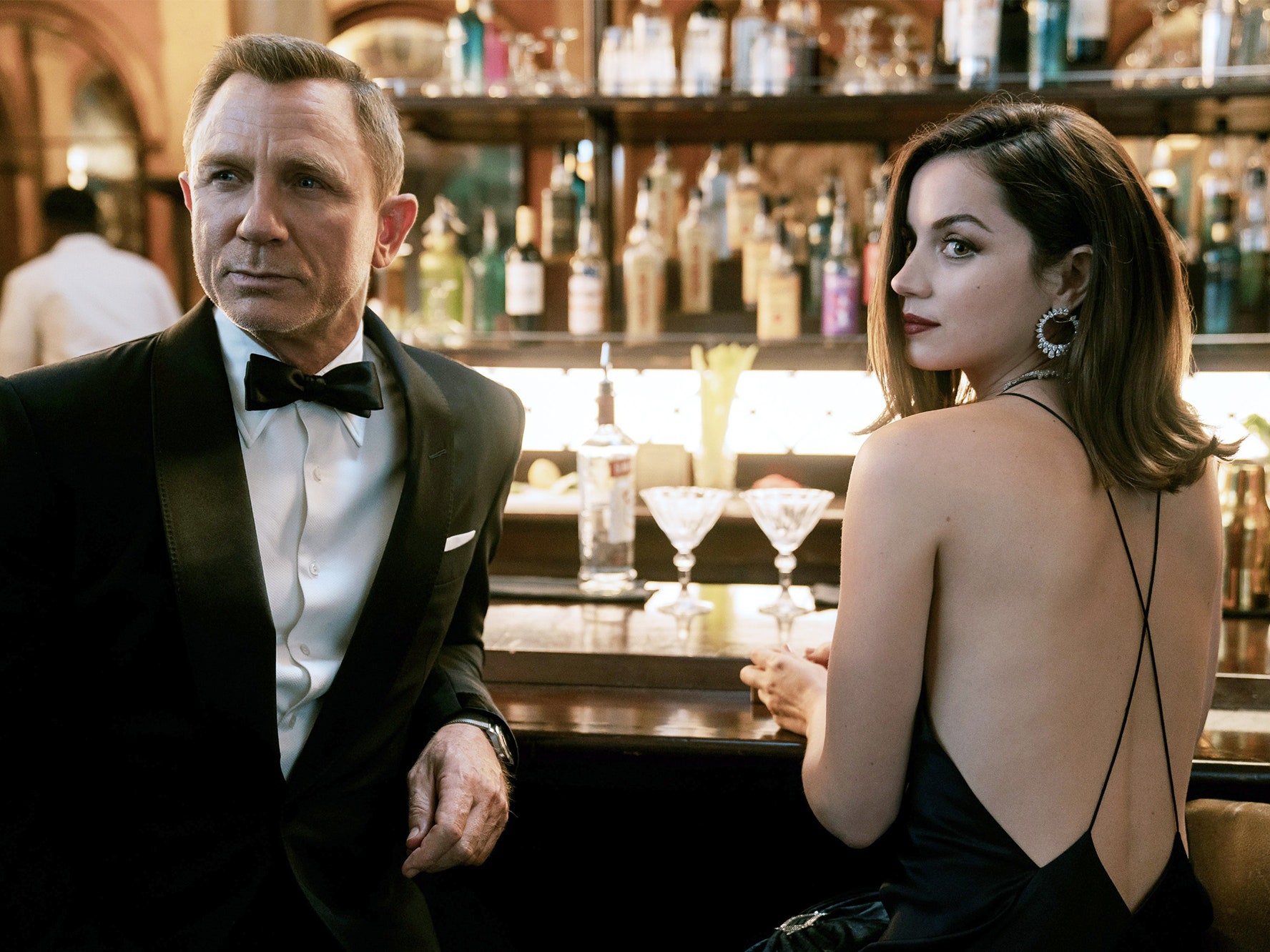
Like Bond in Havana, let’s spend a moment with Ana de Armas before we get to the main event.

Everyone who said that de Armas stole the whole movie in the 20 minutes she was on screen was, obviously, right. Let’s just be thankful she gave the movie back to Daniel Craig on her way out. I felt like she could have walked off with it and there would have been nothing we could have done.

“I’ve trained for three weeks!”

And some people thought the conventions of the Bond franchise couldn’t be retooled for the 21st century cultural environment.

What I really appreciate about the whole Havana-and-oil-rig segment is the great effort that clearly went into making it work on multiple levels – comedy, action, drama – even though it’s essentially disposable in the larger arc of the movie. Even the death of Felix Leiter, while it is used in a very important way to make the point that the movie is making, is strictly unnecessary to the larger plot. They could have skipped Havana and the oil rig entirely and just had a 60-second scene in which the turncoat scientist kills off Spectre.

This is a long movie; there must have been a pretty awful temptation to go that way. But then this would be just another escapist fantasy, rather than a movie about something. And they put in the work to make it entertaining as well as about something.

Speaking of Felix and what this movie is about, let’s get to the main event.

Take a look at this picture of Bond, in his bulletproof car, surrounded by enemies, sitting next to a woman he no longer trusts, trying to decide whether or not saving his own life and hers is even worth it.

Now hold that thought for a moment.

In a way, No Time to Die is the tragic flip side to the essentially happy ending of Skyfall. The lessons of Skyfall, as loyal JPGB fans may recall, are as follows:

  1. All your fancy modern technology and advanced civilization will not save you if you are not the right kind of person.
  2. If you have forgotten how to be the right kind of person, look to your elders and return to the place where you came from.
  3. Do not hesitate to use your fancy modern technology to kill your elders and blow up the place you came from if that is what being the right kind of person requires.

Skyfall is a pretty good way of distilling how the classical liberal view works out in the context of the 21st century. The advance of technology and civilization does not remove, or make less agonizing, the titanic moral struggle at the heart of humanity. That is what divides classical liberals from illiberals whose preferred flavor of illiberalism is progressive.

The sources of the past are all we have to guide us in that struggle, since the sources of the future are unavailable. But the struggle is not to preserve the past, the struggle is to win the battle against evil in our own hearts. The institutions and authorities we have inherited are themselves subject to the same struggle, and inevitably tainted with moral failures, past and present. Sometimes that makes it necessary to destroy them.

Like when they behave irresponsibly and outside the law – which, as we established in Skyfall, they often have to do in order to fight evil.

And here is the happy ending part: To destroy the institutions and authorities we have inherited – if we do it for genuinely moral reasons, and not because we’re infantile and we want to show mom and dad that we’re grown up now and they can’t tell us what to do any more – is to carry forward all that is morally valuable in them. It is in fact the only way to carry forward what is morally valuable in them.

Bond and Mallory reconcile and carry on the fight together.

But we pay a price, because we need these institutions and authorities for more than moral reasons. They provide identity, meaning, purpose – wholeness. We cannot simply decide for ourselves what the meaning of our life is, because we have no non-arbitrary basis on which to make the decision. Of course, a very few are capable of reasoning all the way back to the true non-arbitrary source of all things and then reasoning forward from there, but most people require a coherent world of cultural structures to guide them to the right conclusions.

This brings us to what divides classical liberals from illiberals whose preferred flavor of illiberalism is traditionalist.

We need wholeness. But in the advanced modern world with its constant flux of institutions, we struggle not only for morality (as we always did) but now for wholeness as well. The signposts that used to tell us who we are can no longer do so because they are constantly being created and then swept aside in what is by historic standards an eyeblink of time. This is caused by the ceaseless churn of technological change, economic development and freedom of belief – which are, in the long run, interdependent and come as a package deal.

The basic question that confronts us is which of the two struggles – for morality or for wholeness – will take precedence. For the illiberal traditionalists, “because it is right, because justice requires it” is not an adequate reason to tear down the whole cultural world. For liberals, it is.

This is the tragedy of liberalism – that, to preserve what is morally good in the tradition from the shipwreck of its own injustices, we must throw ourselves into a world without wholeness.

The ending of Skyfall left us feeling like we would have what we needed in the new world created by our stand for justice.

No Time to Die admits that we really don’t – and chooses the new world anyway.

Bond and Madeleine want to write their pasts on slips of paper and burn them, visit the grave to ask forgiveness, and then leave the war for justice behind and enjoy wholeness.

Now look again at that other picture of Bond, not sure whether saving himself is even worth it.

The war for justice can’t be left behind. (Nothing but God is really sacred.)

Bond, because he is a warrior for justice, cannot have wholeness. That was, in its way, the lesson of Casino Royale. But now we learn it more completely. (All the best stories have something in the end that points you back to what you saw at the beginning, but now having a different perspective because of the intervening story.)

The lesson of No Time to Die doesn’t require three points, only one.

Wholeness is overrated.

As I’ve said before, Jeffrey Wright’s Felix Leiter has been an enormous gift to this franchise. In contrast to the very British Bond, Leiter always represents America – whether that’s the slick New York sharpness of Jack Lord in Dr. No, or the “aw shucks” Midwestern charm of Cec Linder in Goldfinger, or the simultaneous smoothness and bluntness of Wright, “a brother from Langley.”

Leiter, hemorrhaging, struggles for life in the rising water:

“It’s like back when I was a kid on that shrimp boat.”

“You’re from Milwaukee.”

“Am I? I thought I made that up. . . . You got this?”

“Yeah.”

“Make it worth it. . . . James . . . it’s a good life, isn’t it?”

“The best.”

Wholeness is overrated.

The villain in No Time to Die doesn’t want to destroy the world. The big beef about this movie was: “He wants to destroy the world, but we never find out why!” Washington Post movie reviewer Sonny Bunch answered this effectively with: “Come on. Who doesn’t want to destroy the world?”

That is, in fact, part of what this movie is about.

Safin doesn’t want to destroy the world; he’s selling his viral/nanobot/whatever weapon to people who want to destroy the world. (Kill millions, actually, not destroy the world – but the forms must be obeyed.)

Safin’s whole family was murdered by Mr. White on behalf of Spectre, and he was left as a child with nothing.

Like the illiberals of left and right – the differences between the two flavors hardly matter – all he really wants is to stop the pain and get his lost wholeness back.

For him, that means taking Mr. White’s daughter and granddaughter and making them – or at least the granddaughter, if the daughter can’t be subjugated – his new family.

And it means creating a new technology that will change the world, making his life matter because he left a lasting impact, without caring whether it was just. Just like Nietzsche said we would need to do if we wanted to create wholeness for ourselves in a world that had been stripped of wholeness precisely by the (his words) “slave morality” that cares more about justice than wholeness.

Safin says Bond, with his war for justice, leaves nothing behind him. But he thinks that he, unlike Bond, does.

He gives the world what he thinks it wants: “People want oblivion.”

This nihilistic nullity has been the final endpoint of all illiberalism in the modern world, of left and right alike: to steal other people’s children for indoctrination, and destroy anything they can’t control.

Because they want their wholeness back, and they care more about that than about justice.

As Pat Buchanan said in 1992: “Somebody’s values are going to prevail. Why not ours?”

What better image than a poisonous garden built on top of a decommissioned ICBM silo for all the efforts, on both left and right, to take our wholeness back?

The naïvely rationalist Romanticism of the illiberal left would seize the technological and economic capacity produced by classical liberalism and use it to build a Brave New World. The naïvely traditionalist Romanticism of the illiberal right would seize that capacity and use it to build a Brave Old World.

Both are “brave” because they begin by summoning up the courage to kill the part of us that loves justice more than wholeness.

And both end in poison, fire and death.

Safin is wrong. Bond does leave something behind.

In the end, we see Madeleine driving with Mathilde.

Visual clues tell us, subtly but unambiguously, that they are back at Matera.

Bond has been buried with Vesper, where he always belonged.

Madeleine has visited the grave to ask forgiveness.

She is going to tell Mathilde about her father, who sacrificed his life – and his wholeness – so she could be safe, and be raised by her mother and not a madman, in a world ruled by the merely weak and venal rather than the diabolically insane.

Meanwhile, his friends at MI6 also tell his story and remember him.

Then, clink the glass and: “Back to work.”

The war continues.

Wholeness is overrated.

The proper function of man is to live, not to exist.

I shall not waste my days in trying to prolong them.

I shall use my time.

In the advanced modern world, we all agree on this. In fact, there has never been a time when this was not agreed upon. But it has taken on new urgency in the advanced modern world because, having lost our wholeness, we are constantly tempted to merely exist and prolong rather than live.

But what do we use our time for? All the big divisions are about this.

Seeking to take our lost wholeness back only grows poisonous gardens that end in fire.

We need wholeness. But we need to serve others more.

It’s right to want wholeness, because we ought to love ourselves.

But love of self becomes poisonous if we don’t make it an even higher priority to love others as we love ourselves.

Mathilde wants wholeness, too.

“If it’s an error, it’s on my shoulders, fair and square,” says Mallory, who endured torture for three months as a prisoner of the IRA.

“I’ve dedicated my life to defending this country. I believe in defending the principles of this…”

He gestures, and looks around at London, and falls silent, unable to find any words to sum up what he serves.

“Of this.”

The burden of responsibility, the legacy of injustice and corruption, the necessity of making new worlds, the sacrifice of wholeness…

If we love others as ourselves, we must accept it.

The war goes on.

Back to work.


School Choice Makes Homeschoolers and Private Schools More Safe from Government, Not Less

February 1, 2022

(Guest post by Greg Forster)

OCPA carries my latest, on why school choice programs make homeschoolers and private schools more safe, not less safe, from government interference:

Once these programs exist, they quickly become so politically strong that they are almost never reduced in size or subjected to any kind of additional regulations or requirements. The politicians typically try that stuff once, get beaten badly, run home and never try it again.

Why? Because once these programs exist, they create a huge new constituency to protect them. Once parents see their children liberated from the government school monopoly, they’re not about to let anyone mess with their children again.

And families that value educational freedom are going to need that political strength for reasons that have nothing to do with choice programs:

The right to raise your children in accordance with the dictates of your own conscience is being set up for threats like it’s rarely seen in this country. Homeschoolers and private schools are going to face these challenges whether there are school choice programs in their state or not. What they need most right now is an organized political constituency that is large enough and institutionalized enough and angry enough to fight back. They’re feeling increasingly vulnerable and anxious, because they don’t have that now—except in places that have big school choice programs, where the organizing has already been done, and many thousands more parents are part of non-government education than before choice programs existed.

Let me know what you think!


School Choice in a Divided America

January 4, 2022

(Guest post by Greg Forster)

OCPA carries my latest, on how school choice is a way forward for a divided America – at each others’ throats over everything from mask mandates to CRT – that reflects our national commitment to diversity and equality under the law:

These intense emotions surrounding education have always presented an unsolvable problem for the government school monopoly. We shove all kids into a single monopoly school system based on the notion that dispassionate educational experts will discover and implement the One Best Way to run schools, but it has never actually worked out that way. Government schools have always served the powerful, delivering at least decent service to comfortable suburban whites, while relegating the poor and the marginalized into schools that are little better than warehouses.

Today that unsolvable problem has become a crisis. Increasing polarization has raised the stakes of cultural conflict so high that even the government school monopoly is no longer able to cope. As Jonathan Haidt explained in his landmark book The Righteous Mind, even questions that seem like they ought to be resolvable through dispassionate discourse, like medical policy, are in practice subject to powerful group-membership associations that transform them into questions of fundamental decency and righteousness.

I have some specific things to say to those on the right who think they can beat the blob at its own game by “banning CRT” in schools:

Leave aside for a moment the fact that CRT has no stable and generally accepted definition, and that the government school monopoly, to the extent that it wants to rely on CRT, will have no difficulty working around or subverting whatever laws you pass. Is America about using political power to force people to conform to the in-group, leading to an endless cycle of conflict over who gets to speak for the in-group? Or is America about protecting everyone’s right to live in the way that seems best to them, as long as they respect everyone else’s right to do the same?…

Beyond prohibiting the most extreme abuses, the way to get education that really raises kids to believe in equality of rights under the rule of law is school choice. Most parents of color agree with that vision of America—equality of rights is what they spent centuries fighting for, after all. What they want from schools is not indoctrination in extreme ideologies, but the Three Rs and sound character virtues. Put them in charge, and that’s what they’ll choose.

Of course, like all other parents, they’ll also expect schools to affirm their human dignity and the contributions of their cultural identity—which white parents, to be blunt, have always taken for granted. “Kiss Me I’m Irish” doesn’t mean “Punch Greg in the Face, He’s Italian.”

A strong, confident America would want to keep the promise of freedom under the rule of law, even for those few families who really do want radical education. It wouldn’t hold those families’ children hostage and try to use the power of the state to turn them against their parents. That doesn’t strengthen the American experiment, it undermines it.

Let me know what you think!


Parents’ Children, Parents’ Choice

December 2, 2021

(Guest post by Greg Forster)

OCPA carries my latest, in which I reply to a school district superintendent who is flogging the slogan “Public Money, Public Rules for Vouchers”:

His list of mandatory conformity for private schools includes taking exactly the same tests, which means the curriculum and pedagogy must also be the same as government schools. He demands they hire teachers on the same basis—worthless teaching certificates that are long proven to have no relationship to educational outcomes—and follow exactly the same “accountability” rules. He even demands they provide exactly the same student services and extracurricular activities.

What’s left for schools to offer parents a choice about? The school mascot?

This is like saying you support letting families decide what to eat for dinner, as long as they decide to eat hamburgers every single night. Hey, you’re free to put your choice of ketchup or mustard on them. It’s a free country! We’ll even let you put cheese on them, sometimes, provided you do it through our government-controlled cheese accountability system.

It’s time to rethink what really serves the public:

What is the public’s interest in education? Is it to ensure all children are pressed into molds, like machine parts on a factory assembly line? Or is it in the public’s interest to recognize that both human nature and the American experiment in a free and equal citizenry demand that education be answerable to parents?

One thing that’s definitely not in the public interest is “accountability” that is under the control of politicians and never holds schools accountable to anything but serving special interests….

I’ve got an “accountability” question for Deighan: According to brand-new data from the same state accountability system you’re so in love with, only 27% of students in the system you run are “proficient” or better in academic performance. Only 10% of African-American students in your system are proficient, and none—zero percent!—are above that level. When are you planning to resign?

I propose the counter-slogan “Parents’ Children, Parents’ Choice.” That’s the “public rule” that really serves the public.

Let me know what you think!


Segregated Public Schools

November 2, 2021

(Guest post by Greg Forster)

OCPA carries my latest, on how the government school monopoly maintains segregated schools:

Assigning students to schools based on where they live guarantees segregated schools, because Americans live in segregated neighborhoods. And even as the lines that separate school districts and individual school attendance zones have fluctuated over generations since the civil rights revolution, the lines continue to be drawn so as to ensure racially segregated schools.

Should we be surprised at that? As long as government monopolizes schooling, who goes to school where is under political control. And one of the most enduring forms of political mobilization is racial identity pandering. Whether openly or by subterfuge, politicians make gravy by appealing to voters’ race-based anxieties and perceived interests. That reality doesn’t magically disappear when it’s time to draw district and attendance-zone lines.

I draw on the Urban Institute’s mapping tool, Dividing Lines, to look at district lines and attendance zones that segregate students in Oklahoma City. Click the link to find schools in your state!

Convincing politicians not to pander by race strikes me as a rather Sisyphean task; I propose another approach:

Unsurprisingly, the progressives at the Urban Institute and I differ on the question of how these lines should be drawn if we lived in a perfect world where they weren’t drawn to satisfy political constituencies driven by identity politics. But we don’t live in that world, so who cares? To my mind, the only question that counts is how we can realistically, in this world, break the chain that binds skin color and school attendance.

School choice, which allows parents to use the public funds for their child’s education to attend the public or private school of their choice, has a great track record of integrating schools. That’s because it ends the segregationist practice of assigning students to schools based on where they live. Seven empirical studies have examined the impact of school choice programs on segregation; six found it reduced segregation while one found no visible effect. No empirical studies have found that school choice increases segregation. (Of course, given how aggressively segregationist the government school monopoly is, creating a more segregated system would be a tall order.)

Let me know what you think!


Christopher Lee for The Al

October 30, 2021

(Guest Post by Matthew Ladner)

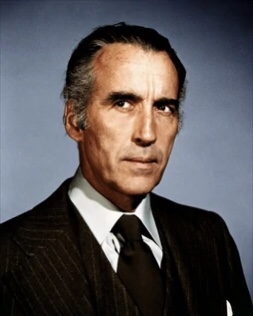
Descended from Charlemagne. Spoke five languages. Served in the British Secret Service in World War II. Related by marriage to Ian Fleming, said to be the inspiration for James Bond, later played a Bond villain. Required to seek the permission of the King of Sweden to get engaged – and received it. Innumerable film credits. Turned down the role of Grand Moff Tarkin but later played a fallen Jedi/Sith Lord. Re-read The Lord of the Rings annually, settled for Saruman after losing out for the role of Gandalf. Cut a heavy metal album at age 90.

Christopher Lee really was the most interesting man in the world. Anyone who can kill so many villains that the files are still sealed and then portray them on the silver screen for decades is Al-worthy in my book!


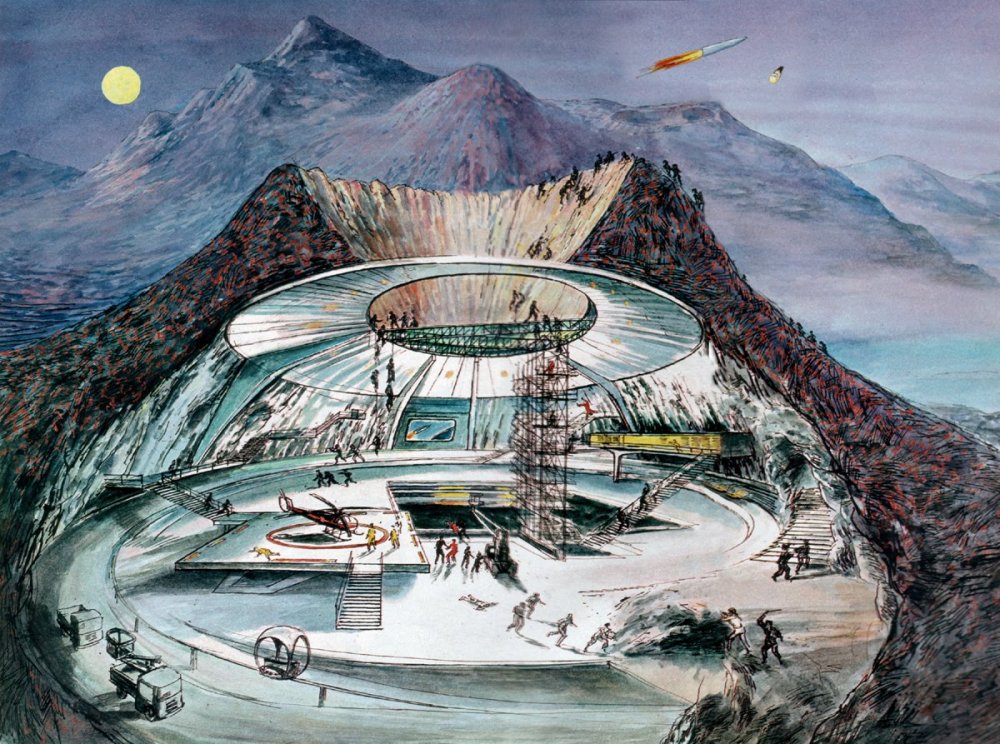
For the Al: Ken “Heinie the Tank Buster” Adam, Father of the Bond-Villain Volcano Lair

October 29, 2021
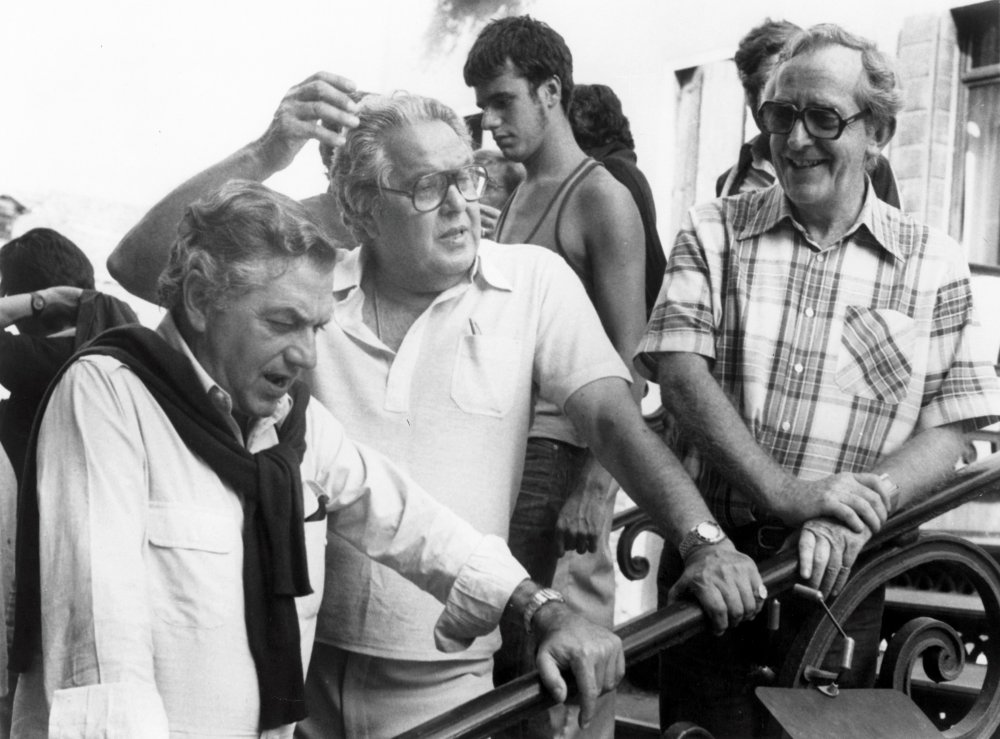
L-R: Set designer Ken Adam, legendary Bond producer Albert Broccoli and director Lewis Gilbert on the set of Moonraker; all photos from the British Film Institute.

(Guest post by Greg Forster)

Ken Adam, who died earlier this year, was a German Jew whose family fled the Nazi regime to England. He became one of only three German-born pilots in the RAF, where as a bomber pilot who specialized in taking out German armor he earned the nickname “Heinie the Tank Buster.”

Now, folks, if it were me, escaping Nazi Germany and becoming Heinie the Tank Buster would be Al-worthy enough for a lifetime. But it wasn’t for Ken Adam.

He went on to become one of the most important set designers in film history, inventing a series of iconic sets that shaped the imagination of the whole world.

Including, ahem, the original Bond-villain volcano lair.

Yes, that one!

Well, not that one.

This one:

(Which reminds me, I’ve been meaning to blog on No Time to Die. I’ll try to get to it soon, I promise! If you’ve already seen the other Daniel Craig films, I highly recommend NTTD. It’s even good enough that I now no longer feel like my time was totally wasted by the execrable Spectre, because the story ended so well. But you do have to have seen the other movies first. And you should, it goes without saying, see it in the theater.)

Now, folks, if it were me, escaping Nazi Germany and becoming Heinie the Tank Buster, and then inventing the Bond villain volcano lair would be Al-worthy enough for about ten lifetimes.

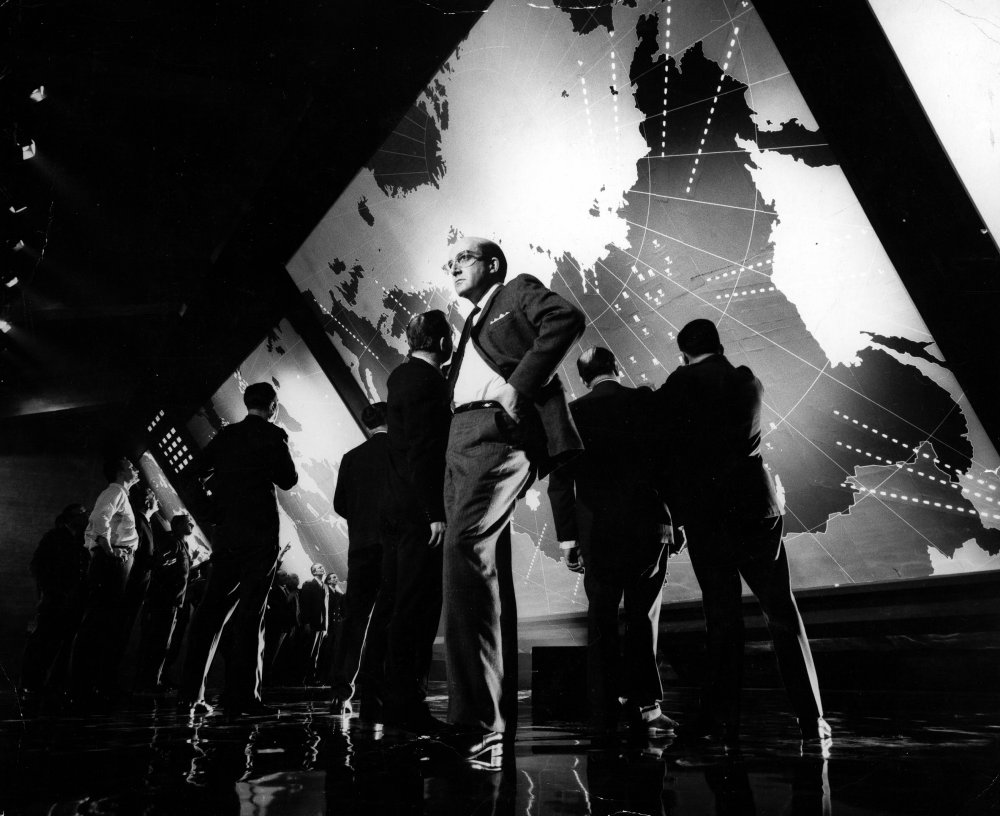
But that’s not all Ken Adam did. Rather than waste words, let me take you on a tour:

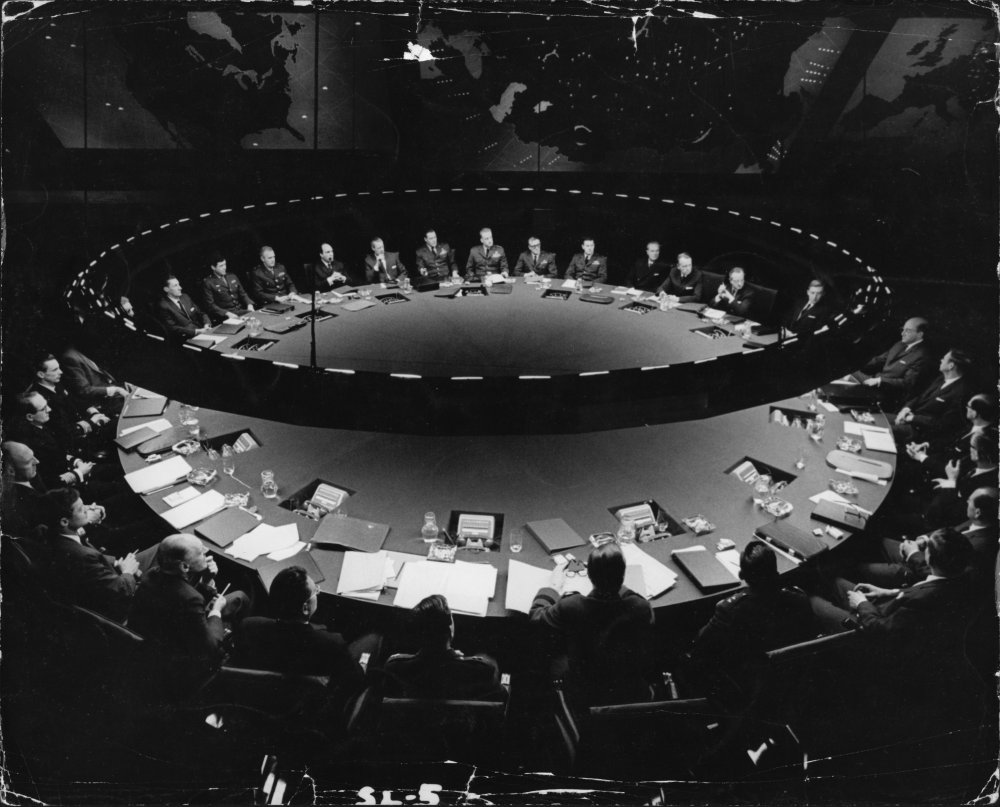
War Room, Dr. Strangelove
Dr. No’s Lair, Dr. No
Ft. Knox, Goldfinger
Drax’s Conference Room, Moonraker

And of course:

Production Design Sketch, You Only Live Twice
Ernst Starvo Blofeld’s Volcano Lair, You Only Live Twice

Gentlemen, you can’t fight Ken Adam’s claim to The Al in here! This is the War Room!

I proudly nominate Ken Adam for Al Copeland Humanitarian of the Year.


Nazar Mohammad Khasha for Al Copeland Humanitarian

October 25, 2021
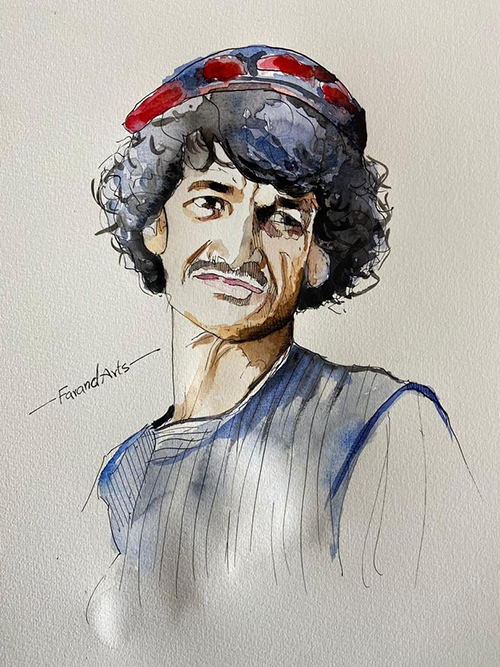
An illustration of Nazar Mohammad Khasha, drawn July 27, by Farand Safi (HT Washington Post)

(Guest post by Greg Forster)

In 2004, Italian security officer Fabrizio Quattrocchi was captured in Iraq by jihadi terrorists, who were at the time winning propaganda victories, and recruits, by executing captives on video. But they won no victory with Quattrocchi; as his death approached, he pulled the hood off his head and shouted: “I’ll show you how an Italian dies!” The video was such a propaganda defeat for the terrorists that regional television networks – normally eager to help the terrorists by showcasing these videos – wouldn’t broadcast it. Mark Steyn commented that allied governments, who normally instruct civilians to cooperate with their captors in hopes of avoiding death, should instead instruct them in the Quattrocchi Protocol: “If you are captured, wreck the video.”

Nazar Mohammad Khasha wrecked the video. When heavily-armed Taliban thugs came to arrest Khasha for the crime of making fun of the Taliban, he looked right into the cameras and made fun of the Taliban.

“They have mustaches on their backsides” he said, smiling, hands bound behind his back in the center-rear seat of a car, with Taliban gangsters sitting on both sides of him, brandishing guns. (Mustaches symbolize bravery in the local culture, the Washington Post explains.)

So one of the thugs hits him in the face. Hard.

And he keeps smiling.

After a second blow, he stops smiling. But by the end of the video, the smile is back.

Immanent torture and death could not kill the spirit of freedom in this man, and he wanted to make sure the world saw it.

It was the last we would see of him. He was brutally killed in Taliban custody.

Not for the faint of heart, if you care to watch how a true Afghan rides off to die:

Khasha, commander of a local police unit in Kandahar, had become a figure on social media by mocking the Taliban. His goofball brand of humor earned him a wide following.

Image HT Daily Mail

But after our shameful betrayal of our allies in Afghanistan this summer, the clock was ticking for Khasha. In late July, the Taliban showed up and arrested him. They recorded the arrest in hopes of a propaganda victory.

But all they got for their trouble was mustaches on their backsides.

And, eventually, a mutilated dead body. Which they seem to be pretty fond of, given that they make so many of them.

Of course, the United States, in obedience to our generations-old and splendidly bipartisan foreign policy tradition, took robust action to defend those who made the mistake of trusting our promises:

…or else we will be very, very angry with you.

And we will write you a letter, telling you how angry we are.

It’s all the more vital to honor people like Khasha now, as the world’s biggest BSDDers become more and more adept at manipulating Hollywood and media companies, so we only laugh at the jokes they choose to permit.

For all our morbid obsession with the supposedly insuperable bounds of cultural particularity, I suspect Khasha and Taiwan’s magnificent President Tsai Ing-Wen would have understood each other quite well:

“Taiwan is standing on the frontline of defending democracy.” I sure am glad somebody is.

To withstand Beijing, I’d place a longer bet on Taiwan’s decency and moral courage than on America’s high-tech arsenal – even if it is the second-best in the whole world.

In the noble tradition of Fasi Zaka, I nominate Nazar Mohammad Khasha for the Al Copeland Humanitarian of the Year Award.


Al Copeland and the Legend of the Twelve Humanitarians

October 8, 2021

(Guest post by Greg Forster)

You know I’m a man of discriminating taste, because I literally just walked out of Shang-Chi and the Legend of the Ten Rings, which is great fun for the whole family as long as no one in your family is loyal to the Communist Party.

Anyway, the Nobel Peace Prize was announced today, so it’s time once again to give those who have contributed to bettering the human condition the highest honor known to humankind: the Al Copeland Humanitarian of the Year Award.

As the historical record below relates, we have now bestowed this incomparable honor upon twelve humanitarians. Who will be lucky number thirteen?

Not, of course, necessarily as lucky as Al Copeland himself.

Nominations can be submitted by emailing a draft of a blog post advocating for your nominee. If Jay likes it, he will post it with your name attached. A winner will be announced after Halloween.

The criteria of the Al Copeland Humanitarian Award can be summarized by quoting our original blog post in which we sang the praises of Al Copeland and all that he did for humanity:

Al Copeland may not have done the most to benefit humanity, but he certainly did more than many people who receive such awards.  Chicago gave Bill Ayers their Citizen of the Year award in 1997.  And the Nobel Peace Prize has too often gone to a motley crew including unrepentant terrorist, Yassir Arafat, and fictional autobiography writer, Rigoberta Menchu.   Local humanitarian awards tend to go to hack politicians or community activists.  From all these award recipients you might think that a humanitarian was someone who stopped throwing bombs… or who you hoped would picket, tax, regulate, or imprison someone else.

Al Copeland never threatened to bomb, picket, tax, regulate, or imprison anyone.  By that standard alone he would be much more of a humanitarian.  But Al Copeland did even more — he gave us spicy chicken.

The 2020 winner of The Al was Nat Love, who overcame enormous adversity and injustice to live a magnificent American life: “I think you will agree with me that this grand country of ours is the peer of any in the world, and that volumes cannot begin to tell of the wonders of it.” Love conquered all amid a field including Nick Steinsberger, who helped pioneer fracking; Charles Hull, who invented 3D printing; and Hans Christian Heg, an immigrant abolitionist hero whose statue had been torn down by a “justice” mob.

The 2019 winner of The Al was Mildred Day, inventor of the Rice Krispie Treat. In the fine tradition of Al Copeland himself, Day made the human condition better by bringing us great food. Her treats are not only delicious, they’re easy to make, so they are often among the first cooking projects that parents do with their children. Parents connecting with their children over something yummy is just about the best thing there could be. Day was favored over political pranksters Chad Kroeger and JT Parr, and Bob Fletcher, who helped three Japanese-American families in California keep their farms after WWII-era internment.

The 2018 winner of The Al was Joy Morton. Like Al Copeland, Morton promoted the good by doing well. It was known that small amounts of iodine could prevent goiters, but no one was doing anything about this until Morton saw a way to gain a competitive advantage for his salt company: adding iodine to salt, and advertising its health benefits. The bumper crop of nominees in 2018 also included Great Course lecturer Elizabeth Vandiver, musical disintermediator Leo MoracchiloliMagic: The Gathering inventor Richard Garfield, scofflaw tech recycler Eric Lundgren, lemonade-stand paladins Adam Butler and Autumn Thomasson, and George Henry Thomas, a Virginian general in the Union army.

The 2017 winner of The Al was Stanislav Petrov, who literally saved the world from nuclear destruction by refusing to follow Soviet orders to retaliate against what he suspected (as was later confirmed) was a false warning of a US strike. It’s not quite spicy chicken, but it’s close! Petrov was selected from an excellent set of nominees, including Whittaker Chambers, witness against communism, Justin Roiland and Dan Harmon, creators of Rick and Morty, and Russ Roberts, author and host of EconTalk.

The 2016 winner of The Al was Master Sergeant Roddie Edmonds, who prevailed over a very competitive field of nominees, including Tim and Karrie League, founders of Alamo Drafthouse movie theaters, political humorist Remy Munasifi, and humorous political journalist Yair Rosenberg. Edmonds stood up against fascists at considerable risk to himself by declaring that he and all of his fellow prisoners of war were Jews, to foil the Nazis’ effort to separate Jewish prisoners. It is this type of courage in the face of illiberalism that we need more of in these times.

The 2015 winner of The Al was internet humorist Ken M. Ken M did more to improve the human condition than just make us laugh by making idiotic comments on social media (although that would have been enough). His humor reveals the ridiculousness of people trying to change the world by arguing with people on the internet. Ken M’s humor is a useful reminder that many of the people reading your posts are probably not much swifter or influential than the Ken M persona. Ken M beat a set of strong nominees, including Malcolm McLean, inventor of shipping containers, Gary Gygax, creator of Dungeons and Dragons, and John Lasseter, founder of Pixar.

The 2014 winner was Peter DeComo, the inventor of the Hemolung Respiratory Assist System. To save a life, DeComo drove all night to retrieve a lung machine from Canada, then thought quickly when border control officials at first denied him permission to bring it home because the device had not yet been fully approved by the FDA. DeComo won over a worthy field, including Marcus Persson, the inventor of Minecraft, Ira Goldman, the developer of the “Knee Defender,” Thomas J. Barratt, the father of modern advertising, and Thibaut Scholasch and Sébastien Payen, wine-makers who improved irrigation methods.

The 2013 winner of The Al was musical satirist Weird Al Yankovic. Weird Al brings joy to people of all ages, while puncturing the pretensions of puffed-up celebrity entertainers. He beat an impressive set of nominees, including performer/skeptics Penn and Teller, crowdfunding website Kickstarter, and WWII industrialist Bill Knudsen.

The 2012 winner of The Al was George P. Mitchell, a pioneer in the use of fracking to obtain more, cheaper and cleaner natural gas. Mitchell won over a group of other worthy nominees: artist Banksy, car creator Ransom E. Olds, first-down-line inventor and two-time Al nominee Stan Honey, and Alfred Fielding and Marc Chavannes, the inventors of bubble wrap.

In 2011, The Al went to Earle Haas, the inventor of the modern tampon. Thanks to Anna for nominating him and recognizing that advances in equal opportunity for women had as much or more to do with entrepreneurs than government mandates. Haas beat his fellow nominees: Charles Montesquieu, the political philosopher, David Einhorn, the short-seller, and Steve Wynn, the casino mogul.

The 2010 winner of The Al was Wim Nottroth, the man who resisted Rotterdam police efforts to destroy a mural that read “Thou Shall Not Kill” following the murder of Theo van Gogh by an Islamic extremist. He beat out The Most Interesting Man in the World, fictional spokesman for Dos Equis and model of masculine virtue, Stan Honey, inventor of the yellow first down line in TV football broadcasts, Herbert Dow, founder of Dow Chemical and subverter of a German chemicals cartel, and Marion Donovan and Victor Mills, developers of the disposable diaper.

The 2009 winner of The Al – in the first year the award bore that name – was Debrilla M. Ratchford, who significantly improved the human condition by inventing the rollerbag. She won over Steve Henson, who gave us ranch dressing, Fasi Zaka, who ridiculed the Taliban, Ralph Teetor, who invented cruise control, and Mary Quant, who popularized the miniskirt.

Also noteworthy from 2009: History’s greatest monster, William Higinbotham, was declared permanently ineligible to receive The Al. He remains the only individual thus disqualified. In (dis)honor of Higinbotham, The Higgy award has been bestowed on (un)worthy candidates annually since 2012.

Al Copeland himself was honored in 2008 as the official humanitarian of the year of Jay P. Greene’s Blog. The award was renamed in his honor the following year.

Okay, you got me, that’s actually 13 people we’ve honored, because Copeland counts. What can I say? ”Who will be lucky number 14?” wasn’t catchy.

Happy hunting, fellow nominators, and remember: watch out for black cats and ladders!


Build on the Year of School Choice

September 29, 2021

(Guest post by Greg Forster)

I don’t know about you, but I really dug the Year of School Choice. Let’s have another one! OCPA carries my latest:

There is no wrong time to do the right thing. But 2022 is also shaping up to provide unique opportunities to those who waited long for justice. Parents and voters are making their support clear. The excuse that we can’t do the right thing because it’s too politically difficult, while never especially savory, has now become positively untenable. If not now, when?

This year, 18 states enacted or expanded 30 programs. And there’s no reason to think the momentum is spent. On the contrary, the major factors that made 2021 a banner year are still going strong:

The pandemic is one reason so many new and expanded school choice programs were enacted in 2021. Starting when the pandemic hit in early 2020, the government school monopoly consistently ignored the wishes of parents and the best interests of children in order to do whatever served the whims of the system’s various political constituencies. The bottomless selfishness of the educational special interests, like teacher and staff unions, competed for public opprobrium with the spineless impotence and disarray of the school boards and other governing authorities whose job it was to rein the special interests in.

A sharp increase in polarization over the teaching of history and civics in 2020 also set the stage for school choice to begin triumphing in 2021. Large numbers of parents lost confidence that the government school monopoly could be trusted to teach the classic liberal principles that undergird our social order committed to universal human rights and constitutional democracy under the rule of law. Contributing factors included a sudden new prominence of extreme illiberal ideologies, and the willingness of mainstream institutions to airbrush away, or even to justify openly, violent lawlessness. (When you do it, it’s a “riot” or an “insurrection,” but when I do it, it’s a “fiery but mostly peaceful protest” or an “autonomous zone.”)

As the nation was debating COVID masks, for millions of Americans it was a different kind of mask that came off the government school monopoly. Parents were not exactly naïve about the government school monopoly going in; Americans had fewer illusions about the system at the start of 2020 than in 1980 or even in 2000. But from the sudden and sharp turn in public opinion during the year, it seems they hadn’t yet realized how bad things were.

Capitalize on the momentum of this blog post by letting me know what you think!