Lost Forever

May 24, 2010

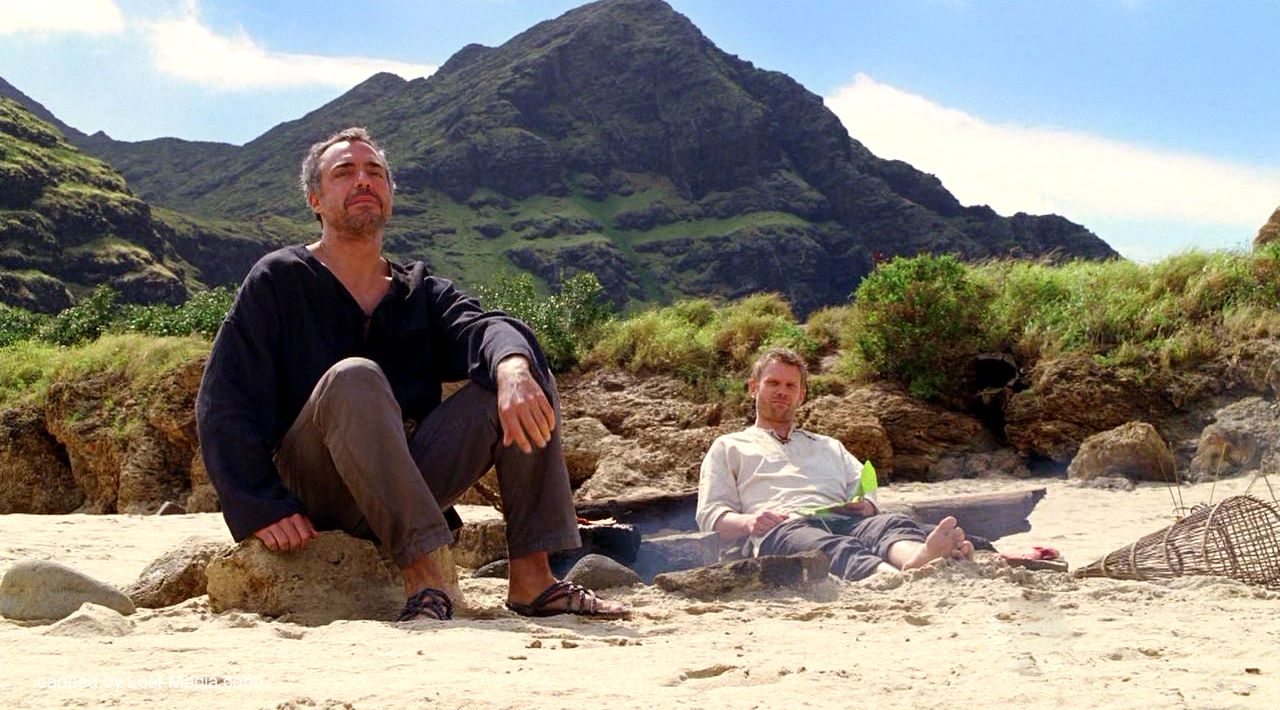
LOST - "The End" - One of the most critically-acclaimed and groundbreaking shows of the past decade concludes in this "Lost" Series Finale Event. The battle lines are drawn as Locke puts his plan into action, which could finally liberate him from the island, on "Lost," SUNDAY, MAY 23 (9:00-11:30 p.m., ET) on the ABC Television Network. (ABC/MARIO PEREZ)IAN SOMERHALDER, ELIZABETH MITCHELL, JOSH HOLLOWAY, JOHN TERRY, MATTHEW FOX, EVANGELINE LILLY, EMILIE DE RAVIN (OBSCURED), HENRY IAN CUSICK, SONYA WALGER

Here is Brian’s take:

So I think I’m pretty pleased with the ending. I’ve been thinking about it a lot, and it definitely succeeded in giving the characters closure, which I think was really what the show was about anyway.  Everything else that happened along the way was just a vehicle to the same inevitable point…”it always ends the same.”  I think this is about as good as they could have done.  I do think it left enough vagueness that people will discuss it for a long time, which is cool really….

Everything that happened, happened. Whoever survived the crash, survived the crash. But they were all dead at the end.

Boone died from the falling plane. Shannon was shot. Charlie drowned. Jack was knifed at the end.

Those that were alive at the end of tonight went on to live their lives, and they died whenever they died.  Bernard and Rose probably lived on the island for a long time before being ready to “move on.”

The Island was NOT purgatory, but the Sideways Reality WAS a kind of waiting room between death and the “next step,” which we saw as the bright light when Christian opened the door. The Sideways Reality was an artificial construct, which did NOT take place in 2004, as we had supposed, but was timeless, it existed outside of time. It was a construct, as Christian said, so that, after their individual deaths, whenever that happened, they could “find” themselves.

What we did not see was Hugo’s long reign as “Jacob,” which apparently he did very well, according to Ben.  Perhaps Hugo and Ben went on to guard the Island for another 1000 years.

Those not in the church aren’t ready to remember and move on yet (Faraday, Miles, Charlotte, etc). Ben remembers, but probably didn’t go in because he wants to move on with Alex. (that’s also why Desmond said that Ana Lucia “wasn’t ready yet”)

Here’s my reply:

I pretty much agree.  The writers did a good job of resolving things given the direction they wanted to go.  Lost was about characters working out their issues and embracing the purposefulness of life — primarily love and sacrificing for others.  And Lost rejected Smokey’s nihilism that there was no purpose to their lives, loves, or sacrifices.  Smokey never worked out his issues.

I loosely guessed this at the beginning of this season: “In the conversation on the beach between Jacob and Esau in the final episode of last season, Esau says that it always ends the same way.  I think he means that we all die.  He repeats this theme when he tells Ben that only Locke understood how pitiful his life was — perhaps all life is.  In Smokey’s view life is futile ending in death.  Jacob agrees that it always ends the same way (we all die) but there is progress.  Jacob believes in the purposefulness of life.”  Then again, I guessed a lot of things.

But I don’t find this kind of storyline fully satisfying.  If Lost is only about characters working out their issues, why bother with the whole Island thing.  They could have had a big group therapy session.  Characters need to work their issues out in a context that really matters — independent of them.  If the story is only about them and their issues, why should we care about saving the Island?  What does it matter if Smokey gets off the Island?  The writers failed to give closure to the plot outside of the characters’ personal development.

One of many unresolved plot items — Did jughead prevent the hatch from being built or not?  Why was Charlie’s sacrifice necessary or important?  Why can’t babies be conceived and delivered on the Island?  What about Michael and Walt?

I’m not asking for details.  I’m saying that the show did a great job of resolving the soap opera aspects of the plot but failed to even address the action aspects of the plot.  Character development without action development is only partially satisfying.


Love Lost

April 17, 2010

It’s been a while since I last posted on Lost, so let’s review what we’ve learned since then.  Most importantly, we’ve learned that something is horribly wrong with the parallel world.  After the side-flashes for Jack and Locke it seemed like the parallel world was one where everyone had worked out their problems.  But it now seems clear that it was all too good to be true.  Starting with the Desmond side-flash episode and continuing this most recent week with Hurley’s side-flash, we are learning that the parallel world is almost certainly bad.  It’s somehow false and people are detecting that, notably Desmond, Charlie, Daniel, and now Hurley.

One big problem with the parallel world is that it is missing love.  Desmond was missing Penny.  Charlie was missing Claire.  Daniel was missing Charlotte.  Hurley was missing Libby.  Is the show telling us, as I earlier guessed, that suffering and loss are virtuous?  Better to have loved and lost than never to have loved at all.

But this doesn’t quite fit everyone’s experience in the parallel world.  Jack and John seem to have great lives in the parallel world, including love.  Nevertheless, I’m willing to bet that the parallel world is somehow false and bad and they need to get back to the Island world.

Desmond already seems to be working on getting the band back together.  He’s manipulating everyone so that they awaken to what they are missing in the parallel world and could get in the Island world.  I wouldn’t be surprised to see him getting everyone back on a plane with a dead Locke so that they can get back to the Island.  Maybe that’s why he ran Locke over. 

We learned a few other things that mostly confirmed things that we suspected.  The whispers are dead people who are stuck on the Island because they had done bad things.  And we have confirmation that Smokey really is bad.  Despite my efforts to build a theory where he might be good, it seems obvious that he is not.  We also know that people are supposed to work out their problems on the Island.  Jack and Hurley both made direct statements about how they used to be controlling (or passive for Hurley) but have now changed.  That was bad script-writing to be so direct about it.  Couldn’t they have just shown us without telling us?

There’s still a lot we don’t know.  In fact, we don’t know much about any of the important things.  What bad thing happens if Smokey gets off the Island?  Whose side is Widmore on?  What is the purpose of these people finding love or working out their issues other than the benefit to them?  Why should we care?


Lost for Life

February 12, 2010

This time I really think I’ve figured something out.  Really.  I mean it.

The Island has two particularly strange characteristics (among several others):  babies can’t be born on it (with important exceptions) and dead people walk around on it.  We know that one of those dead people, Locke, is actually Esau (Smokey).  I’m willing to bet that all dead people we have seen walking around on the Island are in fact Smokey, including Christian, Claire, Boone, Harper, Ecko’s brother, etc…  Smokey is death.

I’m also willing to bet that babies born on the Island, including Aaron and Alex, are somehow connected to Jacob or are Jacob.  Jacob represents life.

In the conversation on the beach between Jacob and Esau in the final episode of last season, Esau says that it always ends the same way.  I think he means that we all die.  He repeats this theme when he tells Ben that only Locke understood how pitiful his life was — perhaps all life is.  In Smokey’s view life is futile ending in death.

Jacob agrees that it always ends the same way (we all die) but there is progress.  Jacob believes in the purposefulness of life.

Remember that Ben brings Juliet to the Island so that they can have babies, perhaps expanding Team Jacob.  Widmore, on the other hand, wants to kill baby Alex and ultimately does through the mercenaries.  Widmore is part of Team Esau.

Also, the dead Alex appears to Ben under the Temple scaring him into doing whatever Locke says, but Locke is actually Smokey at that point.  Alex has to be dead so that Smokey can appear as her and trick Ben into following Locke’s orders to kill Jacob.

I don’t know what the “infected” people, Sayid, the new Claire, and Rousseau’s colleagues, really are.  Perhaps they are being drawn into Team Esau.  Remember that Rousseau’s colleagues went under the Temple, where Smokey attacked them, and Rousseau did not.  Perhaps Smokey infects people there, maybe because they went into a spring like Sayid did.

We also know that Ben summoned Smokey to kill the mercenaries by draining a spring, again suggesting that Smokey and the spring are connected.

I don’t have it all figure out — not by  a long stretch — but I’m pretty confident that this death/life theme will help tie the plot together.


Pass the Clicker: The Future Lost?

November 6, 2009

flash_forward-10

ABC headquarters the day after Lost goes off the air

(Guest post by Greg Forster)

With Lost coming up on its last season, ABC has been scrambling for a new cash cow. It bet heavily on Flash Forward, a new drama with acting talent coming out of its ears and a premise with potential: everyone in the world blacks out for two minutes and experiences a “flash forward” – an intense, dreamlike vision that appears to be a glimpse of what each of them is going to be doing exactly six months later. And everybody’s visions match – if I saw myself having a conversation with you, you also saw yourself having the exact same conversation with me.

The ratings have been slipping and it’s not looking like Flash Forward is going to be the big cash cow ABC was hoping for. Which is too bad, since after a slow start the show is really finding its legs. (Disclaimer: I haven’t gotten around to watching last night’s episode yet, so if the show stank last night I’m not responsible.)

flash-forward1

They clearly invested a lot in stacking this show with talent. In addition to securing Joseph Fiennes to anchor, they rounded up Courtney Vance (known to the general public as a prosecuting attorney on one of the Law & Order shows, but the fan base for Flash Forward is more likely to remember him as “Jonesy,” the brilliant communications officer who figures out how to track the silent sub in The Hunt for Red October), John Cho (Sulu in the new Star Trek) Sonya Walger (Lost’s Penny), and cameos – with suggestions that more appearances may be on the way – from Firefly’s Gina Torres and The 4400′s Peter Coyote.

0929flash_article

Another Lost alum makes a shocking surprise appearance a few episodes into the season, and it looks like that character is going to be a recurring presence.

The show resembles Lost in that it revolves around the intersection between human drama (the “soap opera” element)and great cosmic issues. FF’s cosmic issue is similar to Lost’s, but more anthropocentric – it’s less about man confronting the larger forces in the unverse and more directly about the question of free will, which has come up on Lost but only as one of several themes. Having seen a glimpse of the future, everyone wants to know: can that “future” be changed? Or is it inevitable?

The biggest difference between Lost and FF is the latter’s stronger emphasis on plot. The heroes believe the “flash forwards” are not a cosmic fluke but are the result of some kind of human action, and are trying to track down who’s responsible and why. And so every episode of FF has suspense, thriller and/or mystery-solving elements; the show makes regular use of cliffhanger and twist endings.

This does give the show some strengths. There have been no boring episodes. And the unfolding of the “mythology” is much more well constructed and proceeds at a steady, satisfying rate. The hero has become the lead investigator because he had a “flash forward” in which he was the lead investigator, and he was standing in front of his giant bulletein board full of clues in the case. He remembers many of the clues he saw in his “flash forward” and begins to track them down in the present – and, lo and behold, they turn out to be valid. The idea is for the explanations behind all the seemingly unrelated and sometimes nonsensical clues to be slowly revealed over the course of the season. This will presumably require the writers to avoid making things up as they go.

It also provides a lot of opportunities for the writers to do clever things with the story. More plot = more opportunities for great storytelling, and the writers don’t disappoint.

Don’t get me wrong, sometimes the script can be dumb – but no dumber than Lost occasionally gets.

That said, as I indicated before, the series did take a few episodes to find its legs. The first few episodes telegraphed various underlying conflicts that were obviously going to unfold over the course of the show, but it allowed them all to simmer too long before they started to produce direct conflict among the characters. For a while, all these great actors just weren’t given enough to do.

That’s all over now, but it appears from the ratings that the show may have missed the chance to find its audience. If you like Lost, you should give this a shot.


Get Lost for Good

May 18, 2009

File:5x16 Jacob and nemesis.png

OK, I won’t gloat (too much) about how I correctly predicted that Locke was actually dead and was possessed by some evil force.

Instead I’m going to make new predictions for next season.  The secret to my success at Lost prognostication is just to make a lot of predictions and hope you all forget the majority that I get horribly wrong.

So, here is what I see for next season –  There are two supernatural beings Jacob and his nemesis, who I bet will be called Essau. 

Jacob is the god of life and Essau is the god of death.  Jacob can bring people to life simply by touching them.  We see him bring Locke back to life after he is thrown out of the window.  He brings Illana back from grave injuries in her Russian hospital.  I’m guessing that it was Jacob that saved Ben from death when Richard brought young Ben into the Temple.  In fact, I’ll wager that all of The Others are Jacob’s people because he has saved all of them from death.  That’s why they are so loyal to him and do not fear death.

Essau is the god of death.  All of the dead people we’ve seen around walking around the island are really Essau, including John Locke, Christian Shephard, Eko’s brother, Harper, etc…

Jacob and Essau have been through human history countless times, each working on their superpower of life or death.  They are also playing out a disagreement they have about whether human beings have free will and whether Fate can be changed.  Essau thinks that there really is no free will and Fate cannot be changed.  The details change but Time course-corrects and, as he puts it, “it always ends the same way.”  The way it ends is with death for the individual and global destruction for all of humankind. (Remember the Vanzetti numbers that the Dharma project is working to alter?)

Jacob thinks there can be progress.  He also seems convinced that human beings can make choices and change Fate.  He tells Hurley that he can choose when they ride together in the taxi.  He tells Ben that Ben has a choice before Ben stabs him.

The difficulty is that Jacob promotes the idea of free will at the same time that he manipulates the characters.  He saves Katie from being caught stealing.  He gives Sawyer the pen he uses to finish his revenge letter.  He saves Locke from death.  He save Illana in the hospital and recruits her for her mission.  And he steers Hurley back to the island.

The only flashback in the finale episode that did not involve Jacob manipulating the characters was the one involving Juliet.  And it was Juliet who chooses to let go and fall  into the drill shaft.  And it was Juliet who chooses to detonate the nuke.  She is the variable.  Her choices are different this time through history and that will lead to a change in Fate.

My guess is that the next season will begin on the Oceanic 815 flight to LA and it won’t crash this time.  So, we will think that Fate has changed.  But then all of the main characters will reconnect and find their way to the island.  We will begin to suspect that Time has course-corrected and we’ll think that we are back to things always ending the same way.  But is the grande-finale Jacob and his view of free will will prevail.  The characters will make important choices that avert global destruction.  And I’ll bet that their choices have to do with the affirmation of love, just as Juliet did.


I’m My Own Grandpa — Lost Version

May 4, 2009

It didn’t dawn on me until Patrick’s comment on Greg’s last Lost post, but I’ll bet that little Charlie, Penny and Desmond’s child, is in fact Charles Widmore.  Little Charlie will be whisked to the past on the Island where he can then grow up to be the Charles Widmore we know.  He is, as the song says, his own grandpa.

The reason why Ellie and Charles are so determined not to change the course of events is not that it is impossible, but because it allows Charles to exist.  So Ellie goes around convincing people, including Desmond and Daniel, that time cannot be changed because she doesn’t want time changed.

I’d further guess that the coming war will be between those who are trying to change the course of time and those who believe that it can’t or shouldn’t be changed.  Jack will lead the change faction and John will lead the destiny faction.  That’s why Charles Widmore needed back on the island to ensure that the right side is going to win.

Update — And I’ll bet that Charlie has already been kidnapped by Charles and Ellie.  The nurse oddly told Penny to leave her child while visiting Desmond.  You wouldn’t bother having that bit of dialogue unless it mattered.

(edited to add link, correct typo, and add update)


Get Lost – Do You Know What “Blocking” Is?

May 4, 2009

faraday-underground

Add “undercover agent” to his list of mad skills

(Guest post by Greg Forster)

Late is better than never – thoughts on last week’s Lost:

1) Waaaaaay back in the day, I used to play “theater sports.” If you’ve seen the show Whose Line Is It Anyway? you’ve got the general idea of what it’s like – actors do it for recreation and practice. Basically you’re given an outline of a scene and you have to start playing it immediately.

The cardinal sin of theater sports is “blocking.” This is what they call it when you violate the narrative cues you’ve previously laid down. It generally happens when two members of the team want the scene to go in different directions. One will say something like, “hey, check out that funny-looking bird up there!” and the other will say, “that’s not a bird, it’s a Chinese bomber – run!”

Blocking is the supreme sin because audiences need narrative structure. Surprise twists are one thing. But they need to take place within the context of a narrative universe that has “rules.” If absoultely anything can happen at any time, there’s no drama. So, for example, if it was previously established that the first character had bad eyesight, the dialogue in the paragraph above would not be blocking, it would be a gag. But you can’t just change the rules of the narrative every time you have a new idea for where you want it to go.

This issue has come up before on our Get Lost feature. So let me just admit that Jay has been vindicated – Lost is blocking big time. First they worked really hard to establish the one supreme rule of time travel – whatever happened, happened. Then they pull the rug out.

Even if it turns out that Dan was right the first time and you really can’t change the past – after all, he now thinks you can, but we haven’t seen him actually do it yet – last week’s episode was still blocking.

“Do you know what destiny is?” More like, do you know what good narrative structure is?

2) He’s a tortured artist, tragic lover, philosopher of time and space, undercover agent and cool-under-fire action hero. Oh, and he’s the son of the major villain! (Whoops – spoiler alert.)

I see the inexorable operation of the Wesley Wyndham-Price Axiom is well underway.

Daniel was shot at the end of the episode, but we know he’s not dead because the Axiom states he has to kill some bad guys and win the affections of at least one more smoking hot chick before he goes.

I had Matt hook me up with a Vegas bookie, who gave me the official odds (for entertainment purposes only) on which female will be the next to “notice” Daniel:

Juliet          1 to 5
Relationship with Sawyer is on the rocks; they’re both eggheads

Kate             1 to 20
Recently revised from 1 to 40 because she’s now stranded in the jungle with him

Claire         1 to 25
Remember Claire?

Naomi         1 to 50              
It could happen in a “flash forward” showing Dan’s recruitment

Sun               1 to 100           
A long shot, I know, but we’re running out of females here

Eloise           1 to Ewwwwwwwwwwwwwwwwwwwwwwwww.
Hey, Leia kissed Luke. (Bet you wish I hadn’t reminded you.)

3) Looks like Jay was right the first time when he expressed doubt that the past was really unchangeable.

4) I’ve noted twice before that for a guy with unlimited cash and an army of goons who’s made tons of enemies and tampered with terrifying occult powers, Widmore’s security really stinks. I wondered the first time whether there was some unknown reason Widmore couldn’t be killed. Now that time travel has been introduced on the show, perhaps that explains it.

But given that on last week’s episode, Dan just walked right into the Others’ camp with gun drawn and managed to take them all napping – well, it’s looking more like Widmore is just not a super-genius on the security front. I assume the Others got much more badass after Ben took over, which is why they’re all deadly forest ninjas in 2004.

5) How did Richard know Dan wouldn’t shoot him? Advance knowledge of the timeline? Or is he just a good judge of character? (Or perhaps he’s a lousy judge of character and Dan really would have shot him!)

6) Apparently Eloise knows the future – she apparently knew that Theresa is going to get the whammy from Dan’s Frankenstein-of-Time routine, and at the end she says that it’s the first time in a long time that she didn’t know what was going to happen. Does she have advance knowledge of the timeline, or a superpower? And why doesn’t she know the future now? Maybe because the timeline changed?

7) Dan unsuccessfully tried to persuade Dr. Chang that he was from the future. Afterward, he didn’t seem disappointed that he had failed. He tells Miles he was just trying to ensure Dr. Chang would do what he was supposed to do. What’s he supposed to do? Does Dan have a hidden agenda?

8 ) At a critical moment, Jack notices grey drums labeled FUEL. Wow, good thing Dharma labels absolutely everything with big, huge capital letters!

Get Lost Penance

April 12, 2009

It’s as if the writers of Lost have been reading this blog.  They seem aware that there are problems with time travel and bringing people back from the dead without clearly defined rules to govern those exceptional plot devices.  Lost has not fully resolved these concerns but the show has clearly acknowledged the difficulties.  Perhaps for TV shows confession will bring absolution.

Two episodes ago (I know I skipped posting on Lost last week) in “Whatever Happened, Happened” Hurley and Miles articulate for us the paradoxes involved with time travel.  Hurley stares at his hand expecting it to disappear like in Back to the Future. 

And in the most recent episode, “Dead is Dead,” they directly discuss how strange it is to have people come back from the dead.  Ben alternatively tells John that he predicted John would be resurrected and tells Sun that he had never seen the Island do something like that and that it scared the living hell out of him.  John also admits to Sun that the idea of someone coming back from the dead is strange.

I suspect that the last two episode titles provide the Lost rules on time travel and resurrection.  Whatever happened, happened tells us that time cannot be changed.  And dead is dead tells us that people cannot come back from the dead.  I know that Locke appears to have come back from the dead, but I suspect that he is no longer Locke.  His emphatic statement to Sun that he is still the same person seemed strange and unnecessary, so perhaps he is lying.  Perhaps he is not the same person, but an incarnation of the smoke monster or whatever supernatural force inhabits the island.

That is one other thing that Lost has made clear:  there is a supernatural power on that Island that has a will of its own.  Greg correctly described this weeks ago and correctly predicted that the central questions will become: 1) what is the will of this supernatural force? and 2) is what that force wants good or bad?

There is still ambiguity about the answers to both questions, but I’ll offer my predicted answers.  I suspect that the Island may actually be evil.  This may be the big twist of the show.  The Island may be some Egyptian god that is intent on preserving itself and then eventually destroying the world.  When the Island judges it doesn’t appear to punish evil and reward good.  It lets Ben go despite his atrocities.  It destroys Eko despite his apparent innocence.  Its leaders, Charles and Ben, have been ruthless.  As Charlotte said, “This place is death.”  It, the Island, is evil and will eventually bring death to the whole world.

Ben and Charles may be struggling to be the Island’s representative, but there is a third group out there that is seeking to destroy the Island.  They are the good people because only by destroying the Island will the rest of the world be saved.


Get Lost — The Pause that Refreshes

March 21, 2009

In the most recent episode, Namaste, Jack comes to Sawyer to figure out what they are supposed to do next.  Sawyer, who is reading a book, says that he is going to think.  The problem, he says, with Jack’s previous leadership was that he was always reacting and not really thinking about what to do.  Sawyer was going to read his book and think.

It almost felt as if this was a discussion among the writers.  One asks, “What are we supposed to do with the plot now?”  The other replies, “I have no idea how to unravel this mess.  The writers have just been reacting, making stuff up as they go.  But I’m going to have a pause in the plot so we can think about where to go with it next.”

So, not too much happened in this episode but perhaps the writers are pausing to figure out how to make sense of everything.  Don’t get me wrong.  I still really enjoy Lost.  The characters are well-written and engaging.  The drama within each episode is exciting.  And the overall mystery cries out for resolution.  I just hope that the writers take some time to read a good book and think about where to go next.


Get Lost – For the Defense

March 7, 2009

kate_on_trial

“On the charge of ruining a really cool show, how do you plead?”

(Guest post by . . .

Greg Forster for the defense, your honor.

Ladies and gentlemen of the jury, last week District Attorney Greene read you a very serious and sobering indictment. There is no denying that the charges, if proved, would justify a severe sentence against my client, the television program Lost. But during the forthcoming trial I intend to show you that the prosecutor cannot prove his charges.

The charge, in a nutshell, is this: that with the resurrection of John Locke, my client has 1) irreversably committed itself to containing “fantasy” elements as well as “sci-fi” elements, and 2) that this means the rules of the story’s narrative world are not stable but subject to arbitrary interference, which ruins the drama.

Ladies and gentlemen, there can be no denying the first element of the prosecutor’s theory of the crime. With Locke’s resurrection, my client is irreversably committed to having one foot in the fantasy genre as well as one foot in the sci-fi genre. The possibility that the show might end up with both feet on the sci-fi side of the divide is effectively foreclosed.

And it is also true that stable narrative rules are indispensable to good drama. Drama depends on moral agency, moral agency depends on choice, choice depends on actions having consequences, and actions having consequences depends on events obeying stable rules. In a universe where events were arbitrary, I couldn’t possibly make choices – I would have no way to connect my actions to any consequences. For all intents and purposes, there would be no alternatives to choose from.

But ladies and gentlemen, the prosecutor is wrong – “just plain wrong,” as he himself might put it – to assert that fantasy fiction, which is defined in the relevant statute as fiction containing supernatural elements, must necessarily have narrative rules that are unstable or subject to arbitrary interference.

Not only is this not true, ladies and gentlemen, I submit for your consideration that sci-fi fiction has historically been more guilty than fantasy fiction of presenting us with narrative worlds that have unstable or arbitrarily broken rules. Thus, I submit that when my client, having placed one foot firmly in the sci-fi camp, proceeds to place the other foot firmly in the fantasy camp, it increases rather than decreases the probability that we will ultimately get a narrative universe with stable rules.

No doubt there is much fantasy fiction that lacks stable narrative rules. You will all be familiar with the Harry Potter series, for instance.

But is there not also much fantasy fiction with admirably stable narrative rules? Whatever you may think of the Lord of the Rings, nobody accuses it of taking place in an insufficiently structured narrative universe.

As you will see when we introduce LOTR into evidence during the forthcoming trial, the text of the books is quite clear that Gandalf was not simply in a coma on the mountaintop, but died there, and “returned from death.” Did this leave anyone with the feeling that henceforward anything was possible and there were no rules in the LOTR universe? Was it not just the opposite, ladies and gentlemen – that the resurrection of Gandalf was the highest and most sublime manifestation of the story’s underlying narrative unity? It would be one thing if anyone, under any circumstances, could come back from the dead. But Gandalf’s return from the dead was not like that. It was a unique event, one that could only have happened to that particular character – and for a reason that was not arbitrary, but was clearly an integral part of the narrative universe. And his death and resurrection were connected to a series of consequences – connections which again were an organic part of the narrative.

One may summarzie the case by saying that Gandalf would not be Gandalf if he did not come back from the dead. The perfectly stable and uninterrupted narrative rules of the Tolkien universe demand that Gandalf come back from the dead.

Again, ladies and gentlemen, you may like the LOTR story or hate it. But will anyone really say that J.R.R. Tolkien was insufficiently concerned with the stability of his narrative universe?

One could cite other examples besides LOTR – the fantastic element in Star Wars comes to mind – but this is going to be a long trial with a full-dress media frenzy accompaniment, and I don’t want to make it any longer.

The question is not whether LOTR or Star Wars, or fantasy in general, is good fiction or bad. The question is whether the presence of supernatural powers, including resurrection, implies narrative rules that are unstable or subject to arbitrary interference. It does not.

The reason is simple: supernatural powers, even including power over death itself, may transcend the stable orderliness of nature, but that does not mean they transcend all orderliness. There can be a supernatural order that stands above the natural order. This supernatural order may take many forms, and need not imply anything religious. The only point is that supernature can be just as orderly as nature.

On the other hand, ladies and gentlemen, what has been more common than sci-fi fiction that lacks stable narrative rules? The arbitrariness of the rules of the Star Trek universe has been a running joke for decades. The defense will introduce into evidence several examples of people mocking Star Trek for the cavalier manner in which it disregards its own narrative rules.

For the purposes of narrative, ladies and gentlemen, there is no functional difference between highly advanced technology and supernatural powers. What are “dilithium crystals” if not the Star Trek equivalent of magic? Sci-fi and fantasy are both defined as genres by their reliance on powers – which is another way of saying “technologies” – that are inexplicable. The only thing that separates the two genres is why the powers are held to be inexplicable.

And surely, ladies and gentlemen, that distinction has no relevance for the charge that has been brought against my client. Both sci-fi and fantasy involve inexplicable powers that “do the impossible” from our perspective. Why should one method of doing the impossible still allow for a stable narrative, but not the other?

Here’s another way to put that point. Before Locke’s resurrection, the prosecutor did not bring charges in spite of all sorts of “magic” events that took place in my client. If the prosecutor thought that Locke’s getting up out of a wheelchair was at least potentially reconcilable with a stable narrative universe, why does he not think the same about Locke’s resurrection?

Even now, what is it that the prosecutor wants to see in lieu of resurrections? Time travel. Time travel, ladies and gentlemen! Apparently the prosecution thinks you can travel through time and still be subject to some sort of orderly rules. Well, why can’t resurrection be subject to some sort of orderly rules? Of course, any set of orderly rules governing resurrection would have to be different from the rules of nature that we now live under. But the same is true of time travel!

I would like you to ask yourselves a question during this trial, ladies and gentlemen: Has the prosecutor introduced any actual evidence of narrative arbitrariness on the part of my client? Does my client actually exhibit the breakdown of narrative structure that the prosecution attributes to it?

Surely not. The resurrection of John Locke fits the established narrative seamlessly and perfectly. Of course Locke was resurrected when he returned to the Island. He would not be Locke – and the Island would not be the Island – if it were not so.

The prosecutor also brought a charge of promise-breaking, but on this charge no serious defense is needed, since the prosecutor has failed to introduce any evidence that my client’s creators promised that dead characters would never come back to life. On the evidence so far introduced in this court, they promised only that 1) the characters on the island who appear to be alive are really alive, and 2) when those characters appear to die, they really die. None of this amounts to a promise that dead characters will not be resurrected, ladies and gentlemen. So on this charge we will be submitting a motion for summary judgment.

It is also worth noting, ladies and gentlemen, that the prosecutor confuses the question of genre (sci-fi or fantasy) with the role of faith in the narrative. “Faith” is not necessarily faith in something supernatural. That word means the same thing whether we’re talking about trusting God or trusting in another person, or even a machine. Indeed, the question of whether we should (with John) have faith in the Island, or (with Jack) doubt it was the central plot device on my client long before it was clear whether the Island was supernatural. The whole issue of faith is irrelevant to the prosecutor’s charge; the issue here is whether a narrative world can simultaneously allow for supernatural powers and have stable rules. And on that point I trust you will now see my client’s innocence.

And if all that doesn’t convince you, we have one more argument to offer.

Ladies and gentlemen of the supposed “jury” . . . this is Chewbacca.


Follow

Get every new post delivered to your Inbox.

Join 838 other followers