School Choice and Religious Freedom

August 8, 2012

(Guest post by Greg Forster)

An “interfaith” group has send a hyperventilating letter to Bobby Jindal calling Louisiana’s new school voucher program “a blatant attack on the religious freedom clauses in the United States Constitution.” And that’s one of the less painfully overwrought passages. There’s no hope of getting sound legal, moral, theological or sociological reasoning from such people, but I thought I’d take the occasion to revisit some of the reasons why school choice is a vital step forward, not backward, for religious freedom.

1) Fair play, the rule of law and equal treatment. Religious freedom requires that religious people and institutions be treated the same way everyone else is treated. I would think this would be so obvious as to be axiomatic. Yet everywhere you turn around, people think that if religious schools participate in the American education system on the same terms as other schools – which is really all school choice does – that is somehow a threat to religious freedom. What if we applied this reasoning to other sectors? If the church is burning down, don’t call the fire department! If someone sprays swastikas on the synagogue, don’t call the police! Don’t hook up the mosque to the municipal water lines! That would be a taxpayer subsidy for religion, you know.

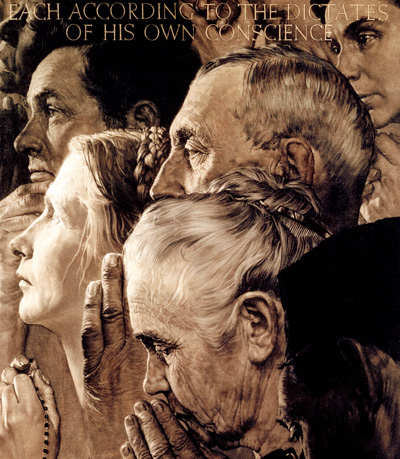
2) Childrearing, formation and faith communities. As many people know, one of the most important Supreme Court decisions on religious freedom upheld the right of the Amish to raise their children according to Amish tradition against compulsory attendance laws. The details of the reasoning that the court used to reach that conclusion are problematic, but we don’t need to be detained by that here; the result was clearly right. A religion is not just a set of intellectual propositions one assents to. It is a total way of life, one that may be expressed differently in different individuals, but also coheres in important ways across individuals, and subsists in relationships and institutions as well as in individuals. In other words, a religion consists not only of individual belief but of a faith community. The formation and rearing of children is a necessary part of that; deny people the ability to raise their children according to the dictates of their conscience and you stamp out religious freedom. You can like this fact or hate it, but it remains a fact. As the court noted, society has a legitimate mandate to see to it that children are educated in some way, but this must not become an occasion for stamping out religious minorities whose mode of education is different. Requiring the Amish to raise their children the same way others do is not just tantamount to outlawing the Amish religion; it actually is outlawing the Amish religion. School choice extends this principle further by making American society a place where every family, not just families who prefer secular schools, has equal access to childrearing according to conscience.

3) The death of character in the common school. Pat Wolf has shown that the empirical evidence consistently finds private schools are better at teaching the civic values on which democracy rests. Charles Glenn, James Davison Hunter and others have shown why. The “common school” model, coralling families of all faiths into one school and requiring that school not to violate the religious beliefs of any of those families, compels schools to become morally neutered. Even where they try to teach moral character, they fail (Hunter has extensive data on this). The reason is simple: the inculcation of moral character requires more than scolding children to be honest, be diligent, etc. Telling edifying stories also fails. Not in every case, but in general, the reliable formation of moral character requires (Hunter again) attachment to something higher and greater than oneself, and the absorbtion at an early age of an intrinsic motivation to prioritize that higher something over the gratification of one’s own desires.

There’s much more to be said, of course, but I didn’t want to let the moment pass without at least this much of a statement of the case.


Double Standards on Special Ed Placements v. Vouchers

July 25, 2012

(Guest post by Greg Forster)

In today’s Examiner, AEI’s Michael McShane (an official JPGB super best friend) wants to know why none of the people fighting to kill the DC voucher program seem to have any objections to DC’s high rate of outplacement for special education students. Could it be because there are a lot more rich white special ed parents? McShane is here to chew gum and kick the cans of edu-hypocrites, and he’s all out of gum.

McShane doesn’t make the mistakes others have made in characterizing DC’s high rate of outplacement. Still, the stats are eye-popping, and will no doubt have many readers asking questions. McShane really doesn’t have the opportunity in a short piece like this to provide the necessary background. Thankfully, Jay wrote this a while back to bring people up to speed.


Random Pop Nationalization

July 13, 2012

“Don’t support national standards? Here is a pair of clown shoes to wear!”

(Guest post by Greg Forster)

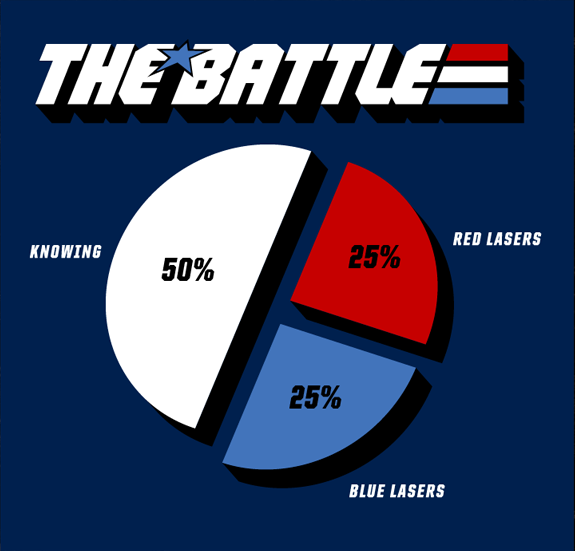
NRO is on fire this morning. An awesome appreciation of the classic G.I. Joe series from Loren Smith (“When I get my hands on those Red October whackos, I’ll make ’em wish Karl Marx was Groucho’s brother!”) and a call to arms from Sally Lovejoy on how the Obama administration has made a lot of progress toward nationalizing education (“With the approval of two more state waivers of the NCLB Act, over half the states (26) have exchanged one set of federal mandates for another, moving us closer to a nationalized educational system.”).

Coincidence? Son, when COBRA is involved, there are no coincidences.

NOW YOU KNOW! And…

HT


The Ultimate Debate!

June 27, 2012

(Guest post by Greg Forster)

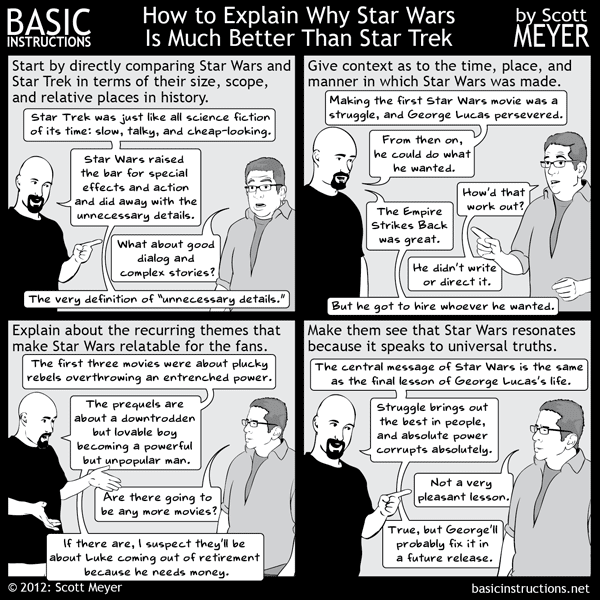
Old and Tired: Star Wars versus Star Trek – which is better?

New and Fascinating: Greg Forster versus Rich Vedder – whose evisceration of the student aid regime is more devastating?

I vote for Rich. The constraints of the WSJ debate required me to address a more narrow set of questions. Rich has marshalled a more comprehensive takedown in the new Imprimis. It’s your one stop shop for everything that’s dysfunctional and destructive about the student aid regime.

HT Basic Instructions, my favorite webcomic – see more legible versions of these comics here and here!


Pass the Popcorn: The Movie for Our Time

June 21, 2012

(Guest post by Greg Forster)

Thrice armed is he that hath his quarrel just;

And he but naked, though locked in steel,

Whose conscience is with injustice corrupted.

                                            Shakespeare’s Henry VI

You lack conviction.

                                                            Agent Coulson

Finally! I finally saw the Avengers tonight.

Greatest superhero movie ever made – yes or no? It’s a tie. Or it’s apples and oranges. This is a movie that can stand next to The Dark Knight without shame, yet the two are doing completely different things. Nolan’s Dark Knight is a movie for all times and places, becausee it’s about the struggle between good and evil in every human heart and in every human city. Whedon’s Avengers is a movie very much for our time and place specifically.

Obviously, spoilers lie in wait for you ahead!

The theme of “war” is invoked repeatedly in this movie. Where Nolan’s movie was about the struggle within hearts and within communities, this movie is about a struggle between communities – in other words, a war. Not America versus the aliens, but one America versus the other.

Yes, the culture war. But perhaps not in the way you might think.

It’s obvious that the three characters who matter in this movie are Steve Rogers, Tony Stark and Bruce Banner. Before we look at them, let’s look at why they’re the ones that mattter.

Politics wears two faces. Politics is power, and politics is justice. The great first question of political philosophy throughout the ages, the question that determines how you answer all the other questions, has been which of these is primary. Throughout history, a small minority of cynics – Thrascymacus, Machiavelli, Hobbes, Hume, Marx, Nietzsche – has said that power is primary.  Over against the cynics, the large majority of political philosophers and the nearly unanimous voice of humanity at large has insisted that justice is primary.

The other characters in this movie are about power. Thor is a warrior, obviously a man of power. Nick Fury and the Black Widow are mainly good at manipulating people, which is another form of power. And Hawkeye isn’t even a character, he’s a plot device. Smart move – nobody was ever going to care about him as a character, so Whedon didn’t even try to make him into one. They might just as well have changed his name to Agent MacGuffin.

You might have expected Thor to be about more than power because he’s a god. This is a trick of the historical lighting. From our privileged perspective as children of the mature religions, we expect that all supernatural beliefs involve a moral element. But the pagan gods were never really divine. They were just projections of ourselves, with all our flaws and our humanity, into the cosmic forces of the unseen universe. That’s exactly why they vanished from history as religion matured. You can read all about this in Plato, or in Chesterton. All pagan gods are “puny gods.”

There’s no indictment in saying these characters represent politics as power. They’re not amoral – even Black Widow has an ethic. Yet none of them is really bringing a robust vision of justice to the team. That’s why they’re not the ones who ultimately determine the fate of the world.

Steve Rogers has a vision of justice. He might seem to be about power rather than justice because he’s fighting for America. Yet his interest in America clearly has nothing to do with the structures of American power. That’s why he has no difficulty turning against Nick Fury and the Council. What he’s loyal to isn’t any particular manifestation of America, but the ideas of justice to which America is committed and which America represents. Steve Rogers has an integrity that transitions seamlessly from obeying the Council to resisting it, because the Council is not the America to which he is loyal. Because of this, his commitment to justice can’t be subverted by anyone or anything in the tangible world claiming the mantle of “America.” His commitment to justice is transcendent and therefore independent and immovable.

This fact is not unrelated to the fact that he believes in the one true God.

Tony Stark is every bit as American as Steve Rogers, and everyone knows it. From the beginning, America’s Tony Starks have had as much claim to have made this country what it is as its Steve Rogerses.  And Tony Stark is committed to a vision of justice. The Tony Starks of the world wouldn’t have nearly the influence they do if they weren’t driven by a very powerful vision of justice. Although he might never put it in these words himself, Stark believes in Romantic individualism, capital R. He worships neither gods nor God but the divine spark within, the sacred self. This can produce silly behavior, but on the whole it is not to be scoffed at. Remember that in the end Stark is willing to die to save other people. He could easily have flown away instead of pulling the missle into the portal. Romantic individualism is a creed that people have been dying for (and killing for) for centuries.

Only two things can enable a man to sacrifice his own life in cold blood: religion, or strict training in moral virtue. Tony Stark has not undergone strict training in moral virtue.

The conflict between Rogers and Stark, which manifests itself as a conflict over justice, is at bottom a religious conflict. Justice and religion flow in and out of one another in perplexing ways. People of different religions can reach moral agreement – if it weren’t so, we’d all have torn each other to pieces long ago. Yet even when our senses of justice align, the religious difference never quite goes away, never quite stops threatening to break out into a war.

Standing between these two figures is Bruce Banner. However handy Stark might be with computers, Banner is the real man of science, the Enlightenment figure. The real essence of Enlightenment ethics is rational self-restraint – to exercise rigorous control over the soul’s dark impulses because the intellect discerns it is advantageous to do so. Rogers has few discernable dark impulses because he’s surrendered himself to transcendent powers. Stark gives his dark impulses relatively free reign, wherever he can get away with it. Banner will not surrender himself to the God without (who can purge the darkness) nor to the god within (who will cultivate it). He disciplines himself, surrendering to nothing. He is always angry.

He worships neither the justice of God nor the justice of the self. He worships justice itself, for its own sake, just like the ancient Stoics, or Kant and Adam Smith.

It is not a coincidence that Banner is objectively the most powerful of the three central characters. Rational self-control is a fantastic engine of power.

Yet he ultimately does not stand on equal footing with Rogers and Stark, because his religion is narrower. Justice alone isn’t sufficient for human life. Rogers and Stark are the two great poles, the two truly ultimate visions of justice, and Banner is the man of greater power but lesser vision whose allegiance would tip the scale one way or the other, if he gave it.

Here’s why this is the movie for our time: the history of modernity is the history of great religions – Christianity, Islam, Marxism, Fascism, Romantic individualism, etc. – struggling for control of the great engines of power unleashed by the Enlightenment and the Industrial Revolution. America was the product of a great alliance between two of these religions, Christianity and Romantic individualism, against the others. It was not merely a temporary pact to share power but a real forging of deep alliances, resting on a robust sense of shared morality between the two. In spite of the differences, there really are deep undercurrents of similarity. Christianity really does celebrate the preciousness and dignity of the individual; we call it the imago Dei, the image of God in every human being. Romantic individualism really does seek to encompass both moral seriousness and an authentic sense of spiritual renewal (to see justice and mercy meet and kiss, as the psalm puts it). Yet in our time the alliance is strained. The differences between religions must always run just a little bit deeper than the similarities; otherwise they wouldn’t be different religions, they’d be different branches of the same religion. And now those differences are rising back up to the surface. The conditions that forged the original alliance have passed. Can it be reforged?

An existential threat submerges the differences and renews the alliance for a while. In the movie, it was an alien invasion. In our time, it has been 9/11. That doesn’t last, however. In the end of the movie, the heroes disperse to go their separate ways.

The closing note of the movie is Nick Fury expressing certainty that if an existential threat ever arises again, the heroes will reunite. Why does he think so? “Because we’ll need them to.” That is the optimistic scenario. I believe (for theological reasons) that there are rational grounds that logically justify a limited amount of optimism about how things go in the world. I am optimistic about renewing the old alliance that defines America. Yet there are limits, and in our time we are testing them.

DC’s Frog Vouchers Becoming Princely

June 19, 2012

(Guest post by Greg Forster)

We interrupt this discussion of Prince lyrics to bring you an important announcement about another kind of prince!

You may have seen the news that a bipartisan coalition of voucher champions in Congress have once again saved the D.C. voucher program. What you may not have heard is the amazing news buried in the story:

The 1,615-student cap on enrollment will now be lifted and as many children as meet the income threshold will be able to apply.

Wow! The D.C. program has long been one of the biggest frogs of the voucher universe. What would it be like if it became a prince?

No opinion about who is the “princess” in this story is expressed or implied. But Boehner did tear up on TV that one time. Just saying.

We now return you to your regularly scheduled discussion of Prince lyrics.


School Choice and the Greenfield School Revolution

June 5, 2012

(Guest post by Greg Forster)

Today, the Friedman Foundation is releasing a study I did with James Woodworth: The Greenfield School Revolution and School Choice. We know from previous research that vouchers (and equivalent programs like tax credits and ESAs) consistently deliver better academic performance, but the size of the impact is not revolutionary. Meanwhile, the whole world is watching as charter school operators (Carpe Diem, Rocketship, Yes Prep, etc.) reinvent the school from the ground up.

It’s ironic that these schools are charters, not voucher schools. A properly designed (i.e. universal) choice program would do a better job than charters of supporting these highly ambitious “greenfield” school models. But existing choice programs are not properly designed, so our impression was that they’re excluding these educational entrepreneurs, instead simply transferring students from one existing set of schools (public) to another (private).

We wanted to test our theory and make sure it was true, not just an accident of publicity or media bias, that the reinvention of the school wasn’t being supported by existing choice programs. We combed through twenty years’ worth of federal data (CCD and PSS) to see if we could find any evidence of disruption in the structure of the private school sector in places that had school choice programs.

We found that while existing school choice programs may be delivering moderately better academic outcomes, they aren’t disrupting the private school sector the way they need to be. In one or two places we found visible impacts, but nothing like a reinvention of schooling. The only impact of any considerable size is the dramatic change in racial composition in the private school population of Milwaukee.

In addition to the empirical findings, the study outlines 1) why radical “greenfield” school models are essential to drive the kind of education reform we need, and 2) why universal school choice would do a better job than charter schools of sustaining it.

Special thanks to Rick Hess, from whom we borrow the term “greenfield,” and Jay Greene for giving us their comments and insights as we developed this study!


Jay Mathews Comes Back for More

May 29, 2012

(Guest post by Greg Forster)

True story: At the house of some friends from church, the elder son (about six years old) was explaining the big bandage he was wearing. He told us he had climbed up on the stove in order to reach the cookies that were on top of the refrigerator, accidentally turned on the range with his foot, fell over, and was badly burned.

The following exchange occurred:

ME: Did you learn a lesson from what happened?

HIM: Uh . . . no.

Apparently Jay Mathews didn’t learn anything either after getting badly burned on the stove of my wrath last year.

He’s once again up to his typical stove-climbing antics, still trying to reach the cookies of bipartisan acceptability on top of the refrigerator of political ambiguity. Over the weekend, he wrote:

Instead, the two parties pound each other with an education issue that makes them look tough to their most partisan supporters. That convenient weapon is vouchers, tax-supported scholarships for students who want to attend private schools. Obama has cut funds for a voucher program in the District, so Romney embraces it. “It will be a model for parental choice programs across the nation,” he said in the speech.

The split doesn’t affect the bipartisan approach to schools much because vouchers have no chance of ever expanding very far. There aren’t nearly enough available spaces in good private schools to meet the demand. Any significant growth in vouchers would lead to heavy government interference in private schools and kill any allegiance conservative Republicans had to it.

Let’s take these claims one by one:

vouchers have no chance of ever expanding very far

Uh, yeah, let me just go ahead and link this again. Thanks. If Mathews wants to lose another bet on vouchers’ legislative prospects, he’s welcome to as much pain as he wants.

He links that statement to an older article of his on the DC voucher program, which serves under 2,000 kids. Compare that to the gargantuan sizes of the new Indiana and Louisiana programs (400,000 kids eligible in Louisiana!).

I’m not saying we’ve reached the promised land, but the political trend is very obviously up and not down.

There aren’t nearly enough available spaces in good private schools to meet the demand.

William F. Buckley once asked, speaking about a person whose name escapes me: “What do you think he would do if the devil removed the blinders from his eyes and showed him the world of economics? I say the devil, because God would never be so cruel.”

What do you think Jay Mathews would do if the devil removed the blinders from his eyes and showed him that quantity supplied can change in response to demand?

Any significant growth in vouchers would lead to heavy government interference in private schools and kill any allegiance conservative Republicans had to it.

Yeah, except for the part where there are now 34 school choice programs serving 212,000 students, and this story Mathews is telling hasn’t happened anywhere.

Keep reaching for those cookies, Jay. You’ll get them someday.

(Edit: In the first version of this post, the devil made me write the wrong name in the WFB quote above.)


CCSS = Cargo Cult State Standards

April 30, 2012

(Guest post by Greg Forster)

Over the transom this weekend came the latest “research” from Common Core advocates:

New Research Links Common Core Math Standards to Higher Achievement

Pretty amazing since CC hasn’t even been implemented yet! I’ve seen some impressive research design accomplishments in my time, but this is a whole new level. This is “pre-search!”

So how’d they manage to pull off this amazing feat?

Schmidt’s work focuses on the strong resemblance of the CCSS for mathematics to the standards of the highest-achieving nations; the improvement in focus, coherence and rigor of the CCSS for mathematics beyond the state standards they replaced; and the link between higher National Assessment of Education Progress (NAEP) mathematics scores and states with standards closely aligned to the CCSS for mathematics.

Fascinating!

And now, on a totally unrelated topic:

The term “cargo cult” has been used metaphorically to describe an attempt to recreate successful outcomes by replicating circumstances associated with those outcomes, although those circumstances are either unrelated to the causes of outcomes or insufficient to produce them by themselves.

But wait – it gets better!

The metaphorical use of “cargo cult” was popularized by physicist Richard Feynman…[who] coined the phrase “cargo cult science” to describe science that had some of the trappings of real science (such as publication in scientific journals) but lacked a basis in honest experimentation.

Or as Jay put it just the other day:

There is a cynical habit in the education policy world to fund and promote analyses that people know or should know to be faulty as long as those analyses advance their cause.  Shaming those who engage in this cynical practice by revealing the obvious flaws in Tucker’s work was the purpose of my review.

Image HT Roy Spencer


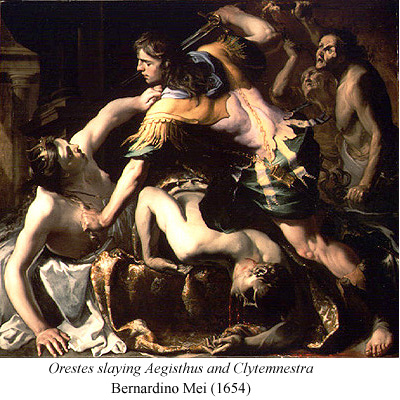
Pass the Popcorn: It’s All Greek to Me

April 27, 2012

(Guest post by Greg Forster)

The earliest reviews of Joss Whedon’s Avengers are not debating whether or not it’s a good movie. They’re debating whether or not it’s the best superhero movie ever made.

This debate is the opposite of Aliens Versus Predator. Whoever wins, we win!

The real debate, in my mind, is whether or not Joss Whedon is the greatest storyteller of our time. There are other contenders to the throne, of course. We’ve written about a few folks who could vie for that title here on Jay P. Greene’s Blog from time to time.

Why pick only one winner? Here’s a much more interesting way to look at things:

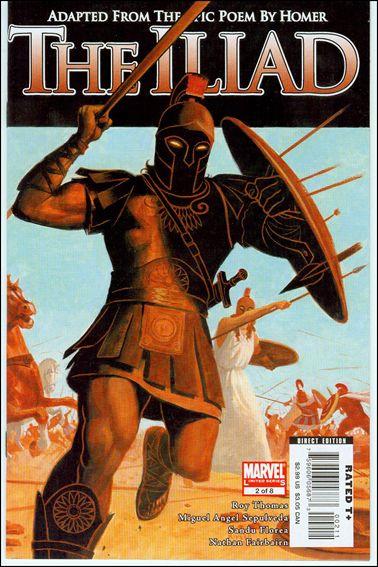
Who Is Our Homer?

Candidate: Chris Nolan

Job Qualifications: High-stakes conflicts between titanic characters who evoke or represent transcendent forces; the essential passivity of man under the power of cosmic forces greater than himself. (Wars between champions loom large.)

Who Is Our Aeschylus?

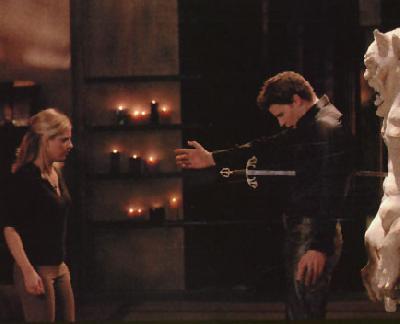
Candidate: Joss Whedon

Job Qualifications: Illuminates the nobility of the human struggle against the essentially tragic nature of the human situation; the hunger for justice that we can never ignore without sacrificing part of our humanity, but can also never satisfy without sacrificing part of our humanity. (Vengeance and justice loom large.)

Who Is Our Sophocles?

Candidate: J.J. Abrams

Job Qualifications: The dynamic interdependence between our choices and our character; we can only act based on who we already are, but can only be who we are through how we act. (Daddy issues loom large.)

Who Is Our Euripides?

Candidate: (I hate to say it since I’m a Watchmen hater, but…) Alan Moore

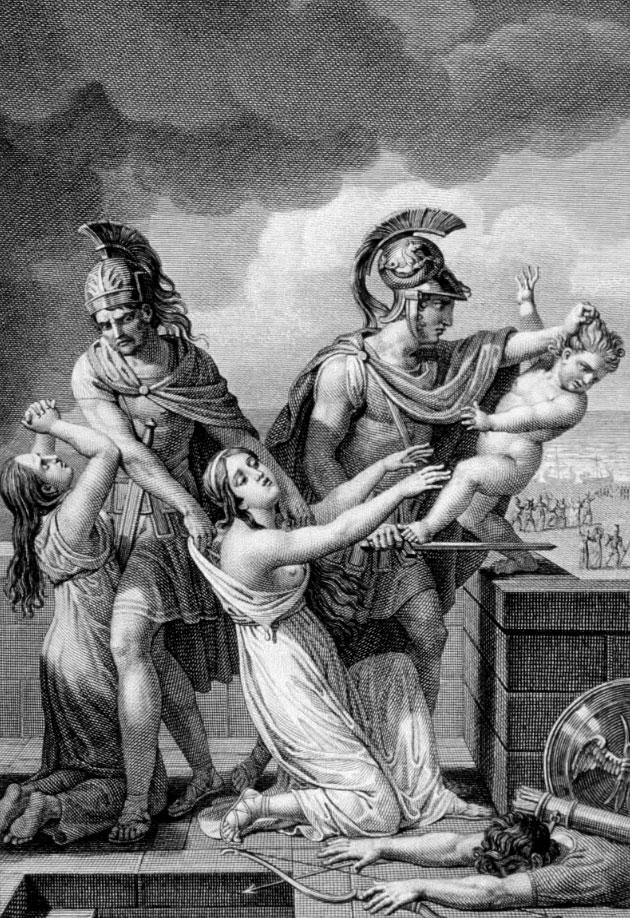
Job Qualifications: Ecstatic confrontation with chaos and meaninglessness; deconstruction of cherished myths. (Mass atrocities loom large.)

Discuss among yourselves! 🙂