(Guest Post by Matthew Ladner)
The twitter thread that just over a week ago may have saved Americans from shortages and hyper-inflation. From Don’t Worry About the Vase, followed by the Al-worthy thread:

They went to five shortly thereafter.
(Guest Post by Matthew Ladner)
The twitter thread that just over a week ago may have saved Americans from shortages and hyper-inflation. From Don’t Worry About the Vase, followed by the Al-worthy thread:
They went to five shortly thereafter.
 1 Comment |
  Uncategorized |
  Permalink
 Posted by matthewladner
(Guest Post by Matthew Ladner)
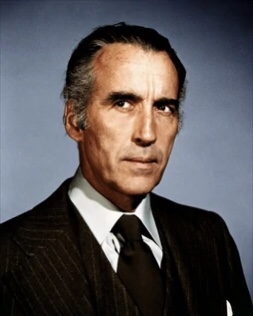
Descended from Charlemagne. Spoke five languages. Served in the British Secret Service in World War II. Related by marriage to Ian Fleming, said to be the inspiration for James Bond, later played a Bond villain. Required to seek the permission of the King of Sweden to get engaged – and received it. Innumerable film credits. Turned down the role of Grand Moff Tarkin but later played a fallen Jedi/Sith Lord. Re-read The Lord of the Rings annually, settled for Saruman after losing out for the role of Gandalf. Cut a heavy metal album at age 90.
Christopher Lee really was the most interesting man in the world. Anyone who can kill so many villains that the files are still sealed and then portray them on the silver screen for decades is Al-worthy in my book!
1 Comment | Uncategorized | Permalink
Posted by Greg Forster

For your consideration… According to a British member of Parliament, Joseph Friedman invented “arguably the most significant technological achievement of the twentieth century.” Granted that MP was Friedman’s great-nephew, but still… Friedman’s invention has been an enormous contribution to improving the human condition and is worthy of his receiving The Al. What did he invent? The bendy straw.
Friedman who was a serial inventor, seller of real estate and insurance, and general wheeler-dealer came upon the idea of the bendy straw while dining with his young daughter. He saw her struggling to get a straight straw into her mouth given that its end was higher than her mouth. He used a screw on the straw to create ridges that allowed the straw to bend and meet his daughter’s mouth at the right height.
How, you might ask, is the bendy straw arguably the most significant technological achievement of the 20th century? Well, as it turns out, many of us have physical difficulties that make navigating the world challenging. We might be born with permanent physical challenges that make drinking from a glass impossible and reaching a straight straw with our mouth impractical. Even if we aren’t born with such challenges, almost all of us have had or will have physical difficulties at some point in our lives. When we are young we may be too small or lack dexterity. When we are old, we may lose strength or dexterity. The same is true when we are injured. As the disability activist, Judy Heumann, notes, in some sense there is not a clear distinction between what we think of as people with disabilities and everyone else since everyone can reasonably expect that at some point physical limitations may make it challenging to navigate the world and thrive.
This is why technology that helps people succeed despite their physical challenges is so important. There are many such technologies, but one of the most important is the bendy straw. We all need to drink and the bendy straw is incredibly helpful in getting that liquid into our mouths despite our limitations. In fact, when Joseph Friedman founded the Flexible Straw Corporation (later Flex-Straw Co.), many of his original large customers were hospitals.
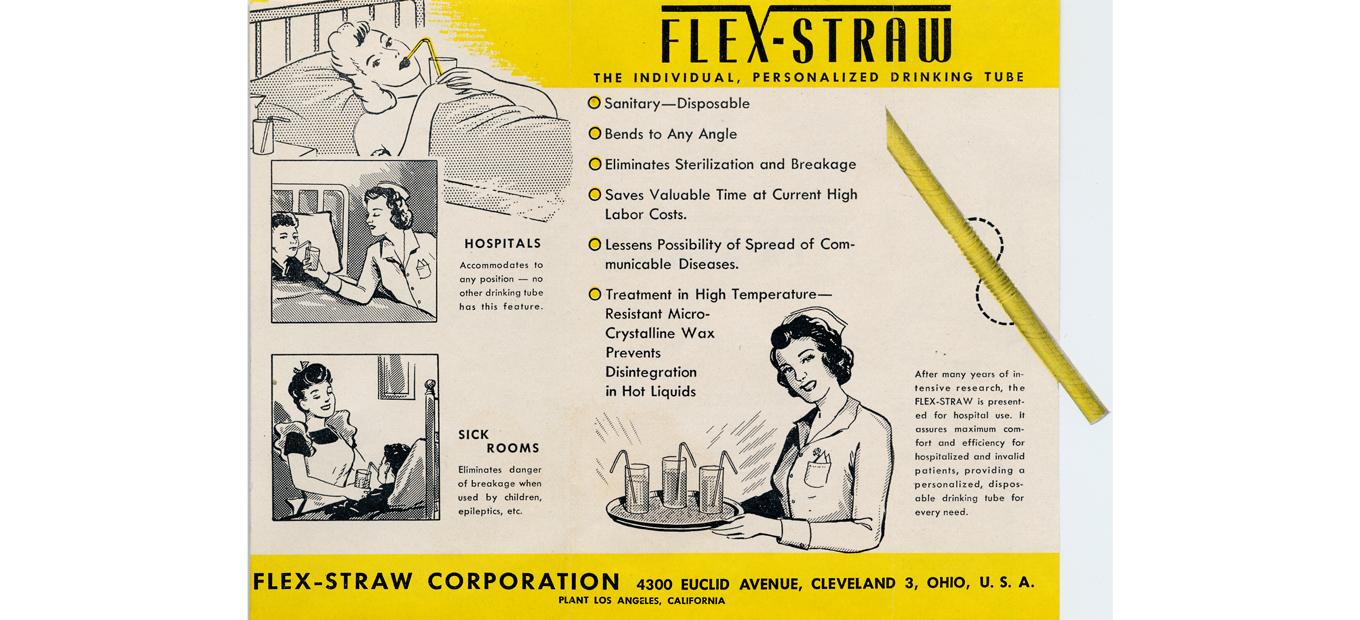
Of course, flexible straws are also just fun. If that encourages children (or some of us grown-ups) to drink their milk, that’s also a plus. Bendy straws also work pretty well with a strawberry daiquiri — another point in their favor.

But some Higgy-wanna-be’s decided that plastic straws were one of the world’s greatest dangers and must be banned in the US and Europe, regardless of the consequences for those with physical challenges or who want to have fun with milk or daiquiris. Never mind that “more than half of the world’s marine plastic pollution entered the ocean from just five countries: China, Indonesia, Philippines, Vietnam and Sri Lanka.” And never mind that, “globally, straws only make up around 0.00002 per cent of all marine plastic pollution (in terms of weight).” The Earth (or something) demands we put an end to Big Straw.
Unlike these Higgy-wanna-be’s, I give a higher priority to improving the human condition and love bendy straws. They are so great that their inventor, Joseph Friedman should be recognized with The Al.
2 Comments | Uncategorized | Permalink
Posted by Jay P. Greene
(Guest post by Greg Forster)
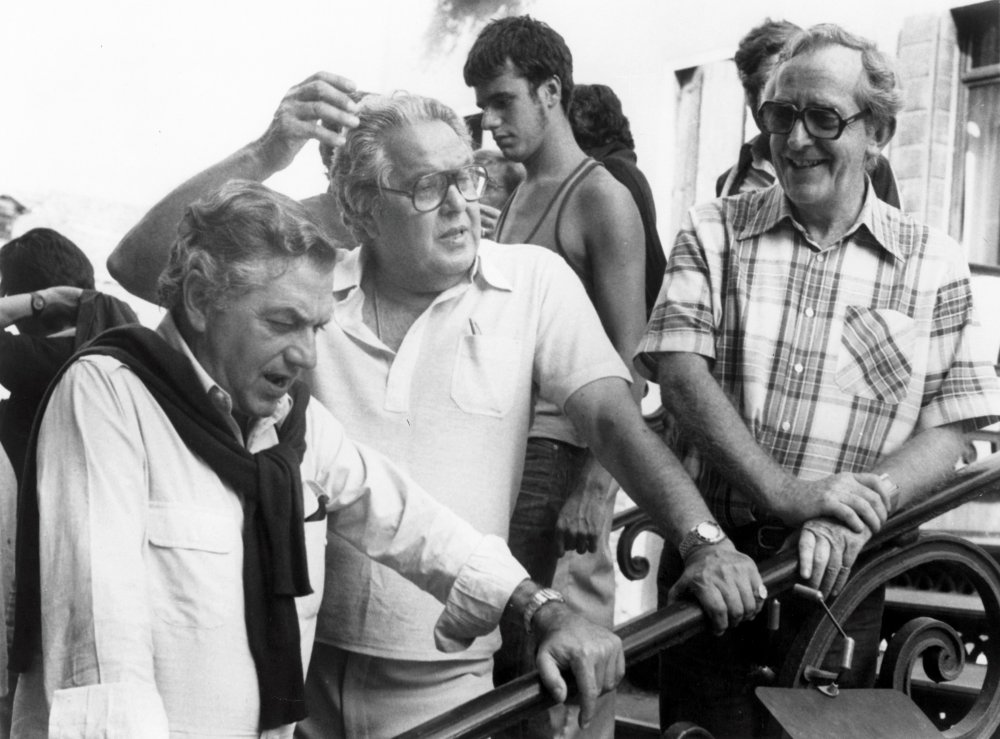
Ken Adam, who died earlier this year, was a German Jew whose family fled the Nazi regime to England. He became one of only three German-born pilots in the RAF, where as a bomber pilot who specialized in taking out German armor he earned the nickname “Heinie the Tank Buster.”
Now, folks, if it were me, escaping Nazi Germany and becoming Heinie the Tank Buster would be Al-worthy enough for a lifetime. But it wasn’t for Ken Adam.
He went on to become one of the most important set designers in film history, inventing a series of iconic sets that shaped the imagination of the whole world.
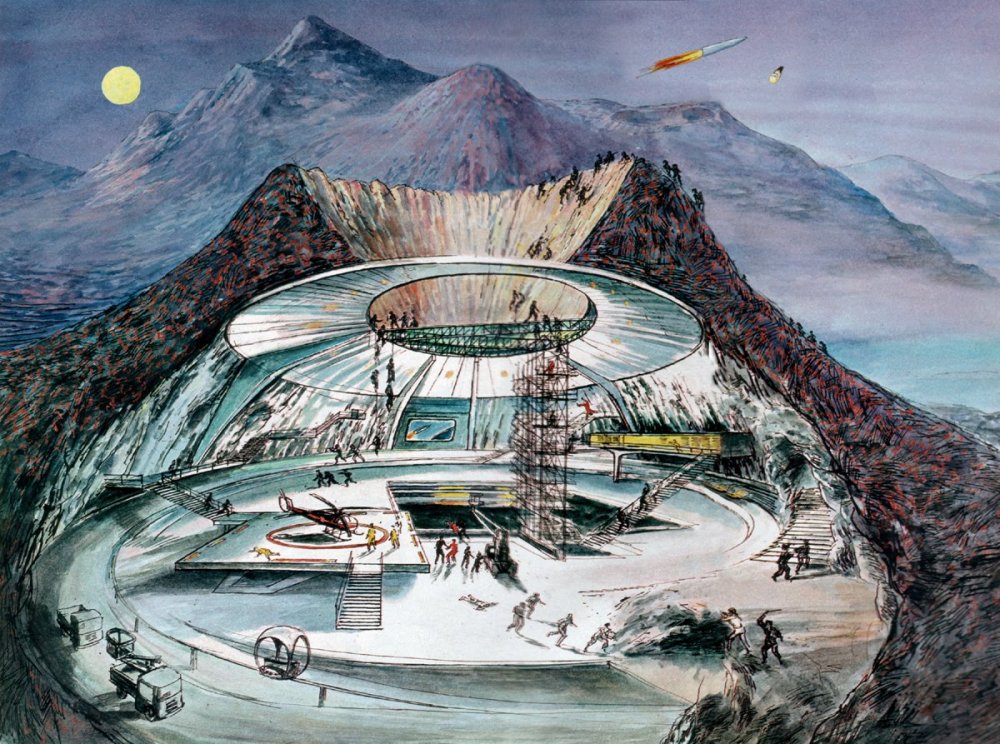
Including, ahem, the original Bond-villain volcano lair.
Yes, that one!
Well, not that one.
This one:
(Which reminds me, I’ve been meaning to blog on No Time to Die. I’ll try to get to it soon, I promise! If you’ve already seen the other Daniel Craig films, I highly recommend NTTD. It’s even good enough that I now no longer feel like my time was totally wasted by the execrable Spectre, because the story ended so well. But you do have to have seen the other movies first. And you should, it goes without saying, see it in the theater.)
Now, folks, if it were me, escaping Nazi Germany and becoming Heinie the Tank Buster, and then inventing the Bond villain volcano lair would be Al-worthy enough for about ten lifetimes.
But that’s not all Ken Adam did. Rather than waste words, let me take you on a tour:
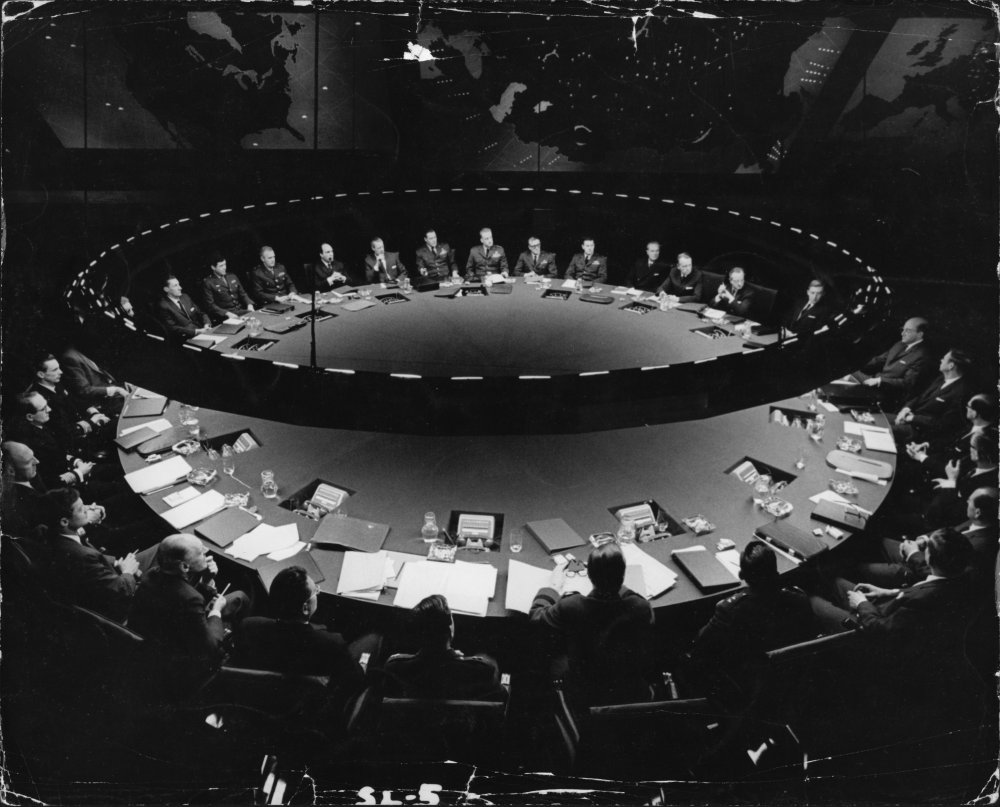
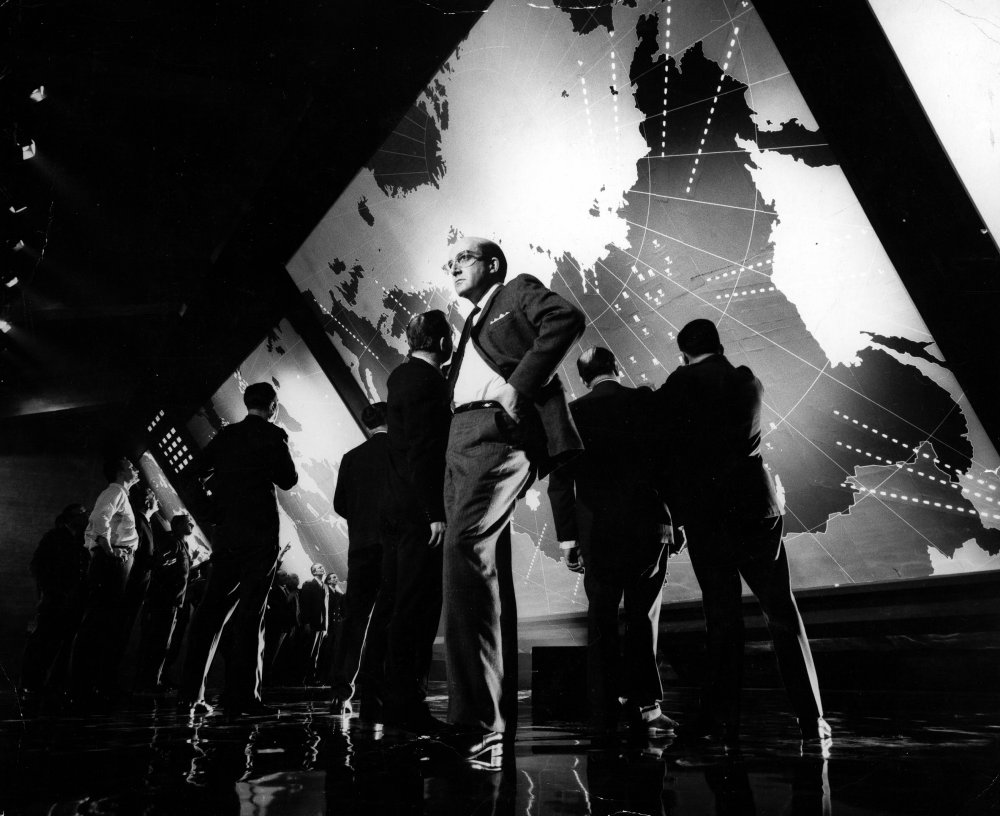



And of course:

Gentlemen, you can’t fight Ken Adam’s claim to The Al in here! This is the War Room!
I proudly nominate Ken Adam for Al Copeland Humanitarian of the Year.
2 Comments | Uncategorized | Permalink
Posted by Greg Forster
Diversity, Equity, and Inclusion (DEI) sounds like it should be a good thing. It is made up of mostly good words. We rightly value diversity, both intellectual and cultural. And who could be against inclusion? Equity is actually not such a good thing as it emphasizes having the same outcomes, but it sounds like equality, which is another very fine word.
But like many bad enterprises, DEI takes a bunch of good words and in Orwellian fashion uses them to advance the very opposite of what those words mean. DEI undermines true diversity by reducing and dividing us into ethnic and sexual identity categories while crushing actual intellectual and cultural diversity. And rather than including people from those diverse intellectual and cultural strands, DEI classifies us as either oppressor or oppressed, with the former deserving whatever harsh consequences they might get while the later is entitled to whatever benefits they can grab. Rather than creating equality, this Manichean split into oppressor and oppressed justifies different rules and differential treatment depending on which category you find yourself in. This produces a mad scramble to have one’s own group somehow included in the blessed oppressed category while trying to throw one’s enemies into the damned oppressor category.
As Rick Hess recently pointed out. this DEI world view is very unpopular among large segments of the population, cutting across partisan and racial lines. So why is DEI spreading so rapidly if its ideas are deeply unpopular? Some of the answer can be found in the Orwellian appropriation of positive words for negative purposes. But people can only be fooled for so long, so why is it continuing to grow even as more people can see it for what it really is? A big part of the explanation can be found in the fact that DEI has some organizational advantages within mainstream institutions. The existence of DEI staff led by Chief Diversity Officers (CDO) acts as a political commissariat, articulating and enforcing ideological orthodoxy. It mobilizes the relatively small group of activists who support its woke agenda and amplifies their voice within institutions.
In a series of studies that James Paul and I have released through the Heritage Foundation, we have documented the extent of DEI staff and CDOs. In our first study, Diversity University, we found that the average university among the 65 institutions belonging to one of the Power 5 athletic conferences has 45 DEI staff. That is more than 4 times the number of staff they have devoted to providing services to students with disabilities, which, unlike DEI, they are required to do by law. These universities have 40% more DEI staff than they have History professors. Despite this outsized effort, surveys of students suggest that the campus climate is no better and may actually be worse at universities with larger DEI staff.
While DEI staff are nearly ubiquitous in higher education, they are only beginning to make their way into K-12 public school districts. In our second study, Equity Elementary, we look at every school district with at least 15,000 students — all 554 of them — to see if they have Chief Diversity Officers (CDOs) listed on their web sites. We found that 39% of them do. Among the largest districts, with more than 100,000 students, 79% have a CDO. But even among the smaller ones with closer to 15,000 students, 32% still have a CDO. We then look at whether having a CDO is associated with closing achievement gaps on standardized tests. Contrary to their ostensible purpose, districts with CDOs actually have larger gaps in achievement between black and white students, Hispanic and white students, and non-poor and poor students than districts without CDOs. And those gaps are growing wider over time, This pattern holds true even after controlling for a host of other observable characteristics of those districts.
CDOs in K-12 public school districts may be educationally counter-productive because, like their higher education DEI brethren, they are more focused on promoting a political agenda than they are on finding effective educational interventions. That political agenda includes advancing policies that likely exacerbate achievement gaps, such as eliminating Gifted program and advanced math offerings while selecting English and Social Studies content for its political orthodoxy rather than educational quality.
People are beginning to notice how DEI efforts are educationally counter-productive and politically radical, and they are starting to organize against this. Parents are achieving enough success at pressuring their schools to abandon this woke agenda that they prompted the National School Boards Association (NSBA) to condemn them as domestic terrorists and seek intervention from federal agencies, which the Biden Administration and Attorney General Garland promptly supplied. This appears to have backfired horribly, causing dozens of state affiliates of NSBA to defect, which resulted in NSBA retracting its letter and apologizing (to its affiliates but oddly not to parents).
The Biden Administration and Terry McAuliffe, the Democratic candidate for governor in Virginia, however, can’t as quickly back away from their declarations condemning protesting parents. McAuliffe, who was way ahead in the polls, has seen his lead evaporate and may be upset in next week’s elections. This turmoil is also not helping Biden’s chances of pulling together the votes for his multi-trillion dollar reconciliation proposal.
Our own research on this issue is attracting a lot of attention. Kyle Smith has an excellent column in the New York Post summarizing our Equity Elementary findings. And Fox News had me on last weekend to discuss that study and its implications for the Virginia gubernatorial contest.
The increasingly woke education reform movement has had little substantive response to this research or the parent backlash that is underway other than to call people racists. This name-calling approach is losing its sting as it continues to be mis-used. And the fact that the ed reform establishment continues to embrace a failed strategy for advancing school choice focused on progressive priorities suggests that many existing ed reform organizations are rapidly becoming irrelevant.
Soon they will become like the Children’s Defense Fund and the advocacy organizations built around the War on Poverty in the 1970s. Those organizations still exist and still receive millions in foundation grants. They still write white papers, issue press releases, organize conferences, and make speeches to each other about how right and good they are. But it has been almost half a century since those organizations had any real political influence. This will soon be the fate of many education reform organizations if they do not change their approach.
McAuliffe may survive and Biden may get his trillions, but the future of any politically successful education reform movement has to be focused on helping parents control the education of their own children and capitalizing upon their concern that a woke agenda is fundamentally undermining their control and their values.
18 Comments | Uncategorized | Permalink
Posted by Jay P. Greene
(Guest post by Greg Forster)
In 2004, Italian security officer Fabrizio Quattrocchi was captured in Iraq by jihadi terrorists, who were at the time winning propaganda victories, and recruits, by executing captives on video. But they won no victory with Quattrocchi; as his death approached, he pulled the hood off his head and shouted: “I’ll show you how an Italian dies!” The video was such a propaganda defeat for the terrorists that regional television networks – normally eager to help the terrorists by showcasing these videos – wouldn’t broadcast it. Mark Steyn commented that allied governments, who normally instruct civilians to cooperate with their captors in hopes of avoiding death, should instead instruct them in the Quattrocchi Protocol: “If you are captured, wreck the video.”
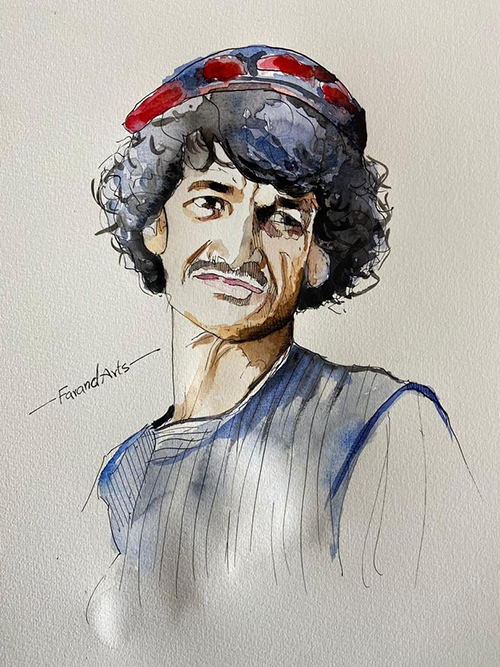
Nazar Mohammad Khasha wrecked the video. When heavily-armed Taliban thugs came to arrest Khasha for the crime of making fun of the Taliban, he looked right into the cameras and made fun of the Taliban.
“They have mustaches on their backsides” he said, smiling, hands bound behind his back in the center-rear seat of a car, with Taliban gangsters sitting on both sides of him, brandishing guns. (Mustaches symbolize bravery in the local culture, the Washington Post explains.)
So one of the thugs hits him in the face. Hard.
And he keeps smiling.
After a second blow, he stops smiling. But by the end of the video, the smile is back.
Immanent torture and death could not kill the spirit of freedom in this man, and he wanted to make sure the world saw it.
It was the last we would see of him. He was brutally killed in Taliban custody.
Not for the faint of heart, if you care to watch how a true Afghan rides off to die:
Khasha, commander of a local police unit in Kandahar, had become a figure on social media by mocking the Taliban. His goofball brand of humor earned him a wide following.

But after our shameful betrayal of our allies in Afghanistan this summer, the clock was ticking for Khasha. In late July, the Taliban showed up and arrested him. They recorded the arrest in hopes of a propaganda victory.
But all they got for their trouble was mustaches on their backsides.
And, eventually, a mutilated dead body. Which they seem to be pretty fond of, given that they make so many of them.
Of course, the United States, in obedience to our generations-old and splendidly bipartisan foreign policy tradition, took robust action to defend those who made the mistake of trusting our promises:
…or else we will be very, very angry with you.
And we will write you a letter, telling you how angry we are.
It’s all the more vital to honor people like Khasha now, as the world’s biggest BSDDers become more and more adept at manipulating Hollywood and media companies, so we only laugh at the jokes they choose to permit.
For all our morbid obsession with the supposedly insuperable bounds of cultural particularity, I suspect Khasha and Taiwan’s magnificent President Tsai Ing-Wen would have understood each other quite well:
“Taiwan is standing on the frontline of defending democracy.” I sure am glad somebody is.
To withstand Beijing, I’d place a longer bet on Taiwan’s decency and moral courage than on America’s high-tech arsenal – even if it is the second-best in the whole world.
In the noble tradition of Fasi Zaka, I nominate Nazar Mohammad Khasha for the Al Copeland Humanitarian of the Year Award.
Leave a Comment » | Uncategorized | Permalink
Posted by Greg Forster
You can watch the full video of my discussion with AFT union head, Randi Weingarten, here:
1 Comment | Uncategorized | Permalink
Posted by Jay P. Greene
Today I had my event with Randi Weingarten, the head of the American Federation of Teachers, hosted by Harvard’s Program on Education Policy and Governance. The video should be posted in a couple days after they finalize the transcript. In the meantime, if you’d like to see my opening remarks, here they are:
Public schools have been sticking it to many low-income and minority students since they were founded. Public schools have been segregated for most of their history by law. Even after state-compelled segregation was ended, public schools continue to be highly segregated because district boundaries were drawn with red lines separating communities by race. Outcomes for low-income and minority students remain abysmal despite huge increases in school spending, now exceeding $15,000 per pupil.
Public schools have been able to get away with this shocking mis-education of disadvantaged students because, despite all of their failings, public schools have managed to serve upper-income families reasonably well. As long as the public school system could maintain the support of advantaged families, the disproportionate political power of wealthier families protected public education from fundamental restructuring, including a significant expansion in school choice.
Upper-income families could pick suburban districts that gave them what they wanted and permitted greater parental input. The fact that wealthier families often supplemented their children’s education with enriching activities outside of school also helped mask any deficiencies in the quality or content of those suburban public schools.
These arrangements engendered a high level of affection for public education among these wealthy and disproportionately powerful families despite reports of severe difficulties in large, urban school districts. With limited direct experience of the dysfunction of urban public education, wealthy families were willing to believe that the problems stemmed from a lack of funding or from societal ills beyond the power of schools to control. Advantaged families were strongly disinclined to risk any disruption in their comfortable arrangements because of problems for other people’s children, especially when they could seize upon spending or social problems as rationalizations to leave the status quo intact.
The pandemic dramatically changed these political dynamics when the public education system failed to deliver what many advantaged parents wanted. Specifically, the public system broke faith with upper-income families by flagrantly resisting in-person instruction, prioritizing the needs of union members over those of parents. In addition, remote learning allowed upper-income families to see the instruction that their children were receiving and many were shocked by its low quality and radical content.
As suburban families organized to object to that radical content to their local school boards, they were further shocked to discover how unresponsive those school districts had become. And when the Biden Administration, with union support, issued a letter orchestrating an effort by the FBI and government agencies to investigate protesting parents as potential domestic terrorists, the inability of even wealthy parents to control the public education of their own children was laid bare.
Education is an extension of parenting and parents want significant control over how their children are raised and educated. The current arrangements of the public education system survived because wealthy parents believed they had that control. Once it was revealed that they also lacked this control, they mobilized politically to regain the autonomy they desire. This resulted in an enormous increase in educational choice over the last year, creating 7 new programs and expanding 21 existing ones in 18 states.
School choice is a one-way ratchet. Once people have experienced an expanded set of options, they are very resistant to having those options taken away. In addition, the broken faith between the public school system and advantaged families will take a lot of time and effort to restore even after schools return to in-person instruction and disputes over masks and vaccines fade. This means that the political pressure for further expansions of school choice remains strong for the foreseeable future.
This last year has given us a glimpse of the future and that future contains a lot more school choice. Because education is an extension of parenting and because parents are best situated to raise their own children, all parents should have control over where and how their children are educated. It is a shame that it took a pandemic and bad political miscalculations on the part of the unions to make advantaged families experience the same feeling of being out of control that poor families have long felt. But now that wealthier families are getting on board for school choice, all families can benefit from its expansion.
11 Comments | Uncategorized | Permalink
Posted by Jay P. Greene

(Guest post by Greg Forster)
You know I’m a man of discriminating taste, because I literally just walked out of Shang-Chi and the Legend of the Ten Rings, which is great fun for the whole family as long as no one in your family is loyal to the Communist Party.
Anyway, the Nobel Peace Prize was announced today, so it’s time once again to give those who have contributed to bettering the human condition the highest honor known to humankind: the Al Copeland Humanitarian of the Year Award.
As the historical record below relates, we have now bestowed this incomparable honor upon twelve humanitarians. Who will be lucky number thirteen?

Nominations can be submitted by emailing a draft of a blog post advocating for your nominee. If Jay likes it, he will post it with your name attached. A winner will be announced after Halloween.
The criteria of the Al Copeland Humanitarian Award can be summarized by quoting our original blog post in which we sang the praises of Al Copeland and all that he did for humanity:
Al Copeland may not have done the most to benefit humanity, but he certainly did more than many people who receive such awards. Chicago gave Bill Ayers their Citizen of the Year award in 1997. And the Nobel Peace Prize has too often gone to a motley crew including unrepentant terrorist, Yassir Arafat, and fictional autobiography writer, Rigoberta Menchu. Local humanitarian awards tend to go to hack politicians or community activists. From all these award recipients you might think that a humanitarian was someone who stopped throwing bombs… or who you hoped would picket, tax, regulate, or imprison someone else.
Al Copeland never threatened to bomb, picket, tax, regulate, or imprison anyone. By that standard alone he would be much more of a humanitarian. But Al Copeland did even more — he gave us spicy chicken.
The 2020 winner of The Al was Nat Love, who overcame enormous adversity and injustice to live a magnificent American life: “I think you will agree with me that this grand country of ours is the peer of any in the world, and that volumes cannot begin to tell of the wonders of it.” Love conquered all amid a field including Nick Steinsberger, who helped pioneer fracking; Charles Hull, who invented 3D printing; and Hans Christian Heg, an immigrant abolitionist hero whose statue had been torn down by a “justice” mob.
The 2019 winner of The Al was Mildred Day, inventor of the Rice Krispie Treat. In the fine tradition of Al Copeland himself, Day made the human condition better by bringing us great food. Her treats are not only delicious, they’re easy to make, so they are often among the first cooking projects that parents do with their children. Parents connecting with their children over something yummy is just about the best thing there could be. Day was favored over political pranksters Chad Kroeger and JT Parr, and Bob Fletcher, who helped three Japanese-American families in California keep their farms after WWII-era internment.
The 2018 winner of The Al was Joy Morton. Like Al Copeland, Morton promoted the good by doing well. It was known that small amounts of iodine could prevent goiters, but no one was doing anything about this until Morton saw a way to gain a competitive advantage for his salt company: adding iodine to salt, and advertising its health benefits. The bumper crop of nominees in 2018 also included Great Course lecturer Elizabeth Vandiver, musical disintermediator Leo Moracchiloli, Magic: The Gathering inventor Richard Garfield, scofflaw tech recycler Eric Lundgren, lemonade-stand paladins Adam Butler and Autumn Thomasson, and George Henry Thomas, a Virginian general in the Union army.
The 2017 winner of The Al was Stanislav Petrov, who literally saved the world from nuclear destruction by refusing to follow Soviet orders to retaliate against what he suspected (as was later confirmed) was a false warning of a US strike. It’s not quite spicy chicken, but it’s close! Petrov was selected from an excellent set of nominees, including Whittaker Chambers, witness against communism, Justin Roiland and Dan Harmon, creators of Rick and Morty, and Russ Roberts, author and host of EconTalk.
The 2016 winner of The Al was Master Sergeant Roddie Edmonds, who prevailed over a very competitive field of nominees, including Tim and Karrie League, founders of Alamo Drafthouse movie theaters, political humorist Remy Munasifi, and humorous political journalist Yair Rosenberg. Edmonds stood up against fascists at considerable risk to himself by declaring that he and all of his fellow prisoners of war were Jews, to foil the Nazis’ effort to separate Jewish prisoners. It is this type of courage in the face of illiberalism that we need more of in these times.
The 2015 winner of The Al was internet humorist Ken M. Ken M did more to improve the human condition than just make us laugh by making idiotic comments on social media (although that would have been enough). His humor reveals the ridiculousness of people trying to change the world by arguing with people on the internet. Ken M’s humor is a useful reminder that many of the people reading your posts are probably not much swifter or influential than the Ken M persona. Ken M beat a set of strong nominees, including Malcolm McLean, inventor of shipping containers, Gary Gygax, creator of Dungeons and Dragons, and John Lasseter, founder of Pixar.
The 2014 winner was Peter DeComo, the inventor of the Hemolung Respiratory Assist System. To save a life, DeComo drove all night to retrieve a lung machine from Canada, then thought quickly when border control officials at first denied him permission to bring it home because the device had not yet been fully approved by the FDA. DeComo won over a worthy field, including Marcus Persson, the inventor of Minecraft, Ira Goldman, the developer of the “Knee Defender,” Thomas J. Barratt, the father of modern advertising, and Thibaut Scholasch and Sébastien Payen, wine-makers who improved irrigation methods.
The 2013 winner of The Al was musical satirist Weird Al Yankovic. Weird Al brings joy to people of all ages, while puncturing the pretensions of puffed-up celebrity entertainers. He beat an impressive set of nominees, including performer/skeptics Penn and Teller, crowdfunding website Kickstarter, and WWII industrialist Bill Knudsen.
The 2012 winner of The Al was George P. Mitchell, a pioneer in the use of fracking to obtain more, cheaper and cleaner natural gas. Mitchell won over a group of other worthy nominees: artist Banksy, car creator Ransom E. Olds, first-down-line inventor and two-time Al nominee Stan Honey, and Alfred Fielding and Marc Chavannes, the inventors of bubble wrap.
In 2011, The Al went to Earle Haas, the inventor of the modern tampon. Thanks to Anna for nominating him and recognizing that advances in equal opportunity for women had as much or more to do with entrepreneurs than government mandates. Haas beat his fellow nominees: Charles Montesquieu, the political philosopher, David Einhorn, the short-seller, and Steve Wynn, the casino mogul.
The 2010 winner of The Al was Wim Nottroth, the man who resisted Rotterdam police efforts to destroy a mural that read “Thou Shall Not Kill” following the murder of Theo van Gogh by an Islamic extremist. He beat out The Most Interesting Man in the World, fictional spokesman for Dos Equis and model of masculine virtue, Stan Honey, inventor of the yellow first down line in TV football broadcasts, Herbert Dow, founder of Dow Chemical and subverter of a German chemicals cartel, and Marion Donovan and Victor Mills, developers of the disposable diaper.
The 2009 winner of The Al – in the first year the award bore that name – was Debrilla M. Ratchford, who significantly improved the human condition by inventing the rollerbag. She won over Steve Henson, who gave us ranch dressing, Fasi Zaka, who ridiculed the Taliban, Ralph Teetor, who invented cruise control, and Mary Quant, who popularized the miniskirt.
Also noteworthy from 2009: History’s greatest monster, William Higinbotham, was declared permanently ineligible to receive The Al. He remains the only individual thus disqualified. In (dis)honor of Higinbotham, The Higgy award has been bestowed on (un)worthy candidates annually since 2012.
Al Copeland himself was honored in 2008 as the official humanitarian of the year of Jay P. Greene’s Blog. The award was renamed in his honor the following year.
Okay, you got me, that’s actually 13 people we’ve honored, because Copeland counts. What can I say? ”Who will be lucky number 14?” wasn’t catchy.
Happy hunting, fellow nominators, and remember: watch out for black cats and ladders!
Leave a Comment » | Uncategorized | Permalink
Posted by Greg Forster

(Guest post by Greg Forster)
I don’t know about you, but I really dug the Year of School Choice. Let’s have another one! OCPA carries my latest:
There is no wrong time to do the right thing. But 2022 is also shaping up to provide unique opportunities to those who waited long for justice. Parents and voters are making their support clear. The excuse that we can’t do the right thing because it’s too politically difficult, while never especially savory, has now become positively untenable. If not now, when?
This year, 18 states enacted or expanded 30 programs. And there’s no reason to think the momentum is spent. On the contrary, the major factors that made 2021 a banner year are still going strong:
The pandemic is one reason so many new and expanded school choice programs were enacted in 2021. Starting when the pandemic hit in early 2020, the government school monopoly consistently ignored the wishes of parents and the best interests of children in order to do whatever served the whims of the system’s various political constituencies. The bottomless selfishness of the educational special interests, like teacher and staff unions, competed for public opprobrium with the spineless impotence and disarray of the school boards and other governing authorities whose job it was to rein the special interests in.
A sharp increase in polarization over the teaching of history and civics in 2020 also set the stage for school choice to begin triumphing in 2021. Large numbers of parents lost confidence that the government school monopoly could be trusted to teach the classic liberal principles that undergird our social order committed to universal human rights and constitutional democracy under the rule of law. Contributing factors included a sudden new prominence of extreme illiberal ideologies, and the willingness of mainstream institutions to airbrush away, or even to justify openly, violent lawlessness. (When you do it, it’s a “riot” or an “insurrection,” but when I do it, it’s a “fiery but mostly peaceful protest” or an “autonomous zone.”)
As the nation was debating COVID masks, for millions of Americans it was a different kind of mask that came off the government school monopoly. Parents were not exactly naïve about the government school monopoly going in; Americans had fewer illusions about the system at the start of 2020 than in 1980 or even in 2000. But from the sudden and sharp turn in public opinion during the year, it seems they hadn’t yet realized how bad things were.
Capitalize on the momentum of this blog post by letting me know what you think!
2 Comments | Uncategorized | Permalink
Posted by Greg Forster

 Jay P. Greene's Blog