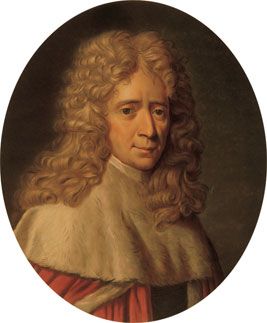
Winner of the 2011 Al Copeland Humanitarian Award: Earle Haas

October 31, 2011

We had several especially worthy nominees for this year’s Al Copeland Humanitarian Award.  Greg nominated Charles Montesquieu, I nominated David Einhorn, and Matt nominated Steve Wynn.  But Anna Jacob nominated this year’s winner: Earle Haas, the inventor of the modern tampon.

Montesquieu’s nomination was especially important in light of the clear shift away from rule by law to rule by regulators.  No one knows what the health care bill actually required; most of the important parts were left to be decided later by regulators.  The new financial regulation is similarly just a template for regulation to be determined later.  This is a very corrosive and dangerous development in a representative democracy and Greg was right to warn us about this.

But it is not quite worthy of “The Al.”  As Greg notes, we are letting Montesquieu’s ideas about the rule of law slip away from us.  If someone were able to reverse that alarming trend, that person might be worthy of “The Al.” There is no shortage of good political philosophers and most have received plenty of recognition.  The tricky and courageous part is to properly implement those ideas.

My nomination of David Einhorn was, I thought, a useful antidote to the economic illiteracy of the Occupy Wall Street movement as well as the petty financial regulators who impede short-selling to appease mob anger and (they claim) promote stability.  But I’m not sure Einhorn’s contributions have lacked proper recognition.  Financial news regularly repeats whatever he says and gives him plenty of credit for correctly identifying past corporate frauds and excesses.

Steve Wynn probably most closely resembles Al Copeland in his personal biography.  They are both business people whose products are adored by some while denounced by others.  They both nearly drove their businesses into the ground.  They both have reputations for being personally difficult.  But despite all of these and other failings, they have both done much more for humanity than most people who win humanitarian awards.

But the “Al” is not given for personal similarity to Al Copeland.  Wynn has built some very nice hotels, turned around an increasingly seedy Las Vegas, and launched a fast-growing subsidiary in Macau.  But frankly my life (and most other people’s lives) would be just fine without these things.  I like the frivolous nature of Wynn’s gambling hotels, just like Copeland’s spicy chicken, but the “Al” is not mostly about being frivilous.

Earle Haas’ tampon, on the other hand, has made an enormous difference in improving women’s lives and making our society better.  Women often felt confined to their house a few days every month.  This limited their ability to work, travel, and engage in public life almost as much as restrictions on women in Saudi Arabia — at least for those few days.  Just look at the ad copied above.  The tampon allowed women to more regularly work during World War II to increase productivity.  The tampon helped defeat the Nazis!

But the tampon also helps illustrate where advancements for women really tend to come from.  Technological innovation, like the tampon, helped liberate women and that innovation comes from a capitalist system.  Earle Haas invented the tampon, at least in part, to make money.  Tampax Corporation brought the product to a mass market primarily to make money.  And women were successfully educated about the benefits of tampons through advertising.  Contrary to the loosely Marxist notion that advertising artificially creates desires for unnecessary products, just look at how essential advertising of tampons was in overcoming irrational opposition and ignorance of its benefits for women and society.

Activists, politicians, and other miscreants who regularly receive credit for advancing the interests of women have often done no such thing.  In fact, quite often they have undermined the cause.  Demanding that women be paid the same even if they are more likely to be absent from work just discourages people from hiring women.  But inventing new technologies that reduce the need for women to be more absent from work allows women to be paid the same without harming their employers.  If speeches and laws created reality we would be right to recognize the activists and politicians.  But Earle Haas was able to create a new reality that no speech or law could do on its own.

If the tampon was good enough to defeat the Nazis and undermine Saudi-like restrictions on women, its inventor is good enough for the “Al.”

(Updated for missing paragraph)


Steve Wynn for Al Copeland Humanitarian Award

October 28, 2011

"Stay Thirsty My Friends..."

(Guest Post by Matthew Ladner)

Last year, Jay nominated the Most Interesting Man in the World for the Al, arguing that he represented an appealing avatar for the manly good life.

Often on the blog, I have used the image of Leonardo di Caprio’s portrayal of Howard Hughes in the Aviator as a tribute to the restless innovator overcoming challenges.

Today it is my pleasure to nominate a real person who embodies qualities of both of these fictional characters: Steve Wynn.

WSJ reporter Christina Brinkley wrote a fascinating book about the battle to control the Las Vegas Strip called Winner Takes All: Steve Wynn, Kirk Kerkorian, Gary Loveman and the Race to Own Las Vegas. There were many interesting things about this book, but Steve Wynn without a doubt steals the show.

Steve Wynn essentially created the modern Las Vegas, transforming the city from a seedy, neon lit gambling hole to what it is today. I’ll let you decide for yourself what it is today, because the seedy neon lit gambling hold is certainly still there.

Ick...

I can remember watching the U2 video I Still Haven’t Found What I’m Looking For, filmed on Fremont Street back in the late 1980s and thinking to myself “Vegas is repulsive. I have absolutely no interest in ever going there.”

Some of you reading this will have exactly the same reaction to Vegas today, but mine has entirely changed, and it is because of Steve Wynn. Steve Wynn invented the Las Vegas that I enjoy visiting.

Steve Wynn invented the modern Las Vegas in the late 1980s when he built the Mirage, the first of the modern casinos, on the strip. Wynn’s vision for updating Vegas was straightforward: he was out to build destination resorts so interesting that people would want to visit even if they weren’t interested in gambling.

Today, the Mirage has fallen into meh status (a volcano? Snore….) but that is a tribute more to the fantastic cycle of one-up manship that the success of the Mirage inspired.  Wynn imagined a Las Vegas that would appeal to far more than gambling junkies, paving the way for a hyper-competitive market in every type of distraction, from fine dining to elaborate stage productions, fine art to high-end nightclubs.

In other words, the tacky Vegas is still available, but now, so is everything else.

Winner Takes All paints a fascinating portrait of Steve Wynn as the ruthless capitalist moving Vegas forward. Others had tried to top Wynn in developing new resorts, but for the most part, Wynn was in a competition against himself. In building the Bellagio, a resort which would make Louis XIV green with envy, someone asked Mr. Wynn what he had in mind for decoration behind the check in counter. When someone suggested a piece of fine art, Wynn liked the idea so much that at one point he had multiple auctioneers in New York and London buying everything in sight. When you read winner takes all, you can imagine the London and New York auctioneers wondering to themselves Egads, who is this person in Las Vegas buying all of our art?”

Today, you can visit Mr. Wynn’s gigantic Picasso collection in a restraunt in the Bellagio known, appropriately enough, as Picasso’s, which combines fine dining with a museum of art experience. I highly recommend it.

Winner Takes All details the rise and fall of Steve Wynn. In building the Bellagio, vacuuming up fine art, and other projects (including the Beau Rivage, a “baby Bellagio” in Biloxi Mississippi- a market faux pas) Binkley presents Wynn as the capitalist gone mad. Wall Street analysts began calling Wynn out on his extravagent spending. Wynn’s reaction as conveyed by Binkley is priceless, something along the lines of “These idiots and their quarterly profit statements! Don’t they get it? I’m an artist!”

Wynn went so far off the financial deep end that his rival Kerkorian, developer of the MGM, wrote a check and bought Wynn’s company straight out from under him. I’m trying to imagine anyone having the ability to write a check with enough zeros in it to purchase the Bellagio and various lesser properties, but it certainly says something about the depths to which Wynn had driven his stock price. The transformative mastermind of the modern Las Vegas was finished, a victim to his own obsession.

Well, that wouldn’t do for an ending, now would it?

Despite losing it all, Wynn found new investors willing to back his vision of excellence. Wynn secured $2.7 billion to build the Wynn hotel, buying an old property for a relative song, and topping himself yet again with a fantastic new resort. Today Vegas is down like everything, but don’t count Steve Wynn out. Personally I can’t wait to see what the mad artist/capitalist comes up with next.


Nomination for the Al Copeland Humanitarian Award: Earle Haas

October 27, 2011

Greg has nominated Charles Montesquieu and I have nominated David Einhorn for this year’s Al Copeland Humanitarian Award.  Here is Anna Jacob’s nomination of Earle Haas, the inventor of the modern tampon:

An overlooked everyday convenience, the mighty tampon is a transformative technology, offering comfort and convenience to consumers. Women had been improvising for thousands of years prior to this revolutionary invention- in Ancient Egypt, using softened papyrus; in Rome, using wool; in Japan, paper; in Indonesia, vegetable fibers, and in Equatorial Africa, rolls of grass. Made of compressed cotton, the tampon as we know it was patented in 1933 by Dr. Earle Cleveland Hass of Denver, Colorado whose “catamenial device” included such modern conveniences as a removal string and insertion applicator. Dr Hass sold the patent and trademark to Gertrude Tendrich who went on to found the Tampax company three years later. The Tampax sales team realized that advertising alone would not ensure the success of their product and established an education department to dispel myths and misconceptions. Mabel Matthews, Tampax’s first full-time educational consultant, travelled to women’s colleges throughout the U.S. discussing the safety and effectiveness of her product.

At the beginning of World War II, the tampon industry faced a setback that could’ve killed this invention before it ever reached mass production. Production of cotton bandages for the troops exploded and Tampax had to assert its product as an essential health product if it was to secure the raw materials of cotton and paper that were need for its production. Company executives travelled to Washington DC numerous times to plead their case, basing their strategy on the lesser size of their product in comparison to its alternative, the sanitary napkin or “maxi-pad.” Tampax succeeded in ensuring access to these materials by asserting that both production and transportation of Tampax actually opened up shipping space and raw materials for the war effort.

Dr Haas’ invention has been transformational for women both personally and professionally, allowing them to travel, work, and swim, unhindered by a predictable restriction three to five days out of every 28. Thank you Dr Haas!


Nominated for the Al Copeland Humanitarian Award: David Einhorn

October 11, 2011

The Al Copeland Humanitarian Award is meant to honor unheralded contributions to improving the human condition.  Unlike most humanitarian awards, which are given to hack politics, community activists, and others whose contribution to humanity may often be more negative than positive, “The Al” tends to highlight entrepreneurs and  inventors.  The not-so-implicit argument of “The Al” is that people can often do more to improve the human condition by creating and building something from which they profit than by giving away their profits or (in the case of politicians and activists) trying to take away someone else’s profits in order to give them to others.

With the recent adulation of Steve Jobs, the role of the entrepreneur as humanitarian has received a lot more recognition that it normally does.  People acknowledged the extent to which Steve Jobs improved the human condition by creating and promoting products that people enjoy.  The fact that he accumulated an enormous amount of wealth for himself, his family, his employees, and his shareholders does not spoil the contribution that he made.  And it was not necessary for Steve Jobs to give away that wealth to do good in the world.  Steve Jobs was probably better at improving the human condition by creating wealth than he could have been by giving it away.

Given this recent recognition of the importance of people who create and build things, I would like to use this year’s “Al” to highlight the potential humanitarian benefits of those who destroy things.  In particular, I would like to highlight the contribution to improving the human condition made by short-sellers.

Short-sellers are people who sell something that they do not own in the hopes of profiting by a decline in the price of that thing.  They are betting that prices, usually of particular stocks or bonds, will go down.

What good comes from people who profit when stocks or bonds lose value?  Basically, short-sellers do as much good as people who profit from a rise in prices, or those who go “long.”  They help insure rational pricing of stocks and bonds so that capital is properly allocated to the places where it can get the highest long-term return (and do the most good for humanity).  If prices are irrationally low for something, then an insufficient amount of new capital will be allocated to that thing.  Conversely, if prices are too high, then too much capital will be allocated toward that thing, which will waste those resources and deprive it to other endeavors that would be more beneficial.

It’s relatively common to laud people who profit from stocks and bonds going up in price.  Warren Buffett has received plenty of positive attention.  But remember that Buffett’s enormous profits were made by others selling to him at lower prices and missing out on the increase in value.  People tend to revile short-sellers for doing the exact same thing — just in the opposite direction.

The short-seller I would like to nominate for this year’s Al Copeland Humanitarian Award is David Einhorn.  Einhorn is most famous for having taken large short positions on Allied Capital and Lehman Brothers.  According to Wikipedia:

In May 2002, at the Ira W. Sohn Investment Research Conference, Einhorn made a speech about a mid-cap financial company called Allied Capital, and recommended shorting it. The stock opened down 20 percent the next day.

Einhorn claimed that Allied was involved in lending practices that actively defrauded the Small Business Administration in the US, and therefore, indirectly, the US taxpayer. Allied said that Einhorn was engaged in market manipulation. To prove this, Allied fraudulently accessed his phone records using pretexting.

The U.S. Securities and Exchange Commission (SEC) investigated Einhorn for market manipulation. Eliot Spitzer announced that he intended to start another investigation. In June 2007, the S.E.C. found that Allied broke securities laws relating to the accounting and valuation of illiquid securities it held.[7]

Einhorn has published a book, Fooling Some of the People All of the Time[8] regarding his battle. FoolingSomePeople.com, the website to promote the book, has information on his angle of the dispute, including a press release from Allied in February 2007 admitting that an agent of the company obtained Einhorn’s phone records fraudulently.

His battle against Allied Capital lasted six years in all. Einhorn would come to view Allied as a microcosm of market trends. “What we’ve seen a year later is that Allied was the tip of an iceberg; that this kind of questionable ethic, philosophy and business practice was far more widespread than I recognized at the time,” he said. “Our country, our economy, is paying a huge price for that.”[9]

In late 2008, the Office of the Inspector General of the Securities Exchange Commission announced that it was investigating some of the charges that Einhorn has made about the SEC’s mishandling of this matter, including the possibility that “a former SEC attorney may have taken confidential investigative materials with him when he left the Commission and provided those materials to a company he went to work for as a lobbyist.”

And Wikipedia describes Einhorn’s short position on Lehman Brothers:

Starting July 2007, Einhorn became a short seller in Lehman Brothers stock. He believed that Lehman was under-capitalised, and had massive exposures to CDOs that were not written down properly.[10] He also claimed that they used dubious accounting practices in their financial filings.[2] 

Lehman went bankrupt in September 2008.

Yes, Einhorn profited by the collapse of Lehman Brothers.  And yes, that collapse had a “contagion” effect that was part of the economic recession of 2008-09 from which we have yet to recover.  But that collapse had to occur.  Real estate prices had reached irrational levels, lending practices were grossly irresponsible, and all of this was mis-allocating capital in very harmful ways.  Building more and more houses in the Nevada desert was a waste of resources that should have been going to more productive ventures.

Einhorn should be lauded, not condemned, for his role in bursting that bubble.  And Einhorn can’t be blamed for the way in which our government has bungled the aftermath of that bubble bursting.  Eventually housing prices had to come way down, banks had to recognize their bad loans and recapitalize, and the construction industry had to grind to a halt for a time.  Short sellers, like Einhorn, helped us recognize these realities sooner.  If the bubble had continued and grown larger, the pop would have been even worse.

The fact that Einhorn is also a competitive poker player, having finished 18th in the World Series of Poker, and the fact that he has given away his poker winnings and half his profits on shorting Allied Capital (in addition to a variety of other high-profile charitable efforts), is only icing on the cake.  Einhorn’s contribution to improving the human condition comes from his deriving a profit from exposing fraud and excess in companies.  That helped pop financial and real estate bubbles before they grew much worse.  By destroying waste and fraud, Einhorn clears the path for others to build.


Steve Jobs on Education

October 6, 2011

Everyone is talking about Steve Jobs this morning.  The acknowledgement of how he improved the human condition while also making billions in profits for himself and others almost makes the Al Copeland Humanitarian Award unnecessary this year.  Steve Jobs embodied the entrepreneur as humanitarian — not because he gave away his wealth as if to cleanse himself of the sin of having earned it, but because he created and promoted consumer items that significantly improved our lives while justly generating enormous wealth for himself, his employees, and shareholders.

In addition to embodying the spirit of “The Al,” Jobs had quite a lot of smart things to say about education reform.  I’m grateful to Whitney Tilson for reminding me of this.  Here are some selected remarks from Steve Jobs on education:

[On Unions]

I’m a very big believer in equal opportunity as opposed to equal outcome. I don’t believe in equal outcome because unfortunately life’s not like that. It would be a pretty boring place if it was. But I really believe in equal opportunity. Equal opportunity to me more than anything means a great education. Maybe even more important than a great family life, but I don’t know how to do that. Nobody knows how to do that. But it pains me because we do know how to provide a great education. We really do. We could make sure that every young child in this country got a great education. We fallfar short of that…. The problem there of course is the unions. The unions are the worst thing that ever happened to education because it’s not a meritocracy. It turns into a bureaucracy, which is exactly what has happened. The teachers can’t teach and administrators run the place and nobody can be fired. It’s terrible.

[On Vouchers]

But in schools people don’t feel that they’re spending their own money. They feel like it’s free, right? No one does any comparison shopping. A matter of fact if you want to put your kid in a private school, you can’t take the forty-four hundred dollars a year out of the public school and use it, you have to come up with five or six thousand of your own money. I believe very strongly that if the country gave each parent a voucher for forty-four hundred dollars that they could only spend at any accredited school several things would happen. Number one schools would start marketing themselves like crazy to get students. Secondly, I think you’d see a lot of new schools starting. I’ve suggested as an example, if you go to Stanford Business School, they have a public policy track; they could start a school administrator track. You could get a bunch of people coming out of college tying up with someone out of the business school, they could be starting their own school. You could have twenty-five year old students out of college, very idealistic, full of energy instead of starting a Silicon Valley company, they’d start a school. I believe that they would do far better than any of our public schools would. The third thing you’d see is I believe, is the quality of schools again, just in a competitive marketplace, start to rise. Some of the schools would go broke. Alot of the public schools would go broke. There’s no question about it. It would be rather painful for the first several years

DM: But deservedly so.

SJ: But far less painful I think than the kids going through the system as it is right now.

[On Digital Learning]

The market competition model seems to indicate that where there is a need there is a lot of providers willing to tailor their products to fit that need and a lot of competition which forces them to get better and better. I used to think when I was in my twenties that technology was the solution to most of the world’s problems, but unfortunately it just ain’t so… We need to attack these things at the root, which is people and how much freedom we give people, the competition that will attract the best people. Unfortunately, there are side effects, like pushing out a lot of 46 year old teachers who lost their spirit fifteen years ago and shouldn’t be teaching anymore. I feel very strongly about this. I wish it was as simple as giving it over to the computer….

As you’ve pointed out I’ve helped with more computers in more schools than anybody else in the world and I absolutely convinced that is by no means the most important thing. The most important thing is a person. A person who incites your curiosity and feeds your curiosity; and machines cannot do that in the same way that people can. The elements of discovery are all around you. You don’t need a computer. Here – why does that fall? You know why? Nobody in the entire world knows why that falls. We can describe it pretty accurately but no one knows why. I don’t need a computer to get a kid interested in that, to spend a week playing with gravity and trying to understand that and come up with reasons why.

DM: But you do need a person.

SJ: You need a person. Especially with computers the way they are now. Computers are very reactive but they’re not proactive; they are not agents, if you will. They are very reactive. What children need is something more proactive. They need a guide. They don’t need an assistant. I think we have all the material in the world to solve this problem; it’s just being deployed in other places. I’ve been a very strong believer in that what we need to do in education is to go to the full voucher system. I know this isn’t what the interview was supposed to be about but it is what I care about a great deal.

(Source: Smithsonian Institution Oral and Video Histories)

The above interview was from 1995, but it is clear that Jobs did not significantly change his mind over time.  In 2007 he reiterated that unions and lifetime employment for teachers were at the heart of the problem.  This is from PC World:

During a joint appearance with Michael Dell that was sponsored by the Texas Public Education Reform Foundation, Jobs took on the unions by first comparing schools to small businesses, and school principals to CEOs. He then asked rhetorically: “What kind of person could you get to run a small business if you told them that when they came in, they couldn’t get rid of people that they thought weren’t any good? Not really great ones, because if you’re really smart, you go, ‘I can’t win.’ ”

He went on to say that “what is wrong with our schools in this nation is that they have become unionized in the worst possible way. This unionization and lifetime employment of K-12 teachers is off-the-charts crazy.”

After Steve Jobs made these comments I wrote an op-ed for the NY Sun, which stated:

There is a price to be paid for this kind of frank analysis and Steve Jobs knows it. “Apple just lost some business in this state, I’m sure,” Mr. Jobs said. Of course, Apple sells a large portion of its computers to public school systems. By taking a stance against school unionization, Mr. Jobs may lose some school sales for Apple.

Sharing the stage with Mr. Jobs was Michael Dell, the chief executive officer of Dell, a competing computer manufacturer. By comparison, according to the description of the event, Mr. Dell “sat quietly with his hands folded in his lap,” during Mr. Jobs’ speech while the audience at an education reform conference “applauded enthusiastically.”

Mr. Dell followed Mr. Jobs by defending the rise of unions in education: “the employer was treating his employees unfairly and that was not good. … So now you have these enterprises where they take good care of their people. The employees won, they do really well and succeed.”

Whether Mr. Jobs or Mr. Dell is right about the role unions have played in public education, one thing is perfectly clear – attacking the unions is a controversial and potentially costly choice for corporate CEOs.

The safe thing is to make bland declarations about the need to improve the quality of education without getting into any of the messy particulars that might be necessary to produce a better education. Changing the status quo in education almost certainly requires ruffling someone’s feathers, but doing that is almost certainly bad for business.

In part this is why we see highly successful entrepreneurs who survive in a world of ruthless competition abandon these business principles when they turn to education philanthropy. People who would never endorse the idea that businesses should be granted local monopolies, offer workers lifetime tenure, or pay employees based solely on seniority, embrace a status quo public system that has all of these features.

While some CEOs may sincerely believe that education is somehow different from the rest of the world in which they live, others have been cowed into submission. Teachers are a very large, well-organized, and relatively affluent consumer and political bloc….

Steve Jobs has embarked on a perilous path, but with solid evidence and persuasive arguments, he can move all of us toward higher quality schools. He should be applauded for having the courage to say out loud what scores of other business leaders are too sheepish to say.

Unfortunately, Steve Jobs will no longer be with us as we try to advance on this perilous path of education reform.


(Edited somewhat for brevity.  See Jobs’ full interview at Smithsonian Institution Oral and Video Histories)


Nominated for the Al Copeland Award: Charles Montesquieu

October 5, 2011

(Guest post by Greg Forster)

As of last month, it is illegal in the state of Wisconsin to go out to your own barn, milk your own cows, and then drink the milk.

Yes, you read that right. The case arises out of the ongoing controversy here in Wisconsin over unpasteurized or “raw” milk. Some people prefer to drink milk unpasteurized for various reasons – for some it’s a taste preference, for others it’s an “organic health” thing, for others it’s just a longstanding tradition of farm life. Personally, I’ve never tried it and don’t care to, but if it comes down to a choice between the foodies, hippies and agrarians on the one hand, and the Heath and Safety Narcs who want unlimited political control of all aspects of human life on the other – well, sign me up with the hippies. (Yes, Matt, you can link back to this post any time you want.)

Last year, when the tumultuous governorship of Scott Walker was still just a twinkle in the electorate’s eyes, we had a huge nuclear war up here over raw milk. I mean, this was the big controversy of the year last year here in dairy country. (Which is why you don’t normally read about what’s going on in state politics in other states. Back when I lived in Indiana, one year the biggest controversy of the year was over switching the state to daylight savings time. No kidding, it was Ragnarok down there.)

Last year they left it that you’re not allowed to sell raw milk. But the raw milk crowd inexplicably failed to submit to the Dictatorship of Health and Safety, and found numerous ways of continuing to exchange raw milk for economic goods. In some cases, you could come do an hour of farm work and get paid in raw milk. In others, farmers would leave raw milk and a locked box with a slot in the top out in the barn; periodically they’d check and find out that all the raw milk had been stolen, and in a totally unrelated development, people had left money in the box. (Perhaps they’d read Matt’s post about this fellow.)

So now, apparently, between one thing and another, we have a judge ruling that consumption of raw milk is illegal.

Worse, the judge has apparently percieved clearly that this opinion implies you have no right to own anything,  and feels perfectly comfortable about it. That this policy, if it were consistently upheld (we will see what happens next) does not merely lead us toward, but directly establishes, unlimited political control over all aspects of human life is apparently no barrier.

“No, Plaintiffs do not have a fundamental right to own and use a dairy cow or a dairy herd,” he thunders in his decision. “No, Plaintiffs do not have a fundamental right to produce and consume the foods of their choice.”

Admirably clear, that!

In response, I nominate Charles-Louis de Secondat, baron de La Brède et de Montesquieu, for the Al Copeland Humanitarian of the Year Award. Montesquieu’s systematic collection of observations about modern government, The Spirit of the Laws, was the fruit of decades spent travelling and studying and was tremendously influential on the American Founders. If memory serves, Montesquieu is quoted more than any other source in the Federalist Papers. In fact, so authoritative was Montesquieu over the early Americans that papers 9 and 10 were composed to answer charges from the Anti-Federalists that the Constitution deviated unacceptably from Montesquieu’s views.

Many crucial innovations in what Hamilton called “the science of politics” emerged in the modern era, were systematically observed by Montesquieu, and then perfected by the Founders under Montesquieu’s influence. Representative democracy and greater rights for the accused in criminal trials were among them. Perhaps the most important was the separation of powers, an idea as old as Aristotle but one that didn’t reach maturity until the Glorious Revolution in 1688 and the U.S. Constitution a century later.

As a critical component of the emergence of this system, Montesquieu insisted that a republic cannot maintain its freedom unless judges restrain their influence as tightly as possible. The application of personal wisdom by individuals in authority, rather than clear and stable standards of public law, as a standard for settling disputes is the jurisprudential principle of monarchy. In the context of monarchy (which has other methods of restraining the willfulness of the rulers) it can be exercised in humane ways. It becomes tyrannical when exercised in a republic, where the traditional social restraints on power that prevail in monarchies have been removed, and the willingness of the rulers to rule by the law rather than their own wisdom is the only barrier to unlimited arbitrary exercise of power.

As Franklin famously observed, the Founders gave us a republic if we can keep it. It was Montesquieu who taught them how to create that republic, and if we have enjoyed the last two centuries of republican government we should be grateful to him.


Nominations Solicited for the 2011 Al Copeland Humanitarian Award

October 4, 2011

It is time once again for us to solicit nominations for the Al Copeland Humanitarian Award.  The criteria of the Al Copeland Humanitarian Award can be summarized by quoting our original blog post in which we sang the praises of Al Copeland and all that he did for humanity:

Al Copeland may not have done the most to benefit humanity, but he certainly did more than many people who receive such awards.  Chicago gave Bill Ayers their Citizen of the Year award in 1997.  And the Nobel Peace Prize has too often gone to a motley crew including unrepentant terrorist, Yassir Arafat, and fictional autobiography writer, Rigoberta Menchu.   Local humanitarian awards tend to go to hack politicians or community activists.  From all these award recipients you might think that a humanitarian was someone who stopped throwing bombs… or who you hoped would picket, tax, regulate, or imprison someone else.

Al Copeland never threatened to bomb, picket, tax, regulate, or imprison anyone.  By that standard alone he would be much more of a humanitarian.  But Al Copeland did even more — he gave us spicy chicken.”

Last year the winner of “The Al” was Wim Nottroth, the man who resisted Rotterdam police efforts to destroy a mural that read “Thou Shall Not Kill” following the murder of Theo van Gogh by an Islamic extremist.  He beat out  The Most Interesting Man in the World, the fictional spokesman for Dos Equis and model of masculine virtue, Stan Honey, the inventor of the yellow first down line in TV football broadcasts, Herbert Dow, the founder of Dow Chemical and subverter of a German chemicals cartel, and Marion Donovan and Victor Mills, the developers of the disposable diaper.

Another past winner of “The Al” was  Debrilla M. Ratchford, who significantly improved the human condition by inventing the rollerbag.  She beat out Steve Henson, who gave us ranch dressing,  Fasi Zaka, who ridiculed the Taliban,  Ralp Teetor, who invented cruise control, and Mary Quant, who popularized the miniskirt.

Nominations can be submitted by emailing a draft of a blog post advocating for your nominee.  If I like it, I will post it with your name attached.  Remember that the basic criteria is that we are looking for someone who significantly improved the human condition even if they made a profit in doing so.  Helping yourself does not nullify helping others.  And, like Al Copeland, nominees need not be perfect or widely recognized people.


And “The Al” Goes to…

October 31, 2010

In keeping with our tradition on JPGB, Halloween is the time to announce the winner of the Al Copeland Humanitarian Award.  “The Al” is meant to honor a person who has made a significant contribution to improving the human condition.

The criteria of the Al Copeland Humanitarian Award can be summarized by quoting our original blog post in which we sang the praises of Al Copeland and all that he did for humanity:

Al Copeland may not have done the most to benefit humanity, but he certainly did more than many people who receive such awards.  Chicago gave Bill Ayers their Citizen of the Year award in 1997.  And the Nobel Peace Prize has too often gone to a motley crew including unrepentant terrorist, Yassir Arafat, and fictional autobiography writer, Rigoberta Menchu.   Local humanitarian awards tend to go to hack politicians or community activists.  From all these award recipients you might think that a humanitarian was someone who stopped throwing bombs… or who you hoped would picket, tax, regulate, or imprison someone else.

Al Copeland never threatened to bomb, picket, tax, regulate, or imprison anyone.  By that standard alone he would be much more of a humanitarian.  But Al Copeland did even more — he gave us spicy chicken.”

Last year’s winner was Debrilla M. Ratchford, who significantly improved the human condition by inventing the rollerbag, beating out Steve Henson, who gave us ranch dressing,  Fasi Zaka, who ridiculed the Taliban,  Ralp Teetor, who invented cruise control, and Mary Quant, who popularized the miniskirt.

This year the nominees were The Most Interesting Man in the World, the fictional spokesman for Dos Equis and model of masculine virtue, Stan Honey, the inventor of the yellow first down line in TV football broadcasts, Herbert Dow, the founder of Dow Chemical and subverter of a German chemicals cartel, Wim Nottroth, the man who resisted Rotterdam police efforts to destroy a mural that read “Thou Shall Not Kill” following the murder of Theo van Gogh by an Islamic extremist, and Marion Donovan and Victor Mills, the developers of the disposable diaper.

These are all worthy nominees.  They all meet the minimum requirements in that none of them threatened to bomb, picket, tax, regulate, or imprison anyone.  And they all have done something to significantly improve the human condition.  But I think we can rule out The Most Interesting Man because I’m not comfortable with the idea of giving the award to a fictional person.  I also think we can rule out Herbert Dow because I’m not sure that he did anything beyond what almost all entrepreneurs have to do — overcome the government-assisted cartels of existing businesses to prevent the entry of new competitors.

Stan Honey’s yellow first down line is an amazing improvement for watching football on TV, but what about those who see the game in the stadium?  I keep expecting there to be a yellow line on the field, which decreases my pleasure from watching the game in person.  As soon as Stan Honey figures out how to install yellow lights to form lines in the turf, I’ll be sure to give him The Al, but until then he will have to be satisfied with a nomination.

Marion Donovan and Victor Mills greatly improved my life and the life of countless million with the invention of the disposable diaper.  I should mention that in addition to their greater convenience, better function, and lower cost, disposable diapers may even be better for the environment.

All of this makes for a compelling case to award The Al to Donovan and Mills.  But there is an even more compelling case to give The Al to Wim Nottroth.  All of the consumer items that improve our lives, whether spicy chicken, roller-bags, or disposable diapers, depend on the existence of liberty for people to choose how they live, including what they make, what they buy, and what they believe.  If the forces of tyranny that Wim Nottroth resisted prevail, we will eventually lose the liberty to enjoy these other benefits.

The tyranny Nottroth directly resisted was the kowtowing of Western governments to radical Muslims who found it offensive to say “Thou Shall not Kill” in the aftermath of the murder of Theo van Gogh by an Islamic fascist who disliked a film made by van Gogh criticizing Islam. If we allow these restrictions on free speech we are surrendering our liberty bit by bit.

The only way we lose our liberty completely is if we surrender it to the new wave of fascists.  Contrary to the gloomy claims of defeatists during the Cold War and today, freedom is not at a disadvantage in a struggle with tyranny.  Freedom does not make us weaker; it makes us much stronger.  Freedom makes us richer, which gives us the material advantages to defeat the enemies of freedom.  Freedom improves the quality of our information and decision-making.  Under tyranny everyone distorts information to fit the wishes of the tyrants for fear of punishment.  And no one scrutinizes the quality of decision-making.  The competitive market of ideas and the freedom to critique decisions improves the their quality in free societies.

As long as we maintain our appreciation for freedom and our desire to struggle for it, both at home and abroad, we are sure to win.  The problem is that it is all too easy forget how wonderful our freedom is relative to the tyranny that exists in many other places.  And it is an even greater danger for us to tire of having to struggle to preserve it, both at home and abroad.  That struggle never ends.  When the challenge from Nazis faded, the threat from the Soviets rose, and when that crumbled the danger has come from radical Islam.  And when we defeat them, as I am confident we eventually will, some other threat will take its place.

There will always be people who prefer to tell other people how to live — what you can say, what you can buy, what you can sell, with whom you can sleep, and what you can think.  In fact, there is nothing natural about freedom.  It’s natural to want your own freedom, but it is equally natural to want to tell everyone else what to do.  Respecting other people’s freedom is something that is acquired and sustained, not something with which we are born.

Clearly some government officials in The Netherlands as well as in other places in the free world are failing to teach and sustain the love of freedom.  They tire of the struggle to preserve freedom and look for compromises with tyrants.  Wim Nottroth resisted his government’s unacceptable surrender to tyranny.  He reminded us how free speech is worth fighting for, even in the face of murderous thugs and their lackey government enablers.  For that he has significantly improved the human condition and is most worthy of this year’s Al Copeland Humanitarian Award.


Al Copeland Award: Supplemental

October 21, 2010

(Guest post by Greg Forster)

I have an update to Matt’s oustanding nomination of Herbert Dow for this year’s Al Copeland Humanitarian of the Year Award. Dow, you will recall, is nominated for having used entrepreneurial ingenuity to circumvent corrupt political restrictions on his ability to serve his fellow human beings and improve the human condition.

Now comes this word from Reuters:

Siegfried Rotthaeuser and his brother-in-law have come up with a legal way of importing and distributing 75 and 100 watt light bulbs — by producing them in China, importing them as “small heating devices” and selling them as “heatballs.”

To improve energy efficiency, the EU has banned the sale of bulbs of over 60 watts — to the annoyance of the mechanical engineer from the western city of Essen.

Rotthaeuser studied EU legislation and realized that because the inefficient old bulbs produce more warmth than light — he calculated heat makes up 95 percent of their output, and light just 5 percent — they could be sold legally as heaters.

On their website (heatball.de/), the two engineers describe the heatballs as “action art” and as “resistance against legislation which is implemented without recourse to democratic and parliamentary processes.”

Costing 1.69 euros each ($2.38), the heatballs are going down well — the first batch of 4,000 sold out in three days.

Yeah, I’ll bet they did.

And here’s some food for thought for all you green-green lima beans out there:

Rotthaeuser has pledged to donate 30 cents of every heatball sold to saving the rainforest, which the 49-year-old sees as a better way of protecting the environment than investing in energy-saving lamps, which contain toxic mercury.

The spirit of Herbert Dow lives on!

HT SDA


“No, I’m Not Going to Stand Somewhere Else.”

October 14, 2010

(Guest post by Greg Forster)

Molly, if you’re reading this – you still have a choice. You can try to run away from what you know you’re called to do, but Victor Laszlo is right: like Rick Blaine, you’re trying to run away from yourself, and you will never succeed. Or you can rejoin the fight from wherever you are now; the Internet makes it possible to do your part to save the world from any computer station, anywhere.

In case you missed the news, Molly Norris, the cartoonist who came up with the idea for Everybody Draw Mohammed Day, was admonished by the FBI that she needed to erase her identity and go into hiding, and she has done so. As Mark Steyn and others have observed, it appears that the United States law enforcement apparatus is now, effectively, working for the other side. Terrorizing people into abandoning their freedoms is precisely what the enemy is trying to accomplish. Now the FBI is helping them.

This is not the same thing as doing this for a witness in a criminal trial. You send mob informants into hiding because for them, hiding is what they need to do in order to fight the enemy. You can’t testify against the mob if the mob can kill you before you get to the stand. And if they get to you after you take the stand, the next informant won’t testify.

But for people like Norris, not hiding is what they need to do to fight the enemy. If mob informants go into hiding, we win. If Molly Norris goes into hiding, the enemy wins.

Earlier this year, when Norris cancelled her proposed Everybody Draw Mohammed Day out of fear for her life, I expressed my disappointment and she showed up in the comments to ask where all the people who were supposed to be protecting her had gone. It was a very just question! And she was thinking only of politicians and intellectuals, not the police. Who knew, then, that even the police would turn against her?

Yet we can’t give up. We can’t become cowards just becasue the FBI has done so. We are still human beings, and there is no escape from responsibility.

That’s why, in the tradition of Fasi Zaka, I’m proud to nominate Wim Nottroth for this year’s Al Copeland Humanitarian of the Year Award.

The Gates of Vienna blog recounts the story:

Back in the fall of 2004, just after Theo Van Gogh was murdered, an artist named Chris Ripke painted a mural on a Rotterdam street with the text: “Thou Shalt Not Kill”. A scriptural quote, but universally accepted, one would think, and not at all controversial.

Needless to say, local Muslims complained, and the municipality ordered city workers to remove the mural. A video reporter [for a local TV station] named Wim Nottroth stood in front of the mural in an attempt to prevent its removal, but he was arrested by police.

The authorities also ordered all news videos of the operation destroyed, but at least one survived and was uncovered by the diligent detective work of Vlad Tepes.

The mural was on private property. The owner of the property had approved the mural. No laws were violated. But the police destroyed the mural and confiscated all videos of their crime (or so they thought) and erased them.

Four months later, it was revealed that an imam from the mosque that demanded the destruction of the mural was connected to terrorist organizations and inciting his followers to violence. He was deported for being in the country illegally.

Nottroth had been sent to the scene in his capacity as a journalist. His job was to film the police destroying the mural. But as the moment of destruction approached, Nottroth realized that although he was a journalist, he was a human being first. And nobody else was going to do what needed to be done by somebody.

So he went and stood in front of the mural. And he stood there until the police arrested him.

The translation from the Dutch is awkward in some places, but it’s impossible not to hear the courage and integrity behind the awkwardness: “We all do agree to that, don’t we? Thou shalt not kill, we all agree to, isn’t it?…If this goes away there will be more misery than there would be if you leave it.” He couldn’t have been more eloquent if he’d quoted Locke’s Letter Concerning Toleration or Milton’s Aeropagetica.

This exchange encapsulates a lot in a short space:

Nottroth: It should be possible here in a democratic…

Policeman: You rather go stand there.

Nottroth: Well then, I will remain standing here.

Darn straight.

Each and every one of us must be ready to say that at any time, when our duty as human beings calls upon us. For reminding the world that standing for freedom, even against your own government when necessary, is every person’s responsibility, I nominate Wim Nottroth for the 2010 Al Copeland Humanitarian of the Year Award.