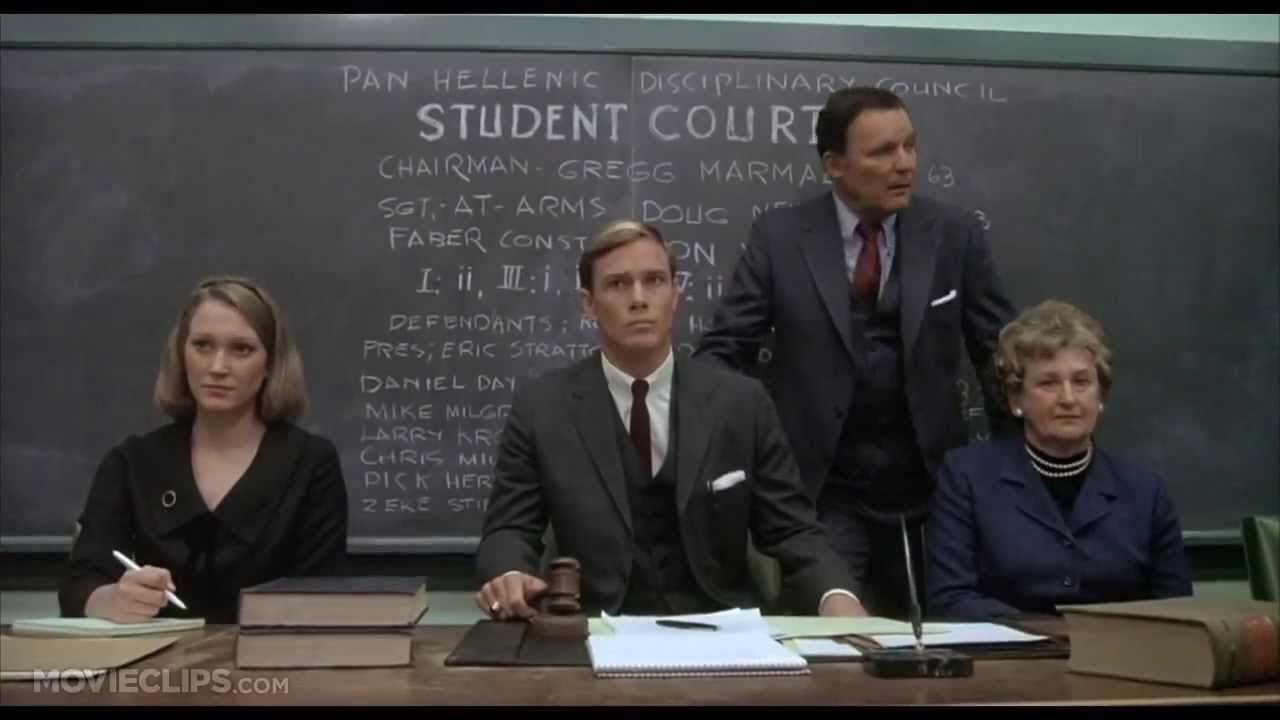
Checker Finn: Ed Reform as the Faber College Pan-Hellenic Disciplinary Council

July 18, 2016

(Guest Post by Matthew Ladner)

Checker Finn wrote a read-worthy lament for the state of ed reform for Hoover. Read the whole thing but this paragraph in particular caught my attention:

Exacerbating the disagreements on those questions is the self-righteousness that seems to have swamped this field in recent years. Education has never been a mirth-filled realm, but when I first got into it a lot of participants could still smile, occasionally giggle, even tell the odd joke—and the chuckles were, often as not, bipartisan. Today, however, practically nobody seems to have a sense of humor, at least not about anything bearing on ed reform. Is it because of our unfunny national politics? Because social media and 24/7 news mean that even a short chortle can be turned by one’s foes into evidence that one is making light of something? I’m not sure about the cause, but I can attest that it’s hard to make common cause with people who can never share a spoof or jest.

Practically nobody?!? It is alas a lonely task, but we continue to hold this last, best outpost of making light of things in ed reform-especially the deeply misguided and doomed to fail yet uhhh-gain sorts of things. We have been spoofing and jesting here at JPGB non-stop since 2008 and ed reform continues to provide plenty of material.

Checker makes an important point-social justice warriors make for poor dinner guests. It reminds me of this Charlie Rose debate about the 1960s when Barbara Ehrenreich droned on sternly while PJ O’Rourke’s related that his fondest 1960s memories involved LSD and picking up hippie women at protests.

Lighten up, Francis-we may as well keep a good sense of humor during what constitutes a protracted process of figuring things out.


Expert Ratings- A Cautionary Tale

July 15, 2016

GB Screenshot

(Guest Post by Matthew Ladner)

A few months ago, I was on a panel discussing the incorporation of user reviews into the K-12 space for things like digital courses and ESAs. One of my fellow panelists expressed skepticism about the entire project until I noted that Rotten Tomatoes allows both “expert” and “user” reviews of movies. With this, he expressed contentment so long as the experts got their own ratings for separate consideration.

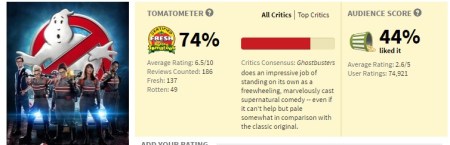
It has long been my experience using Rotten Tomatoes however that the user ratings tended to be much more reliable than the critic reviews. Last night I got a double barrel reminder of this when I allowed a 74% fresh critic rating convince me to go see Ghostbusters before the audience score came in (the studio released the film yesterday).

The 44% rating of the audience is incredibly generous. The 74% critic rating reveals some sort of deep divorce from reality. This movie is about as terrible as:

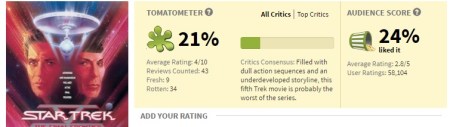
Star Trek V

Apparently 2o+% of people are just unwilling to admit that they paid to see a bad movie. What more proof? The critics nailed this one:

Highlander 2

Sometimes both the critics and the audience gets it wrong, but the critics get it more wrong. This would be the case with Ghostbusters 2016 and:

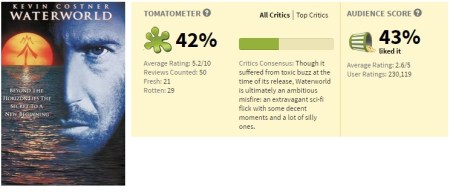
Jones Sometimes the critics and audience agree on a stinker:

Waterworld

So in the end, I’m happy to have “expert” reviews included, but if 74% of them thought that the hot mess I saw last night was a good movie, it says something important about relying solely on experts. Like everything else in life “experts” are not to be trusted.


Arizona Leads the Nation in NAEP Gains-Now It is Time to Go from Good to Great

July 14, 2016

(Guest Post by Matthew Ladner)

For you incurable skeptics, here are a few charts on Arizona’s glorious six-year (and counting?) reign as the NAEP gain champion, starting with 2009 to 2013:

Math NAEP gains 2009 to 2013

So just to provide some play by play here- Arizona 4th graders were 9 points below the national average on 4th grade math in 2009, but when this cohort reached 8th grade in 2013, they were only 4 points below the national average- within striking distance of the national average.

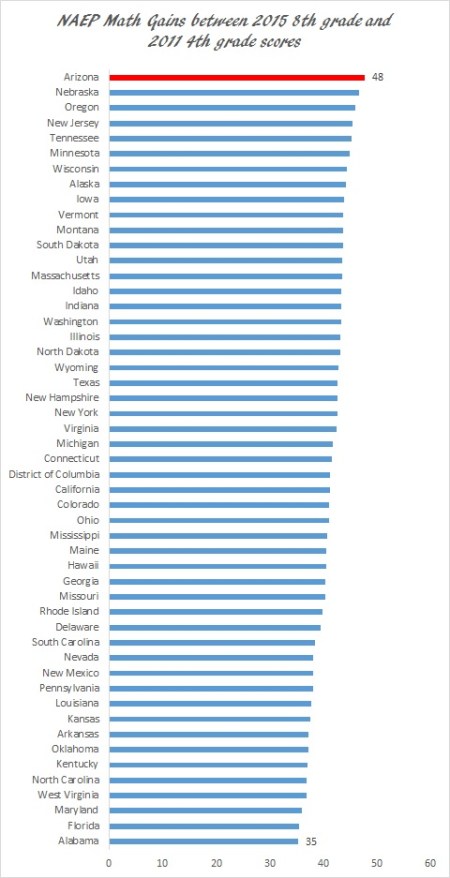
Here is what happened in the next cohort we can track in NAEP math- 4th graders in 2011 to 8th graders in 2015.

NAEP Math Cohort gain 2015

So in 2011, Arizona 4th graders scored five points below the national average on 4th grade math, still ranked in the bottom 10 of states. In 2015 the same cohort of students scored 2 points above the national average on 8th grade math. This was the first time in the history of the NAEP that Arizona had scored above the national average in any NAEP exam in any subject.

So where does this leave Arizona? Unfinished to be sure, but headed in the right direction. NAEP 8th grade scores are more reflective of the overall quality of a school system than 4th grade scores in my opinion, as you have additional years of schooling. In 2015, Arizona had moved to within the margin of error of the national average on both NAEP math and reading (slightly above in Math, even more slightly below in Reading). Arizona students were below the national average and outside the margin of error on both Math and Reading in 2009.

Of course the national average itself is a milestone but not a resting place- the United States does not rank well against other countries. We need to keep it up. Arizona was never going to become even an average performing state without above average gains, and no other state matches the gains seen by Arizona students over the last six years- so a bit of celebration is in order:


Guess which state had the largest overall NAEP gains in 2013…

July 13, 2016

(Guest Post by Matthew Ladner)

I’ve already been happy to report that measuring NAEP gains between 4th grade scores in 2011 and 8th grade scores in 2015, Arizona banked the largest overall gain in achievement. Just out of curiosity I decided to rank the states during the previous period (2009 to 2013) the same way- 4th grade scores in 2009 compared to 8th grade scores in 2013. I did this separately for Math and Reading.

Any guesses on which state came in first in overall gains? Here is a few clues:

Arizona wins again! First in overall math gains, fifth in overall reading gains, highest overall combined ranking. Feel free to pop out and take notes- we’ve been doing this since (at least) 2009. Yes, feel free to bring your golf clubs.

Oh yes- I almost forgot:


The Greene-Polikoff Wager: An Update

July 12, 2016

14305514cold-beer-t-shirts-and-hoodies-education-is-important-but-cold-beer-are-importanter

(Guest Post by Jason Bedrick)

In 2014, Jay made a wager with education policy wonk Morgan Polikoff regarding how many states would, after 10 years, still be a part of Common Core (defined as having “shared standards with shared high stakes tests-even if split between two tests”). The loser owes the winner a cold beer.

At the time the wager was made, the states had almost unanimously adopted Common Core so Morgan was confident but Jay thought political support for CCSS was a mile wide but an inch deep.

Morgan noted that “At last count, 1 state out of 45 has repealed the standards.”  I responded: “I’m sure gay marriage opponents felt similarly triumphant in 2004. How many states have effectively implemented Common Core?” […]

According to Heritage’s count, 15 states have already refused to join Common Core, paused implementation, or downgraded or withdrawn from participation in national tests.  I just need all of these states to continue toward withdrawal from Common Core and 11 more to join them over the next ten years.  I like my chances.

Just a few months later, Jay posted an update:

With the withdrawal of Iowa this week from the Smarter Balanced testing group, there are only 26 states that plan to use one of the two national tests to assess their students during the 2014-15 school year.  It’s true that 35 states remain part of the two testing consortia and some of the 9 states that have delayed implementation of the common tests may begin using one of them in the next few years.  But it’s safe to say that several of those 9 delayed start states will never follow through.  And some of the 26 states actually using a common test in 2015 are already making noises about withdrawing.  See for example reports coming out of Wisconsin and South Carolina.
If one more state that is currently using one of the common tests drops it than decides to follow through on implementation, I will have won the wager.  And we have more than 9 years to see that happen.

So how is the bet looking two years later? Well put it this way: Jay can probably already taste that beer. From Education Next:

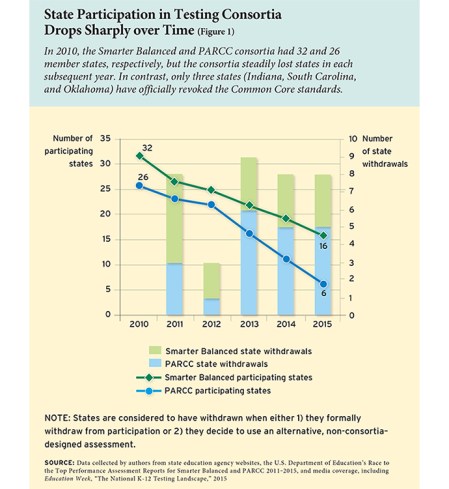
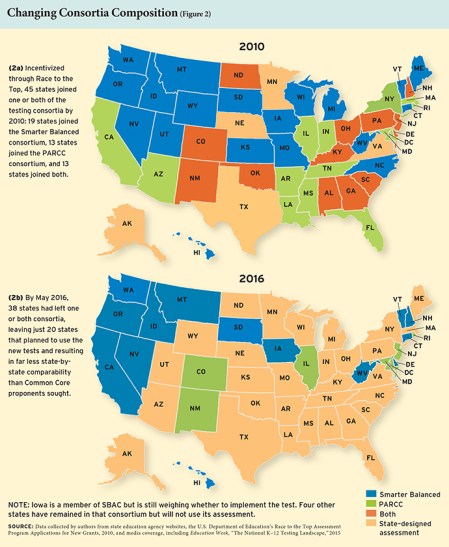
State participation in the consortia declined just as implementation of the new standards and tests was set to begin. The pace of withdrawals quickened over time, particularly for PARCC, which five or six states left every year between 2013 and 2015 (see Figure 1). As of May 2016, just six states planned to implement the PARCC-designed assessment in the 2016-17 academic year. SBAC also faced attrition but fared better and still retains 14 states that plan to use the full test. (That figure includes Iowa, where a legislative task force has overwhelmingly recommended the SBAC assessment, though as of early 2016 state officials had yet to formally accept the recommendation.) By early 2016, 38 states had left one or both consortia, short-circuiting the state-by-state comparability that the tests were designed to deliver (see Figure 2).

ednext_xvi_4_jochim_mguinn_fig01-small

“Oh, how the mighty have fallen!”

ednext_xvi_4_jochim_mguinn_fig02-small

Common Core in retreat.

Note that these charts do not reflect the fact that Illinois has just replaced PARCC with a “revamped” version of the SAT for its high school students. Students in grades 3-8 will still take the PARCC, so perhaps Illinois should count as half a state for purposes of the Greene-Polikoff Wager.

Of course, it’s always possible that the remaining CCSS states will work out the kinks, opposition will fade as people get used to the testing regime, and then the political winds will shift again and states will re-enter one of the CCSS testing consortia. A lot can happen in eight years. But there is no denying that Jay was prescient in his read of the situation.


The Blob’s Shameless Self-Interest

July 11, 2016

SHUT UP AND GIVE ME MONEY

(Guest post by Greg Forster)

The education blob has never been shy about demanding that we hand them money, with little to justify their demands beyond sheer bullying self-assertion. But this year has seen an especially outrageous spate of self-dealing activism in Oklahoma, as I write in my latest article for OCPA:

Perhaps there’s a rational case that Oklahoma should spend more on schools. If so, I haven’t run across it going through pages and pages of the blob’s invective. Their argument boils down to “we spend X amount and it’s too little! We need to spend more more more!”

A press corps with any self-respect or sense of professional responsibility would ask the blob questions like these: Why have previous increases in school budgets and teacher salaries failed to produce educational improvements? Why shouldn’t the new spending you demand be targeted to more specific, publicly identified needs instead of being allocated indiscriminately? How much spending—give us a dollar amount—would be enough to make you say spending is sufficient and any problems that persist are the responsibility of the schools?

Come for the fake Tocqueville quote; stay for the philosophical analysis of the role of self-interest in the American political order!

Like them, we need to be realistic about self-interest, but not cynical. Human nature is powerfully affected by self-interest, as the embarrassing spectacle of the Oklahoma blob shows. We need not be revolutionaries and try to make a brave new world where no such selfishness occurs; as Madison and Tocqueville both warned us, such utopianism is the quickest road to a pure dictatorship of the selfish. But democracy is nonetheless threatened by unrestrained selfishness, for the majority can in fact vote itself largesse.

As always, your comments – whether self-interested or not – are very welcome!


Bending Spoons with Andy Smarick

July 11, 2016

(Guest Post by Matthew Ladner)

Following up on Greg’s post on Andy Smarick’s great post on accountability and how our current systems are based upon premises on their way to being out of date. It brings to mind this scene in the Matrix:


You have to understand that most of these people are not ready to be unplugged, and many of them are so inured, so hopelessly dependent on the system, that they will fight to protect it.

Andy took the red pill- welcome aboard the Nebuchadnezzar!


“Public” Is Not “Government”

July 8, 2016

untitled

(Guest post by Greg Forster)

Andy Smarick is starting to have the most important realization about accountability – that the government school monopoly has corrupted not only our systems of accountability but even our conception of what accountability is. There is no need for a single, uniform accountability system in each geographic zone, and there is no need for accountability to be government-controlled.

Go read his post. Then remember that you read it here first. Not only the idea of families holding schools accountable but the idea that many other kinds of social organizations (think tanks, churches, civic groups, etc.) could help them do so by building family-driven structures of accountability.

My only complaint is that the title on his post reinforces the same error he is awakening from. The title is “Public Accountability vs. Consumer Accountability.” Since none of the language in the post itself reflects the extreme myopia we see in that title, I’m betting the title was composed by the smug technocrats at Fordham.

Welcome aboard, Andy! Soon enough you’ll realize these insights aren’t going to find an easy home at Fordham, but we’ll be here to welcome you as you pursue them.

Update: Ironically, I mispelled “error”!


The MacKenzies Weigh in on the 2015 NAEP gain Champion

July 6, 2016

(Guest Post by Matthew Ladner)

MM: Hows it goin eh? So I am Matthew MacKenzie, and this is my sister Lisa Graham Mackenzie…put on your touk!

LGM: <putting on hat> COO LOO COO COO COO COO COO COOOOOOOO! Good day!

MM: Good day! Sos our topic today is education…

LGM: Education? Do you need me to teach you how to open a beer again hoser?

MM: No! Ifs I didn’t learn that after the sixth lesson or so, I’da thirsted to death already!

LGM: You….learn? <snorts>

MM: Yeah….okay…..so good day, we are here today to talk about education in the United States.

LGM: They have education in the United States? I thoughts the test scores were even lower down there than yours hose-head?!?

MM: Yeah, well, they are, check out how high Canada is on this ranking eh!

MM: You may have to squint but Canada is near the top! United States, er, well but at least some American states are making progress…like getting a lot better…

LGM: Oh you mean like BEER! Remember when just a small number of breweries made almost all the beer, and it mostly tasted like stagnant pond water?

MM: Yeah- kinda like that! So’s now some states have kinda done the microbrewery thing for schools eh? Sos more people can find a school that they like!

LGM: Beauty! And hosers like you can find a beer you like!

MM: Yeah so the state with the biggest gains did microbrewery education in a big way eh? Ands you can read about in our column in the Arizona Republic!

LGM: What’s the Arizona Republic?

MM: You know, it’s like the Moose Jaw Times Herald, but even better and for Arizona!

LGM: Okay…So if they keep making gains they might be able to do advanced Canadian math problems like this one:

MM: Yeah…that’s what we call “applied math” up here in the Great White North!

LGM: Beauty! So we wrote a column and it ran, like, in the newspaper?!?

MM: Yeah!

LGM: Sos why does this post have a MacKenzie theme eh?

MM: Take off- you’ll have to read the column to find out, eh?

LGM: You take off hose-head!

MM: Okay so that’s our show for today eh…good day!

LGM: Good day!


The Next Accountability

July 6, 2016

Little-sprouts_-Grow-bean-sprouts-in-your-back-garden

(Guest post by Greg Forster)

Today the Friedman Foundation carries the introduction to my forthcoming series, The Next Accountability. In this series I will make the case that the education reform movement is being pulled apart by differing visions of “accountability”:

Our forefathers built the education reform movement on a foundation that all reformers shared: We need to hold schools accountable, so they’ll give kids the education we want them to get. Now we’re discovering cracks in the foundation. It turns out we don’t agree on what we want, or on how we get schools to deliver it.

These differing visions of accountablity are really differing visions of what education is for – which are in turn differing visions of what constitutes a good human life:

A few of us, however, think that all this technocracy is precisely what we have been fighting against all along. It is essentially an extension of the old regime’s philosophy: We’re the education experts, and we know best! It’s just as impersonal and unresponsive to the real needs of real people as the blob. It’s as if we defeated the Soviet Union, and then celebrated our victory by imposing communism on Western Europe and North America.

For this reason, supporters of choice are going to have to get beyond talking points and canned rhetoric about “markets” and “competition”:

America needs to rethink what we really want from schools. Whether of the old or new variety, technocratic systems fail not only because they can be manipulated by greedy and incompetent people or because they lack sufficient information about client preferences (although these things are also worth remembering)—technocracy fails more importantly because it is based on a wrong understanding of what education is for.

Knowing what we want requires us to reawaken to who we are. All the great thinkers who have cast big visions for education, from Plato and Aristotle to Aquinas and Locke to Rousseau and Dewey, agreed that knowing something about what it means to educate children ultimately requires us to know something about what it means to be human. If opponents of technocracy can’t say something about that, all our rhetoric about markets and competition is chaff in the wind.

In the forthcoming articles in this series, I will lay out a vision of what we want from schools, and how we can create new approaches to accountability that will help us get what we want, without falling into the technocratic trap.

Follow the link and read the introduction to get a sneak preview of what that will entail.

Championing a different vision of accountability may increase the current conflicts in the education reform movement rather than decrease them. Technocracy is rooted in a vision of what education is for – of what is good for human beings – that many people in the education reform movement really believe in. We shouldn’t expect them to give it up without a fight.

But, as I will argue, a fresh vision can attract new allies. In many cases they will be more powerful allies than our current technocratic coalition partners, who are increasingly dismissive of us and our concerns anyway. And if we’re not willing to fight technocracy, even when it comes from our friends (in many cases former friends, who turned on us as soon as they thought they could) what was the fight against the blob all about in the first place?

It is only through that kind of conflict that really historic progress gets made. Dr. Martin Luther King Jr. was not interested in renegotiating the terms of segregation. He came not to reform it but to exterminate it. We too must fight not for a renegotiation of terms with the technocratic beast, but for its end.

The remainder of this series will launch shortly after Friedman Legacy Day on July 29, when the Friedman Foundation will be making big announcements about its future. One thing I can promise you: we will never leave behind the mission to fight for justice and freedom that has always animated the foundation, which is Milton’s greatest legacy to us.

In the meantime, I welcome your feedback and look forward to the next stage of the fight!