Weingarten Has a Great Idea!

December 10, 2012

Lisa Simpson keep out sign

(Guest post by Greg Forster)

What a shock – Randi Weingarten wants to solve the teacher quality crisis with higher barriers to entry. Because unions never erect barriers to entry for a profession in order to fatten themselves by exploiting the weak and vulnerable.

Weingarten’s article opens with yet another sign that we’re winning: “Every profession worth its salt goes through such periods of self-examination. That time has come for the teaching profession.” Yes, it sure has!

But you know, maybe this is a good idea. Hey, Randi, how about this: we institute a bar exam for teachers and then anyone who passes the exam is allowed to teach. What do you say to that?


Alfred Fielding and Marc Chavannes for The Al

October 30, 2012

Bubble wrap calendar

(Guest post by Greg Forster)

Pop! Alfred Fielding and Marc Chavannes invented bubble wrap in 1957. Pop! If that doesn’t deserve The Al, I don’t know what does. Pop! Pop!

If you’re like me, reading those little pops! gave you a vicarious thrill by bringing to mind all the times you’ve popped bubble wrap and loved it. It’s a visceral joy. If you consider both quality and quantity of enjoyment, there’s not a lot out there that beats bubble wrap.

Like many Al nominees, Fielding and Chavannes benefitted humanity through a combination of innovative thinking, entrepreneurial drive, guts, and some serenedipity. Working in a New Jersey garage, they were trying to invent a new kind of wallpaper – paper on the bottom where it sticks to the wall, plastic on the top where people see it. I can’t seem to determine whether they were actually envisioning something we would describe as “bubble wrap wallpaper” or if they were just trying to get a layer of plastic on top of a layer of paper, but Wikipedia says the product they were working on was “three dimensional wallpaper,” so hey, I say that’s good enough. It was bubble wrap wallpaper.

Bubble wrap wallpaper? Hey, it was 1957. But our intrepid heroes realized – to their credit – that bird wouldn’t fly. But they realized that their process for injecting air into plastic would provide a revolutionary packaging material. They founded the Sealed Air Corporation in 1960 and the rest is history.

Let’s look at bubble wrap as a helpful product first. Bubble Wrap is actually a name brand; Sealed Air Corporation holds the trademark. The product is manufactured in 52 countries and the company reported revenue of $4.2 billion in 2009. And then of course you have to add all the copycats. I can’t find information on the total amount of “plastic bubble packaging” used in the world, but it must be enormous.

Bubble wrap helps a lot of people do a lot of things. In addition to keeping your great-grandmother’s china safe during a move, a variety of special kinds of bubble wrap serve industry (and thus all of us) in a number of ways. For example, they make a special anti-static bubble wrap for shipping computer chips.

But you don’t want to hear about any of that. I know what you want. Pop!

Just add up all the pleasure everyone has ever gotten from popping those bubbles. Just the other day my daughter got a birthday present in the mail, and we had to get her to stop popping the bubbles before she would open the present!

Here’s a good test of the value of bubble wrap. You can buy hand-held, key fob sized bubble wrap simulators. You pop the little bubbles and they reinflate. And these days, bubble wrap has gone cloud. That’s right – there’s an app for that.

What makes popping bubble wrap so fun? Is it about power – the thrill of destruction? Maybe for some, but I doubt that’s the main attraction. Is it the excitement of steadily building the pressure, not knowing when the threshold will be crossed, until suddenly pop! – essentially a hand-held roller coaster or scary movie. That’s more plausible. But people who don’t care for roller coasters or scary movies – me, for example – seem to get as much out of bubble wrap as everyone else. In the end, I think it’s a mystery. Why do lots of people like chocholate and few people like anchovies? They just do.

So in addition to sheer quality and quantity of enjoyment, there’s another reason bubble wrap embodies The Al. It’s an improvement to the human condition that no central planner or philosopher could ever have dreamed up. It reminds us that at the deepest level, the universe is the way it is simply because it is that way. That doesn’t mean the universe is irrational or amoral at its core; it means that the deepest mind and morality of the universe are what they are independent of whether we understand or approve. And so also with beauty, which is the third of the three classical Aristotelian transcendent experiences (the good, the true and the beautiful) – including the beauty of popping bubble wrap.

Pop!


El Paso Cheating Scandal

October 15, 2012

(Guest post by Greg Forster)

One guy who isn’t going to be nominated for this year’s Al Copeland award is Lorenzo Garcia, disgraced ex-superintendent of El Paso schools. He’s at the center of the latest major cheating scandal connected to NCLB. From the New York Times:

Students identified as low-performing were transferred to charter schools, discouraged from enrolling in school or were visited at home by truant officers and told not to go to school on the test day. For some, credits were deleted from transcripts or grades were changed from passing to failing or from failing to passing so they could be reclassified as freshmen or juniors…

In 2008, Linda Hernandez-Romero’s daughter repeated her freshman year at Bowie High School after administrators told her she was not allowed to return as a sophomore. Ms. Hernandez-Romero said administrators told her that her daughter was not doing well academically and was not likely to perform well on the test.

Ms. Hernandez-Romero protested the decision, but she said her daughter never followed through with her education, never received a diploma or a G.E.D. and now, at age 21, has three children, is jobless and survives on welfare.

“Her decisions have been very negative after this,” her mother said. “She always tells me: ‘Mom, I got kicked out of school because I wasn’t smart. I guess I’m not, Mom, look at me.’ There’s not a way of expressing how bad it feels, because it’s so bad. Seeing one of your children fail and knowing that it was not all her doing is worse.” [ea]

Accountability systems don’t work when those being held accountable percieve the system as political and illegitimate. Schools need these systems but they’re not going to work as long as education is a government monopoly. More on that here and here.

Via Bill Evers


Progressives for School Choice

October 3, 2012

(Guest post by Greg Forster)

There was a time when Jack Jennings posed as a nonpartisan voice of apolitical wisdom. That was then! It was always a thin disguise, but the mask is really off now:

The Republicans’ talk about giving parents the right to choose is a politically expedient strategy … Just beneath the surface of the education rhetoric are political motivations to thwart integration, weaken the Democratic coalition, and cripple the teachers’ unions.

Over on RedefineED, Doug Tuthill responds with a really amazing history of progressive support for school choice. Go take a look! Even if you think you know this history, you’ll learn something.

Actually, Tuthill leaves two major figures off his list. Thomas Paine proposed school vouchers for England, justified as a way to advance the well being of the poor, in the appendix to the second edition of The Rights of Man. And J.S. Mill supported vouchers as a blow against socially conservative cultural dominance, writing that “A general State education is a mere contrivance for moulding people to be exactly like one another.”

(via Bill Evers)


Kevin Williamson on Homeschooling

October 3, 2012

(Guest post by Greg Forster)

If you subscribe to National Review, don’t miss Kevin Williamson’s fantastic piece in the new issue on home schooling. Here are three little tastes of a long article in which every paragraph is good:

In the public imagination, homeschooling has a distinctly conservative and Evangelical odor about it, but it was not always so. The modern homeschooling movement really has its roots in 1960s countercultural tendencies; along with A Love Supreme, it may represent the only worthwhile cultural product of that era. The movement’s urtext is Summerhill: A Radical Approach to Child Rearing, by A. S. Neill, which sold millions of copies in the 1960s and 1970s…

[Dana Goldstein, writing against home schooling in Slate] went on to argue that the children of high-achieving parents amount to public goods because of peer effects…She does not extend that analysis to its logical conclusion: that conscientious, educated liberals should enroll their children in the very worst public schools they can find in order to maximize the public good…

Teachers’ unions have money on the line, and ideologues do not want any young skull beyond their curricular reach. A political class that does not trust people with a Big Gulp is not going to trust them with the minds of children.

If you don’t subscribe – shame on you!


Conspiracy Theory Time!

October 2, 2012

(Guest post by Greg Forster)

Check out this delicious teacher-blogospheric reaction to Bill Moyers’ new ALEC story:

The education stuff starts at around the 14 minute mark, with the main example being the overthrow public education in Tennessee by a virtual school operator.

What I’ve been too lazy to determine on my own is this: is our new unelected state charter school authority based on an ALEC template? Or is that something that came out of Race to the Top? Or is there even a difference?

ALEC, President Obama’s Education Department – what’s the difference?

Not that there aren’t some real conspiracies. Thankfully, they tend to fail due to their internal contradictions and inability to control their own actors. But these people live in a world where literally everyone is out to get them and there are no other agendas besides teachers versus the world. Wonder how that mindset gets cultivated?


Mahatma Kozol Takes Cash Only

September 26, 2012

(Guest post by Greg Forster)

Over the email transom from George Mitchell comes a publicity item for Jonathan Kozol’s latest weeper. Here’s the part that really stood out to me:

We should let folks know there are signing restrictions for this event. Mr. Kozol will only personalize copies of Fire in the Ashes, and will only sign the most recent editions of four of his backlist titles that are purchased at the event.

What a selfless and noble tribune of generosity! What a titanic warrior against the greed of capitalism!

For my money (if Kozol will pardon the expression) nobody’s ever managed to top Tucker Carlson’s 1995 classic “Jonathan Kozol’s Crying Game.” One of the best things WS published even back in its glory days.

PS “Mahatma Kozol” courtesy of the Fordham Institute, during Kozol’s ridiculous “partial fast” in 2007. The image seems to have disappeared from Fordham’s site but it lives on at Alexander Russo’s blog.


Paging Mr. Nottroth, Mr. Wim Nottroth…

September 5, 2012

(Guest post by Greg Forster)

I think the JPGB post I’m most proud of is my nomination of Wim Nottroth for the Al Copeland award. I was deeply honored, of course, to have my nominee go on to win “the Al.” But I was even more honored to help more people learn about Nottroth and what he did for all of us.

Readers interested in similar threats to liberty may have been following the case now pending in Germany, where a rabbi is under criminal investigation for the “offense” of circumcising children. For those who are interested, over on the new group blog I edit called Hang Together, I offer four lessons Americans can learn from the German circumcision case as we wrestle with our own struggles on religious freedom.


Charters v. Private Schools: Urban and Suburban Differences

August 28, 2012

(Guest post by Greg Forster)

Cato has new research out from Richard Buddin, examining where charter schools draw their students from. Adam Schaeffer offers a summary, emphasizing the dangers of charter schools: “On average, charter schools may marginally improve the public education system, but in the process they are wreaking havoc on private education.”

I agree with the basic premise: charters don’t fix the underlying injustice of government monopolizing education by providing “free” (i.e. free at the point of service, paid for by taxpayers) education, driving everyone else out of the education sector. As Jay and I have argued before, vouchers make the world safe for charters; that implies you can view charters as a response by the government to protect its monopoly against the disruptive threat of voucher legislation.

But what interests me more are the urban/suburban and elementary/secondary breakdowns of these data. It appears that charters are only substantially cutting into private schools in “highly urban” areas. In the suburbs, the charter school option is framed much more in terms of boutique specialty alternatives (schools for the arts, classical education, etc.) rather than “your school sucks, here’s one that works.” If you’d asked me, I would have guessed that would also cut heavily into the private school market – it would appeal to parents of high means who are looking for something out of the ordinary for their children, and that demographic would be most likely to already be in private schools. Yet the data show otherwise; apparently the families choosing boutique suburban charters weren’t much impressed with their private school options. And what’s up with this weird distribution on the elementary/secondary axis? Apparently public middle schools really stink in urban/suburban border areas.

Discuss!


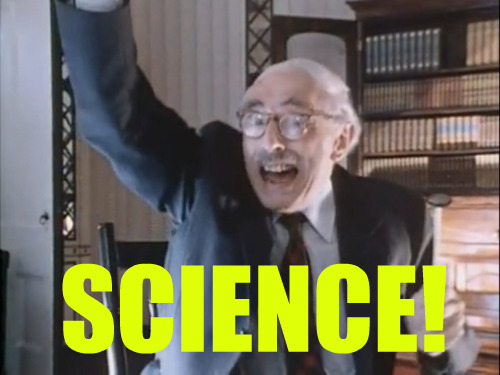
Blinding Us with Science

August 15, 2012

(Guest post by Greg Forster)

Jay’s proposed reforms to the way Gates handles science are relevant far beyond the Gates Foundation, and foundations generally. He’s helping us think about how to wrestle with a deeper problem.

Public policy arguments need an authority to which they can appeal. The percentage of the population that is both willing and able to absorb all the necessary information to make a responsible decision without relying on pretty sweeping appeals to authority is very small. And even for us wonks, you can’t reduce the role of authority to zero; life doesn’t work that way. (Economists call this “the information problem.”)

So it’s normal, natural and right for public policy arguments to make some appeals to authority. The problem is that increasingly, our culture has no widely recognized authorities other than science. When there are many potential loci of authority, there is less pressure to corrupt them. If the science doesn’t back your view, you can appeal to other sources of authority. Where there is only one authoritative platform, there’s no alternative but to seize it.

As I once wrote:

Say that you favor a given approach – in education, in politics, in culture – because it is best suited to the nature of the human person, or because it best embodies the principles and historic self-understanding of the American people, and you will struggle even to get a hearing. But if you say that “the science” supports your view, the world will fall at your feet.

Of course, this means powerful interest groups rush in to seize hold of “science,” to trumpet whatever suits their preferences, downplay its limitations, and delegitimize any contrary evidence. If they succeed – which they don’t always, but they do often enough – “the science” quickly ceasees to be science at all. That’s why “scientific” tyrannies like the Soviet Union had to put so many real scientists in jail – or in the ground.

We need other sources of wisdom and knowledge – and hence of authority, because those who are recognized as having wisdom and knowledge will be treated as sources of authority – besides science. As Jay has written:

Science has its limits.  Science cannot adjudicate among the competing values that might attract us to one educational approach over another.  Science usually tells us about outcomes for the typical or average student and cannot easily tell us about what is most effective for individual students with diverse needs.  Science is slow and uncertain, while policy and practice decisions have to be made right now whether a consensus of scientific evidence exists or not.  We should rely on science when we can but we also need to be humble about what science can and can’t address…

My fear is that the researchers, their foundation-backers, and most-importantly, the policymaker and educator consumers of the research are insensitive to these limitations of science.  I fear that the project will identify the “right” way to teach and then it will be used to enforce that right way on everyone, even though it is highly likely that there are different “right” ways for different kids…

Science can be corrupted so that it simply becomes a shield disguising the policy preferences of those in authority.  How many times have you heard a school official justify a particular policy by saying that it is supported by research when in fact no such research exists?  This (mis)use of science is a way for authority figures to tell their critics, “shut up!”

To summarize the whole point, our group of school choice researchers put it well (false humility aside) in our Education Week op-ed earlier this year:

Finally, we fear that political pressure is leading people on both sides of the issue to demand things from “science” that science is not, by its nature, able to provide. The temptation of technocracy—the idea that scientists can provide authoritative answers to public questions—is dangerous to democracy and science itself. Public debates should be based on norms, logic, and evidence drawn from beyond just the scientific sphere.

What can we do about it? Beyond building in checks and balances to ensure that science isn’t being abused, we can make a deliberate effort to appeal to non-scientific sources of wisdom. There’s nothing unscientific about relying on “norms, logic, and evidence drawn from beyond just the scientific sphere.” In Pride and Prejudice, Caroline Bingley comments that it would be more rational if there were more conversation and less dancing at balls; her brother comments that this would indeed be “much more rational, I dare say, but much less like a ball.” It might be more scientific if our civic discourse appeals to nothing but science, but it’s much less like civic discourse.

For a good example of what I mean, check out Freedom and School Choice in American Education. When it came out, I commented on how it showed the diverse values that had led the authors to support school choice:

What’s particularly valuable about this book, I think, is how it gives expression to the very different paths by which people come to hold educational freedom as an aspiration, and then connects those aspirational paths to the practical issues that face the movement in the short term. Jay comes to educational freedom with an emphasis on accountability and control; against the Amy Gutmanns of the world who want to set up educational professionals as authority figures to whom parents must defer, Jay wants to put parents back in charge of education. Matt comes to educational freedom with an emphasis on alleviating unjustified inequalities; against the aristocrats and social Darwinists of the world who aren’t bothered by the existence of unjustified inequalities, Matt wants social systems to maximize the growth of opportunities for those least likely to have access to them. And I come to educational freedom with an emphasis on the historical process of expanding human capacities, especially as embodied in America’s entrepreneurial culture; agaisnt all forms of complacency, I want America to continue leading the world in inventing ever better ways of flourishing the full capacities of humanity. And each of the other contributors has his or her own aspirational path.

Individual liberty; the lifting up of the poor and the marginalized; the American experiment in enterprise culture. These are fine things worth fighting for, and they would remain so no matter what the science says.