Third Edition of “Win-Win” Adds a Third Win

April 17, 2013

Win-Win 3.0 cover

(Guest post by Greg Forster)

This morning, the Friedman Foundation releases the third edition of my biannual report summarizing the empirical research on school choice. As in previous years, I survey all the available studies on academic effects – both for students who use school choice and for public schools. Hence the title “A Win-Win Solution” – school choice is a win for both those who use it and those who don’t.

New in this edition of the report, I also survey the impact of school choice on the democratic polity in three dimensions: fiscal impact on taxpayers, racial segregation and civic values and practices (such as tolerance for the rights of others). Guess what it shows? School choice is not just win-win, it’s actually win-win-win. It not only benefits choosing families and non-choosing families; it also benefits everyone else through fiscal savings and the strengthening of social and civic bonds.

Here’s the most important part of the report – that unbroken column of zeros on the right remains as impressive as it ever was. Do please read the rest if you’d like to know more!

Win-Win 3.0 chart


Let the National-Standards Culture Wars Begin!

April 12, 2013

psychic-octopus-culture-war

Paul the psychic octopus sez: “Did I tell you so? Let me count the ways.”

(Guest post by Greg Forster)

And so it begins! Over on NRO, Heather Mac Donald is stirring up a culture war over the new national science standards:

One doesn’t need to be a global-warming skeptic to be appalled by a new set of national K–12 science standards. Those standards, developed by educrats and science administrators, and likely to be adopted initially by up to two dozen states, put the study of global warming and other ways that humans are destroying life as we know it at the very core of science education. This is a political choice, not a scientific one. But the standards are equally troubling in their embrace of the nostrums of progressive pedagogy.

I’m sure Mac Donald is right – I certainly trust her more than I trust the cronies who are writing the standards. But the larger picture here is the dramatic increase in the politicization of school curricula that national standards inevitably creates. Of course, the very existence of the school monopoly is itself a neverending geyser of political headaches and occasional massive warfare over the curriculum. But nationalization multiplies the problem a hundredfold.


Gerson Cites Voltron

April 4, 2013

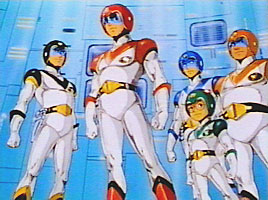
voltron team (original)

(Guest post by Greg Forster)

As long as we’re on the subject of narcissism here on JPGB, may I note that Michael Gerson quoted our Voltron op-ed in Monday’s Washington Post?

But even small, restricted choice programs have shown promising results — not revolutionary but promising. Last year a group of nine leading educational researchers summarized the evidence this way: “Among voucher programs, random-assignment studies generally find modest improvements in reading or math scores, or both. Achievement gains are typically small in each year, but cumulative over time. Graduation rates have been studied less often, but the available evidence indicates a substantial positive impact. . . . Other research questions regarding voucher program participants have included student safety, parent satisfaction, racial integration, services for students with disabilities, and outcomes related to civic participation and values. Results from these studies are consistently positive.”

I’d tweet about it, but I’m too cool for Twitter.


David Sarnoff for William Higinbotham Inhumanitarian

March 21, 2013

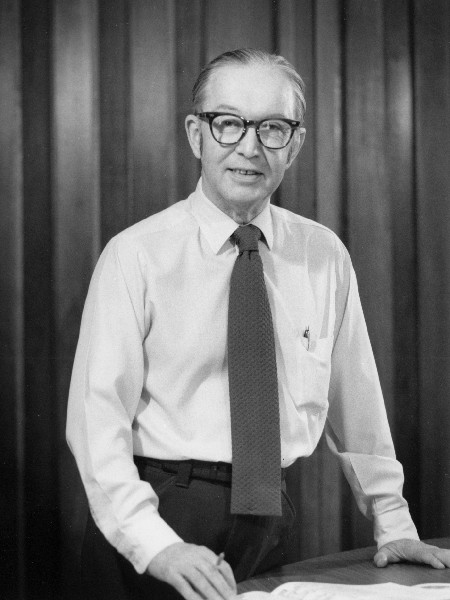
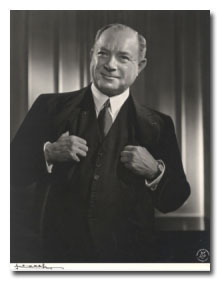
David Sarnoff

(Guest post by Greg Forster)

Many corporate titans have had the opportunity to ruin the lives of intrepid young inventors and entrepreneurs whose innovations would have upset the apple cart of corporate profits. Few, however, have the unusual distinction of ruining the life of a really world-class inventor whose product revolutionizes an industry. World-tranforming inventions don’t just fall off the tree every day. A greedy fat cat is amazingly lucky if fate grants him the golden opportunity to crush such an extraordinary upstart.

David Sarnoff did it twice.

If you remember that Everclear song from a while back, you know that today, AM radio is remembered as a joke. But there was a time when it was all anyone had. The days of broadcast radio may be coming to close thanks to satellite, but for a long time we were blessed to have the superior-in-every-way technology of FM.

But not long enough a time. Commercialization of FM was delayed by two or three decades, and its inventor driven to suicide, thanks to our illustrious Higgy nominee.

FM radio broadcasting technology was invented by Edwin Armstrong. In the 1910s, Armstrong figured out how to reduce interference between bandwidths. In the 1920s he invented Frequency Modulation (FM), which delivered far superior sound. FM technology is so awesome that it is still the industry standard, almost a century after it was invented. We had to go to outer space to find something better.

In 1937, using his own money, Armstrong built the first ever FM radio station. And then another, and another. By the mid-40s he had a national network of stations, the Yankee Network. Remember, he built the whole thing from scratch to nationwide rollout over more than 30 years, with his own technology, his own work, and risking his own money.

David Sarnoff, head of the Radio Corporation of America, wasn’t having any of that! RCA made its fortune from AM stations – a big enough fortune to buy influence in Washington. So Sarnoff talked the FCC into moving the FM band from 42 to 50 MHz to 88 to 108 MHz.

Armstrong’s stations were all obsolete, overnight. Ruined, he committed suicide in 1954. FM didn’t become industry standard for another 30 years.

Now, one could argue that if FM was such great stuff, why didn’t more investors back Armstrong and keep him going? The answer seems pretty obvious to me. If the FCC is in Sarnoff’s pocket, nobody’s going to invest in technology that Sarnoff doesn’t want to permit.

Seems like this would make Sarnoff eminently qualified for The Higgy. But you know what? Ruining the inventor of FM radio was small potatoes for Sarnoff. By the time he was shutting down Armstrong, he had already ruined the inventor of television.

Philo Farnsworth came up with the basic idea for television at age 14 and demonstrated it at age 21. That was in 1927. Now, if something as revolutionary as TV technology was first demonsrated in 1927, why did it take until the 1950s to spread into homes across America?

Ask David Sarnoff! When Farnsworth filed for a patent in 1926, Sarnoff saw that TV was the future and sprang into action to defend RCA’s broadcasting dominance. At first he signed up another inventor to work for RCA and claimed this other guy had invented the TV, but the Patent Office ruled in Farnsworth’s favor in 1930. So Sarnoff had to make peace with Farnsworth if he wanted to make TVs, right?

Ha ha. Sarnoff went ahead and made TVs without paying Farnsworth. Long after it was too late, the courts forced Sarnoff to pay Farnsworth a measly $1 million. Compare that to the revenue RCA made by positioning itself as a dominant TV provider. The impact of Sarnoff’s theft is even greater because the growth of the TV industry was suddenly put on hold with the advent of WWII; by the time the war was over and the floodgates were open for TV to take over the world, Farnsworth’s patent had expired.

Celebrate innovation and entrepreneurship by supporting David Sarnoff for William Higinbotham Inhumanitarian of the Year.

HT Cracked


Nominations Solicited for William Higinbotham Inhumanitarian of the Year

March 21, 2013

William Higginbotham

(Guest post by Greg Forster)

At last! The time has arrived – time for our first ever William Higinbotham Inhumanitarian of the Year Award. Send in your nominations, by email or in a blog comment!

“The Higgy” will be awarded on April 15 to the nominee who best exemplifies the criteria for the award, as laid out by Jay:

“The Higgy” will not identify the worst person in the world, just as “The Al” does not recognize the best.  Instead, “The Higgy” will highlight individuals whose arrogant delusions of shaping the world to meet their own will outweigh the positive qualities they possess.

That’s “The Al” as in the Al Copeland Humanitarian of the Year Award, which recently concluded its fifth year (including the inaugural award to Copeland himself) by honoring George P. Mitchell.

“Arrogant delusions of shaping the world” perfectly captures the spirit of our new award’s namesake. He invented the video game, which is just about the coolest thing I can imagine anyone putting on his tombstone; yet he lamented, in the words of Wikipedia, “that he would more likely be famous for his invention of a game than for his work on nuclear non-proliferation.” As I said when I first honored him by announcing that he would not be nominated for The Al:

We shall not tarnish the sterling silver of Al Copeland’s reputation by associating it with such filth. Copeland may have offended the delicate sensibilities of many with his penchant for fast cars and boats. He may have annoyed his neighbors to the point of filing lawsuits with his extraordinary Christmas decorations. He may have failed in some busienss ventures. More seriously, he may have had a turbulent family life.

But say this for Al Copeland – he never thought nuclear non-proliferation was more important than videogames.

That’s a stick in the eye to everything the Al Copeland award stands for.

And here is the final humiliation for Higinbotham – unlike Al Copeland, who was the first recipient of the Al Copeland Humanitarian of the Year Award, we are not going to give The Higgy to William Higinbotham. Paradoxically, he deserves it so much that he doesn’t deserve it.

Instead, we’re going to give it to someone nominated between now and April 15, right here on JPGB – maybe your nomination. So nominate early and often!


Pass the Popcorn: Justice League for Dummies

February 10, 2013

20130210-150410.jpg

(Guest post by Greg Forster)

Hollywood is so dumb, they’re actually having trouble making a Justice League movie. Over on Hang Together, I am not impressed:

Look, you have here a team consisting of:

1) A virtuous hero raised by decent ordinary folk on a farm in Midwest corn country;

2) A self-made billionaire genius whose parents were slaughtered in front of him in a big east coast city;

3) A beautiful, fascinating noblewoman from an advanced but bizarre civilization who doesn’t believe in our ways but is stuck here and is trying her best to make our home hers; and

4) A couple other less important characters (choose any two from dozens of DC universe possibilities).

In other words, you have:

1) The moral backbone of America;

2) The cosmopolitan entrepreneurial genius of America;

3) The exotic immigrant from aristocratic Europe; and

4) Comic relief.

If you can’t make that movie, get out of the storytelling business.

Read the rest here, including my suggested opening scenes for the film.


Vouchers from the Hell Planet

February 5, 2013

Vouchers from the Hell Planet

(Guest post by Greg Forster)

If you value your productivity, do not click here.

Also, to keep this rolling, I made this:

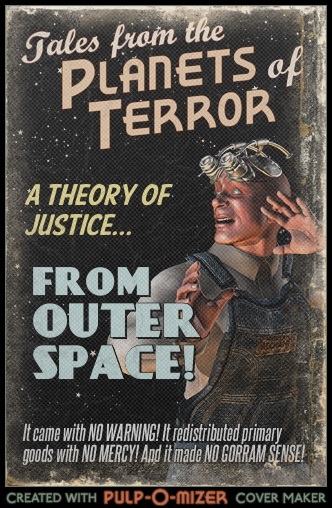
A Theory of Justice from Space

Your move, Matt.


The 123s of the ABCs

January 28, 2013

ABCs of School Choice 2013 Milton & Rose

(Guest post by Greg Forster)

My colleagues at the Friedman Foundation have released this year’s ABCs of School Choice, which you can find here – but only if you want the very latest and best data on school choice.

Just inside the cover is this striking photograph of Milton and Rose, which I had never seen before. Coming up on seven years after his passing, I’m tremendously heartened by the progress school choice has made. Right up until his death Milton was boldly predicting that he would live to see one state enact a universal voucher. As I’ve said on numerous occasions, it was a gutsy thing to say for a man who had seen the far side of 90 and was cracking jokes about having outlived the actuarial tables.

Next to the photo appears this statement, which first ran in The School Choice Advocate in 2004:

Government is committed to assuring that all children receive a minimum education. It currently does so by setting up and running schools, assigning students within a designated catchment area to each school. Students are thereby deprived of choice. They go to the designated school or else they do not benefit from the government commitment and their parents must pay twice for their education—once in the form of taxes, again in tuition.

Equally important, government is deprived of the benefits of competition. It is as if the government decided that the automobiles it uses must be built in government factories. What do you think the quality and cost of government cars would be? Or, to take another example, it is as if recipients of food stamps were required to spend them in a specified government-run grocery store.

It is only the tyranny of the status quo that leads us to take it for granted that in schooling, government monopoly is the best way for the government to achieve its objective.

A far more effective and equitable way for government to finance education is to finance students, not schools. Assign a specified sum of money to each child and let him or her and his or her parents choose the school that they believe best, perhaps a government school, perhaps a private school, perhaps homeschooling. Let the schools in turn, whether government or private, set their own tuition rates, and control their own operating procedures. That would provide real competition for all schools, competition powered by the ultimate beneficiaries of the program, the nation’s children.

ABCs of School Choice 2013 Milton signature

Check it out.


Starring Matt Ladner as the Difference Principle!

January 16, 2013

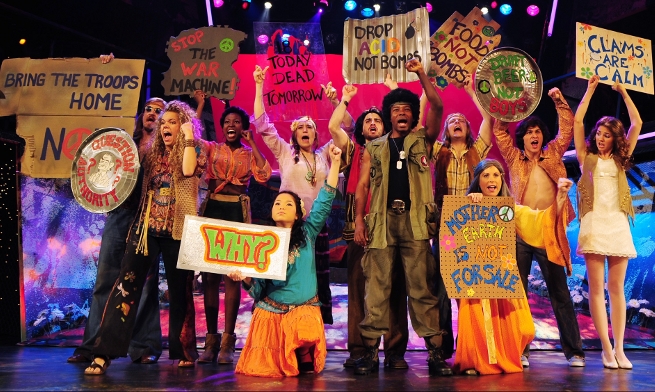
Hippies on stage

(Guest post by Greg Forster)

Are you ready for this? A Theory of Justice: The Musical!

No, really:

In order to draw inspiration for his magnum opus, John Rawls travels back through time to converse (in song) with a selection of political philosophers, including Plato, Locke, Rousseau and Mill. But the journey is not as smooth as he hoped: for as he pursues his love interest, the beautiful student Fairness, through history, he must escape the evil designs of his libertarian arch-nemesis, Robert Nozick, and his objectivist lover, Ayn Rand. Will he achieve his goal of defining Justice as Fairness?

Wait, I thought they already made that show. It was called Hair.

Here’s a publicity photo from the production – Matt Ladner in costume for his co-starring role as “The Difference Principle”:

ladnerhippie

HT David Koyzis


Refuting Rauch and EPI on the Economics of Productivity

December 12, 2012

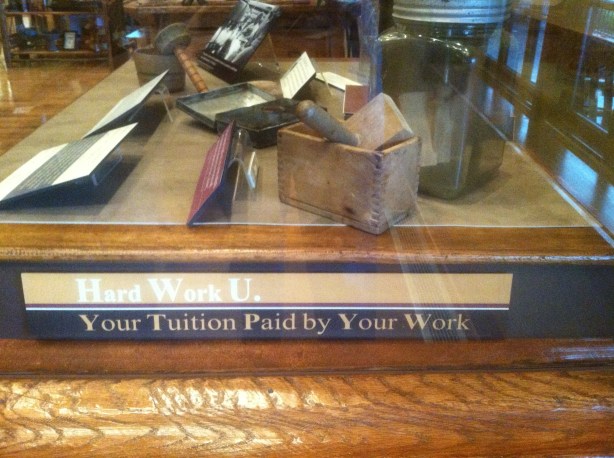
Hard Work U 3

(Guest post by Greg Forster)

Many readers of JPGB will be familiar with the hard-left, union-friendly Economic Policy Institute. A recent article by Jonthan Rauch uses some EPI graphs to argue that the U.S. economy no longer rewards working-class employees for productivity. Over on Hang Together, I say the graphs are deceptive. The problem is a decline in productivity in the workers, caused by – JPGB readers will be shocked – lousy K-12 schools (and also a loss of the older religious work ethic).

If you’re familiar with EPI’s work, you won’t be surprised – Jay, Marcus and I took on some very shoddy work they did on teacher pay back in Education Myths.