The Federal Role In Education

October 21, 2008

Mike Petrilli has an excellent piece on Flypaper about lessons for the next administration on the limits of federal involvement in education policy.  He’s reacting to a report by Sara Mead and Andy Rotherham laying out an agenda for the federal government, which presumably they will be helping administer for an Obama administration.

Having learned these lessons the hard way, Mike warns that Sara and Andy are falling into old traps despite the best of intentions.  Mike argues that giving money to favored organizations, such as KIPP charters and Teach For America to “Grow What Works” will suffer from the same flaws as the Bush administration’s efforts to give money to favored organizations, such as Reading First.  Even if the favored groups are doing great work, giving money to them will be portrayed by opponents and the media as cronyism and pork. 

In addition, Mike notes that expanding Teach For America and KIPP requires cooperation from state and local agencies to lift caps on charters, equalize funding for charters and traditional public schools, and relax certification requirements.  The problem is that state and local agencies have perfected the art of subverting federal mandates.  At best unwilling state and local agencies will minimally comply with federal requirements while eviscerating their spirit.  At worst they will defy the requirements and dare the federal government to withhold funds.  The feds generally lack the political nerve to risk the political fallout from actually applying a sanction to a local or state education agency.

Let me expand Mike’s observations to draw lessons for the future of No Child Left Behind.  Like Mike, I once believed that the federal government could use the carrots and sticks (mostly sticks) in NCLB to motivate local and state education agencies to improve.  Since I was convinced by evidence that incentive systems worked, why shouldn’t the federal government do what works? 

My mistake and the mistake of NCLB was in not considering how much implementation of those incentive systems matters.  The federal education bureaucracy lacks the familiarity with local circumstances, the nimbleness to respond to changing circumstances, and the political will to apply sanctions to properly implement an incentive system.  Incentive systems are good for education reform but the federal government is too big, slow, far-away, stupid, and cowardly to do it right. 

The same is likely to be the case when the federal government tries to expand Teacher For America and KIPP under an Obama administration.  As Andy and Sara will soon discover and as Mike has warned them, the federal government will be obstructed by unwilling local and state actors.  And the mandates the Feds issue to overcome that resistance will trample upon or fail to anticipate local circumstances.

So what can the federal government do right?  First, they can continue to improve the availability of information about the school system.  NCLB deepened and entrenched the testing requirements that 37 states had already adopted before NCLB was adopted.  Improving transparency facilitates better policy evaluation and the development of effective state and local accountability systems.

Second, the federal government can facilitate “redistributive” efforts that localities cannot pursue without being punished by collective action issues.  For example, no locality can operate a substantial special education or English language learner program without attracting more students needing services, which then drives up the costs of the programs and drives away the local tax base that pays for those programs.  (See Paul Peterson’s The Price of Federalism for a great discussion of this).  To the extent that we want redistribution, we need the federal government to mandate it.  And I fully confess that I depart from my Cato colleagues in that I think we need some (but very limited) redistribution.

Third, the federal government can fund pilot programs to experiment with new ideas and approaches.  But I should emphasize that I think the federal government has no business evaluating or paying for evaluations of those efforts.  The evaluation process in the US Department of Education and the small number of contract-research firms is far too politicized to be reliable.  Instead, the federal government should play its role of improving transparency by making data on the pilot programs it sponsors available to any qualified researcher rather than to a favored research firm.  The Feds should heavily be in the data collection and distribution business, much as the Department of Commerce makes economic data available, but they should leave analyses of those data to the market of ideas.

The failures of the Bush administration have been a humbling experience.  But we are doomed to repeat their mistakes if we do not learn from them and limit the federal role in education to what the Feds can actually do well.

(edited for typos)


Memo to Gadfly: History Failure Is a Historical Problem

October 21, 2008

“Okay, Mr. Hancock, if you’re so smart, how many of the freedoms protected in the Magna Carta can YOU name?”

(Guest post by Greg Forster)

The new Gadfly includes a guest editorial lamenting that our students don’t know civics, history, geography, etc. The editorial claims social studies is being “squeezed out” by accountability programs and that we should be “reinserting history and related subjects back into the curriculum.”

All this assumes that the failure of public schools to teach social studies effectively and the resulting colossal student ignorance of civics is a new phenomenon. Otherwise, the claim that social studies is being “squeezed out” and the call to “reinsert” it would make no sense.

But in fact this is not a new phenomenon. The catastrophic failure of social studies education in public schools is a subject with a long history. So what does that do to the story that social studies is being “squeezed out”?

Let me be clear: if I thought it were true that social studies was being squeezed out, but I also thought this would result in a change to our 70% national graduation rate (50% urban) and rampant illiteracy and innumeracy even among those who “graudate,” I would consider that a price well worth paying – and I say that as a social scientist. But the evidence that social studies is being squeezed out is not in fact convincing.


Memo to Rhee: McKay Scholarships for DCPS!

October 19, 2008

(Guest Post by Matthew Ladner)

Erin Dillion over at the Quick and the Ed has posted a copy of a table on Special Education private placements from a recent research report on parental choice in Washington DC (see below).

So, is it just me, or would a McKay Scholarship program be a fantastic idea for DCPS? Rich kids are already getting private placements with the help of specialized attorneys, often Cadillac placements. McKay creates a maximum amount per pupil matched to their funding, and democratizes the private placement process: no lawyers necessary.

DCPS, like other school systems, has likely been complaining about “inadequate” special ed funding for decades. Typically this narrative involves shunting millions out of general ed funding into special ed. In DC, this story has been reinforced by private placement lawsuits, which often result in far more than the normal per capita funding, and create legal costs.

A  approach would substantially improve this. No lawsuits, no massive awards. If the parent of a child with a disability is disatisfied, they simply walk away with a predetermined maximum amount.

Alternatively- we can leave private placements as mostly something the rich white kids with attorneys access, at a sustantial cost to DCPS.


Bad Timing

October 19, 2008

Just days after I wrote about how teachers enjoy exceptional job security, even in hard economic times, the Dallas Independent School District (DISD) lays off 375 teachers.  The 135 stories about it found by Google News emphasize the harship and turmoil that these layoffs are causing.

I wouldn’t want to minimize that suffering in any way, but it is worth noting that the layoffs were not caused by tough economic times.  Instead, the teachers were let go to address an $84 million deficit that “was caused by a massive miscalculation in the budget.”  It seems that Dallas public schools had to fire 375 teachers because they couldn’t do the budget math properly.  Maybe they could even out their errors by issuing a press release about the layoffs filled with grammatical mistakes. 

So I guess teachers can lose their jobs.  But, to put it in perspective, this was only 3% of DISD’s teaching workforce and a tiny fraction of the nation’s 3 million public school teachers.  My point that teachers are remarkably insulated from economic downturns still holds, even if a number of teachers in Dallas lost their job due to gross budget mismanagement.


Keegan vs. Darling-Hammons debate webcast

October 17, 2008

(Guest Post by Matthew Ladner)

The chief education advisors for the McCain and Obama campaigns debate next week online. Check it out.


Pass the Popcorn: All-Time Great Summer Movies

October 16, 2008

epi518

(Guest post by Greg Forster)

Inspired by Matt’s “all time best bad movie” contest, I decided to ask readers to cast their votes on the all-time great summer movies. And, like any good political science geek, I planned to use multiple voting systems. I was going to provide a slate of nominees and ask people to post a list of which nominated movies they thought were among the all-time great summer movies, in order of greatness. Then I was going to count up which movie got the most #1 votes, which movie got the most total votes, and which movie got the most votes if the votes were weighted based on where they fell on people’s lists.

But once I had compiled my list of nominees, I thought: why put it up for a vote? Excellence is not subject to democracy. So instead of being a list of nominees, this is just my list of the all-time great summer movies. (Since excellence is very much subject to freedom of speech even if it isn’t subject to democracy, you are very welcome to post your comments and your own lists!)

My list was selected by the following highly scientific process:

1) There was no such thing as a “summer movie” in the way we now think about that term before the 1980s or so. I chose 1980 as the cutoff date by a highly scientific process of noticing that it was divisible by both four and ten.

2) The definition of “summer” has changed over time. I chose May 1 to September 1 as my cutoff dates by a highly scientific process of deciding that I’m willing to stretch into May, but not April or September. I have manfully resisted the temptation to include as “honorary” summer movies the many excellent films with non-summer release dates (e.g. The Incredibles, November 5, 2004; Serenity, September 30, 2005; Casino Royale, November 17, 2006).

3) I examined the lists of movies first released in the US between May 1 and September 1 in every year from 1980 forward (that’s why God made IMDB) and chose the best nominees, selecting them by the highly scientific standard of whether or not I thought they were plausbile candidates for being an all-time great summer movie. After 2001 the IMDB lists get too long (they include not only the rapidly expanding straight-to-video market, but also a lot of miscellaneous media like video games) so for 2002 to 2008 I switched to using the list of the top 100 grossing movies and then seeing which of the plausible candidates was released in the summer. The dropoff in nominees after 2002 may be due to this methodology change, but I’m inclined to think not; rather while the quality of movies in general has not (I think) gone down, the rate of production for all-time great summer movies has.

After prolonged, highly scientific consideration, I decided to exclude small-budget comedies, even the major classics, on grounds that a movie needs a big budget to be a “summer movie.” Exceptions were made where I felt that a movie was striving for a big-budget, summer-movie “feel” even if the budget wasn’t actually big (e.g. the many big-name guest stars and over-the-top musical numbers in The Blues Brothers make it feel like a summer movie even though it probably didn’t cost summer-movie money; I got a similarly “summery” vibe from Ferris Bueller’s Day Off).

Likewise, dramas with a strongly “gritty” and/or “realistic” tone (e.g. Untouchables, June 3, 1987; Unforgiven, August 7, 1992; 28 Days Later, June 27, 2003) and movies intended to be accessible to younger children (e.g. E.T., June 11, 1982; Labyrinth, June 27, 1986; Finding Nemo, May 30, 2003) were excluded as not fitting the genre.

On the other hand, I strove to include movies that we might not immediately think of as “summer movies,” but which, upon reflection, might be considered within that category. And I did make allowances where I felt that a franchise was “owed” a place on the list, as you’ll see from my comments.

The Empire Strikes Back

May 21, 1980

luke_vs__vader_morph_by_joew771-d5u7bwn

From Leia’s anguished confession as Han goes into the carbonite to Luke’s heroic-cum-suicidal showdown with the Dark Lord, this movie was a high point not only for the franchise, but for science fiction generally and for film generally.

The Blues Brothers

June 20, 1980

BluesBrothers

It’s big, it’s in your face, it has musical numbers and a finale where a SWAT team storms the building – it’s a summer movie. For me the most memorable line is during that final sequence when the police are closing in as the brothers are about to make the orphanage’s mortgage payment, and a police dispatcher, in a totally calm, monotone nasal voice, says: “The use of unnecessary violence in the apprehension of the Blues brothers has been approved.”

Raiders of the Lost Ark

June 21, 1981

indy1_zps00e1566e

In film as in all other occupations, the first step to doing great work is to do what you love. Spielberg loved 1930s cliffhanger serials and knew them well enough to bring them up to date, preserving what made them great in their own time while translating them into the (vastly superior) narrative idiom of modern film.

Star Trek II: The Wrath of Khan

June 4, 1982
kobayashi_maru

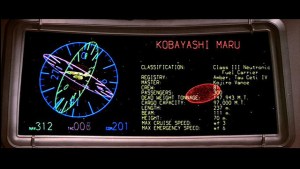
On this list, The Wrath of Khan stands as representative of the Star Trek franchise, not all of which were summer movies, but which cumulatively deserve representation. (Group rights are no good in politics but they have their place in “all-time greatest” lists.) But it’s convenient that one of the best of the series happens to have been a summer movie (two of them, actually – Insurrection was released in summer as well). Do you recognize the graphic above? The Kobayashi Maru is so widely referenced among sci-fi geeks that it’s a cliche, but there’s a reason it resonates so widely; it’s one of the best (in the sense of most fitting and most revealing) character backstories on film.

WarGames

June 3, 1983

6568_1

Remember this? Laugh if you will, but I think there’s a reason everyone from my generation remembers this movie. Has there ever been a more tense opening scene? “Turn your key, sir. TURN YOUR KEY.”

Krull

July 29, 1983

krull_cyclops

Also in the “laugh if you will” department, this odd but oddly gripping sci-fi/fantasy hybrid stretched your imagination. If you could get past the “Huh?” factor, the film clearly knows how to tap into the vein of epic drama even with a story that doesn’t follow the standard genre conventions.

Ghost Busters

June 8, 1984

Ghostbusters-Screencaps-ghostbusters-29592124-1920-1080

What makes this movie so surpassingly great is that all the little things are consistently right. You remember all the really great moments, of course, but think about some of the ones you don’t usually remember, like Annie Potts trying to handle the sudden surge of business (“I’ve quit better jobs than this.” [Picks up the phone] “Ghostbusters! Whaddaya want!”). These fully-drawn characters are why the movie succeeds when it reaches for something more than just comedy – like near the end, when the boys crawl back out of the broken street and the crowd goes wild, chanting “Ghost busters!” “Ghost busters!” and Venkman brags, “That’s all right, we can take it. We can take it. They wanna play rough!” It’s not a gag; it’s played straight, as heroism, offered for our admiration. And it works.

Back to the Future

July 3, 1985

89ce8721-43e0-487b-82e7-27c53dc6d61d

Behold the man, Christopher Lloyd. He’s spent decades doing nothing but crap, yet for just a couple of brief, shining moments, he was brilliant – so brilliant that no amount of subsequently produced crap can ever move us to regret his career.

Top Gun

May 16, 1986

untitled

Yes, the silliness quotient is getting a little high here. But this is the movie that set the standard for macho cool. (“We were inverted.”) And as Harvey Mansfield has recently demonstrated, machismo is not in itself a silly thing; in a dangerous world, the culture of machismo is serious business.

Ferris Bueller’s Day Off

June 11, 1986

ferris_buellers_day_off

Contains just enough “bigness” (the parade, “Save Ferris” on the stadium’s electronic billboard) and summer-ness to bump up from the “comedy” category to the “summer movie” category in my mind. The city itself is as much a character as Ferris and Cameron. Sure, it lacks the drama and epic scope of most summer movies, but Ferris himself is larger than life – more primal force than man, the Iago of slackers.

Big Trouble in Little China

July 2, 1986

Jack_Burton_h3

The Ghost Busters of the kung fu genre. Cheesy over-the-top martial arts thriller (half spoof, half serious) meets super-sharp dialogue and fully drawn characters, again with all the little things done right: “A brave man likes the feel of nature on his back, Jack.” “Yeah, and a wise man has got enough sense to get in out of the rain!

Aliens

July 18, 1986

Ellen-Ripley-Aliens-female-ass-kickers-29685715-1280-688

Continuing a theme, it’s the characters who make this a big cut above the standard action flick – another real high point for sci-fi, and one of the best “straight action” movies ever made (as distinct from movies that are more in the “epic” or “adventure” subgenres). The debate in the APC about whether to nuke the site from orbit (“it’s the only way to be sure”) is one of the most note-perfect scenes I’ve ever seen. It also serves (in a way so subtle that you don’t notice it until it’s all over) as a great character intro for Hicks, who has been silent in the background until now while Apone and Hudson stole the show, but now must lead the unit. “But he’s a grunt! No offense?” “None taken.” And the way he says it, it’s clear that there really was no offense taken. It’s not the standard “call of destiny” scene, like Luke standing over the still-smoldering ruins of his aunt and uncle’s farm. But it serves the same function in the narrative – for both Ripley and Hicks.

Spaceballs

June 24, 1987

spaceballs-06

“Aww, that’s just what we need . . . a Druish princess.”

“Funny – she doesn’t look Druish.”

Robocop

July 17, 1987

robocop-remake

Blends two of the great strengths of sci-fi that rarely go together well, but do so here: super-cool hi-tech action and smart social commentary, including some very clever social satire (“I’d buy that for a dollar!”). Kudos also for the excellent twist ending: The elderly corporation president is held hostage with a gun to his head by his villainous vice president. Robocop can’t save him because the VP has had him programmed to be unable to take action against an officer of the company. Then the old president, who has been mostly a smiling-grandfather figure until now, suddenly shows that he didn’t get to be the president without learning how to think quickly under pressure. “Dick . . YOU’RE FIRED!” Whereupon Robocop blows the VP away.

The Living Daylights

July 31, 1987
Living Daylights

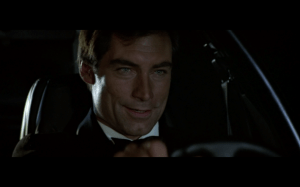
Just as the Wrath of Khan stands for the Star Trek franchise, this stands for the Bond franchise. But, again as with Wrath of Khan, it’s convenient that one of the franchise’s strongest entries happens to have been a summer movie. Vastly underappreciated due to the juvenile public reaction against the toning down of Bond’s sexual immorality, this complex espionage thriller delivers action, snappy dialogue (targeting recticles appear on the windshield of Bond’s car and he explains to the girl: “I’ve had a few optional extras installed”), and – not least important – marks the start of the series’ deliberate development of Desmond Llewelyn’s comic genius. Bond observes as an MI6 technician carrying a loud stereo on his shoulder flips a few switches and launches an RPG-type rocket out of it. “It’s a little something we’ve worked up for the Americans,” remarks Q with evident delight. “It’s called a Ghetto Blaster.”

Who Framed Roger Rabbit?

June 22, 1988
vlcsnap-3434311

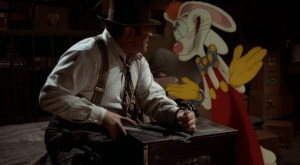
One of those times when a super-clever novelty act turns out to be more than just a novelty act. It does for classic cartoons what Raiders did for 1930s cliffhanger serials – translates it into the idiom of modern film. And see above re: Christopher Lloyd.

Batman

June 23, 1989

batman1_clip03

Remembered, of course, for Jack Nicholson’s Joker – and it still will be, even now that Heath Ledger has reinvented the character in an even more impressive way – it’s hard to remember now that it was this movie that resurrected the then-mostly-defunct genere of comic book movies, which is no small feat given the peculiar imperatives of that type of narrative, and also revolutionized the visual style of movies in related genres. One of the most influential movies of the last generation.

Terminator 2: Judgment Day

July 3, 1991

Terminator2

Noted at the time for its then-record budget, Terminator 2 did for special effects what Tim Burton’s Batman did for comic book narratives – showed the narrative power they were capable of weilding.

A Brief History of Time (Documentary)

August 21, 1992

a-brief-history-of-time

Just kidding! 🙂

But I think his appearances on The Simpsons have shown Stephen Hawking’s potential as an action hero (“If you are looking for trouble, you found it”), and if they made a summer movie starring him, I’d go.

Jurassic Park

June 11, 1993

Jurassic-Park

I suppose I’m including this mostly out of a sense of obligation, given its prominence and influence – although I did decide not to include Rambo 2 in spite of its (probably greater) influence. In this case I think the craftsmanship of the movie is better. (The moment where Sam Neil dismisses Jeff Goldblum as a “rock star” intellectual lightweight, for example, works well.) This is a movie I wouldn’t spontaneously suggest watching, but would happily watch if others in the room wanted it.

Speed

June 10, 1994

speed_1994_blu_ray_movie_review_full

Continuing that theme, here’s another movie that I include largely out of a sense of obligation, yet I wouldn’t include it if I didn’t think it had merits. Craftsmanship again makes the difference.

Apollo 13

June 30, 1995
apollo13b

Much more than a nerds-as-heros flick (although it is clearly that), this movie is a triumph of the filmmaker’s craft. Nothing in it is particularly spectacular in itself, but all the pieces click perfectly and the whole is much more than the sum of its parts.

Austin Powers: International Man of Mystery

May 2, 1997

123573

The franchise degenerated so quickly in the subsequent films that I don’t think the full cleverness of the original is still as widely appreciated. The better you know Bond, the more gags you’ll notice here. And maybe it’s just me, but I bust a gut laughing at Austin trying to get the little go-kart turned around in the narrow dead-end hallway. I don’t know why, it just works.

Men in Black

July 2, 1997

men_in_black

If you haven’t seen it in a while, plug it back in. It’s a lot funnier than you remember.

The Mask of Zorro

July 17, 1998
the-mask-of-zorro7

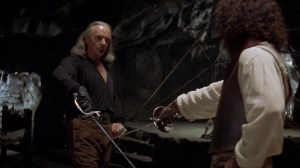
One more for the “laugh if you will” file, but I think this movie stands out from the crowd. Action, comedy, terrific performances, and – in case you haven’t noticed, this is an important mark of a great movie for me – really good dialogue. The aging Zorro (Anthony Hopkins) wants to train a drifter he’s picked up (Antonio Banderas) to replace him. Hopkins points to the sword in Banderas’s hand and asks, “Do you even know how to use that thing?” “Of course I do,” replies Banderas. “The pointy end goes in the other man.”

South Park: Bigger, Longer & Uncut

June 30, 1999

south-park-1

What does one say? If you haven’t seen it, words aren’t going to convey the experience. I’m only about 50% on board for the movie’s agenda, but they do it cleverly so as to avoid turning away people who aren’t ultimately with them – their focus is on the failure of parental responsibility, not on the policy question of what should be allowed on TV.

Shrek

May 18, 2001

shrek-3

It could have been a one-joke movie, but consistent cleverness and Eddie Murphy’s breakout performance made it franchise-worthy.

Spider-Man

May 3, 2002

spider-man-11

What Batman created, Spider-Man recreated. Standing as radiant day to Tim Burton’s somber night, Sam Raimi’s equally powerful vision of the super hero radically broadened the scope of the genre.

Batman Begins

June 15, 2005
batman-begins-31

And then, of course, the dark night of Batman came roaring back with its own reinvention – this time with subtlety and intellectual heft. Chris Nolan embarks on the novel mission of making a Batman movie that’s all about Batman, and it works on every level.

The Dark Knight

July 18, 2008

dark-knight-3

See here, here, here, here, here, and here. Nuff said.


McCain and Obama Agree: Competition Good for Education

October 16, 2008

Education finally came up in a presidential debate and I heard something that I never heard before — the standard-bearers for both parties agreed that competition was good for public schools.  Sure, past Democratic candidates have endorsed school choice with charters, as Obama did.  But Obama did something new.  He specifically said that competition from charter schools was important for improving traditional public schools. 

Clinton, Gore, and Kerry embraced school choice with charters as an escape hatch for students condemned to failing public schools, sounding very much like Sol Stern, Mike Petrilli, and Rick Hess.  But Obama left previous Democratic candidates and these fellows at market-oriented (?!) think tanks in the dust by saying that choice was desirable because of competition. 

Here are Obama’s exact words: “Charter schools, I doubled the number of charter schools in Illinois despite some reservations from teachers unions. I think it’s important to foster competition inside the public schools.”

Of course, Obama wants to limit choice and competition to public schools (which include charters), while McCain wants to include private schools in the mix.  But they agree on the big idea:  public schools are improved when they have to compete to earn students and the revenue those students generate.

Just think.  Only twenty years ago school choice and competition was hardly a glimmer in Ronald Reagan’s eye.  Now the idea is so widely accepted as reasonable that the leaders of both parties differ only on the mechanism for producing choice and competition.  We’ve come a long way, baby.

Correction — Rick Hess emailed to say that he did not want to be counted among those who are unpersuaded by competitive effects from choice.  He does think that almost no current choice program is designed properly to produce competitive effects, but he thinks such effects are possible and desirable.


The Rawlsian Path Out

October 15, 2008

Perhaps children will read better by the light of my Broader/Bolder money bonfire…

(Guest Post by Matthew Ladner)

John Rawls’ influential work A Theory of Justice argued that societal ethics ought to be decided as if we were behind a theoretical “veil of ignorance.”

Behind the veil, no one would be aware of what his or her position would be in a forthcoming society. You would not know whether you would grow up the child of a billionaire or poor in the inner city. The veil creates an incentive to leave a path out of the latter scenario.

Matthew Miller’s reading of Rawls calls for the aim of public policy to be the creation equality of opportunity, rather than equality of condition. But how much of a path do public schools actually represent for disadvantaged children?

Gauging opportunity is tricky, given that we really only have information on the equality of condition. Let’s be brave and speculate. The percentage of free or reduced price lunch students scoring “Advanced” on the 4th grade NAEP reading test in 2007 was — drumroll – two.

That’s right. Two percent- two point zero. While this was double the one point zero from 1998, it is hardly satisfying.

Mind you, total per pupil spending as of 2004-5 was $10,725. So, a child that has been in the average public school in this country since kindergarten will have had somewhere in the neighborhood of $55,000 spent on their education by the time they reach 4th grade.

Might we not get two percent scoring advanced in the complete absence of a public school system? If we spend $55K per kid to improve their opportunities, shouldn’t we be doing a lot better than 2%?

Some of course will grumble that the Advanced level on NAEP is simply too high a bar to expect an economically disadvantaged child to clear. So, let’s go down a level- 15% of free and reduced lunch kids score “Proficient” on 4th grade reading. Add in your two scoring Advanced, and you have 17% of low-income children reading at a high level.

In return for the taxpayer’s $55,000, we get 83% of our low-income children reading at less than a high level. Half of these children score “Below Basic.” Here is NAEP’s definition of Basic in 4th Grade Reading:

Fourth-grade students performing at the Basic level should demonstrate an understanding of the overall meaning of what they read. When reading text appropriate for fourth-graders, they should be able to make relatively obvious connections between the text and their own experiences and extend the ideas in the text by making simple inferences.

That doesn’t sound like a great deal to ask for $55,000 and five years of schooling- but half of the nation’s low-income children didn’t get there in 2007.

Now, we actually have NAEP data for one urban school district- Washington DC. DCPS shells out over $20,000 per year per student. So, a 4th grader has “benefited from” more than $100,000 of funding. Or, at least someone has benefited. DCPS had exactly zero point zero low-income students scoring at the advanced level in 2007. Well, not precisely zero- the NAEP footnotes note that the number “rounds down to zero.”

Six percent of DCPS low-income 4th graders scored Proficient or better, 29% at Basic or better, and 71% at Below Basic.

Regardless of your philosophical viewpoint, these results simply cannot be credibly defended. When the Texas Rangers overpaid for Alex Rodriquez and found themselves in last place, the General Manager noted that he could be in last place with the lowest rather than a sky-high payroll. DCPS is in the same boat. Give me half of the DCPS budget as an incentive program for kids to read books at the library, and I’ll get you more than zero kids scoring as advanced readers.

Education is the key to social mobility. Those who believe in Rawlsian ideals will be facing the reality that they can either have an alliance with the defenders of the status-quo, or they can have an effective K-12 path out of poverty, but they cannot have both.


Did Milton Friedman Support School Choice Tax Credits?

October 15, 2008

(Guest post by Greg Forster)

Did Milton Friedman support school choice programs where the financing runs through the tax code rather than the treasury? He always made it clear that if he had a choice between them, he preferred vouchers (funded through the treasury) over either of the two alternatives forms of school choice that use the tax code (direct tax credits for families to offest thier tuition costs or scholarships distributed by charitable organizations and funded by donations that make the donor eligible for a tax credit). But that doesn’t mean he didn’t support the tax-code alternatives or didn’t consider them to be “true” school choice programs.

I bring this up because Robert Enlow of the Friedman Foundation has dug up a letter that Milton wrote in support of Florida’s tax-credit scholarship program. The letter was written on May 17, 2005 and was addressed to a Florida corporate leader who was considering whether or not to support the program.

Milton wrote:

I agree with you completely that the tax code should be used solely to raise revenue to fund necessary government spending and not to create social policy. Unfortunately, in schooling, the tax code is already being used to create social policy, by devoting tax funds to maintaining a socialist education system. If the state decides to subsidize the schooling of children, the straightforward way is to provide a voucher to each parent and let the parent choose the school that he believes is best for his or her children. Let the private market provide the schools. If the state wants to set up schools, let them charge tuition and compete with private schools on a level playing field.

Unfortunately, for reasons we are both well aware of, ranging from unions to school administrators and religious concerns, that ideal solution is not feasible.** Where it has been feasible to any significant extent, as in Milwaukee and the Florida Opportunity Scholarship Program, it has worked well. But again and again, as currently in Florida, an inferior tax credit program seems the only political option. Tax credits are an indirect, and I believe less efficient, way to do what vouchers do more directly. But they do promote the basic objective, of expanding parental choice and thereby introducing more competition into the educational industry. As a result, I have reluctantly supported tax credit programs in a number of states.

Let me just repeat, the tax system is being used for social purposes with both vouchers and tax credits.

**I think we may take it as given that he means “not currently feasible in Florida.” Any attmept to attribute to Milton Friedman the view that vouchers were “not feasible” in general would be absurd in light of his continuing active support for voucher efforts right up to the end of his life.

Milton was always completely open about his opinions, even to a fault. If he was thinking about whether to change his mind about something, but wasn’t yet sure whether to change his position, he would say so – and this would sometimes drive people to claim he had in fact changed his position.

We see that openness in this letter. He admits that his support for tax credits is only as a second-best option and even says the he supports them “reluctantly.” But if you knew Milton even a little bit – and I was only privileged to know him a little bit before he died – you know that he wouldn’t say he supported them at all unless he really supported them. The emphasis here is on the support, not the reluctance; the reluctance only comes in because (as the opening sentence makes clear) he’s addressing an audience that shares his concerns about tax credits.


Vote Milton in 2008

October 14, 2008

(Guest post by Greg Forster)

In a recent issue, the Weekly Standard‘s Matthew Continetti vents his anger at the House Republicans who killed the first bailout bill. I was about to quit reading after the first paragraph or so – because, really, why bother? – when this line struck me: “It was the day when Lou Dobbs replaced Milton Friedman as the face of economic conservatism.”

Excuse me? Milton Friedman didn’t even approve of the existence of the Fed. Does Continetti think he would approve of having the government buy $700 billion in financial assets? Would Milton Friedman also support having government buy up people’s mortgages and “renegotiate” the terms, or any other gimmick the GOP happens to dream up in its quest for votes?

It is just barely possible that what Continetti meant, but failed to actually say, was that Friedman would have opposed the bailout in a responsible, intellectually defensible manner, while the House Republicans didn’t. But the whole tone and tenor of Continetti’s article suggest otherwise. I’m afraid it looks a lot like Continetti simply identifies respectable and responsible economic conservatism with support for the bailout, and of course Milton Friedman is the respectable and responsible economic conservative par excellence, and Continetti failed to think through the implications. I wish he were the only bailout defender who took this attitude.

The whole thing reminded me of a classic William F. Buckley column entitled “Quick! Get Milton Friedman on the Line!” and published on Oct. 22, 1987, right after the Black Monday market crash. The entire column consists of a transcript of Buckley’s phone call to Friedman after the crash. I’ve emphasized a few lines that might be of heightened interest in light of current events:

How are you, Milton?

We’re fine, how are you?

I was wondering whether you could do me a favor. I would like nine hundred words for National Review on the market breakdown. We would need it by Thursday, noon.

Nope.

Why not?

I have never written an economic analysis tailored to the market, and I’m not going to start doing that now.

Why?

Because the behavior of the market doesn’t correlate in any significant way with the behavior of the economy. It’s a mistake to imply that it does, and that would be inferred if I wrote about it.

Well, why don’t you write precisely on that theme? And it wouldn’t be cheating, would it, if you were to suggest what the investor might expect from the market, given the condition of the economy?

Yes, it would – I would be in the business of vetting the market, and I just told you, I’m not going to do that. I make my own decisions about the market, but not for public instruction. I sold all my stocks during the summer.

You did!

I did. And I’m going back into the market tomorrow.

Later, Buckley remarks that “the talk is of another 1929 depression,” to which Milton replies, “nonsense.”

Well, do you subscribe to the proposition that there are safeguards built into the system that would prevent a depression on a 1929 scale?

In 1954, I delivered a lecture in Sweden under the title, “Why the American Economy is Depression-Proof.” I have seen no reason since then, and see none now, to change that conclusion.

But your position all along has been that even the Great Depression was avoidable, correct? Even without the Federal Deposit Insurance Corp., and the SEC, and Social Security, et cetera?

Yes. The economic downturn from August 1929 to the end of 1930 was more severe than during the first year of most recessions, but if an upturn had come shortly after, the episode would have been classified as a garden-variety recession. It was converted into the Great Depression by the collapse of the financial system in successive waves. In 1931, 1932 and 1933. The stock market played no significant role in this collapse. The argument that the 1929 market crash produced the 1931 to 1933 economic contraction is a prime example of post hoc, ergo procter hoc.

You’re saying that it could all have been avoided?

Yes. The financial collapse of 1931 to 1933 need not have occurred and would have been avoided if the Fed had never been established, or if it had behaved differently. The Fed’s inept performance led to changes in the financial system that make a similar financial collapse highly unlikely.

Well, that’s good news, isn’t it?

Yes, that’s good news.

I still don’t see why you won’t write nine hundred words on just what you’ve said for National Review.

You’ve got nine hundred words in what I’ve just said.

Good point. Thanks a lot, Milton, and good night.

Good night, Bill.

The column appears in Buckley’s Happy Days Were Here Again.

As the election approaches, the Friedman Foundation’s choice of “Vote Milton in 2008” as the theme for this year’s Friedman Day feels more and more appropriate.

Coming Tomorrow: Did Milton Friedman oppose financing school choice through tax credits? Archeologists have uncovered startling new evidence! Tune in for the text of a newly discovered letter in which Milton lays out his position.