Ravitch Escapes the Dark Side of the Force

April 23, 2011

(Guest Post by Matthew Ladner)

Awesome news! Diane Ravitch escaped from the clutches of Emperor Weingarten and has disavowed the Dark Side of the Force. At least, that’s the way it looks on Twitter, where someone has taken to posting quotes from the time before Ravitch joined the Sith.

 Better late than never! Welcome back Diane!


Cateaux!

April 22, 2011

(Guest Post by Matthew Ladner)

Quick response from Andrew Coulson. I suspected that the Cato Institute might, like Cato the Manservant, prove unwilling to call off their attack. I can hear Peter Sellers’ French accent in my head “Cateaux!!?!? Cateaux?!!??! I know zat I ordeured you alvays to attack, but I rescind zee ordeur! CATEAUX?!?!?”

Andrew has primarily refered back to his litany of why he likes tax credits better than vouchers. I have already conceded that tax credits enjoy some benefits over vouchers in the last post, so I don’t see this as on point. The question isn’t “tax credits good vouchers bad?” but rather whether tax credits are up to every school choice task we might assign to them. My request to examine the case of children in large families, children in poor families and/or children with disabilities in large poor families has gone unanswered as of yet.

Andrew offers the fact that the Step Up for Students tax credit serves a greater number of students than the McKay Program in Florida as evidence that tax credits could be up to the job of providing education for children with disabilities. Children with disabilities however require more costly services than general education students. The most recent figures show that Step Up for Students raised $106m while McKay spent $138m. Spend the entire tax credit amount on children with disabilities, and about a quarter fewer of them would be served and 29,000 low-income kids currently served by the SUFS program would be SOL.

When one considers the still small fraction of Florida special needs children served by the richer and easier to scale McKay Program, I hold it as self-evident that even the mighty Step Up for Students program, the nation’s largest of its kind, would fall completely short of the task assigned to McKay. I am happy that both programs exist, and I have never heard a peep of complaint from private schools in Florida about burdensome regulation associated with the McKay program.

I also think that Andrew should broaden his view of the word “savings.” An advantage of the ESA approach lies in exposing the opportunity cost involved in possible private school cost inflation: an allowable use of the ESA funds in Arizona include putting money in a College Savings 529 account. Higher education provides a cautionary tale of mixing subsidies and education: hyperinflation. The evidence of this from K-12 choice programs is limited, but no one has really studied the matter, and the potential obviously exists.


Clousseau vs. Cato (Institute)

April 22, 2011

(Guest Post by Matthew Ladner)

So in the old Pink Panther movies, Inspector Clousseau had this butler named Cato. Apparently, at some point, Clousseau had ordered Cato to conduct surprise attacks in order to keep his fighting skills sharp. Cato took to this role with relish, and Clousseau was unable to get him to stop. Clousseau did not seem to think that the value of the practice outweighed having his apartment destroyed on a regular basis, but Cato certainly seems to have thought it to be the case.

So…

My pals at the Cato Institute hold a strong preference for tax credits over vouchers. They have some reasons to do so- tax credits have thus far proven more durable to court challenge, and so far operate with fewer regulations on private schools. We’ve lost voucher programs in the courts in Colorado, Florida and Arizona and no tax credits yet.

Voucher-only supporters (I am not of this camp) usually about now would note their preference for programs that provide a meaningful level of subsidy to low-income people, and then would recite a litany of perceived deficiencies in existing school tax credit programs. The Illinois personal tax credit program, for instance, can certainly be justified given that taxpayers sending their children to private schools are suffering a double payment penalty.  With a maximum subsidy of $500, however, it doesn’t help anyone much and does very little to put private education within reach of the poor. They would also note that there is less to this less regulation business than meets the eye, given recent tax credit programs in Arizona and Florida which (gasp) require students to take a nnr exam.

Personal tax credits cannot address the needs of poor, especially of the poor with multiple children, or children with disabilities. There are two possible fixes- refundable credits, and scholarship credits. Under a refundable credit, the government would provide you a payment for private school expenses even if it exceeds your tax liability. Cato opposes refundable credits, and we don’t have any examples of them in any case. Scholarship credits involve having non-profits pool donations from tax-donors (either personal or corporate donors depending on the program) and giving scholarships to kids.

Arizona lawmakers passed a school voucher program for children with disabilities in 2006. Edu-reactionaries sued against it and killed it with a Blaine Amendment. We passed a corporate tax credit program in an effort to save the kids on the program, but it debuted during a national financial collapse that impacted housing-crazy Arizona especially hard. The program has helped some students, but I don’t think it is unfair to say it underwhelmed, and had a $5m cap in any case. There was zero possibility that this program could grow into something like the fully scalable, elegantly operating McKay program, which funds special needs children on demand.

The Arizona Supreme Court did repeatedly broadly hint that a program with multiple possible uses for funds would not violate the Blaine Amendment. Nick Dranias and I researched the matter carefully and proposed a system of public contributions to ESAs as a solution. School choice champions in the Arizona legislature crafted a bill, which has now been signed into law by Governor Brewer.

Out jumps Cato from behind the leftovers in the fridge to the attack!

I could go into full OCD point by point refutation mode, but I will spare you by making a few brief comments. First, Adam’s discussion about “third-party payers” is odd to say the least, given Cato’s support of scholarship tax credits. Scholarship tax credits don’t just have third-party payers, they also have fourth party payers- donors and scholarship organizations.

Perhaps the Cato Institute only supports personal credits these days, although I doubt it. Such a preference would constitute utter indifference to equity concerns.

I also think Adam should not rush to jump to any conclusions regarding constitutional issues. When an Arizona Supreme Court justice gets a teacher union attorney to admit that a program with multiple uses solves a Blaine problem in open court, I’m willing to bet that ESAs are constitutionally distinct from vouchers in some circumstances. Further, Adam may be premature in concluding that deposits into these accounts remain “public funds.” Payments to individuals under contractual agreements with the government are not considered public funds- otherwise someone could sue to prevent the state from hiring anyone. Some of the money will end up paying for private school tuition, verboten under Blaine! Some of the top Constitutional attorneys in the country contributed to the development of this proposal including the crack team of Dranias and Bolick at the Goldwater Institute and Tim Keller at the Institute for Justice. I’ll take my chances with them in any court.

I encourage my friends at Cato to give equity concerns some serious consideration. Personal use credits are weak tea when dealing with poor children, children in large families, and children with disabilities. Some families are large, poor and have children with disabilities. This is not to say that personal use credits are bad- in fact, I say that they are a good but limited tool. The same applies to scholarship credits- they are good as far as they go.

Nor finally are choice mechanisms mutually exclusive, and we need every tool we can get.


Tennessee Senate Passes School Voucher Bill

April 21, 2011


(Guest Post by Matthew Ladner)

The Tennessee Senate passed a school voucher program for low-income children in the three largest counties by a vote of 20-10. Congratulations to Sen. Brian Kelsey- on to the House!

P.S.

BOOOOOOOOOM!!!!!!!!!


BOOOOOOOOOOOOOOOOOM!!!!!!!!!

April 21, 2011
Maybe this one Greg?


(Guest Post by Matthew Ladner)
 
Colorado, Arizona, Washington DC and now…word has arrived that Indiana legislators have sent what will become the nation’s largest voucher program to Governor Daniels for signature. I will update with details when available.
 
Huge win for the school choice movement, and especially for the Foundation for Educational Choice (nee Friedman Foundation).
 
4 down, 3 to go…
 

UPDATE: Friedman Foundation Press Release below. Still requires House approval, but also expands pre-existing tax credit program and creates a new tax deduction for private school expenses. It may soon be 6 down, 1 to go…

Indiana Senate Passes Nation’s Largest Voucher Bill

INDIANAPOLIS, IN — The Indiana Senate today passed legislation that would create the nation’s broadest school voucher program, allowing low- and middle-income families to use taxpayer funds to send their children to the private school of their choice.

House Bill 1003, which was approved by the Senate in a 28-22 vote, would create a new scholarship program enabling families to send their children to the private school of their choice. Scholarship amounts are determined on a sliding scale based on income, with families receiving up to 90 percent of state support.

The Indiana House of Representatives previously approved a similar version of the bill by a vote of 56-42. The Senate version, which adds a $1,000 tax deduction for families that pay out of pocket for private or homeschool expenses, will now go back to the House. If the House agrees to the changes made in the Senate, the bill will proceed to Governor Daniels, who is expected to sign the bill into law.

“This is exciting news,” said Robert Enlow, President and CEO of the Foundation for Educational Choice. “We applaud those legislators who stood tall for kids, and we hope the House will concur as soon as possible so that Indiana families who desperately need educational options do not have to wait any longer.”

If enacted, the voucher would be available to far more students than other programs in the country, where vouchers are limited to low-income households, students in failing schools, or special-needs students. Under HB 1003, a family of four earning up to $61,000 per year would be eligible.

Additionally, the $1,000 tax deduction for private and homeschool expenses has universal eligibility. The bill also improves Indiana’s scholarship tax credit program by increasing the program cap to $5 million, making $10 million in scholarships available to Hoosier families.


Spinning Spring Spheres

April 21, 2011

According to one report, a public school in Seattle decided to re-name Easter Eggs as “Spring Spheres” as part of a 3rd grade politically correct, religion free Easter celebration.  The story has spread like wildfire across the internet with observers unsure what to condemn more — the removal of religion from an Easter celebration, the fact that Easter was being celebrated in any way in a public school, the obsession with political correctness, the fact that an egg is not a sphere, etc…

Even National Public Radio jumped into the mock-fest in Wait, Wait, Don’t Tell Me’s Lightning Fill in the Blank:

SAGAL: To avoid offending anyone, third graders at an elementary school in Seattle will only be allowed to have plastic Easter Eggs if they blank.

(Soundbite of gong)

Ms. O’CONNOR: If they bring in a note from their parents.

SAGAL: No, if they call them spring spheres.

(Soundbite of laughter)

Ms. O’CONNOR: Oh, that’s so irritating because they’re not spheres.

SAGAL: They’re not. They’re spring ovoids, but that’s not illative. Calling Easter Eggs, Easter Eggs could upset people who don’t celebrate Easter, not to mention all the poor chickens, who have to watch their young mercilessly stuffed with chocolate. So instead we get Spring Spheres. Spring Sphreres come in Solstice Baskets.

(Soundbite of laughter)

SAGAL: They’re delivered by the generous Candy Rabbit, a good friend to other inoffensive childhood heroes like Winter Fat Guy.

(Soundbite of laughter)

SAGAL: And the Tooth Confirmed Bachelor.

(Soundbite of laughter)

(Soundbite of applause)

But now the awkwardly named Seattle newspaper, the Post Intelligencer, is raising questions about the accuracy of the Spring Sphere allegation.  They write:

Seattle Public Schools spokeswoman Teresa Wippel said Wednesday that the district does have a policy on religious holidays, but that it has not confirmed that the “spring sphere” incident actually happened. And the reporting so far has been a little vague….  

True or not, Spheregate follows a few other well-known non-promotions of holidays. The city of Seattle purposely leaves out the word “Easter” from its annual community-center “spring egg hunts.”

And the Port of Seattle was pummeled over Christmas trees a few years ago, after a threatened lawsuit in 2006. They first removed the trees, then brought back, then said they weren’t Christmas trees, but trees that promote “peace and harmony.”


An Offer the States Can’t Refuse

April 20, 2011

(Guest post by Greg Forster)

Fordham desperately wants you to believe that they want “transparency, not accountability” from the feds. Don’t believe a word of it. It’s true only if you define “accountability” as “school-level accountability.”

Fordham’s idea is that the feds get unlimited and unaccountable power to decide what schools should be doing, and then the states are in charge of holding schools accountable for doing what the feds have decreed they should do. It’s “tight-loose”!

The executive summary of the Fordham report – which is the only part of it most people will bother reading, and the Fordham folks know it – mouths just the right reassuring weasel-words to throw you off the scent:

Transparency in lieu of accountability. Results-based accountability throughout the education system is vital, but it cannot be successfully imposed or enforced from Washington. Indeed, the No Child Left Behind experience has shown federal “accountability” in this realm to be a charade. The federal government can’t force states and districts to turn around failing schools or offer students better options. What Uncle Sam can do is ensure that our education system’s results and finances are transparent to the public, to parents, and to educators.

In a comment on Matt’s post this morning, Mike Petrilli shows up to peddle the same line:

Hi everyone. When you look closely at our proposal (if you can get past the preface, Matt!) you’ll see that we’re all advocating more or less the same thing: Mandate “transparency” but not accountability. We can quibble about the details.

That’s pretty hard to believe given that up through the day before yesterday, Fordham was stumping for the federal-government sponsored initiative to create national standards, national curriculum, and national assessments.

And, in fact, you don’t even have to get very far into the main body of the Fordham report (which few will read) before you see how empty these gestures are.

The report considers ten policy questions, giving “the reform realism position” on each one. Question one is: “Should states be required to adopt academic standards tied to college and career readiness (such as the Common Core)?”

Jay has already pointed out that “college and career readiness” is an empty phrase. It’s a blank check that the feds can fill in later.

But let’s set that aside. What is Fordham’s position on the use of federal government power to define what schools should be held accountable for doing?

As a condition of receiving federal Title I funds, require states to adopt the Common Core standards in reading and math, OR to demonstrate that their existing standards are just as rigorous as the Common Core. Standards developed apart from the Common Core initiative would be peer reviewed at the federal level by a panel of state officials and content-matter experts; the panel itself (not the secretary of education) would have the authority to determine whether a state’s standards are rigorous enough.

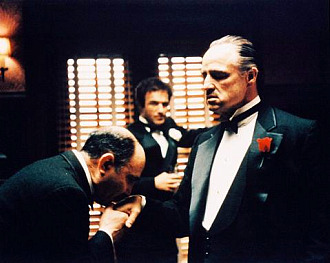
So adopting Common Core is just about as “voluntary” for the states as signing Johnny Fontane was for Jack Woltz.

Governor Walker the morning after Wisconsin opts out of Common Core

How naive do these people think we are?


It’s Hammertime!

April 20, 2011

No, not that one.  Check out this Hammertime, which effectively presents the positive results from the DC voucher program despite false claims of no benefits from the Obama administration.


Strawman Alert!

April 20, 2011


(Guest Post by Matthew Ladner)

I went to read the Fordham Report on ESEA reauthorization. I didn’t even make it past the preface without finding a gigantic strawman argument:

The local controllers.

These folks, led by conservative and libertarian think tanks such as the Heritage Foundation and the Cato Institute, want Uncle Sam, for the most part, to butt out of education policy—but to keep sending money. They see NCLB as an aberrant overreach, an unprecedented (and perhaps unconstitutional) foray into the states’ domain. Many within this faction also favor reform, particularly greater parental choice of schools, but at day’s end their federal policy position resembles that of the system defenders. They want to keep federal dollars flowing, albeit at a much more modest rate than those on the left; but they want to remove the accountability that currently accompanies these monies. They have given up on Uncle Sam as an agent for positive change, period. And they have enormous confidence that communities, states, and parents, unfettered from and unpestered by Washington, will do right by children.

I’ll let the Cato Institute speak for itself, but as the coauthor of a piece on NCLB with Gene Hickok for the Heritage Foundation, I must say that this characterization of Heritage is sloppy. Gene and I noted some very real problems with the formulation of NCLB, and recommended a process by which states could negotiate with the federal Department of Education to have a single unified system of school accountability. No burning down the Federal Department of Education, no abandonment of accountability and transparency, nor any fever dreams of federally driven vouchers for all.

NCLB led to a net increase in transparency, and put a bright spotlight on achievement gaps- both very admirable outcomes. NCLB’s formula however contains dozens of ways for districts and schools to fail AYP and back loaded proficiency requirements will be changed, or else AYP with either lose all credibility, or else will lead states to dummy down their tests to absurd levels. The only reasonable assumption to make is that those that crafted the original law intended to reboot the provisions well before 2014. The Safe Harbor provision is not going to save the day, lawmakers must change the law.

Gene and I suggested a reboot that would allow states to have a single system of school accountability (many have a state system and AYP, which often contradict each other). States proposing a reasonable system- something AYP will no longer be in 2014 absent changes-could have a single system for ranking schools. I’m fine with the Federal Department of Education being tough-minded about approving alternatives. No federalist bone in my body would ever compel me to approve a cruel joke of a testing system (I’m looking straight at you Mississippi) and I’m not certain that the Obama administration has a federalist bone in any case. They did however win the election, and they may win the next one as well.

Call me crazy (it’s been too long since anyone has) but I think the federal government allowing parents the clarity of a single system of accountability is good thing if the state is proposing something that provides transparency and will nudge improvement out of the system. Not “perfection” by some arbitrary deadline, but sustained improvement. This strikes me as an especially good idea when the federal system is set to implode.


The Fordham Report is Here. Time to Party!

April 19, 2011

The Fordham report on renewal of ESEA has been released and it is time to party!

Following the rules of our Fordham report drinking game you will have to consume 7 shots of your choice; one for each time “tight-loose” is used in the report.  33 times you will need to consume whatever the Gates Foundation and U.S. Department of Ed mandate while declaring “I do this of my own free will;” one for each usage of “Common Core” in the report.  You need to shotgun a Pabst Blue Ribbon for the 1 usage of “race to the bottom” in the report and consume 8 Milwaukee’s Best for the 8 times “Race to the Top” is used.  That’s 42 total “consumptions.”

I whiffed on predicting the usage of “smart-[blank].”  I’m sorry to say that there was nothing very smart in the report.  I also entirely failed to expect the repeated usage of the phrase, “reform realism.”  It has alliteration!  What could be more persuasive than that?  I guess that is why it appears 21 times in the report.

Greg did accurately anticipate a slew of hemisphere fallacies, where they compromise between the view that the world is a sphere and the world is flat by saying that the world is a hemisphere.  The particular manifestation of the hemisphere fallacy in this report is that they repeatedly frame the debate as saying that some people think that the federal government should mandate something (standards, cut scores, etc…) and some people think that the federal government should mandate nothing in exchange for the resources it provides.  Fordham takes the middle ground of saying that the feds should mandate standards, cut scores, etc… or allow states to prove to a panel of experts that their alternative approach is at least as good.

Where to begin?  First, in practice the Fordham approach is equivalent to the feds mandating standards, cut scores, etc… If I told you that you had to eat the food the government provides or prove that your choices were equally nutritious, most people would end up just eating whatever the government provided.  The burden of proving the merit of your alternative choices would effectively compel you to comply with the mandate.

Second, if there is one thing we do not need in education policy, it is more committees of so-called experts.  Fordham proposes a bizarre procedure by which the expert panelists could be selected.  States would choose two members, the secretary of education would propose two more, and those four would choose an additional three panelists.  And if that is not convoluted enough, the panels would need 5 votes to decide anything.  This doesn’t sound like a committee of experts.  This sounds like politics by other means.  And given how complicated and bizarre this procedure is, it is even more likely that states would simply comply with the mandate, as suggested above.

Third, as is usual with hemisphere fallacies, Fordham frames the alternative “extremes” as caricatures so that their middle position seems like the only sensible alternative.  It isn’t.  I support a limited role of the federal government in education to facilitate the education of students who are significantly more expensive to educate, such as disabled students, English language learners, and students from very disadvantaged backgrounds.  Only the federal government can ensure this type of “redistributive” policy in education because if localities attempted to serve more expensive students they would attract those expensive students while driving away their tax base.  As Paul Peterson described in his classic book, The Price of Federalism, this is the only appropriate role of the federal government in education.  So, the federal government mandates that schools serve these categories of students while also providing additional resources to facilitate that the services will be provided.  This redistributive effort describes the bulk of what the federal government has done (and should do) in education.

If we are concerned that local schools are failing to serve these categories of students adequately we can address (and have imperfectly addressed) that through legal remedies.  Families, at least in special ed, can go to the courts if their schools fail to provide an appropriate education with federal funds.  We could expand that model to the other categories of federal involvement, but I think that approach is unwise.  Instead, I would favor providing the federal funds directly to students in these redistributive categories so that they would have economic leverage over schools to ensure the provision of appropriate services.  If schools fail to address student needs, they should be able to take those federal funds to another school, public or private.

The other phrase that I should have included in our drinking game is “college and career readiness.”  That concept is referenced 44 times in the new Fordham report.  It is the criterion by which expert panels need to judge standards, cut scores, etc… It is the goal of the entire Fordham approach (and remarkably in sync with the Gates Foundation in using a phrase dozens of times that was virtually unheard of a decade ago).

The only problem is that I have no idea what “college and career readiness” means.  The Fordham folks have no idea what that phrase means.  No one knows what college and career ready means.  It has no clear, technical, objective definition.  It is yet another political slogan substituting for an idea with actual substance, sort of like “reform realism” or “tight-loose.”

And yet this empty slogan is the entire purpose of the nationalization project on which Fordham-Gates-AFT-U.S. Dept of Ed are embarked.  Only in the D.C. bubble of  power-hungry analysts who provide no actual analysis could we launch a radical transformation of our education system with little more than a series of empty slogans.  It’s enough to make you drink.  Er, I mean consume.

(edited for clarity)