You can pay African-American ministers not to encourage their parishioners to vote, like Ed Rollins, and then come back as the campaign manager for Mike Huckabee. You can serially cheat on your spouses, like New Gingrich and then run for president. And you can make false allegations against public officials, like Diane Ravitch, or use your anonymous blog to promote your own research, like Jennifer Jennings, and nothing happens. Oh well.
I don’t have time to write a post as long as the topic deserves, so let me just start a discussion by making a claim…
For the most part, organizations are incapable of innovating. Most organizations are founded with a particular mission and method for pursuing that mission. If circumstances require that the mission or method be changed, organizations generally can’t do it. They’ll just keep doing what they were initially established to do until they can no longer continue operating.
Public school systems almost never close and the creation of new ones is highly constrained. Plenty of our public schools are failing, but we almost never admit that they have failed and allow that organization to be replaced with new ones.
Let’s stop trying to fix Detroit, LA, or Chicago public schools. Let’s let the reality of their failure become official. They, like most organizations, cannot innovate. They need to be replaced with new organizations with new missions and new methods of education. That’s how we can reform schools — by replacing them.
Last year, college athletics went through a bit of realignment. The Big 10 conference announced its intention to expand, setting off a tidal wave of intrigue and speculation. The PAC-10 made a big play to become the PAC-16 by adding Texas, A&M, Oklahoma, Oklahoma State and Colorado. Colorado bolted to the Pac-10 before Baylor could take their spot, the rest of the prospective PAC-16 members stayed in the Big 12, now properly known as the Big 12 minus 2. Nebraska also left the Big 12 to join the Big 10 after the Big 10 was unable to secure either Texas or Notre Dame.
The Big 10 is the only conference to have a research consortium (along with the University of Chicago) and a big issue in the expansion was membership in the American Association of Universities- a private club of major research universities. At the time of expansion, all 12 members of the Big 10 (don’t ask) were members, but recently the AAU took the unprecedented step of booting the University of Nebraska-Lincoln out of the club, which required a 2/3 vote of the member institutions. UNL became the first member of the AAU in the 111 history of the organization to face ejection.
During the time when the Big 12 had 12 members, Nebraska and Texas were often at odds. The Texas side of the story, which is the only one I have heard, is that there was a knock-down dispute over admission requirements for athletes at the conference inception. Nebraska wanted them low, Texas wanted them higher. Texas had the vast majority of tv sets in the conference, Texas won. Resentment festered among the Children of the Corn.
Over the weekend, John Witte and Pat Wolf had a compelling article in the Milwaukee Journal Sentinel summarizing the real (as opposed to media-reported) results of the Milwaukee voucher program research being conducted by the School Choice Demonstration Project.
And then they dropped a bomb:
Recently, our research team conducted site visits to high schools in Milwaukee to examine any innovative things they are doing to educate disadvantaged children. The private high schools of the choice program graciously opened their doors to us and allowed us full access to their schools. Although several MPS principals urged us to come see their schools as well, the central administration at MPS prohibited us having any further contact with those schools as they considered our request for visits. We have not heard from them in weeks.
Our report on the private schools we visited, which will offer a series of best practices regarding student dropout prevention, will be released this fall. Should MPS choose to open the doors of their high schools to us, we will be able to learn from their approaches as well. [ea]
MPS opposition to vouchers takes standing in the schoolhouse door to a whole new level.
Yes it has been an unusual decade with lots of private sector job destruction, and you could come up with a few other caveats, but this is looking like the 1970s all over again: the rest of the country is in the tank while Texas booms. This didn’t end well for Texas in the 1980s, when an oil bust led to an S&L/Real Estate collapse that spun Texas into a deep recession while most of the rest of the country recovered.
That said, that’s a mighty impressive chart for Texas residents, depressing for the rest of us.
I’ve now said just about everything I have to say on this issue. Unless something changes I think we’ve established a few things about Diane Ravitch if you didn’t know them already. First, it appears she fabricated (or imagined) serious allegations of misbehavior against a public official. That combined with her inaccurate and selective treatment of empirical evidence should make us doubt her credibility as a scholar.
And let’s be clear — Ravitch is a huge source of meanness. In just the last week (including after her call for an end to meanness) here are some of the missives she has hurled:
Numerous Tweets in the last week suggest that “the billionaire boys club” has “bought” the policies they prefer in public education: “Bill Gates really has bought control of US education,” “Billionaires. Club takes over LAUSD,” “Pearson is too late; US education already purchased by Gates & Broad.”
When she’s not alleging on Twitter that public officials have been bought by billionaires, she alleges that they are too incompetent to design systems for evaluating public employees like teachers: “Those who can’t teach, pass laws about how to evaluate teachers.”
This is just a sample of her meanness within the last week. Her bizarre tirades go on and on and on.
In exposing her false allegation against Deborah Gist and ridiculing her thin-skinned swollen ego I am not primarily seeking to be mean (although I should add that I have nothing against meanness when properly used to defeat bad things).
I have done all of this because respectable people — people who should know better — have been treating Diane Ravitch as if she were a serious person. She isn’t. I don’t know whether she has experienced a mental breakdown, has become intoxicated by her new celebrity, or was never a serious person. Respectable people should be wary.
There are far more serious people out there who have concerns about the influence of wealthy foundations on education policy, who doubt the benefits of school choice, accountability testing, and merit pay, and who would be willing to be interviewed to say as much. I’m not saying these views are ridiculous. I am saying that the unsupported, unthoughtful, and hypocritical way in which Diane Ravitch expresses these views is ridiculous. And ridiculous things are deserving of ridicule.
Minnesota lies in the heart of Big Ten country, where people have long taken justifiable pride in their K-12 scores and the academic prowess of their universities.
The favorable demographics alluded to by Sen. Moynihan, however, have masked a growing problem: Minnesota suffers from the largest racial achievement gaps in the nation.
A system of schooling that gives the least to those starting with less is unworthy of the traditions and ideals of Minnesota.
Liberals and conservatives should work together with educators to fiercely pursue radical improvement in literacy skills. The students with the least have the most to gain.
Diversity. Pluralism. Variety…We treasure these values, and I do not believe it excessive to ask that they be embodied in our national policies for education.
Daniel Patrick Moynihan inspired the challenge with a story from his book Miles to Go. During testimony to Senator Moynihan asked Laura D’Andrea Tyson of the Clinton Administration for two supportive studies justifying the hundreds of millions of dollars spent on a favored program.
Moynihan received two studies the following day, but Moynihan did something strange and actually read the studies. Moynihan noted that both studies actually concluded similar programs had failed to produce any positive results.
In response, Moynihan wrote the following in a letter to Tyson:
In the last six months I have been repeatedly impressed by the number of members of the Clinton administration who have assured me with great vigor that something or other is known in an area of social policy which, to the best of my understanding, is not known at all. This seems to me perilous. It is quite possible to live with uncertainty, with the possibility, even the likelihood that one is wrong. But beware of certainty where none exists. Ideological certainty easily degenerates into an insistence upon ignorance.
Faced with a choice critic at the Arizona Republic displaying what I regarded as an insistence on ignorance, I invited him to put up or shut up. I could produce multiple random assignment studies showing academic gains associated with private choice programs, if the critic could produce merely two I would pay him out a delicious steak dinner. I wrote:
If opponents of school choice can offer no proof to back their assertions, they deserve neither my steak nor anyone’s confidence, leaving everyone to wonder: where’s the beef?
I repeated the challenge to the nation on NRO without receiving anything resembling a serious reply.
… I reflected on a blog I wrote recently about my visit to Rhode Island. In that blog, I wrote harsh words about state Commissioner Deborah Gist. On reflection, I concluded that I had written in anger and that I was unkind. For that, I am deeply sorry.
Like every other human being, I have my frailties; I am far from perfect. I despair of the spirit of meanness that now permeates so much of our public discourse. One sees it on television, hears it on radio talk shows, reads it in comments on blogs, where some attack in personal terms using the cover of anonymity or even their own name, taking some sort of perverse pleasure in maligning or ridiculing others.
I don’t want to be part of that spirit. Those of us who truly care about children and the future of our society should find ways to share our ideas, to discuss our differences amicably, and to model the behavior that we want the young to emulate.
While this is a very positive development, it does not fully address the issue. The main issue at this point is not Deborah Gist’s hurt feelings for having been accused (apparently wrongly) of exceptional rudeness and incivility; the main issue is Diane Ravitch’s credibility. It is not enough for Ravitch to say that she is imperfect if the imperfection is about the very thing that makes everyone pay attention to her — her authority as an accurate chronicler of events.
To maintain her credibility Ravitch needs to give permission for the videotape of her meeting with Gist to be released. Even if she is sorry or believes that she wrote in anger, she has still not spoken to the basic accuracy of her account. If the video confirms her account, she could still be sorry but also be vindicated as a reliable source. If the video does not confirm her account, she would be sorry and unreliable. We still need to see the video and Ravitch should agree to release it.
In addition, there is something self-serving and potentially insincere about Ravitch’s generic denunciation of “the spirit of meanness that now permeates so much of our public discourse” coming only after she is potentially caught in making inaccurate allegations against others. Ravitch’s meanness toward “the billionaire boys,” Joel Klein, Michelle Rhee, etc… has existed for some time without any concern from her about the nature of public discourse.
My concern about the sincerity of her newly expressed opposition to meanness is compounded by her use of the phrase: “[t]hose of us who truly care about children…” by which I can only imagine that she includes herself and excludes her opponents. Self-righteousness does not normally accompany contrition.
But perhaps Ravitch has turned a new leaf and is truly sorry for her own role in the meanness of public discourse. The credibility of that contrition will have to be determined in light of her future writing and speaking, just as her credibility as a chronicler of events will have to be determined when she agrees to release the video.


 Posted by Jay P. Greene
 (Guest Post by Matthew Ladner)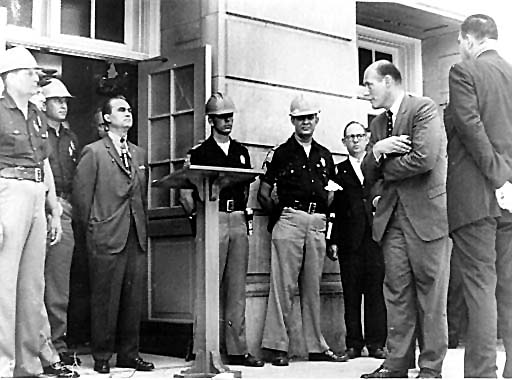



 Jay P. Greene's Blog