Speaking of Intellectual Corruption!

July 27, 2011

(Guest post by Greg Forster)

We now interrupt this serialized political philosophy dissertation on how power corrupts knowledge systems to bring you something completely unrelated – the latest nonsense from the increasingly irrelevant, lifelong Democratic party hack Jack Jennings!

Talk about weasel words. Studies clearly and conclusively finding modest positive impacts from vouchers magically become studies finding that voucher outcomes are “similar” to outcomes at public schools, which then magically become studies provding no “clear” evidence that vouchers have any impact. Never mind that most studies of vouchers have been conducted at Harvard, Princeton, Cornell, Stanford, the Fed, etc. – they’ve been conducted by “pro-voucher” researchers, which is technically true if you define any researcher who does a study finding positive impacts from vouchers as a pro-voucher researcher. (By the same method, you can prove that all studies finding cigarettes cause cancer were conducted by “anti-smoking researchers.”) Extremely minute scrutiny of studies by think tanks have found no scientific flaws in their work, which proves that even more minute scrutiny is obviously needed. And for some reason, a shift in the political winds away from supporting smaller voucher programs toward supporting larger voucher programs is evidence that vouchers are failing! Right, sure they are.

For the record, the empirical evidence supporting school choice is overwhelming – stronger than the evidence supporting any other reform policy. Impact sizes are sometimes large but usually modest, not surprising given that existing programs are tiny, underfunded and overregulated. But the evidence is consistent that school choice produces benefits even under these disadvantageous conditions.

Oh, and more good news: everyone’s onto Jennings’ game, so no one cares about his nonsense. Mickey Kaus:

At this point if Jack Jennings doused himself in gasoline and set himself ablaze in front of the NEA, would anyone notice?

I have Jennings’ professional reptuation hanging on the wall in my trophy room, right next to my Jay Mathews meal ticket.


Command v. Choice, Part I: Truth and Power

July 26, 2011

Vaclav Klaus and Vaclav Havel

(Guest post by Greg Forster)

Jay is causing quite a stir with his two-part deconstruction of the Gates Foundation. To those who may be upset, let me say the following two things.

First: Jay’s posts will have no important impact – unless they’re true.

Second: That fact itself demonstrates why the Gates command-and-control approach to education reform is bound to fail.

As Jay points out in his two posts, the Gates effort has undermined the intellectual integrity of many people associated with it. Why? The immediate answer is simple. The Gates strategy is a power agenda. And as Jay and I have both had occasion to point out, power agendas seek to subvert “science” in order to create the impression that their policies are scientifically supported. Other knowledge systems are equally vulnerable, but in our society “science” is the only knowledge system whose validity and importance is recognized by virtually everyone; hence science is the key target for corruption.

Don’t get me wrong; power, considered simply by itself, is good. It’s better to have it than not have it. You can’t get much good done without it. But all good things come with natural temptations and dangers, and one of the natural temptations and dangers that always – always – comes with power is the constant threat to subvert knowledge.

I don’t know their hearts, but I’ll bet the Gates people are not bad people, as people go. They just aren’t awake to, and taking steps to check, this natural danger. They’re not aware of what they’re doing and don’t recognize the process of intellectual corruption for what it is even when it’s held up to their faces – because that failure of recognition is itself the natural attendant danger of power.

But this just leads us to a deeper question. Why do power agendas always display this tendency to corrupt knowledge systems? Why does Gates invest hundreds of millions of dollars in research when it’s clear they already know what they want to be true and aren’t interested in following the evidence? And why does it spend hundreds of millions more subverting the individuals and organizations who talk about education research? Why does Gates care what a bunch of bloggers think? What explains this enormous investment?

Because truth has a power of its own. People want to believe what’s true. Even wicked people who deliberately decieve others for the sake of power would not be willing to be decieved themselves for the sake of power. Every human being has a desire to know truth and live in accordance with that knowledge. To be sure, other desires compete with this desire and often win out over it. But the desire is always there and can always be harnessed as a force for social change – that is, for power. So the people who care about power always have to worry about the people who care about truth.

This dynamic is as old as time. From Plato to Paul, from Martin Luther to Martin Luther King, people who care about truth more than they care about power have been a threat to those who care more about power than they do about truth.

And the reverse is also true, as can be surmised from the response of the powerful to the four people I’ve just named. Asked what he would do to help win support from the pope for the Russian war effort against Germany, Stalin snorted, “The pope? How many divisions has he got?” In a more reflective hour, however, he spoke with more shrewdness: “Ideas are more powerful than guns. We would not let our enemies have guns, why should we let them have ideas?”

Mind you, though, the trouble is not entirely on the side of the “power people.” We “truth people” have our own, equally dangerous dysfunctions. We know that the social systems of power are a threat to the social systems of knowledge production, so our natural instinct in many cases is to fear power. We build high ivory towers and steer clear of the world of power. And by doing so we render ourselves not only irrelevant and irresponsible, but even irrational – because our isolation from “the real world” leaves us extremely vulnerable to falling for spurious ideologies that flatter our prejudices.

For example.

The natural and intrinsic dangers of the life devoted to truth are themselves just as much a threat to the process of knowledge production as the natural and intrinsic dangers of the life devoted to power.

In spite of the natural rivalry between truth and power, or perhaps because of it, people who have gone all the way to the two extremes – those who care only about power and those who care only about truth – often make alliance with one another. The power people provide subsidies that allow the truth people to spend all day in their offices thinking, computing, writing, talking, and doing everything they like to do; in exchange, the truth people anoint the power people as legitimate. Everyone gets what he wants – except for the other 99% of us, who get screwed.

The answer to this dilemma, of course, is that we have to care about both truth and power. Not to care about truth is dishonest. Not to care about power is irresponsible. Both are self-destructive. (Not to mention other-destructive!)

In reality, however, human beings are rarely so balanced. All virtues come in matched pairs of opposites (e.g. courage and moderation, candor and tact) and each person tends to care more about one necessary virtue than its opposite. That’s why people need social systems in which the legitimacy of opposing virtues is respected and processed in a way that doesn’t subordinate the one to the other.

As a little vignette to illustrate this, consider the roles played by Vaclav Havel and Vaclav Klaus in Czech liberation. Under the Czechoslovak tyranny, Havel lived underground, writing tracts and plays and organizing a network of dissident intellectuals. He had no use for the regime’s systems of power, except as targets – and slow, fat targets they were for a powerful genius like his. Havel’s greatest non-fiction work may be his book-length essay “The Power of the Powerless,” in which he argues that truth is the power of the powerless because all people desire ” to live in the truth.” Unchecked power forces people to live a lie, and the more they have to live a lie the stronger the desire to live in the truth grows. When that desire grows stronger than the desire to live quietly, the power of the powerless becomes greater than the power of the powerful.

In 1989, Havel’s circle of dissidents triggered the crisis that brought down the regime. Protestors gathered in Wenceslas Square for days, then weeks, in defiance of machine-gun toting thugs who might gun them all down at any moment. Havel addressed the crowd daily, and was in little danger because wherever he went, throngs of ordinary people spontaneously surrounded him in an effort to shield him from snipers. “You have to kill us all” was the implicit message of the protestors – and the regime broke. Havel’s game plan, Havel’s leadership, Havel’s hour.

Klaus, on the other hand, was an economist for the state bank under the Czechosolvak tyranny. He was not a supporter of the regime, but he apparently saw nothing inconsistent between that and a banking career within the system. He joined the resistance movement early during the revolution of 1989, and before long he drew a large following of support backing him as a leader – two facts that indicate, I think, that he had legitimacy as a reformer.

Havel and his circle, however, couldn’t stand him. More important, they didn’t trust him. They still don’t. To this day, Klaus is dogged by whispers about all the nasty things he must have been doing to keep his position in the state bank, while people like Havel were going to jail for the sake of truth. And it’s not like there’s not some reasonableness to that disposition.

But the bottom line was that Havel didn’t know how to run a country, and Klaus did. In 1989-1991 those two facts rapidly became clear to a large number of people. Havel and his circle had founded Civic Forum as an umbrella party for the resistance movement, and after the regime collapsed it was the “national unity party” under which the new democracy was governed. A year after the revolution, to the surprise and disgust of the Havel circle, the national party deputies elected Klaus to chair the party. Before long an anti-Klaus faction walked out of the party and founded a new one, completing the transition to a system of electoral party competition. Havel, as president of the new nation, stood formally apart from these events, but everyone knew where his sympathies lay.

With the separation of the Czech Republic from Slovakia in 1992, Klaus became its prime minister. From then until Havel’s retirement in 2003, Klaus ran the government and Havel served as head of state. And a bang-up job they both did of it, too – Klaus’ political, economic and administrative leadership brought about a peaceful and successful transition from state ownership and command-and-control to prosperity and personal freedom, while Havel articulated for his nation a renewed understanding of the political community that grounded it in the humane and civil virtues of freedom and personal responsibility. Neither of those feats could have succeeded without the other.

Havel (truth) and Klaus (power) naturally dislike and distrust each other. But the Czech resistance after 1989 and the Czech government in the two succeeding decades made room for them both – Klaus became president after Havel’s retirement from office, while Havel has continued to write and speak. As a result, the Velvet Revolution and the subsequent history of the Czech Republic stand as miraculous modern models of peace, prosperity, order and justice.

So what would an education policy that took seriously both truth and power look like? Stay tuned for Part II.

(You can tell I’m smarter than Jay because I use Roman numerals for my serialized posts.)


Gates Foundation Follies (Part 2)

July 26, 2011

Image result for gates foundation headquarters

A sketch of the $500 million new Gates Foundation headquarters

In Part 1 of this post, I described how the Gates Foundation came to recognize the importance of using political influence to reform the education system rather than focusing on reforming one school at a time in the hopes that school systems would see and replicate successful models.  No private philanthropist has enough money to buy and sustain widespread adoption of an effective approach and the public school system has little incentive to identify and spread effective approaches on their own.

Faced with the unwillingness of the public school system to reproduce successful models (assuming that Gates could even offer one), the Foundation was left with two solutions to encourage innovation: 1) identify the best practices themselves and impose them from the top down, or 2) encourage choice and competition so that schools would have the proper incentive to identify, imitate, and properly implement effective approaches.

The Gates Foundation made the wrong choice.  Their top-down strategy cannot work for the following reasons:

1) Education does not lend itself to a single “best” approach, so the Gates effort to use science to discover best practices is unable to yield much productive fruit;

As I’ve explained before, there are many different “best” techniques for different kinds of teachers with different kinds of students in different situations with different available resources.  There are some practices that are universally beneficial in education, but they tend to be pretty obvious and are already well known (e.g. it is bad to beat kids, it is better when teachers know the material they are teaching, it is helpful to break down ideas into their essential components, etc…).

The difficulty of discovering universally beneficial  practices that are not already well-known, especially with the blunt tools available to researchers probably helps explain why the Measuring Effective Teachers (MET) project, on which the Gates Foundation is spending $335 million has yet to produce any meaningful results despite entering its third year of operation.

2) As a result, the Gates folks have mostly been falsely invoking science to advance practices and policies they prefer for which they have no scientific support;

Despite having nothing to show for the $335 million they are spending on MET, the Gates folks nevertheless claim that it “proves” the harmfulness of teachers engaging in “drill and kill.” The fact that the research showed no such thing did not deter them from telling the NY Times and LA Times that it did.  Even when I pointed out the error, the Gates folks refused to issue a correction (although the LA Times ran one on their own).

Similarly, the Gates-orchestrated effort to push national standards, curricular materials, and assessments is advancing without any scientific evidence of the desirability of these approaches.  Gathering a group of Checker Finn’s friends (er, I mean, “a panel of experts”) to attest that the Common Core standards are better is not science.  It is the false invocation of science to manipulate people into compliance with their agenda.

3) Attempting to impose particular practices on the nation’s education system is generating more political resistance than even the Gates Foundation can overcome, despite their focus on political influence and their devotion of significant resources to that effort;

Opponents of centralized control of education have begun to mobilize against the Gates-orchestrated effort to establish national standards, curricular materials, and assessments.  But the bulk of the political resistance to the Gates strategy will come from the teacher unions.  They don’t want anyone to infringe on their autonomy or place their interests in jeopardy with a nationalized accountability system.  They may play along with Gates for a while and take their money, but when push comes to shove the unions can only tolerate one dictator in education — the unions.  Of course, those of us who don’t want anyone centrally-controlling the nation’s education system will oppose both Gates and the teacher unions.

We already have a taste of the kind of resistance teacher unions will put up against the Gates nationalization effort in the slogans emanating from Diane Ravitch and Valerie Strauss’ Twitter feed, supported by their Army of Angry Teachers.  Falsely claiming that MET proved that drill and kill is harmful did not mollify these folks at all.

The teacher unions derive far more power and money from the status quo than Gates can ever offer them, unless of course Gates builds a nationalized system and cedes control to the unions, which is not part of the Gates plan.  Nothing in the Gates strategy weakens the unions and would force them to make significant concessions, so in the end the unions will either hijack the Gates strategy for their own benefit or block it.  Even Gates does not have the resources to beat the unions without first diminishing their power.

4) The scale of the political effort required by the Gates strategy of imposing “best” practices is forcing Gates to expand its staffing to levels where it is being paralyzed by its own administrative bloat; 

Over the last decade the Gates Foundation has roughly doubled its assets but increased its staffing by about 10-fold.  The Foundation is now huge, which is part of why it needs the Education Pentagon pictured above to house everyone.  The Foundation has gotten huge because it is trying to buy political influence as it buys people.  Gates has been snapping up or funding just about every advocacy group, researcher, or education journalist they can find.  Getting all of these people on board for a nationalized education system (or at least mute their dissent) involves paying an enormous number of people and organizations.

Gates can buy a lot of folks, but they can’t buy everyone and they can’t keep the folks they do pay in line for very long.  It’s like herding cats. (I should note that I’ve received Gates Funding in the past).

And the sheer size of their staff and funded allies along with the focus on controlling the political message is so overwhelming that it is significantly hindering their ability to do anything.  People inside the organization have told me that they are suffering from a bureaucratic gridlock with endless meetings, conference calls, and chains of approvals.  Notice that Gates is paying a ton of researchers and yet virtually no research is coming out.  Very curious.

5) The false invocation of science as a political tool to advance policies and practices not actually supported by scientific evidence is producing intellectual corruption among the staff and researchers associated with Gates, which will undermine their long-term credibility and influence.

As noted above, the need to advance a particular political message has led Gates to mischaracterize their own research (for example, claiming that MET proves that drill and kill is harmful when the research does not show that).  But the intellectual corruption extends much farther.  I had a highly respected and accomplished researcher employed by Gates tell me that Vicki Phillips’ mischaracterization of the MET results was not so far off because there isn’t a big difference between a low correlation and a negative one.  He also defended comparing the magnitude of a series of pair-wise correlations to determine the relative influence of different variables.  To hear someone who knows better twist the truth to avoid contradicting the education boss at Gates was just sad.

Unfortunately, too many advocates, researchers, and others are being similarly corrupted.  In most cases the Gates folks don’t have to exert any explicit pressure on people to keep them in line; they just anticipate what they think would serve the Gates strategy.  But I am aware of at least one case in which a researcher’s findings were at odds with the desired outcome and that person suffered for it.

I’ve heard another story from someone involved in the MET project that the delay in releasing any results from the analyses of classroom videos even as the project enters its third year is explained by their inability to find any meaningful results.  Perhaps another year of data will make something turn up that they can finally tout for their $335 million investment.  The fact that the initial MET report with basically no useful findings was released on a Friday just before Christmas suggests that the Gates folks are working hard to shape their message.

The national standards, curriculum, and testing campaign is rife with intellectual corruption.  For example, people are twisting themselves into knots to explain how the effort is purely voluntary on the part of states when it is manifestly not, given federal financial “incentives,” offers of selective exemptions to NCLB requirements for states that comply, and the threat of future mandates.  There is so much spin around Gates that it makes one dizzy.

—————————————————————————————–

Let me be clear, most of the folks affiliated with Gates are good and smart people.  The problem is that when your reform strategy requires a top-down approach, these good and smart people are put under a lot of stress to have a unified vision of the “best” that will be imposed from the top.  And whenever an organization starts sprinkling millions of dollars on researchers and advocacy groups unaccustomed to that kind of money, there are temptations that are hard for the most virtuous to resist.

But the good and smart people at Gates can stop the counter-productive strategy that the Foundation is pursuing.  The Foundation changed course once before and it can do it again.

————————————————————————————–

UPDATE — For my suggestions of what the Gates Foundation could do instead, see this post.


Gates Foundation Follies (Part 1)

July 25, 2011

Image result for gates foundation headquarters

A sketch of the $500 million new Gates Foundation headquarters

Jason Riley’s interview with Bill Gates in the Wall Street Journal was not as great as Riley’s interview with me last week (shameless plug for my new mini-book), but it was still very illuminating.  In particular, the Gates interview confirmed two things about the Foundation’s education efforts: 1) they’ve realized that the focus of their efforts has to be on the political control of schools and 2) they are uninterested in using that political influence to advance market forces in education. Instead, the basic strategy of the Gates Foundation is to use science (or, more accurately, the appearance of science) to identify the “best” educational practices and then use political influence to create a system of national standards, curricular materials, and testing to impose those “best practices” on schools nationwide.

The Gates Foundation came to understand the necessity of political influence over schools with the failure of their previous small schools strategy.  Under that strategy they tried to achieve reform by paying school districts to break-up larger high schools into smaller ones.  The problem with that strategy is that even the Gates Foundation does not have nearly enough money to buy systemic reform one school at a time.

School districts currently spend over $600 billion per year and the Gates Foundation only has $34 billion in total assets.  With the practice of spending only about 5% of assets each year and given the large (and effective) efforts the Foundation makes in developing country health-care, Gates only spends a couple hundred million dollars on education reform each year. Given the small share of total education spending Gates could offer, most public districts refused to entertain the Gates strategy of smaller schools, others took the money but failed to implement it properly, and others reversef the reform once the Gates subsidies ended.

The way I described the situation in my chapter “Buckets into the Sea” in the 2005 book, With the Best of Intentions, edited by Rick Hess is:

Philanthropists simply don’t have enough resource to reshape the education system on their own; all their giving put together amounts to only a tiny fraction of total education spending, so their dollars alone can’t make a significant difference.  In order to make a real difference, philanthropists must support programs that redirect how future public education dollars are spent.

And in 2008 I repeated this claim, saying: “total private giving to public education is a tiny portion of total spending on schools.  All giving, from the bake sale to the Gates Foundation, makes up less than one-third of 1% of total spending.  It’s basically rounding error.”

I don’t know whether the Gates Foundation was influence by my writing or whether they arrived at the same conclusions independently, but they are now articulating those same conclusions, often with the same exact words:

“It’s worth remembering that $600 billion a year is spent by various government entities on education, and all the philanthropy that’s ever been spent on this space is not going to add up to $10 billion. So it’s truly a rounding error.”

This understanding of just how little influence seemingly large donations can have has led the foundation to rethink its focus in recent years. Instead of trying to buy systemic reform with school-level investments, a new goal is to leverage private money in a way that redirects how public education dollars are spent.

While the focus of the Gates Foundation on influencing education policy is sensible, the particular political approach they have chosen is doomed to fail and attempting it is likely to be counter-productive.  In Part 2 of this post I will explain how the new strategy Gates has decided to pursue is flawed.

To give you a taste of what is coming in Part 2, the arguments can be summarized as: 1) Education does not lend itself to a single “best” approach, so the Gates effort to use science to discover best practices is unable to yield much productive fruit; 2) As a result, the Gates folks have mostly been falsely invoking science to advance practices and policies they prefer for which they have no scientific support; 3) Attempting to impose particular practices on the nation’s education system is generating more political resistance than even the Gates Foundation can overcome, despite their focus on political influence and their devotion of significant resources to that effort; 4) The scale of the political effort required by the Gates strategy of imposing “best” practices is forcing Gates to expand its staffing to levels where it is being paralyzed by its own administrative bloat; and 5) The false invocation of science as a political tool to advance policies and practices not actually supported by scientific evidence is producing intellectual corruption among the staff and researchers associated with Gates, which will undermine their long-term credibility and influence.

Tune in for Part 2.

————————————————————————————–

UPDATE — For my suggestions of what the Gates Foundation could do instead, see this post.


Testing, Cheating, Culture and Corruption

July 21, 2011

(Guest post by Greg Forster)

Matt draws our attention to some of the broader issues raised by the APS scandal. Cheating is not just about cheating.

Here’s another one of those broader issues I think we should take note of. To call this “cheating” is really inadequate. This was a whole institutional culture in which cheating had become not just acceptable, but normal. This was way beyond teachers subtly indicating the correct answers (such as through tone of voice) or deliberately seating bad students next to good ones (so they could copy). Those things happened, but much more happened.

Teachers had “cheating parties” in which they sat around erasing and remarking student answer sheets. There was one guy whose job was to open test booklets, copy the contents, reseal them (using a lighter to melt the plastic back into place) and then distribute the contents to everybody. This was a huge, pervasive, known-to-everybody cheating system.

And cheating was not just normal but mandatory. Hark ye, my bretheren, unto the Atlanta Journal-Constitution:

For teachers, a culture of fear ensured the deception would continue.

“APS is run like the mob,” one teacher told investigators, saying she cheated because she feared retaliation if she didn’t.

Cheat – or else!

What’s going on here? This is not just the undifferentiated “corruption of human nature.” This is a very specific dynamic of institutional culture. This is a system whose organizational culture responded to NCLB by systematically embracing cheating at all levels, even to the extent of viewing non-cheaters (i.e. honest teachers) as threats to the integrity of the system.

We should think carefully about how that kind of thing happens. There is one hypothesis that sticks out to me as clearly plausible: This happened because the testing requirements of NCLB were percieved as evil, tyrannical and a threat to the integrity of education. Personnel at all levels actually viewed cheating as morally virtuous because it was necessary to protect an essential good (education) from being undermined by vicious oppressors with evil agendas. And given widespread teacher cynicism about the value of standardized tests as a metric of learning, in their perception nothing valuable was lost in the process.

This is about more than cheating. This is a wakeup call to our thinking about how reform works.

I have always been in favor of the aspect of NCLB that uses tests to create transparency. Remember, before NCLB you didn’t even have all states participating in NAEP. Anyone want to go back to that? No? Well, then, let’s not throw the baby out with the bathwater.

However, it is now pretty clear that NCLB does not work as an accountability tool. Might the systemic, institutional extent of the cheating in APS help explain why? Teachers and administrators don’t percieve the tests as legitimate – they see them as inaccurate metrics being imposed by evil oppressors as tools of exploitation – and thus don’t respond to them in positive ways. (On net, that is. Bad responses cancel out good ones.)

Contrast that with the use of testing for accountability in two other contexts. Jeb Bush’s A+ accountabiliy testing system in Florida did produce positive results. Could that be because Florida had spent years at the bottom of the national listings for education and was sick of it, and had spent years trying to improve through the tried and true ideas of the unions and was sick of failing, and was thus more open to new directions? In the context of this openness, Jeb Bush’s leadership, and his partnership with the right stakeholders, framed the reforms in a way that caused them to be experienced as legitimate at the school level.

Even more impressive, consider the use of testing in innovative charter schools like KIPP. Remember that David Brooks column blasting Ravitch? Brooks identifies what he calls “a core tension,” namely: “Teaching is humane. Testing is mechanistic.”

However, in schools where the entire institutional culture has been reinvented from the ground up around personal relationships between teacher and student that are centered around leadership, mentorship and accountability, testing isn’t experienced as mechanistic at all. Where the students really see the teachers caring about them, and vice versa, standardized testing is accepted as a tool that empowers this relationship:

The schools that best represent the reform movement, like the KIPP academies or the Harlem Success schools, put tremendous emphasis on testing. But these schools are also the places where students are most likely to participate in chess and dance. They are the places where they are mostlikely to read Shakespeare and argue about philosophy and physics. In these places, tests are not the end. They are a lever to begin the process of change…

Ravitch thinks the solution is to get rid of the tests. But that way just leads to lethargy and perpetual mediocrity. The real answer is to keep the tests and the accountability but make sure every school has a clear sense of mission, an outstanding principal and an invigorating moral culture that hits you when you walk in the door.

I think this means it’s essential that the use of tests for accountability purposes must be implemented only in contexts of institutional culture where they will be experienced as legitimate – and the degree to which the tests are used must be controlled by the degree to which the institutional culture permits this experiential legitimacy.

In some cases (as with Jeb in Florida) that could be accomplished statewide. In others it can’t. Sometimes it will have to be districts, or a network of charter schools. In many contexts it won’t work at any level. It certainly won’t work nationally, since the institutional context of the federal role in education could never permit this kind of thing to develop in a way that would be seen as legitimate.

How, then, do we drive accountability? Choice and competition, obviously. And guess what? Once schools face the disruptive threat of choice, they will be more likely to start using tests for accountability voluntarily – because they want to survive and they’ll be ready to reconsider their options.

You know, it strikes me that this principle might have application to other issues besides accountability testing. In general, the higher you go up the ladder of power – from school to district, from district to state, and from state to national – the less likely you will really be implementing your reform, and the more likely you will just be playing power games, and be seen to be playing power games, and thus cause those below you on the ladder to respond by playing power games of their own. As in Atlanta.


WSJ Interview on New Choice Mini-Book

July 21, 2011

Jason Riley of the WSJ interviews me about my new mini-book, Why America Needs School Choice.

I can’t figure out how to embed the video, but click here to view it.


Arne Duncan on Atlanta Cheating Scandal

July 21, 2011

(Guest Post by Matthew Ladner)
Political scientist Donald Campbell postulated that “The more any quantitative social indicator is used for social decision-making, the more subject it will be to corruption pressures and the more apt it will be to distort and corrupt the social processes it is intended to monitor.” The Army of Angry Teachers has seized upon the Atlanta cheating scandal as proof that the whole process of testing and transparency is destructive and ought to be done away with.

Arne Duncan weighs in on the Atlanta cheating scandal as a part of a roundtable at the WaPo. Duncan provides a bit of much-needed perspective on the problems of testing, noting that although the Atlanta scandal is the worst uncovered, that it involves 44 schools out of thousands in Georgia.

Secretary Duncan goes on to acknowledge a number of problems in state academic testing, including the far larger problem of states dummying down their cut scores in order to proclaim improvement.

One elephant in the room: test security. It isn’t difficult to infer that while the state of Georgia performed erasure analysis on the tests (thus uncovering the cheating) that they failed to let it be known that they would be doing so on a large-scale (and thus failed to deter the cheaters, who thought they could get away with it). States need to not only employ these techniques, they need to employ them as deterrents.

People are quite clever, however, and constantly develop new ways to cheat if provided incentives to do so. It seems possible that a system of third-party administration of tests will need to be developed as we attach greater consequences to test scores, including school ratings and merit bonuses. This could be a simple as the way you took the SAT test, or it could have a more high-tech look to it.

Another Campbell’s Law problem that strikes me as more serious than systematic answer changing by staff is the practice of teaching to test items. I fear that this is quite widespread, although it is difficult to quantify. The idea behind the standards movement is to teach to a set of academic standards, and to use testing to measure success. If teachers instead teach to a set of test items then the whole process can devolve into a farce.

A skillfully managed system of student testing can and has played a leading role in improving student outcomes. It’s difficult to pull off, and easy to foul up. We should be concerned about staff led cheating. We should be even more concerned about low cut scores, item exposure and test study guides.


The Army of Angry Teachers — When Success Breeds Failure

July 19, 2011

It must feel empowering for teachers upset by current developments to hold big rallies with thousands of union members chanting slogans.  They must finally feel like their voice is being heard, as Diane Ravitch, Valerie Strauss, and the new breed of teacher union advocates make their case.

While this may all feel like success to the teacher unions, I suspect that it is actually breeding failure.  The unions succeed by intimidating politicians with their raw power while convincing the public that teacher unions love their children almost as much as the parents do.  Maintaining this double-game is essential because it disarms parents, media elites, and others who might otherwise mobilize against teacher unions and apply their own direct pressure to politicians.

As long as teacher unions act like Mary Poppins to parents, media elites, and others, the general public is willing to suspend their normal inclination to desire choice and competition in the goods and services they consume.  Mary Poppins is an extension of the family and we don’t apply market principles to our family.  The family is a refuge from the rough and tumble of the market which is instead governed by a sense of mutual obligations and affection.  Where the family ends, the market begins and people think the market needs choice and competition to stay healthy.

But when the public face of the teacher unions is the Army of Angry Teachers, they no longer seem like Mary Poppins and begin to look a lot more like longshoremen beating their opponents with metal pipes.  Diane Ravitch and Valerie Strauss may provide psychological comfort to angry teachers (some of whom seem so irate that they may need professional psychological help to manage their anger), but it undermines the double-game that is at the heart of the teacher union strategy.

Giant mobs of yelling protesters and blogs filled with tirades may increase the intimidation politicians feel, but it seriously undermines the image of teachers as an extension of our family.  And as that Mary Poppins image is significantly eroded, media elites and the general public will increasingly think of education as something in the marketplace that requires choice and competition.  And this erosion is extremely hard for teacher unions to reverse.

What feels like success to angry teachers is actually sowing the seeds of failure for the teacher union.


Technology and School Choice: The False Dichotomy

July 18, 2011

(Guest post by Greg Forster)

Terry Moe has a great article in today’s Journal about how entrepreneurial innovation taking advantage of new technology is putting the teacher’s unions on the road to oblivion. It’s a great article, except that it draws one false dichotomy.

Fans of JPGB know that we do love us some high-tech transformation of schooling around here. Matt has been on this beat for a long time, and hardly a week goes by that he doesn’t update us on the latest victory of “the cool kids” over “edu-reactionaries” in the reinvention of the school. But he doesn’t own that turf entirely; I made this the theme of my contribution to Freedom and School Choice (as did Matt, of course).

The problem is that Moe insists high-tech transformation of schooling, and the destruction of union control it entails, is absolutely, positively a separate phenomenon from the wave of school reform victories this year:

This has been a horrible year for teachers unions…But the unions’ hegemony is not going to end soon. All of their big political losses have come at the hands of oversized Republican majorities. Eventually Democrats will regain control, and many of the recent reforms may be undone. The financial crisis will pass, too, taking pressure off states and giving Republicans less political cover…

Over the long haul, however, the unions are in grave trouble—for reasons that have little to do with the tribulations of this year…The first is that they are losing their grip on the Democratic base…Then there’s a crucial dynamic outside of politics: the revolution in information technology.

Really? The victories of 2011 – “the year of school choice” – aren’t in the same category with the long-term path to oblivion the unions are on? On the contrary, 2011 is the year of school choice precisely because it has become obvious that the unions are on track for oblivion, for the reasons Moe identifies.

Moe’s argument relies on the assumption that when Republicans are in power, they always make dramatic and innovative school reform policies their #1 priority.

Sorry  . . . lost my train of thought I was laughing so hard . . . let me pick myself up off the floor . . . there, now where was I? Oh, yes.

The GOP hasn’t touched real school reforms with a hundred-foot pole in years. Why did it all of a sudden embrace real reform this year?

Could it be because…

  1. …the unions are losing their grip on the Democratic base, meaning squishy Republicans don’t have to worry about being demonized as right-wing loonies simply for embracing real reform, and…
  2. …the revolution in information technology has made it obvious to MSM and other key cultural gatekeepers that the unions are the reactionaries, once again reassuring squishy Republicans they won’t be demonized for embracing real reform?

Obviously the financial crisis was also a factor here, as Moe rightly points out. But is that really an immediate-term phenomenon, bound to disappear next week? What really counts is whether the nation feels so rich it can afford to ignore ballooning school costs. Technically the recession ended two years ago and we’ve been in “recovery” for two years. How’s that feeling? Do we feel rich and luxurious again? Are we on track to restore a widespread national sense of inevitable prosperity by 2012? By 2014? By 2020?

Bottom line, the unions losing Democratic support and taking their stand in opposition to entrepreneurial change was the crucial, indispensable precondition for this year’s wave of school reform success.

Oh, and guess what? Sustaining those policies, especially school choice, will be the only way this wave of advancing technology will produce the results Moe is expecting. Only school choice can prevent the blob from neutralizing any reform you throw at it. If the techno-innovators turn their back on choice and competition, they’ll be dead meat. (For more on that topic, see the aforementioned chapter by your humble servant in Freedom and School Choice.)


Random Pop Culture Apocalypse: Harry Potter vs. Scooby Doo Mashup

July 17, 2011

(Guest Post by Matthew Ladner)

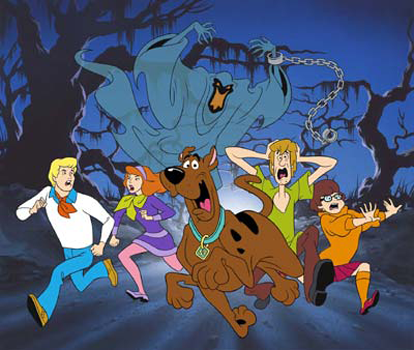
Shaggy: Zoinks, like I don’t know that it was a good idea to have the mystery machine shipped to England man! The food here is bad enough to keep even Scoob from wanting to eat!

Scooby: No ray! Find Indian food again!

Velma: Look guys we’re here! Hogwarts castle!

Professor Mcgonagall: Welcome to Hogwarts, and thank you for agreeing to help us. We’ve had some very strange things going on. Our tourist revenue is down 60% since the rumors started about Hogwarts being haunted began. Tom will show you to your rooms, and I will meet you in the main dining hall at 7 pm.

Shaggy (walking through Hogwarts): Like this place is really creepy man! Did something in that painting just move?!?

Fred: Isn’t it bad enough that you are a hippie with the constant munchies? Do you have to be afraid of your own shadow as well?

Daphne: FRED!

Fred: I’m sorry, that’s been building up for 40 plus years.

Shaggy: Yeah, well, like whatever man- at least you won’t ever see me wearing a scarf!

Tom: Here are your rooms, I’ll be back at 6:45 to escort you to the dining hall.

Velma: thanks Tom!

Shaggy (in room with Scooby): Like this place gives me the creeps Scoob!

Scooby: Zeah, me too!

< Enter Voldemort through a secret door>

Shaggy: Like it is a super-pale creepy monster without a nose! Let’s get out of here Scoob!

Voldemort: Idiots! I have a nose, it is just really flat! Now feel my wrath!!!!

Shaggy and Scooby: ZOINKS!!!!!!!!!

<Extended chase scene ensues>

<Chase ends in Voldemort’s capture. Just go with it…>

Fred: This Voldemort wanted to drive Hogwarts out of business so he could buy it for a song out of foreclosure! Now let’s find out who Voldemort really is!

TOM RIDDLE!!!!!!!!!!!!!!!!

Shaggy: Like no man, it’s “I would have succeeded if it hadn’t been for those meddling kids and their dog! ” If Scoob hadn’t destroyed your horcruxes while running around the castle, we never would have captured you!

Scooby:

SCOOBY DOOBY DOO!!!!!!!!!!!!!