Raising the Bar on the Forster-Mathews Bet

April 1, 2015

(Guest Post by Matthew Ladner)

Thus far I am aware of a tax-credit improvements in Alabama and Arizona, new special education scholarship programs in Arkansas and Mississippi, and many other measures pending in many other states. I think it is safe to say that Greg will once again defeat Jay Mathews in the over/under of 7 enactments.
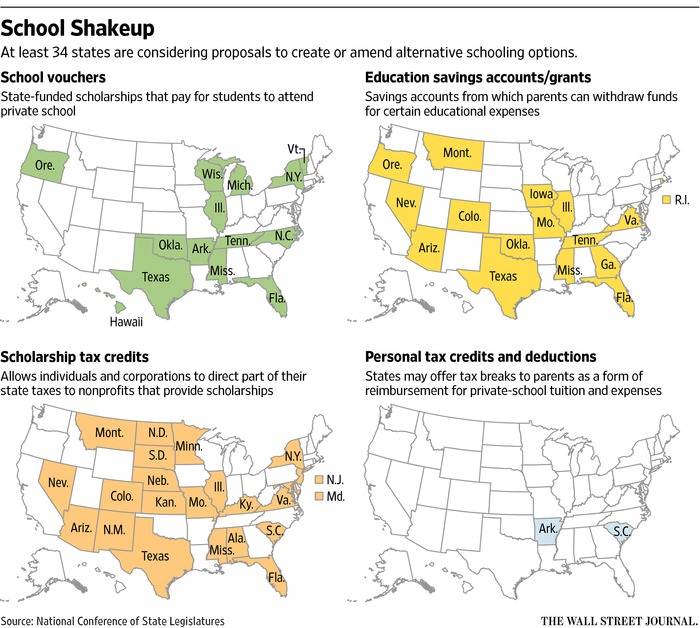
WSJ choice


While we celebrate yet another Greg victory, it may be a good time to pose a different question for ourselves: how many states have enacted a choice program or a combination of choice programs sufficiently robust to see a growth in private education in the face of a strong charter school law? A Rand Corp study found private schools will lose one student for every three gained by charter schools in Michigan.  We would not expect to find an exact match for this nationwide, but charter schools do by definition draw upon the universe of would-be choosers: parents who are looking for alternatives outside of their zoned district school. It makes sense that they would have a larger impact on private education.

If we assume the Michigan finding to be roughly equivalent to a national average, then we can proceed to check the tape. First charter school enrollment by state:
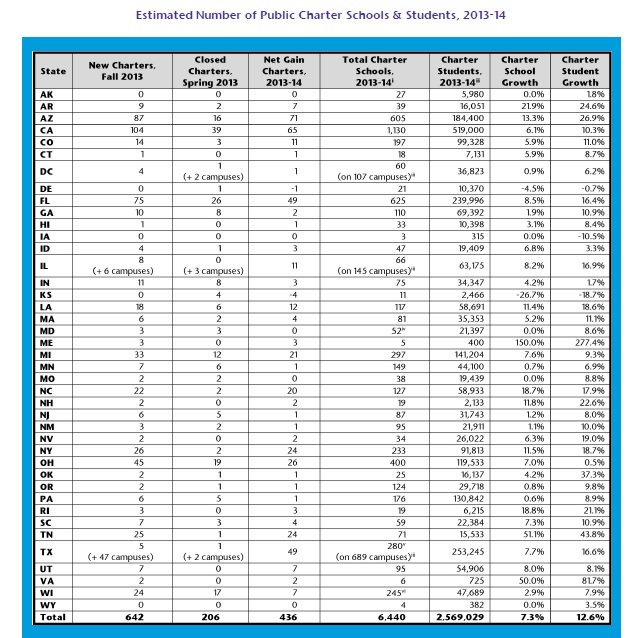
Charters school enrollment

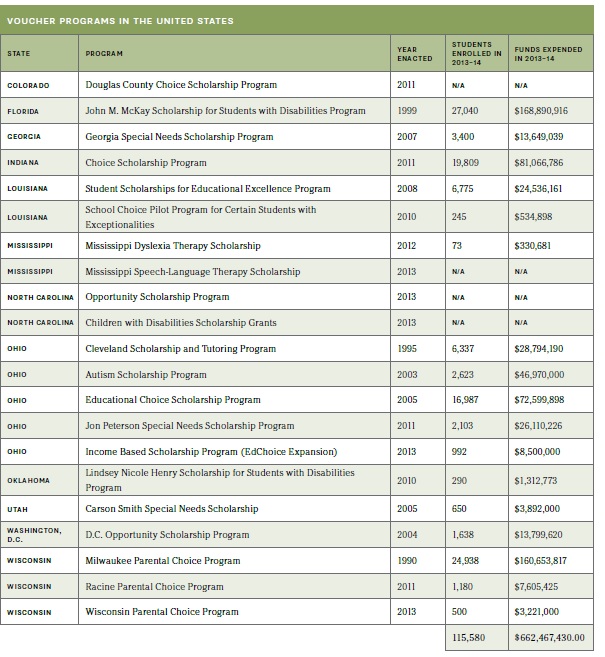
Next private choice program enrollment by state (from the Alliance for School Choice Yearbook):
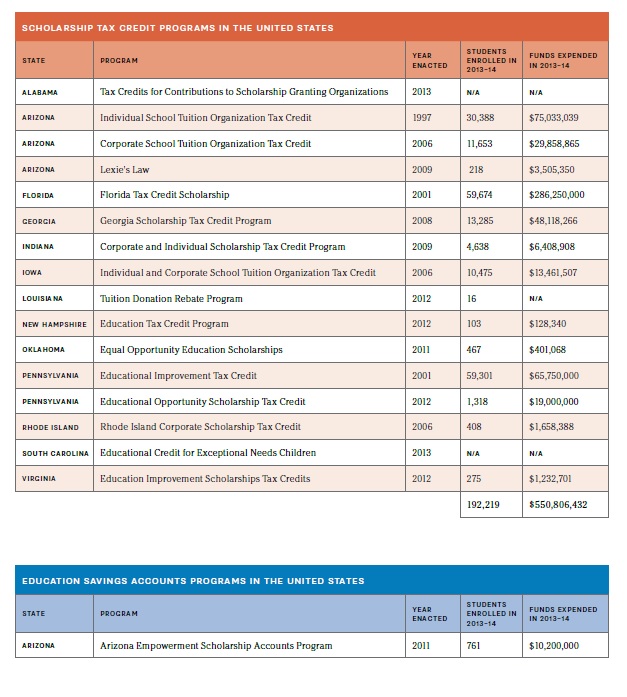
Private choice students 1


And…

Private choice students 2

So how many states have one-third or more as many private choice students as charter school students? Indiana is matching private choice students with charter school students despite a strong charter law thus far, and so is the leader in the clubhouse. Florida barely met the 1 private choice for 3 charter school students standard between the combination of the corporate tax credit program and the McKay Scholarship program. Without new revenue sources however growth in the Florida tax credit will stall in the next few years even as statewide student growth continues. Moreover Florida charter schools have almost certainly drawn a relatively advantaged group of students from private schools (charter schools have universal eligibility). The private choice programs have been aiding only low-income and children with disabilities and providing significantly fewer resources than those students receive in public schools (smaller tax credit scholarships in the case of low-income children, no local top-up funds in the case of McKay students).

Florida lawmakers have been busy improving the ability for high quality charter operators to open new schools (as they should) but balked last year at providing new tax credit revenue sources. Absent some large policy changes Florida will soon slip below the 1 to 3 ratio.

Iowa met the standard because of a healthy and growing tax credit program and a weak charter school law (3 total schools), so give them an *. Wisconsin meets the bar with the combination of private choice programs and a charter school program that (last I heard) is still bottled up in Milwaukee, so kind of an * too.

The Illinois and PA programs would require some sort of estimate regarding the price elasticity of demand for private schooling, but I’ll just heroically guess that charter schools have the better end of the deal in those states. Arizona and Ohio have more than three charter students for every private choice student. Other states like California, Michigan, New York and Texas seem content to watch their charter school sector batter their private school sectors into gravel.

Bear in mind that this comparison would look even more lopsided if we counted dollars rather than students. For instance the average tax credit scholarship in Arizona runs around $2,000 while the average charter school receives around $7,000 per pupil. Very few of the private choice programs come near to matching the per pupil level of subsidy provided to charter, much less district schools. Emblematic of this failure was the choice of 12 Catholic schools in Washington D.C. to give up the ghost and convert to charter schools after a (poorly designed) voucher bill had passed.

The goal of the private choice movement should not be to preserve a preexisting stock of private schools per se, but rather to allow parental demand to drive the supply of school seats. Those District of Columbia Catholic schools did not convert to charters because the parents were clamoring for it, but rather because the Congress had offered almost twice as much money per pupil to do it. States like Texas invest hundreds of millions of dollars per year into a charter sector that draws disproportionately from private schools while providing parents who would prefer a private education for their child nothing but the prospect of struggling to pay their school taxes and private school costs simultaneously.

Seen in this context, many private choice victories seem worthy but incremental. Incremental change is the equilibrium point of American politics, but the choice movement needs more Indiana style successes. Once more unto the breach dear friends…


AZ ESA applications close tomorrow

March 31, 2015

ESA

(Guest Post by Matthew Ladner)

The ESA application period for next year ends tomorrow in Arizona. Nice problem to have (image from the AZ Department of Education ESA page). H/T Kim Martinez, American Federation for Children.


Breakfast of Champions in the Texas Legislature Cafeteria!

March 27, 2015

Nerd Focus

(Guest Post by Matthew Ladner)

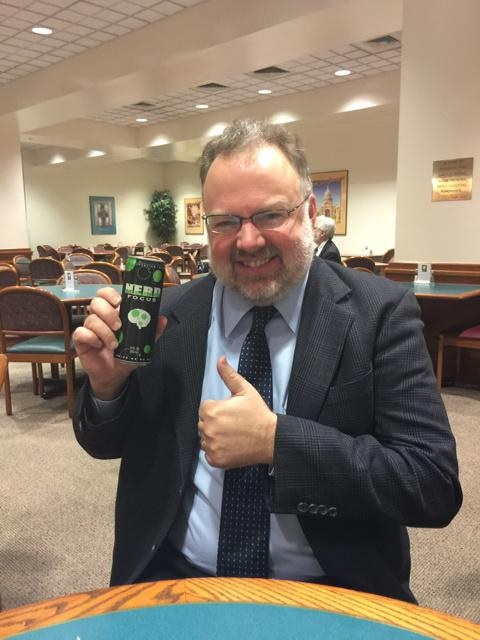
The cafeteria in the Texas Legislature is the only source I know of for NERD FOCUS…the most powerful energy drink on the planet. It’s a good thing they have it, because I needed it during a two hour panel testimony in the Senate Education Committee. Bonus chart from the WSJ on the school choice action:

WSJ choice


Mississippi Legislature Passes Account Based Choice Program for Special Needs Students

March 26, 2015

(Guest Post by Matthew Ladner)

The Mississippi Senate concurred with the House special needs ESA bill today, sending the measure to the Governor, who is a strong supporter. Mississippi thus becomes the nation’s third state with an account based parental choice program. Special congratulations to the bill sponsors and tireless supporters for a successful two-year struggle, the Mississippi Center for Public Policy, Empower Mississippi and especially the parents who fought so hard for this legislation. Awesome team effort that paid off in the end.

!!BOOOOOOOOOOOOOOOM!!

Also today a special needs voucher  bill passed the Arkansas house 90-0.


Governor Ducey Calls for Arizona Academic Standards in State Board Address

March 23, 2015

(Guest Post by Matthew Ladner)

Consistent with his campaign position, Arizona Governor Ducey called for the creation of Math and Reading standards that are both high and unique to Arizona in a speech to the Arizona Board of Education.


Luke Reaches Retirement Age next year, Bo in 2024, What Happens Next in Georgia?

March 16, 2015

(Guest Post by Matthew Ladner)

Rolling age-demography road show is heading down the Atlanta highway over on the Ed Fly blog.


Arizona Superintendent Diane Douglas Delivers Reality Check (No, really!)

March 13, 2015

(Guest Post by Matthew Ladner)

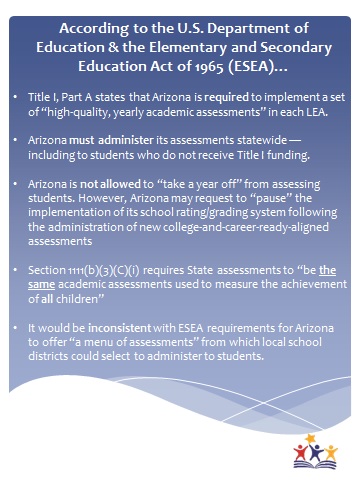
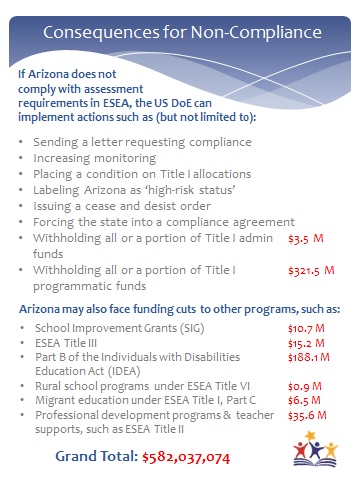
This morning Arizona Superintendent of Public Instruction Diane Douglas, acting within the responsibilities of her office and seeking to protect the best interest of Arizona students imo, released a power point presentation providing a reality check regarding some recent legislation regarding state standards. Here is a copy of the first slide:

AZDoE 1

And here is the second:

AZ DoE 2


Zero snark here: I commend Superintendent Douglas for taking this step. None of this means Arizona can’t adopt its own academic standards (I expect that we will do so) but it does mean that some careful thought about how to do it is in order. Yes I agree that the feds should not be taking our money and then giving some of it back in the form of school aid so they can boss us around etc. but Superintendent Douglas is living in the real world rather than a preferred world. I don’t think many would like to be in the situation of having Arizona taxpayers helping to pay for the U.S. DoE budget while dealing ourselves out of any of the funding for AZ schools. This #shadowfaction member applauds the Superintendent for this move!


Multiple States Ditch My Little Pony Coloring Book Quality Academic Exams

March 12, 2015

(Guest Post by Matthew Ladner)

New article on the quality of state tests vis a vis NAEP by Paul Peterson and Matthew Akerman at Education Next. The authors demonstrate a trend towards closer alignment in proficiency rates between state exams and NAEP during the Common Core era, with 20 states narrowing the gap. Several states, including at least Arizona and Florida, will debut new tests in a few weeks.

Of special interest to me in the above chart is the overall averages by year trends. Notice Tennessee’s long string of F grades, followed by A grades in 2011 and 2013. Was it a coincidence that Tennessee saw more NAEP progress than any other state between 2011 and 2013? Perhaps so, perhaps not.

Notice also however Washington D.C., which had even larger aggregate NAEP gains than Tennessee between 2011 and 2013 (and a long history of NAEP progress before 2013). Nothing but C grades thus far, but charter schools have been taking the place over and outscoring the (improving) district. Apparently there is more than one path up the mountain.

Can we attribute the general increase in the rigor of state tests to Common Core? The authors note in a fashion as dry as a martini:

CCSS may be driving these changes. One indication that this may be the case is that the six states that are not implementing CCSS for reading or math all continue to set low proficiency standards. Their grades: Virginia, C+; Nebraska, C; Indiana, C-; Texas, C-; Alaska, D+; and Oklahoma, D.

Regardless of where you stand on the Common Core project, and we’ve beat the horse into hamburger on it here, state tests with the approximate rigor of a My Little Pony coloring book- look Mommy I colored this unicorn blue-I’m PROFICIENT!!!– deserve no one’s support.  

In other words, if you are a Tennessee opponent of Common Core you owe everyone a realistic plan that keeps you at an A on this chart. If you want to go back to the old system, you need to explain why you want to spend tax dollars on a state sponsored weapon of mass deception (years of tests that proclaimed you proficient when you signed your name).

This is the space that Arizona Governor Doug Ducey staked out in his campaign- standards that are high but not common. It will be no small task to pull this off in practice, but it is the best path for an opponent of the Common Core project to follow.


Peshek on ESA legislation around the nation

March 11, 2015

(Guest Post by Matthew Ladner)

My colleague Adam Peshek has a post up about the progress of ESA legislation around the country, including the above map. I would like to again thank my friends in the Arizona school district industrial lobbying complex. Without their having made the grave mistake of filing suit against two tiny voucher programs for children with special needs and foster care students, we would not be having this conversation today!

Most of the bills are in fact conversation starters, but one of those (in Virginia) passed one house and failed on a tie vote in the other.

Which state will be the next to turn red on Adam’s map? As an old football coach once told me “it depends on who is the bestus and wants it the mostus.”

Stay tuned to this channel…

UPDATE : The Mississippi House passed a special needs pilot program today 65-51, now heads to the Senate to be reconciled. Oklahoma effort pushed to next year’s session.

UPDATE Part Deux: Rhode Island has an ESA effort underway.


Our Kids: The American Dream in Crisis

March 10, 2015

(Guest Post by Matthew Ladner)

Good write up in the WaPo wonkblog on Robert Putnam’s new book.  Obvious resonance with Charles Murray’s book Coming Apart. In fact Murray had some “scissor graphs” of his own:

This bit from the WaPo article was especially poignant:

Lola and Sofia, as Putnam names them (all of the ethnography subjects in the book are anonymous), have navigated life without coaches, pastors, tutors, friends’ parents, counselors, neighbors, community groups, parents’ co-workers and family friends. They feel abandoned even by the one group of adults we like to think poor kids can always count on — their teachers.

“In junior high,” Lola, the older sister, explains to Putnam’s team, “the teachers actually cared.”

“In high school, teachers don’t care,” Sofia says.

“The teachers would even say out loud that they get paid to be there,” Lola says.

“Just to be there,” Sofia says. “Just to babysit.”

“Yeah,” Lola adds, “that they’re there just to babysit, that they don’t care if we learn or not.”

They believe the honors classes at their high school got all the good teachers, but they don’t understand how students were chosen for those classes. Only the smart kids, they say, were told about the SATs. They tried to join after-school activities — the very venue where they might find structure and mentors — but Lola was told her reading wasn’t good enough for a reading club, and Sofia that her grades weren’t high enough to play volleyball.

Through their eyes, coaches and teachers were gatekeepers who extended opportunity only to chosen students.

Their view of the world around them is a deeply lonely one. And it exposes an inverse reality among the privileged that Putnam admits he did not previously see even in the lives of his own children: Take away the parents who drive you to soccer, the peers you know who went off to college, the neighbor who happens to need a summer intern — and childhood is bewildering. A task as simple as picking the right math class becomes another trapdoor to failure.

The privileged kids don’t just have a wider set of options. They have adults who tailor for them a set of options that excludes all of the bad ones.

Meanwhile, for a child like Sofia, “she’s just completely directionless, because life happens to her,” Putnam says. “What she’s learned her whole life is that life is not something you do, it’s something you endure.”

Before you rush off to use poverty as a blanket excuse for the failings of the public school system, let me note the following: many of today’s poor children had multiple generations of ancestors who had the opportunity to attend public schools that were funded generously compared to schools around the world. Ideally public education serves as an agent of class mobility, but obviously we have been getting far less of this than desired. The costs of the failures of our social institutions-including but certainly not limited to our educational institutions-seem to be compounding over time.