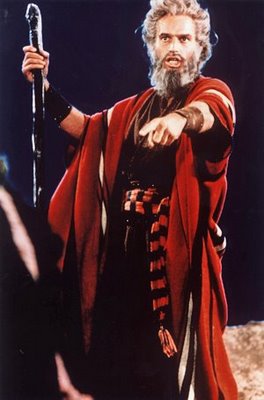
Get Lost – Locke Goes Up in Smoke

May 7, 2010


“I am not dead and you are not Hurley.”

(Guest post by Greg Forster)

As we approach the end, I’m thinking back and trying to integrate what we now know with what has gone before. For some reason, what’s engaging my attention the most is trying to figure out how much of Locke’s experience was a result of Smokey’s deception, and how much was real.

When Smokey called Locke a “sucker” a while back, I wondered if they were trying to suggest that everything Locke had believed in was a result of Smokey’s deceptions. But that can’t be right.

It all starts with Locke standing up and walking after the plane crash, and I doubt anyone’s going to attribute that to Smokey. That’s Jacob. Or maybe it all really starts when Richard comes to Locke as a boy. That’s Jacob, too – although Richard tried to discourage Locke from following the path that he did.

During season 1 Smokey appears to Locke but doesn’t kill him. We now know why – he was a candidate. But at the time, Locke assumed Smokey was part of “the Island” that had healed him and that he was serving. Ironically, at the same time Locke thought Smokey was with the Island and was therefore good, he was focused on fighting the Others, who we now know to be Jacob’s people! Although Ben seems to have sort of taken the Others off the rails to serve his own purposes, so in a sense they were also evil at the time. Locke’s job, later, was to get them back on the rails.

At the end of season 1 Smokey is dragging Locke into a hole and he tries to convince John to let him go, but John drops dynamite into the hole to save him. During season 2 it’s all about the button in the hatch, and during season 3 it’s all about the Hydra island, so there’s not a lot that I recall that bears directly on the question. At the end of season 3 Ben takes Locke to the cabin, Locke hears Jacob, Ben shoots Locke out of jealousy, then Walt appears to him and saves him, and then in season 4 he joins the Others.  

Then during season 4, in the cabin, Christian tells Locke to move the island. And Christian appears to Locke again in season 5 when his leg is injured, and guides him to the wheel so he can fix the island’s time dislocation. Was Christian Smokey in both cases? Claire was with him in the cabin so that argues for yes.

But here’s what’s really bothering me. At the end of season 3, how did he see Walt? Smokey can only be dead people, and we know Walt’s not dead because Locke meets him in LA in season 4.

“Sorry about all those continuity problems I keep causing.”

What gives?

And what other items are missing from this list? I’m sure I’m not recalling everything.


Get a Job, Hippie!

May 6, 2010

(Guest post by Greg Forster)

Stephen Spruiell notes that even as the administration is trying to make a college degree a new constitutional right, it is going to war against the institutions that have actually figured out how to extend college education in a sustainable way – for-profit colleges.

Why? Spruiell cites “ideological” hostility to profit in the education industry. But I suspect it’s at least as much a consciously cynical attempt to reshape the higher education sector in a way that will make it more supine – businesses that make a profit answer to the customer, and are thus harder to coopt for political purposes.

Among the policy tricks being deployed or considered for the purpose of destroying for-profit colleges is a new rule that would bar them from federal student aid unless they have a 70 percent graduation rate and a 70 percent rate of placement “in field” after graduation. Elsewhere on NRO, Robert VerBruggen remarks that the nationwide average college grad rate is only 60 percent.

But Spruiell gets the prize for this comment:

Imagine the Department of Education telling Big State U that 70 percent of its “peace studies” grads must be placed “in field” or it will lose federal funding for the program.

Gives a new meaning to the old outburst “Get a job, hippie!”


Union Lobbyist Goes Down Hard

May 3, 2010

The unions talk tough. So did Michael Spinks.

(Guest post by Greg Forster)

Collin Hitt of the Illinois Policy Institute just sent me this wonderful nugget, pulled off the official recording of the proceedings of the Illinois House Executive Committee last week.

Dramatis personae: Illinois Education Association thug lobbyist Jim Reed, and Rep. Daniel Burke.

Reed: I think the question to the downside [of the school voucher bill] is the fact that while you may think that you’re helping these 24,000 kids, the fact that you’re diverting funds from public schools means that the kids who are left in those existing public schools are going to have fewer resources. So there is a downside in terms of those students who are actually left in our public school system. That’s the downside.

Burke: Could they do any worse than what they are doing now, whether they’re funded or not?

Reed: You mean our public schools generally?

Burke: No. These schools that we are discussing, that are going to be affected by this legislation.

Reed: Probably not. They are the lowest of the lowest.

Wow! I bet Reed is still digging his teeth out of the carpet.

That’s quite a trick – I’ve never seen checkmate in one move before.

Unofficial transcript of what Rep. Burke said next


It’s “Nobody Draw Mohammed Century”!

April 30, 2010

(Guest post by Greg Forster)

Today, Mark Steyn posts a letter he recieved from cowardly lioness Molly Norris, along with his absolutely devastating response. Not to be missed if you’ve been following the bru-ha-ha over Everybody Draw Mohammed Day.

Steyn does leave one thing out of his response, though. Asked to explain why he and others are so contemptous toward Norris, he offers a number of unassailable demonstrations that it’s because her behavior is contemptible. But Norris’s betrayal of her own professed principles was not only a missed opportunity, as Steyn stresses. It was a unique kind of missed opportunity.

For one person or one partnership or one organization – like, say, Trey Parker and Matt Stone, or Kurt Westergaard and Jyllands-Posten, or Ezra Levant and his team at the Western Standard – deliberately says something calculated to push back against a violent threat to freedom of speech, that is nothing short of heroic. They take all the risk, and all the rest of us reap the reward of their bravery as parasitic free riders.

But you can’t build a civilization on heroic virtue. Civilization has to be livable for the ordinary person. If a civilization is going to be characterized by freedom, it has to be built in such a way that the ordinary person can enjoy freedom without having to demonstrate heroic virtue.

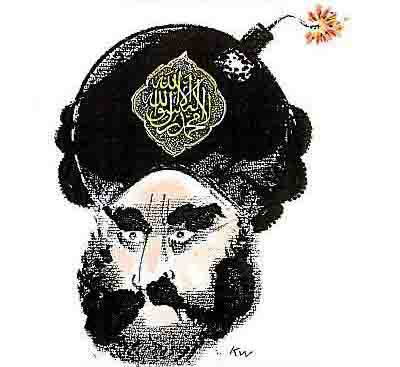
Kurt Westergaard (Photo by Daily Mail)

Don’t get me wrong – heroic virtue such as has been demonstrated by Parker, Stone, Westergaard, and Levant – and Mark Steyn – will always be necessary. But that’s just another way of saying heroes will always be necessary. And you can’t have a whole civilization populated by nothing but heroes. In other words, heroes are a necessary but not sufficient condition for a free civilization. By all means, let’s affirm that the ordinary person can’t be free unless heroes make his freedom possible – but he also can’t be free if freedom for heroes is the only kind of freedom we have.

So what else, besides heroes, is necessary for the freedom of the ordinary person? A mutual defense pact.

We need a culture in which it is expected that when one person’s freedom is threatened, others will rally to his defense. If it’s everybody for himself, the enemies of freedom can pick us off one by one. Or if nobody but the government is responsible to defend those whose freedom is threatened – well, how well does anything work out if it’s a government monopoly? But if we come to each others’ defense, then defending freedom doesn’t require heroic virtue. It’s hard to be the first person to stand up for freedom – that’s why we need heroes, or nobody can be free. But it’s not so hard to be the tenth, or hundredth, person to stand up for freedom – that’s why those who aren’t heroes can be free, too.

It’s not necessary for everybody in the whole world to come to everybody else’s defense. But it is necessary that those who are morally and culturally proximate to the threatened person come to his defense. By “morally proximate” I mean those who have a special duty toward the threatened, whether by natural relationship (such as being a friend or family member) or for some other reason (such as by professional responsibility – doctors have more responsibility to care for the sick than others, because they are more able to do so and have voluntarily accepted the professional responsibility). By “culturally proximate” I mean those who best understand the social situation of the threatned person because they themselves inhabit a similar social situation.

And that’s what makes Norris’s abdication especially galling. The idea of Everybody Draw Mohammed Day was a fantastic way for all of us who are – as professional producers of social commentary – morally and culturally proximate to those whose freedom is threatened here to exercise a mutual defense pact. Steyn himself has articualted on numerous occasions the imperative for professional producers of news and culture to rally to fight off the threat to free speech from political Islamism. Well, this seemed to be, for a few brief shining moments, a way for some of us to do that.

But not now. Nobody else can make EDMD happen the way Norris could have. Yet it appears that being hip – i.e. not being even remotely associated with anything her elite-lefty social circle finds declasse – was more important to her than striking what could have been one of the most powerful blows for freedom in our generation.


Health Care Wars: A New Hope

April 30, 2010

(Guest post by Greg Forster)

I recant!

When Obamacare passed, I lost hope. All the arguments that were being offered at the time for the feasability of repeal seemed to run from flimsy to transparently bogus. And Mark Steyn kept raising the question – has a victory like this ever been rolled back?

But since then some better arguments have been made that a rollback, culminating in repeal, could happen. The best of these is Ramesh Ponnuru’s article in the current NRODT, now generously made available to the world on NRO. Long story short, Obamacare has a long lead time before the corrupting influence of its subsidies on the general populace can be expected to take hold (the subsidies don’t even start flowing for years) and there’s a window of opportunity that can be seized – not for repeal immediately, but to set the stage for repeal. Plus, when the rest of the world’s developed countries adopted their big welfare states, most people saw themselves as the winners and only “the rich” as the losers. Today, most people seem to see themselves as the losers.

The clincher for me, though, was Randy Barnett’s article in yesterday’s Journal on the legal merits of the constitutional lawsuit. My argument last month was that if Social Security (mandatory retirement savings) is legal, then Obamacare (mandatory health insurance) must be. I was ignorant of two key factors, one that I didn’t know and one that I forgot. The one I didn’t know is that the legislative language in Obamacare actually makes the Social Security comparison legally problematic – they didn’t realize until too late that they would need to appeal to the tax authority to protect themselves (funny how hard it is to get everything exactly right in a 50,000 page bill that you have to ram through in a hurry to avoid scrutiny).

And the thing I forgot is that court cases are not decided on the merits. There’s no excuse for a voucher supporter to forget that!

Image by FireWire


Public Schools Are Segregation Academies

April 26, 2010

(Guest post by Greg Forster)

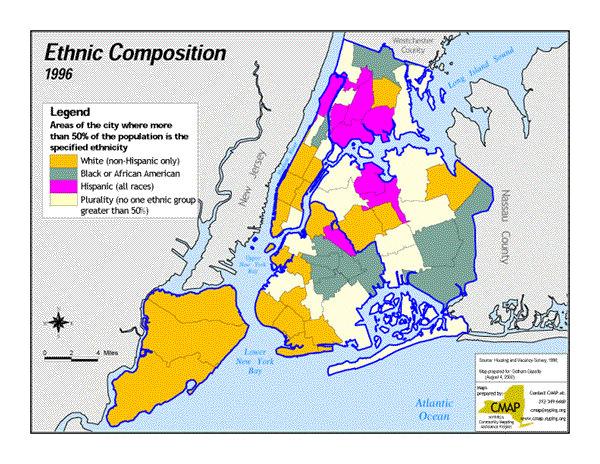
The first image above shows the school districts in Manhattan. The second shows the racial/ethnic makeup of the population; the data are a little old, but the relevant facts for the purpose of this post haven’t changed.

Take a look at the shape of District 2 – it’s the one that encompasses all of Manhattan below Central Park except for a big chunk on the southeast tip of the island.

What occasions this particular illustration? In his e-mail blast today, Whitney Tilson reprints the following correspondence “from a friend”:

Every great DOE school is selective — whether by test score or by Realtor, if you know what I mean. 

Look at the map of Manhattan District 2, one of the best public school systems in America. It could only have been drawn to intentionally ensure that white kids on Upper East Side, Chelsea, and Greenwich Village wouldn’t have to bump shoulders with black and Hispanic kids. 

Try renting a 2 bedroom apartment in that district for less than $3,000. 

Does District 2 cream? Hell yes!  Kids there have benefitted from a double-whammy (which was designed to benefit white kids, but now is increasingly filled by Asian students): they attend a middle school where you have to ace the 4th grade tests to be allowed in.  They also get the best teachers in the city because who wouldn’t want to teach the richest public school families in America? 

Schools filled with rich kids, when the system is rigged in their favor (the education level of their parents, the reality that rich kid schools are able to raise hundreds of thousands of dollars for teacher aides and books and such at fancy fundraisers, etc.), equals selective schools. 

Then we give them the best teachers and we allow their test scores to mask the city’s low aggregate scores. We create gifted and talented programs for them and give them a much stronger curriculum and higher expectations. We watch their parents spend a small fortune on afterschool tutoring and organized activities for their kids. 

OF COURSE they do well with all that extra learning! 

The NYC ‘system’ is rigged in favor of rich kids. (Joel Klein has tried to unrig it, but the political force is too strong.) 

It is why poor kids need these opportunities that are provided by the 30-40% of charters that are really, really excellent. 

What’s the quickest and easiest way to create a nationwide system of segregation academies? Force people to go to school based on where they live.

How do you make them even worse? Let the district lines be drawn by an unaccountable bureaucracy that claims to care about kids but actually doesn’t care how many children’s lives it has to destroy in order to keep the gravy trains running on time.

What is the only – the only – empirically proven way to successfully smash segregation? School choice.

Images by UNHP and Gotham Gazette


CPS Officials Admit Vouchers Are No Problem

April 23, 2010

(Guest post by Greg Forster)

The new Chicago Tribune editorial buries the lede in a major way.

The editors praise the Illinois House Executive Committee for passing the voucher bill 10-1. But tucked away in paragraph eight we find this little stick of dynamite:

Chicago schools would wind up with less money, but also with fewer children to educate. CPS officials tell us privately that they could handle that. [ea]

That would certainly be consistent with the large body of high-quality research consistently finding that vouchers improve rather than harm public schools, as well as with the fiscal track record that shows vouchers leave public schools with more dollars per student because their costs fall faster than their revenues.

But I don’t think I’ve ever seen public school officials admit that before, even “privately.” The public school system can handle vouchers, but it can’t handle the truth.


I Can’t . . . It’s Just Too Easy

April 22, 2010

(Guest post by Greg Forster)

A charter school founded by Linda Darling-Hammond and overseen by Stanford’s education school is being shut down by the state for persistant abysmal performance.

I can’t do it. The ed-school hacks tried to make their Cloudcoocooland theories work in real life and it came crashing down in humiliating failure. Twist the knife now? C’mon, it’s just cruel. Not even I can do that.

So I’ll quote Whitney Tilson doing it! From his e-mail blast on Monday:

Normally, a low-quality charter school being denied a full extension of its charter isn’t worth of a STOP THE PRESSES, but this isn’t just any charter school: it’s the one started by Stanford’s School of Education (where my father earned a doctorate, by the way) and, in particular, Linda Darling-Hammond, author of the infamous Teach for America hatchet job (my full critique of her is posted at: http://edreform.blogspot.com/2007/12/obamas-disappointing-choice-of-linda.html).  LDH (along with Ravitch, Meier, and Kozol) is among the best known of your typical ed school, loosey-goosey, left-wing, politically correct, ivory tower, don’t-confuse-me-with-the-facts-my-mind’s-made-up, disconnected-from-reality critics of genuine school reform.  (Forgive my bluntness, but I can’t stand ideological extremists of any persuasion, especially when kids end up getting screwed.)

LDH and Stanford’s Ed School decided to test their educational theories in the real world, starting a charter school in 2001 to serve the low-income, mostly-Latino children of East Palo Alto.  I credit them for this – in fact, I think EVERY ed school should be REQUIRED to start and run, or at least partner with, a real live school.  What they set out to do is REALLY, REALLY hard, so I also credit them for having the good sense to start the school via a joint venture with a proven, first-rate operator, Aspire.  However, their anti-testing ideology soon got in the way of their good sense:

The two cultures clashed. Aspire focused “primarily and almost exclusively on academics,” while Stanford focused on academics and students’ emotional and social lives, said Don Shalvey, who started Aspire and is now with the Bill & Melinda Gates Foundation.

Five years ago the relationship ended amicably and Stanford New School was on its own.

It doesn’t take much imagination to guess what happened when, freed of Aspire’s rigor and focus on the critical basics (like teaching children to read properly!), the ivory tower theories ran head on into the reality of East Palo Alto kids.  The results were easy to predict: the school fell on its face:

…test results for Stanford New School students are almost uniformly poor. On last year’s Standardized Testing and Reporting Results only 16 percent of the students were proficient or advanced in English and math, an improvement from the previous year. And in a three-year comparison of similar schools in 2007 and 2008 — the most recent state results — the school scored 6, 7 and most recently a 3 out of 10.

LDH cynically tries to explain away this failure by – surprise! – blaming both the evaluation system and the kids:

Ms. Darling-Hammond — who told the board that the school “takes all kids” and changes their “trajectory” — was angered by the state’s categorization of the charter as a persistently worst-performing school. “It is not the most accurate measure of student achievement,” she said, “particularly if you have new English language learners.”

To understand what nonsense this is, see the comparison of Ravenswood to other schools with comparable percentages of low-income and ELL students in Andy Rotherham’s blog post….

This appears to be your classic “happy school”, a phrase coined by Howard Fuller to describe the most dangerous type of school – not the handful of violent, gang-infested high schools, but rather the elementary schools that are safe and appear ok: the students are happy, the parents are happy, the teachers are happy, the principal is happy…  There’s only one problem: THE KIDS CAN’T READ!!! 

There’s one thing in this passage I have to object to. Every education school should start a charter? Good gravy, cripes, and sakes alive, man! Have you no decency? How many children’s lives do you want to destroy?

Whitney Tilson calls down a plague of locusts on America

Kicking the ed-school hacks while they’re down is one thing. But a nationwide epidemic of schools run by them? Now that’s what I call cruel.


The Unions Doth Protest Too Much

April 19, 2010

(Guest post by Greg Forster)

Wow, the graphic above seems to have struck a sensitive spot with our Sith apprentice, Leo Casey. Here’s his surprisingly defensive overreaction.

Leo thinks he has my motives all figured out. He thinks my post last week was trying to sow division within the union by pitting their internal constituencies against one another.

Er, no. I don’t think many UFT members read Jay P. Greene’s Blog, except the ones who are paid to.

Leo’s evidence about my motives consists entirely of a passage from a book written 20 years ago by people who have no connection to me. Oh, and he lists my affiliation as being with “the Milton Friedman Foundational Educational Choice.” Two words right out of five ain’t bad – at least by his standards.

You would think that a person who has been caught participating in eggregious political fraud and promoting scandalous calumny would be more careful. Or maybe you wouldn’t.

Sherman Dorn likewise misconstrues my purpose (although without the foot-shooting intellectual slapstick we’ve come to expect from Leo). Dorn writes of my post: “This is corruption! is the implication.”

Er, no. I not only didn’t say anything about corruption, I didn’t imply anything about it. There’s nothing corrupt about UFT representing more non-teachers than actual teachers.

Dorn invokes my status as a political scientist with hoity-toity academic credentials in order to sadly lament that I failed to provide an extensive discussion of the academic literature on different types of voting systems in my blog post. Well, let’s try to satisfy him by adopting some unnecessarily opaque academic jargon as we look back at the actual, clearly and explicitly expressed purpose of the post.

My post is what political scientists call “positive theory.” That is, I’m offering an explanatory model of the unions’ behavior. Why do unions invest so much of their effort in racking up a trillion dollars in mostly-unfunded pension obligations, rather than taking a more evenhanded (and thus presumably less noticeable) approach to what kinds of swag they grab? Why do they support policies that make working conditions worse for teachers?

Down here in the dark bowls of the earth where we “trolls” live, the prevailing explanation is that the union leadership has incentives to do things that fatten themselves at the expense of the union membership. Well, I’m not saying that’s not true! But there’s at least one other plausible theory, and my post offered it. Or both could be right!

But . . . I’ll admit that I did have a hidden agenda! Namely, I wanted to create some transparency about whether the UFT represents “teachers.” It’s not wrong for UFT to represent more non-teachers than it does teachers, but it’s wrong for UFT to puff itself up as The Voice of The Teacher in order to promote policies that serve another agenda. Not that I think a union should puff itself up as The Voice of the Teacher even if it does primarily represent teachers, any more than I think the National Organization for Women should puff itself up as The Voice of Women. But how much more shameless would it be if most voting members of NOW were men?


Only 40% of UFT Voters Are Actual Teachers

April 14, 2010

(Guest post by Greg Forster)

Over on NRO, Rick Hess points out that only 40% of the voters in last week’s UFT elections were actual teachers.

Do you think this sort of thing might have something to do with the problem of runaway, unfunded teacher pensions? Looks like at least one union is representing retirees at least as much as teachers.

This also sheds some light on why the unions favor policies that destroy the working environment for public school teachers. Only 40% of their voters are affected by the destruction of the teacher working environment.

And this is after the implementation of a new rule that counts each vote by a retiree as only 0.72 of a vote. If the retirees’ votes hadn’t been diluted, the teachers would only be 34% of the electorate and the retirees 46%.

In case you’re wondering, the other 22% of the UFT vote is composed of what the union calls “functional teachers,” i.e. almost entirely non-teachers (librarians, nurses, counsellors, etc.)