Seriously, What Is Up at UFT?

February 28, 2011

(Guest post by Greg Forster)

I’m catching up on this a little late, but ALELR has connected a couple of dots and drawn a picture of things at the UFT that can only make you say “Epic Facepalm.”

OK, you do remember the whole Cue Card Check scandal? At the time, Randi Weingarten was so embarrassed that she was forced to go out and claim she knew nothing about all this – cue cards? what cue cards? – and would “make some changes in the union.”

I missed this at the time, but last summer Elizabeth Green (who also broke the Cue Card Check story) reported that Marvin Reiskin, the UFT political director, had taken early retirement in the aftermath of the scandal. He was lined up for retirement at the end of the year anyway, but forcing him out early – even a month early – beats doing nothing. It sends an internal signal, however muted.

Obviously UFT had to be looking for a replacement who would restore credibility. Their number one priority after such a humiliation must have been to bring in someone who would restore adult supervision – and, more importantly, be seen to do so – show the watching world that the grownups were back in charge at UFT.

So get this: the person tapped to play that role was Paul Egan.

I think the question now becomes: why does UFT have an organizational culture in which people like this consistently rise to the top, no matter how strong the external incentives against it?


FEC Drills Down the Data

February 21, 2011

(Guest post by Greg Forster)

If you want to drill down into state level data on school choice, check out the new edition of The ABCs of School Choice from my comrades-in-arms at the Foundation for Educational Choice.

Back when I was head of research for FEC, I used to put together the ABCs publication, and let me tell you – this new version is not your father’s ABCs. They’ve got a ton of new data, such as:

  • How many students used Arizona’s tax-credit scholarships in each year since the program began? How about the personal tax credit in Illinois or Ohio’s EdChoice voucher?
  • How many schools have taken Florida McKay vouchers in each year? How about Milwaukee vouchers?
  • What was the average dollar value of Georgia’s special needs voucher program in each year? How about Louisiana’s failing-schools voucher?
  • Et cetera?

Plus, as always, the ABCs gives you a detailed rundown on how each program works – the rules and regulations, the eligibility qualifications, legal issues, the whole story. Check it out.


Bureaucratic Bloat – Bathroom Edition!

January 24, 2011

(Guest post by Greg Forster)

Short version of this post: I clean my own toilet, therefore school staff unions should be abolished.

Long verson: I just had an article come out on bureaucratic bloat in Oklahoma schools, in which I noted that only half of the state’s K-12 public education employees are teachers. That’s pretty much par for the course nationwide.

(Before you ask, the breakdown looks similar if you do it by dollars instead of by headcount. I use headcount because it’s simpler – with dollars you have to navigate a more complex set of categories – and because there are categories of spending over which states have little control, such as debt service, whereas headcount is more flexibile.)

One argument I made was that instead of focusing on bloat in “administration,” we should really focus on privatizing services in the giant “other” category – bus, cafeteria, etc. Private companies already exist that can provide all those services better and cheaper. There’s no reason these functions should be performed by unionized civil servants under outrageously dysfunctional personnel rules that ensure substandard performance and with gargantuan nuclear exploding pensions that cost ONE TRILLION DOLLARS.

A disgruntled teacher writes in (anonymously) to say, among much else, that my argument is invalid because I don’t clean my own toilet:

 Not only do you expect us to teach our children, which I gladly and proudly do well, but you expect us to do so with out the assistance or limited assistance of janitorial staff, nurses, aides, bus drives and cooks. So we are to teach successfully as well as clean the toilets, cook their meals, take their temperature and drive buses (which we do anyway)…I wonder if Mr. Forster has someone that cleans his office and bathroom or if he does that himself?

(Read the letter in all its unabridged, unedited, undiluted glory here.)

Now, there are several problems here. As William F. Buckley once wrote: “I have seen non-sequiturs in my life, baby ones, middle-sized ones, and great big ones, but they all stand aside in awe at yours.”

First, I didn’t argue that teachers should clean their own toilets; I said we should hire private service providers to do it instead of using unionized civil servants. The teacher herself, curiously, seems to recognize this, but only in the non-toilet context; she complains elsewhere in the letter that under my argument “we are to contract out to professionals to provide meal service.” (I will leave unremarked upon her implicit acknowledgement that unionized civil servants cannot be considered “professionals”; unremarked upon as well will be the question of what this implies about teachers.)

The real problem with her argument, though, is that I do, in fact, clean my own toilet. The office in which I work does not hire janitorial staff. We are all responsible for cleanliness, including the bathrooms. On my first day, this fact was impressed upon me with some force by the administrative staff. And I’m proud to say that I have lived up to my responsibilities.

After all, I learned my skills through discipleship with a true master – the Li Mu Bai of toilet cleaning.

Sure he can walk on water – but does he clean it?

My first job in education was working for Jay Greene – yes, the Jay Greene – and we had no janitorial staff in that office either. In addition to our each taking responsibility for our messes daily, Jay appointed a regular schedule for comprehensive office cleaning. We each took a task – dusting, vacuuming, etc.

Jay always took the bathroom cleaning job. Every time. He told us this was his way of setting an example for the staff, citing a motto from the Israeli officer corps: “Follow Me!”

I still do.

So, if my arguments would be invalid if I didn’t clean my own toilet, doesn’t it therefore follow that since I do clean my own toilet, my arguments are valid?


“Academics” and the “Practical” Part IV: Seizing Power

January 19, 2011

(Guest post by Greg Forster)

For a while now I’ve anticipated that the next installment of this series would be about power. Since Jay has broached the subject, I guess it’s finally time to get around to writing what I’ve been planning!

A quick review of my Unified Field Theorem of Education Reform:

Part 1: Education reformers shake out into two groups, which I call the “liberal artists” and the “pragmatists.” The liberal artists want to teach first the three Rs, then traditional “academic” content more generally. Their strength is their insistence on tangible accountability for teaching all children; their weakness is their overreliance on standardized testing – now culminating in the current effort to create a government-controlled national testing regime which logically implies the further step of imposing a single curriculum on all schools under the control of a central authority. The pragmatists want to make education in various ways “more relevant to real life.” Their strength is their desire to create new models of education that will prepare students better for life in the (changing) world. Their weakness is their tendency to discount (in practice if not in rhetoric) the value of traditional academics, and especially their fear of accountability systems.

Part 2: Both sides undermine not only education governance (the focus in Part 1) but pedagogy as well. The pragmatists want to abstract “skills” from “content” and focus on teaching the skills; they fail to appreciate that the only way to learn skills is by leaning content. You can never teach “skills” directly. The liberal artists want to abstract “knowledge” from “practice” and focus on teaching the knowledge; they fail to appreciate that all the really important knowledge is intricately bound up with practice, and can only be learned practically.

Part 3: Liberal artists need to get over their testaphilia, and pragmatists need to get over their testaphobia. A vast quantity of what students deperately need to learn must be learned in ways that can’t be tested with the level of objective systematization the liberal artists insist upon. You can “test” practical knowledge but not in the ways the liberal artists want – and not in ways that can be effectively used as the basis of an accountability regime. Yet standardized testing, and more generally the “rote” “regurgitation” of “mere” “facts,” is always going to be a crucial part of good education. In Daniel Willingham’s language, you can’t get to the “deep structure” of problems, which is what the pragmatists want, until you’ve first mastered the “surface structure,” which is the rote facts the pragmatists disdain. You have to walk before you can fly.

Running through all this is the tension between governance and pedagogy. Once we decide what we want schools to do, how do we structure the system to try to get them to do that?

The links beteween each camp’s pedagogy and governance, both in their good and bad aspects, run much deeper than it may at first appear. What’s really at stake is our view of the human person.

An analogy to politics will help here. In modern political philosophy there are basically three anthroplogies on offer. They give rise to different political systems.

  • You can be cynical about human nature, thinking that people are basically bad. This leads more or less directly to an explicitly authoritarian, implicitly totalitarian tyranny of “enlightened” despots. Because people are basically bad, no one can ever have legitimate power (no one deserves it) and the world will really operate by illegitimate power no matter what you do. So you might as well give the power to the smartest people so they will at least make things run more smoothly and everyone will have an easier time of it. Machiavelli and Hobbes fit this model.
  • You can be naive about human nature, thinking that people are basically good. This also leads more or less directly to an explicitly authoritarian, implicitly totalitarian tyranny of “enlightened” despots. Because people are good, they will naturally want to cooperate to make everyone better off, which of course means putting things under the control of the smartest, best people. And those people ought to have the power to coerce everyone’s cooperation, becasue such power won’t really need to be exercised very much – just enough to encourage people to get over their less powerful selfish tendencies and live into their natural desire to benefit others, which is (underneath the superficial layer of selfishness) really their deeper and stronger desire. The payoff from giving dictatorial power to experts is huge (because the experts are not only smart but good and trustworthy) and the cost is small (because the power won’t have to be exercised much). Rousseau and Hegel fit this model.
  • You can take a mixed view of human nature, thinking that people are both basically good and basically bad. They need freedom to do their good stuff, but also enough restraint to keep them from getting out of line and destroying other people’s good stuff; the rulers, in turn, must be strong enough to restrain violence, but not so strong that they themselves become unaccountable. This is the anthropology of liberal democracy, freedom of religion, and the entrepreneurial economy; Locke, Montesquieu and Madison are its architechts.

The thing to note is that societies cannot be counted on to remain faithful to one model. In particular, the mixed model on which liberal democracy, freedom of religion and entrepreneurial economy are built is really darned difficult to maintain. We are constantly falling away into cynicism on the one side (e.g. Cass Sunstein, Catherine MacKinnon, Saul Alinsky) or naivete on the other (e.g. Michael Lerner, Alan Wolfe, Jim Wallis) with the same disastrous consequences every time.

How does this relate to pedagogy and governance in education? I propose that education needs to be based on a mixed model, but is constantly falling away into one or the other of two truncated models – and that’s why substantive education issues are constantly being hijacked by brute political power.

Look at the liberal artists. How did we get to a point where the people dedicated to the full flowering of human knowledge represented by “traditional academics” are in the process of reducing the content of education to what can be measured by bubble tests – and lining up to create a national dictator that will reach into every school in America and crush everything that isn’t bubble tests?

It’s because their anthropology privileges intellect over action. A human being is a mind that has a body. What they want is to educate the mind. The body is really of no concern to them. Even the mind is only of interest insofar as it knows things – the mind’s ability to do things through the body is not interesting. Re-reading my first post in this series, this is really clear in the exchange between Jay and Checker about whether schools should teach things like “entrepreneurial attitudes.”

Checker Finn’s ideal school

This anthropology implies an aristocracy of intellect. The system should serve the interests of those who are capable of learning. The liberal artists think they’re egalitarians and democratizers because they stick up for the poor black kids who want to learn – and, as I have said over and over, they’ve done us a great service. They have indeed been the great titanic warriors against race and class aristocracies. But there are other kinds of aristocracies as well. The liberal artists only stick up for the kids who want to learn in a certain way: the intellectual way, the bubble test way. They want the whole system to serve only the kids who desire to know for knowledge’s sake – and that’s not most kids. What about the kids who want to invent new things, or acheive greatness in other ways, and who might be willing to learn academics as a stepping stone to that but not for its own sake? They’re chucked into the maw of the intellectual tyranny.

Ken Robinson was wrong (in that video back in Part 1) to attribute this anthropology to the Enlightenment; it is actually far older, and has historically been associated with undemocratic power structures. Mind/body dualism was the philosophy of Greco-Roman aristocracy – Athens was the only democracy of any importance in the ancient world, and it executed the great dualist Socrates. Even during the Enlightenment, those who strongly embraced mind/body dualism (like Descartes) were strong supporters of traditional power structures. It was those who challenged mind/body dualism, like Locke, who ushered in democracy.

What about the pragmatists? It’s tempting to say that they have the opposite problem – they think kids are bodies that have minds. But that’s actually wrong. The strength of the pragmatists is that they’re not plagued by mind/body dualism.

Their problem is egalitarianism. They don’t want education to result in inequalities – no inequalities of life outcomes, but more fundamentally, no inequalities of educational outcomes. To draw a distinction, even in thought, between those who can accomplish more and those who can accomplish less is itself wrong. Anything that tends to reinforce the appearance of such distinctions, or (worse) explicitly assume such distinctions and build on them, is in principle radically evil.

This explains their testaphobia and their general aversion to accountability systems. It also explains why they are de facto but not de jure hostile to traditional academics. They have no objection to academics in principle – provided the illusion of equal outcomes is not punctured. But, of course, it always is. Much safer to stick to content-free, purely “practical” projects that teach “skills.”

The picture offered to us is one of glorious diversity in which every child is radically different, and none of the differences matter.
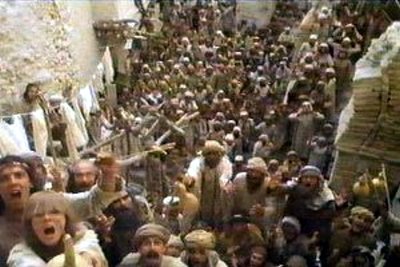
“You can think for yourselves!”
“Yes! We can think for ourselves!”
“You are all individuals!”
“Yes! We are all individuals!”

Naturally, while the liberal artists are striving to build an aristocracy, the pragmatists are striving to build a tyranny of the majority – the mob rule of unlimited democracy. This was their original sin going all the way back to John Dewey, whose perfidy begins right at the beginning when he sets out to redesign the whole educational enterprise to produce, not the fullest possible flourishing of human capacities, but people suited to fit the new, radical political system that early 20th century progressives were working so hard to build. Human beings are little clay figures just waiting for Dewey and his acolytes to mold them into the politically convenient shape. All the worst aspects of educational pragmatism can really be traced back to this original politicization of the project.

So both camps find substantial resistance to their desires – the liberal artists, in children who are capable of achievement but don’t highly value knowledge for its own sake; the pragmatists, in children who are capable of excellence (even the kinds of excellence pragmatists claim to value) and need special nurturing to achieve it.

And both camps, their vision cramped by narrow anthropologies, fail to see the legitimacy of this resistance. To them, the resistance appears to be simply obscurantism. Hence they feel perfectly justified stamping it out by force.

And naturally, when they seek power, they both reach for the strongest of all social weapons in modern culture – science.

Say that you favor a given approach – in education, in politics, in culture – because it is best suited to the nature of the human person, or because it best embodies the principles and historic self-understanding of the American people, and you will struggle even to get a hearing. But if you say that “the science” supports your view, the world will fall at your feet.

Of course, this means powerful interest groups rush in to seize hold of “science,” to trumpet whatever suits their preferences, downplay its limitations, and delegitimize any contrary evidence. If they succeed – which they don’t always, but they do often enough – “the science” quickly ceasees to be science at all. That’s why “scientific” tyrannies like the Soviet Union had to put so many real scientists in jail – or in the ground.

This was, again, the original sin of Dewey and the whole “pragmatist” movement in early 20th century philosophy. The goal of that school was to undermine the philosophical structure of knowledge on which real science depends, so that they would then have a free hand to bend “science” to their will. I believe it was George Orwell who said that philosophical pragmatism amounts to saying that truth is determined by who has more guns.

But the liberal artists are no longer very much better. They didn’t used to flatten their understanding of a good education down to the level that could be measured “scientifically” on tests. But the imperative to seek power and crush resistance has driven them to that point.

How, then, do we escape from both aristocracy and mobocracy, and undo the tyranny of science? Stay tuned.


Government Takeover of STEM

January 4, 2011

(Guest post by Greg Forster)

In his Sunday column, George Will advocated a government takeover of the economy. Well, not quite – but close.

Will points out, correctly, that the economy is really, ultimately driven by the discovery of new ways of serving human needs. From this, he concludes that the enormous government regime of subsidies (and consequent control) of “basic science” and other STEM (science, technology, engineering and math) research in universities must not only continue, but be dramatically expanded.

He makes the by-now standard argument for government control of STEM:

  1. STEM contributes to the economy through “basic science.”
  2. “Basic science” doesn’t yield useable results rapidly enough to show up on quarterly earnings reports.
  3. Businesses are incapable of seeing past quarterly earnings reports when making decisions.
  4. Therefore, only government (through its hired retainers in the universities) has a long enough time horizon to be entrusted with control of basic science, and hence STEM.

How is this wrong? Let me count the ways.

The error starts right at the beginning. “Basic science” is not what drives entrepreneurial innovation and economic flourishing. “Basic science” is part of the liberal arts and is not all that much different from the study of poetry. It’s about investigating the fundamental structure of the universe simply for the sake of understanding it – just like poetry, in a different way, investigates the fundamental structure of the universe simply for the sake of understanding it. Basic science not only doesn’t produce economic benefits on a quarterly basis, it doesn’t produce economic benefits at all (except insofar as it contributes generally to the maintenance of a humane culture). 

This matters because it is universities who fundamentally drive “basic science,” but not entrepreneurial innovation. There’s a reason Bill Gates had to leave Harvard to found Microsoft.

It’s entrepreneurially minded businesses that drive entrepreneurial innovation and economic flourishing. The assertion that businesses don’t support long-term innovation is false. Some do, some don’t. The ones that do are where the dynamism of the economy comes from. Google encourages employees to spend a set portion of their time working on side projects over which they have total control, and which are not expected to produce defined results; the Google News service was created as one such project. Yes, there are many businesses that can’t see past their quarterly earnings reports. But the solution to that is for a partnership of philanthropy and educational institutions to raise up a new generation of entrepreneurial leaders who can see past their quarterly earnings reports.

If business as a sector is congenitally and permanently incapable of long-term thinking, the United States is scrod, and we should all quit trying to save it.

The worst error is to think that government and universities are capable of better long-term strategic thinking than business. The opposite is the case. Just look at the outstanding examples of long-term strategic thinking we have before us in those sectors today – in government, $14 trillion debt with bailouts, nationalizations and endless Keynesianism (on the right and left) at home, and fecklessness and appeasement abroad; in the universities, a ridiculously unsustainable business model, the most dysfunctional labor policy (tenure) of any sector of society, and a total abandonment of the sector’s core function (education for human life) in favor of hyperspecialization of technical competencies.

The main difference between business and the government/university axis is that business occasionally does really take care for the long term.


Secret Identity Revealed!

January 4, 2011

(Guest post by Greg Forster)

Randi Weingarten in the Washington Post immediately after Obama’s inauguration:

Should fate, as determined by a student’s Zip code, dictate how much algebra he or she is taught?

Robert Enlow in Sunday’s Chicago Tribune, discussing FEC’s big new ad campaign for choice:

We think it’s amoral to base quality of education on the ZIP code you live in.

Were they separated at birth? Reading each other’s mail? Did Robert steal the training manual from the AFT equivalent of Wudang Mountain?

Or is there, perhaps, something more sinister going on?

I mean, have you ever seen Randi Weingarten and Robert Enlow in the same room at the same time? Who benefits from the appearance that they’re two different people?

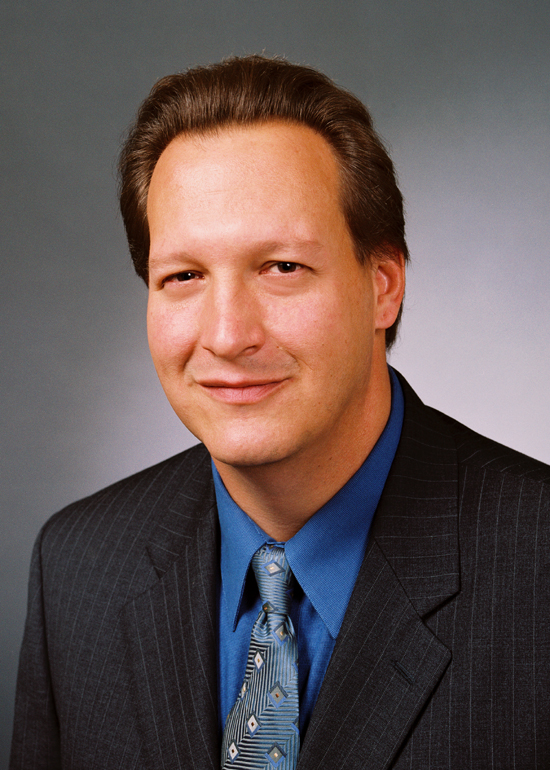
Take this picture:

Now add a wig, earrings, makeup, and the world’s most painful looking smile:

That’s not a woman. That’s a MAN, man!

Seriously, congrats to FEC on the big campaign, the coverage in the Trib, and successfully stealing the unions’ most powerful talking point – that the quality of your education shouldn’t be determined by your ZIP code.


“Academics” and the “Practical” Part III: The Daleks Are Coming!

December 15, 2010

(Guest post by Greg Forster)

This week Jay highlighted the fact that a study showing a positive correlation between test prep activity in the classroom and improved learning is being portrayed as having shown a negative correlation between test prep activity (“drill and kill”) and improved learning. At this point it’s not known (at least to me) where the error arose, and I don’t have anything to say about the question of who said what. But I think it illustrates how the whole subject of drillandkillaphobia needs to be revisited.

Lately I’ve explored in some depth how testing has come to be the focal point of the fight between the two great factions in the education space, the “liberal artists” and the “pragmatists.” Liberal artists have gradually come to invest all their hopes in standardized testing. Pragmatists have gradually come to invest all their fears in precisely the same thing. This is a mutually reinforcing circle – over time, the liberal artists increasingly think testing must be good because the pragmatists hate it, and the pragmatists increasingly think it must be bad because the liberal artists love it. So naturally the battle line over testing has become more and more absolute.

The problem, as I’ve tried to show, is that this dynamic causes each side to reject something that’s essential to good education. The liberal artists seek curricula (or standards that can only lead to curricula) that emphasize sterile head knowledge of facts to the exclusion of practical problem-solving. We don’t know how to test what Daniel Willingham calls “deep knowledge” of subject area content, and even if we did the tests would be almost infinitely vulnerable to manipulation if they were ever used for accountability purposes. But we do know how to create rigorous tests for head knowledge of facts, so the liberal artists define “subject area content” to mean simply head knowledge of facts.

The pragmatists do the opposite. And since I was pushing pretty hard last time to emphasize what I thought were the dysfunctions of the liberal artists, I’d like to balance the scales with something about drillandkillaphobia.

Merely mention the subject of testing and it seems that pragmatists instantly jump to the conclusion that you want schools to look like this:

Now the interesting thing is that these days, they will engage in the most hysterical drillandkillaphobia while all the time affirming that we need to keep standards high, content knowledge matters, etc. To some extent I think that must be intentionally tactical – P21 knows that its flavor of loosey-goosey crunchy granola doesn’t sell these days, since they’ve lost a lot of battles in the war of ideas. But I don’t think that explains all of it. Take another look at that Ken Robinson “Changing Paradigms” video, where he begins by saying that of course we don’t want to lower standards. Clearly he, at least, really means it. It seems completely obvious to him that there’s no contradiction between his attacks on testing and his affirmation of high standards.

And that’s the problem. It seems so obvious to him that he fails to even take the question seriously. (That was one of the key points in Willingham’s stimulating critique of Robinson’s video.)

If the liberal artists need to get over their testophilia, the pragmatists need to get over their drillandkillaphobia. I’m not aware of any hard evidence linking test prep to worse outcomes. Sure, lots of people are really convinced that it must be the case, but that’s hardly a solid ground for making policy. (The floor is open in the comments section if you have some hard evidence you want to share.) And it’s not like this is a new question. I’ll admit that I haven’t done an exhaustive review of the research (again, if you have, the floor is open) but Jay and I conducted a study a while back showing that attaching rewards and penalties to a test doesn’t change the results; that would seem to speak right to the heart of drillandkillaphobia. This new Gates Foundation study, finding a positive correlation between test prep and learning outcomes, would seem to be another piece of evidence against it.

People can’t learn what Willingham calls the “deep structure” of practical problems until they’ve learned what he calls the “surface structure.” You can’t get from the pool deck to the bottom of the pool without passing through the surface of the water; similarly, you can’t get to deep (i.e. practical) content knowledge without first getting shallow (i.e. factual) content knowledge. If you like, it’s “merely” or “sterile” head knowledge. But head knowledge it is and head knowledge it will remain, even after you add the “deep” part.

People learn head knowledge by memorization. And any kind of memorization will appear, to those who wish to stigmatize and delegitimize it, to be “merely” “rote” memorization. You can call it “regurtitation” when people know facts, and in a sense you’re right – but people do need to know facts and be able to summon up that knowledge as necessary, whether you call that “regurgitating” or not. And for everyone but the real genius students, gaining head knowledge of facts will involve some kind of “drill.”

As the pragmatists themselves never tire of reminding us, real learning is hard. Well, yes it is. You can’t learn if you don’t memorize stuff. Memorizing stuff is hard and unpleasant, and it’s a lot more so for some kids than for others. That’s the world; deal with it.

I fully admit that if you really want to learn you are never just memorizing. You must be trying to understand the facts you absorb – understand their significance and the connections between them. But while it must be more than memorizing, it is never less than memorizing. Of course, if it must be more then by definition it can never be less.

Take that great, perennial boogyman of rote memorization – historical dates. People whine, why does it matter in what year a certain event occurred? Well – why does it matter? If you stopped and seriously asked that question and sought out the answer, you might . . . well, you might learn something.

The great irony, of course, is that at the same time the pragmatists are pushing this new bout of drillandkillaphobia, they’re working hard to impose a federal-government controlled system of national testing – excuse me, a totally “voluntary” system of “common” “assessment” that has nothing to do with the federal government, nothing to see here, move along, pay no attention to the man behind the curtain. That really is an attempt to handcuff real learning and turn us all over to the benevolent dictatorship of soulless men in white coats who must be trustworthy because, after all, they’re scientists. And that, of course, was always the original sin of the Progressive movement, in its educational form as in all other forms. Handing over all power to a tiny priesthood is the very epitome of “democracy” as long as we’re careful to call the priests “scientists.” But now I’m broaching a whole new and much deeper subject, one that will require another post to handle with any justice.


Who’s to Blame for College Dropouts?

December 10, 2010

(Guest post by Greg Forster)

Education Week has some survey results that most people probably won’t find surprising or controversial, but that actually raise some tough ethical questions:

The public pins most of the blame for poor college graduation rates on students and their parents and gives a pass to colleges, government officials and others, a new Associated Press-Stanford University poll shows…

When asked where the blame lies for graduation rates at public four-year colleges, 7 in 10 said students shouldered either a great deal or a lot of it, and 45 percent felt that way about parents.

Others got off relatively easy: Anywhere between 25 percent and 32 percent of those polled blamed college administrators, professors, teachers, unions, state education officials and federal education officials.

Plausible enough! If you go to college and don’t graduate, whose fault is it but yours?

Yet Education Week thinks this is bad news for folks like us:

The belief that students are most at fault for graduation rates is a troubling sign for reformers who have elevated college completion to the forefront of higher education policy debates and pushed colleges to fix the problem, said Michael Kirst, professor emeritus of education and business administration at Stanford.

“The message is, ‘Students, you had your shot at college and failed and it’s your fault, not the college,'” Kirst said.

You know what? I think they’re right. This is bad news for us on a certain level. Gathering political capital for reforms that will do something about our collegiate dropout factories requires us to convince people that the colleges, not just the students, need to change.

And yet I don’t think the popular view is quite wrong. Check out this quote:

“We’re all responsible for our own education, and by the time you get to college you are definitely responsible and mature,” said Deanna Ginn, a mother of 12 from Fairbanks, Alaska.

Ginn is right. We don’t want to undermine the personal responsibility of each individual student who drops out.

Yet that can easily become an excuse to take colleges off the hook for their legitimate responsibilities, and these survey results show that happening.

Matt has spent a lot of time documenting the disaster in Arizona, where (to pick just a couple of many shocking numbers he’s posted here) ASU graduates only 28% of students in four years, and the University of Arizona 33%. But those are not really unusual numbers – this is not just an Arizona problem.

No doubt, as thousands of kids come in, spend money and then drop out, year after year, the college administrators and their hired protectors in state legislatures tell themselves exactly what Ginn says – if you drop out, it’s your own fault.

Well, yes. If you drop out, it is your own fault. But let’s think about this. Year after year, you see these dismal dropout rates. Is that really no business of yours? Is it really OK to say that sure, something like two-thirds of the new students we’re accepting this year are making a bad decision by coming here, but hey, as long as their tuition checks clear, that’s their headache, not ours?

I say if you run a college that has a two-thirds dropout rate, it’s your responsibility to do something about that. Taking people’s money to help them make bad choices is both morally wrong and, even from a merely selfish standpoint, imprudent in the long term. You should be asking how you can help ensure that kids who have a low likelihood of graduating are steered onto some alternate path – perhaps you can develop an alternate path for them at your own institution, which would allow you to cash their tuition checks and also look yourself in the mirror with respect. I don’t think that’s inconsistent with saying that each and every dropout is personally responsible for dropping out.

If I know you have an allergy to a vaccine that’s so bad you’ll die if I inject you with it, I have a responsibility not to inject you with it no matter how much money you offer me or how completely convinced you might be that it’ll do you good. After we say that, the principle also implies repsonsibilities at a little lower level than life and death.


Does Parent Trigger Cut the Gordian Knot?

December 8, 2010

(Guest post by Greg Forster)

The editorial in yesterday’s Journal covering the “parent trigger” earthquake in Los Angeles – at McKinley Elementary in Compton – argues that this could be a revolutionary new mechanism for advancing parental control of schools:

The biggest obstacle to education reform has long been overcoming the inertial forces of unionized bureaucracy. Parent trigger is a revolutionary shortcut, and bravo to the parents in Compton for making the leap.

The model is set to spread, argue the editors:

Parent trigger has support from Democrats including Sacramento Mayor Kevin Johnson, Los Angeles Mayor Antonio Villaraigosa, former Washington, D.C., schools chief Michelle Rhee and even Rahm Emanuel now that he’s running for mayor of Chicago. Legislators in Georgia, Indiana, Michigan, New Jersey, West Virginia and Maryland tell us they will introduce versions of parent trigger in the coming months.

Last time I looked in on the state of school governance reform in LA, I was skeptical. But that was more than a year ago, when the parent trigger mechanism wasn’t yet a part of the reform package. Last fall they were setting themselves up to have the public system hire private managers – which hasn’t worked in the past.

The parent trigger model is different. At a school that hasn’t made Adequate Yearly Progress ™ four years running, get a majority of parents to sign a petition and you can close the school, change administrators, or turn over the school to charter operators. The key difference is that the parents signing the petition decide what happens.

The district will fight them in court, of course, and they may win on a bogus technicality. As we learned in Florida in 2006, when the unions demand obeisance from their slaves you can’t count on a court to follow even the most tranparently clear meaning of the letter and spirit of the law.

But that’s not really relevant to the real policy question. All school reform policies are exposed to the naked assertion of thuggish power from union-bootlicking judges, and I don’t see much reason to think this one is more exposed (at least in principle) than any others.

So, that aside, is the Journal right that parent trigger is a way to cut the Gordian knot? Here are the advantages and disadvantages as I see them.

Advantages:

  1. School choice as a consequence of school failure is a proven way to improve public school performance. Even where the threat is never actualized, the mere threat produces clear gains.
  2. The parent trigger system may overcome the serious procedural obstacles that have dogged other “failing schools” models. The system for activating choice is (with an exception I’ll discuss below) simple, clear and not under the control of the government bureaucracy – and informing parents about their choices is easier because the system for creating choices involves getting parents informed and involved.
  3. The system is politically attractive, and partly for the right reasons. If a majority of the actual parents in the school want the school handed over, it’s really hard to be the people who say it shouldn’t be handed over.

Disadvantages:

  1. For the moment, the system is only promoting management change, at best involving charter operators, which is an improvement but is inadequate. But that’s less important because you could always use a parent trigger to activate vouchers.
  2. Petitions carry some problematic issues as a vehicle. Phrasing can be unclear, and/or people may not understand what they’re signing. Worse, the blob could organize its own counter-petitions to create confusion. It’s unlikely they could actually seize control of a school this way, but they could disrupt the process.
  3. More seriously, the system is only available at a small number of schools (those that don’t make AYP four years running). You could always fight to expand that, but the question is how far you could expand it. In theory you could do a parent trigger everywhere, but it’s not clear whether that would be politically viable. Maybe it would be if you did it in the right state. The larger question here is how wedded we are to a “failing schools” model that assumes schools are only failing if they’re populated by kids who are poor and dark-skinned. It’s an important question whether the parent trigger could be used to transition to a “failing schools” model that says any school repudiated by its parents is a failing school, or if it only reinforces the worst of our existing prejudices about what constitutes educational failure.
  4. Along a smiliar line, in its current form the parent trigger (like all previous “failing schools” models) reinforces government’s right to decide what constitutes a good education, because it relies on state testing as a parent-choice gatekeeper. In addition to my recent movement toward stronger critique of accountability testing for what are essentially pedagogical reasons, on an even more basic level it’s imperative that we not validate the idea that a good education is what government says it is. This, and #3 above, are what I meant when I said that parent trigger is politically attractive “partly” for the right reason. 
  5. Carrying on the theme of #3 and #4, most Americans wrongly believe there’s nothing wrong with their own schools; after all, the kids are middle-class whites and the schools are run by the government – nice, clean suburban government, not those icky urban machines – so how bad could they be? So suppose you give everyone a parent trigger and don’t get enough schools where you overcome all the obstacles of perception (to say nothing of the logistics) and get a majority to sign off. That would only validate the illusion that the status quo in the great suburban Middle America is A-OK.

So color me ambivalent. Parent trigger is certainly an improvement over Florida’s A+ model, where near-insuperable bureaucratic obstacles stood between parents and the actual excercise of choice. And I see some potential to use this as a path to making parents’ judgments the standard for what counts as a good school. But there are serious dangers here as well, if we don’t take seriously the omnipresent temptation to slide back toward liberal paternalism.


“Academics” and the “Practical” Part II: Neither Just Skills nor Just Facts

December 1, 2010

(Guest post by Greg Forster)

Picking up (after a month of constant travel) on my effort to build a unified field theorem of education reform, I want to respond to a strong challenge Jay issued to my use of the word “skills” in my original post.

I used the term “basic skills” to refer to the three Rs, without even thinking about it. I didn’t even stop to define it; after Jay challenged me I thought he had misunderstood what I meant by that term, so I went back and posted a clarification. But it turned out Jay had understood me perfectly well. He just wanted to challenge that use of the term.

I think this is likely to be a crucial issue in my effort to reconcile the legitimate interests of “liberal artists” with the legitimate interests of “pragmatists,” so it’s worth pausing to hash it out.

Jay pointed me to this article by Daniel Willingham: “Critical Thinking: Why Is It So Hard to Teach?” I haven’t had nearly enough time to digest it fully, I’m afraid, but I’ve digested enough of it to offer what I think is a useful next step in thinking about this issue.

First off: In a discussion of the controversy between teaching the three Rs (and all the other things liberal artists want) and teaching critical thinking (and all the other things pragmatists want), why did Jay challenge my conception of what it means to teach the three Rs and then, to back up his challenge, point me to an article on critical thinking? Why not an article on the three Rs?

Because this is, really, an article on the three Rs, and on the whole liberal arts agenda more generally, disguised as an article on critical thinking. Presumably that’s how he got it published in American Educator – an organ of the AFT! It’s the educational equivalent of the Sokal hoax. Willingham has a bunch of pragmatists – teacher union pragmatists, no less – publishing liberal artist propaganda. It’s a brilliant practical joke.

…or so I thought when I first looked at it.

But the more I look at it, the more I think the joke is as much on us liberal artists as it is on the pragmatists.

Willingham’s thesis in a nutshell:

First, critical thinking (as well as scientific thinking and other domain-based thinking) is not a skill. There is not a set of critical thinking skills that can be acquired and deployed regardless of context. Second, there are metacognitive strategies that, once learned, make critical thinking more likely. Third, the ability to think critically(to actually do what the metacognitive strategies call for) depends on domain knowledge and practice.

The idea that critical thinking isn’t a skill is the real core of the article:

Critical thinking does not have certain characteristics normally associated with skills—in particular, being able to use that skill at any time. If I told you that I learned to read music, for example, you would expect, correctly, that I could use my new skill (i.e., read music) whenever I wanted. But critical thinking is very different. As we saw in the discussion of conditional probabilities, people can engage in some types of critical thinking without training, but even with extensive training, they will sometimes fail to think critically. This understanding that critical thinking is not a skill is vital. It tells us that teaching students to think critically probably lies in small part in showing them new ways of thinking, and in large part in enabling them to deploy the right type of thinking at the right time.

Rather, critical thinking is what emerges when you do a good job of teaching content. That’s because learning “to deploy the right type of thinking at the right time” only happens when you learn a specific field. You don’t learn the scientific method by studying the scientific method (which is what is implied by calling it a “skill”). You can learn about the scientific method that way; that is, you can acquire “head knowledge” of facts about it, facts that could be regurgitated on a test. But it doesn’t make you any better at actually using the scientific method. Studying biology, on the other hand, will make you better at the scientific method because you’re actually using it. It will even make you better at using the scienfic method in all other disciplines, even the ones you haven’t studied. That’s because in your study of biology you’re learning 1) knowledge of the “deep structure” of problems in that field, and 2) “contextual cues” in that field that signal you when to do what. That knowledge, and not “the scientific method” learned as a skill in its own right, is what helps you figure out “deep structure” and “contextual cues” in other fields.

So the pragmatists, who want to focus on “critical thinking” as such, have it all wrong, and the liberal artists, who want to focus on teaching content, have it all right. Right?

Wrong.

Throughout Willingham’s analysis there is an emphasis on how critical thinking emerges from learning these content-specific disciplines in practice. You learn “deep structure” and “contextual cues,” not by studying deep structure and contextual cues as such, but by learning specific disciplines like biology. However, you learn deep structure and contextual cues in biology, not by reading books about biology, but by doing biology. You conduct experiments, you do field research, etc. You go out and solve problems and create knowledge.

Look again at one particular phrase in my description of Willingham above: studying the scientific method as such wouldn’t make you any better at using the scientific method, but it would give you facts about it – the kind of thing you could regurgitate on a test.

And there’s our problem. We liberal artists really do have a strong tendency to reduce content knowledge to “head knowledge” of facts. If you can pass a test on a subject, you know the subject. But – and here we are hoist on Willingham’s petard – that is not the kind of content-specific knowledge that leads to good critical thinking.

Obviously we need to have head knowledge. Students need to learn facts. That’s vital. In particular, for all the reasons outlined in my original post, I think the emphasis on standardized testing emerged for good reasons, and standardized testing needs to remain an important part of our educational landscape.

And I’m not giving up my position that the pragmatists, in their zeal to equip students with critical thinking, creativity, the entrepreneurial mindset, etc. have historically sought these qualities at the expense of, rather than in addition to, content knowledge – and that this has historically had devastating effects.

But I’m also sounding a red alert that we liberal artists have gone just as far wrong in allowing our zeal for accountability – which in practice has come to mean “testing” for too many of us – to drive us into a reductionistic approach to what content knowledge really consists of.

I wonder if it would help to go back to Aristotle’s concept of “intellectual virtues.” He classified the goal of education as imparting not skills or facts, but virtues. And alongside the “moral virtues” he put “intellectual virtues.” Indeed, he thought the two were not just equally important but interdependent; you couldn’t have one without the other.

He warned that a “virtue,” whether moral or intellectual, cannot be reduced to either just a personal characteristic we possess or a thing that we do. If a virtue is just a characteristic, then we’re “virtuous” while asleep or in a coma; if a virtue is just a thing that we do, then our “virtue” depends as much on circumstances outside us as on our character. Rather, virtue must be something that is both active and intrinsic.

Aristotle solved this problem by proposing that virtue is a habit. To possess a virtue means to be in the habit of doing the right things at the right times.

Now, I suppose (stretching just a little bit) that the reductionistic tendency of the pragmatists is to pursue their goals – critical thinking and so forth – as merely something they want students to do. They seek the activity but not the intrinsicness. And the reductionistic tendency of the liberal artists is to pursue their goals as merely something they want students to have inside them; they seek the intrinsicness but not the activity. It might help us to start thinking of learning as the imparting of good habits – to intrinsically possess the quality of being prone to do the right things.

But whether Aristotle helps or not, it seems to me that a recovery of good education must be neither a turn away from the practical toward the academic, nor a turn away from the academic toward the practical, but an acknowledgement that, by separating the two, we have really lost both.