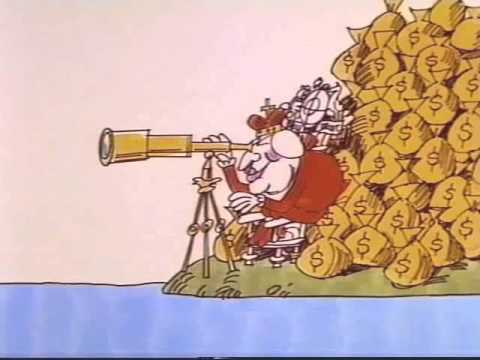
Does Money Matter After All?

July 7, 2015

(Guest Post by Eric A. Hanushek)

Considerable prior research has failed to find a consistent relationship between school spending and student performance, making skepticism about such a relationship the conventional wisdom. Given that skepticism, new studies that purport to find a systematic relationship between school spending and student performance get disproportionate attention.

There is in fact great demand for results linking funding with favorable outcomes.  Knowing that a strong relationship existed would mean that policy makers outside of the schools – legislatures, governors, and courts – only have to concern themselves with how much money was provided to schools and not with how money was used.  And, meeting our education challenges by providing more money appears from history to be easier than pursuing more fundamental changes in schools.

Kirabo Jackson, Rucker C. Johnson, and Claudia Persico offer a new study suggesting that a clear money-performance relationship exists if you just look in the right place. Their overarching conclusion is that “methods matter.” Their discovery of a money-performance relationship is attributed to analyzing the effects of spending that emanates from court decisions (exogenous variation in spending), tracing the effect of this spending to long run outcomes (completed schooling and wages), and focusing on the right subgroup (disadvantaged students).

From a methodological viewpoint, details are important here. How court decisions are dated given long and repeated legal involvement in many states; how the spending reaction to court decisions is measured; whether the court decisions are unrelated to the character of schools before court involvement; and how court-mandated spending differs from other increased spending are a few of the details.  Nevertheless, while these are important methodological issues, it is more useful to focus on the substance of their findings.

Jackson, Johnson, and Persico reach the following conclusions about the impact of a 10 percent increase in spending for all 12 years of schooling:  1) It would increase years of schooling by 0.44 years for poor children and by an insignificant 0.075 years for non-poor children, implying that a spending increase of 22.7 percent would eliminate the average education gap; 2) It would increase high school graduation rates by 11.6 percentage points for poor children and 6 percentage points for non-poor children; 3) It would increase subsequent family incomes by 16.4 percent for poor children and zero for non-poor children; 4) It would reduce subsequent adult poverty rates by 6.8 percentage points for poor children and zero for non-poor children.

Their analysis covers schooling experiences for the period 1970-2010.  Thus, it is useful to connect these estimates to actual funding patterns over the period.  Between 1970 and 1990, real expenditure per pupil increased not by 10 percent but by over 84 percent.  By 2000, this comparison with 1970 topped 100 percent, and it reached almost 150 percent by 2010.  No amount of adjustment for special education, LEP, or what have you will make these extraordinary increases in school funding go away.

If a ten percent increase yields the results calculated by Jackson, Johnson, and Persico, shouldn’t we have found all gaps gone (and even reversed) by now due to the actual funding increases?  And, even with small effects on the non-poor, shouldn’t we have seen fairly dramatic improvements in overall educational and labor market outcomes? In reality, in the face of dramatic past increases in school funding, the gaps in attainment, high school graduation, and family poverty have remained significant, largely resisting any major improvement.  And, the stagnating labor market performance for broad swaths of the population has captured considerable recent public and scholarly attention.

What could reconcile these apparent inconsistencies?  Here are some possibilities:

  • There might be sharply diminishing returns to spending so that their estimates apply most clearly in 1970 when spending (in 2011-12 $’s) was just $4,500 as opposed to 2010 when spending was $11,000. Thus, by implication, spending today might be expected to have a much smaller impact than they estimate.
  • Only spending induced by the courts might have the large impacts they identify, with spending not related to judicial rulings having a negligible impact. The likelihood of this is a little questionable since, with a few exceptions such as NJ and WY, the courts have done little to look into how any legislature responds in terms of specific spending programs.  But, if true, normal spending increases by state legislatures and by local taxpayers would not be expected to have any impact on outcomes.
  • The estimates of Jackson, Johnson, and Persico might simply be very wrong.

Maybe there are other ways to reconcile the Jackson, Johnson, and Persico estimates with the aggregate data on spending and outcomes.  But in the end they themselves state what is now commonly accepted: How money is spent matters.  Indeed, by simple consideration of their evidence, how money is spent is more important than how much is spent.

Of course, it is always important to recognize that none of this discussion suggests that money never matters.  Or that money cannot matter.  It just says that the outcomes observed over the past half century – no matter how massaged – do not suggest that just throwing money at schools is likely to be a policy that solves the significant U.S. schooling problems seen in the levels and distribution of outcomes.  We really cannot get around the necessity of focusing on how money is spent on schools.


Tell me, friend, when did a bipartisan super-majority abandon reason for madness?

July 7, 2015

(Guest Post by Matthew Ladner)

So welcome back from your Independence Day holiday break, glad you are still ready to get your wonk on, so let’s talk a little academic transparency. The forces of light and darkness are on the march in this Middle Earth.

A few months ago I had the chance to meet with Bill Jackson from Greatschools here in Phoenix. At that meeting Bill told me something I’ve been trying to wrap my head around ever since- that more than half of parents visited Greatschools last year.

My instant reaction was to pick my jaw off the table and then mumble incoherently about probably far less than that percentage of parents had visited the Arizona Department of Education website ever, and of those that did only some unknown fraction did so to learn information about particular schools.

So then I decided to compare the Great Schools rating system with that of the state of Arizona on schools in my neighborhood. I started with Arcadia High. Arcadia High is a large high school south of Camelback Mountain. You may have heard of a prominent former student by the name of Spielberg- local legend has it that the architecture of the school inspired the space ship design in Close Encounters. The NCES put their FRL % at about half the statewide average at 25% back in 2010.

Great Schools gives Arcadia High a 7 out of 10, while easy grading Arizona gives it an “A” grade. So Greatschools essentially gave the school a C-minus, while the state of Arizona gave it an A. Which one is more accurate? Well one can never be certain (the same school can work very differently for different kids) but the Arizona Board of Regents tracked the academic progress of the entire public school Class of 2006 and found that 39% of the Arcadia High cohort finished a four-year degree within a six-year window.

Hmm, if 39% = “A” then what does a “B” look like? Well Shadow Mountain High School, near where I used to live a few years ago, got a “B” from the state, but saw 29.7% of their Class of 2006 get a BA in six years. The more discerning Greatschools ranking system gave the school a 6 out of 10 rating, which one can reasonably translate to “D-minus” and which seems to fit much more comfortably with the school’s higher education outcomes.

I could go on beating this horse into horseburger, but it misses the point. The (main) point is not that Arizona’s grading system needs a lot of work- although it clearly does- but rather that Greatschools provides an invaluable public service by providing a more rigorous ranking system. In addition, Greatschools also provides a source for student, parent and teacher reviews of schools. Mike McShane cited research showing that parents rate this reviews highly in their decision-making (see page three). This makes it all the better that Greatschools gets more traffic than the state website- it has more of the information they desire. It’s worth noting that the state of Arizona recently took a couple of year time out on school grades as they transition to a new state test. There is precedent for this, as the Arizona Department of Education just stopped publishing school report cards for several years within the last decade. Fortunately Bill Jackson and company have no need for timeouts, and parents are frequenting his website anyway.

Greatschools is performing a very valuable service in a fashion clearly superior to that provided by my state government-may God and His Angels bless Bill Jackson and all of his descendants. Greatschools gives highly valuable information to parents for free in helping them make difficult education decisions here in Arizona, and elsewhere. Greatschools however must make use of public data, and therein lies a growing threat to this invaluable parental choice resource.

It is with great sadness that news has reached my ears that an Arizona Congressman plans to offer an amendment to the ESEA reauthorization bill that would fundamentally undermine Greatschool’s ability to provide comparable data between schools for consideration by parents. The amendment would create a parental opt-out of testing. This would create what seems like a fatal blow to data comparability between schools, and a rather powerful perverse incentive for schools to nudge their weaker students to “opt-out.” Parents and researchers would have little to no way of knowing the rates of strategic “opting out” and thus compatibility between schools would be utterly compromised.

In the midst of anti-testing hysteria being fanned by the unions (the NEA for instance has model opt-out legislation) and others I fear this amendment will in fact pass. I had a front row seat to watch Texas dispatch a 30+ year bipartisan consensus in favor of testing and transparency in a distressingly casual fashion. If it can happen in Austin, it can happen anywhere.

Yes you can argue the federal government should have no role at all in financing schools and/or bossing them around. So why should you care? Notice however that the option of getting the feds out of the schooling business will not be seriously considered anywhere in the process. The federal government will still be sending money, will still be bossing schools around, but just would not get data reliable enough for Greatschools to even pull an Arizona-style rescue manoeuvre, or to consider student learning gains in making more rational retention and tenure decisions. In other words, federal policy will have been entirely captured by adult interests- funding will continue to flow, but transparency will suffer a train wreck.

In fact, if Congress were to pass a law with a parental opt-out, it doesn’t take a very active imagination to foresee a veto by President Obama. If you lead with your chin you should expect your opponent to break your jaw. A veto would allow Secretary Duncan to complete the last two years of rule by lawless administrative fiat in technocratic peace. Some of the latest waivers, by the way, have already stretched into the term of the next administration. They’ve already done waivers for states and districts- why not have the Department of Education hire some seasonal workers and offer waivers to individual schools if they are willing to pant, beg and roll over as commanded? Congress may lack the seriousness to actually put a stop to it.

Jay will argue that reformers brought this down on themselves with naive overreach. If the House votes to kill academic transparency it should indeed be a cause for education reformers to stare long and hard in the mirror. They won’t however be alone. The broad bipartisan consensus that created some level of academic transparency in return for federal funding and bossiness, warts and all, had a better idea than our contemporaries who would provide federal funding and bossiness in return for approximately nothing.

Who can stand against the union of the two towers, when far-left meets far-right at far-gone? Any chance Bill Jackson can take a long hike and throw the One Ring into the lava of Mount Doom?


On the Beautiful Messiness of Freedom

July 3, 2015

(Guest Post by Jason Bedrick)

As Independence Day approaches, Americans are preparing to celebrate our freedom. This year, I will be celebrating the many significant advances in educational freedom.

Freedom is messy. An education system in which providers are free to experiment means a system that is open to disruption. But what exactly does that mean? Here are just a few examples of how we might rethink key components of our education system—including student advancement, student assessment, and learning environments—from our friends at the Clayton Christensen Institute:

Rethinking Student Advancement

Since the late 19th century, most schoolchildren have advanced according to credit hours (or “Carnegie units”). All students of the same age were expected to advance at the same pace across all subjects. Unfortunately, that meant some students would struggle just to keep up while more advanced students were bored. A better way, argues Michael Horn, would have students advance according to skill, not age:

Reengineering our education system in this way would also allow us to shift from focusing on how many years of schooling a student has—faulty measures that focus on time but not learning—to measures that allow us to see what students have mastered in terms of their knowledge, skills, and dispositions.

“Do. Or do not. There are no credit hours.”

Providing every child with an individualized lesson plan sounds like a logistical nightmare, but Horn believes the blended-learning model could make it feasible:

Blended learning can support competency-based learning by providing the tools to bring it to scale. As online learning improves, schools will be able to rely on it to deliver consistently high-quality learning adapted to each student. That will free schools to focus on fulfilling other functions critical to students’ life success. Digital innovations are rapidly reshaping the world around us, but we can harness those same innovations to prepare our nation’s students to meet the opportunities and challenges ahead.

Indeed, as Horn notes, New Hampshire has already begun moving toward competency-based education.

Rethinking Student Assessment

In the traditional classroom, teachers are tasked with both instruction and assessment. However, as Thomas Arnett explains, these two roles create tensions that can make the teacher’s job very difficult:

By way of comparison, the arrangement of having teachers act as both instructors and assessors is akin to asking the judges in a gymnastics competition to also coach the gymnasts leading up to the event, or asking a restaurant manager to conduct official food handling inspections at his restaurant. In many domains of life, we recognize that we create problematic conflicts of interest if we ask people who produce or perform to also provide the ratings of their outputs for external audiences. Yet, in education it is the norm to ask teachers to both coach their students and rate their students’ academic achievements.

One facet of this problem stems from the fact that traditional grades are highly subjective. Teachers’ assessments and grading systems are not developed using rigorous psychometric techniques to ensure validity and reliability. Instead, we ask teachers to develop their own grading systems based on their professional judgment and interpretation of learning standards and school policy. Translating standards into a rigorous and fair grading system is sticky business.

Arnett also highlights the conflict of interest teachers have because they “need to develop good relationships with their students’ and their students’ families”:

If their grading system is “easy,” few students and parents are likely to complain. On the other hand, if their grading system is “hard,” they can end up with a flood of phone calls and meeting requests from upset parents. This puts pressure on teachers to go easy on their students in order to keep everyone happy. But teachers who hand out “easy As” are not doing an adequate job preparing their students for future education and for life beyond school.

Overcoming these obstacles is not impossible—Arnett readily concedes that we “all know that the best teachers are highly skilled at navigating these dilemmas”—but he argues that it’s best not to put teachers in such dilemmas in the first place. One way to separate instruction and assessment, he proposes, is through online assessments. Compared to having teachers develop and grade their own tests, online assessments—done right—would be less expensive, provide crucial feedback to teachers and students more quickly, and would have greater validity and reliability. Moreover, they would free teachers to focus on instruction and shift the teacher from the role of referee to the role of coach.

Rethinking the Classroom

If schools are going to operate in new ways, it follows that we may have to rethink the physical space in which learning takes place. The traditional classroom was designed for the Industrial Era and has served us relatively well since then, but it assumes a certain relationship between teachers and students—as well as school operations generally—that may not apply in some modern learning environments.

In a fascinating interview with Michael Horn, architect Larry Kearns explains how he designed a building to meet the needs of a blended-learning school in Chicago:

In a traditional school, since learning is monopolized by large-group direct instruction, all you need are cellular classrooms, with rows of desks focused on a single instructor. Since this “habitat” for learning is so culturally ingrained, it often goes unquestioned. …

Since blended-learning schools leverage multiple modes of learning, their spatial needs differ. At a minimum, they need spaces designed for different types of personalized learning, which can occur individually through digital media or in small interactive groups. The small-group learning can be peer-to-peer or teacher-led. Ideally, spaces for all of these modes of learning can be located in the same physical space, interlocked to minimize disturbances between them.

This combination of learning spaces is inherently decentralized since it focuses on the students. The teacher’s desk, if there is one, is pushed to the margins. Consequently, blended-learning “habitats” look nothing like their predecessors. …

Scheduling activities in a blended-learning school is more challenging than a traditional school. You cannot rely on a traditional bell schedule dictating movement between classrooms that focus on a single discipline. In a blended-learning environment, students are continually rotating between activities in a single space as they engage with a myriad of topics. It is much less passive than a traditional classroom. Consequently, programming a blended-learning school is a four-dimensional exercise where time and space must be tightly integrated.

Image of blended-learning classroom from edSurge.

The Road Ahead

The ideas presented above are just some examples of how our education system might change in the coming years, particularly with the advent of ESAs. None of the above proposals are necessarily the best way of doing things. Some might prove ineffective. It’s likely that some reforms will work well in some circumstances but not in others—or for some students, but not others. The best way to sort the wheat from the chaff and to match individual students to what works best for them is through a decentralized process of experimentation, evaluation, and evolution. Policymakers must resist the urge to impose regulations that would undermine this process. As AEI’s Michael McShane wrote recently:

School choice programs simply establish the conditions for a market to emerge. That market relies on both demand- and supply-side responses. If parents cannot access the schools that they want their children to attend, they won’t support the program. If new schools or new providers don’t enter the market, either due to regulation or because the funding mechanism doesn’t offer them what they want, there won’t be enough seats. The better advocates understand this complex dance of supply and demand, the better they can design programs that will meet the desperate needs of so many American families. [Emphasis added.]

Friedrich Hayek wrote in The Fatal Conceit that the “curious task of economics is to demonstrate to men how little they really know about what they imagine they can design.” Indeed, the most well-intentioned of policies can produce results that are the opposite of what was intended. We need look no further than Wisconsin and Louisiana to see how policies intended to protect the poor from the uncertainties of the market ended up depriving the poor of its benefits.

If Hayek isn’t enough, perhaps the Book of Proverbs will do: “When pride comes, disgrace follows; but with humility comes wisdom.”


Blended Learning Grows in Yuma

July 3, 2015

(Guest Post by Matthew Ladner)

Don Soifer has a very interesting piece on how the Yuma Elementary District is going all in on personalized learning. Yuma of course is also the home of Carpe Diem, so the district is getting in on this trend. This bears watching. The reason you get to do something other than subsistence farming is because people figured out how to leverage technology in order to improve the productivity of farmers. It sure would be helpful if someone figured out how to do something similar in education-especially in Arizona.

Arizona is a relatively poor state with an unusually small working age population and a vise that looks to tighten in future years. Having lots of people too young to work or else on fixed incomes is not a recipe for lavishing money on schools, but it just might make pretty good primordial soup for innovation.  We have public school teacher shortages, which starts with the fact that only 19% of the public school Class of 2006 earned any kind of BA degree in six years.


No More Educational Kings!

July 2, 2015

No More Kings

(Guest post by Greg Forster)

Heading toward the Independence Day weekend, OCPA’s Perspective has just come out with my article on school choice as an embodiment of the principles of the Declaration of Independence:

The schools this country was founded upon saw themselves as responsible to families, churches, and, in a broad way, the local community. They were not government-owned or government-run…Government control over the minds of the young would have been seen by the founding generation as intolerable tyranny…

I argue that the creation of the government school monopoly involved a rejection of the principles of the founders, including religious freedom. One of the motives of Horace Mann and his Unitarian friends in creating a government school monopoly was to stamp out the old religion of the Puritans and establish Unitarianism in Massachusetts. Whatever you think of the relative merits of Calvinism and Unitarianism, government control of education for the purpose of religious indoctrination is not what this country was founded on.

Fortunately, by the time they tried to play this trick on another religious minority, the cat was out of the bag:

Thank heaven our Roman Catholic friends were smart enough to see what was going on when the government monopoly was turned against them. Not many Americans in the mid-19th century shared the Boston Brahmins’ contempt for evangelicals, but a lot of them did want to purge Catholic immigrants of their filthy popery. Catholics weren’t having any of it; in the great tradition handed down from the American founding, they ignored the government monopoly and started their own schools. America’s newcomers were more faithful to the principles of their adopted home than America itself was.

I not only support free speech but enjoy it, and I welcome your comments, whatever your view!


Ended the Wonk Wars Have

July 1, 2015

(Guest Post by Matthew Ladner)

Congrats to hometown hero Seth Rau of Nevada Succeeds, winner of the 2015 Wonkathon! Mike Petrilli’s reflection on the 14 wonkathon entries is available here.  Thanks to the Fordham folks for pulling it together.

In other news, I have officially lost count of the number of private choice enactments this year. Florida lawmakers circled back to expand ESA eligibility and tripled the funding for FLESA. I understand that Ohio lawmakers improved the Buckeye State’s scholarship funding. South Carolina increased funding for their tax-credit program. The Wisconsin statewide expansion is still pending.  So let’s see if I can list them out:

MS special needs ESA

NV tax credit

TN special needs ESA

Ark special needs voucher

AZ ESA expansion for reservation kids

AZ tax credit expansion to S-corp donors

FL ESA expansion

OH voucher improvements

SC tax credit expansion

MT tax credit program

NV ESA

IN increased scholarship amounts

PA and WI are still in the works, plus I am pretty sure I am forgetting some.  Still too early for the inevitable 2015 vs. 2011 post- or is it?


Recognition for Al Copeland and School Names

June 28, 2015

Over the last week I’ve seen some nice recognition of two projects with which I’ve been involved: school name research and the Al Copeland Humanitarian Award.  Robert Pondiscio has a column in US News in which he reiterates our recommendation that school names are an important opportunity for communities to articulate and learn about their values:

There are nearly 200 K-12 schools in America named after Confederate leaders or places named after them. There have been calls to strip the names from those buildings too.

I don’t have the standing to tell people in schools I will never see or set foot in whose names their institution are fit to bear. But as a teacher of civics and history, I know a good teachable moment when I see one. So here’s a challenge for every school in this country named after a president, military figure, athlete, civic leader or any prominent person: Commit the coming school year to a close examination of the life and work of your school’s namesake. For starters, there’s no excuse for ignorance. And your students might learn something – good, bad or ugly – that will create a sense of pride or discomfort. At the very least, it will provide a first-rate lesson in history, civics and democratic processes to an education system where both are in short supply.

Amen, brother Robert.

And in the Wall Street Journal, Andy Kessler has a column that nicely captures the spirit of the Al Copeland Humanitarian Award.  He argues that capitalists are often the ones who do the most to improve the human condition, not the philanthropies and foundations named after them.  He writes:

Everyone should stop focusing on an entrepreneur’s wealth and instead focus on the value the customers gained from his products. I can’t dig for oil, let alone frack, but I am happy to pay Exxon a premium for my high-test gas. Collectively, we are richer because of Exxon. So inequality is not a bug of capitalism; it’s a feature.

The Ford Foundation plans to focus on six areas of inequality: civic engagement and government; creativity and free expression; gender, ethnic and racial justice; inclusive economics; Internet freedom; and youth opportunity and learning. Hard to argue against all that namby pamby. But none are productive, none drive profits, and none will achieve the huge leaps in public welfare that Henry Ford pulled off so long ago.

At the end of the day, there are only four things you can do with your money: You can spend it, pay it to the IRS, give it away or reinvest it. Consumption is on the receiving end of productivity—furthering personal instead of public welfare. Government spending is by definition not productive, as you realize every time you step into a DMV. Same goes for charitable giving—no profit means no measure of value or productivity.

And so the most productive thing someone can do with his money—the only thing that will increase living standards—is invest. If the Ford or Clinton foundations really wanted to help society, they’d work on lowering barriers to business formation and cutting the regulatory chains that inhibit productive hiring in the U.S. and globally. But what fun is that? Better to boast about reducing inequality, public welfare be damned.

The Al Copeland Humanitarian Award selection committee could not have said it better.


Attack of the Wonks!

June 23, 2015

(Guest Post by Jason Bedrick)

As the Fordham Institute’s ESA Wonk-a-thon is coming to a close, I thought it would be useful to summarize the views of the participants to identify areas of consensus and contention. As JayBlog readers may recall, Fordham’s central question was:

As Nevada implements its groundbreaking education savings account program, what must it get right in order to provide positive outcomes for kids and taxpayers? Should state authorities stay out of the way? Or are there certain areas that demand oversight and regulation?

Inevitably, such summaries will lack the depth and nuance of the complete essays, but I will endeavor to faithfully record what I take to be the main recommendations from each wonk. (If an author thinks I missed or misconstrued something, please yell at me in the comments section.) The following summaries appear in the order that Fordham posted the originals:

Michael Goldstein (Match Education): Nevada needs an “individual, organization, or coalition of champions who take it upon themselves to ensure that their [state] provides excellent school options to all children and families.” This “harbormaster” would recruit high-quality providers to the state and provide parents with good information.

Seth Rau (Nevada Succeeds): Nevada should ensure all ESA students take NNR tests and track student outcomes. The state treasurer must ensure the application process is user friendly, distribute restricted-use debit cards, and conduct annual audits. Otherwise, providers should be free to innovate and parents should be free to choose among them.

Matthew Ladner (Foundation for Excellence in Education): The state should ensure financial accountability through restricted-use debit cards and the whitelisting of vendors and eventually of individual products. The market can foster quality through platforms where users rate providers (as happened informally in Arizona). The state should aggregate NNR test scores and hire an academic researcher to report on the data, but otherwise avoid trying to regulate quality.

Jonathan Butcher (Goldwater Institute): The state should ensure the ESA funds are being used for eligible educational purposes by reviewing receipts before issuing the next quarterly installment. Students should take NNR tests and the state should commission an academic researcher to report on the results. Otherwise, policymakers should rely on the market to ensure quality.

Tracey Weinstein (StudentsFirst): The state should “set a high bar for the quality of services offered by providers” and “eliminate providers who consistently fail to meet the mark.” The state should also provide ESA families with information about providers.

Andy Smarick (Fordham Institute): The state should “prioritize transparency, continuous and small-scale course corrections, and research” and “collect and publish information on providers, participation rates, student outcomes, and more.” In the long term, researchers should “study how the public’s interests are and are not being met by these increasingly private choices.”

Neerav Kingsland (New Schools for New Orleans): Nevada should increase public funding to $7,000 per student with more for low-income, ELL students, and special needs students, and that educational institutions should be prohibited from charging ESA families additional tuition beyond the amount the state deposits in the ESA. 

Lindsey Burke (Heritage Foundation): State regulators should stay out of the way of the market. The state should primarily concern itself with ensuring taxpayer dollars are used only for eligible expenses and making the application process transparent and user friendly. Responsibility for academic outcomes should lie primarily with parents, though the state’s NNR testing requirement is appropriate.

Jason Bedrick (Cato Institute): Policymakers should resist the urge to overregulate. Quality is best fostered through the market process: provider experimentation, parental evaluation, and organic evolution. A robust market ensures quality by channeling expert knowledge (e.g. – private certification and expert reviews) and user experience (e.g. – platforms for user ratings). The state should limit its role to ensuring that ESA funds are spent only on eligible expenses and serving as a repository for information. 

Adam Peshek (Foundation for Excellence in Education): The state should primarily concern itself with providing financial accountability (restricted-use debit cards, auditing), but responsibility for academic outcomes should rest with parents. We must “remain vigilant against death by a thousand regulatory cuts.”

Robin Lake (Center on Reinventing Public Education): Nevada must recruit a “new breed” of bureaucrat that will “learn how to regulate choice without squashing innovation,” “develop creative and better approaches to fiscal and performance accountability,” “coordinate with non-governmental agencies to develop a strong supply of high-quality providers,” ensure transparency, and “build a dashboard of indicators of a healthy market and government regulatory structure” (among other objectives).

Travis Pillow (redefinED): Regulators should give providers the freedom to experiment (even though some experiments will fail). However, the state should ensure the health and safety of students and prevent financial fraud. The results of NNR tests should be reported to parents and the public. The state should provide an online forum for parents that would help catch administrative problems and could serve as a Yelp-like provider rating system. The state should give more money to low- and middle-income families and students with special needs. 

Robert Tagorda (SoCal education reformer): To operate at scale from the outset, the state treasurer’s office and state department of education must collaborate effectively. The state must broker information to ensure the marketplace functions properly, but it can’t do it alone. The state must foster organic solutions and exchanges of information such as platforms for user reviews.

Rabbi A.D. Motzen (Agudath Israel): “Almost universal” eligibility isn’t good enough. The state should expand eligibility to all students, not just those who attended a district school for 100+ days in the previous year.

There appears to be some consensus around financial accountability. The state must ensure that ESA families are only using taxpayer funds for their intended educational purposes. To that end, most of the wonks who addressed the matter called for utilizing restricted-use debit cards and/or auditing.

The primary area of contention is the role of the state in guaranteeing educational quality. Some want the state to set standards, measure performance, and perhaps even “eliminate” providers who don’t meet those standards. Others (myself included) respond: “Get your regulatory paws off me, you dirty technocrats!” are concerned that such efforts would stifle the very diversity and innovation that the ESA is intended to foster.

It’s an important debate. I commend both the Fordham Institute for hosting it and the participants for offering their insightful analysis. Differences in means aside, we all share the same end: fostering an education system in which all children have access to high-quality providers that meet their individual needs.


Pass the Popcorn: Take Her to the Moon

June 19, 2015

image

(Guest post by Greg Forster)

Joy is Life.

Sadness is Wisdom.

Go see this movie while it’s still in theaters or we’re not friends any more.


NVESA Wonkathon Keeps Swinging

June 18, 2015

(Guest Post by Matthew Ladner)

NV ESA wonkathon continues to belt out tunes and has spilled into other venues! Rick Hess weighed in with this off-site commentary:

The thinking provoked by the Nevada ESA has been especially promising. For instance, this week the Fordham Institute has had a number of folks contributing to a blog series on the program. I’d been prepared for a lot of bureaucratic talk about how we have to ensure there are “only” quality offerings (as if we a] know how to do that and b] we can all easily agree on what “quality” entails). Instead, most of the contributors asked what it will take to promote an influx of great providers, healthy transparency, useful information on quality, and a vibrant ecosystem. This focus on what it takes for choice systems to work has too often been buried under vacuous cheerleading or bureaucratic proposals for test-based quality control when it comes to vouchers and charters, and I find it a really promising sign. 

Meanwhile back at wonkathon central, we have two new entries from Neerav Kingsland and Lindsey Burke.

Goldstein-Gone-Wild already nominated NK for harbormaster in the first post, which may have raised expectations for the actual NK post to Sports-Illustrated Cover Curse type of level. I’m broadly sympathetic to the notion that NVESA is leaving too much money on the table for the incumbent system, and too little for disadvantaged kids-especially for special needs kids. I don’t however see the current stock of private school seats and their prices as terribly relevant to where this is ultimately going to go, as those seats are few and far between anyway. NVESA is going to create a demand for schooling models that can get the job done at what passes as low spending per pupil these days. The challenge is to see how we can meet that demand.

NK also seems to view NVESA as a voucher program rather than a multi-use account model. GGW’s call for micro-schools, education cooperatives and who-knows-what-else-parents-may-come-up-with all stand within the realm of the possible.

Meanwhile Lindsey Burke calls the Wolf!

No not that Wolf!

Not that one either!


Now cut it out! This Wolf:

Burke quite rightly cites the fantastic survey of private school leaders in Louisiana that Wolf and company did for AEI. This very careful and important study can be summarized as:

I fear btw that Kingsland’s call to disallow topping-off for private schools would result in just such a backfire by serving as a defacto price cap. Better in my view to increase the funding for low-income and otherwise disadvantaged kids.

Also some interesting discussion yesterday on Twitter about NCLB supplemental services as a cautionary tale for ESA. More on that later and more wonkathon posts are on the way-stay tuned!