The Wisdom of the Market

July 17, 2015

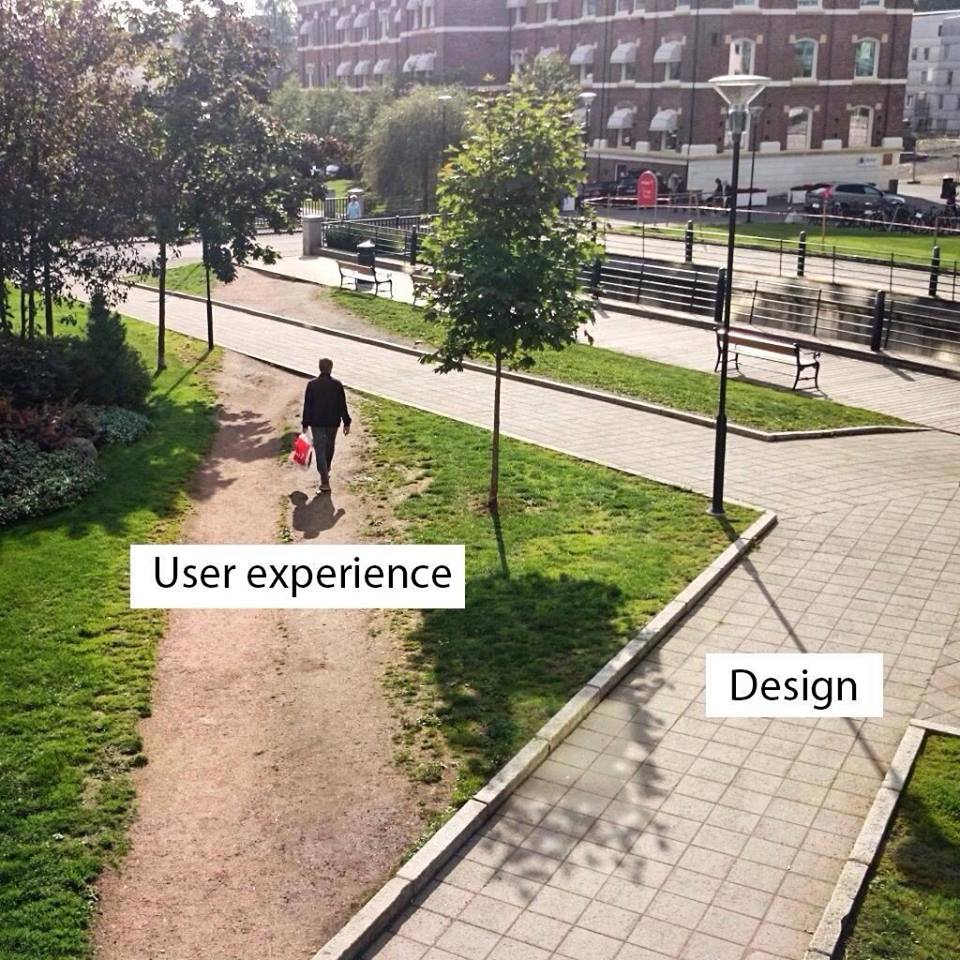
Design vs Experience

(Guest Post by Jason Bedrick)

I’m humbled that Andy Smarick thinks I “offered the most compelling philosophical explanation for a system of choice” among the recent Fordham Institute Wonkathon participants. However, he misreads me when he states that my “professed ‘humility’ (we don’t know everything) came across as agnosticism (we can’t know anything) given that we’ve learned gobs about choice over twenty-five years.”

Nowhere do I claim “we can’t know anything.” Of course we do, and of course we can learn more. But questions remain: who are “we,” what do “we” know, and is that knowledge sufficient to achieve “our” ends?

By “we” Smarick seems to have in mind “policymakers and wonks” and the “what” that “we” supposedly know is that markets alone just don’t cut it so some very, very smart people must bend schools to their will impose government regulations to ensure accountability. To bolster his case, Smarick cites a recent article in National Affairs by Chester Finn and Bruno Manno on the lessons they’ve learned from their decades of experience studying charter schools:

Both strongly support school choice, but they concede the “vexing reality” that “market forces alone can’t reliably generate academic effectiveness.” Overconfidence led to accountability getting short shrift early. “Those present at the creation of the charter bargain (ourselves included) paid too little attention to how authorizing would work.”

Throughout the article, the [Finn and Manno] explain how events played out differently than expected. Because they assumed “a barely regulated marketplace would provide more quality control than it has…we focused on quantity rather than quality.” They were excited by policies that would spur “infusions of capital and entrepreneurialism,” but “we didn’t take seriously enough the risk of profiteering.”

Smarick claims that my Wonkathon entry’s “sanguine title, ‘Let the market work,’ runs headlong into Finn and Manno’s reflections.” As Justice Scalia might say: pure applesauce.

It may or may not be true that “market forces alone can’t reliably generate academic effectiveness” but Finn and Manno cannot draw that conclusion from experience in the charter sector because charters are not operating in a free market, never mind a “barely regulated” one. Charters are secular public schools that can’t charge families tuition, can’t devise their own criteria for admission, they have to meet certain state standards, and they can be shut down by their “authorizers” even if a sufficient number of students and parents prefer the charter to make it financially viable.

In other words, charters provide more choice and competition than the status quo, but charters are not operating in a market. The lack of a price mechanism alone should make that apparent. Drawing any conclusions about what an actual market in education would or would not produce based on the charter experience is ludicrous.

There’s some truth to Smarick’s contention that “theory without experience is [mere] intellectual play,” but he’s drawing the wrong lessons from Finn and Manno’s experience. Although it’s impossible to draw solid conclusions about a market from a non-market, the charter sector has much to teach policymakers about the chasm between policy intentions and policy results.

For example, Finn and Manno lament that “charters in many places are hobbled by many operational constraints, too little money, and, often, insufficient attention both to the delicate balance between quantity and quality.” These constraints often stem from the very regulatory framework that was intended to ensure quality. A 2010 Fordham study found that “state laws were the primary sources of constraint on charter school autonomy, accounting for three-quarters of the infringement that these schools experience.” This year, an American Enterprise Institute study found that “one-fourth of average charter application contains inappropriate and onerous requirements,” and that authorizes “sometimes mistake length for rigor” and “often prize innovation less than they say they do.”

The fatal conceit of the charter school agenda was that granting schools a bit more autonomy and granting parents a bit more choice in a controlled environment would create a true “market” in education. But a market requires a price mechanism, a means of channeling dispersed knowledge. Smarick accuses me of believing that “we can’t know anything” but that’s not so. Policymakers can’t possibly ever know enough to design the education system from the top down but the market can channel dispersed knowledge to produce higher quality through experimentation, evaluation, and evolution.

Smarick confuses the technical knowledge of experts for the dispersed knowledge of the entire system. Sure, technocrats have learned “gobs about choice” in a quarter-century, but they can’t possibly know enough to design the most effective possible education system. Likewise, a panel of a dozen Nobel-prize winning economists certainly knows “gobs” about how markets function, but they cannot possibly know enough to effectively set the price of tin on any given day.

The technocrats’ approach is attempt to define quality, measure it, and shut down any school that doesn’t live up to it — even against the will of parents. As Finn and Manno wrote:

Charter doctrine is clear: Bad schools should be closed (or “non-renewed”) by their authorizer. Yet it turns out to be as hard to close bad charters as traditional district schools. Hundreds of kids are affected, and the alternatives for them are often no better than the troubled charter. Furthermore, parents are almost universally hostile to the demise of their children’s current schools.

First, why are those parents “almost universally hostile” to closing down their chosen school? Could it be because “the alternatives for them are often no better” and probably worse? Could it be that the schools are effectively providing some things–safety, discipline, good values, a love of learning–that the parents legitimately prioritize over test scores in a few subjects?

Attempts to define and measure quality too often come at the cost of innovation. At present, states’ standardized testing regimes assume that all students should progress at the same pace across all subjects — a system that is anathema to reforms like competency-based learning which dispense with Carnegie units. Moreover, the focus on a few subjects both creates a perverse incentive for schools to focus on those subjects to the exclusion of others and overlooks the other, often more important areas where a school may be performing quite well. As AEI’s Michael McShane wrote:

Recently, I have been influenced by the work of Northwestern University economist Kirabo Jackson, whose fascinating NBER working paper calls into serious question policy’s recent overreliance on math and reading scores as the primary measure of the “goodness” of schools and teachers. As it turns out, teachers have important and measurable impacts on both the cognitive and non-cognitive development of students. While it’s certainly true that test scores can tell us something important about a teacher, what is troubling for the test-score types is that it looks like (1) non-cognitive scores are better predictors of later life success (completing high school, taking the SAT, and going to college) and (2) that it is not the same set of teachers that is good at raising both cognitive and non-cognitive measures.

Such has to be the same for schools, right? If there are teachers that are increasing non-cognitive, but not cognitive skills, surely there are schools that are doing the same. As a result, trying to assess if a school is “good” or “bad” relies on a complex web of preferences and objective measures that, quite frankly, cannot be taken into account in a centralized accountability system. We need something more sophisticated, and something that can respect a diverse conception of what “good” and “bad” means.

This is not to say that there should be no standards or accountability. The question is who imposes the accountability on whom. As I’ve noted previously, the absence of a government-imposed standard does not imply the lack of any standards. Rather, it leaves space for competing standards, which in turn fosters innovation and diversity. Parents can then evaluate the quality of education providers based on their own experience and the expert evaluations of appropriate external providers, and the entire system evolves as parents select the providers that best meet their children’s needs.

So yes, policymakers should be humble about what they know or think they know, but we can have greater confidence in a system that channels dispersed knowledge to produce greater quality and innovation. This is more than mere “intellectual play.” It’s the process by which we’ve seen enormous gains in productivity and quality in nearly every other sector in the last century — not top-down technocratic tinkering but bottom-up experimentation, evaluation, and evolution in a free market.


Scenes from the Seattle Waiver Riots

July 16, 2015

(Guest Post by Matthew Ladner)

A reporter caught this gripping moment from the Seattle Washington riots following the state’s decision to drop their NCLB waiv…what? Seattle police don’t carry shields with Greek words written on them? Few in Seattle took any notice of the waiver business?

Sorry my bad.


Lamar Alexander’s Senate Floor Speech Against Federally Mandated Testing Opt-Out

July 15, 2015

(Guest Post by Matthew Ladner)

Senator Lamar Alexander, formerly both the Governor of Tennessee and the United States Secretary of Education, gave a compelling floor speech yesterday against a federally mandated opt-out. Let’s listen in from the Congressional Record:

The proposal from the Senator from Utah is a Washington mandate that says to States that Washington will decide that. So our proposal is local control. His, the way I hear it, is Washington knows best. That is like Common Core. The proposal that is on the floor for a vote tomorrow says Washington may not mandate to any of our States what its academic standards should be. That ends the Washington Common Core mandate. In the same bill, why should we put a Washington mandate about whether you can opt out of your test?

Why don’t we allow States to make that decision?

So I say to my Republican friends, especially, do we believe in local control only when we agree with the local policy? I don’t think so. The great economist Art Laffer likes to say: States have a right to be right, and States have a right to be wrong.

I have a different view. I am going to vote no on the amendment of the Senator from Utah because it takes away from States the right to decide whether and how to use the Federal tests and whether parents may opt out.

Why is that a problem? Well, in the following States, States use these tests as part of their State accountability system. They don’t have to do it, but they do use it. I am told by the State of Tennessee that if we were to adopt the Utah proposal Federal mandate, that the State would have to come up with a different accountability system.

So which States on their own have decided to use these tests as part of their State accountability system? Florida has, Georgia, Idaho, Indiana, Kentucky, Louisiana, North Carolina, Ohio, Oklahoma, Pennsylvania, Tennessee, and Texas.

So I urge my colleagues to vote for the Alexander-Murray proposal because it reverses the trend toward a national school board and specifically allows States to decide whether States may opt out of tests while the amendment goes the other way. It is a Washington mandate that takes away from States the ability to make that decision.

Result- amendment voted down 32-64. #BOOOOOOOOOOOOM!


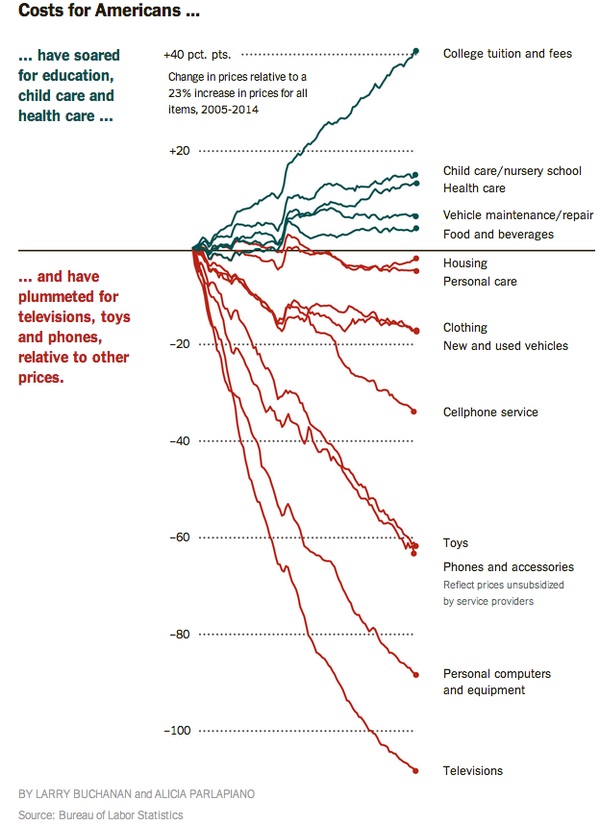
Do you think it might be possible that we’ve accidentally induced hyper-inflation in higher education?

July 15, 2015

Higher ed inflation

(Guest Post by Matthew Ladner)

I mean maybe? Just a little bit? Massive direct and indirect subsidies and encouragement to take on debt creates Baumol’s cost disease on steroids. Oh and by the way, take a look at that mid-aughts increase in housing prices, and then compare that to the higher education bubble, and consider all the trouble the housing bubble caused.

HT Kingsland, Buchanan and Parlapiano, BLS


Senators to Emperor Weingarten: What is thy bidding my master?

July 14, 2015

“If we confuse the Senate with populist rhetoric, they could become a powerful ally against state reform efforts…”

(Guest Post by Matthew Ladner)

Not content to let the House have all the fun in gutting state testing data and creating perverse incentives for schools to sweep their low-performing students under the rug, the Senate is getting ready to join in as well. The civil rights community is up in arms-they should be, and we should all be with them.

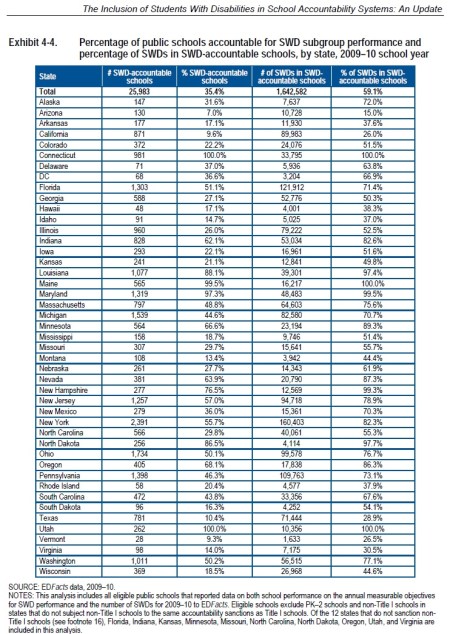
If you are nursing the hope that school officials would not do such a thing, let me direct you to the following table on the % of schools that actually wound up being including special education students as a part of their accountability subset in 2009-10:

So if you live in either Connecticut, Maine or Utah, then you can hang on to the hope that every child will be counted. If you live in a state education the other 98% of American students, it is time to wake up to the fact that school officials have a long and predictable history of following the path where perverse incentives lead them, and don’t tend to let little things like the interests of children bother them overly much. Given the opportunity to make use of a “parental” opt-out, it is blindingly obvious that school officials will take full advantage of the provision to make themselves look good, just as they have used every available loophole to bury special education scores.

Some in the beltway likes to think that Congress is some sort of gathering of Olympians best positioned to guide the nation towards technocratic K-12 improvement. The House has already provided (additional) recent evidence to demonstrate this to be incredibly misguided, and the Senate seems poised to follow suit.  Anti-common core hysteria “The Devil Made Me Do It!” will not do for an excuse when one is contemplating wrecking state testing systems and creating a Freddie/Fannie level perverse incentive all in one fell swoop.

By the next time this law comes up for reauth some 13+ or so years hence, CC will likely be a distant memory. If you’ve been paying attention, states have been adopting their own tests left and right and they have control over their own cut scores. Oklahoma withdrew from the standards completely, and approximately nothing happened to them. Many states have begun a process to review and revise standards. The best case scenario is that states will choose to use something better than their old My Little Pony Book of Connect the Dots for their new tests, but it will be up to them in any case.

We would likely find a federal opt out of all criterion based tests not so easily dispatched. It would prove far more consequential if Hanushek and Loveless are to be believed. Once put into law, the unions will fiercely defend it, given that it completely thwarts the ability to consider test scores in tenure and retention decisions on the basis of criterion based tests. I would expect it to stay in place until the next reauth. States desiring to have campus level comparable data would have to create new systems to carry it out with non-criterion tests in an era of testing fatigue. Thanks DC!

None of this is likely to happen of course, given the high probability of a presidential veto. It grows ever more obvious however that the unions have outmanoeuvred reformers.

UPDATE: The Senate voted down the opt-out amendment most similar to the House Amendment 32-64. Faith in humanity (temporarily?) restored.


I don’t want to say I told you so, but…

July 13, 2015

With all of the discussion over the anti-testing backlash to Common Core over-reach on JPGB lately, I thought I would just take a moment to note how perfectly predictable this all was.

I can’t even keep track of how long I’ve been warning about this, but this post from nearly a year ago nicely captures the point I’ve been making:

Even if you are a standards and test-based accountability person, you are better off not seeking total victory as the Common Core people have.  Yes, some states had lousy standards.  And yes, some tests were poorly designed or had low thresholds for passing.  But trying to fix all standards and tests, everywhere, all at once is the wrong approach.  Seeking this total victory has more fully mobilized the opponents of all standards and testing.  In response to a more heavy-handed and top-down national effort, more previously un-involved people have flocked to the anti-testing side.  Not only will these folks undermine effective implementation of Common Core, but in their counter-effort to roll back national standards, they will destroy much of what was good about state standards and tests.  The whole idea of standards and test-based accountability is being undermined by the imprudent over-reach of Common Core.

And this:

But in the rush to a clear and total victory, supporters of Common Core failed to consider how the more than 10,000 school districts, more than 3 million teachers, and the parents of almost 50 million students would react.  For standards to actually change practice, you need a lot of these folks on board.  Otherwise Common Core, like most past standards, will just be a bunch of empty words in a document.

These millions of local officials, educators, and parents often have reasons for holding educational preferences that are different than those dictated by Common Core.  Common Core may call for things like more focus on “informational texts”  and delaying Algebra until 9th grade, but there are reasons why that is not already universal practice.  It’s not as if local officials, educators, and parents are unaware of the existence of informational texts or just waiting to be told by national elites about when they should start teaching Algebra.  They have interests and values that drove them to the arrangements that were in place prior to Common Core.

Having the Secretary of Education, state boards, and a bunch of DC advocacy groups declare a particular approach to be best and cram it into place in the middle of a financial crisis with virtually no public debate or input from educators or parents did not convince local officials, educators, and parents to change their minds.  These are the folks who need to be on board to make the implementation of Common Core real.  And these are the folks who are organizing a political backlash that will undo or neuter Common Core.  A direct path to victory by Common Core supporters sowed the seeds of  its own defeat.

The unraveling of Common Core makes this flop the most obviously ill-conceived and doomed-to-fail reform effort since the Annenberg Foundation threw $500 million away in the 1990s.  I assure you that while the money was flowing from Annenberg that effort had plenty of defenders, just as Common Core does today.  After Common Core fails, everyone will say how they knew it was flawed, just as they currently do with Annenberg.  Victory has a thousand fathers while defeat is an orphan.

The unraveling of the bipartisan coalition supporting the informational benefits of standardized testing became inevitable as soon as a a new crop of reformers arose afflicted with PLDD who were determined to use those tests to identify the right ways of teaching, the right ways to hire/fire/compensate teachers, and the right ways to authorize and close schools of choice.  This over-reach wasn’t a bridge too far; it was a thousand bridges too far.  And in a perfectly predictable fashion it has failed and begun to take down the reasonable use of tests along with it.

Complaining about the destruction of reasonable uses of testing is like complaining about the heat in Phoenix in July.  The problem isn’t that it’s a hot day.  The problem is having decided to move to Phoenix in the first place.  At this point there is nothing really to do about it except learn from this error to avoid making similar mistakes in the future.


School Choice Movement Checkup

July 10, 2015

(Guest Post by Matthew Ladner)

Veteran school choice warrior Bob Holland landed a nice overview of the school choice movement in the Orlando Sentinel. One of the money quotes:

This past school year, more than 350,000 students used a conventional voucher, a tax-credit scholarship, or an Education Savings Account via 58 school-choice programs in 28 states and the District of Columbia. Ten years ago, there were only 10 voucher and tax-credit scholarship programs supporting 106,456 students.

Watch those savings accounts. An ESA is the next-generation voucher, much as Uber is the next-generation taxi service. It works like this: Parents may have a sizable percentage of their child’s share of state education dollars deposited into an ESA from which they can draw to pay for educational products, providers or services of their choosing.

This has the potential to individualize education as much as it is now bureaucratized. Families could seek and pay for courses or programs that meet a child’s particular needs — tutoring if math is tough, or advanced math in an elite private school if that is the student’s bent; a home-school co-op for a reading round table; or even an early credit literature course at an area university. Possibilities abound.

Bob’s tally of the last decade adds emphasis to a point I raised earlier on JPGB- lawmakers have passed 48 private choice programs in the last decade (which is awesome) and the number of participants has more than tripled (could be better). Many of these programs, like the new special needs program that passed in the Wisconsin budget last night, remain newborns or infants and will begin adding students soon. Still…

Nevada’s new ESA program sets a new bar for the movement. The law has what we should all recognize at this point as a highly desirable broad pool of eligibility-we don’t means test public schools, charter schools or virtual schooling programs. We should not means test private choice programs either. NVESA deals with equity issues through varied funding rather than eligibility and allows multiple uses for funds. Nevada lawmakers can improve NVESA over time by including funding weights as policymakers develop for them for the public system. NVESA is not your father’s Oldsmobile and that’s a good thing.

Nevada lawmakers passed the best school choice program to date this year, but they can improve upon it over time and we can surpass it in other states.


It Depends on What the Meaning of “Testing” Is

July 9, 2015

Bill wagging finger

(Guest post by Greg Forster)

Lots of really good back and forth about NCLB testing and the federal opt-out over the past few days, in response to Matt’s posts. I just want to step in and point out something that seems to be getting lost in the discussion.

Testing of all students (other than those that get an opt-out) is not the only kind of NCLB-related testing. NCLB also required all states, for the first time, to participate in the Nation’s Report Card. NRC participation created the “academic transparency” Matt is looking for, but without raising any concerns about opt-outs, because it’s given to a representative sample of students rather than to all students. If you want to measure how states are doing at serving subgroups of students, this can be done by testing representative samples of those subgroups via the NRC.

My position is that the feds should not throw huge piles of money at schools, but if they’re going to do so (and it seems nothing can stop them) they can and should require the kind of “transparency” NRC provides without pushing states to test every child – and also without interfering with states’ ability to test every child in public schools if they wish to do so. Testing a representative sample of students provides “transparency” without forcing any particular child to take the test.

Unfortunately, the Common Core people have destroyed the bipartisan consensus for “transparency” of even the NRC kind, because now all testing has become suspect. Well done!


K-12 Reformers Need to stare in the Mirror after 251-178

July 9, 2015

(Guest Post by Matthew Ladner)

Perhaps it can be delayed until after the reauth drama has reached a conclusion, and by no means to I wish to exonerate members of the House, but there is a very real need for K-12 reformers to look at themselves in the mirror and ask “how did we lose a bipartisan super-majority that favored academic transparency in the United States House?”

It’s been clear to me that the transparency consensus has been collapsing since at least 2013.  Even now, many in Washington seemed not to have noticed, and continue to carry supporting poorly considered technocratic tweaks to NCLB as if the consensus still exists.

251-178 folks-it’s gone.  How it was lost is certainly complex and I am not in a position to render definitive judgement. I’m calling it though that the canary just died in the coal mine.

To me there has never been a stronger case made for reducing the federal footprint in K-12 than yesterday’s vote. Yesterday the United State House of Representatives voted in overwhelming fashion to mandate the gathering and collection of student testing data that would be of absolutely no value whatsoever- would compromise the ability of parents to compare schools in a reliable fashion, would never withstand challenge in a legal proceeding like Vegara etc. Both past experience and simple logic would lead one to the conclusion that creating a federal parental opt-out for state testing systems will create a powerful incentive for school officials to nudge low-performing students (read: Black, brown, children with disabilities) out of standardized testing to improve their scores. They managed to do this in an attempt to reauthorize an important piece of legislation 8 years behind schedule. I don’t know about you but if this is the best we can get out of our alleged federal Olympians color me more ready than ever to take my chances with state legislatures.

But I digress. If reformers want there to be a consensus on transparency, we apparently need to rethink our efforts. What we are doing now obviously is not working.


The U.S. House Votes to cram Parental Opt Amendment down the throats of state testing systems

July 8, 2015

What is thy bidding, Master Weingarten?

(Guest Post by Matthew Ladner)

The House adopted the Salmon amendment 251-178. This means that of the 435 members of the United States House of Representatives, only 178 of them thought it would be a bad idea to completely wreck campus level comparability AND to create a federal parental opt-out for STATE testing systems.

So here in my (and Rep. Salmon’s) state of residence, Arizona, our state accountability system predates NCLB. If NCLB got rid of the federal testing mandate, we still have state statutes for state testing. So…the 251 affirmative votes basically thought it was a good idea to have the federal government mandate a parental opt-out wrecking state accountability systems past the point where private organizations like Greatschools can salvage them the way they have in Arizona.

I’ve either gone completely nuts, or a large majority of the House has failed to think about this carefully or perhaps at all. I’ll let you draw your own conclusions.