 (Guest Post by Matthew Ladner)
The brilliant Michael Lewis looks back at Liar’s Poker and the financial meltdown. Lewis worked for Solomon Brothers, which led the way to securitization of mortages in the 1980s. A must read…
(Guest Post by Matthew Ladner)
The brilliant Michael Lewis looks back at Liar’s Poker and the financial meltdown. Lewis worked for Solomon Brothers, which led the way to securitization of mortages in the 1980s. A must read…
 3 Comments |
  economics | Tagged: Liar's Poker, Michael Lewis |
  Permalink
 Posted by matthewladner
Max Brantley, Arkansas blogger and the editor of the free-weekly Arkansas Times, seems like a fun guy. While I’ve never met him, I can tell from reading his blog that he enjoys good food and drinks. He enjoys travel. He’s devoted to family and friends. He seems like the kind of guy that you might want to have some beers with as he recounted old stories.
Brantley is also a breath of fresh air in a state that is remarkably averse to open debate of controversial issues. He’s fearless — a giant-slayer. He’s willing to take-on powerful interests and actors in a Southern culture that leans heavily toward deference. These qualities make him quite admirable and at times fun to read.
But Brantley has another, all-too-common, Southern trait that makes him much less than admirable and sometimes awful to read. For Brantley it is clear that all politics is personal. He doesn’t seem primarily interested in ideas or principles. He’s interested in promoting his friends and punishing his enemies — mostly punishing his enemies. Despite being strikingly and openly leftist in his thinking, Brantley is really not much of an ideologue. He’s a personal networker.
He’ll attack efforts that he might otherwise support if those efforts would help people he’s deemed to be enemies. See, for example, his recent denunciation of state Rep. Dan Greenberg’s efforts to produce ethics reform in the Arkansas legislature. If Brantley really cared about the idea of ethics reform, he’d probably back proposals to move things in the right direction. But personal vendettas matter more to him than principles.
You see, Dan Greenberg is the son of Paul Greenberg, the editorial writer for the Arkansas Democrat-Gazette. The Dem-Gaz is owned by Walter Hussman, who bought and basically closed the old Gazette newspaper for whom Brantley used to work in 1991. After being let go by Hussman, Brantley has been reduced to running a free-weekly that occassionally has great investigative reporting but mostly lives off of gossip, show-listings, and naughty personal ads.
For nearly two decades Brantley has seethed about this injury, lashing out at anyone connected to Hussman — even when connected with several degrees of separation. So Brantley hectors Dan Greenberg because he’s connected to Paul Greenberg, who’s connected to Hussman. I’m sure that Brantley and the younger Greenberg truly disagree on many issues. But my point is that even when they agree, Brantley’s personal rage and relative disinterest in ideas prevent him from embracing that agreement.
I’ve also been a frequent target of Brantley’s bile. My sin? I’m connected to the Waltons, although more loosely than Brantley will admit or understands. And the Waltons are allies with Hussman on school reform in Arkansas. So when my department hosted a lecture by Democratic U.S. Senator Blanche Lincoln, Brantley posted this:
We notice that Sen. Blanche Lincoln(D-Waltonsas) is speaking Thursday at Walton University in a program sponsored by the Walton School of Education Reform.It’s a good forum for a senator who carries so much water for Wal-Mart and the Walton heirs on other matters — estate tax abolition, etc.. No Child Left Behind, “teacher quality” and other education topics will be discussed at this week’s event. Jay P. Greene, head Walton shill and professor of teacher derision at Waltonville, surely will be on hand, perhaps with a script for the senator.
Never mind that Sen. Lincoln agrees with Brantley on most issues. And never mind that much of what Sen. Lincoln had to say in her lecture was consistent with what Brantley normally supports. You can watch the lecture here to see for yourself if she was reading from a script that I or someone else wrote. Brantley nevertheless had to find a way to denounce an event that was connected to people who were connected to other people who were connected to his enemies. This kind of anger management problem is normally treated with medication and therapy, but Brantley finds blogging to be cheaper and easier.
Brantley may hate me (and a long list of other people) but I don’t feel the same about him. He can be dangerous and spiteful, but Brantley is also entertaining and informative. I’m OK with agreeing with him on some things and disagreeing on others. I don’t feel the need to join his personal grudge-match and extend hatred to everyone with whom he is connected. I only wish Max Brantley would do the same.
2 Comments | politics | Tagged: Arkansas Times, Blanche Lincoln, Jay Greene, Jay P. Greene, Max Brantley, Walter Hussman | Permalink
Posted by Jay P. Greene

(Guest post by Greg Forster)
Yesterday’s Wall Street Journal carried a review of Alex Beam’s new history of the great books movement, A Great Idea at the Time. The reviewer, Robert Landers, approvingly quotes Beam’s statement that he wanted his history of the GB movement to be “brief, engaging, and undidactic . . . as different from the ponderous and forbidding Great Books as it could be.”
The GB movement has touched all levels of post-primary education – secondary, collegiate, and “continuing” – and it has come in for a lot of criticism, some of it justified, particularly as regards the pomposity and the (really surprising) intellectual vacuity of Mortimer Adler. Much that was written about the Great Books by some of their most prominent self-appointed champions was indeed prolix, unengaging, and didactic.
With some shame, I confess that in my excitement about great ideas during my intellectual youth, I was suckered into paying $50 for Adler’s useless cinder block of a book, the “syntopicon.” Adler’s ambition was to create a reference that would point you to everything that the great thinkers had ever thought about each of a hundred “great ideas.” Alas, the real content of the Great Books failed to line up with Adler’s preconcieved notions about what constitues a great idea, and Adler failed to realize this; consequently the book is as useless as it is long. Fortunately, thanks to the miracle of the Internet, I was able to find another sucker willing to pay me $50 to take the embarrassing thing off my hands.
But anyone who thinks the Great Books themselves are prolix, unengaging, and didactic has obviously never read one – or if he has, all the more shame on him that he didn’t pay attention to what he read.
Indeed, the greatness of Great Books consists precisely in the authors’ gift for communicating large ideas in a clear, easily understood, engaging, and undidactic way so that everyone – everyone – can benefit from them. People think that the greatness of Great Books consists in the greatness of the ideas, but this is false. Any fool can write a book about great ideas, as Mortimer Adler proved so conclusively. What takes greatness is to write a book about a great idea that makes those ideas accissible and exciting to all readers.
The issue here really goes to the heart of how we understand education when it comes to ideas as opposed to skills (like reading and math). What is the best way for people who are not themselves great philosophers to learn about great ideas? For a long time the nation’s educators have set themselves up as a parasitical priesthood class, arguing that the ordinary person lacks the capacity to recieve these things directly from the sources; they need priests to interpret for them. The GB movement argued that the great philosophers themselves were much better teachers of ordinary people than the educational priests – that is precisely what makes them so great.
C.S. Lewis – who wrote extensively about the purpose, methods, and philosophy of education – put it very concisely in an introductory essay he wrote to be included in a new edition of an old book (Athanasius’s On the Incarnation), which was subsequently published separately under the title “On the Reading of Old Books”:
I have found as a tutor in English Literature that if the average student wants to find out something about Platonism, the very last thing he thinks of doing is to take a translation of Plato off the library shelf and read the Symposium. He would rather read some dreary modern book ten times as long, all about “isms” and influences and only once in twelve pages telling him what Plato actually said. The error is rather an amiable one, for it springs from humility. The student is half afraid to meet one of the great philosophers face to face. He feels himself inadequate and thinks he will not understand him.
But if he only knew, the great man, just because of his greatness, is much more intelligible than his modern commentator. The simplest student will be able to understand, if not all, yet a very great deal of what Plato said; but hardly anyone can understand some modern books on Platonism.
It has always therefore been one of my main endeavours as a teacher to persuade the young that firsthand knowledge is not only more worth acquiring than secondhand knowledge, but is usually much easier and more delightful to acquire.
The whole essay is well worth reading for anyone who wants to think about how great ideas are communicated to ordinary people who want to know about them.
And for those of a more quantitative bent, I can’t resist examining the one quantitative claim implied by Beam’s comment – that his book, unlike the Great Books, is “brief.”
The Journal lists Beam’s book at 245 pages. I went to my office shelf and took down all the books that could be considered Great, and checked the page numbers – excluding introductions, interpretive essays, appendixes and the like (some of which occupy hundreds of pages in the volumes I have). Where I had multiple editions I picked the edition that I used regularly. I suspect the selection may be biased toward longer works because the books I keep at work as opposed to what I keep at home for regular reading are probably longer. One could argue that the selection is biased in the other direction because some books are so long that I don’t even bother to own a hard copy, and access them electronically (e.g. Aquinas’s Summa Theologica and Calvin’s Institutes). But I would argue that those longer works are not really Great Books at all, but reference works. Aquinas and Calvin never meant for anyone to sit down and read their works cover to cover; the idea was to provide a useful reference so that if you need help with some specific problem, you know where to look it up. (They’re kind of like Adler’s syntopicon that way, except they’re actually useful.)
Here’s what I came up with:
Plato, Apology of Socrates: 21 pages
Locke, A Letter Concerning Toleration: 49 pages
Rousseau, Discourse on the Origin of Inequality: 97 pages
Rousseau, The Social Contract: 144 pages
Locke, The Reasonableness of Christianity: 195 pages
Locke, Two Treatises of Government: 240 pages
Treatment case: Alex Beam, A Great Idea at the Time: 245 pages
Aristotle, Ethics: 276 pages
Niebuhr, Moral Man and Immoral Society: 285 pages
Burke, Reflections on the Revolution in France: 292 pages
Plato, Republic: 300 pages
Aristotle, Politics: 425 pages
Rousseau, Emile or On Education: 447 pages
Hobbes, Leviathan: 482 pages
Hamilton, Madison & Jay, The Federalist Papers: 494 pages
Locke, Essay Concerning Human Understanding: 678 pages
Tocqueville, Democracy in America: 705 pages
Montesquieu, The Spirit of the Laws: 722 pages
Augustine, The City of God: 1,086 pages
So it does seem fair to say that Beam’s book is on the shorter end of the distribution – but the generalization that Great Books are not “brief” is patently false. And that’s before we even get into the qualitative dimension; the Apology is more or less the Original Great Book (the educational equivalent of an OG, if you will) and in length it barely rises to the level of a pamphlet.
Bottom line: before you complain about the GB movement, try picking up a Great Book and reading it.
UPDATE: See additional data and discussion in my follow-up post.
6 Comments | civic values, instructional reform | Tagged: Alex Beam, Best of Greg, great books, Greg Forster, Mortimer Adler, Robert Landers, Wall Street Journal | Permalink
Posted by Greg Forster

After experiencing a 97% decline in profit and an 8% drop in same store sales, Starbucks should also get in line for a federal bailout. The collapse of Starbucks would pose a “systemic” risk to the economy. Caffeine-deprived workers would fuel a spiraling decline in productivity. Withdrawal headaches would spark fights in the streets, family disintegration, and general grumpiness.
And let’s not forget the baristas who risk losing their jobs. Remember that Seattle was built by baristas who passed the tradition from father to son. Do we want to turn Seattle into another Flint, Michigan? Besides, how can we retrain them for other work that would still permit their goatees, piercings, and tattoos?
2 Comments | economics | Tagged: Jay Greene, Jay P. Greene, Starbucks | Permalink
Posted by Jay P. Greene
(Guest Post by Matthew Ladner)
Leave a Comment » | economics | Tagged: Republican Party Bailout | Permalink
Posted by matthewladner
Even worse than the tedium of lame election coverage is the tedium of lame post-election coverage. Did I really have to hear 10,000 news stories on what kind of dog Obama will get? Or how about the 10 thousand million gzillion stories about where the Obama children will go to school? Ugh.
Even worse, education bloggers have joined this lame-fest offering endless opinions and interpretations about the significance of whether the Obama children will attend public or private school. We’ve seen postings over at Flypaper, Eduwonkette (the posting was actually by Aaron Pallas, a grown man and otherwise respectable scholar who chooses to call himself “skoolboy”), Jay Matthews at the Washington Post, Joanne Jacobs, …. The list goes on but I got so bored typing it that I dozed off for a while.
So why is the topic of where the Obama kids will go to school politically irrelevant? Supporters of choice try to use the fact that anti-voucher presidents choose private schools rather than DC public schools as evidence of hypocrisy. I don’t buy that argument. There is no more hypocrisy in saying that public dollars should only go to public schools even if I choose to use my own dollars at private schools than in saying that public dollars shouldn’t go to think tanks even if I donate to them with my private dollars.
Folks hostile to vouchers worry that the Obamas choosing a private school is part of a broader problem where the public purposes of education are being undermined by private consumption. Skoolboy goes so far as to worry that private education might be contrary to the public goal of “producing citizens prepared for life in a democracy” and entertains the “provocative” proposal from one of his students to “eliminate private schooling altogether [to] reduce both the temptation and the capacity for members of privileged groups to use their resources to maintain their advantages.” He dismisses the proposal as not “feasible” but we could only imagine how wonderful everything would be if skoolboy and his students ran the world. Not only could we do away with private schools but we could also all have really cool blogger rapper names, like The Notorious JPG and DJ Super-Awesome.
Skoolboy seems to believe that private education undermines the public purposes of education, while public schools do not. And I can only assume that the airtight logic behind his view is that both public education and public purpose have the word, public, in them. Because if he bothered to familiarize himself with the empirical evidence on the relationship between private education and the production of citizens prepared for life in a democracy, he’d find that private schools better serve that purpose. Patrick Wolf has an excellent summary of that literature.
Folks may want to score points for or against vouchers with the Obama children, but let’s just leave them alone and ignore them like we did during most of the campaign.
15 Comments | vouchers | Permalink
Posted by Jay P. Greene
(Guest Post by Matthew Ladner)
Sweet are the uses of adversity,
Which, like the toad, ugly and venomous,
Wears yet a precious jewel in his head;
And this our life, exempt from public haunt,
Finds tongues in trees, books in the running brooks,
Sermons in stones, and good in every thing.
As You Like It Act 2, scene 1, 12–17
Lance Izumi helpfully suggests a way forward for Republicans on education policy in the New York Times Education Watch Blog.
3 Comments | NCLB | Tagged: Lance Izumi, NCLB | Permalink
Posted by matthewladner
(Guest post by Greg Forster)
For years – six of them, to be exact – mankind has pondered the question: Just what is it that makes Firefly the greatest TV series of all time?
I think I have the answer.
The concept of Firefly in the conventional sense is as follows: It’s the future. Six years ago, there was a big horrible war and the good guys lost. A single central government called The Alliance, formed by the unification of the governments of the United States and China, decided to bring all humanity on all planets under its control. The Independents, who sought to resist annexation, fought back just hard enough to get a lot of people killed, but not hard enough to win. Now the remnants of the Independents – the “browncoats” – are adrift on the edges of civilization, forced to scavenge for work where they can get it and constantly hounded by a tyrannical government that’s always itching for an excuse to lock them up. One of the most bitter and disillusioned of these former soldiers, Mal Reynolds, has managed to scrape together a ship and a crew. To keep the ship fueled and flying, he takes on illegal salvage, smuggling, theft of government supplies, etc. The government is after him, and his business partners are all either betraying him or open to doing so if the opportunity arises. So every week there’s a fresh adventure waiting for him and his crew – daring heists, double and triple crosses, espionage, and always the constant struggle to keep fueled and keep flying.
The genius of Firefly is: that stuff isn’t what Firefly is really about.

I said I was giving you “the concept of Firefly in the conventional sense.” If the network suits ask for a precis of the show, that’s what you give them. But series creator Joss Whedon made up all that stuff strictly to provide a backdrop to the real story: the story of nine people thrown together by forces outside their control and forced to find a way to live with each other and with the choices that their need for intimate coexistence foists upon them.
Here’s the thing: if you watch the whole series from start to finish, afterwards you will not know much more about the show’s fictional universe and backstory than what I’ve already told you above. But you will know these nine extraordinary (and yet, in other ways, very ordinary) people as though you had lived with them.


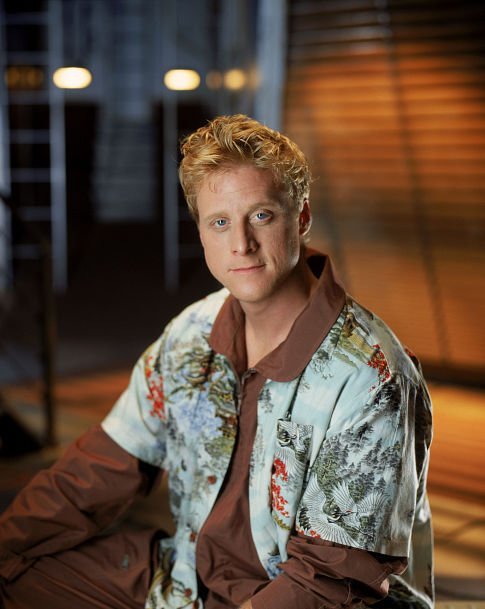


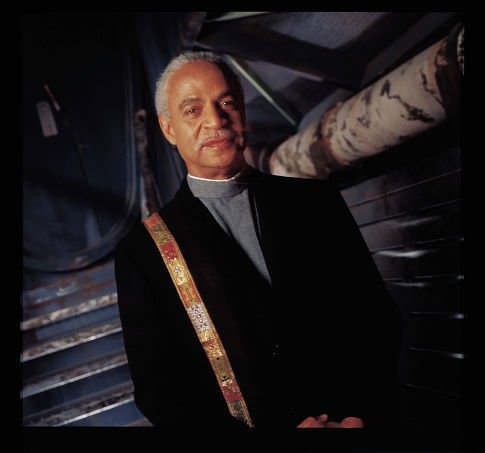


The genius of Firefly is that the characters are at once so real as individuals, and yet at the same time so perfectly crafted to drive the necessary interactions between them that create the plot. It must be really difficult to make both of those happen at the same time, since the former requires their personalities to seem spontaneous and undesigned, but the latter requires that they really be calculated and artificial.
I mean this. On the one hand, you can easily imagine what it would be like to meet any of these characters in isolation from the rest of the show. If Simon Tam walked into my office right now, I can picture exactly how he would act. I would love to talk theology with Shepherd Book, but if Kaylee Frye came in I would introduce her to the engineers in my office and then find an excuse to slip away. On the other hand, all nine characters are perfectly designed such that if you put any two of them together, their personalities and backstories will immediately start generating plot opportunities. And if you stick any three of them together, you can just sit there and write a whole episode in five minutes based solely on how those three people would mesh or clash when forced to confront some difficult situation together.
In a sense, then, once Whedon had created these people, all he had to do was stick them together on a small ship where they’re always bumping into each other. And in fact, a lot of the really golden moments on the show arise without the need for any outside force like evil governments and backstabbing business partners (although those do keep things interesting).
The first time the crew has dinner together, it quickly becomes apparent that Kaylee has a crush on Simon, the ship’s doctor. She asks what kind of doctor he is and he says he’s a trauma surgeon. Jayne snorts, “Kaylee’s just sorry you ain’t a gynecologist.” Captain Mal: “Jayne, you will keep a civil tongue in that mouth or I will sew it shut, is that understood?” Jayne: “You don’t pay me to talk pretty. Just because Kaylee gets all…” Mal: “Walk away from this table. Right now.” Silence. Jayne is a violent man – that’s why he’s on the crew, because he likes to fight and he isn’t too scrupulous about the when, where and who – and no one is sure what he’ll do. But after a moment he gets up, slops an extra helping of potatoes onto his plate and stomps off to his quarters.
Simon: “What do you pay him for?” Mal: “What?” Simon: “I was just wondering what his job on the ship is.” Mal: “Public relations.”
These people haven’t known each other an hour, and already they’re off to the races.
Of course, I’m not saying this is the only reason Firefly is the greatest show ever. The dialogue is top-notch, the directors keep things pitched just right between comedy and drama, the cinemetography is boldly innovative (in a good way), and things are set up so that over time the crew is gradually being set on a collision course with that tyrannical government – adding just the right level of epic struggle to what is essentially an ensemble drama.

The Fox network infamously screwed everything up because some empty suit – or, more precisely, a suit that should have been empty – didn’t like the lack of lasers and explosions in the pilot. So the second episode was aired first and the pilot wasn’t aired until halfway through the season. Way to start the series off on the right foot! The show never found an audience beyond the Joss Whedon fan core, and was cancelled. But that’s the way things go in a spoiled world.
Fox retained the TV rights and wouldn’t let Whedon take the series elsewhere at a price that other networks were willing to pay. Great story: Somebody asked Whedon at a convention whether he had talked to the Sci-Fi network. This was just after Sci-Fi had cancelled the incomparable Farscape while retaining that show with the real-life “psychic” – not a fictional show about a psychic but an actual con artist playing his cruel hoax for a studio audience – and other, similarly un-sci-fi fare. Whedon responded that he had called the Sci-Fi Network about Firefly but they had told him it was too science-fictiony for them.
Whedon somehow managed to persuade Universal (bless them!) to make a movie, Serenity. The movie isn’t as good as the show – there are just too many difficult balancing acts going on, as Whedon tries to make things accessible to newcomers while providing big payoffs to fans of the show, and also tries to get through the entire epic confrontation with the government that he had planned for the show’s finale, and resolve all the interpersonal plotlines as well. But saying that it’s not as good as the greatest TV series of all time is not saying much against it – it’s still very good.
Unfortunately, the movie opened in the low-traffic month of September, opposite some trifle starring Jessica Alba – prominently featured in a bikini in all the publicity. (On opening day Whedon was telling interviewers: “I’ve seen that other movie. The ads are a total fraud. She wears a parka the whole time.”) Once again, Firefly just couldn’t find its audience.
Of course, as I’ve recently observed, artistic excellence isn’t subject to democracy. It’s just sad that the mass audience never got to experience the greatest TV show in history. But, like I said, it’s a spoiled world. And thanks to the miracle of technology, the show lives forever on DVD, or you can watch the whole series and the movie for free on Hulu. This is why God made the Internet.
5 Comments | Pass the Clicker | Tagged: Firefly, Greg Forster, Pass the Clicker, Serenity | Permalink
Posted by Greg Forster

Five school districts in Wisconsin have sued their investment advisors after losing $1.5 million on a $2 million investment in collateralized debt obligations. That’s a 75% loss. According to the lawsuit, the investment was “complex, convoluted, and opaque, and as Stifel and RBC then well knew, beyond the investment knowledge or experience of the School Districts . . . , their school board members, and their administrators.”
Complex? Convoluted? Opaque? That sounds like just the thing that school officials should put the public’s money in.
But don’t worry. It’s not their fault that they did something foolish. It was the fault of the people who sold it to them and they are asking the courts to return the money. And if that doesn’t work, they’ll just take it from you in future taxes.
I wonder if school officials can do the same if they select foolish educational policies. If that faddish whole language reading curriculum didn’t work can they sue the people who sold it to them to get their money back?
This all reminds me of a great Shel Silverstein poem:
Smart
My dad gave me one dollar bill
‘Cause I’m his smartest son,
And I swapped it for two shiny quarters
‘Cause two is more than one!
And then I took the quarters
And traded them to Lou
For three dimes—I guess he don’t know
That three is more than two!
Just then, along came old blind Bates
And just ‘cause he can’t see
He gave me four nickels for my three dimes,
And four is more than three!
And I took the nickels to Hiram Coombs
Down at the seed-feed store,
And the fool gave me five pennies for them,
And five is more than four!
And then I went and showed my dad,
And he got red in the cheeks
And closed his eyes and shook his head—
Too proud of me to speak!
Leave a Comment » | economics, scandal | Tagged: Jay Greene, Jay P. Greene, pension | Permalink
Posted by Jay P. Greene

(Guest Post by Matthew Ladner)
Charlie Barone did an excellent job unpacking NCLB’s safe harbor provision in reaction to a report by the Center on Education Policy warning of the looming 2014 train-wreck (where 100% of students must be proficient).
I co-authored a study for the Heritage Foundation also critical of the 2014 requirement. My concern is that what states will obviously do is to simply dummy down their tests in order to comply. I believe this process has already started, and will accelerate as the passing requirements escalate.
Barone however unpacked the arcane “Safe Harbor” provision on NCLB. Safe Harbor basically gives you a pass on AYP so long as you can reduce the number of children scoring below proficient by 10%. If this represents an obtainable standard, then presumably states would not feel overly pressured to drop their cut scores.
So, I decided to put safe harbor to a test- a very forgiving one. I looked at data from Florida’s 67 school districts over the past six years on 4th grade Reading and Math. The NAEP shows that Florida has been making solid progress on both subjects.
So what happens if you assume that we are at the 2014 100% requirement, an apply safe harbor to the overall performance of Florida districts? Judging them solely on 4th grade math and reading, and without judging any of the required student subgroups– like the various ethnic groups, free and reduced lunch kids, special education children, etc- Florida’s districts failed to make safe harbor 71% of the time based on the overall results alone.
I’ll leave the debate over whether public schools should be able to routinely reduce their passing rates by 10% year after year to others. The point I am making is: they don’t. I am confident that if required to break down results by various subgroups, that not a single Florida district would have made AYP during these six years under safe harbor. The number of individual schools making safe harbor is also likely to be negligible.
This, during a period of strong statewide improvement in both reading and math.
The sad reality is that, unless changed, NCLB will create a tremendous and perverse pressure on the state of Florida and others to dummy down their state accountability exams. In the greatest of ironies, a bill which aspired first and foremost to create transparency in public education contains the seeds of its own destruction in encouraging states to lower passing standards.
Gene Hickok and I endorsed Senator Cornyn and De Mint’s A-Plus concept as a way out of this looming train wreck. Under it, states could negotiate a single set of testing with the feds: preferably one better designed than a one-size-fits-all system with the mother of all perverse incentives built in. The Department would have discretion as whether to accept a state model rather than AYP, so no one is proposing to burn down the Department of Education.
The administration was not enthused. Nor, to my knowledge, have they ever acknowledged that 2014 is a problem. Nor to my knowledge have they ever embraced anything that could be considered a solution. Refusing to recognize a problem and thus failing to take action against it while it is still relatively manageable- ring any bells?
The Democrats will run the department and Congress, and powerful constituencies in their coalition want to vastly increase federal funding and replace testing with “portfolio assessments.” Now would be an outstanding time for all who believe in public school transparency-Democrats and Republicans- to pull their heads out of the sand on this issue. Safe harbor is not a solution. If you don’t like A-Plus- fine, propose another solution. Pretending like there isn’t a problem is a recipe for disaster.
7 Comments | NCLB | Tagged: Gene Hickok, Heritage Foundation, Matthew Ladner, NCLB, Race to the Bottom | Permalink
Posted by matthewladner


 Jay P. Greene's Blog