From the standpoint of the child, the great waste in the school comes from his inability to utilize the experiences he gets outside the school in any complete and free way within the school itself; while on the other hand, he is unable to apply in daily life what he is learning in school. That is the isolation of the school–its isolation from life. When the child gets into the schoolroom he has to put out of his mind a large part of the ideas, interests and activities that predominate in his home and neighborhood. So the school being unable to utilize this everyday experience, sets painfully to work on another tack and by a variety of [artificial] means, to arouse in the child an interest in school studies …. [Thus there remains a] gap existing between the everyday experiences of the child and the isolated material supplied in such large measure in the school.
Collecting and trading desired items sounds just like the kind of thing Dewey would embrace. Students would learn about commerce and the potentially mutual benefits of trade. But schools not only refuse to take advantage of these opportunities to teach students useful lessons about the world, they insist on banning the items altogether.
Maybe schools are preparing students for the world as they wish it would be — with a lot of collaboration but little commercial trade — rather than the world as it is and almost certainly will continue to be.
Don’t miss this solid gold story of Chris Christie v. the dishonesty of activists claiming to represent teachers.
Buildup: Teacher in the audience challenges Christie’s statements about teacher pay, saying if his figures were right she’d be making $83,000, and she doesn’t make nearly that much. Christie replies that she does if you count benefits. She fires back that she has a master’s degree and lots of experience and she isn’t adequately paid for these. Christie remarks that if she doesn’t think she’s paid what she’s worth, she’s free to do something else with her life, and moves on to the next questioner.
Kicker: Public records show that the teacher in question makes just under $85,000 base salary. Oops.
Last week I visited the Carpe Diem charter school in Yuma Arizona. Yuma is off the beaten path, in far western Arizona near the borders of California and Mexico.
Carpe Diem is a 6-12 school with 240 students. A value added analysis of test scores found that they have the biggest gains in the state of Arizona. Their math results are really off the chart, with some grades averaging at the 98th percentile on Terra Nova.
Carpe Diem is a hybrid model school, rotating kids between self-paced instruction on the computer and classroom instruction. Their building is laid out with one large computer lab, with classroom space in the back. They had 240 students working on computers when I walked in, and you could have heard a pin drop.
Carpe Diem has successfully substituted technology for labor. With seven grade levels and 240 students they have only 1 math teacher and one aide who focuses on math. Covering 6-12 and 240 students and getting the best results with a demographically challenging student body = no problem for Carpe Diem. Their founder, Rick Ogston, told me they use less staff than a typical model, and have cash reserves in the bank despite relatively low per pupil funding in AZ. They have never received support from philanthropic foundations, making due with state funding, but their model seems like it could be brought to scale with the right investment.
They have a classic innovation story in that they tried this radically different approach because they lost their space they were renting some years ago, and the only one available did not lend itself to a traditional approach. The only space they could find was at a University of Phoenix campus. The available space did not lend itself to the traditional 22 kids in multiple classroom model, so they innovated.
Mr. Ogston and his team have created a much more sophisticated version of the Rock Star Pay for Rock Star Teachers model I have written about over the last two years. One math teacher, seven grade levels, 240 students, best value added gains in the state, 90th plus percentile ranking, diverse student body. Check, check, check, check and check!
When I first bounced the idea of the Rock Star Pay for Rock Star Teachers model off of Gisele Huff some years ago, she told me in her delightful French accent “Matthew, you must incorporate TECHNOLOGY into this model. Then the teachers would be SOCRATES!” I knew she was right, and Rick Ogston has proved it.
You are the value-added champion of the year dude!
I want to congratulate the Carpe Diem team for creating a truly innovative school, and encourage others to make the trek from San Diego or Phoenix to see the school for themselves.
Big news out of Oklahoma today: lawmakers passed the Lindsey Nicole Henry Scholarships for Students with Disabilities Program. Governor Henry, a Democrat, is expected to sign the bill. Text of the bill here (starts on around page 12).
Great win for the kids in Oklahoma, and hopefully a sign of things to come for even broader K-12 reform.
Is it me, or has the primary and special-election season that is now winding down down represented a major leap forward in excellence for the quality of campaign communications? I don’t just mean production values, although after the introduction of the “Demonsheep” those did go up dramatically. I mean, in addition, at least in some places there was a puncturing of the ordinary cheap and forumlaic insincerity. This was shocking and refreshing, and I’d like to honor it. So I’m giving out the following three awards.
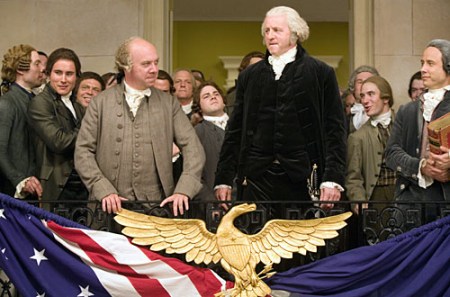
The John Adams Award
For excellence in the strategic use of ironic self-effacement to embarrass your egomaniacal jackass of an opponent
If you took U.S. History 101, you probably know that in 1800 John Adams and Thomas Jefferson allowed their surrogates in the press to circulate truly horrible fictions about one another. At one point, Jefferson’s papers circulated the rumor that Adams had sent one of his functionaries over to England to collect four women, two of whom were to serve as Adams’s mistresses and two for the functionary (as his compensation for making the trip).
Rather than blow a gasket and work himself into high dudgeon, Adams commented, “If it is true, then he has cheated me out of my two and kept them all for himself!”
In that spirit, I bestow the John Adams award upon Mickey Kaus, blogger turned candidate for the Democratic Senate nomination in California, for his deftly ironic use of candid self-effacement to repeatedly humiliate his opponent, Barbara Boxer. His public statements have been consistently barbed and effective, but this and this were what moved me to create an award to give him.
“The box was on the defensive for the entire debate.”
The Gen. Anthony McAuliffe Award
For candor above and beyond the call of duty
Before the Battle of the Bulge, Gen. McAuliffe recieved the following communique:
To the U.S.A. Commander of the encircled town of Bastogne
The fortune of war is changing. This time the U.S.A. forces in and near Bastogne have been encircled by strong German armored units. More German armored units have crossed the river Our near Ortheuville, have taken Marche and reached St. Hubert by passing through Hompre-Sibret-Tillet. Libramont is in German hands.
There is only one possibility to save the encircled U.S.A. troops from total annihilation: that is the honorable surrender of the encircled town. In order to think it over a term of two hours will be granted beginning with the presentation of this note.
If this proposal should be rejected one German Artillery Corps and six heavy A. A. Battalions are ready to annihilate the U.S.A. troops in and near Bastogne. The order for firing will be given immediately after this two hours term.
All the serious civilian losses caused by this artillery fire would not correspond with the well-known American humanity.
The German Commander
McAuliffe sent back the following reply:
To the German Commander
NUTS!
The American Commander
In that spirit, I bestow the Gen. Anthony McAuliffe award upon Les Phillip, candidate for the Republican nomination for the U.S. House in Alabama District 5.
Test yourself:
How many of the references did you catch? (Jim Geraghty says that’s William Ayers’ wanted poster they flash near the end.)
The Ronald Reagan Award
For fearlessness in the mocking of buffoonery
Reagan won a close election in 1980 in large part because he wasn’t afraid to display his contempt for Carter’s contemptible behavior. This was captured in our historical memory in that famous debate, when Carter repeated for the umpteenth time his shameless lies about Reagan’s record on Medicare, and Reagan smiled and said, “there you go again.” (Never mind that we’d be living in a much better world now if Reagan really had wanted to slash Medicare; the fact is, he didn’t, and people knew it.)
In that spirit, I bestow the Ronald Reagan award upon Carly Fiorina. The Demonsheep was clever and funny, and it broke a lot of conventions in a way that got everybody paying attention, but it was also deeply amateurish and forced. The follow-up ad, though, was far superior.
Congratulations to the winners. My fervent hope is that I’ll have more awards to give out come November!
If this president and Congress really wanted to help children and benefit teachers, it would emancipate students so their parents could use their own tax dollars to obtain educational services wherever they wanted — at charter schools, virtual schools or with a voucher to transfer to the private school of their choice. But that’s not really what they want. Instead, they want to maintain a status quo that is designed to benefit the adults rather than brighten the future of children.
It’s not just this $23 billion bill, it’s the whole stinking system that’s one big slow-motion perpetual bailout. What are the odds you’ll get serious change without school choice? 3,720 to none.
The Red Nose Institute mails red clown noses to U.S. troops stationed abroad. It does so, according to its web site, “to put a smile on the faces of our troops overseas.” They continue:
The idea is for folks who care about our military to donate red foam noses. Monetary donations are also accepted and used to purchase even more noses and also to help with mailing costs. The noses are then mailed to U.S. troops deployed anywhere overseas. A letter is enclosed with each package telling that the folks sending them are extremely proud of our military and thankful for what they are doing on our behalf. Servicemen and women are encouraged to share the noses with someone who might need a smile and possibly to share them with the nearby children. There is NO COST to our military or to anyone requesting noses. We all know that relieving stress is of the utmost importance! If sending red noses to troops can help do this, our job has been accomplished!
The Red Nose Institute is also a charitable organization exempt from taxes under section 501 (c) (3) of the tax code. This bothers Rob Reich and his colleagues at Stanford University. Reich, who is an associate professor of political science and not the diminutive former Clinton Administration official, issued a report last year, “Anything Goes: Approval of Nonprofit Status by the IRS,” calling for reform of the process by which the IRS approves organizations as tax exempt.
Their report laments “the distinctive modern American proclivity to confer special tax benefits to wildly diverse and indeed eccentric associations.” The report cites The Red Nose Institute along with several other nonprofit organizations as instances that illustrate the problem. Instead, they would like the IRS to scrutinize applications for nonprofit status more closely and raise fees to discourage applications. They conclude:
The 501(c) code, we believe, stands in need of reconsideration in light of the massive growth of the nonprofit sector. Is this really an effective way to organize charity? Should the mere desire to associate for nearly any purpose be rewarded with tax privileges?
I see the problem completely differently. Why should the IRS be in the position of determining whether certain organizations benefit the public or not? I would contend that the Red Nose Institute is doing much more good for the world than the Ford Foundation has (with its funding of anti-Israel and anti-semitic groups) . In fact a great many nonprofit organizations have promoted ideas that are much more harmful, wasteful, and just plain silly than sending red noses to boost the morale of troops overseas. At least the Red Nose Institute has a plausible theory of action and their intervention doesn’t cost much.
Essentially, Reich and his colleagues are trying to substitute their own taste (through the authority of government officials) for the taste of individual donors. They are just picking organizations that don’t strike their fancy rather than applying any objective or even reasonable test for whether an organization promotes the public good.
Another organization they feature in the report as obviously silly is Curtains Without Borders, which “aims to conserve historic painted theater curtains.” Why does this serve the public good any less than museums that conserve painted canvasses let alone ones that display jars of urine containing crucifixes?
The point is that there is a particular and distorted vision of “the good” that some people would like to impose on all of us through the coercive power of the government. I do not want to use the tax code to favor certain organizations as being for the “public good.” Instead, I would propose treating all organizations the same in the tax code.
And to be clear, allowing people to keep their own money is not a “tax privilege.” Taking people’s money through taxation is a necessary evil that we should try to keep as minimal and evenly dispersed as possible. Taxing all organizations at the same lower rate is better than taxing some at a higher rate so that others pay no taxes.
If we can’t go all the way and end tax exempt status, I’d favor keeping the door as wide open as possible to organizations that claim to be public charities. I’d rather err on the side of having some silly low-revenue organizations over having the IRS intimidate people into sharing a particular vision of the good.
So I think I’m pretty pleased with the ending. I’ve been thinking about it a lot, and it definitely succeeded in giving the characters closure, which I think was really what the show was about anyway. Everything else that happened along the way was just a vehicle to the same inevitable point…”it always ends the same.” I think this is about as good as they could have done. I do think it left enough vagueness that people will discuss it for a long time, which is cool really….
Everything that happened, happened. Whoever survived the crash, survived the crash. But they were all dead at the end.
Boone died from the falling plane. Shannon was shot. Charlie drowned. Jack was knifed at the end.
Those that were alive at the end of tonight went on to live their lives, and they died whenever they died. Bernard and Rose probably lived on the island for a long time before being ready to “move on.”
The Island was NOT purgatory, but the Sideways Reality WAS a kind of waiting room between death and the “next step,” which we saw as the bright light when Christian opened the door. The Sideways Reality was an artificial construct, which did NOT take place in 2004, as we had supposed, but was timeless, it existed outside of time. It was a construct, as Christian said, so that, after their individual deaths, whenever that happened, they could “find” themselves.
What we did not see was Hugo’s long reign as “Jacob,” which apparently he did very well, according to Ben. Perhaps Hugo and Ben went on to guard the Island for another 1000 years.
Those not in the church aren’t ready to remember and move on yet (Faraday, Miles, Charlotte, etc). Ben remembers, but probably didn’t go in because he wants to move on with Alex. (that’s also why Desmond said that Ana Lucia “wasn’t ready yet”)
Here’s my reply:
I pretty much agree. The writers did a good job of resolving things given the direction they wanted to go. Lost was about characters working out their issues and embracing the purposefulness of life — primarily love and sacrificing for others. And Lost rejected Smokey’s nihilism that there was no purpose to their lives, loves, or sacrifices. Smokey never worked out his issues.
I loosely guessed this at the beginning of this season: “In the conversation on the beach between Jacob and Esau in the final episode of last season, Esau says that it always ends the same way. I think he means that we all die. He repeats this theme when he tells Ben that only Locke understood how pitiful his life was — perhaps all life is. In Smokey’s view life is futile ending in death. Jacob agrees that it always ends the same way (we all die) but there is progress. Jacob believes in the purposefulness of life.” Then again, I guessed a lot of things.
But I don’t find this kind of storyline fully satisfying. If Lost is only about characters working out their issues, why bother with the whole Island thing. They could have had a big group therapy session. Characters need to work their issues out in a context that really matters — independent of them. If the story is only about them and their issues, why should we care about saving the Island? What does it matter if Smokey gets off the Island? The writers failed to give closure to the plot outside of the characters’ personal development.
One of many unresolved plot items — Did jughead prevent the hatch from being built or not? Why was Charlie’s sacrifice necessary or important? Why can’t babies be conceived and delivered on the Island? What about Michael and Walt?
I’m not asking for details. I’m saying that the show did a great job of resolving the soap opera aspects of the plot but failed to even address the action aspects of the plot. Character development without action development is only partially satisfying.
“These proposed national standards are vague and lack the academic rigor of the standards in Massachusetts and a number of other states,” said Pioneer Institute Executive Director Jim Stergios. “The new report shows that these weak standards will result in weak assessments. After so much progress and the investment of billions of tax dollars, it amounts to snatching mediocrity from the jaws of excellence.”
Today’s Journal wastes precious op-ed space on Randi Weingarten’s whiney pitch for an education bailout. It’s tough out there for a public school bureaucrat trying to keep his (or her) fiefdom from shrinking – but they should have thought of that before setting off on a multiple-decade teacher overhiring binge. Of course there are teacher layoffs!
Whinegarten wants $23 billion. With the enormous geyser of money we pour into the system every year, will a piddling $23 billion make any difference to performance? Forget about 3,720 to one – not even C-3P0 can calculate those odds.
Delightful schadenfreude bonus: Some mischievous elf in the Journal‘s offices decided to place the Whinegarten piece directly below Daniel Henninger’s column singing the praises of Christo Rey. Are they laying off teachers? I would ask whether they’re likely to hire any of the teachers who got laid off from the public system, but I won’t – because the public system is so dysfunctional it’s more likely to lay off good teachers than bad ones.


 Posted by Jay P. Greene





 Jay P. Greene's Blog