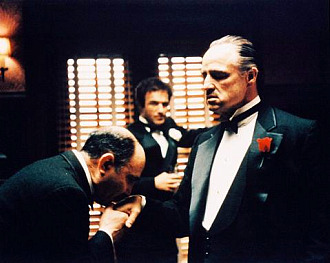
Don’t Go Wobbly, Mike

June 9, 2011

(Guest Post by Matthew Ladner)

Over at the Ed Next blog, Mike Petrilli asks the question: if not the 100% proficiency requirement of NCLB, then what? Mike concludes:

So let’s get specific. Assuming that these 1 million kids remain poor over the next 12 years, what outcomes would indicate “success” for education reform? Right now the high school graduation rate in poor districts is generally about  50 percent. What if we moved that to 60 percent? Right now the reading proficiency rate for 12th graders with parents who dropped out of high school is 17 percent. What if we moved that to 25 percent? The same rate for math is 8 percent. What if we moved that to 15 percent?

To my eye, these are stretch goals–challenging but attainable. Yet to adopt them would mean to expect about 400,000 Kindergarteners not to graduate from  high school 12 years from now. And of the 600,000 that do graduate, we would  expect only 150,000 to reach proficiency in reading (25 percent) and just 90,000 of them to be proficient in math (15 percent).

90,000 out of 1 million doesn’t sound so good, but without improving our graduation or proficiency rates for these children, we’d only be taking about 40,000 kids. So these modest improvements would mean twice as many poor children making it–9 percent instead of 4 percent.

And what about the other 91 percent of our Kindergarteners? We don’t want to write them off, so what goals would be appropriate for them? Getting more of  them to the “basic” level on NAEP? Preparing them for decent-paying jobs instead of the lowest-paid jobs? Driving down the teen pregnancy rate? Lowering the incarceration rate?

Is this making you uncomfortable? Good. If we are to get beyond the “100 percent proficiency” or “all students college and career ready” rhetoric, these are the conversations we need to have. And if we’re not willing to do so, don’t complain when Diane Ravitch and her armies of angry teachers complain that we are asking them to perform miracles.

I agree that the 2014 cliff was utopian and counterproductive, and further that the safe-harbor provision does little to rescue NCLB as originally formulated. As Congress dithers on reauthorization (and when have we ever known Congress not to dither?) the 2014 event horizon approaches. Many states back loaded their proficiency requirements to the 2012-2014 period, and ooops, here it comes.

Our goal should be a system which encourages systemic improvement and academic growth rather than a system which requires “perfection on a deadline.” No one is better at creative insubordination than school administrators, making perfection on a deadline a dangerous proposition.

Rather than set goals, we need to focus on aligning the incentives of the adults in the system to match the interests of children and taxpayers. Let’s not bother with any Soviet style 5 year targets, and focus on incentivizing the behaviors we want, and disincentivizing the behaviors we don’t desire. Rather than bemoan a lack of parental involvement, let us promote policies that strongly encourage it. If we can do this, improvement will follow. Stretch goals should come in the form of raising cut scores over time and other forms of raising the bar. All the while, important incentive pieces like parental choice and financially incentivizing academic success must proceed.

Florida pursued this course, and coincidentally the ur-reactionary Ravitch is down there today. The St. Pete Times reports:

“Particularly in  Florida, it’s a disaster,” she said during a visit Wednesday with the St. Petersburg Times editorial board. “What we are doing is killing creativity, originality, divergent thinking. All the things we need in the 21st century are what we’re squeezing out of a generation of children.”

In a speech today at the Florida School Boards Association annual meeting in Tampa, Ravitch plans to continue her full-throated campaign to “save public education” from its obsession with testing.

“This is institutionalized fraud,” she said, referring to the phenomenon of ever-rising scores. “Because we are graduating just as many kids who can’t read as we did 10 years ago.”

She acknowledged that Florida’s focus on reading has produced real gains. But she said other test improvements may have come about partly from the state’s focus on reducing class
sizes.

Ravitch and her “armies of angry teachers” are living in an alternative universe where she gets to make wild allegations about destroying the creativity of a generation of children without offering any evidence, make claims about education policy (in this case class size) which have been clearly refuted by empirical investigation and label the state which has produced more combined NAEP gains than any other for low-income children “a disaster.” Her point about 12th grade scores may be true in some states, but is not the case in Florida, where FCAT scores, AP passing rates and graduation rates are all improving. Why bother looking anything up if you can simply confidently assert nonsense?

Ravitch is noisily preaching to her reactionary choir as history blows past her, making her the George Wallace of the soft bigotry of low expectations-a sad but ultimately unimportant figure. Meanwhile, the serious conversation of K-12 carries on without her. Getting back to Mike’s post, I think the reactionary he should be worried about is not Diane Ravitch and her army of angry teachers but rather Charles Murray and his potential army of angry taxpayers.

The country after all spends about $10,000 per year per child-amounting to about $50,000 by the end of 4th grade-more if there was public pre-school provided. For that amount of money, which is largely the envy of the rest of the planet, it seems reasonable to teach the vast majority of children how to read. If it can’t be done because of “poverty” then why are we spending so much money going through the motions of pretending to try? Only educating an elite may offend our sensibilities, a Murrayite could argue, but only educating an elite while spending trillions of dollars on maintaining an illusion of educating the uneducable is far, far worse.

Far left meets far right at far gone, so to speak.

Americans are not quitters, and we are not going to give up on public education. Nor are we going to embrace some dorm-room bull session pipe dream of embracing state socialism to fix our education problems, which is just as well, because it wouldn’t work anyway. The grown ups in the K-12 reform conversation, both on the left and right, are pursuing greater productivity for the existing enormous investment in education.

I can forgive Mike for assuming we need some sort of gosplan, and that the gosplan needs to have an assumed rate of failure- he works in DC, and there is something in the water. Focusing on aligning the interests of adults with the interests of children while increasing parental involvement in a variety of ways will produce improvement. We’ve had enough utopian exercises (Goals 2000, NCLB 2014 with Common Core on hot standby). Our focus should be on thoughtful management of incentives in order to produce improvement. This is mostly going to involve sustained hand to hand combat in state capitals- a long hard slog.

Let’s get on with it-sometimes the hard way is the only way. Forget about a master plan or a schedule for improvement Mike- let’s get as much improvement as fast as we can get it.


Nice to see headlines like these…

June 3, 2011

(Guest Post by Matthew Ladner)

The EdFly is a project for the Foundation for Florida’s Future and does a great job of collecting interesting edu-news stories. Here is two good ones for today:

From Louisiana- Bill to Delay School Grades Crushed

From Michigan- Synder: DPS a ‘Failing Format’ Needs Big Overhaul


Governor Mitch Daniels Lays Out His Education Vision at AEI

May 4, 2011

(Guest Post by Matthew Ladner)

Governor Daniels lays out his education reforms at an American Enterprise Institute. If Indiana can sustain these reforms with prolonged high-quality implementation, they can become the new Florida. Indiana 2011 stands as the best reform session since Florida 1999 in my book.


Old Diane Debates Future Self

April 27, 2011

Old Diane Ravitch has now created one of those computer animated videos in which she debates her future self, all done with actual quotes from the once and future Diane Ravitch.  This is the funniest thing to hit the internet since Homestarrunner.

If I were as tech savvy as Current Diane, I’d figure out how to embed the video here.  But since I am a Luddite, just follow this link.

And in case you doubt how tech savvy Current Diane is, consider this:

If it is accurate that Diane Ravitch joined Twitter on July 22, 2009 and if she has “tweeted” 9,403 times since then (as is currently indicated on her Twitter page), then she has tweeted an average 14.62 times per day. That’s once every 57 minutes for every waking hour over the last 643 days.

That sounds normal to me.

[UPDATE:  Old Diane Ravitch helpfully put her debate with Future Self on Youtube.  Now I can embed it in the post.  Thank you, Old Diane.  You are the best (even if you were a blowhard authoritarian and perhaps a lousy scholar back then).


The Wisdom of Old Diane Ravitch

April 25, 2011

It’s kind of sad to see the bizarre behavior of Diane Ravitch as she bathes in the adoration of her new found friends and financiers.  In just the last hour Diane sent out 14 tweets.  14!  Doesn’t she have anything better to do than to shower the world with such nuggets as:

“unions protect teachers against arbitrary firing, defend education budget in Legislature, Congress.

When does she have time to adjust her medication?

But as Matt noted over the weekend, someone has taken to “tweeting” under the name “Old Diane Ravitch,” sending quotations from Ravitch’s earlier writings.  And those claims are almost as hyperbolic in the opposite direction as are her current claims.

All of this raises the same question that I raised before about whether Ravitch is really a great scholar.  She hardly seems like a serious person.  And it seems perfectly possible to me that her current horde of devoted followers are just as delusional as were her previous horde.  They just like her for saying things that they want to hear and have no ability to judge the substance behind her various claims.

While I’ve never been a Ravitch fan and have always found her to be a bit of an authoritarian blow-hard (then and now), here are some tidbits of wisdom from Old Diane Ravitch that are just hilarious in contrast to her current declarations:

Old Diane Ravitch
OldDianeRavitch Old Diane Ravitch
I object to the practice of assigning new teachers to troubled schools, often as a result of union seniority rules.http://nyti.ms/hakLGd
Old Diane Ravitch
OldDianeRavitch Old Diane Ravitch
Thanks for the follow @m_rhee — the next tweet’s for you!
»
Old Diane Ravitch
OldDianeRavitch Old Diane Ravitch
@m_rhee The system we have serves adults, not children. Let’s reverse that formula. http://nyti.ms/fvgSZf
Old Diane Ravitch
OldDianeRavitch Old Diane Ravitch
The public school system would be strengthened by the ability to shut down bad schools. http://bit.ly/eGNq4g
Old Diane Ravitch
OldDianeRavitch Old Diane Ravitch
It is unjust there is no realistic way to force the closure of schools that students and parents would abandon if they could.
Old Diane Ravitch
OldDianeRavitch Old Diane Ravitch
If the current system is successful for only half of students, then new approaches must be sought to help everyone elsehttp://bit.ly/eROkHL
Old Diane Ravitch
OldDianeRavitch Old Diane Ravitch
The challenge to public education today is not to reinforce the correlation between achievement and social class, but to sever it.
Old Diane Ravitch
OldDianeRavitch Old Diane Ravitch
There is a tendency to rationalize poor performance by implying that poverty equals destiny and so no one is to blame for failure.
Old Diane Ravitch
OldDianeRavitch Old Diane Ravitch

@
@DianeRavitch Without testing, there is no consistent way to measure success or failure. http://nyti.ms/hakLGd
Old Diane Ravitch
OldDianeRavitch Old Diane Ravitch

@
@DianeRavitch Future self, I can tell that you are going to be a formidable opponent.
Old Diane Ravitch
OldDianeRavitch Old Diane Ravitch

@
@DianeRavitch Many states are clamoring to reduce class size, but few are grappling with the most important questions.http://bit.ly/fOh3hY
Old Diane Ravitch
OldDianeRavitch Old Diane Ravitch

@
@DianeRavitch Public contracting is often referred to as “privatization,” but that label is misleading. http://bit.ly/eROkHL
Old Diane Ravitch
OldDianeRavitch Old Diane Ravitch
It may be harder to graduate from high school than to become a certified teacher. http://bit.ly/fOh3hY
Old Diane Ravitch
OldDianeRavitch Old Diane Ravitch

@
@MichaelPetrilli I agree. Every school should have the power to select its own teachers, remove the incompetents.http://nyti.ms/gEEwOR
Old Diane Ravitch
OldDianeRavitch Old Diane Ravitch
Texas model has successfully improved the performance of black and Hispanic students, particularly in math and writinghttp://nyti.ms/dUlirj
Old Diane Ravitch
OldDianeRavitch Old Diane Ravitch
Congress should focus on the quality, not quantity, of the nation’s teaching corps. http://bit.ly/fOh3hY
Old Diane Ravitch
OldDianeRavitch Old Diane Ravitch
NYC schools chancellor should have the power to close schools that consistently fail or engage in corrupt practices.http://nyti.ms/gEEwOR
Old Diane Ravitch
OldDianeRavitch Old Diane Ravitch
Every classroom should have a well-educated, knowledgeable teacher. We are far from that goal today. http://bit.ly/fOh3hY

An Offer the States Can’t Refuse

April 20, 2011

(Guest post by Greg Forster)

Fordham desperately wants you to believe that they want “transparency, not accountability” from the feds. Don’t believe a word of it. It’s true only if you define “accountability” as “school-level accountability.”

Fordham’s idea is that the feds get unlimited and unaccountable power to decide what schools should be doing, and then the states are in charge of holding schools accountable for doing what the feds have decreed they should do. It’s “tight-loose”!

The executive summary of the Fordham report – which is the only part of it most people will bother reading, and the Fordham folks know it – mouths just the right reassuring weasel-words to throw you off the scent:

Transparency in lieu of accountability. Results-based accountability throughout the education system is vital, but it cannot be successfully imposed or enforced from Washington. Indeed, the No Child Left Behind experience has shown federal “accountability” in this realm to be a charade. The federal government can’t force states and districts to turn around failing schools or offer students better options. What Uncle Sam can do is ensure that our education system’s results and finances are transparent to the public, to parents, and to educators.

In a comment on Matt’s post this morning, Mike Petrilli shows up to peddle the same line:

Hi everyone. When you look closely at our proposal (if you can get past the preface, Matt!) you’ll see that we’re all advocating more or less the same thing: Mandate “transparency” but not accountability. We can quibble about the details.

That’s pretty hard to believe given that up through the day before yesterday, Fordham was stumping for the federal-government sponsored initiative to create national standards, national curriculum, and national assessments.

And, in fact, you don’t even have to get very far into the main body of the Fordham report (which few will read) before you see how empty these gestures are.

The report considers ten policy questions, giving “the reform realism position” on each one. Question one is: “Should states be required to adopt academic standards tied to college and career readiness (such as the Common Core)?”

Jay has already pointed out that “college and career readiness” is an empty phrase. It’s a blank check that the feds can fill in later.

But let’s set that aside. What is Fordham’s position on the use of federal government power to define what schools should be held accountable for doing?

As a condition of receiving federal Title I funds, require states to adopt the Common Core standards in reading and math, OR to demonstrate that their existing standards are just as rigorous as the Common Core. Standards developed apart from the Common Core initiative would be peer reviewed at the federal level by a panel of state officials and content-matter experts; the panel itself (not the secretary of education) would have the authority to determine whether a state’s standards are rigorous enough.

So adopting Common Core is just about as “voluntary” for the states as signing Johnny Fontane was for Jack Woltz.

Governor Walker the morning after Wisconsin opts out of Common Core

How naive do these people think we are?


The Fordham Report is Here. Time to Party!

April 19, 2011

The Fordham report on renewal of ESEA has been released and it is time to party!

Following the rules of our Fordham report drinking game you will have to consume 7 shots of your choice; one for each time “tight-loose” is used in the report.  33 times you will need to consume whatever the Gates Foundation and U.S. Department of Ed mandate while declaring “I do this of my own free will;” one for each usage of “Common Core” in the report.  You need to shotgun a Pabst Blue Ribbon for the 1 usage of “race to the bottom” in the report and consume 8 Milwaukee’s Best for the 8 times “Race to the Top” is used.  That’s 42 total “consumptions.”

I whiffed on predicting the usage of “smart-[blank].”  I’m sorry to say that there was nothing very smart in the report.  I also entirely failed to expect the repeated usage of the phrase, “reform realism.”  It has alliteration!  What could be more persuasive than that?  I guess that is why it appears 21 times in the report.

Greg did accurately anticipate a slew of hemisphere fallacies, where they compromise between the view that the world is a sphere and the world is flat by saying that the world is a hemisphere.  The particular manifestation of the hemisphere fallacy in this report is that they repeatedly frame the debate as saying that some people think that the federal government should mandate something (standards, cut scores, etc…) and some people think that the federal government should mandate nothing in exchange for the resources it provides.  Fordham takes the middle ground of saying that the feds should mandate standards, cut scores, etc… or allow states to prove to a panel of experts that their alternative approach is at least as good.

Where to begin?  First, in practice the Fordham approach is equivalent to the feds mandating standards, cut scores, etc… If I told you that you had to eat the food the government provides or prove that your choices were equally nutritious, most people would end up just eating whatever the government provided.  The burden of proving the merit of your alternative choices would effectively compel you to comply with the mandate.

Second, if there is one thing we do not need in education policy, it is more committees of so-called experts.  Fordham proposes a bizarre procedure by which the expert panelists could be selected.  States would choose two members, the secretary of education would propose two more, and those four would choose an additional three panelists.  And if that is not convoluted enough, the panels would need 5 votes to decide anything.  This doesn’t sound like a committee of experts.  This sounds like politics by other means.  And given how complicated and bizarre this procedure is, it is even more likely that states would simply comply with the mandate, as suggested above.

Third, as is usual with hemisphere fallacies, Fordham frames the alternative “extremes” as caricatures so that their middle position seems like the only sensible alternative.  It isn’t.  I support a limited role of the federal government in education to facilitate the education of students who are significantly more expensive to educate, such as disabled students, English language learners, and students from very disadvantaged backgrounds.  Only the federal government can ensure this type of “redistributive” policy in education because if localities attempted to serve more expensive students they would attract those expensive students while driving away their tax base.  As Paul Peterson described in his classic book, The Price of Federalism, this is the only appropriate role of the federal government in education.  So, the federal government mandates that schools serve these categories of students while also providing additional resources to facilitate that the services will be provided.  This redistributive effort describes the bulk of what the federal government has done (and should do) in education.

If we are concerned that local schools are failing to serve these categories of students adequately we can address (and have imperfectly addressed) that through legal remedies.  Families, at least in special ed, can go to the courts if their schools fail to provide an appropriate education with federal funds.  We could expand that model to the other categories of federal involvement, but I think that approach is unwise.  Instead, I would favor providing the federal funds directly to students in these redistributive categories so that they would have economic leverage over schools to ensure the provision of appropriate services.  If schools fail to address student needs, they should be able to take those federal funds to another school, public or private.

The other phrase that I should have included in our drinking game is “college and career readiness.”  That concept is referenced 44 times in the new Fordham report.  It is the criterion by which expert panels need to judge standards, cut scores, etc… It is the goal of the entire Fordham approach (and remarkably in sync with the Gates Foundation in using a phrase dozens of times that was virtually unheard of a decade ago).

The only problem is that I have no idea what “college and career readiness” means.  The Fordham folks have no idea what that phrase means.  No one knows what college and career ready means.  It has no clear, technical, objective definition.  It is yet another political slogan substituting for an idea with actual substance, sort of like “reform realism” or “tight-loose.”

And yet this empty slogan is the entire purpose of the nationalization project on which Fordham-Gates-AFT-U.S. Dept of Ed are embarked.  Only in the D.C. bubble of  power-hungry analysts who provide no actual analysis could we launch a radical transformation of our education system with little more than a series of empty slogans.  It’s enough to make you drink.  Er, I mean consume.

(edited for clarity)


Tight-Loose Imperial Vendor Management

April 18, 2011

(Guest post by Greg Forster)

Darth Vader, pioneer of tight-loose management practices:

He doesn’t tell you exactly where to bring the fleet out of light speed, he just insists that it be the correct point for pulling off a successful surprise attack on the rebel base. If you pick the wrong point, that’s your fault – and that’s what the assessment and accountability systems are there for.

You have failed me for the last time, Governor Walker!

But for some reason I have the feeling that when the new federal tight-loose approach to standards, curricula and assessments is implemented, it will look a whole lot more like this:


The Tight-Loose Sales Force

April 18, 2011

(Guest post by Greg Forster)

Continuing the series, I shamelessly rip off a line from an old Dilbert comic (which I can’t find online or I’d just post it).

“Welcome to the Tight-Loose Sales Force. We don’t ask you to do anything unethical, but we set the sales quotas so high that you basically have no choice. Any questions?”


Tight-Loose Travel Agency

April 18, 2011

To illustrate how repeating a slogan like “tight-loose” does not necessarily mean that a policy will be tight on the ends while loose on the means, we are featuring ads for our new Tight-Loose line of businesses.

In this post we feature the Tight-Loose Travel Agency.  When you are required to get from New York to London in less than 6 hours, we can arrange to get you there in any way you like.  You can take a ride on a rocketship, jump through a kink in the time-space continuum, ask Scotty to beam you there… whatever you prefer.  When you are tight on ends, we make sure that you are loose on means.

Think about this as you read the new Fordham report, being sure to “consume” each time tight-loose is repeated.  If we nationally mandate standards, curriculum, and assessment, how much meaningful choice over means will people really have?

UPDATE — Or, as is more likely, if you are required to walk across the street rather than travel to London, the Tight-Loose Travel Agency can still handle all of your travel needs.  We know that you’ll voluntarily and without reward or compensation want to travel around the entire world before arriving across the street.  Our rocketship, time-space continuum kink, and Star Trek beam will all be here at your disposal.  Remember even with really low ends we are still loose on means.