The Way of the Future in Ed Reform Advocacy

August 11, 2012

Matt has been a leader in noting how technology will change the way we educate students in the future.  But technology is already fundamentally changing how people advocate for their preferred reforms.  Documentaries and movies are displacing print forms of advocacy at a rapid clip.

We’ve seen documentaries like Waiting for Superman and Race to Nowhere have far greater impact than any blog, article, or book.  And now dramatic films, like Won’t Back Down are making the case for parent trigger laws more powerfully than any print argument.  For better or worse, ed reform is going Hollywood.

In part this shift of ed reform advocacy to film is a manifestation of my earlier argument that the intellectual debate over the broad principles of education reform is over.  A broad consensus among elites has developed that lack of resources is not the central problem with our education system and that simply pouring more money into schools will have little effect.  There is also a broad consensus that parents should have some choice in where their children go to school and that those choices are not only fair to parents and children but also the competition they produce will help improve schools.  These ideas have been found in speeches given by President Obama, in the Democratic Party’s platform, and in liberal establishment newspapers like the Washington Post and not just in the conferences organized by the American Enterprise Institute.  And the collection of athletes and other celebrities joining the ed reform party is rapidly growing.

In addition, the teacher unions are finally being treated as the special interest group they are rather than as credible players in the discussion over the merits of various education policies.  When Campbell Brown takes on the unions the game is over.   

Of course, the unions are still quite powerful and the battles over each policy and the regulations that are appropriate will continue for a long time, but the big intellectual war over ed reform is over.  Similarly, Brown v. Board of Education marked the end of the big intellectual war over racial equality in America, but the battles over the best policies to promote equality have and will continue to rage.

The end of the big intellectual war over education reform has opened the door to Hollywood’s elites to join the fray.  Guess Who’s Coming to Dinner came along after the dust from Brown had settled, not before.  Similarly, the wave of Hollywood films on ed reform is just starting.

And it’s not just Hollywood that’s getting into the ed reform act.  Last night I watched a Bollywood film, Three Idiots, that makes the case for a more student-centered education.  I’m not saying that it is a great film or that it’s argument is well-made.  I’m just saying that technology is being brought to ed reform advocacy and movies are playing an increasingly important role.  And it is worth noting that Three Idiots broke records for the highest grossing Bollywood opening and highest overseas revenues.

You can watch the entire movie for free on YouTube, but here was the most entertaining part.  Don’t worry about the lack of subtitles in the clip since the words don’t really matter.  Once people can see the beautiful colors and fun of ed reform advocacy in a film, why will they ever read a blog post again?


The Dark Knight Rises: The Mythology of Our Time

August 1, 2012

I’ve been on a Greek mythology kick this summer.  If the desire to create stories, like those of classical mythology, is universal, what are the myths of today?   I’d argue that superhero stories are the modern equivalent of classical mythology.

They are basic stories and characters that are familiar to almost all of us.  The artist doesn’t invent the characters or their stories, he provides his own twist with his own telling of these familiar stories.  Similarly, Sophocles did not invent the story of Oedipus, Euripedes did not invent the story of Iphigenia, etc… Each play or each telling of an epic poem was like each “re-boot” of the Batman, Spiderman, or Superman sagas — changing the emphasis and minor plot points in order to create a new meaning from a familiar character and story.

Greg has suggested this connection between modern superhero stories and classical mythology by trying to connect current directors and writers with their ancient equivalents.  But I want to take the point even further.  Not only are the modern makers of superhero movies like the playwrights of antiquity, their stories serve the same purpose for us and do so in very similar ways.  Neither the new Batman series nor others attempt to capture realism in their plots.  As real as they make the action and special effects, the plots and characters are obviously unrealistic.  We only accept them because they fit within the genre of a hero story — with their defining flaws, archetype villains, and endurance for suffering and sacrifice.  As ironic and post-modern as we like to think of ourselves, we are as willing to suspend disbelief for hero stories as were the ancients.

In addition, the plots of the Christopher Nolan Batman as well as other superhero sagas are designed to make sense of the world and offer some moral guidance, just as ancient myths did.  (SPOILER ALERT)  The Nolan Batman evokes images of our post 9-11 experience with terror, the need for security, and the price we pay for that need.

In his earlier posts, Greg suggested that the message of Nolan’s Dark Knight is that political and social order may require a lie.  The new movie makes clear that lies have their consequences and are ultimately self-defeating.  And as the earlier Dark Knight films emphasized the need not to be paralyzed by fear, the current movie suggests the opposite danger of being completely without fear.  And in earlier movies we learned that the rich and powerful were fundamentally corrupt, but in the new movie we see that rule by The People is at least as horrifying.  And a final paradox– in previous movies Batman learned that his success requires not trusting others because they are unreliable, but in the current movie we see that success ultimately requires trusting others despite their unreliability.

Perhaps the moral of Nolan’s Batman is also drawn directly from the Greeks.  We know that “Carved into the temple [to Apollo at Delphi] were three phrases: γνῶθι σεαυτόν (gnōthi seautón = “know thyself“) and μηδέν άγαν (mēdén ágan = “nothing in excess”), and Ἑγγύα πάρα δ’ἄτη (eggýa pára d’atē = “make a pledge and mischief is nigh”),[10]   I’m not sure Nolan could have summarized the messages of his Batman trilogy more succinctly.


Random Pop Nationalization

July 13, 2012

“Don’t support national standards? Here is a pair of clown shoes to wear!”

(Guest post by Greg Forster)

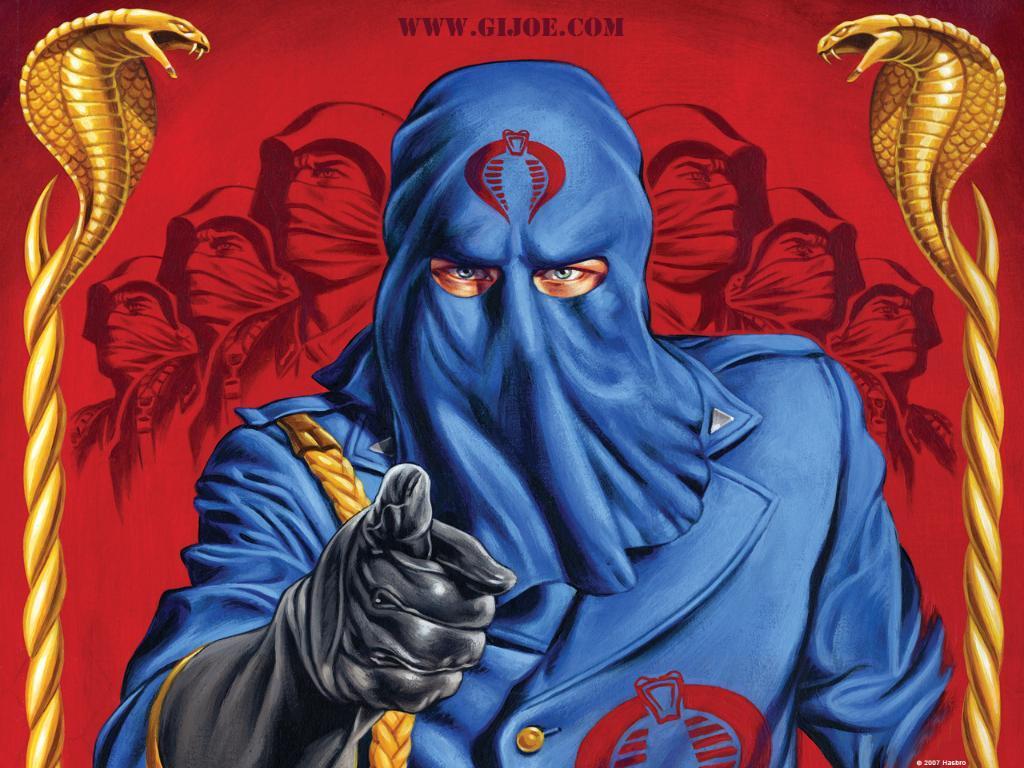
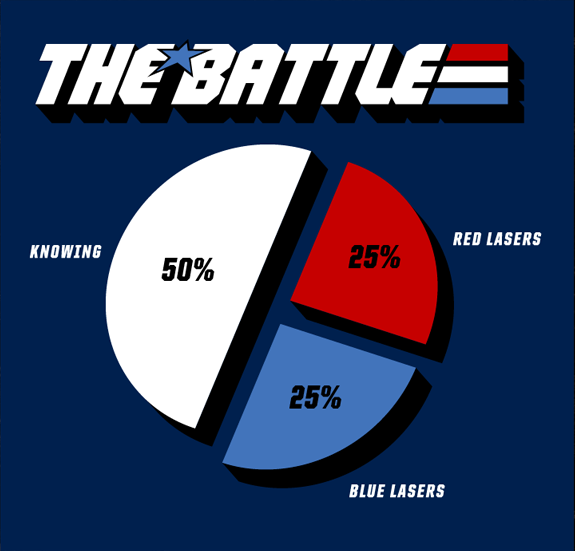
NRO is on fire this morning. An awesome appreciation of the classic G.I. Joe series from Loren Smith (“When I get my hands on those Red October whackos, I’ll make ’em wish Karl Marx was Groucho’s brother!”) and a call to arms from Sally Lovejoy on how the Obama administration has made a lot of progress toward nationalizing education (“With the approval of two more state waivers of the NCLB Act, over half the states (26) have exchanged one set of federal mandates for another, moving us closer to a nationalized educational system.”).

Coincidence? Son, when COBRA is involved, there are no coincidences.

NOW YOU KNOW! And…

HT


Friday Fun

March 9, 2012

Pass the Clicker: Awake

March 2, 2012

NBC has a new series, Awake, on Thursday nights at 8 CT/ 9 ET that has the potential to fill the void in our blog pop culture discussion left by the departure of Lost.  The premise of Awake is that homicide detective, Michael Britten, is in a car crash involving his wife and son.  He then faces two realities.  In one his son survives and his wife is killed and in the other it is the other way around.  He goes to sleep and wakes up in the other reality.

In both realities he sees a therapist who tries to convince him that he is simply dreaming the other reality.  Each therapist is very persuasive.  But both scenarios feel equally real to Britten.  And he’s not entirely sure he wants to give up being able to continue his relationships with his wife and son, even if they occur in alternative and potentially illusory realities.

Besides the engaging premise, the show provides some nice twists to make it all a little more complicated and interesting.  Events in one reality help provide clues to solving crimes in the other.  And the varying personalities of his therapists seem to reflect what he is lacking in each scenario: a stern and confrontational figure or a compassionate and nurturing one.  The varying color themes in the alternative realities add a nice visual touch.

Of course, many promising premieres have fizzled quickly (e.g. Flash Forward or Once Upon A Time), but let’s hope Awake holds up and fills our geeky need for pop culture blog posts.


Oh No…There Goes Tokyo…

January 21, 2012

(Guest Post by Matthew Ladner)

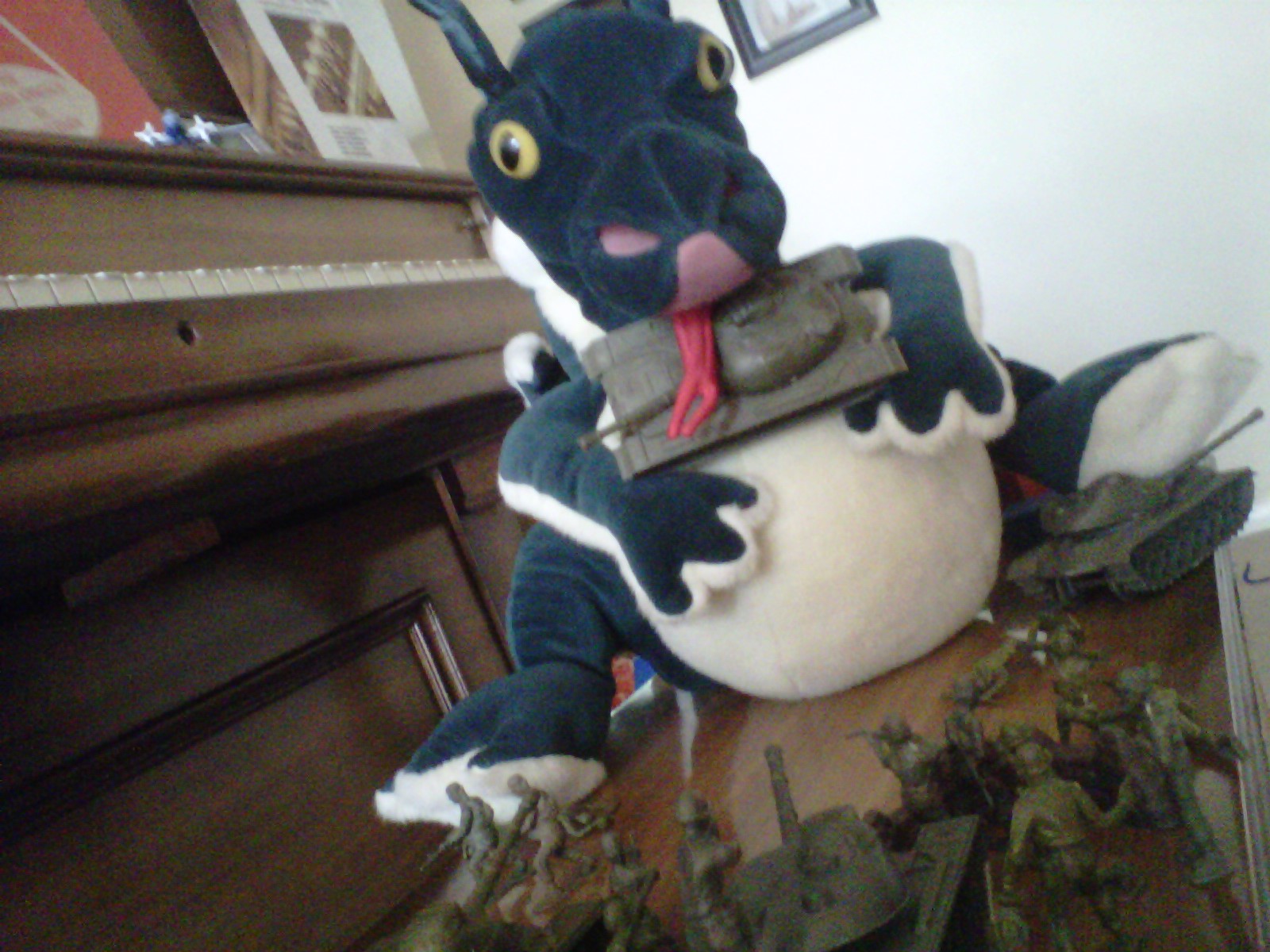
So my children have acquired a taste for cheesy pop culture. It’s in their DNA. Last summer my son Benjamin watched the epic battle between Captain Kirk and the Gorn from the original Star Trek series and pronounced it as “Kirk versus the Halloween Costume.”

Last week I allowed them to watch a couple of Godzilla flicks, which led to the reactment on the piano bench you see above.

Go, Go Godzilla!!


Beatles With Lightsabers — Simply Awesome

January 11, 2012


Crystal Bridges Art Museum Opening in Arkansas

November 9, 2011

The Crystal Bridges Museum of American Art (pictured above) is opening this week in Bentonville, Arkansas.  Much has already been written (see this for example) about the significance of this new museum and I doubt that I could add much to that discussion.

What I can do is highlight an artist, Thomas Hart Benton, whose work I love and is part of the Crystal Bridges collection. Benton’s work, such as Plowing it Under pictured below, was part of the Regionalist art movement in the 1930s.  As Hart described the Regionalist movement in his autobiography:

We came in the popular mind to represent a home-grown, grass-roots artistry which damned ‘furrin’ influence and which knew nothing about and cared nothing for the traditions of art as cultivated city snobs, dudes, and aesthetes knew them.  Regionalist we became and the victims thereby of a lot of odd and inaccurate definitions which the word suggested…I [became] just an Ozark hillbilly.  We accepted our roles.

It is strange that some have criticized Crystal Bridges for drawing great works of art away from big coastal cities (see this for example) to semi-rural Arkansas.  More accurately, the big coastal cities often drew great artists away from mid-America.

Thomas Hart Benton was born in Neosho, Missouri — just 40 miles from Crystal Bridges.  The city of Bentonville Arkansas was actually named after Thomas Hart Benton’s great uncle.  Benton painted and taught in New York and Paris, but eventually settled back in Kansas City.  It is entirely fitting that his work should be on display in a beautiful gallery in the heart of America.

In case you are ever in Kansas City, be sure to visit the Nelson-Atkins Museum, where you’ll find Benton’s wonderful take on the story of Persephone (pictured below).


Save a Pretzel for the Gas Jets

November 1, 2011

There’s a hilarious series of videos of “bad lip reading” of presidential candidate’s speeches.  Check out these to get you started.  And for your information, I am in 100% agreement with Perry that we should “save a pretzel for the gas jets.”


Random Pop Culture Apocalypse: Harry Potter vs. Scooby Doo Mashup

July 17, 2011

(Guest Post by Matthew Ladner)

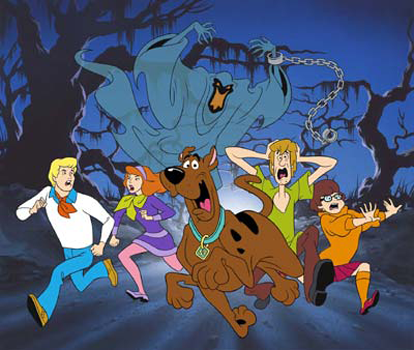
Shaggy: Zoinks, like I don’t know that it was a good idea to have the mystery machine shipped to England man! The food here is bad enough to keep even Scoob from wanting to eat!

Scooby: No ray! Find Indian food again!

Velma: Look guys we’re here! Hogwarts castle!

Professor Mcgonagall: Welcome to Hogwarts, and thank you for agreeing to help us. We’ve had some very strange things going on. Our tourist revenue is down 60% since the rumors started about Hogwarts being haunted began. Tom will show you to your rooms, and I will meet you in the main dining hall at 7 pm.

Shaggy (walking through Hogwarts): Like this place is really creepy man! Did something in that painting just move?!?

Fred: Isn’t it bad enough that you are a hippie with the constant munchies? Do you have to be afraid of your own shadow as well?

Daphne: FRED!

Fred: I’m sorry, that’s been building up for 40 plus years.

Shaggy: Yeah, well, like whatever man- at least you won’t ever see me wearing a scarf!

Tom: Here are your rooms, I’ll be back at 6:45 to escort you to the dining hall.

Velma: thanks Tom!

Shaggy (in room with Scooby): Like this place gives me the creeps Scoob!

Scooby: Zeah, me too!

< Enter Voldemort through a secret door>

Shaggy: Like it is a super-pale creepy monster without a nose! Let’s get out of here Scoob!

Voldemort: Idiots! I have a nose, it is just really flat! Now feel my wrath!!!!

Shaggy and Scooby: ZOINKS!!!!!!!!!

<Extended chase scene ensues>

<Chase ends in Voldemort’s capture. Just go with it…>

Fred: This Voldemort wanted to drive Hogwarts out of business so he could buy it for a song out of foreclosure! Now let’s find out who Voldemort really is!

TOM RIDDLE!!!!!!!!!!!!!!!!

Shaggy: Like no man, it’s “I would have succeeded if it hadn’t been for those meddling kids and their dog! ” If Scoob hadn’t destroyed your horcruxes while running around the castle, we never would have captured you!

Scooby:

SCOOBY DOOBY DOO!!!!!!!!!!!!!