(Guest post by Greg Forster)

You’re all clear, kids!

Now let’s blow this thing and go home!
 3 Comments |
  politics, vouchers | Tagged: Best of Greg, Greg Forster, Washington DC |
  Permalink
 Posted by Greg Forster

(Guest post by Greg Forster)
Jay Mathews and I are rebooting our somewhat troublesome bet. We’re starting over from scratch. This time, rather than counting legislative chambers, we’re going to count “enactments” of school choice. Any time a new school choice program or expansion of a school choice program (defined the same way as before) is enacted, that counts as one.
I have to get to seven enactments in 2011 to win.
We’re currently at four:
1. AZ new program
2. AZ program expansion
3. CO new program
4. UT program expansion
I’m getting out a little ahead of the Arizona governor, here, but those bills are both slam dunk at this point.
I warned Jay that Indiana is looking pretty good, so it’s really a fight over whether I can get two wins in places like Wisconsin, Oklahoma and D.C. He’s cool with that.
Commence handicapping!
7 Comments | politics, vouchers | Tagged: Donkey Kong, Greg Forster, Jay Mathews | Permalink
Posted by Greg Forster

(Guest post by Greg Forster)
For the second time in my life I have braved the cutting edge of the very latest of yesterday’s technology, producing another pod-type casting module out there on the big Inter-Net system of tubes. Ben Boychuk of School Reform News interviews me on Win-Win and my ironically fated bet with Jay Mathews, the voucher compromise in Indiana, the Obama administration’s lies about voucher research, and more.
Leave a Comment » | politics, vouchers | Tagged: Ben Boychuk, Greg Forster, School Reform News | Permalink
Posted by Greg Forster

(Guest post by Greg Forster)
I made the bet thinking I had three. I turned out I had five. By the time the bet went live on the blog I had seven.
Then, in the comments, Matt brings to my attention that both Utah houses passed a major financial expansion of the Carson Smith voucher program on March 10. And Scott notes that Minnesota’s House passed a new voucher program on March 30.
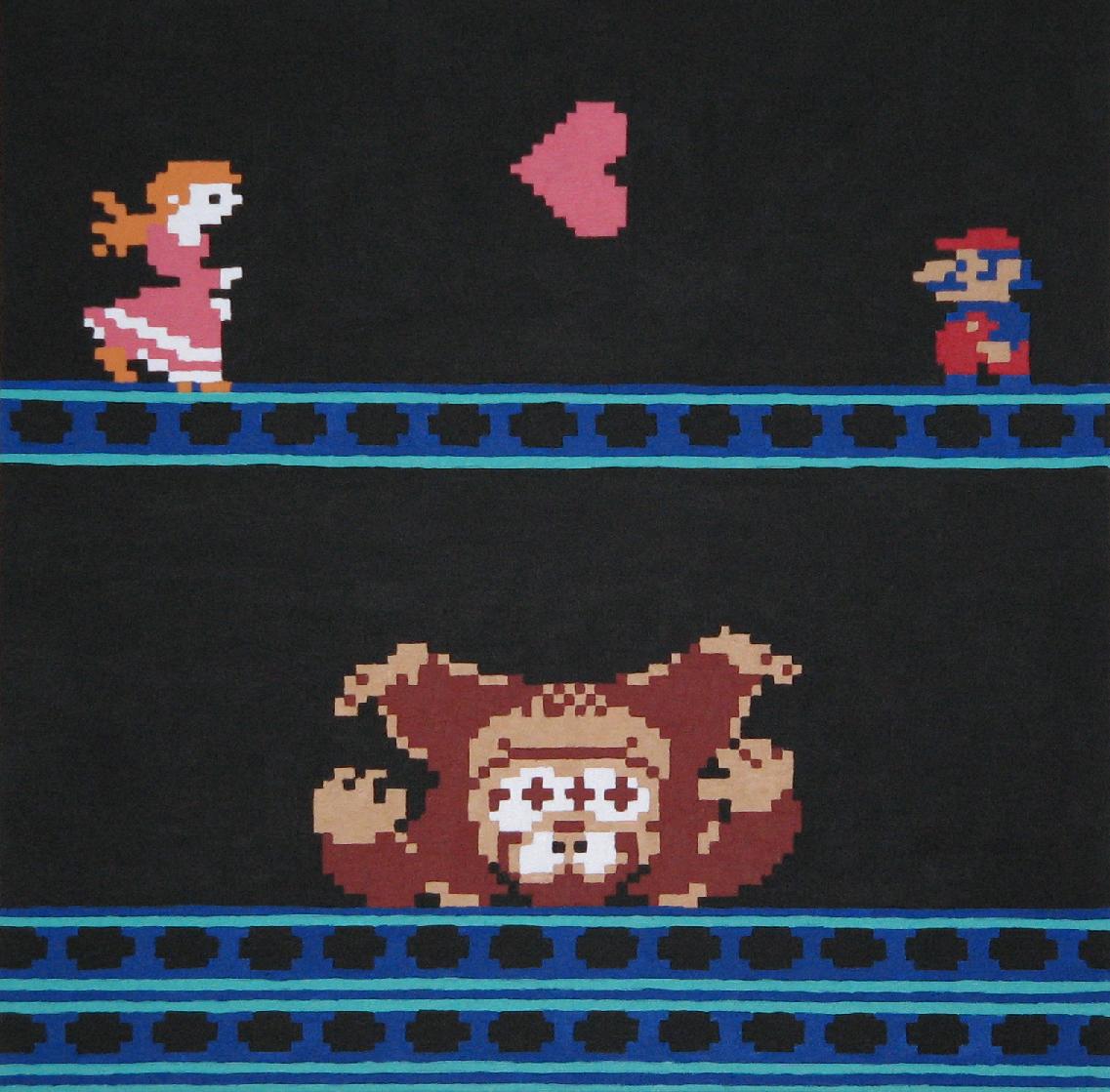
I won the bet in half a day!
6 Comments | politics, vouchers | Tagged: Donkey Kong, Greg Forster, Jay Mathews | Permalink
Posted by Greg Forster

(Guest post by Greg Forster)
Last week I challenged Jay Mathews of the Washington Post to a bet:
Tell you what, Jay. Let’s make a bet. You say there won’t be “a wave of pro-voucher votes across the country”…[W]e’ll set a mutually agreed on bar for the number of voucher bills passing chambers this year. If we hit the bar, you have to buy me dinner at a Milwaukee restaurant of my choice. But if we don’t hit the bar, I buy you dinner at a DC restaurant of your choice. That’s pretty lopsided in your favor, dollar-wise. How about it?
Today I’m proud to announce that Jay has accepted the bet!
The terms, exactly as I offered them to Jay over e-mail:
Here’s what I propose. I win the bet if at least ten legislative chambers pass bills in 2011 that either create or expand a private school choice program. Otherwise you win. Just based on my experience in the movement, I think if we got that many chamber passages, it would mark 2011 as a banner year for choice.
Definitions: A “private school choice program” is a program that funds attendance at private schools using public funds, either directly (by vouchers) or indirectly, through the tax code (as is the case with many school choice programs these days). That means charter schools don’t count. This is the definition we use here at the foundation. “Expanding” a program means increasing the eligible student pool, or increasing the amount of funds available to support the program (on either a per-student or global basis). That’s in your favor because I’m agreeing not to count, say, relaxation of burdensome restrictions on participating schools as an “expansion.”
Jay’s succinct response: “It’s a bet!”

Well, I didn’t plan it this way, but during the time I was working out the details and deciding how many programs to propose for the bet, and then communicating with Jay, there were a few votes on school choice programs!
When I proposed the bet to Jay earlier this week, I had missed the votes in Arizona a couple weeks ago. I thought we only had three of the ten passages needed for me to win the bet – the Virginia House, the Oklahoma Senate and Douglas County, Colorado.
When Matt clued me in on the Arizona votes, I realized that we were already at five out of the ten passages needed for me to win:
1. VA House new tax-credit scholarship program (February 8 )
2. AZ Senate tax-credit program expansion (March 8 )
3. AZ House tax-credit program expansion (March 10)
4. Douglas County, CO new voucher program (March 15)
5. OK Senate new tax-credit scholarship program (March 16)

Then what happens?
6. IN House new voucher program (March 30)
7. U.S. House voucher expansion (March 30)
We got to seven votes before I even announced the bet! So much for my plans to make this a big, drawn out, suspenseful thing. The whole shooting match is going to be over before I even get three blog posts out of it. And here I made these cool ruler graphics and everything!
Here’s one other thing that’s bothering me. Was it unethical for me to make the bet with Jay without revealing to him that Indian is the official ethnic food of Jay P. Greene’s Blog?
15 Comments | politics, vouchers | Tagged: Best of Greg, Donkey Kong, Greg Forster, Jay Mathews, Washington Post | Permalink
Posted by Greg Forster
In a new study released today by a team of researchers led by Josh Cowen at the University of Kentucky, we learn that voucher students in Milwaukee are more likely to graduate high school and go to a four year college than their counterparts in the Milwaukee Public Schools. The report concludes:
MPCP [voucher] students were more likely to have enrolled in a four year college, even after accounting for race, gender and prior achievement. They were less likely to have dropped out of high school or remained enrolled after four years. These differences may be partially explained by family background characteristics such as parental education and income. They do not appear to be related to private school “creamskimming” of students into or out of MPCP between 8th and 9th grade.
Attending a private school with a voucher resulted in about a 7 percentage point improvement in the probability of attending a four year college. Considering that is a move from about 32% to 39% attending 4 year college, it is a big effect.
And this attainment benefit is consistent with the findings of the U.S. Department of Education’s official evaluation of the DC Opportunity Scholarship voucher program, led by my colleague Patrick Wolf, which found:
The offer of an OSP scholarship raised students’ probability of completing high school by 12 percentage points overall (figure ES-3). The graduation rate based on parent-provided information was 82 percent for the treatment group compared to 70 percent for the control group. The offer of a scholarship improved the graduation prospects by 13 percentage points for the high priority group of students from schools designated SINI in 2003-05 (79 percent graduation rate for the treatment group versus 66 percent for the control group).
Despite these positive results, the Obama Administration issued a statement opposing the continuation and expansion of the DC voucher program, on which the U.S. House is scheduled to vote today. They boldly (and falsely) declared:
Private school vouchers are not an effective way to improve student achievement. The Administration strongly opposes expanding the D.C. Opportunity Scholarship Program and opening it to new students. Rigorous evaluation over several years demonstrates that the D.C. program has not yielded improved student achievement by its scholarship recipients compared to other students in D.C.
Given the lack of intellectual honesty on the part of the Obama Administration in declaring that vouchers have no benefits for students even after rigorous research (including the official evaluation they released!) finds otherwise, confirms the danger of entrusting any additional authority over eduction policy in the national government. They will lie, cheat, and crush their opponents, so why would we want to give these folks control over a nationalized set of standards, curriculum, and testing.
6 Comments | politics, research reports, vouchers | Permalink
Posted by Jay P. Greene
(Guest post by Greg Forster)
At the beginning of a very kind column praising my new report on the empirical evidence on vouchers, Jay Mathews indicates that for some strange reason, he’s afraid of me and my school-choice posse:
Do I really want to get beaten bloody again by school vouchers devotees?
Come on, Jay. I’m not a dangerous man. I would never beat anyone bloody. I’m soft and harmless. I’m a perfectly ordinary bunny rabbit. A cute, fluffy, harmless bunny rabbit.

Well, okay, I have been known to bite. With big, sharp, pointy teeth. But just to stretch my repertoire, I’ll take the soft approach this time.
Jay acknowledges the evidence:
Greg Forster, a talented and often engagingly contrarian senior fellow at the Foundation for Educational Choice, has expanded a previous study to show that nearly all the research on vouchers, including some using the gold standard of random assignment, has good news for those who believe in giving parents funds that can be used to put their children in private schools. Students given that chance do better in private schools than similar students do in public schools, the research shows. Public schools who are threatened by the loss of students to private schools because of voucher programs improve more than schools that do not have to worry about that competition, the research also shows.
Yet he thinks we shouldn’t support vouchers because . . . well, I’ll let him explain:
I see nothing morally, economically or politically wrong with vouchers. I have never thought that they drained public schools of vital resources. I think a low-income family that gets the chance to choose a private school that suits their child should do so.
But I think such programs have limited growth potential because there are never going to be nearly enough empty spaces in private schools to help all the students who need them. Forster and other voucher advocates say this will change when voucher programs become universal. Then, entrepreneurs will be able to convince investors that they can create a new generation of private schools with the new wave of voucher students.
I think they are wrong about that. The young educators who have led the robust growth of charters prefer to work in public schools. Many voters will continue to resist sending their tax dollars to private schools, particularly with the pressures to cut back government spending that are likely to be with us for many years.
So that’s two arguments. Entrepreneurial startups won’t attract talented education refomers, and voters won’t support the programs.
It’s true that the leading-edge school reformers, the people Matt calls “the cool kids,” prefer to work in public schools. As I’ve written before, you can already see how that strategic choice is leading to dead end after dead end. The school choice movement needs to start building bridges to these people and showing them that in the long run, only school choice can provide the institutional support they need to sustain the kind of reforms they want.
As for politics, school choice has always polled well (for a discussion of the research and methodological issues, see here). The American people are not, in fact, uncomfortable with allowing religious institutions to participate in publicly funded programs on equal terms alongside other institutions. There was a time when they were (see “amendments, Blaine”) but that bigotry has receded.
Oh, and as for pressure to cut spending, school choice saves money. Tons and tons of it. That has always been one of our biggest assets in the political fight – that’s why the Foundation for Educational Choice produces state-focused fiscal studies year after year, to show each state how school choice would save taxpayer money while delivering better education.
The political obstacle to choice has never been the public at large. It has always been the blob, with its huge piles of cash fleeced indirectly from taxpayers, and (perhaps more important) its phalanx of highly disciplined volunteers and voters. A minority of the voters can control the outcome if they are single-issue voters when the rest of the public takes into account the whole panoply of problems confronting the body politic. And when you threaten to derail a gravy train, it tends to make the passengers into single-issue voters.
But the tide is changing. The cynical selfishness of the blob is more and more visible to more and more people. Reform has already won the war of ideas. That does not mean the ground war is won. The unions are still big, rich, and powerful. But they are no longer sacred. They have lost their mystique. No one thinks the unions speak for kids anymore; no one even thinks the unions speak for teachers anymore. And in the end, that’s what counts.
As Jay has put it, the unions are now the tobacco lobby. Or, as I have put it, they’re Bull Connor. That’s why school choice is now poised for a series of big political wins.
Jay is skeptical – pointing to the greater success of charters, he thinks vouchers won’t make big gains this cycle. As readers of JPGB know, the answer to the charter argument is that vouchers make the world safe for charters. As for whether vouchers make big gains this year, we’re about to find out.
Tell you what, Jay. Let’s make a bet. You say there won’t be “a wave of pro-voucher votes across the country.” Me and my posse at FEC will go back and count up the number of school choice bills (private choice, not charters) that passed state chambers in 2008-2010. Then we’ll set a mutually agreed on bar for the number of voucher bills passing chambers this year. If we hit the bar, you have to buy me dinner at a Milwaukee restaurant of my choice. But if we don’t hit the bar, I buy you dinner at a DC restaurant of your choice. That’s pretty lopsided in your favor, dollar-wise. How about it?
11 Comments | competitive effects, instructional reform, politics, research reports, vouchers | Tagged: Greg Forster, Jay Mathews, Washington Post | Permalink
Posted by Greg Forster

(Guest Post by Matthew Ladner)
The race is on to make a Hitler meltdown video for Wisconsin public sector unions– funniest one gets a highly coveted JPGB No-Prize!
In the meantime, here is a good one of the housing bubble.
1 Comment | politics | Tagged: Wisconsin Standoff | Permalink
Posted by matthewladner

Jack Jennings, the former Democratic staffer for the House Education and Labor Committee and current head of the Center on Education Policy, has a piece on Huffington/AOL/whatever that thing is. In case you aren’t familiar with his oeuvre you can read Greg’s “Check the Facts” on Jennings in Education Next a few years back.
In making the case for more federal spending on education and for national standards and assessments, Jennings asks:
How can the country raise academic achievement if 14,000 local school districts are each making their own decisions on most key aspects of education?
I thought about answering with evidence on how choice and competition among school districts improves educational outcomes from people like Caroline Hoxby, Henry Levin, and yours truly. But then I remembered that evidence is not really Jennings’ thing.
It might be better to answer Jennings’ question by slightly re-wording it to fit different contexts and see if it still seemed like a reasonable question. Here we go:
How can the country raise gross domestic product if 29.6 million businesses are each making their own decisions on most key aspects of the economy?
Or how about this:
How can the country reduce crime if there are more than 17,000 law enforcement agencies each making their own decisions on most key aspects of crime-prevention?
This is getting easy. Here’s another:
How can the country make good laws if 535 members of Congress are each making their own decisions on most key aspects of public policy?
Why would Jennings think that he is making a persuasive argument with a rhetorical question that is rebutted by rigorous research and seems silly when transplanted to other situations? Sadly, Jennings rhetorical question may win some converts and it does so not by being reasonable or by being consistent with research findings. Jennings uses this rhetorical question because it appeals to people’s desire for power, not their desire for evidence or logical consistency. When Jennings asks how we can make schools better with so many independent school districts, he is appealing to the reader’s fantasy that they or their allies might be able to dominate the enhanced central authority that would substitute for so many independent school districts.
Inside most public policy wonks is a mini-dictator, waiting to come out. They dream about how things ought to be organized… if only they were in charge. The drive for Common Core national standards is built on appealing to these mini-dictator fantasies.
Of course, if the mini-dictators realize that others are striving to control the central authority, they may turn against the idea if they think they are unlikely to be the ones in charge. That is our best hope. It is impossible to remove the thirst for power, but it is possible to (as the Founders realized) pit ambition against ambition in the hope that it will prevent tyranny.
(edited for typos)
16 Comments | instructional reform, money myth, politics | Tagged: Jack Jennings | Permalink
Posted by Jay P. Greene

The editors at Education Next have two essays on the state of education reform that remind me of Woody Allen’s never-delivered university commencement speech:
More than at any other time in history, mankind faces a crossroads. One path leads to despair and utter hopelessness. The other, to total extinction. Let us pray we have the wisdom to choose correctly.
In one essay, Paul Peterson, Marci Kanstoroom, and Chester Finn reject my rosy assessment of progress in the war of ideas about education reform, saying “It’s way, way too early to declare victory. Atop the cliffs and bastions that reformers are attacking, the opposition has plenty of weapons with which to hold its territory…. It’s dangerous to think a battle is over when it has just begun.”
In the other essay, Frederick Hess, Martin West, and Michael Petrilli go even further in their gloom, arguing not only that the war has hardly begun, but that the reform warriors are really the enemy:
First, reform “support” resides with a mostly uninformed, unengaged public—one that isn’t especially sold on their ideas and that, in any event, is often outmatched by well-organized, well-funded, and motivated special interests. And second, and more unfortunately, many reformers are eagerly overreaching the evidence and touting simplistic, slipshod proposals that are likely to end in spectacular failures. In short, some forces of reform are busy marching into the sea and turning notable victories into Pyrrhic ones. To quote that wizened observer of politics and policy, Pogo: We’ve met the enemy, and he is us.
That’s funny. I thought the enemy was a monopolistic, bureaucratized 19th century school system propped up by teacher unions and their allies who place the interests of adults over the needs of children. I guess I was wrong in not understanding that it is really the opponents of that system who are the problem.
In truth, I don’t really disagree with much of what either essay has to say. It is all just a matter of emphasis and framing. In my declaration of victory I was careful to acknowledge that the war over policy has barely begun and reformers have a long and difficult road ahead:
We won! At least we’ve won the war of ideas. Our ideas for school reform are now the ones that elites and politicians are considering and they have soundly rejected the old ideas of more money, more money, and more money.
Now that I’ve said that, I have to acknowledge that winning the war of ideas is nowhere close to winning the policy war. As I’ve written before, the teacher unions are becoming like the tobacco industry. No one accepts their primary claims anymore, but that doesn’t mean they don’t continue to be powerful and that people don’t continue to smoke. The battle is turning into a struggle over the correct design and implementation of the reform ideas that are now commonly accepted. And the unions have shown that they are extremely good at blocking, diluting, or co-opting the correct design and implementation of reforms.
Rick Hess correctly demonstrated how important design and implementation are almost two decades ago in his books, Spinning Wheels and Revolution at the Margins. And it is always useful for him and others to remind reformers of the dangers that lurk in those union-infested waters. But for a moment can’t we just bask in the glow of our intellectual victory — even if our allies are a new crop of naive reformers?
Yes, there is a danger in thinking that the policy war is over when it has barely begun. And yes, there is a danger in over-promising and over-simplifying reform ideas. But there is also a danger in reform burn-out. The struggle over school reform has been going on for decades and will almost certainly take several decades more. Donors have grown frustrated and advocates have jumped to ill-conceived quick fixes that would set the cause of reform back significantly, like adopting national standards and assessments. If we don’t periodically note our policy progress and intellectual victories, we will have great difficulty sustaining the reform movement.
My view does not really differ substantially from the two essays in Education Next except that they see a greater danger in over-confidence and I see a greater danger in burnout. And I don’t mind being used as the straw man for their arguments. The Straw Man had a brain.

13 Comments | politics, teacher union | Tagged: and Chester Finn, Education Next, Frederick Hess, Marci Kanstoroom, Martin West, Michael Petrilli, Paul Peterson | Permalink
Posted by Jay P. Greene
You are currently browsing the archives for the politics category.


 Jay P. Greene's Blog