Pass the Popcorn: Where Are They Now?

June 12, 2009

(Guest post by Greg Forster)

Don’t let anyone tell you Pass the Popcorn doesn’t take accountability seriously. Opinion about pop culture is so ephemeral, it’s easy to get away with writing crud because you know nobody will remember it in ten minutes anyway.

So to hold myself to a higher standard, here’s a retrospective of my 2008 movie posts, along with an updated opinion with the benefit of 20/20 hindsight (including home viewing where applicable).


Speed Racer

Speed Racer

What I thought last year: Fantastic. Much more than a thrill ride – an exceptionally well constructed and executed melodrama. One of the best movies I’ve seen in years. But I probably won’t enjoy it as much on a small screen.

What I think this year: Boy was I wrong about that last part.


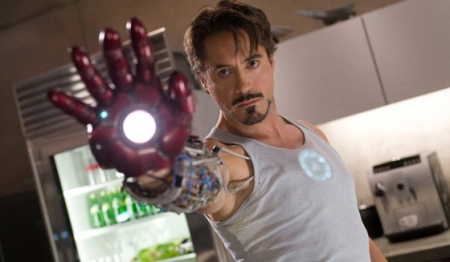
Iron Man

Iron Man

What I thought last year: A better-than-just-good movie that could have been great, except the marketing suits wouldn’t allow the movie to be either clearly pro-weapons-makers or clearly anti-weapons-makers, so the central character development around which the whole movie is built is left ambiguous. That and the climactic battle is lame.

What I think this year: The ambiguity isn’t as bad as I had thought – there are some subtleties that I missed. What’s driving Stark’s crisis of conscience is not that making weapons was bad per se, but that his weapons are being abused. So I’ll upgrade the movie from better-than-just-good to really good. But the battle is still lame.


Hulk 1

The Hulk

What I thought last year: The last Hulk movie really stank in spite of having been made by one of the few really great moviemakers of the 1990s, and this one doesn’t look any better. The Hulk character is probably unfilmable; the emotional intimacy you get in comics and (to a lesser degree) on TV isn’t available in the movie format, so the character’s dependence on anger probably just can’t be well exploited on film. I’m going to skip it.

What I think this year: No regrets.


The Happening

The Happening

What I thought last year: Shyamalan got lazy and his work has gone precipitously downhill. Early reports indicate this doesn’t look like the movie that will turn him around. Skip.

What I think this year: No regrets.


Wall E

Wall-E

What I thought last year: It’s an “A” movie about a lonely robot who discovers companionship, wrapped in a “C” movie about the evils of consumerism.

What I think this year: The more I watch it, the easier it gets to ignore the “C” movie.


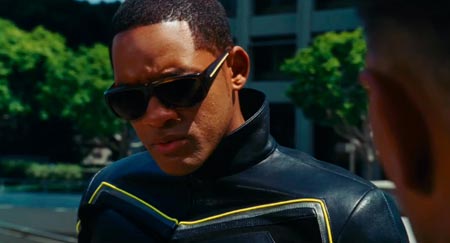
Hancock 3

Hancock

What I thought last year: Boy, it’s fun to remember Will Smith’s early-90s novelty act. And this was a fun movie. But not one I’d feel the need to see again.

What I think this year: Yup.


Joker 2

The Dark Knight

What I thought last year: Well, I wrote about it six times (here, here, here, here, here and here) so that gives you an idea of what I thought.

What I think this year: Was six posts really enough?


Quantum-Of-Solace

Quantum of Solace

What I thought last year: Fantastic potential. Squandered.

What I think this year: Can’t wait for the next movie. Can wait to buy this one.


Fifteen Years of Pulp Fiction

June 5, 2009

(Guest Post by Matthew Ladner)

This year marks the 15th anniversary of Pulp Fiction. I can’t believe it either.

Pulp Fiction was a pop-culture phenomenon, not only resurrecting the career of John Travolta, but elevating the careers of several others, especially the brilliant Samuel L. Jackson.

I’ve met people who were repulsed by the grisly violence, foul language and drug use of the film. I’ve encountered others who claim that Resevoir Dogs is a better film (nonsense). Others like the film for the grisly violence, foul language and drug use, but I don’t believe they actually appreciate the film to the fullest.

You see, I believe that despite all of the hipster post-modern lingo, heart stabbing injections, Deliverance references, etc. that Pulp Fiction is actually a film about redemption.

Tarrantino used two main devices to tell this story: a fake Bible quote and non-linear storytelling.

Samuel L. Jackson’s hitman character Jules recites a manufactured version of Ezekiel 25:17 before killing people:

Along the way, Jules experiences what he regards as a miracle and decides to abandon the life of a hit man to “walk the earth” in a way that has echoes of the lillies of the field. Vincent Vega, Jules’ partner in crime ridicules him for choosing to become a bum.

The brilliance of the non-linear story telling is that the viewer knows that Vincent will soon be bleeding to death in a bathtub after being shot multiple times. We don’t know what happens to Jules, but we do know what happens to Vincent. The wages of sin, in other words, are death.

This becomes all the more clear when Ringo attempts to rob Jules in the diner:

Jules is trying real hard to be the shepard, and whatever happens to him, it’s better than what happens to Vincent.

This is how I interpreted Pulp Fiction, and I was relieved to see the Thomas Hibbs offer that the film can be interpreted in this way in his brilliant book Shows About Nothing: Nihlism in Popular Culture from the Exorcist to Seinfeld.

Tarrantino seems to be an unlikely source for a covert religious allegory, but there it is, hidden in plain sight.


Pass the Popcorn: Things Are Looking Up – Or Are They?

May 29, 2009

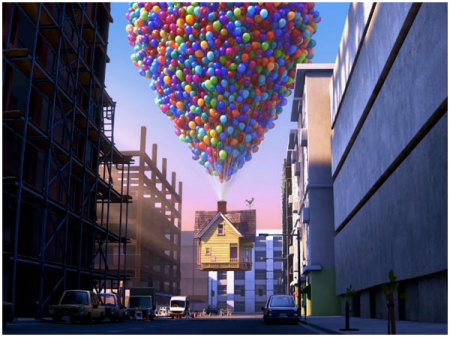
UP 1

(Guest post by Greg Forster)

Well, I’m going to owe a lot of people their money back on this post. Bowled over by the new Star Trek film (which you should really go see if you haven’t already) I overconfidently predicted that it would be the best movie of the year, and offered a refund on the price of the blog post to anyone who felt differently at year’s end. My reasoning at the time – as I explained in the comment thread – was as follows: “Take a look at what else is on the docket for this year. See anything that’s likely to be better?”

Guess what I had completely and totally forgotten about?

When I realized that a Pixar movie was coming out this summer, here’s what I felt like:

UP 2

But who knows? Pixar has been less than stellar in the past – remember A Bug’s Life and Monsters Inc.? Both are better than the average family movie, but to say that is damning with faint praise.

And UP comes to us from a relatively untested creative team. It was written by Bob Peterson and co-directed by Peterson and Pete Docter. Both have accumulated some secondary credits at Pixar – Peterson got secondary writing credits on Finding Nemo and Ratatouille; Docter got “story” credits on both Toy Story movies, Monsters Inc. and Wall-E; both have worked on Pixar shorts, direct-to-video projects, videogames, etc. (Peterson was also the voice of Ray the science teacher in Nemo and Roz the bureaucrat-cum-deus-ex-machina in Monsters.) Neither seems to have done much outside Pixar.

Between the two of them, there’s only one topline credit before UP. Guess what it is?

Docter directed Monsters Inc.

Let’s see how far back we have to go before we find a Pixar movie with a similarly untested creative team:

Wall-E: Written and directed by Andrew Stanton of Finding Nemo

Ratatouille: Written and directed by Brad Bird of The Incredibles and The Iron Giant (a masterpiece you really must see if you haven’t yet)

Cars: Written and directed by John Lasseter of Toy Story & Toy Story 2

The Incredibles: Written and directed by Brad Bird of The Iron Giant

Finding Nemo: Written and directed by Andrew Stanton of . . .

. . . well, OK, I guess the last time we had an untested creator at the helm, we did pretty well, didn’t we?

But guess when the last time before that was? Monsters Inc. Directed by Pete Docter.

I suppose I’m being overly pessimistic. It’s partly because I don’t want to have to shell out all that money on my ill-advised guarantee.

But I have another reason to suspect UP will be no good – I loved the teaser trailer.

No, seriously. Up until now, I have hated every teaser trailer I’ve seen from Pixar. I hated the teaser for Finding Nemo. I hated the teaser for The Incredibles. I really hated the teaser for Cars. I don’t remember seeing the teaser for Ratatouille but I didn’t go in with high expectations so I can’t have liked it if I did see it. And I was, I guess, nonplussed by the teaser for Wall-E – by that time I had learned that hating the teaser was actually a good sign, so that changed my whole outlook on them.

So up until now the teasers have been awful and the movies have been great. What does it say that the teaser for UP made the movie look really good?

This is the second of what I guess will be an annual series of Pass the Popcorn entries on Pixar. I don’t think I can top what I said in the first edition, so I’ll stop here.

Except I will note that the plot synopsis for Toy Story 3 has changed pretty radically since I first expressed such trepidation about it. Before, there was a whole paragraph, which I don’t remember in detail but it was about Woody and Buzz getting thrown away after Andy grows up. Now it’s just one sentence, and Woody and Buzz are ending up in a day care. That sounds much more promising.


Pass the Popcorn: They Went Boldly, And They Found New Life

May 9, 2009

Star Trek

(Guest post by Greg Forster)

Note: This post is 100% spoiler free!

If you’re a Trekkie, you don’t need me to tell you to go see the new Star Trek movie.

But if you’re not a Trekkie: You should go see the new Star Trek movie. If it’s not the best movie you see all year, I’ll give you your money back on this blog. I’m that confident you’ll love it.

Star Trek 2

To keep this post spoiler-free (in hopes that I can convince the maximum number of people to go see the movie) I can’t tell you everything about what makes this such a good movie. But I’ll do my best to indicate as much as I can.

I think the biggest key to success here is the way J.J. Abrams and writers Roberto Orci and Alex Kurtzman drilled down to the essence of what makes Star Trek such a wonderful platform for storytelling and built their whole story around that, ruthlessly cutting out anything and everything from the original franchise that got in their way.

Lots of things have been changed, sometimes dramatically. Some things that Trekkies hold dear have been destroyed; new things have been introduced that mossbacked fans will find jarring.

Star Trek 4

But all that destruction only makes way for Abrams & Co. to use the Star Trek setup the way it was originally used – before it got cluttered with the overgrowth that inevitably accumulates in any long-term franchise.

I felt like the more they dramatically changed everything, the more it became more like the Star Trek it always was. It was like they reached into the middle of a large, complex structure and pulled the center outward, turning the whole thing inside-out in the process, but at the end it was the same as it had been, even though it was completely different.

Star Trek 5

I’ve been trying to think of how to express this point more clearly. I keep coming back to the opening lines of G.K. Chesterton’s The Everlasting Man, where he says that there are two ways of getting home. The first is to stay there. The second is to go all the way around the world and come back to where you started.

I think the Star Trek movies had just stayed home too long. Abrams & Co. have taken them all the way around the world, and the result is, the franchise is home again.

I think the most important thing they’ve built on is the simple but brilliant storytelling mechanic of taking eight or nine colorful, highly strung personalities and locking them all together for an extended period in a tin can where they can’t get out of each other’s way and are periodically threatened with death. Firefly recently proved again how well this can work when it’s properly used. Who knows? Maybe Abrams was watching.

But another important aspect – and this is something you should know going in – is that it brilliantly maintains the unique narrative style of Star Trek. Again, I’m not sure exactly how to make clear what I’m getting at.

Let’s put it this way. Star Trek has never been the kind of franchise where they stop to ask questions like, “how could Starfleet Academy possibly have a final exam that consists of role-playing a simulated scenario where everybody knows ahead of time that there’s no winning outcome to the scenario?” Merely the fact that you know you’re in a no-win situation will change your behavior. But as a poetic narrative device it works brilliantly, as the famous discussion of Kirk’s unique approach to the exam in Star Trek II demonstrated.

Oh, and it helps that they put in a lot of very clever references to the original series. Don’t worry, if you’re not a Trekkie you won’t even notice them. They aren’t obtrusive. But if you are a Trekkie, you will laugh your head off time and again at the sly way the movie nods its head to some of your favorite (and most cringe-worthy) memories.

Sulu Fencing

No, this is not a spoiler. Trust me.

Also, you get a lot of movie out of this movie. It’s fast-paced, but not because they’re always fighting. It’s because they’ve trimmed out absolutely all the fat. There is not a minute of screen time wasted in this movie. Yet nothing is rushed or sloppy – it’s just very efficient storytelling. You get twice as much out of it just from that alone. (That, by the way, is the secret to the success of a lot of great movies and TV shows – an efficient storyteller can give you more bang for the buck even with an otherwise ordinary narrative. But then, the highly efficient storytellers also tend to be excellent in other ways.)

Oh, just go see it already. The sooner you do, the sooner I can talk about it.


Quantifying the Popcorn

January 23, 2009

scores-on-doors

(Guest post by Greg Forster)

No time to write a lengthy discussion of it (why did I waste all that time this morning composing a post on something as useless as education policy?) but don’t miss the fascinating article in today’s Wall Street Journal on the history of, and debates over the merits of, the practice of movie critics assigning stars, letter grades, or “thumbs” to movies as a quick and easily accessible, yet frustratingly reductive, indication of their judgment on a movie.

Among other things, the article asks some prominent movie critics to give a star ranking to the practice of ranking movies by stars. One gives the practice four stars (“It helps the reader, and it helps us”) while another gives it one and a half (“It’s not necessary to film criticism but it’s not something that undermines it”). Some people quoted in the article are actively hostile to the practice, though.

The article is by “The Numbers Guy,” Carl Bialik, who apparently has a blog under that title at the Journal‘s website. Who knew? On the blog he has a follow-up to the story with more quotes and tidbits, including one critic who complains that he doesn’t know how to give an accurate ranking to a movie that he hated, yet enjoyed watching for its awfulness:

“The toughest one for me was Gran Torino, which I think is a terrible film but nonetheless found immensely entertaining in its awfulness,” Las Vegas Weekly film critic Mike D’Angelo told me about his 100-point grading system on his personal Web site. “I wound up giving it 34/100, which includes like 20 bonus points for camp value.”


Pass the Popcorn: Payback’s a Bitch

December 19, 2008

 vesper-1

(Guest post by Greg Forster)

Last weekend I finally got to see Quantum of Solace. I had heard it wasn’t as good as Casino Royale, so going in, I tried to manage my expectations.

“It doesn’t matter whether it’s as good as Casino Royale,” I told myself. “It’ll be fun, and it’ll probably be better than just fun, and that’s better than most movies. I’ll just enjoy what’s on the screen without worrying about what’s not.” That’s how I try to approach most movies.

It wasn’t enough.

Don’t get me wrong. Quantum of Solace is not a bad movie. I enjoyed most of the two hours I spent watching it. However, not only was there a tremendous amount of lost potential – an approach to the Bond story that could have taken the francise to a whole new level – but there were actually some pretty significant stretches that I couldn’t enjoy even on the level of fun or coolness.

quantum_of_solace-table

These data over here illustrate the precipitious decline of cool gadgets in James Bond films, as measured by both quality and quantity. I’ll move this electronic display across the tabletop just by moving my hand, so the audience will momentarily forget that this table-computer thingy is not an adequate substitute for a buzzsaw wristwatch.


The lost potential here is pretty darn serious. Casino Royale not only gave us a really cool  Bond movie, but the setup for what could have been a two-part (or longer) serious epic story arc- the first real epic storyline in the franchise.

vesper-2

I can’t find it now, but in the runup to the new movie, some fan put together a desktop wallpaper image of Vesper Lynd with the tagline “Payback’s a Bitch.” That got me more excited to see the movie than anything in the official advertising – Bond both loves and hates Vesper (“the bitch is dead”) and thirsts for revenge on her killers even as he hardens his heart against all natural human affection.

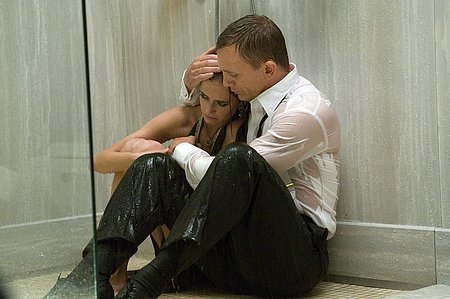
bond-and-vesper-shower1

Quantum of Solace does try to redeem that promise, and there are some really good moments. The very last thing Bond does before the end credits roll is a really shocking twist – not so much a plot twist as a “character twist” – that works perfectly. It violates our expectations pretty radically, yet resolves the story perfectly, though not in the way we had thought.

And about two-thirds of the way through the movie, there is a scene that pays tribute to a famous moment in an earlier Bond movie that could have been incredibly cheap and derivative, but is pulled off with note-perfect direction and ends up being extremely effective.

There are also a number of great dialogues in the movie. Bond’s intereactions with M at the beginning are great – Judy Dench is finally permitted to do more than scowl at Bond, and her talents unexpectedly provide real depth to the M character here. And there’s a short but really powerful scene between Bond and Felix Leiter, about which more later.

But while there is some good action, some coolness, and several good moments that show us the epic this movie could have been, the movie not only doesn’t fulfill its potential, it frequently doesn’t even work on the level of standard Bond movie.

It wasn’t just the absence of a decent villain – although that flaw alone is more than enough to shame any director who makes a Bond movie.

 quantum_of_solace-villains

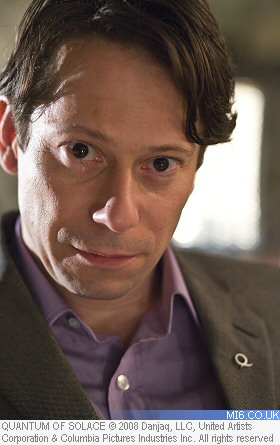
That guy on the left? Literally the instant he came on the screen I was scared of him. He’s in the movie for about five minutes. The loser on the right is the “villain.”

One does wonder just what has to happen to a man to cause him to make a James Bond movie with a lame villain. All action/adventure movies, but especially Bond movies, depend on the personality of the villain; his cunning is needed to test the hero’s wits, his ruthlessness to test the hero’s courage, his power to test the hero’s strength, his evil to test the hero’s good. The lame villain would have prevented the film from reaching anything like its full potential even if there were no other flaws.

quantum_of_solace-villain

He’s supposed to be scary. I’m told that if you stare long enough you’ll start to see it, like those “magic 3D” posters from the 90s. Anyway, I think they were going for “creepy guy who makes your skin crawl,” but they got “bug-eyed pervy loser.”


It wasn’t just the gaping holes in the plot. In case you’re curious, those holes arise primarily because the filmmakers decided to give the movie an environmental theme. I say “theme” because the movie is not at all didactic about the environment. They were smart enough to avoid that trap. But they wanted the evil scheme to somehow involve the environment, and what they came up with (I won’t spoil it, though really there’s not much to spoil) doesn’t pass the laugh test.

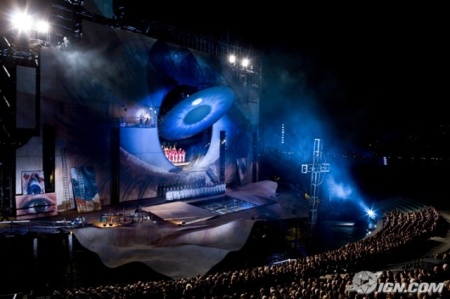
As for the lengthy scene in the middle of the movie that takes place at a radically avant-guarde European opera performance, while many (including my wife) found it annoying, I actually didn’t mind it.

quantum_of_solace-opera

I can see why they put it in – just like they put in that scene at the “dead bodies” museum exhibit in Casino Royale. They’re trying to reintroduce the tone of the older Bond movies that was simultenously highbrow and exotic. Flying off to Brazil (or wherever) used to be something only the rich could do, and for those who couldn’t do it, it was a little like flying to Mars. Today, when the Bond audience is comfortably upper-middle class and airfares to just about everywhere in the world are within their reach, it’s hard to take Bond to esoteric places. While the scene probably doesn’t work as well as the director hoped it would, I think it’s serviceable.

But now back to the flaws.

It wasn’t just the movie’s anti-Americanism. Here the movie is didactic, alas. One winces to hear the mass-murdering psychopath Haitian dictator Aristide discussed (though he is identified by a generic description and not by name) as a saint. And the filmmakers don’t seem to be aware that the Aristide whom they so admire was returned to office by U.S. power after being deposed in a coup.

But the damage here is pretty radically mitigated by several factors. First, it’s obvious that they felt they had to have something left-wing in there to counterbalance the fact that the movie’s villain is a phony environmental philanthropist, which might be taken as a critique of certain real-life phony environmental philanthropists. (“I did learn something about the environment from this movie,” my wife said to me afterward.  “I learned not to trust people who claim to be acting on behalf of the environment.”) There’s a sense, or at least I had the sense, that when they denounce American imperialism, they do so out of a sense of obligation. Second, on some occasions America really has been guilty of the kind of evil attributed to it here – although one wonders whether either the filmmakers or the audience are aware of who the real perpetrators of those evils were (and are), and which of the two political parties they tend to be clustered in.

But most importantly, Felix Leiter is given an opportunity to point out that if America has sometimes done nasty things, it is, on balance, not the world’s worst offender. In a Bolivian bar, Bond snorts, “you guys have carved up this place pretty well,” and Leiter spits back, “I’ll take that as a compliment – coming from a Brit.” Even by the standards of civilized nations, America stands up pretty well.

bond-leiter


In the Bond films, Felix Leiter has always stood for America. He lacks Bond’s air of elegant sophitication and savior-faire, but also Bond’s arrogance and hard-heartedness. Bond is the advanced-but-decadent Old World, Leiter is the plain-but-decent New.

Watch, for example, the first few minutes of Goldfinger, and see how differently Bond and Leiter treat the girl in the bikini by the poolside. If you’ve studied your Tocqueville, you know how to pick out the American in any crowd of men – he’s the one who talks to women like they’re human beings, not property.

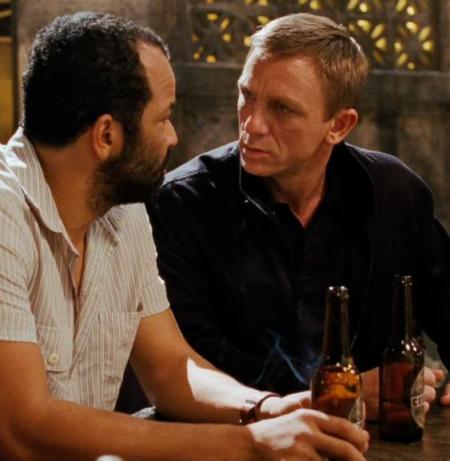
On the subject of Felix Leiter as representative of America, it’s almost amazingly appropriate that the Felix Leiter character has switched races – and not for the first time, if you’re prepared to accept the quasi-official Bond film Never Say Never Again, where Bernie Casey took the role. Race is the most distinctive aspect of the American experience, so it’s fitting that the representative American should be alternately black and white. America is as much the slick East Coast sharpness of Jack Lord in Dr. No as it is the wry “aw shucks” Midwestern charm of Cec Linder in Goldfinger; America is also the simultaneous smoothness and bluntness of Jeffrey Wright.

leiter-1

“Felix Leiter – a brother from Langley.”

leiter-2

leiter-3

I’ll go out on a limb and say that if Quantum of Solace had to be the first ever anti-American Bond film, it’s appropriate that the task of sticking up for America’s good name should fall to a black Felix Leiter. Those who hold themselves out as representatives of black America often don’t have much good to say about America, but that was not always the case, and if I may trust my personal experience, I find black Americans to be among the most intensely patriotic. Indeed, they’re almost the last sizeable population group among the core politically left groups who obviously mean it with all their hearts when they protest that they, too, love their country. And that’s not at all surprising – around the world, we are discovering that those who have been deprived of their liberties are the ones who cherish them most, while those who have long enjoyed liberty come to take it for granted. Why should we surprised to discover this at home? True, it was against American oppression that American blacks had to fight to gain their liberties, but now that they have liberty, they cherish it, and will not allow it to be lost. And they know that America, even with all it has done wrong, stands for liberty as no other nation does, or ever has.

But now, again, back to the flaws.

I think the main flaw in Quantum of Solace is the mandate that a sequel must be bigger and flashier than the original. Where Casino Royale centered around a card game and gave us intrigue, cunning, dialouge, and character development, Quantum of Solace is nonstop car chases, explosions, etc. Everything has to be bigger and blow up more spectacularly. That just doesn’t leave any time for the revenge plotline to develop properly.

This flaw is badly exacerbated by the poor editing and bad pacing of the action sequences. Each individual camera shot is too short, while each action sequence as a whole is too long. Because of the rapid-fire editing that spoils so much of the action, someone has called this “Bond for the ADD generation.” But I disagree; no one with ADD would have had the patience to sit through these interminably long action sequences. I barely had the patience to sit through them myself.

I wish I could say that this movie is good but not great. As I said, it’s not a bad movie. I enjoyed watching it, for the most part. But I just can’t bring myself to type that it’s a good movie. Looking at my grand unified field theorem of Bond movies, I’d have to say that where Casino Royale was “Reboot Awesomeness,” Quantum of Solace has skipped right past the “Still Good” phase and landed squarely in “Passable,” alongside The Spy Who Loved Me and The World Is Not Enough. That doesn’t bode well for the next one.

But remember the tagline to the end credits of every Bond movie: “James Bond will return.” And so he shall.


Pass the Popcorn: You Know His Name

November 14, 2008

silhouette-roulette

HT Web Design Library

(Guest post by Greg Forster)

After the U.S. entered World War II in 1941, it was formally at war with Germany, but American attention was primarily focused on the Pacific theater. This was only natural given that the impetus for our engagement was Pearl Harbor, but another contributing factor was widespread anti-British sentiment among American elites. This animus against Britain had been one of the key causes of America’s prewar isolationism, and Churchill worried that he would have difficulty drawing the U.S. into full engagement in the European theater.

Casting about for some way to counteract this problem, Churchill lit on the idea of rounding up some charming and sophisticated English gentlemen – some of whom weren’t previously contributing much to the war effort, or anything else for that matter – and sending them to Washington on a combined charm offensive/intelligence gathering mission. Led by Roald Dahl (yes, that Roald Dahl) their job, recently recounted in Jennet Conant’s The Irregulars, was to wine and dine the American elites in order to 1) improve their impression of Englishmen and 2) keep their ears open for any useful rumors. Whether the Charge of the Aristo Brigade accomplished much for the war effort is doubtful, but there is at least one respect in which the program had a major impact on world history.

One of the men sent to Washington on this “espionage as aristocratic glamorfest” mission was Ian Fleming. The rest is history.

In his paean to Fleming, Mark Steyn observes that all the basic elements that make Bond what he is were present right from the beginning in the first book, Casino Royale – and that the 2006 “reinvention” of the Bond movie franchise in the film version of Casino Royale consists in the filmmakers having done away with all the cornball stuff that the earlier movies had added to that basic foundation over the years, allowing the core Bond to shine through. As the title song says, “The coldest blood runs through my veins/You know my name.”

Now, from what we can tell in the previews of the new film, it appears that Marc Forster (no relation, alas) is adding another innovation to his vision of Bond – storylines that span multiple movies. Bond has had recurrent villains before, of course, but never an ongoing storyline. The rise of epic storylines has recently done wonders for network television, after having been pioneered on high-quality niche shows like Farscape and Buffy the Vampire Slayer. And at about the same time network TV was noticing the narrative power of season-long story arcs, The Lord of the Rings proved that movie audiences were open to ongoing storylines across multiple movies. Now Forster wants to take things to the next level and try doing it with movies that aren’t growing out of a preestablished book series (like The Lord of the Rings) where the epic story arc is already well established and has a fan base. It’s daunting, but it’s the next natural step to take.

And where better to try it than with James Bond? Nobody realized it until now – well, nobody but Marc Forster and the rest of his creative team – but with hindsight, the franchise has always been begging for this. And nowadays, when it’s so much harder than it used to be to get audiences to see espionage as material for epic drama, it’s a genius move. I can’t seem to find it now, but one clever fan put together a desktop image for the new movie consisting of flames formed into a ghostly image of Vesper Lynd, with the tagline “payback’s a bitch.” (If you get the reference, you’re a true Bond fan.) Bond has pursued villains, even Blofeld himself, out of vengence for a girl before, but making that the whole ongoing reason for his neverending war with SPECTRE is absoultely brilliant. 

Though of course it hasn’t been called SPECTRE for a long time now, due to an inconclusive legal battle 47 years ago (no kidding) over the rights to the movie Thunderball – ironically, one of the worst Bond films ever made. Or perhaps it’s more karmic than ironic: when the producers allowed Bond to become nothing more to them than an excuse to make money, they incurred divine wrath, manifested in the loss of the SPECTRE name.

When I was a teenager, I played the official James Bond role playing game and they called the criminal conspiracy TAROT, and each of the organization’s divisions was named after a Tarot card. (I forget what TAROT stood for.) In the video game based on From Russia With Love a few years ago they were calling it Octopus. In the new movie it’s now called Quantum. But we all know it’s really SPECTRE.

The producers waiting for resolution of this same legal battle is also the reason there were no Bond films between License to Kill (1989) and Goldeneye (1995). And it wasn’t until 2001 that the rights to the James Bond character were unambiguously settled on one rightsholder. But they still only got the character – the other material from Thunderball, such as SPECTRE, is still too radioactive to touch.

Shudder to think that about half the country wants the judges to rule us, even though the judges can’t even look after James Bond properly. I mean, if they can’t be bothered to provide a clear resolution of a conflict when something as important as James Bond is on the line, why are we surprised that they have trouble deciding whether or not it makes sense to require American servicemen to die for the sake of a paperwork error?

In this edition of Pass the Popcorn I forego the traditional review of the franchise from its origin to the present day, not only because the task is too great for me, but also because I’ve already offered a unified field theorem of the Bond franchise and there’s no need to reinvent the wheel.

Expectations for Quantum of Solace are, of course, enormous. That’s more or less inevitable when you make a sequel to a groundbreaking film. So, my fellow Bond fans, the name of the game now is anticipation control. The great secret to movies is to just go in and enjoy what’s there, if there’s anything at all to be enjoyed. Critical evaluation can come later. It’s hard enough to do when expectations are low, as the critical response to Speed Racer showed. It’s all the harder when expectations are high.

Alas, I won’t be able to see it opening weekend. But it looks like I can probably contrive to see it next weekend. Until then: arm yourself, because no one else here will save you.


Pass the Popcorn: All-Time Great Summer Movies

October 16, 2008

epi518

(Guest post by Greg Forster)

Inspired by Matt’s “all time best bad movie” contest, I decided to ask readers to cast their votes on the all-time great summer movies. And, like any good political science geek, I planned to use multiple voting systems. I was going to provide a slate of nominees and ask people to post a list of which nominated movies they thought were among the all-time great summer movies, in order of greatness. Then I was going to count up which movie got the most #1 votes, which movie got the most total votes, and which movie got the most votes if the votes were weighted based on where they fell on people’s lists.

But once I had compiled my list of nominees, I thought: why put it up for a vote? Excellence is not subject to democracy. So instead of being a list of nominees, this is just my list of the all-time great summer movies. (Since excellence is very much subject to freedom of speech even if it isn’t subject to democracy, you are very welcome to post your comments and your own lists!)

My list was selected by the following highly scientific process:

1) There was no such thing as a “summer movie” in the way we now think about that term before the 1980s or so. I chose 1980 as the cutoff date by a highly scientific process of noticing that it was divisible by both four and ten.

2) The definition of “summer” has changed over time. I chose May 1 to September 1 as my cutoff dates by a highly scientific process of deciding that I’m willing to stretch into May, but not April or September. I have manfully resisted the temptation to include as “honorary” summer movies the many excellent films with non-summer release dates (e.g. The Incredibles, November 5, 2004; Serenity, September 30, 2005; Casino Royale, November 17, 2006).

3) I examined the lists of movies first released in the US between May 1 and September 1 in every year from 1980 forward (that’s why God made IMDB) and chose the best nominees, selecting them by the highly scientific standard of whether or not I thought they were plausbile candidates for being an all-time great summer movie. After 2001 the IMDB lists get too long (they include not only the rapidly expanding straight-to-video market, but also a lot of miscellaneous media like video games) so for 2002 to 2008 I switched to using the list of the top 100 grossing movies and then seeing which of the plausible candidates was released in the summer. The dropoff in nominees after 2002 may be due to this methodology change, but I’m inclined to think not; rather while the quality of movies in general has not (I think) gone down, the rate of production for all-time great summer movies has.

After prolonged, highly scientific consideration, I decided to exclude small-budget comedies, even the major classics, on grounds that a movie needs a big budget to be a “summer movie.” Exceptions were made where I felt that a movie was striving for a big-budget, summer-movie “feel” even if the budget wasn’t actually big (e.g. the many big-name guest stars and over-the-top musical numbers in The Blues Brothers make it feel like a summer movie even though it probably didn’t cost summer-movie money; I got a similarly “summery” vibe from Ferris Bueller’s Day Off).

Likewise, dramas with a strongly “gritty” and/or “realistic” tone (e.g. Untouchables, June 3, 1987; Unforgiven, August 7, 1992; 28 Days Later, June 27, 2003) and movies intended to be accessible to younger children (e.g. E.T., June 11, 1982; Labyrinth, June 27, 1986; Finding Nemo, May 30, 2003) were excluded as not fitting the genre.

On the other hand, I strove to include movies that we might not immediately think of as “summer movies,” but which, upon reflection, might be considered within that category. And I did make allowances where I felt that a franchise was “owed” a place on the list, as you’ll see from my comments.

The Empire Strikes Back

May 21, 1980

luke_vs__vader_morph_by_joew771-d5u7bwn

From Leia’s anguished confession as Han goes into the carbonite to Luke’s heroic-cum-suicidal showdown with the Dark Lord, this movie was a high point not only for the franchise, but for science fiction generally and for film generally.

The Blues Brothers

June 20, 1980
BluesBrothers

It’s big, it’s in your face, it has musical numbers and a finale where a SWAT team storms the building – it’s a summer movie. For me the most memorable line is during that final sequence when the police are closing in as the brothers are about to make the orphanage’s mortgage payment, and a police dispatcher, in a totally calm, monotone nasal voice, says: “The use of unnecessary violence in the apprehension of the Blues brothers has been approved.”

Raiders of the Lost Ark

June 21, 1981

indy1_zps00e1566e

In film as in all other occupations, the first step to doing great work is to do what you love. Spielberg loved 1930s cliffhanger serials and knew them well enough to bring them up to date, preserving what made them great in their own time while translating them into the (vastly superior) narrative idiom of modern film.

Star Trek II: The Wrath of Khan

June 4, 1982
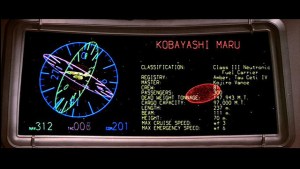
kobayashi_maru

On this list, The Wrath of Khan stands as representative of the Star Trek franchise, not all of which were summer movies, but which cumulatively deserve representation. (Group rights are no good in politics but they have their place in “all-time greatest” lists.) But it’s convenient that one of the best of the series happens to have been a summer movie (two of them, actually – Insurrection was released in summer as well). Do you recognize the graphic above? The Kobayashi Maru is so widely referenced among sci-fi geeks that it’s a cliche, but there’s a reason it resonates so widely; it’s one of the best (in the sense of most fitting and most revealing) character backstories on film.

WarGames

June 3, 1983
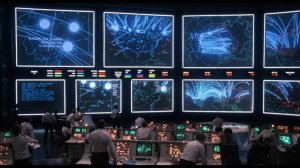
6568_1

Remember this? Laugh if you will, but I think there’s a reason everyone from my generation remembers this movie. Has there ever been a more tense opening scene? “Turn your key, sir. TURN YOUR KEY.”

Krull

July 29, 1983

krull_cyclops

Also in the “laugh if you will” department, this odd but oddly gripping sci-fi/fantasy hybrid stretched your imagination. If you could get past the “Huh?” factor, the film clearly knows how to tap into the vein of epic drama even with a story that doesn’t follow the standard genre conventions.

Ghost Busters

June 8, 1984

Ghostbusters-Screencaps-ghostbusters-29592124-1920-1080

What makes this movie so surpassingly great is that all the little things are consistently right. You remember all the really great moments, of course, but think about some of the ones you don’t usually remember, like Annie Potts trying to handle the sudden surge of business (“I’ve quit better jobs than this.” [Picks up the phone] “Ghostbusters! Whaddaya want!”). These fully-drawn characters are why the movie succeeds when it reaches for something more than just comedy – like near the end, when the boys crawl back out of the broken street and the crowd goes wild, chanting “Ghost busters!” “Ghost busters!” and Venkman brags, “That’s all right, we can take it. We can take it. They wanna play rough!” It’s not a gag; it’s played straight, as heroism, offered for our admiration. And it works.

Back to the Future

July 3, 1985

89ce8721-43e0-487b-82e7-27c53dc6d61d

Behold the man, Christopher Lloyd. He’s spent decades doing nothing but crap, yet for just a couple of brief, shining moments, he was brilliant – so brilliant that no amount of subsequently produced crap can ever move us to regret his career.

Top Gun

May 16, 1986

untitled

Yes, the silliness quotient is getting a little high here. But this is the movie that set the standard for macho cool. (“We were inverted.”) And as Harvey Mansfield has recently demonstrated, machismo is not in itself a silly thing; in a dangerous world, the culture of machismo is serious business.

Ferris Bueller’s Day Off

June 11, 1986

ferris_buellers_day_off

Contains just enough “bigness” (the parade, “Save Ferris” on the stadium’s electronic billboard) and summer-ness to bump up from the “comedy” category to the “summer movie” category in my mind. The city itself is as much a character as Ferris and Cameron. Sure, it lacks the drama and epic scope of most summer movies, but Ferris himself is larger than life – more primal force than man, the Iago of slackers.

Big Trouble in Little China

July 2, 1986

Jack_Burton_h3

The Ghost Busters of the kung fu genre. Cheesy over-the-top martial arts thriller (half spoof, half serious) meets super-sharp dialogue and fully drawn characters, again with all the little things done right: “A brave man likes the feel of nature on his back, Jack.” “Yeah, and a wise man has got enough sense to get in out of the rain!

Aliens

July 18, 1986

Ellen-Ripley-Aliens-female-ass-kickers-29685715-1280-688

Continuing a theme, it’s the characters who make this a big cut above the standard action flick – another real high point for sci-fi, and one of the best “straight action” movies ever made (as distinct from movies that are more in the “epic” or “adventure” subgenres). The debate in the APC about whether to nuke the site from orbit (“it’s the only way to be sure”) is one of the most note-perfect scenes I’ve ever seen. It also serves (in a way so subtle that you don’t notice it until it’s all over) as a great character intro for Hicks, who has been silent in the background until now while Apone and Hudson stole the show, but now must lead the unit. “But he’s a grunt! No offense?” “None taken.” And the way he says it, it’s clear that there really was no offense taken. It’s not the standard “call of destiny” scene, like Luke standing over the still-smoldering ruins of his aunt and uncle’s farm. But it serves the same function in the narrative – for both Ripley and Hicks.

Spaceballs

June 24, 1987

spaceballs-06

“Aww, that’s just what we need . . . a Druish princess.”

“Funny – she doesn’t look Druish.”

Robocop

July 17, 1987

robocop-remake

Blends two of the great strengths of sci-fi that rarely go together well, but do so here: super-cool hi-tech action and smart social commentary, including some very clever social satire (“I’d buy that for a dollar!”). Kudos also for the excellent twist ending: The elderly corporation president is held hostage with a gun to his head by his villainous vice president. Robocop can’t save him because the VP has had him programmed to be unable to take action against an officer of the company. Then the old president, who has been mostly a smiling-grandfather figure until now, suddenly shows that he didn’t get to be the president without learning how to think quickly under pressure. “Dick . . YOU’RE FIRED!” Whereupon Robocop blows the VP away.

The Living Daylights

July 31, 1987
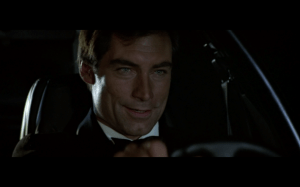
Living Daylights

Just as the Wrath of Khan stands for the Star Trek franchise, this stands for the Bond franchise. But, again as with Wrath of Khan, it’s convenient that one of the franchise’s strongest entries happens to have been a summer movie. Vastly underappreciated due to the juvenile public reaction against the toning down of Bond’s sexual immorality, this complex espionage thriller delivers action, snappy dialogue (targeting recticles appear on the windshield of Bond’s car and he explains to the girl: “I’ve had a few optional extras installed”), and – not least important – marks the start of the series’ deliberate development of Desmond Llewelyn’s comic genius. Bond observes as an MI6 technician carrying a loud stereo on his shoulder flips a few switches and launches an RPG-type rocket out of it. “It’s a little something we’ve worked up for the Americans,” remarks Q with evident delight. “It’s called a Ghetto Blaster.”

Who Framed Roger Rabbit?

June 22, 1988
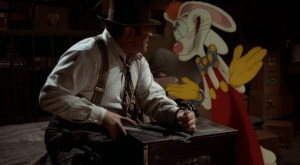
vlcsnap-3434311

One of those times when a super-clever novelty act turns out to be more than just a novelty act. It does for classic cartoons what Raiders did for 1930s cliffhanger serials – translates it into the idiom of modern film. And see above re: Christopher Lloyd.

Batman

June 23, 1989

batman1_clip03

Remembered, of course, for Jack Nicholson’s Joker – and it still will be, even now that Heath Ledger has reinvented the character in an even more impressive way – it’s hard to remember now that it was this movie that resurrected the then-mostly-defunct genere of comic book movies, which is no small feat given the peculiar imperatives of that type of narrative, and also revolutionized the visual style of movies in related genres. One of the most influential movies of the last generation.

Terminator 2: Judgment Day

July 3, 1991

Terminator2

Noted at the time for its then-record budget, Terminator 2 did for special effects what Tim Burton’s Batman did for comic book narratives – showed the narrative power they were capable of weilding.

A Brief History of Time (Documentary)

August 21, 1992
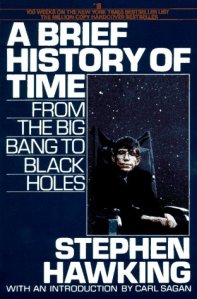
a-brief-history-of-time

Just kidding! 🙂

But I think his appearances on The Simpsons have shown Stephen Hawking’s potential as an action hero (“If you are looking for trouble, you found it”), and if they made a summer movie starring him, I’d go.

Jurassic Park

June 11, 1993
Jurassic-Park

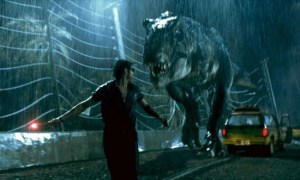
I suppose I’m including this mostly out of a sense of obligation, given its prominence and influence – although I did decide not to include Rambo 2 in spite of its (probably greater) influence. In this case I think the craftsmanship of the movie is better. (The moment where Sam Neil dismisses Jeff Goldblum as a “rock star” intellectual lightweight, for example, works well.) This is a movie I wouldn’t spontaneously suggest watching, but would happily watch if others in the room wanted it.

Speed

June 10, 1994

speed_1994_blu_ray_movie_review_full

Continuing that theme, here’s another movie that I include largely out of a sense of obligation, yet I wouldn’t include it if I didn’t think it had merits. Craftsmanship again makes the difference.

Apollo 13

June 30, 1995
apollo13b

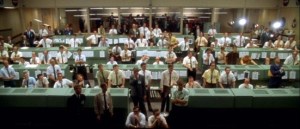
Much more than a nerds-as-heros flick (although it is clearly that), this movie is a triumph of the filmmaker’s craft. Nothing in it is particularly spectacular in itself, but all the pieces click perfectly and the whole is much more than the sum of its parts.

Austin Powers: International Man of Mystery

May 2, 1997

123573

The franchise degenerated so quickly in the subsequent films that I don’t think the full cleverness of the original is still as widely appreciated. The better you know Bond, the more gags you’ll notice here. And maybe it’s just me, but I bust a gut laughing at Austin trying to get the little go-kart turned around in the narrow dead-end hallway. I don’t know why, it just works.

Men in Black

July 2, 1997
men_in_black

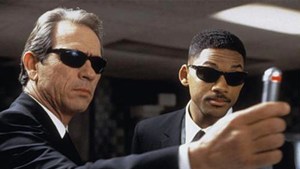
If you haven’t seen it in a while, plug it back in. It’s a lot funnier than you remember.

The Mask of Zorro

July 17, 1998
the-mask-of-zorro7

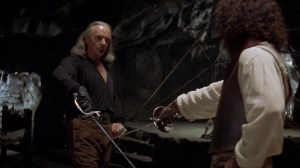
One more for the “laugh if you will” file, but I think this movie stands out from the crowd. Action, comedy, terrific performances, and – in case you haven’t noticed, this is an important mark of a great movie for me – really good dialogue. The aging Zorro (Anthony Hopkins) wants to train a drifter he’s picked up (Antonio Banderas) to replace him. Hopkins points to the sword in Banderas’s hand and asks, “Do you even know how to use that thing?” “Of course I do,” replies Banderas. “The pointy end goes in the other man.”

South Park: Bigger, Longer & Uncut

June 30, 1999

south-park-1

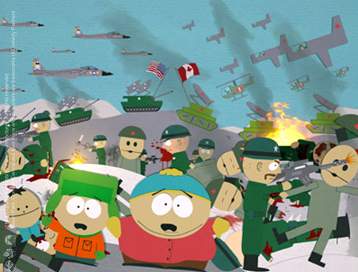
What does one say? If you haven’t seen it, words aren’t going to convey the experience. I’m only about 50% on board for the movie’s agenda, but they do it cleverly so as to avoid turning away people who aren’t ultimately with them – their focus is on the failure of parental responsibility, not on the policy question of what should be allowed on TV.

Shrek

May 18, 2001

shrek-3

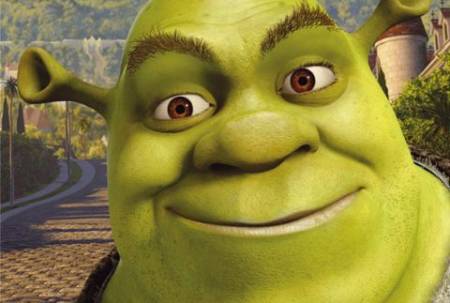
It could have been a one-joke movie, but consistent cleverness and Eddie Murphy’s breakout performance made it franchise-worthy.

Spider-Man

May 3, 2002

spider-man-11

What Batman created, Spider-Man recreated. Standing as radiant day to Tim Burton’s somber night, Sam Raimi’s equally powerful vision of the super hero radically broadened the scope of the genre.

Batman Begins

June 15, 2005
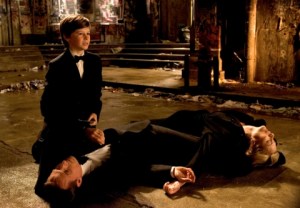
batman-begins-31

And then, of course, the dark night of Batman came roaring back with its own reinvention – this time with subtlety and intellectual heft. Chris Nolan embarks on the novel mission of making a Batman movie that’s all about Batman, and it works on every level.

The Dark Knight

July 18, 2008

dark-knight-3

See here, here, here, here, here, and here. Nuff said.


Pass the Popcorn: There Can Be Only One

October 3, 2008

(Guest Post by Matthew Ladner)

And the winner of the greatest bad movie of all time….

The rest of the flicks are going down! It’s gotta be that way!

Barney Frank’s version of events in the $700b taxpayer heist, bailout, rescue plan.

 A sequel? You’ll have to pay me $50m, bro! Go Netflix Speed 2 if you want to see what happens in a Keanuless Keanu sequel…


Decision 2008: Greatest Bad Movie Ever

September 26, 2008

(Guest Post by Matthew Ladner)
So kids, the time has come to choose: what is the greatest really bad movie of all time? Number one seeds: Xanadu, Starship Troopers, Urban Cowboy and Point Break.


The floor is also open for nominations.


One movie I’ve had nominated, but haven’t had the chance to see yet: Congo.


Have your voice heard by voting in the comment section.