We Will We Will FRACK You!!!

July 15, 2014

(Guest Post by Matthew Ladner)

The above gif is a 14 year time lapse, putting in tiny red dots for new oil wells (HT Mark J. Perry).  After watching this for a while, a few things spring to mind.

1. The motto of the University of Texas at Austin “We’re Texas. What Happens Here Changes the World” comes to mind.

2. Pennsylvania seems perfectly content to drill New York’s shale formation from just south of the border.  Memo to New York: fracking involves horizontal drilling, so you might want to rethink your ban.

3. Canada is just barely getting in on the action thus far, but western Canada has plenty of shale formations. So…

Hey you hosers! Don’t force us to sell our oil to China eh?

Just for the record I’d rather fill up my tank with gas refined from Canadian oil rather than line the pockets of various anti-American regimes. Pipelines please…

4. I have not heard much about Arkansas, but it looks like a boom going on in the north of the state (?)


Burke: 44% of DC Students attend charter schools, DC officals are knocking on doors

July 14, 2014

8028f-faye_morningafter

(Guest Post by Matthew Ladner)

Lindsey Burke on the lay of the land in the District of Columbia Public Schools, which inches ever closer to having a majority of charter school students and which is leading the nation by a wide margin in academic gains, led by charter schools. Oh and where district school principals have taken to the streets to sell their schools to parents in search of students.

What do you make of all of this Chewie?


Yeah, me too.


Heavily Taxed Surrounded by Young and Old People is No Way to Spend 2030 Son

July 9, 2014

(Guest Post by Matthew Ladner)

The CBO is projecting a slowing rate of economic growth due to the aging of the population. Some of my favorite people are retirees mind you, but you don’t see all many of them developing new products, services or other innovations. They are retired after all and thus have largely withdrawn from the work world.  Children largely have yet to enter into the work world.  If you get a large percentage of your population as young and/or old, it will put a serious strain on your working age population to pay the taxes to maintain state services like education and health care.

Age by State


Washington state not only comes in with the lowest projected percentage of young and old people, it is also currently one of the states that currently has no state income tax. Moreover, it borders a state (Oregon) also projected to have a relatively age demographic profile and that has no sales tax. I’ve never been to Vancouver Washington but let’s just say I’m keeping an eye on it.  Texas with its favorable age demographics, solid business climate, and state revenue bubbling out of the ground (plus Tex-Mex!!!!) will be hard to beat.

The taxpayers of 2030 are in the K-12 pipeline right now. States like Arizona and New Mexico especially should feel nothing short of panic regarding how few of them can do little things like read and/or perform grade level math. Having almost half of your population falling outside of working age and large swathes of the working age population poorly educated looks like a recipe for disaster to these eyes. I’m a fairly determined optimist generally speaking, but low NAEP scores and high age dependency ratios appear highly troubling. Even states like Florida should regard their improved K-12 outcomes as merely a good start.

The burden of being a middle aged taxpayer in 2030 looks heavy, and it doesn’t improve afterwards. Many adjustments lie ahead, and there are things we could be doing now to help later. I can’t improve upon how the Economist put it, and it bears frequent repeating:

In rich countries, this generation of adults is not doing well by its children. They will have to pay off huge public-sector debts. They will be expected to foot colossal bills for their parents’ pension and health costs. They will compete for jobs with people from emerging countries, many of whom have better education systems despite their lower incomes. The least this generation can do for its children is to try its best to improve its state schools. Giving them more independence can do that at no extra cost. Let there be more of it.


Random Pop Culture Apocalypse: I’m So Lonesome I Could Cover

July 7, 2014

(Guest Post by Matthew Ladner)

Speaking of cowboys, this song by Hank Williams Sr. demonstrates the hit and miss but generally delightful nature of cover songs.  Here is the original:

Elvis gives the song a go:

Al Green gives it some soul:

Terry Bradshaw (?!?) exceeds very low expectations- Go Terry Go!:

Johnny Cash and Nick Cave go duet:

Plus the Master in the Art of Living Dean Martin gave it a go:

All of these versions however buried their head in their pillows to weep bitterly when they heard the genius of the bagpipe/punk rock version:


SBoE Response to Dallas Crisis? Drop the Bucket and Grab a Shot Glass Partner!

July 3, 2014

(Guest Post by Matthew Ladner)

Texas Education Commissioner Michael Williams decided to override the State Board of Education to allow Great Hearts to open a school in Dallas, bringing to mind an old Arizona cowboy story. In 1911, the rough and tumble miner/cowboy frontier town of Prescott suffered a terrible fire.  Patrons of the Palace, a favorite watering hole on Prescott’s Whiskey Row to this day, took note of the burning buildings outside and decided to take collective action.  They gathered round the bar you see above, picked it up and moved it across the street to the grounds of what had been the territorial capitol (now the county courthouse).  Having saved the bar and its contents, they sat at the relocated bar and drank their whiskey, watching Prescott burn to the ground.  You can see what remained of the Palace in the below photograph taken after the fire.

This story came to mind when I read this story about the Texas State Board of Education’s attempts to protect the children of Dallas from the option of attending a Great Hearts charter school.  Really it is not fair for me to think this though, because at least Prescott’s cowboys tried to do something in response to their emergency, and they didn’t spend their time trying to thwart the fire fighters.

The 2013 Trial District Urban Assessment revealed that 51% of Dallas Independent School District students scored “Below Basic” in Reading, while only 16% scored Proficient or better.  Dallas parents need as many alternatives as they can get.  The idea of the SBOE wringing its hands about the fact that charter schools in Arizona (or elsewhere) don’t provide transportation, charge fees for certain activities (district and charter schools both do this as permitted by state statute) and solicit donations from parents (district schools get more taxpayer money and still solicit from parents btw) staggers the imagination.

Whoa there fellas- all that noise is making it hard for me to drink…

“I have no confidence, really, in the Great Hearts organization,” board member Mavis Knight said during the SBOE’s debate over initially denying the Dallas charter.  Fair enough- a classics approach is not everyone’s cup of tea.  I hope Ms. Knight will exercise her freedom of association rights guaranteed by the 1st Amendment of the Constitution and not send her children to the Dallas Great Hearts school if that is her preference. It won’t shock me however when hundreds of families decide that the school is a good fit for the needs of their child, and if the Arizona experience is any guide many hundreds more will sit unhappily on the wait list.

A great many Dallas parents have no confidence in DISD (Exhibit A: endless North Dallas suburbia). Those trying to make a go of it in the city deserve options and the right to make their own decision free of Ms. Knight’s guidance.


The Sweet Agony of Victory

June 30, 2014

(Guest Post by Matthew Ladner)

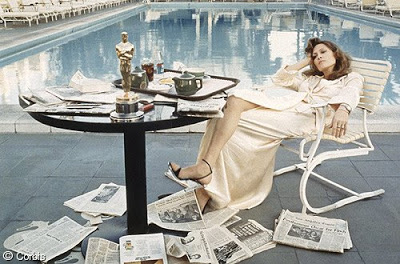
This has to be one of the most priceless photographs of all time- Faye Dunaway post Oscar victory, 1977. It will have to supplement

BOOOOOOOOOOOOOOOM!

from now on.  Go score some victories so I can post Faye again soon.


Al Winner Al is Bringing It July 15th

June 26, 2014

(Guest Post by Matthew Ladner) Amazon Prime just informed me that Al Copeland Humanitarian Award Winner Weird Al has a new cd coming out July 15th.  The internet refused to reveal the songs on the collection in a 30 second google search, but there are so many pop songs aching for parody now that Weird Al will likely be shooting fish in a barrel. Just in case no one else is going to suggest it, a Weird Al/Me First and the Gimme Gimmes team up would be totally awesome unless it was so awesome that it tore a rift in space-time, unleash cosmic parody forces beyond human comprehension or control, in which case it would be really TOTALLY AWESOME.


Fordham Continues to Advocate Playing with Fire

June 25, 2014

(Guest Post by Jason Bedrick)

Imagine the following playground scenario:

Tommy: Hey guys, I have a great idea! Let’s all go play with fire! It’ll be fun!

Cate: No way, Tommy. Playing with fire is very dangerous. Someone could get hurt!

Jay: Cate’s right. I used to think playing with fire was a good idea, but I’ve seen other kids get burned.

Milt: Yeah, plus, there are lots of ways to have fun without playing with fire!

Tommy: Friends, you’ve taught me an important lesson about the dangers of fire. Okay, here’s my new idea: let’s all go play with fire, but if other kids don’t want to, then playing video games is totally cool too. How’s that sound?

If you find Tommy’s response puzzling, then you’re likely to find the Thomas B. Fordham Institute’s “revised” approach to educational choice and accountability equally puzzling.

In the debate between parental choice and top-down government mandates, the Fordham Institute follows Yogi Berra’s advice: “When you come to a fork in the road, take it!” Fordham supports choice, but argues that the only way to prevent parents from choosing “bad” schools is to regulate them out of existence. In January, Fordham released a “toolkit” for policymakers that advocated requiring all private schools to administer the state test (i.e. – Common Core) and publish the results as a condition of accepting school vouchers or even tax-credit scholarships. Lower-performing schools would be forbidden from accepting students with vouchers or scholarships going forward.

Fordham’s proposal elicited a torrent of criticism. Andrew Coulson, Director of the Center for Educational Freedom at the Cato Institute, and I argued that their approach would stifle educational diversity and innovation. Jay Greene noted that standardized tests capture only a fraction of the benefits of educational choice. James Shuls of the Show-Me Institute pointed to the evidence that parents hold a range of legitimate views regarding what constitutes quality. Robert Enlow, President of the Friedman Foundation, reminded Fordham that such top-down accountability has not worked in government schools—something that Fordham itself once lamented when it called certain test-based accountability measures an “illusion.” Rick Hess of the American Enterprise Institute expressed concern that without any clear limiting principle, mandating state tests could easily lead to mandating “certified teachers, a state-approved curriculum, state-approved facilities, a state-approved plan of emergency services,” etc.

Last week, Fordham’s incoming Executive President, Michael Petrilli, offered what he called an “olive branch” to Fordham’s critics:

While we didn’t agree with the all of the arguments forwarded by our friends, we did come to see the risk to private-school autonomy and innovation that a test-based accountability system could create. We also understood the particular sensitivity around using Common Core tests for this purpose.

Petrilli then explained that Fordham has updated its “toolkit” accordingly. But if you expected that recognizing “the risk to private-school autonomy and innovation” would mean abandoning the push to mandate state assessments (i.e. – Common Core tests), then Fordham’s “revised” approach will leave you scratching your head. In the “revised” toolkit, Fordham recommends that state policymakers:

Require that all students who receive a voucher (or tax-credit scholarship) participate in state assessments. (While we prefer state assessments as policy, we think any widely respected test that allows for ready comparison against other schools or districts is a reasonable compromise);

In case you missed it, Fordham’s “revision” is in the parentheses. Like little Tommy, Fordham claims to recognize the risk of playing with Common Core fire but continues advocating for exactly that (unless they need to compromise for political purposes, in which case other tests are totally cool “a reasonable compromise”). If Fordham truly recognizes the “risk to private-school autonomy and innovation” that Common Core poses, then why is it still calling mandatory Common Core testing as an initial preference?

Petrilli concluded by calling for “a round of Kumbaya” and then getting “back to work on expanding great educational options to lots more children nationwide.” However, expanding educational options should mean more than just which school best teaches to the Common Core tests. By all means let’s work on expanding educational options… but let’s do it right.


Milton Friedman’s case for ESAs from 1995

June 24, 2014

(Guest Post by Matthew Ladner)

Stephanie Linn from the Friedman Foundation with a great piece on ESAs noting that the great Milton Friedman foresaw the ESA design with a proposal for “partial vouchers”

“Vouchers are not an end in themselves,” Friedman wrote. “The purpose of vouchers is to enable parents to have free choice, and the purpose of having free choice is to provide competition and allow the educational industry to get out of the 17th century and get into the 21st century.” 
 
“Why not add partial vouchers?” Friedman asked. “Why not let (parents) spend part of a voucher for math in one place and English or science somewhere else.”
A longer quote from the original Milton Friedman column is well worth consideration:
No one can predict in advance the direction that a truly free market educational system would take. We know from the experience of every other industry how imaginative competitive free enterprise can be, what new products and services can be introduced, how driven it is to satisfy the customers — that is what we need in education. We know how the telephone industry has been revolutionized by opening it to competition; how fax has begun to undermine the postal monopoly in first-class mail; how UPS, Federal Express and many other private enterprises have transformed package and message delivery and, on the strictly private level, how competition from Japan has transformed the domestic automobile industry.

The private schools that 10 percent of children now attend consist of a few elite schools serving at high cost a tiny fraction of the population, and many mostly parochial nonprofit schools able to compete with government schools by charging low fees made possible by the dedicated services of many of the teachers and subsidies from the sponsoring institutions. These private schools do provide a superior education for a small fraction of the children, but they are not in a position to make innovative changes. For that, we need a much larger and more vigorous private enterprise system.

The problem is how to get from here to there. Vouchers are not an end in themselves; they are a means to make a transition from a government to a market system. The deterioration of our school system and the stratification arising out of the new industrial revolution have made privatization of education far more urgent and important than it was 40 years ago.

In other words, it is time for the parental choice movement to include but also look beyond the stock of private schools we have today. Friedman had this figured out long ago, it is time for the rest of us to catch up (as usual).


Governor Scott signs Personal Learning Scholarship Accounts law

June 23, 2014

(Guest Post by Matthew Ladner)

Governor Rick Scott has signed the nation’s second account based choice program. Go Team ESA!