Editors note: Ben Ladner is a Senior at the Arizona School for the Arts in Phoenix.
Tell me if you’ve heard this one before: a nerdy, socially confused teenager looking for a place he can fit in discovers community in a game and the fellow people who are obsessed with it. I suspect you all know the story – more than one of the regulars here grew up on Dungeons and Dragons. But while I’ve raided a few bandit hideouts in my time, my story is about a different but no less revolutionary game: Magic: the Gathering.
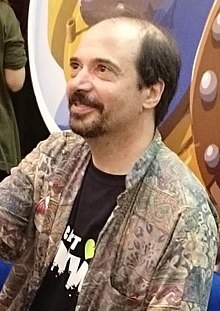
In the early 1990s, Richard Garfield was an unkempt mathematics post-grad who designed games in his spare time. He and a friend pitched a board game to Peter Adkison, CEO of Wizards of the Coast, a small gaming company looking for an innovation to sell, but it was too complex for Adkison’s scrappy firm to handle. Adkison wanted something smaller and simpler, that could be played quickly between rounds at larger conventions. Garfield told Adkison that he might have something, what he returned with was nothing short of a revolution.
Magic: the Gathering, released in 1993, is a combination of baseball cards and chess. Cards representing various high-fantasy monsters, arcane spells, and powerful magic items can be collected and traded, but each has play value in a strategic, intellect-based game that pits players and their decks of cards against each other. Players use their collections to fine-tune their decks in a game world that is ever-changing as regular expansions add new cards to the mix.
Magic was the first game to combine the two previously unrelated concepts, and it has become no less of a paradigm shift in the gaming world than D&D was a generation earlier. Trading card games are everywhere now, and Magic is still going strong with over 20 million fans. Its rise coincided with that of the internet, leading to a strong presence there among the players. Some have become celebrities of sorts, leading the way in the world of e-sports as they compete in professional-level, livestreamed tournaments. I, for one, care much more about the Magic: the Gathering Pro Tour than I do about any mainstream sport.
I am a nerd. I lead a robotics club at my school, unabashedly cosplay for no reason, and have a map of the Klingon Empire pinned up in my bedroom. For most teens, this would be a social death sentence, but Magic saved me. I play in local tournaments whenever I can, and the community of people I have met at these events is no less nerdy or obsessed that I am. I feel comfortable being me when I’m there. Among the older players are people I would look up to as mentors and examples. I, and millions of others, owe Magic an unpayable debt. It has given us an outlet for our creative energy, a community, and a common bond.
As for Garfield, he pocketed 100 million dollars when the wildly successful Wizards of the Coast was bought by toy giant Hasbro, and moved on with his life. While he continues to design games, he understands and accepts that he will forever exist in the shadow of his creation. In his words; “Pretty early on, I realized that trying to make the next Magic only going to make me unhappy.” Garfield’s later projects, which have seen some success, are made with the same obsessive passion that brought forth Magic, not in some futile attempt to measure up. That’s not to say Garfield is above continuing to tinker with Magic. He returns to the game from time to time, and the expansions he helps create, such as 2005’s Ravnica: City of Guilds, the gothic-horror themed Innistrad, released in 2011, and most recently Dominaria this year, are among the most innovative and best-loved by players.
Richard Garfield created something that has made life better for millions of nerds like me. And he did it because he is just as much a nerd as we are. He wasn’t in it for money or recognition, though he has received much of both. He just wanted to make something cool. For that, he is worthy of the title “humanitarian of the year.”
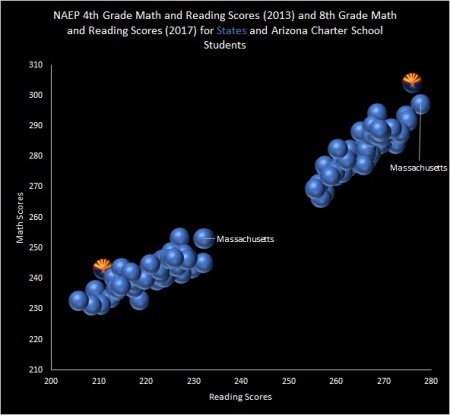
So out riding my bike on the canal this morning I had the idea for a new visualization for cohort NAEP gains. Here’s what it looks like:
So a bit of explanation: the shotgun blast at the lower left part of the chart are 4th grade math and reading scores for states in 2013, with Arizona charter school students included. Arizona charter school students didn’t blow anyone away with their math and reading scores as 4th graders in 2013, but this is in the range of what many would expect from a majority minority school system operating with very modest funding.
Fast forward the clock to 2017 and those kids were 8th graders, which are the shot gun blast of dots on the upper right. Lo and behold, that majority minority student population is **ahem** outscoring states that spend more than twice as much per pupil and have the advantaged end of the achievement gap stick. Arizona charter students pulled this off despite spotting such states a head start in the form of higher 4th grade scores.
Wait…I’m picking up a disturbance in the Force. I can feel you thinking “Ok but students come and go from charter schools and this must explain some of those gains.”
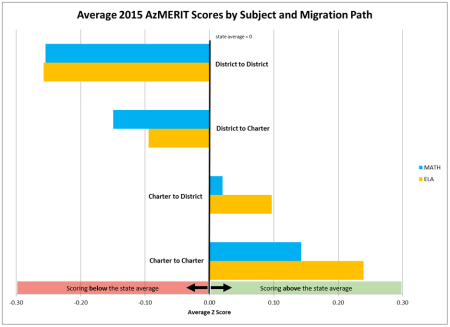
Actually kids do come and go from charters, but to the extent this is happening Arizona charters are sending out kids with higher levels of academic achievement and bringing in kids with lower levels of achievement. From the Center for Student Achievement:
So if numeracy and literacy are an important part of what you are looking for in a school for your child, you might want to move to Arizona. Once here you can consider enrolling your child in one of our pluralistic charter school offerings which focus on everything from the arts to equestrianism to the classics. As far as I can tell, it’s the finest system of public education in the country, and it is available to you free of charge delightfully without a crushing level of taxation. Plus…bring your golf clubs:
Update from the Arizona Republic on Scottsdale Unified enrollment trends. I am a SUSD taxpayer and have taken a look at SUSD from time to time as a microcosm of how school choice programs interact. Scottsdale faces a good deal of competition from charters and to a lesser degree private schools, and also has been unusually open to open enrollment transfers for a fancy district.
So first the good news: SUSD academic performance continued to improve with the release of the 2018 AZMerit scores:
A previous district sponsored study found that the top issue identified by families living in the Scottsdale district but sending their students elsewhere was “academic rigor.” This seems to be trending in the right direction.
Now for the not so good news: as touched upon in the Republic story: looking past scandals, investigations and resignations the district has a very large amount of empty space and declining enrollment. The district also has up to $229,000,000 to spend on facilities, a source of said scandals, investigations and resignations. District enrollment is down 4,800 from the peak in 2002 and trending down. A 2012 Auditor General report found the district utilizing only 65% of capacity and the projections are for still lower enrollment. $229m is a lot of money to spend on a 22,000 and falling enrollment count and district leaders should ponder long and hard the factors that influence enrollment decisions, such as those revealed by their previous survey (“lack of academic rigor” is not easily mistranslated into “building not spiffy.”)
The Republic article details an agonizing set of choices facing the Scottsdale Unified board- spending money on facilities with declining enrollment runs the risk of needing to close the facility regardless at some future point. Without increased enrollment, closures will become inevitable. Communities don’t react well to school closures, but Scottsdale parents have been voting with their feet. A potential best strategy going forward was reported on in the Republic story:
Board member Kim Hartmann challenged the board to think about ways schools can improve to make them more desirable.
Hartmann called attention to Cheyenne Traditional School, with 955 students, which has high AzMERIT scores and has captured students from outside the district through open enrollment.
Scottsdale Unified has enough empty space to open a dozen or more Cheyenne Traditional Schools, or (better yet) a mix of other specialized programs. Who should decide which Scottsdale Unified campuses should remain open? Why not leave the decision up to parents? If the district can give more parents what they are looking for, fewer campuses will need to close-expand rather than shrink the pie. Why not give the opportunity for declining enrollment SUSD schools to specialize? Why not co-locate micro-school concepts in half empty campuses? Why not lease empty space to charter school operators to generate revenue?
The best Arizona districts are not sweating competition-they are beating it with a club. There will always be a Scottsdale Unified, however it do well to adapt to a new era and seize the opportunities afforded by it. SUSD has the potential to produce higher levels of parental satisfaction and student achievement by increasing the diversity of approaches to education. If the SUSD board would like to avoid endless hours of painful and emotional hearings on school closures (and who wouldn’t?) they would do well to delegate the decision on which campuses to close to Scottsdale parents and educators, who just might choose “none of the above.” The board should imo give educators the opportunity to specialize their schools and seek new enrollment, and create a minimum enrollment/space standard for closure. Let parents sort out the rest.
The shape of things to come is discernable on the youtube channel of a delightfully crazed heavy metal guy’s every growing catalogue of cover songs made from a home-based studio in Norway. Leo Moracchiloli, a former member of multiple obscure Nordic thrash bands, has created music that has been viewed over 400,000,000 times and counting. As Voicecouncil explained:
Every week for the past two years, Leo Moracchioli has been posting a fully-produced recording and music video to his wildly popular YouTube channel, Frog Leap Studios, which has reached a remarkable 1,050,000 subscribers.
This one-man-show has found a new brand of genre-crossing that is hitting the spot for multitudes of hungry fans: heavy metal covers of hit songs.He sings the vocals, plays all the instruments, creates the arrangements, edits, mixes and produces every song, right down to shooting and starring in the videos (occasionally enlisting his young daughter as an apt co-star).
It is almost unheard of for an artist to single-handedly produce musical content at the rate and volume he does.
It is not just metal covers that he creates. He also puts out instructional videos and acoustic covers, reaching up to a dozen videos per month.
He says he has had fans telling him he should take a break once in a while, but he can’t bring himself to skip a week.
“You wouldn’t do this if you didn’t have the burn to do it,” he says regarding the insane pace of his work.
Leo is a fantastic example of disintermediation which is a fancy term for “cutting out the middle man.” Years ago I read an interview with the members the Austin band Fastball about record labels. You remember Fastball:
Anyway after The Way became a huge hit the interviewer asked the band members what it was like to be rich and famous. You could feel them shrugging as they explained they were not rich. One of the members said that he had redone his kitchen, but otherwise life had not changed much. The upshot of the article was that record labels basically profit like mad while artists not so much. If you are now thinking of the scene in Bill and Ted’s Excellent Adventure where Billy the Kid says “Here’s the deal-what I win, I keep. What you win, I keep!” give yourself a gold star as it pretty much sums up record labels.
Oh brave new world where you don’t need a record label!
The Jayblog was also a bit of disintermediation when it launched in 2008. I think Jay, Greg and I were all working at think tanks at the time, but just in case you wanted more edu-nerdy goodness, Jayblog was dishing it out, automatic for the people. Like the Prime Directive that guides the JPGB, Leo is obviously primarily doing the videos to entertain himself, which is a large part of their charm. Just imagine Leo trying to sign a record label contract in the 19XXs. Not happening, but lo and behold people get a huge kick out of him. In fact, if I recall correctly, the plot of Bill and Ted involved some unexplained technological change that allowed their bandto become a cultural phenomenon. Leo is not quite to the level of Wyld Stallions as a cultural phenomenon, but he is doing pretty good so far and he can actually play his instruments. I’m therefore pleased to nominate Leo Moracchiloli for the Al Copeland Humanitarian Award.
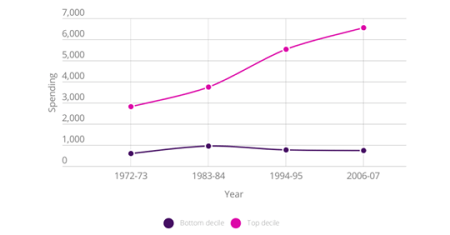
Enrichment- coming in various forms such as tutors, club sports, Kumon, Mathnasium etc. has become increasingly ubiquitous among the posh. It seems entirely normal, but we should recognize the significance of this trend. In addition to the equity issue staring back at you in this chart, there is also something else worth noting in the data: upper-income America continues to put their children into public schools in high numbers but they are solely relying upon those schools less and less. It’s always been the case that all American families should know better than to entirely rely upon any school to provide the totality of the education of their child. Upper income families have the ability and increasing willingness to act. Jay refers to this trend as hybrid homeschooling. I think of it as a better American version of Japanese cram schools.
In places like Japan and South Korea university admission is highly selective and competitive, and families routinely send their children to what are called “cram schools” after their regular school to prepare for admission exams. Andrew Coulson made a convincing case in Market Education that these private after school programs were more responsible for Japan and Korea’s high PISA scores than their public school systems.
To which America says “I see your obsessive preoccupation with standardized test prep mania and raise you a hackerspace for kids!”
If that’s not your child’s cup of tea don’t worry because there are many other options. On the academic side you can get Advanced Placement coursework and textbooks for free, and take the AP exams for a shot at college credit for approximately $85 per course. That however is just academic stuff, albeit academic stuff that can earn you college credit at an amazingly low price- how about something fun like animation camp? Or museum programs? If you go to Cottageclass.com you can find all kinds of stuff- from art, music, wood shop to ethics classes.
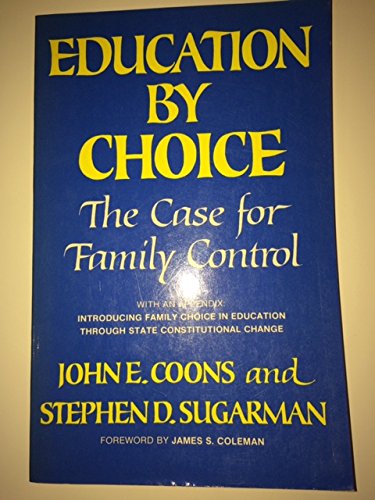
The trend towards enrichment may in fact be in part fueled by the overreaching of standardization in public education. Jack Coons and Stephen Sugarman for instance noted in Education by Choice:
To the extent that schools of choice must conform to state imposed curriculum requirements, the principle of family control is compromised. Each centrally imposed curriculum prescription or prohibition tends to shrink the proportion of families that can be satisfied. If the state demands too much the effect will go beyond simply adding or eliminating certain courses; entire schools will be excluded. For example some preexisting private institutions would refuse to participate if sex education were required, others would refuse if it were forbidden. It seems sensible for us for the state to impose very few restrictions or mandates. In general schools should be free to please themselves and their customers.
Coons and Sugarman go on to say that in a choice system we should allow individual public school campuses to decide upon their curriculum as well. Such freedom is far more plausible in a liberal system of choice, and in the absence of that freedom local control was largely abandoned in a largely futile effort to improve outcomes through centralization. In many ways Coons and Sugarman arrived a place similar to John Stuart Mill, who had warned presciently:
All that has been said of the importance of individuality of character, and diversity in opinions and modes of conduct, involves, as of the same unspeakable importance, diversity of education. A general State education is a mere contrivance for moulding people to be exactly like one another: and as the mould in which it casts them is that which pleases the predominant power in the government, whether this be a monarch, a priesthood, an aristocracy, or the majority of the existing generation, in proportion as it is efficient and successful, it establishes a despotism over the mind, leading by natural tendency to one over the body. An education established and controlled by the State should only exist, if it exist at all, as one among many competing experiments, carried on for the purpose of example and stimulus, to keep the others up to a certain standard of excellence.
American families have deep misgivings about the conduct of public schooling, especially the modern practice of standardized testing. We should aspire to a schooling system that is a good deal more than providing test-prep custodial care for the advantaged before they move on to more genuine educational experiences after school. Likewise, the equity issue in the above chart deserves to be addressed but realistically must be addressed within a context of increasingly constrained resources. The trend towards top-down standardization in K-12 has predominated in recent decades and produced too little at too great a cost despite good intentions. It’s time for a more liberal approach that gives opportunities to educators to create schools and educational experiences, and families the opportunity to select among them. The last 40 years has gone mostly wrong, some bold states should see if Mills, Coons and Sugarman had it right.
The above chart comes from Robin Lake’s Education Next piece on the slowdown in charter school growth in the Bay Area. This article focused on three culprits: facility challenges, internal challenges and political backlash. There were several interesting nuggets in the “internal challenges” section, for instance:
Charter advocates in the Bay Area seem to subscribe to a “survival of the fittest” ethic, which holds that because running a successful charter school requires so much capacity, if potential operators are scared off from pursuing an application without a lot of handholding, it’s probably for the best. This was a reasonable strategy in the early days when the supply of savvy entrepreneurs was plentiful and charters were booming, but it may be time to look deeper for quality operators and provide more support.
Translation: I had my legal department cut and paste from their last 700 page charter application, if you don’t have a legal department too bad.
Then:
Meanwhile, the funding community is not sufficiently supporting these smaller players to make it worth their while. In interviews, many leaders told us they believe that the Bay Area’s supply of effective schools is limited today by the philanthropic funding strategies used in the past. In particular, there is a consistent perception that single-site schools and school leaders of color who are not tied into local funder networks have historically not been connected to dominant funding channels.
Translation: It’s easier for large philanthropic foundations to write big checks to other big organizations than to seed mom and pop operations.
Further hampering growth, the charter leaders we interviewed said that start-up dollars are the hardest to come by in the communities they consider most viable for charter school expansion. Operators are finding it easy to access philanthropic funding in urban Oakland and San Francisco, but see those places as “over-saturated” and gentrifying. By contrast, in the less urban area of western Contra Costa County, there are more available facilities and a growing population of students that match most charter schools’ target populations—but fewer opportunities to access philanthropic dollars to start up new schools.
As one charter-school operator said, “People are moving farther and farther away from cities [because they can’t afford to live there] and into poor-performing school districts. An organization like KIPP—if they want to double in the next five years—they’ll need to go in these areas. But charters are not going there because there is no funding there.”
Translation: America is morphing into Paris, France whereby the wealthy people live in the city and the not-wealthy in the suburbs or exurbs. Philanthropists have yet to appreciate just how quickly this is happening.
Like any complex phenomenon, the charter school slow down certainly has more than one explanation. None of these factors would seem to explain why the last few states to pass charter laws have opened few to no charter schools, why the highly ranked Indiana law that passed in 2001 still hadn’t met the minimum subgroup reporting requirements for NAEP in 2017 (you can often get scores for male Asian students as a point of reference) etc. In other words Lake’s look into the SF area was informative, but perhaps not fully revealing.
As a determined optimist, I’m going to say that the charter movement is only mostly dead, which means it is partially alive. Let’s get him to Miracle Max quickly however because it doesn’t look good…
Reason hosted a debate between Stiglitz and Easterly on the role of markets in reducing poverty. A questioner from the audience asks Professor Stiglitz to address his endorsement of Hugo Chavez in 2006 and 2007 in a respectful but direct fashion around minute 51. Eventually after a fumbling attempt to claim that some aspects of the Chavez program were good, Stiglitz admits that in the end while Chavez rhetorically embraced higher and more inclusive rates of economic growth, in the end “he didn’t know how to do it.”
Venezuela sits atop the world’s largest proven oil reserves but production is in free-fall along with the overall economy. Starvation and hyper-inflation run rampant, and the country’s economy dives ever deeper into a humanitarian crisis. Meanwhile, a group of Texas wildcatters have a single region outproducing the country with the largest proven reserves despite the fact that we’ve been drilling in that region for a century. Friedman once said that if you put the federal government in charge of the Sahara they would produce a shortage of sand. This was not alas much of an exaggeration.
The double-plus good propaganda generators are at it again here in the Cactus Patch- in the latest edition of the two-minute hate, the Grand Canyon Institute claims each private choice student is costing the state general fund more money than the public school students. In the instant-classic turn of phrase by Robert Pondiscio however, it is important not to make vast decisions based on half-vast data.
You can watch a public affairs show interview with the author here. In the author states that the analysis supports abolishing private choice programs. Just how half-vast is the Grand Canyon Institute analysis? Well they’ve basically done a two variable regression analysis with private school enrollment as the dependent variable, and they’ve hung their entire estimate on one of the two regression coefficients. The first problem, which sinks the entire analysis by itself, is that their dependent variable for Arizona private school attendance is unreliable.
GCI uses a federal source for private school attendance by state. That source however does not have anything like a 100% response rate (see the appendix) and lists 320 private schools in Arizona. If one however goes to the Arizona Department of Revenue report on private school tax credits, you find tax credit scholarship tax credits going to 362 different private schools. The list of 362 may or may not be exhaustive. So CGI has a flawed dependent variable on their hands- the reality is that we don’t know the number of students attending Arizona private schools- we don’t even know the number of schools.
Second off a regression analysis with two independent variables (% of students attending charters and private choice dollars, respectively) would likely a grade of incomplete in an Introduction to Statistics class-if the instructor wanted to encourage the student and was feeling generous. The universe of other factors which influence private school attendance. A quick google search for instance revealed an analysis testing 14 separate variables– many of which were statistically significant. Arizona’s economy crashed during the period examined in the CGI analysis for instance, and the above analysis finds family income explains variance in private school attendance. Considering that the entire GCI analysis rests on a regression coefficient, failure to control for more than two variable would be deeply suspicious even if they had a valid dependent variable, which they don’t.
In short, the Grand Canyon Institute’s elephant went in search of a way to claim that Arizona’s private school choice programs were bad, and sure enough they (predictably) found it. The analysis reveals much more about CGI than private choice programs in the end.
Fall has arrived in an even-numbered year, which means that in addition to football there are also elections. Here in the Cactus Patch our political conversation has been even more boisterous than usual. Back in 2016 an individual deep in the council of left-of-center Arizona politics told me that the plan was to make the 2018 election about K-12 education and to run David Garcia for Governor. Garcia did indeed win the Democratic Party’s nomination (the Arizona Education Association announced their endorsement for Garcia at a RedforED rally last spring) and K-12 does indeed look to be the major election issue, so mission accomplished on both fronts. Ballot propositions may however have a much larger impact on school funding than the officeholder races, but not in the way commonly supposed.
Hysteria reigns supreme in the K-12 discussion. A steady stream of reports from the ACLU, the Grand Canyon Institute and the Arizona Republic’s ongoing Two-Minute Hate series on charters and choice programs appear to have been coordinated with impressive precision. Each of these things deserve to be addressed on their own merits (or lack thereof-it’s a mixed bag on substance imo with a spectrum ranging from good points to shallow propaganda) but as far as multi-organizational timed to an electoral calendar efforts go:
In the midst of all this political mosh-pit I saw something that struck me the other day- a Twitter avatar that said “No on 305/Yes on 127.” These reference two ballot propositions on the November ballot-Proposition 127 would require the state to generate half of it’s energy from renewable sources by 2030, while Prop. 305 will ask voters to either confirm or reject the expansion of the ESA program that passed in 2017.
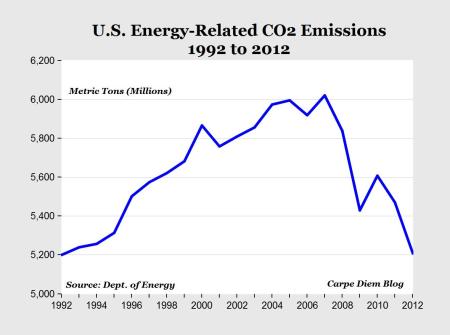
The No on 305/Yes on 127 combo struck me because it seems extremely likely that Prop. 127 would take more money out of Arizona district classrooms than 305, and by a very wide margin. I claim no expertise on energy policy, but I found the take of the Washington Post and of Peter Zeihan in the Accidental Superpower on the subject to be compelling. So first off, some good news:
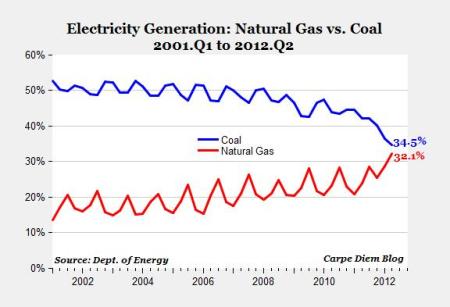
Things are headed in the right direction and it is mostly because natural gas is cheap, cleaner and is replacing the use of coal in generating electricity.
The Washington Post, not of anthropomorphic climate change denial fame, rightly celebrated this trend. Noting that natural gas reduces emissions by half the Post editorial board noted:
True, half the emissions does not mean no emissions. But the United States does not have to eliminate its carbon footprint all at once, nor should it. Doing so would cost far too much. Instead, natural gas can play a big role in transitioning to cleaner energy cheaply.
When something is far too expensive for the Washington Post editorial board’s tastes, it is a good idea to pay close attention. Peter Zeihan also addressed this topic in the Accidental Superpower. He generally buys the notion of anthropomorphic climate change, but noted that the next generation of power generation plants were being built to use natural gas due to market forces, that this was considerably cleaner than coal burning, and that the life span of these new plants would be about 30 years. Sometime in the next 30 years Zeihan reckons that one or more of the many possibilities for alternative energy will pencil out in terms of economic viability-we just don’t know which one(s) yet.
Google around a bit and you will read about experiments in everything from artificial leaves to fuel producing microbes to crystal encased nuclear waste fueled batteries to clean coal fuels. Which of these-or something else- becomes economically viable is anyone’s guess, but it is not likely to happen on a deadline adopted by Arizona voters in 2018. How much sense does it make to make a massive investment in alternative energy technologies before any of them pencil out, especially when some of them eventually will?
So back to Arizona, Prop. 127 and education. The conversion from coal to natural gas is already happening in Arizona. This is good because right now the Texas oil fields are simply flaring off natural gas as a waste product until the pipeline infrastructure is built to collect and sell it. In fact you can see the flaring from outer space:
The Wall Street Journal recently wrote that there was enough natural gas being flared off to power a small state-one million dollars worth per day. I volunteer Arizona to be that state rather just have them burn it off without generating any power and having us burn coal to generate our electricity. The transition from coal to natural gas has already begun in Arizona, and happily it is being driven by market forces rather than mandates.
Prop. 127 however will force the renewable issue and the companies that generate the state’s power have detailed the enormous costs to such a move. Consumer rates are estimated to double in price. Since the initiative does not define nuclear power as “renewable” so opponents claim Prop. 127 would necessitate the closure of the nation’s largest nuclear power plant which produces **ahem** zero carbon emissions and probably (I’m guessing) cost the GDP of a small country to build.
Given what would be a mad scramble to create renewable energy, one additionally suspects that it would damage the ongoing conversion of coal burning plants to natural gas. Converting coal burning plants to natural gas can be done but it takes time and money-but there is a payoff in the form of low natural gas prices-it pencils out, and is cleaner. Natural gas capacity would not help meet the mandate so the time and effort to convert to natural gas seems very likely to be diverted on a snipe-hunt of utility scale alternative energy sources ready for prime-time.
Between the increased cost of electricity and the foregone taxes from plant closures, the Arizona Public Service Electric Company estimates a loss of $670,000,000 to Arizona education providers in their service area by 2030. The expensive rates would not stop in 2030. That’s a big hit to education budgets and is not a statewide figure, with APS serves only part of the state.
So let’s compare Prop. 127 to Prop. 305. The ESA expansion under voter consideration contains a cap on the total number of participants of 30,000. Arizona has about 1,200,000 students and often gains 30,000 kids annually. We’ve also learned in recent years that the number of district open enrollment students is approximately twice as high as charter school students, and charter school students outnumber private choice students ~3 to 1. So from the perspective of an individual district campus with enrollment loss, other district schools are the primary competition, charter schools a secondary source of competition, and private schools a distant third. Centrist Arizona Republic columnist Joanna Allhands pointed this out in a column shortly after the ESA expansion passed. Allhands is not a fan of the ESA program but she sees through boogy-man stories:
But it won’t be the death knell to your neighborhood district school. In fact, I’m not sure many will even notice a difference.
Allhands went on to posit that charter schools were already scratching much of the Arizona school choice scratch itch, and that there was no reason to expect a mad rush to private schools even with broadened ESA eligibility. She could have added by the way that while there are 4,500 ESA students statewide, Scottsdale Unified has 4,000 open enrollment students from out of district, and it is only one of Arizona’s 230 school districts. “Scottsdale is DRAINING MONEY from nearby school districts-we’ve got to STOP THIS!!!!” said no one, ever, oddly enough. The ESA expansion can serve as an important tool for families looking for the right-fit education for their child, but the program is nothing near the threat to school budgets as doubling their utility costs.
So my friends on the Arizona left are actively supporting a massive drain of funding out of Arizona classrooms (what you spend on air-conditioning cannot be spent on teacher salaries). Meanwhile they have also invested a large effort in putting another ballot measure up because in large part they fear that it will have a large impact on district finances but it won’t. Churchill told us that democracy is the worst form of government except for all the other ones that have been tried. I remain hopeful that voters will exercise good sense in all of this, but…
Over at RedefinED Jack Coons reflects on the 40th anniversary of the publication of the book Education by Choice with his coauthor Stephen Sugarman. Dr. Coons in some ways too modest, saying that he and his co-author “did not anticipate” Education Savings Accounts, but in effect I believe that they did. Coons and Sugarman envisioned parents, including low-income parents, having the power to create “personally tailored education” for their children, using “divisible educational experiences.” This sounds very close to education savings accounts/multi-provider education to my ears:
To us, a more attractive idea is matching up a child and a series of individual instructors who operate independently from one another. Studying reading in the morning at Ms. Kay’s house, spending two afternoons a week learning a foreign language in Mr. Buxbaum’s electronic laboratory, and going on nature walks and playing tennis the other afternoons under the direction of Mr. Phillips could be a rich package for a ten-year-old. Aside from the educational broker or clearing house which, for a small fee (payable out of the grant to the family), would link these teachers and children, Kay, Buxbaum, and Phillips need have no organizational ties with one another. Nor would all children studying with Kay need to spend time with Buxbaum and Phillips; instead some would do math with Mr. Feller or animal care with Mr. Vetter.
Coons and Sugarman were talking about education, not just schools, in a way that is today becoming increasingly practiced. They wanted parents in the driver’s seat. In “Education by Choice,” they suggest “living-room schools,” “minischools” and “schools without buildings at all.” They describe “educational parks” where small providers could congregate and “have the advantage of some economies of scale without the disadvantages of organizational hierarchy.” They even float the idea of a “mobile school.” Their prescience is remarkable, given that these are among the models ESA supporters envision today.
If you would like to see how parents are already doing this with their own money- see here. If you want an overview of how it is being done in the context of an ESA program-see here. If you would like to see ESAs in action, see here:
Multi-vendor education has been growing in different forms for decades-with families enrolling in after-school/summer programs of various sorts on one end of the spectrum to full blown homeschooling with multiple service providers on the other. Coons and Sugarman were way ahead of their time, and this is just getting started.



 Posted by matthewladner










 Jay P. Greene's Blog