Civics Ignorance: A Very Long Track Record of Public School Failure

September 17, 2008

(Guest post by Greg Forster)

Around these parts we sometimes discuss the failure of civic education in government schools. Our focus is usually this body of research, consistently showing that private school students have stronger democratic values than public school students. And of course Jay has more recently done some pathbreaking research on how civic values are embodied (or not) in public school names (which seem to have undergone a dramatic change in the past 50 years) and public school mascots (which do not appear to have done so).

But of course most people come at this issue from a different angle, bewailing the results of the breakdown of civic education in government schools – our high school graduates don’t know when the Civil War happened, etc. – without saying much useful about the cause.

Well, in response to a recent article on the subject, yesterday’s Wall Street Journal included an intriguing letter to the editor drawing our attention to a 1943 study of the civic knowledge of 6,000 incoming freshmen at the nation’s top colleges. According to the letter, over half did not know the dates of the Civil War and could not locate St. Louis on a map, and nearly two-thirds mistook Walt Whitman for bandleader Paul Whiteman.


Separated at birth?

The study doesn’t appear to be on the web, but I did find this Chronicle of Higher Education article that cites some more findings from it. Apparently only 6 percent were able to name the original 13 colonies. The article also cites a 1917 study that found widespread ignorance of historical items that history teachers said “every student should know” at all levels from elementary school to college.

(Digression: The 1943 study was conducted by historian Allan Nevins of Columbia. While searching for it online, I stumbled across the fact that Nevins is widely credited as the founder of the field of oral history, having been the first to systematically seek out and record on tape, for the use of future scholars, the recollections of persons who had witnessed events of historical significance. Fascinating! Don’t say you never learned anything from Jay P. Greene’s Blog.)

So it seems that on civics education, as on the subject of reading and math scores, the reason we have an outrageous and unacceptable failure of outcomes is not because our schools have undergone a recent decline but because our schools have a consistent, very-long-term record of shocking underperformance. To quote an author who used to be a leading scholar of the history of education, there was no golden age.

What to make of this? To judge from the Chronicle article, some seem to think that we should find it comforting rather than all the more disturbing to know that the failure of civics education is not new. Clearly it does mean that civic ignorance is not a sign that the Republic is in immediate jeopardy of an existential crisis, and the overheated rhetoric to that effect needs to be toned down. On the other hand, the long-term damage done by civic ignorance is going to be all the worse and all the more difficult to repair. It appears that the failure of public schools to teach civic knowledge and values is not the result of a recent change that might be attributed to transitory influences (such as 1960s radicalism) but a fundamental flaw at the heart of our educational institutions. I find the latter thought more daunting than the former, not less.

But there is hope. As I mentioned at the outset, private schools do a better job of civics education. That gives us a clue as to what that fundamental flaw in our educational institutions is (they’re a government monopoly) and how we can go about setting it right.


Pass the Popcorn: In Praise of Sequels . . . But Not These Sequels!

September 12, 2008

Good Will Hunting 2: Hunting Season! (It’s Kevin Smith, so use caution)

(Guest post by Greg Forster)

Sequels are a good thing. Why does everybody complain about them?

Do they represent a new trend, one whose influence might be negative? No, they’ve been around since the medium of film began. If you’re going to assert that sequels have ruined the movies, what’s your control group?

Are sequels on average lower in quality than non-sequels? It seems unlikely. Sure, most sequels are bad. So are most other movies. That’s just the way it is.

And that’s the starting point, I think, for why people get this bee in their bonnets about sequels. The one thing sequels have in common is that they all follow upon, and thus invite comparisons to, a successful movie – the one that started the franchise. Since the first movie in the series is always one that a lot of people thought was good, and most movies are bad, statistically it will always be unusual for a sequel to live up to the standard set by the original. And since that’s the metric we judge them by, we dislike them.

But sequels do for movies what brands do for other consumer products: they convey information about the content of the product, thus helping consumers make a more informed choice.

It’s true that the imperatives of the movie business create much stronger incentives for filmmakers to “dilute the brand” than are present for other consumer goods. Thus, the extremely strong trend for movies to get worse as a franchise ages. In some of the older francises, you can actually trace the life cycle from awesome to mediocre to brain-numbingly stupid to the franchise reboot that brings you back to awesome. (Cue Elton John: “It’s the ciiiiiiiiiiiiiircle of liiiiiiiiiife . . .”) Occasionally you get a fallow period between the end of one cycle and the start of the next, where the filmmakers have realized something is wrong, so the quality gets somewhat better again, but they’re still trying to figure out how to get back to where they should be. And, of course, sometimes there’s a failed reboot.

By my count, James Bond has had six reboots since its debut. I include Goldfinger as a reboot because the previous two movies just don’t have the winning Bond formula down yet (in contrast to the books, where the Bond formula was actually in place from the very start). And Dr. No is in the “awesomeness” category solely because it was first – I dare you to sit all the way through it now. Few movies have aged worse.

Reboot Awesomeness Dr. No Goldfinger Live and Let Die The Living Daylights GoldenEye Casino Royale
Still Good From Russia with Love   The Man with the Golden Gun   Tomorrow Never Dies  
Passable     The Spy Who Loved Me   The World Is Not Enough  
Please Kill Me Now!   Thunderball Moonraker Licence to Kill Die Another Day  
Fallow Period   You Only Live Twice, Diamonds Are Forever For Your Eyes Only, Octopussy, View to a Kill      
Failed Reboot   On Her Majesty’s Secret Service        

And if that doesn’t get a comment thread going, nothing will.

But, having praised the phenomenon of sequels in general, let me balance the scales by making fun of some upcoming sequels that the world really, really does not need:

Huh? Of all the movies Pixar could be making a sequel to, they’re going with this?

All the world’s a racetrack as racing superstar Lightning McQueen zooms back into action, with his best friend Mater in tow, to take on the globe’s fastest and finest in this thrilling high-octane new installment of the ‘Cars’ saga. Mater and McQueen will need their passports as they find themselves in a new world of intrigue, thrills and fast-paced comedic escapades around the globe.”

Do you like that? Cars is now a “saga.” Wonder how many they’ll make before the well runs dry.

Uh . . . they all died. That’s the point of the story. What’s the sequel going to be about?

Movieinsider.com dryly notes of “Untitled 300 Sequel Project” that “no plot details have been announced.”

Maybe we get to watch them bury all the bodies.

The sequel will be shot in the Smithsonian. The perfect pair – a brainless movie franchise and the museum conglomerate that actually manages to make American history boring.

The project was started by Disney without Pixar’s involvement, solely to gain bargaining leverage over Pixar. In other words, they started it because they knew it was a bad idea and they wanted to hold Pixar’s baby hostage. The first thing the Pixar people did when they merged with Disney was kill this project.

Now they’re really making it. Check out the plot. Can even Pixar pull this off?

Where have you gone, Steve Martin? A nation turns its lonely eyes to you . . .

Rambo 5. Yes, Rambo 5. I would never make that up.

But after making fun of all these sequels, let me end on a positive note: Power of the Dark Crystal. See you in 2009.


Good Schools Don’t Reward Students . . . Except When They Do

September 10, 2008

(Guest post by Greg Forster)

Last week I ran a column on Pajamas Media defending the practice of providing students with tangible rewards, including money, for academic achievement. At almost the same time that went live, Fordham’s latest Gadfly came out with a column by Liam Julian attacking the practice.

In his column, Julian wrote that a “recalcitrant youngster . . . requires strict discipline, not bribes. David Whitman’s fine new book, Sweating the Small Stuff, illumines the wonders such discipline can work.”

To start with, I feel perfectly comfortable juxtaposing Julian’s paean to the stick with my defense of the carrot: “To train students at all, you need to motivate them primarily with something that they understand. That means either ‘bribes’ or punishments for failure. Bribes are the more humane option.” I didn’t intend that to mean that there should be no discipline – of course student misconduct requires punishment – but discipline should not be the motivator for success.

Nor is it, I believe, in the schools profiled by Sweating the Small Stuff. I think that in these schools, the real motivator is promising kids they’ll have a better, more prosperous, more successful life if they get with the program. And, as I argued in my column, promising kids prosperity later in life if they study hard now is not really different, in principle, from giving them tangible rewards now. The only difference is the time lag.

More important, I thought Julian’s remark was a little funny, seeing how the “neo-paternalist” schools praised by Fordham’s Sweating the Small Stuff rely so heavily on providing kids with immediate tangible rewards for success. KIPP schools even give kids a weekly allowance, which is reduced if they don’t behave.

I had planned to write a post this morning making this point to Julian. But it appears that Michelle Rhee, whose plan to establish rewards for success in DC is what set off Julian’s original article, has beaten me to it. On Flypaper, Julian writes:

I’m told that Michelle Rhee, who moments ago wrapped up a “Reporter Roundtable” here at the Fordham offices (I knew I noticed a soft glow emanating from our conference room), defended her plan to pay students for right behavior by pulling out the KIPP Card.

Julian is not impressed:

First, let’s make the obvious distinction between KIPP dollars and American dollars, the former being valid tender only at KIPP-operated enterprises that stock wholesome inventory and the latter easily traded for 64-ounce buckets of cola and pornographic magazines. To be clear: There is a not insignificant difference between rewarding 12-year-olds with school supplies and cutting them each month a $100 check (as Rhee’s plan would do), which they can spend on whatever savory or unsavory products or activities they please.

But KIPP dollars are good for more than “school supplies.” For example, kids don’t get to go on big school trips to fun destinations – trips the kids really want to go on – if they haven’t got enough money to pay for it. So Julian isn’t quite playing fair here – KIPP does reward students with things they want.

And that’s not even the real problem. The real problem is that Julian is tacitly conceding the main point he defended in his original article: that kids need discipline, not bribes. Now, apparently, the new line is that it’s perfectly fine to provide kids with tangible rewards for success as long as you do it in the right way.

Well . . . OK then! So much for the position that all these kids really need is a good hard smack of “discipline.” Turns out they need tangible rewards, too. Julian just objects to what kind of reward Rhee wants to give them. That’s a carrot of another color.

Sure enough, Julian goes on to insist that some tangible rewards are “bribes” and others are not:

Second, Rhee’s plan is bribery and KIPP’s is not. To be clear: Rhee’s plan is engineered such that D.C. pupils who habitually miss class and refuse to do their work may, encouraged by offers of payment, deign to act as they already should. At a KIPP school, a consistent truant who balked at books wouldn’t be paid, wouldn’t be bribed—he’d be disciplined and maybe expelled. KIPP uses its KIPP Dollars as rewards for the good behavior that is already expected, not as an incentive to generate such behavior that wouldn’t otherwise be present. KIPP Dollars are simply one reminder among many to pupils that they shouldn’t act out, that they should be conscientious and decorous.

So rewards are not bribes when they are used to reward good behavior, but they’re bribes when they are used to reward the absence of bad behavior? I’m afraid Julian is simply manipulating the definitions of words in order to bring his condemnation of “bribes” into conformity with his praise of “neo-paternalism.” But you can’t redefine your way out of a flat contradiction. Obviously KIPP schools (and not only them) provide tangible rewards as a motivator. If this is OK with Julian, he should stop talking about “bribes” as though he had some kind of principled, across-the-board case to make against motivating students with rewards, and instead frame his case in terms of what kinds of rewards are acceptable in what kinds of situations.

Moreover, in a public school system where the kids have not chosen to be there, you don’t have the option of simply expelling everyone who doesn’t fall right into line. Obviously this is yet another argument for universal vouchers (if more arguments were needed), and someday when all students can choose where to go to school, schools (including government schools) will be able to demand more from the students who go there. But until that day comes, Rhee has to work with the system she’s got. Telling her to just do things the way KIPP does them is not a serious option for public schools.

Let me put that another way. In his original article, Julian said that rewarding students for showing up and behaving themselves is inappropriate because school attendance is supposed to be compulsory. Now he’s praising KIPP schools for expelling students if they don’t show up and behave themselves. Well, does he think public schools should start doing that? If so, then attendance at public school would no longer be compulsory, would it?

Does Julian really think that our approach to kids who don’t currently want to show up and behave themselves should be to tell them to stop showing up? If not, what does he propose to do to change their motivation, if not rewarding them for changing their behavior?

What this all really comes down to is the difference between coercion and choice. You can change people’s behavior by offering them something they want in return for doing what you want, or else by brute force. In terms of both effectiveness and ethics, rewards beat brute force eleven times out of ten.


PJM on Merit Pay in D.C.

September 8, 2008

(Guest post by Greg Forster)

Today, Pajamas Media carries my column on Michelle Rhee’s push for a limited, voluntary merit pay system in Washington D.C.:

To see how much has changed, just consider the amazing fact that about one out of every three public-school students in D.C. attends a charter school — government-owned but non-unionized, privately operated, and (most important of all) chosen by parents — instead of a regular public school. “We lost 6,000 students last year,” says Parker, referring to the number of students who moved from regular schools to charters. Six thousand students is over 13% of the city’s remaining enrollment in regular public schools — in one year.

Rhee isn’t the force behind charter schools or vouchers in D.C. She’s in charge of the regular public system. But the same widespread mandate for reform that made charters and vouchers successful have allowed Rhee to succeed with reforms like closing schools that were only there to create patronage jobs, introducing curriculum innovation, and taking on the unbelievable amount of bureaucratic waste in the system. And as vouchers and charters have sent a message that the system can’t take students for granted any more, the pressure for reform has only increased — strengthening Rhee’s hand.

By coincidence, the Washington Post‘s Marc Fisher has a column today emphasizing how the explosion of charter schools in D.C. was decisive in bringing the unions to the bargaining table, even on the issue of reforming the structure of teacher pay. Just as competition from globalization forced the private sector unions to start the long, slow process of giving up the ridiculous extravegances that they won from management in the 1960s and 1970s, thus rescuing the American economy from disaster, now competition in schooling is forcing the teachers’ unions to start the same process of giving up their own ridiculous extravegances – the biggest of all being a system of hiring, firing and pay that bears no serious relationship to job performance.


Pass the Popcorn: City of the Dark Knight (Issue #5)

September 5, 2008

(Guest post by Greg Forster)

Okay, okay, okay, okay, okay.

I saw it for a third time last night and now I just have to post one more City of the Dark Knight before letting this movie go (as promised two weeks ago).

You may not be surprised to hear that after three viewings within three months, the “pencil trick” has lost all its magic (so to speak). As the Joker walks into the room, I’m sitting there thinking, “here comes the pencil trick.” And of course that sucks all the life out of it.

But much more important, every time I see this movie the story of Harvey Dent comes across more fully and more believably. Since Dent has been mostly in the background in my posts on this movie, today we’re going to be all Dent all the time.

Part of the reason the Dent story made less of an impression on me during the first viewing is just my own idiosyncratic way of experiencing movies. I generally don’t “look ahead” mentally while watching a movie. I know lots of people do that, and God bless them. Among regular moviegoers, those who look ahead are probably in the majority. One very dear friend of mine, who has worked in Hollywood full time for about twelve years now, looks ahead so diligently and is so intimately familiar with the conventions of the medium and the imperatives of storytelling that she claims no movie ending has ever surprised her – yet she also claims this has no impact on her enjoyment of movies. (And I guess the latter claim must be true, or she wouldn’t work in Hollywood.)

But that just isn’t how I’m built. It isn’t a conscious decision; I just don’t do it. I experience the movie as it comes. In some ways it’s better, in some it’s worse. Despite my friend’s testimony, I can’t help but think that plot twists and surprises must be much more enjoyable for me than for her. And I have a lot more patience for slow-paced movies like Heat, Unbreakable and Ghost Dog. I’m not sitting there thinking, “come on, come on, get on with it,” because I’m not looking at where we’re going, just at where we are. On the other hand, foreshadowing has to be pretty blatant before I’ll notice it. (One clever little movie, The Opposite of Sex, has the main character – a teenage girl – narrating the movie as it happens, on the pretense that she’s in control of what’s on the screen. In the first scene she’s packing up to run away from home, and she puts her father’s pistol in the backpack. Narration: “Oh, and this part where I take the gun? That’s like, duh, gonna be important later! My English teacher says that’s called foreshadowing.”) And if things happen early in a movie that turn out to have more significance later, I’m slower to catch up.

On second and subsequent viewing, however, you can’t help but look ahead. And when you do that, the Dent narrative comes across much better. The second time, when things happened like Dent saying “you either die a hero or you live long enough to see yourself become the villain,” I noticed them and said, “oh, I see what they’re doing here.” But it was still coming across all in bits and pieces. The third time was the charm – I saw the whole Dent narrative pull together. On the third viewing you’re bearing these things in mind from beginning to end – for example, one of the keys to the Dent narrative is that Dent knew all the time that Wertz and Ramierez – the cops in Gordon’s unit who got Rachel killed and him disfigured – were dirty. I don’t think I realized the full importance of that until the third viewing.

Obviously Chris Nolan was counting on you to look ahead. From the moment you hear the name “Harvey Dent,” you’re supposed to be thinking, “oh, he’s going to become evil.” And given the core audience for this movie, I’m sure that was a very sound decision. The movie is much more economical this way – sound economy being a precondition of artistic achievement.

It also helped that I now understand the Joker’s plan better. (Yes, in spite of his claims, he has a plan.) When he says to Dent “introduce a little anarchy” and hands him a gun, he’s not mainly inviting Dent to go out and kill Maroni – which is what I thought the first time. Obviously he does hope that Dent will go out and kill Maroni, which is why he plants the idea with Dent that killing Rachel was all Maroni’s idea. But what he mainly wants is for Dent to kill him, just as he previously wanted Batman to kill him. That makes the whole scene make a lot more sense.

The Joker tells Dent that the world is controlled by “schemers” who make “plans,” and that everybody organizes their lives around the “plans” even if the plans are horrible. Now let’s look at this from Dent’s persepective. All his career he’s been fighting to clean up Gotham. And what has been his primary obstacle? Not the bad guys, but the system. He has Maroni dead to rights, and Maroni walks. For that matter, years ago he had Wertz and Rameriez dead to rights on corruption and racketeering charges, and they walked, too. And then the system let Gordon set up his own little unit and put these dirty cops to work on Dent’s cases. And even after Gordon and Dent round up a whole city of full of bad guys by taking advantage of the broad racketeering laws, and Dent gets a judge to sign off on it, he still has to go to the mayor and beg for permission to prosecute the cases – over the vocal objections of the police commissioner (Gordon’s predecessor). Examples like this could be multiplied.

After a track record like that, is it any surprise that Dent, lying in that hospital bed, was receptive to the Joker’s message that the legal system’s “schemers” with their “plans” are not essentially different from the mafia’s “schemers” with their “plans”? That the real problem is the futility of trying to do things by “plans” at all?

But – and here I’m sort of half expositing the movie and half speculating to fill in the blanks – Dent is not the Joker. Dent will not become simply an “agent of chaos.” He resents the system because it stands in the way of justice, and he’s still motivated by a desire to see justice done. So when he rejects the system, he doesn’t (at least from his perspective) simply set himself up as prosecutor, judge, jury, and executioner, because that’s not how justice works. Instead, he sets up a new “judge and jury” system of his own, one that will substitute for the real judges and juries who have proven so ineffective (their “plans” are “horrible,” as the Joker puts it). This leaves him to serve simply as prosecutor (he decides whose “cases” will come to the bar) and executioner. And the system he sets up – “chance,” as embodied in the coin toss – is “fair” not only in that it has no favorites but also in that it is not subject to all the other forms of human weakness and corruption. There will be no crazy, arbitrary rewriting of the rules by ideologically blinded judges or by self-serving, scheming politicians and police. How could there be, when chance by definition has no plans?

The temptation to set aside all civilized procedure in the pursuit of justice is a perennial one, inherent in the nature of a human race whose members are each good enough to desire justice yet evil enough not to be able to carry it out without the need for checks and balances. It is partly this temptation that makes Batman so popular in the first place, as this movie clearly understands. (“What gives you the right?” demands the Batman imitator. “What makes you different from me?” The crushing rejoinder “I’m not wearing hockey pants” is good for a laugh, yet the question remains.)

It’s a temptation that must be strictly avoided, because it never ends according to plan, as the Joker knows only too well – that, of course, is why the Joker starts Dent down this road in the first place, because he knows that Dent will end up an agent of injustice rather than of justice. He wanted to do the same with Batman. When Batman throws him from the building, he laughs with glee on the way down because he thinks he’s won. When Batman ropes him and hauls him back up, he says “you really are incorruptible, aren’t you?” That line is his admission of defeat, at least as far as Batman is concerned. But a moment later he drops the hammer: he admits defeat with respect to Batman, but (correctly) claims victory over Harvey Dent.

And in this game, the good guys have to win every time. The bad guys only have to win once.

Unless, of course, the good guys break the rules.


PJM on Cash for Test Scores

September 4, 2008

(Guest post by Greg Forster)

This morning, Pajamas Media carries my column on schools giving out cash or other tangible prizes to reward academic achievement:

These days, if a child asks why he should care about doing well in school, what kind of answer does he get? He gets the same answer from every source: from parents, teachers, and school administrators; from movies and TV shows; from public service announcements, social service programs, and do-gooder philanthropies; from celebrities, athletes, and actors; from supporters and opponents of education reform; from everybody.

The answer is always some version of: you need to do well in school in order to have prosperity later in life.

Well, if you scrape away the sanctimony, what is this but a “bribe” on a colossal scale?

The practice of tangibly rewarding educational success is the subject of a forthcoming article in Education Next, which is a top scholarly journal, as we all know.


Modest Programs Produce Modest Results . . . Duh.

September 3, 2008

HT perfect stranger @ FR

By Greg Forster & Jay Greene

Edwize is touting a new “meta-analysis” by Cecilia Rouse and Lisa Barrow claiming that existing voucher programs produce only modest gains in student learning.

Edwize quotes the National Center for the Study of Privatization in Education (NCSPE), which sponsored the paper and is handling its media push, describing the paper as a “comprehensive review of all the evaluations done on education voucher schemes in the United States.”

But the paper itself says something different: “we present a summary of selected findings…” (emphasis added). Given EdWize’s recent accusations about cherry-picking research, which are repeated in his post on the Rouse/Barrow paper, we thought he’d be more sensitive to the difference between a comprehensive review of the reserach and a review that merely presents selected findings. (By contrast, the reviews we listed here are comprehensive.)

Even more important, the Rouse/Barrow paper provides no information on the criteria they used to decide which voucher experiments, and which analyses of those experiments, to include among the “selected findings” they present, and which to exclude from their review. The paper includes participant effect studies from Milwaukee, Cleveland, DC, and New York City, but does not include very similar studies conducted on programs in Dayton or Charlotte. In New York it includes analyses by Mayer, Howell and Peterson, as well as Krueger and Zhu, but not by Barnard, et al. The paper includes systemic effect analyses from Milwaukee and Florida, but excludes analyses by Howell and Peterson as well as by Greene and Winters.

Clearly this paper is not intended to be, and indeed it does not even profess to be, a comprehensive review.

But even with its odd and unexplained selection of studies to include and exclude, Rouse and Barrow’s paper nevertheless finds generally positive results. They identified 7 statistically significant positive participant effects and 4 significant negative participant effects (all of which come from one study: Belfield’s analysis of Cleveland, which is non-experimental and therefore lower in scientific quality than the studies finding positive results for vouchers). In total, 16 of the 26 point estimates they report for participant effects are positive.

On systemic effects, they report 15 significant positive effects and no significant negative effects. Of the 20 point estimates, 16 are positive.

And yet they conclude that the evidence “is at best mixed.” If this were research on therapies for curing cancer, the mostly positive and often significant findings they identified would never be described as “at best mixed.” We would say they were encouraging at the very least.

Moreover, the paper is not, and doesn’t claim to be, a “meta-analysis.” That term doesn’t even appear anywhere in the paper. It’s really just a research review, as the first sentence of the abstract clearly states (“In this article, we review the empirical evidence on…”). It looks like the term “meta-analysis,” like the phrase “comprehensive review,” was introduced by the NCSPE’s publicity materials.

What’s the difference? A meta-analysis performs an original analysis drawing together the data and/or findings of multiple previous studies, identified by a comprehensive review of the literature. The “conclusions” of a research review are just somebody’s opinion. Meta-analyses vary from simple (counting up the number of studies that find X and the number that find Y) to complex (using statistical methods to aggregate data or compare findings across studies). But what they all have in common is that they present new factual knowledge. A research review produces no new factual knowledge; it just states opinions.

There’s nothing wrong with researchers having opinions, as we have argued many times. It’s essential. But it’s even more essential to maintain a clear distinction between what is a fact and what is somebody’s opinion. Voucher opponents, as the saying goes, are entitled to their own opinions but not their own facts. (Judging by the way they conduct themselves, this may be news to some of them – for example, see Greg Anrig’s claims in the comment thread here.)

By falsely puffing this highly selective research review into a meta-analysis, NCSPE will decieve some people – especially journalists, who these days are often familiar with terms like “meta-analysis” and know what they mean, even if NCSPE doesn’t – into thinking that an original analysis has been performed and new factual knowledge is being contributed, when in fact this is just a repetition of the same statement of opinion that voucher opponents have been offering for years.

(We don’t blame Edwize for repeating NCSPE’s falsehood; there’s no shame in a layman not knowing the proper meaning of the technical terms used by scholars.)

And what about the merits of the opinion itself? The paper’s major claim, that the benefits of existing voucher programs are modest, is exactly what we have been saying for years. For example, in this study one of us wrote that “the benefits of school choice identified by these studies are sometimes moderate in size—not surprising, given that existing school choice programs are restricted to small numbers of students and limited to disadvantaged populations, hindering their ability to create a true marketplace that would produce dramatic innovation.”

And there’s the real rub. Existing programs are modest in size and scope. They are also modest in impact. Thank you, Captain Obvious.

The research review argues that because existing programs have a modest impact, we should be pessimistic about the potential of vouchers to improve education dramatically either for the students who use them or in public schools (although the review does acknowledge the extraordinary consensus in the empirical research showing that vouchers do improve public schools).

But why should we be pessimistic that a dramatic program would have a dramatic impact on grounds that modest programs have a modest impact?

One of us recently offered a “modest proposal” that we try some major pilot programs for the unions’ big-spending B.B. approach and for universal vouchers (as opposed to the modest voucher programs we have now), and see which one works. He wrote: “Better designed and better funded voucher programs could give us a much better look at vouchers’ full effects. Existing programs have vouchers that are worth significantly less than per pupil spending in public schools, have caps on enrollments, and at least partially immunize public schools from the financial effects of competition. If we see positive results from such limited voucher programs, what might happen if we could try broader, bolder ones and carefully studied the results?”

Has Edwize managed to respond to that proposal yet? If he has, we haven’t seen it. Come on – if you’re really as confident as you profess to be that your policies are backed up by the empirical research and ours are not, what are so you afraid of?

And while we’re calling him out, here’s another challenge: in the random-assignment research on vouchers, the point gains identified for vouchers over periods of four years or less are generally either the same size as or larger than the point gains identified over four years for reduced class sizes in the Tennessee STAR experiment. Will Edwize say what he thinks of the relative size of the benefits identified from existing voucher programs and class size reduction in the empirical research?


The Meta-List: An Incomplete List of Complete Lists

August 27, 2008

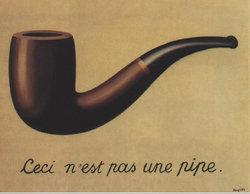
“The Treason of Images,” Rene Magritte, 1928-29 (“This is not a pipe.”)

(Guest post by Greg Forster)

Jay posted two “complete lists” of voucher research this week, and a number of people seem to have found them helpful. Jay and I have both spent a lot of time circulating these lists for years (they change over time, of course, as new research gets done). We keep on thinking we’ve circulated these lists so much that there can’t be much use in circulating them further, yet we keep on finding more people who say, “Wow, I’ve never seen anything like this before, this is really helpful!”

Well, if people found those two lists helpful, maybe they’d like to see some of the other lists that have been compiled. So here’s a meta-list: a list of complete lists of research.

Of course, this is not a complete list of the complete lists. If anyone wants to add more in the comment section, that will help make this page even more useful. And I’ll come back and update the list as needed, so that this page will remain a useful resource for people looking for all the research on vouchers.

Though no doubt others will think that my list of complete lists isn’t nearly complete enough. I hope they’ll compile their own lists of complete lists – the more the merrier. And when there are enough lists of complete lists out there, we’ll need to make a list of them, so that people can keep track of them all . . .

Of course, these lists are all “complete to my knowledge.” There may always be a study lurking out there that hasn’t been noticed – although on the voucher issue that’s a somewhat more remote possibility than it is with other issues.

Last year I made an effort to summarize all the research on all the issues relating to vouchers in this study. The sections covering random-assignment studies of voucher participants and studies of how vouchers affect public schools are now out of date, but the report will point you to a bunch of other studies on issues that don’t have enough of a body of research – or have too much of a body of research – to generate a “complete list.” For example, you’ll find a discussion of the evidence on questions like the fiscal impact of voucher programs, and whether vouchers provide all students with access to schooling.

On those last two subjects – fiscal impacts and whether the private school sector provides broad, inclusive access to schooling for all students – the Friedman Foundation offers handy guides (here and here) and references to the research issues (here and here).

And finally, here is a meta-list that will point you to a bunch of complete lists of research on issues related to vouchers. Personally, I’ve found this resource to be the most helpful of all.

NOTE: This post is edited as needed to keep it up to date.


Dems v. Teacher Unions: More Cracks in the Facade

August 25, 2008

(Guest post by Greg Forster)

Do not miss Mickey Kaus’s firsthand account of stunning anti-teacher-union backlash from delegates at the Democratic National Convention:

I went to the Ed Challenge for Change event mainly to schmooze. I almost didn’t stay for the panels, being in no mood for what I expected would, even among these reformers, be an hour of vague EdBlob talk about “change” and “accountability” and “resources” that would tactfully ignore the elephant in the room, namely the teachers’ unions. I was so wrong.

In front of a gathering of about 500 delegates, four “smart, young, powerful, bald** black state and local elected officials” (Kaus’s description; the asterisks lead to a note conceding the presence of some hair on one guy’s head – but only on the sides) denounce teachers’ unions, explicitly and in strong terms, and recieve vigorous applause. “In a room of 500 people at the Democratic convention!” (emphasis in original)

Most satisfying line: “John Wilson, head of the NEA itself, was also there. Afterwards, he seemed a bit stunned.”

Promising signs that the facade is cracking faster than we may have thought. And my pals at the Friedman Foundation who decided to make this topic the cover story of the latest issue of the School Choice Advocate sure do look prescient.


Pass the Popcorn: City of the Dark Knight (Issue #4)

August 22, 2008

(Guest post by Greg Forster)

After my two initial Pass the Popcorn entries on The Dark Knight, outlining what I thought was the main theme of the movie, I decided to let that go for a while rather than harp on it after I had already said my piece. But I always knew that after I had spent a while meandering around other topics, I would circle back around to the heart of the movie – the moral hypocrisy of all human beings and all civilization.

In the interim, the death of Aleksandr Solzhenitsyn has provided a reminder of just how perennially true and relevant the movie’s observations are. If any man of our time was ever entitled to treat his enemies as simply evil and his own side as simply good, surely that man was Solzhenitsyn. But, to the contrary, he made a point of not losing sight of the real basis of evil in the moral corruption that is endemic to our species, and that is one of the reasons his intellectual legacy will live on well beyond the context of the particular historical conflict in which he participated. To say it again, if any man was entitled to treat some people as “basically good” and other people as “basically bad,” he was – but the whole point is that no man is in fact entitled to do so.

Solzhenitsyn expressed the key insight succinctly yet beautifully:

“The line between good and evil passes not through states, nor between classes, nor between political parties either – but right through every human heart.”


I anticipate (without ruling anything out) that this will be my last PTP entry on The Dark Knight, at least for a good while. I’d like to end where the movie ended.

To recap the central point of my first post quickly: All human beings are both good and evil, but it isn’t in their nature to admit this about themselves; hence the ubiquitous fiction that “people are basically good.” People tell themselves this ultimately because it allows them to avert their gaze from their own corruption. The outcome of this is the outrageous extreme of moral hypocrisy that is easily observable (provided we’re willing to look without flinching) both in every individual person (no exceptions) and in society as a whole. In this movie, we see it play out on the individual level with the Joker’s desire to induce Batman to kill him, and at the social level with the fact that the whole restoration of Gotham City rests on the reputation of Harvey Dent – because people need heroes. Why do people need heroes? Because they’re not “basically good.” If people were basically good they wouldn’t make their support for civic justice conditional on the moral purity of some fallen human being. The very fact that people need to be rallied to support justice shows how far from real righteousness they are.

The Joker has our number:

“When the chips are down, these . . . these ‘civilized people’ . . . they’ll eat each other.”

So did Harvey Dent, in his way:

“You either die a hero or you live long enough to see yourself become the villain.”

One thing I didn’t comment on earlier is what Gordon says at Dent’s funeral. I noticed it especially the second time I saw the movie. If memory serves, Gordon says of Dent that “he was the hero we deserved – no more.” No more? Shouldn’t that be no less? Or is Gordon slyly reaching out to the few people in Gotham who know the truth, reassuring them that at least somebody realizes what’s really going on – that Dent was the hero Gotham deserved in the sense that Gotham deserved a man who really, really wanted to be good but ultimately failed to live up to his own standards, because that’s exactly how Gotham itself behaved?

As I wrote before, one of this movie’s biggest strengths is that it doesn’t attempt to convince us that it’s a good thing that people need hypocrisy. It’s a bad thing – it’s a sign of how evil we are – that people need hypocrisy.

But since people do in fact need it, it may not be wrong to supply it.

That last assertion is the thought the movie ends on, and it’s where I stopped my first post, saying “hold that thought.” Well, I’ve been holding that thought for a month and a half now. It’s time to unpack it.

Is it wrong to supply hypocrisy? We might answer by saying that if it is, we’re all totally screwed. On the evidence, it appears that no civil order of any kind can long survive without falling back on collossal heaps of hypocrisy.

I’m not even talking about the kind of rank everyday hypocrisy that hits you in the face every time you pick up a newspaper. Although there’s always plenty of that – obviously. Take the frenzy over the past month against “speculators” who have, according to both presidential candidates and most of our other leaders, driven up the price of gas. It’s an old social science maxim that you should never posit malice if ignorance covers the facts, but can John McCain and Barack Obama and all the rest of them really be as ignorant as all that? As Chrales Krauthammer wrote recently: “Congressional Democrats demand . . . a clampdown on ‘speculators.’ The Democrats proposed this a month ago. In the meantime, ‘speculators’ have driven the price down by $25 a barrel. Still want to stop them? In what universe do traders only bet on the price going up?”

It beggars belief that our leaders don’t know exactly what they’re shoveling here. And this is just one issue out of hundreds where the same dynamic occurs. Is there a single political issue where the public discourse isn’t dominated by claims that can’t possibly be believed by those who make them? Not for nothing did Michael Kinsley define a “gaffe” as when a politician accidentally tells the truth. But Mickey Kaus strikes nearer to the mark when he says that Kinsley’s definition ought to be expanded to include all cases where a politician accidentally says what he really thinks, whether true or not.

But that kind of hypocrisy doesn’t go to the roots of social order. Although its omnipresence would be sufficient to prove the universality of some type of corruption in human nature, from a standpoint of the political system it’s an epiphenomenon.

The real hypocrisy runs deeper. It was well captured a while back by an old college acquaintence of mine who subsequently served for a while as a small-town prosecutor. Please read this brutally honest essay in which he reflects, after having left the job, on the nature of his service representing the people in our courts:

We who deal in the laws of a free people are puppeteers. We must be so . . . because our system works better than any other, and because we have no choice but to make it work. We have to give the appearance that we possess the wisdom and authority needed to make our society function. We have to make believe that our culture possesses an exclamation point as strong and as firm as the question mark of [classical] liberalism. So on with the courtroom pomp and ceremony, on with the bluster and posturing! . . .

Men who doubt themselves need puppet shows. They need little passion plays to affirm the dignity of a frequently silly and corrupt form of governance, lest something more dignified but less humane rise to power. Ours is a system of laws administered by flawed and small-souled lawyers to foolish and wicked men; such a system cannot survive without the pantomimes of solemnity.

And note that he has (as far as I can tell) no regrets about having chosen to serve in this capacity. As he says, our system is better than the alternatives (i.e. “something more dignified but less humane”) and given the realities of fallen human psychology this is what it takes to sustain it.

It was with this in mind that I chose the title “City of the Dark Knight” for my mini-series on this movie. The title is meant as a tribute (an obscure one, no doubt) to Augustine, whose political theory I was reminded of by The Dark Knight’s unflinching meditation on society’s hypocrisy. Augustine works so hard to puncture the Romans’ ridiculous charade of virtue and honor not because he hates them – he loves Rome dearly – but because penetrating the mask of society’s pretense of righteousness is for him (as it was for Plato) the first step to any serious wisdom about justice. The fundamental political reality is that people are neither “basically good” or “basically bad.” We tend to associate the observation that if people were “basically good” there would be no government with Madison’s Federalist #10, but I think (though I’m open to argument) that Augustine is the real source of the insight. And there would equally be no government if people were “basically bad,” since people with no natural idea of justice would never develop a system for enforcing justice (however intellectually impressive Hobbes’s attempt to argue the contrary may be). Though Augustine doesn’t put it in exactly these words (or not that I recall), I think we can say that for him politics is a manifestation of the ongoing tension between the image of God that was planted in all men at creation and the moral corruption that was planted in all men at the fall.

And this, if I may be autobiographical for a moment, is why I fled screaming from Washington after spending a year between college and grad school working there. When people with little experience of academia hear that I have a Ph.D. in political science, about 50% of the time they immediately ask me “so are you going to run for president?” Set aside for a moment the charming naivete that associates the pursuit of a Ph.D. in political science with ambition to public service. More to the point is the fact that I could never serve in public office because I couldn’t practice the hypocrisy that all public servants, seemingly without exception, must practice on a regular basis to do their jobs.

Yet though I am not the man to do it, I can see clearly the necessity of maintaining the hypocrisy. Classically, “prudence” was identified as one of the four cardinal virtues. We have a moral responsibility to consider the outcomes of our choices and act so that we aim for those outcomes to conform to the proper ordering of ends (i.e. goals or purposes). Can it really be our responsibility to rank candor above the preservation of humanity? For a long time I was spellbound by Kant’s iron declaration “let justice be done though the heavens fall.” It would be a worthy resolution if “justice” meant simply “goodness” or “righteousness,” that is, virtue as such – including prudence. But “justice” is not virtue as such, it is only one of the virtues. And as Aristotle observed, only virtue as such can be pursued without limit. You can’t go “too far” in the right direction. But any partial good, as opposed to good as such, can be pursued too far – that is, to the exclusion of other partial goods that ought not to be excluded. Hence Kant was actually driven to the insane extreme of preferring the destruction of the universe to the utterance of a single false statement.

The healthy conscience recoils from Kant’s famous statement that if a man intending to murder your friend asks whether your friend is home, and he is, you should tell the truth. (For a while I wondered whether this claim was misunderstood – in the 18th century, gentlemen were usually armed, so when Kant said that you shouldn’t compromise your honor by lying, was he assuming that you would just shoot the guy instead? But when I shared this speculation with a friend, he pointed out that while gentlemen in 18th century England were usually armed, that wouldn’t have been the case in 18th century Prussia.)

And Kant’s dilemma of whether to lie to the murderer is, ultimately, the choice Batman and Gordon must make at the end of the movie. The “murderer” in this scenario is Gotham City itself – which threatens to give up on its own salvation unless it is told the lie that Batman and Gordon choose to tell it.

With that, I’ve said my piece. (Again.) Next week, on to other movies.

UPDATE: Well, I hadn’t quite said my whole piece. See here for the next chapter.