There Is No End Zone

May 4, 2011

(Guest post by Greg Forster)

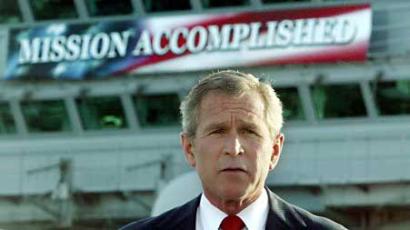
I hate to be a pest, but the war’s not over.

In this joyful moment when some people selfishly focus on trying to pull together as Americans and be glad the good guys won for once, thank goodness there’s Jimmy Carter to remind us of just how badly the world still sucks.

He chooses a moment when this kind of thing is going on to announce in today’s Washington Post:

Suspicions of Hamas stem from its charter, which calls for Israel’s destruction.

Riiiiiiiiiiiiight. It’s just a matter of some words on a piece of paper.

Headline from Monday’s Guardian, one of the squishiest publications in the western world:

 Hamas Praises Osama bin Laden as Holy Warrior

Coming together as Americans doesn’t get easier when some Americans cling tenaciously to delusions so persistently destructive that they defy merely psychological explanations.

To paraphrase Adam Sandler in The Wedding Singer: “Even the Guardian gets it. Why doesn’t Jimmy Carter?”

Or to paraphrase Jason Robards in Parenthood: “Defending America against its enemies is like Jimmy Carter’s ego. It never, never ends. It goes on forever – and it’s just as frightening. There is no end zone. You never cross the goal line, spike the ball and do your touchdown dance.”

You never get to live in a world where people aren’t trying to kill you. And apparently you also never get to live in an America where some Americans aren’t doing their best to drive us apart from each other by embracing our enemies.

HT


Pay Any Price, Bear Any Burden

May 2, 2011

(Guest post by Greg Forster)

Continuing the theme, this post by Jim Geraghty

A key message has been beamed to every corner of the earth, sure to reach anyone who has ever committed terror against Americans, who seeks to do so again, or who is contemplating the act: No matter who you are, no matter how many followers you have, no matter how smart or careful you think you are, our guys can find you. It’s just a matter of time. If you kill our countrymen, they will look, and they will look, and they will look and they will never quit and we will never forget. You will die in prison at Gitmo or you will die quickly from a covert-ops team’s bullets. But one way or another, you will pay the price for harming our people.

Elsewhere, Salon groans that the war against Osama and his organization has cost $1.3 trillion. Think about what that says to aspiring terrorists. When we say, ‘we’ll pay any price to see them brought to justice or to bring justice to them,’ we mean it. That’s the kind of country we are.

…reminded me of this:

Vice President Johnson, Mr. Speaker, Mr. Chief Justice, President Eisenhower, Vice President Nixon, President Truman, reverend clergy, fellow citizens, we observe today not a victory of party, but a celebration of freedom—symbolizing an end, as well as a beginning—signifying renewal, as well as change. For I have sworn before you and Almighty God the same solemn oath our forebears prescribed nearly a century and three quarters ago.

The world is very different now. For man holds in his mortal hands the power to abolish all forms of human poverty and all forms of human life. And yet the same revolutionary beliefs for which our forebears fought are still at issue around the globe—the belief that the rights of man come not from the generosity of the state, but from the hand of God.

We dare not forget today that we are the heirs of that first revolution. Let the word go forth from this time and place, to friend and foe alike, that the torch has been passed to a new generation of Americans—born in this century, tempered by war, disciplined by a hard and bitter peace, proud of our ancient heritage—and unwilling to witness or permit the slow undoing of those human rights to which this Nation has always been committed, and to which we are committed today at home and around the world.

Let every nation know, whether it wishes us well or ill, that we shall pay any price, bear any burden, meet any hardship, support any friend, oppose any foe, in order to assure the survival and the success of liberty.

Emphasis added. Emphatically.

And I’ll throw this in as a bonus: “We dare not tempt them with weakness.”


An Offer the States Can’t Refuse

April 20, 2011

(Guest post by Greg Forster)

Fordham desperately wants you to believe that they want “transparency, not accountability” from the feds. Don’t believe a word of it. It’s true only if you define “accountability” as “school-level accountability.”

Fordham’s idea is that the feds get unlimited and unaccountable power to decide what schools should be doing, and then the states are in charge of holding schools accountable for doing what the feds have decreed they should do. It’s “tight-loose”!

The executive summary of the Fordham report – which is the only part of it most people will bother reading, and the Fordham folks know it – mouths just the right reassuring weasel-words to throw you off the scent:

Transparency in lieu of accountability. Results-based accountability throughout the education system is vital, but it cannot be successfully imposed or enforced from Washington. Indeed, the No Child Left Behind experience has shown federal “accountability” in this realm to be a charade. The federal government can’t force states and districts to turn around failing schools or offer students better options. What Uncle Sam can do is ensure that our education system’s results and finances are transparent to the public, to parents, and to educators.

In a comment on Matt’s post this morning, Mike Petrilli shows up to peddle the same line:

Hi everyone. When you look closely at our proposal (if you can get past the preface, Matt!) you’ll see that we’re all advocating more or less the same thing: Mandate “transparency” but not accountability. We can quibble about the details.

That’s pretty hard to believe given that up through the day before yesterday, Fordham was stumping for the federal-government sponsored initiative to create national standards, national curriculum, and national assessments.

And, in fact, you don’t even have to get very far into the main body of the Fordham report (which few will read) before you see how empty these gestures are.

The report considers ten policy questions, giving “the reform realism position” on each one. Question one is: “Should states be required to adopt academic standards tied to college and career readiness (such as the Common Core)?”

Jay has already pointed out that “college and career readiness” is an empty phrase. It’s a blank check that the feds can fill in later.

But let’s set that aside. What is Fordham’s position on the use of federal government power to define what schools should be held accountable for doing?

As a condition of receiving federal Title I funds, require states to adopt the Common Core standards in reading and math, OR to demonstrate that their existing standards are just as rigorous as the Common Core. Standards developed apart from the Common Core initiative would be peer reviewed at the federal level by a panel of state officials and content-matter experts; the panel itself (not the secretary of education) would have the authority to determine whether a state’s standards are rigorous enough.

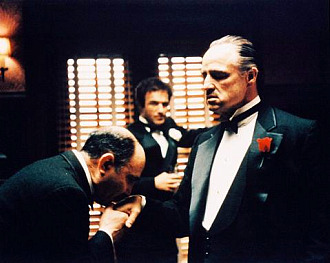
So adopting Common Core is just about as “voluntary” for the states as signing Johnny Fontane was for Jack Woltz.

Governor Walker the morning after Wisconsin opts out of Common Core

How naive do these people think we are?


The Bizarro World Prospect

April 18, 2011

(Guest post by Greg Forster)

The latest issue of The American Prospect was apparently published on Bizarro World.

Charter schools and teacher accountability have now replaced vouchers as the new cause célèbre.

So nobody’s interested in vouchers any more, huh?

Today, even school reformers who promote charter schools and accountability still believe vouchers are a good third option because they give parents another choice. Republican governors Rick Scott in Florida, Chris Christie in New Jersey, and Mitch Daniels in Indiana have all appeared with reform guru Michelle Rhee, the nation’s leading voice for charter schools and teacher evaluation programs, to consult them on school reform. They all plan to use vouchers as one of many aspects of reform in their states. Rhee’s new organization, Students First, cites the Florida voucher program as a notable example of expanding parental choice.

Uh…okay. Guess my dinner with Jay Mathews is still safe, then.

“It’s an old ideology they’ve been interested in for a long time,” says Cynthia Brown, Vice President for Education Policy at the Center for American Progress, “but they’ve lost a lot of steam. The notion of vouchers for all kids is almost dead.”

So I guess the dream of universal vouchers is dead, huh?

No matter, the infamous Scott Walker has put forth a proposal to dramatically expand Milwaukee’s program so that any child, not just low-income students, can get a voucher.

Uh…okay. As the Walker juggernaut – excuse me, the infamous Walker juggernaut – rolls over the last gasp of union hopes in the judicial election, I’d say this is a bad time to make big bets against universal vouchers.

Underwhelming studies of voucher programs have damaged their reputation, even among conservatives prone to liking them.

I’ll spare you the predictably mendacious, cherry-picking lit review that follows, in which the author goes over all the evidence on vouchers, except for the overwhelming majority of the evidence that supports vouchers. (For a complete research review, see here. For more on the use and abuse of evidence in voucher controversies, see here, here and here.)

Though vouchers are no longer a viable school reform strategy on their own, they did play a big part in shaping how we think about school reform. In short, rhetoric around reform is now discussed using a term that used to be synonymous with vouchers: “school choice.”

So vouchers failed, except for the fact that everyone wants to be them.

Still, the idea of choice itself as the mantra of reform is odd, and it’s disturbing that this is the aspect of the voucher-program idea that survived. Though it begins with progressive rhetoric about giving poor families the same choices wealthier ones have, the necessity for choice arises out of a situation in which public education is failing. The goal should be a system in which all schools are good schools, not creating a two-tiered system of good versus bad.

Yes, it’s very odd that school reformers focus on offering “choice” instead of on making schools successful – because in Bizarro World, monopolies always serve people best!

All the talk about choice rings especially hollow in D.C. No one in the city voted for or approved their new voucher program.

Yes, that’s right, nobody in D.C. approved the program. Except for, you know, the thousands of parents who put their kids into it.

If the left keeps this up, it’s going to wake up one morning and find out that it’s Bull Connor.

Tight-Loose Imperial Vendor Management

April 18, 2011

(Guest post by Greg Forster)

Darth Vader, pioneer of tight-loose management practices:

He doesn’t tell you exactly where to bring the fleet out of light speed, he just insists that it be the correct point for pulling off a successful surprise attack on the rebel base. If you pick the wrong point, that’s your fault – and that’s what the assessment and accountability systems are there for.

You have failed me for the last time, Governor Walker!

But for some reason I have the feeling that when the new federal tight-loose approach to standards, curricula and assessments is implemented, it will look a whole lot more like this:


The Tight-Loose Sales Force

April 18, 2011

(Guest post by Greg Forster)

Continuing the series, I shamelessly rip off a line from an old Dilbert comic (which I can’t find online or I’d just post it).

“Welcome to the Tight-Loose Sales Force. We don’t ask you to do anything unethical, but we set the sales quotas so high that you basically have no choice. Any questions?”


Hemisphere Fallacy! Drink!

April 15, 2011

(Guest post by Greg Forster)

Fordham hasn’t even released its new report explaining why all sensible people favor the creation of an unstoppable national juggernaut to safeguard the decentralization of America’s federal system of government, and we already have to drink up.

In the new Gadfly, Mike Petrilli writes:

Speaking for the anti-“tight” right, Greene argues that “dictating the ends with a national set of standards, curriculum, and assessments will necessarily dictate much of the means.” (And, to be fair, he did so in a witty and amusing blog post, in which he proposed a “drinking game” for readers of Fordham’s forthcoming ESEA proposal, due out next week.)

But it’s unclear why he finds the concept of “tight-loose” so preposterous. Consider this: Here are the most likely potential mandates that Congress might attach to federal Title I funding in the next ESEA:

  1. States must adopt rigorous academic standards (and cut scores) in English and math that imply readiness for college and career.
  2. States must test students annually in English and math.
  3. States must build assessments and data systems to allow for individual student growth to be tracked over time.
  4. States must develop standards and assessments in science and history, too.
  5. States must rate schools according to a prescriptive formula (i.e., AYP).
  6. States must intervene in schools that fail to make AYP for several years in a row, or in schools that are among the lowest-performing in the state.
  7. States must develop rigorous teacher evaluation systems and ensure a more equitable distribution of effective teachers.
  8. States must ensure that Title I schools receive comparable resources—including good teachers and real per-pupil dollars—as those received by non-Title I schools.

The way Greene argues it, Congress has to either choose “none of the above” or “all of the above.” But of course it doesn’t. We at Fordham would select items one through four off this a la carte menu, and leave the rest for states to decide. That, to us, would be “tight-loose” in action.

Hemisphere fallacy! Drink!

Mike continues:

Does Jay believe none of these should be required? And if so, isn’t he arguing for federal taxpayers to just leave the money on the stump? Why not make the principled conservative case and say that Title I and other federal funding streams should simply be eliminated?

And:

Let’s quit with all the over-the-top rhetoric. Give the list of eight mandates above a good look. Congress is likely to move ahead with the first few and will definitely reject the last few; the real debate is about the ones in the middle. In other words, we’ll be arguing over the precise definition of “tight-loose,” regardless of what the anti-“tight” right or the anti-“loose” left have to say about it.

I’m not Jay, but I think the answer to all this is obvious:

  • Mike is wrong to question Jay’s integrity by arguing that “principle” requires him to either support federal education mandates or support repeal of Title I;
  • Mike is wrong to imply that it’s unserious or “over the top” to debate the merits of anything other than the hemisphere-style middle ground that is likely to be the locus of congressional debate in the immediate term; and
  • Mike is self-contradictory to do both in the same post.

Oh, and by the way – “tight/loose”! Drink!


Big Lunchlady Is Watching You

April 13, 2011

(Guest post by Greg Forster)

Theorists like Amy Gutmann argue that parental freedom needs to be compromised in the name of democracy because parents can’t be trusted as the default authority over the education of children. Jay has frequently responded by pointing out that this logic, applied consistently, would produce not just government control of formal schooling but government control of every aspect of child-rearing. One example I’ve seen him use to devastating effect is to point out that we don’t establish government control over children’s meals in order to ensure kids are getting proper nutrition. Jay suggests that this inconsistency indicates that these theories of democracy are really invented post facto to justify social institutions whose real existential principle is to provide unions with a gravy train.

Well, Jay, you should be careful what you ask for.

The Chicago Tribune reports that some Chicago schools – a government spokesperson declines to say how many – forbid students to bring any food from home unless they have a medical excuse.

Principal Elsa Carmona said her intention is to protect students from their own unhealthful food choices.

“Nutrition wise, it is better for the children to eat at the school,” Carmona said. “It’s about the nutrition and the excellent quality food that they are able to serve (in the lunchroom). It’s milk versus a Coke. But with allergies and any medical issue, of course, we would make an exception.”

Carmona said she created the policy six years ago after watching students bring “bottles of soda and flaming hot chips” on field trips for their lunch. Although she would not name any other schools that employ such practices, she said it was fairly common. [ea]

The Tribune headline writer makes an amusing attempt to soften the obvious implications here – the headline says the school forbids only “some lunches” from home. The actual policy described in the article is that all food from home is banned unless you challenge the ban and have a special medical reason.

Most readers of JPGB probably won’t need to have the real agenda spelled out here. Kudos to the Trib writers, Monica Eng and Joel Hood, for spelling it out to the paper’s readers:

Any school that bans homemade lunches also puts more money in the pockets of the district’s food provider, Chartwells-Thompson. The federal government pays the district for each free or reduced-price lunch taken, and the caterer receives a set fee from the district per lunch.

This lunchroom needs a better class of criminal.

It’s the same basic principle that has been driving the runaway overhiring of teachers for decades. It just involves the extension of the principle to a new sphere of social control.

HT Joe Carter at First Things


YEEEEAAAAAHOOOOOO!

April 9, 2011

(Guest post by Greg Forster)

You’re all clear, kids!

Now let’s blow this thing and go home!


Me and Mathews – It’s BACK On!

April 4, 2011

(Guest post by Greg Forster)

Jay Mathews and I are rebooting our somewhat troublesome bet. We’re starting over from scratch. This time, rather than counting legislative chambers, we’re going to count “enactments” of school choice. Any time a new school choice program or expansion of a school choice program (defined the same way as before) is enacted, that counts as one.

I have to get to seven enactments in 2011 to win.

We’re currently at four:

    1. AZ new program

    2. AZ program expansion

    3. CO new program

    4. UT program expansion

I’m getting out a little ahead of the Arizona governor, here, but those bills are both slam dunk at this point.

I warned Jay that Indiana is looking pretty good, so it’s really a fight over whether I can get two wins in places like Wisconsin, Oklahoma and D.C. He’s cool with that.

Commence handicapping!