Charters Are a Halfway House: Union Slip-Up Edition

September 8, 2016

slip-up-709045_640

(Guest post by Greg Forster)

America’s Last Education Labor Reporter proves once again why America needs to have at least one education labor reporter. He points out that a recent bureaucratic victory for the blob, in which the NLRB declared charter schools subject to unionization under federal labor law, also implies that if teacher unions attempt to organize charters they will be subject to financial disclosure and other restrictions under that same federal labor law:

If you think this would be a small price to pay, remember that when the Bush Administration’s Labor Department tried to reinterpret the LMRDA to include 32 NEA state affiliates, the union filed suit, calling the revision “unfair” and “motivated by an ill-will toward unions in general, and NEA and its affiliates in particular.”

A mixed victory for the unions, but it’s also a reminder of the problem built into the design of charter schools.

Charters are, in the final analysis, government schools, and thus can never be more than a halfway house to real (i.e. private as well as public) school choice.

As Reagan said in Berlin: “A bird on a tether, no matter how long the rope, can always be pulled back.”

It’s a thought that Common Core supporters would also do well to ponder.


Pass the Popcorn: If You Need to Blink

August 25, 2016

kubo_0_0

(Guest post by Greg Forster)

If you need to blink, do it now. If you miss a single word of the blog post below, our hero will perish.

Do yourself the biggest favor you’ve done yourself in a long time and go see Kubo and the Two Strings while it’s still in theaters. This masterpiece demands to be seen on the big screen, so you can appreciate not only its oustanding story but its gorgeous visuals.

If you know Coraline, you know what greatness the offbeat animation studio LAIKA is capable of. LAIKA’s last few offerings haven’t been as well recieved, but let me assure you Kubo not only matches but actually surpasses the storytelling and artistic accomplishments of Coraline.

Kubo-2strings-3

It would be criminal to reveal the plot of Kubo. Indeed, one of the many ways in which this movie shines is the perfect craftsmanship of its progressive plot revelations. These people know how to tell a truly epic story.

I will say this much, though, to motivate you to see it. Kubo is the son of a great samurai warrior who fought a duel with the moon. The plot is driven by this question:

Is it better to be a man, to live a life marred by suffering and then die, leaving behind deeds well done and the memories held by those who loved you?

Or is it better to be the moon, floating high above the world and immune to death and suffering, and have no story?

Don’t miss this gem. I’ll be going back as soon as I can to see it again.

Update: Saw it again, loved it more the second time. “It amazes me that creatures down here will fight so hard, just to die another day.” “Down here there are days worth fighting for.” Don’t miss your chance to see it on the big screen!


The Next Accountability – Teachers and Schools

August 25, 2016

Little-sprouts_-Grow-bean-sprouts-in-your-back-garden

EdChoice has posted Part 2 of my new series on The Next Accountability. In Part 1 I outlined what we most want from a good education; now I outline the most important qualities teachers and schools should have to deliver these results:

All this can be summed up by saying that teachers need to be wise and professional. Wisdom means teachers possess themselves the capacities of head, hands and heart that we want students to develop. Professionalism means that teachers’ primary motivation is not to check boxes on a curricular chart or maximize formal outcomes such as test scores, or even to please parents, but to help students develop those capacities of head, hands and heart that the teachers possess and the students need.

The great challenge we face is that in our society, where we are free to disagree about what is good, true and beautiful, we lack consensus about what constitutes a good education. Good schools are therefore those that manage to overcome legal and bureaucratic obstacles to operate as free communities, with a shared commitment both to freedom of disagreement about the highest things and also to bonds of interdependence and reciprocity:

Freedom and community tend to lose their meaning when separated from one another. Real community means people freely choose to be in community. And real freedom can only be protected by a community that loves freedom and institutionalizes it as a shared, public moral commitment.

Next, in Part 3: how the two great camps in the debate over accountability – advocates of technocracy and choice – are, in different ways, trying unsuccessfully to sidestep the core problem of building consensus in a pluralistic society.

Stay tuned! Your thoughts are very welcome as always.


The Next Accountability: What Do We Want from Schools?

August 3, 2016

Little-sprouts_-Grow-bean-sprouts-in-your-back-garden

(Guest post by Greg Forster)

Today the newly renamed EdChoice launches Part 1 of my series of articles on The Next Accoutability, previewed with an introduction a few weeks ago.

I argue that the education reform coalition is coming apart because we don’t agree about what we want from schools:

The movement was well served in many ways by its various edifying impulses: to “close the achievement gap,” to “put parents in charge,” etc. But it has been haunted for decades by a growing awareness that these moral impulses do not always cohere easily.

The question, “What do we do if putting parents in charge doesn’t, by itself, close the achievement gap?” has been debated at every education reform conference I’ve attended. Such debates were lively and interesting intellectual exercises, so long as not much hung on them.

We lack consensus on what we want from schools because in a pluralistic society with religious freedom, we want to respect diverse opinions about the highest questions in life. But this leaves us with an incoherent education policy:

Our freedom to disagree about transcendent things does not mean that public policy can escape the responsibility to ask what is good, true and beautiful. In fact, the very assertion that it is good to have the freedom to disagree about transcendent things is itself an assertion about what is good, i.e. about transcendent things.

The challenge of pluralism is also an opportunity for us to discover a fresh vision of human potential that embraces the freedom to disagree about the highest things:

School accountability should be grounded in an understanding of human potential aimed at building up free communities, open to pluralism under the rule of law and respect for human rights, where people achieve and appreciate the good, the true and the beautiful in the midst of their differences over those very things.

I outline how we can understand educational goals for the head, the hands and the heart in ways that point toward the possibility of coherence in a pluralistic society.

Coming in two weeks: Part 2, looking at how teachers and schools actually carry out the task of educating students in the midst of our uncertainty about the highest goals of education. It is here, I will contend, that we will find clues to how we can hold schools accountable more effectively. Stay tuned!

As always, your comments and feedback are greatly appreciated.


Happy Friedman Legacy Day!

July 29, 2016

Friedman Day Tribute

(Guest post by Greg Forster)

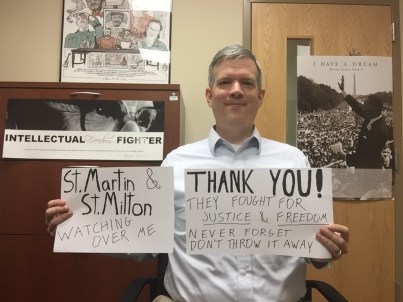
Milton turns 104 this weekend. Above is the tribute I contributed to the Friedman Foundation’s photo series. We should, indeed, never forget.

When he came on the scene, half the world was in slavery to totalitarian socialism, and he made a material contribution to their liberation. Here at home, both parties were deeply committed to statism, and he rightly advised the friends of freedom not to spend most of their time trying to elect the “right” side. He emphasized that all politicians are powerfully affected by self-interest while in office, so instead of trying to elect people who say they support freedom, we should work to change incentives for officeholders so it will be in their interest to support freedom. “Don’t change the players, change the game,” he wisely said. Words to remember.

I was honored to work for Milton in the last years of his life. I admired that he was so eager to help other people learn. One way you could see this was that he was always asking people questions – questions intended to help them notice their blind spots and become aware of internal contraditions in their thinking. He never talked “at” anyone. He asked you what you thought, in a way that made you think. That’s another thing we’d be wise to remember.

If you’re near Indy, join my Friedman friends for the main event. I’ll be spending the evening tonight with the Wisconsin chapter of Americans for Prosperity, saying a few words about Milton’s legacy – and of course school choice.

However alarming things may be now, let’s remember that the danger to freedom was even worse in his time. Yet he didn’t lose hope that people could be enlightened and persuaded. And he didn’t let personal or factional hostility take over what was supposed to be a debate about ideas. Let’s carry that legacy forward, whatever comes!


The Blob’s Shameless Self-Interest

July 11, 2016

SHUT UP AND GIVE ME MONEY

(Guest post by Greg Forster)

The education blob has never been shy about demanding that we hand them money, with little to justify their demands beyond sheer bullying self-assertion. But this year has seen an especially outrageous spate of self-dealing activism in Oklahoma, as I write in my latest article for OCPA:

Perhaps there’s a rational case that Oklahoma should spend more on schools. If so, I haven’t run across it going through pages and pages of the blob’s invective. Their argument boils down to “we spend X amount and it’s too little! We need to spend more more more!”

A press corps with any self-respect or sense of professional responsibility would ask the blob questions like these: Why have previous increases in school budgets and teacher salaries failed to produce educational improvements? Why shouldn’t the new spending you demand be targeted to more specific, publicly identified needs instead of being allocated indiscriminately? How much spending—give us a dollar amount—would be enough to make you say spending is sufficient and any problems that persist are the responsibility of the schools?

Come for the fake Tocqueville quote; stay for the philosophical analysis of the role of self-interest in the American political order!

Like them, we need to be realistic about self-interest, but not cynical. Human nature is powerfully affected by self-interest, as the embarrassing spectacle of the Oklahoma blob shows. We need not be revolutionaries and try to make a brave new world where no such selfishness occurs; as Madison and Tocqueville both warned us, such utopianism is the quickest road to a pure dictatorship of the selfish. But democracy is nonetheless threatened by unrestrained selfishness, for the majority can in fact vote itself largesse.

As always, your comments – whether self-interested or not – are very welcome!


“Public” Is Not “Government”

July 8, 2016

untitled

(Guest post by Greg Forster)

Andy Smarick is starting to have the most important realization about accountability – that the government school monopoly has corrupted not only our systems of accountability but even our conception of what accountability is. There is no need for a single, uniform accountability system in each geographic zone, and there is no need for accountability to be government-controlled.

Go read his post. Then remember that you read it here first. Not only the idea of families holding schools accountable but the idea that many other kinds of social organizations (think tanks, churches, civic groups, etc.) could help them do so by building family-driven structures of accountability.

My only complaint is that the title on his post reinforces the same error he is awakening from. The title is “Public Accountability vs. Consumer Accountability.” Since none of the language in the post itself reflects the extreme myopia we see in that title, I’m betting the title was composed by the smug technocrats at Fordham.

Welcome aboard, Andy! Soon enough you’ll realize these insights aren’t going to find an easy home at Fordham, but we’ll be here to welcome you as you pursue them.

Update: Ironically, I mispelled “error”!


The Next Accountability

July 6, 2016

Little-sprouts_-Grow-bean-sprouts-in-your-back-garden

(Guest post by Greg Forster)

Today the Friedman Foundation carries the introduction to my forthcoming series, The Next Accountability. In this series I will make the case that the education reform movement is being pulled apart by differing visions of “accountability”:

Our forefathers built the education reform movement on a foundation that all reformers shared: We need to hold schools accountable, so they’ll give kids the education we want them to get. Now we’re discovering cracks in the foundation. It turns out we don’t agree on what we want, or on how we get schools to deliver it.

These differing visions of accountablity are really differing visions of what education is for – which are in turn differing visions of what constitutes a good human life:

A few of us, however, think that all this technocracy is precisely what we have been fighting against all along. It is essentially an extension of the old regime’s philosophy: We’re the education experts, and we know best! It’s just as impersonal and unresponsive to the real needs of real people as the blob. It’s as if we defeated the Soviet Union, and then celebrated our victory by imposing communism on Western Europe and North America.

For this reason, supporters of choice are going to have to get beyond talking points and canned rhetoric about “markets” and “competition”:

America needs to rethink what we really want from schools. Whether of the old or new variety, technocratic systems fail not only because they can be manipulated by greedy and incompetent people or because they lack sufficient information about client preferences (although these things are also worth remembering)—technocracy fails more importantly because it is based on a wrong understanding of what education is for.

Knowing what we want requires us to reawaken to who we are. All the great thinkers who have cast big visions for education, from Plato and Aristotle to Aquinas and Locke to Rousseau and Dewey, agreed that knowing something about what it means to educate children ultimately requires us to know something about what it means to be human. If opponents of technocracy can’t say something about that, all our rhetoric about markets and competition is chaff in the wind.

In the forthcoming articles in this series, I will lay out a vision of what we want from schools, and how we can create new approaches to accountability that will help us get what we want, without falling into the technocratic trap.

Follow the link and read the introduction to get a sneak preview of what that will entail.

Championing a different vision of accountability may increase the current conflicts in the education reform movement rather than decrease them. Technocracy is rooted in a vision of what education is for – of what is good for human beings – that many people in the education reform movement really believe in. We shouldn’t expect them to give it up without a fight.

But, as I will argue, a fresh vision can attract new allies. In many cases they will be more powerful allies than our current technocratic coalition partners, who are increasingly dismissive of us and our concerns anyway. And if we’re not willing to fight technocracy, even when it comes from our friends (in many cases former friends, who turned on us as soon as they thought they could) what was the fight against the blob all about in the first place?

It is only through that kind of conflict that really historic progress gets made. Dr. Martin Luther King Jr. was not interested in renegotiating the terms of segregation. He came not to reform it but to exterminate it. We too must fight not for a renegotiation of terms with the technocratic beast, but for its end.

The remainder of this series will launch shortly after Friedman Legacy Day on July 29, when the Friedman Foundation will be making big announcements about its future. One thing I can promise you: we will never leave behind the mission to fight for justice and freedom that has always animated the foundation, which is Milton’s greatest legacy to us.

In the meantime, I welcome your feedback and look forward to the next stage of the fight!


We Win! NEPC & Lubienski Admit Choice Improves Outcomes

June 30, 2016

HVherald

(Guest post by Greg Forster)

As long as we’re talking about ridiculous hit pieces, the servants of the edu-blob at NEPC have published a hatchet job by Christopher Lubienski attacking the new edition of my Win-Win report reviewing the evidence on school choice, as well as another recent research review by three authors at U.Ark.

Guess what? Both Lubienski and (in their press release) NEPC now admit that school choice improves educational outcomes!

Don’t believe me? Check out how the press release opens:

The degree to which students benefit from voucher programs, which allow parents to use taxpayer dollars to send their children to private schools, has been debated for years. Most studies have found only modest benefits, at best. Two new reports claim to offer empirical support for the effectiveness of vouchers.

That’s right – what’s debated is not whether school choice improves students’ academic outcomes but the degree to which they improve outcomes.

It’s over, folks. Just like Jay said years ago…

WE WIN!


medal

giphy

tumblr_m07dqpmyPV1r1fuq8

Let’s also note that they shamelessly ignore four of the five sections of my report. The research on how school choice affects outcomes in public schools (it improves them), taxpayers (it saves money), segregation (it breaks down racial barriers) and civic practices (it strengthens democracy) is dismissed without notice:

While the report weighs in on a number of outcomes from voucher programs, including the competitive and fiscal impacts on public schools, the effects on civic values, and on racial segregation, these issues have not been seen as central to questions of voucher efficacy, and are not always illuminated by randomized studies.

Segregation and impact on taxpayers hasn’t historically mattered in choice debates? That will come as a surprise to a lot of legislators and activists I know!

The hit piece itself is a lot of sound and fury signifying nothing, as we’ve come to expect from the all-hat-and-no-cattle Lubienski and NEPC. They make a lot of noise about “misrepresentations of the research literature,” but if you actually read their report (which they’re counting on you not to do) they bring no substantial allegations that might back that up – only pedantic interpretive quibbles that aren’t even worth responding to here.

Their only real accusation is the old “cherry-picking” routine. As always, they say we cherry-picked the research that supports our conclusions. Of course we didn’t; in my report I bent over backward, methodologically speaking, to ensure I didn’t exclude anything. Doesn’t matter. Whatever method researchers use to discover studies, they say it’s “cherry picking.” If they saw me walk right past a cherry tree without touching it, they’d accuse me of cherry picking.

Lubienski and NEPC know that most reporters don’t understand or even read research reports, so they can say what they want and get away with it. I’m content to let my work stand for itself; anyone who reads my report will see that the cherry-picking accusation is false, and none of Lubienski’s other accusations adds up to much beyond quibbling over issues where reasonable people can disagree, none of which (singly or jointly) affects the overall finding of my report.

My personal favorite part of the hatchet job was this gem. My method is to count a study as having found a positive effect if any of its reported results were positive, and to count it has having found a negative effect if any of its reported results were negative. I do this to avoid cherry-picking which of the results “really count” and which don’t. Lubienski complains, in the context of discussing a report that was put into the positive column under my method:

Nevertheless, the Friedman Foundation classifies this report as demonstrating “positive effects” if it has any single positive estimate, even when a “study typically includes multiple analytical models — sometimes many of them, occasionally even more than 100.” (While a single negative estimate could also place a study in the “negative effect” category, there are no such instances of this in the Friedman Foundation report.)

Got that? There were no studies of this kind that had any negative findings reported, at all, and that somehow tells against my positive finding because it means my method never put one of those studies in the negative column.

If that doesn’t discredit Lubienski, I’m not sure what would.


Win-Winning in the Oklahoman

June 4, 2016

2016-5-Win-Win-Solution

(Guest post by Greg Forster)

Today the Oklahoman carries my latest op-ed on the research showing school choice is a win-win solution. The op-ed is adapted from my recent OCPA article on school choice myths in Oklahoma. There was no space in the Oklahoman to discuss those Oklahomans who believe that the reason school choice doesn’t work is because poor parents are lazy and shiftless. My focus instead was on claims that choice is “unproven”:

The Oklahoma Education Coalition (OEC), for example, repeats a large number of long-discredited myths about school choice. Here’s one: “Vouchers are unproven as a means of consistently or significantly improving student achievement for all students…. Research on voucher programs in other states shows vouchers have been costly but offers no confidence that vouchers will improve achievement among participating students.”

In case you’re wondering about the terminology, OEC insists for some reason that we must refer to ESAs as “vouchers.” Their arguments are so bankrupt on the merits that their only hope of persuading people to reject ESAs is by changing the label to something they think has negative emotional associations. Fortunately, the word “vouchers” has never really been a liability for the school choice movement.

Attentive readers of JPGB won’t be surprised at what follows. Your comments, as always, are welcome!