Educating Journalists about Education Science

July 16, 2008

(Guest post by Greg Forster)

Don’t worry, this post is definitely not a continuation of the recent big dustup about 1) whether it’s naughty for scholars to provide journalists with accurate information about their work; and 2) whether it’s naughty for anonymous bloggers to argue that scholars’ motives are relelvant to their credibility, but bloggers’ motives aren’t relevant to theirs (which reminds me of Pat Moynihan’s quip about the Supreme Court cases, since overturned, holding that government can’t subsidize private school books but can subsidize classroom equipment such as maps; Moynihan asked, “What about atlases?” – books of maps? What about scholars who are bloggers? Or bloggers who write about scholarly studies? Once you start legitimizing ad hominem arguments, where do you stop?).

But I would like to expand on a comment that Eduwonk made during said dustup, which deserves more attention and has significance well beyond the issues that were at stake in that squabble. The comment got lost in the exchange because it was somewhat tangential to the main points of contention.

He wrote:

Not infrequently newspapers get snookered on research and most consumers of this information lack the technical skills to evaluate much of the work for themselves.   As education research has become more quantitative — a good thing — it’s also become less accessible and there is, I’d argue, more an asymmetry to the information market out there than a fully functioning marketplace of ideas right now.  In terms of remedies there is no substitute for smart consumption of information and research, but we’re not there yet as a field.

We are living in the first golden age of education research, brought on by the advent of systematic data collection, which every other field of human endeavor began undertaking a long time ago but which education is only getting around to now because it has been shielded from pressure to improve thanks to its protected government monopoly. Given the explosion of new information that’s becoming available, educating journalists about quantitative research is a huge problem. Jay is right that there is a marketplace of ideas. There really can’t help but be one; the idea some people seem to have that we can forbid people who own information from spreading it around as much as they want is silly. But just because there’s a market doesn’t mean there’s a perfect market, and Eduwonk is right that markets require informed consumers to function well. The current state of methodological ignorance among journalists does hinder the market of ideas from functioning as well as it should. (I’ll bet Jay would agree.)

As it happens, the same subject came up this morning in a completely different context, as my co-workers and I struggled to figure out the best way to present the findings of an empirical study we’re coming out with so that journalists will be able to follow them. And I wasn’t there, but I hear this topic also came up at a bloggers’ panel at the recent conference of the Education Writers’ Association.

Here at the Friedman Foundation, this has been a topic of great importance to us for some time, since exposing the bad and even bogus research that’s used to justify the status quo is one of our perennial challenges. We took a stab at composing a journalist’s guide to research methods. It went over well when we first distributed it (at last year’s EWA, if memory serves). But it’s necessarily very basic stuff.

Eduwonk is also right about journalists having been snookered by lousy research, and I think that has had both good and bad effects. The good news is that I’ve noticed a clear trend toward greater care in reporting the results of studies (not at propaganda factories like the New York Times, of course, but at serious newspapers). In particular, we’re seeing journalists talk about studies in the context of previous studies that have looked at the same question. Of course, we have a long way to go. But we’re on the way up.

On the bad side, however, I have also noticed a greater reluctance to cover studies at all. Part of that is no doubt due to the increase in volume. I’m young, but even I can remember the heady days of 2003 when any serious empirical study on the effects of a controversial education policy (vouchers, charters, high-stakes testing) would get at least some coverage. Now it’s different, and (to echo Eduwonk) that’s a good thing. But I think it’s extremely unlikely that this is the only factor at work. Junk science has poisoned the well for serious research. No doubt that was part of its intended purpose (although of course the motives of those who produce it have no relevance to its scientific merts or lack thereof).

My hope is that journalists will soon realize they’re getting left behind if they don’t learn how to cover the research accurately. Their job is to go where the news is. If the news is in quantitative research – and that is in fact where a lot of it is – they’ll have to learn how to get there.

Also, the changing media landscape will help. The old idea that journalists must be neutral stenographers with Olympian detachment from all the issues they cover is an artifact of the mid-20th-century role of the media as oligarchic gatekeeper, and is rapidly dying out. As “news” increasingly includes coverage by people who are actively engaged in a field, even as advocates, we can expect the news to be increasingly provided by people with greater amounts of specialized knowledge. (By the way, the old idea of the scholar as detached Olympian stenographer is equally an artifact of vanished circumstances, and will probably be the next thing to go; see the Our Challenge to You statement on the inside cover of any empirical study published by the Friedman Foundation for our views on the relationship between advocacy and scholarship.)

An optimistic view, yes – but since my optimism on other subjects has been triumphantly vindicated over the past year, even when the conventional wisdom said to head for the hills, I think I’ll let it ride.


I Love It When a Plan Comes Together

July 15, 2008

(Guest Post by Matthew Ladner)

Recently I wrote about Arizona’s system of testing having jumped the shark. The cut scores for the AIMS had been dropped severely, and the state’s version of the Terra Nova exam spun a tale of Arizona students scoring above the national average in every grade and subject tested. Arizonans were asked to believe this, despite having a very difficult to educate K-12 population and NAEP scores below the national average in every test given since the early 1990s.

I am pleased to say that the Arizona legislature, acting in a bipartisan fashion, took corrective action. Essentially they limited the current testing contracts to a single year, and appointed a commission to design a new testing system, specifying the use of a college readiness exam as a graduation exam along the lines of the Michigan model with the ACT.

The challenge now will be for the commission to create a challenging, consistent system of testing providing proper transparency for parents, teachers, administrators and policymakers. The first step was to admit that there was a problem, which the Arizona legislature has now done emphatically.


It Never Ends

July 14, 2008

I thought that the exchange with Eduwonkette over the appropriateness of releasing research without peer review had run its course with my last post.  But it seems that it will never end.  Here is her latest post and here is the reply that I posted in her comment section:

Eduwonkette is attempting to change the subject. I’ve never disputed that peer review can help provide additional assurances to readers about quality.  The issue is whether research ought to be available to the public even if it has not been peer reviewed.  In attacking the release of my most recent study Eduwonkette seems to be arguing that it is inappropriate to release research without peer review, at least under certain conditions that she only applies to research whose findings she does not like.  If she were going to be consistent, she would have to criticize anyone who releases working papers of their research, which would be almost everyone doing serious research.


What’s more, she is still trapped in a contradiction: she can’t say that we should analyze the motives of people who release research directly to the public when assessing whether it is appropriate, while she prevents analysis of her own motives because she blogs anonymously.  As I have now said several times, either she drops the suggestion that we analyze motives or she drops her role as an anonymous blogger.  If she refuses to resolve this contradiction, Ed Week should stop lending her their reputation by hosting her blog.  Let her be inconsistent in blogging at the expense of her own anonymous persona and not drain the respectability of Ed Week.


Lastly, the comparison of the market for education policy information and the market for cars comes from my most recent post in our exchange, but she oddly does not credit me here. (See https://jaypgreene.com/2008/07/12/see-were-in-italy/ )  Her position seems to be that we ought to forbid (or at least shun) the sale of used cars without warranties (translation: research without peer review).  My argument is that used cars without warranties come at a risk but there are compensating benefits.  Similarly, non-peer-reviewed research has its risks but also its benefits.


UPDATE — My exchange with Eduwonkette continues although it seems increasingly pointless.  Here is my (slightly edited) last comment on her site:

“Let’s make this very concrete. Was it inappropriate for Marcus Winters and I to release our social promotion findings in 2004 without peer review, or should we have waited until it had been peer-reviewed and published (in various forms) in 2006, 2007, and again in 2008? If the appropriate thing is to wait, would interest groups, editorial boards, and bloggers similarly hold their tongues until the additional evidence came in?  Would policymakers hold off on decisions that might have come out differently if they had the suppressed information?

Would it have been OK to release in 2004 as long as we tried to make it obscure enough so that people were less likely to find it? What if interest groups, bloggers, etc… found our obscure finding and promoted them (as has happened with Jesse Rothstein’s paper)?

And in saying ‘working papers and thinktank reports are released for entirely different functions’ you are repeating your call for an analysis of motives. You’ve said that think tanks want to influence policy (bad motive) while academics are trying to advance knowledge with each other (good motive). But if academics are serving the public good, shouldn’t they ultimately want to influence policy? I am an academic who also releases working papers through a think tank. Does that make my motives good or bad? I think all of this analysis of motives is silly when the real issue is the truth of claims, not why people are making those claims. Calling for an analysis of motives is especially silly for someone who is trying to influence people anonymously. The fact that you are trying to influence people through a blog does not give you a free pass from having to be consistent on this.”


Blog Rankings

July 14, 2008

This blog is not yet three months old but I am pleased to report that it is off to a good start.  According to Technorati’s rankings, JayPGreene.com is attracting more readers than the American Federation of Teachers’ blog, Edwize, more than Diane Ravitch and Deborah Meier’s, Bridging Differences hosted by Education Week, more than the Reason Foundation’s Out of Control, and the Center for Education Reform’s Edspresso.  It significantly trails the educouple of Eduwonk and Eduwonkette as well as Cato at Liberty (although that’s not primarily an education blog).  Flypaper, which started about the same time as this blog, is also off to a good start.  The Queen of education blogs seems to be Joanne Jacobs.

Here are the Technorati rankings (as of this morning) of education sites that seem to share some of the same audience as this blog.  By no means is this a comprehensive list of education blogs.  And I have no idea how reliable or meaningful Technorati’s rankings really are.  I’d continue blogging no matter what the rankings were because it’s fun.  I imagine the same is true of most others.

  1. Cato at Liberty               3,662
  2. Joanne Jacobs                3,709
  3. Eduwonkette                27,419
  4. Eduwonk                      30,876
  5. Flypaper                       95,943
  6. Jay P. Greene               104,227
  7. Bridging Differences   107,924
  8. D-Ed Reckoning         107,924
  9. AFT’s Edwize              116,227
  10. Edspresso                  123,039
  11. Out of Control            123,039
  12. Core Knowledge         127,851
  13. Sherman Dorn            151,703
  14. EdBizBuzz                   184,730

AJC Op-Ed

July 13, 2008

I have an op-ed in today’s Atlanta Journal Constitution on the social promotion issue in Georgia.


See, we’re in Italy…

July 12, 2008

Stripes

“See, we’re in Italy.  The guy on the top bunk has gotta make the guy on the bottom’s bed all the time.  It’s in the regulations.  If we were in Germany I would have to make yours.  But we’re in Italy, so you’ve
gotta make mine. It’s regulations.”

This is more or less Eduwonkette’s response to my complaint that she can’t argue that the source of information is important in assessing the truth of claims while blogging anonymously.  Her answer is that it’s different for bloggers (in Italy) than for researchers (in Germany).  It’s regulations.

She goes on to describe some differences between different types of information in education policy debates, but it’s not clear why any of those differences would be relevant to whether assessing the source is important for one and not for another.  The closest she comes to explaining why things are meaningfully different is when she says, “And let’s be realistic: an anonymous blogger isn’t shaping public policy.”  So, if information will have no bearing on policy debates, then its source is unimportant.

This would be a consistent argument if she really believed that bloggers had NO influence.  But of course they have at least some influence.  Why else would she and the rest of us be bothering with this?  And if bloggers have some influence, then the same basic principles should apply: either we should analyze the motives of sources of information to assess the truth of claims or we shouldn’t.  I’m in favor of not analyzing motives for anyone since I think that the truth of claims is independent of the motives of the source.  Even bad people can make true arguments.

At the risk of belaboring this issue, maybe I can clarify things by describing the market of ideas in policy debates as being like the market for cars.  We have different levels of confidence in cars that have gone through different processes before being made available for sale.  We could buy a used car from the corner used car dealer with no warranty.  That would be like reading blogs.  We don’t really know whether we are getting a lemon or not, since almost no assurances have been made about quality.  Or we could buy a used car from a larger chain with at least some warranty.  That would be like getting information from newspapers or magazines.  There has been some review and assurance of quality, but we still don’t quite know what we’ll get.  Or we could buy a new car from a major dealer and buy the extended warranty.  That would be like getting information from a peer-reviewed journal.  It may still be a lemon, but we’ve received a lot of assurances that it is not.  And I suppose reading an anonymous blogger is like buying a used car from someone you don’t know in the want ads.  There are trade-offs in getting cars with these different level of assurances about quality, just as there are trade-offs in getting information that has gone through different processes to assure quality. 

Eduwonkette’s argument is essentially that the same rules regarding these trade-offs don’t apply to the market for cars without warranties that do apply to the market for cars with warranties.  My view is that there are only differences in degree, not kind.  Even bad people can sell cars that are good values.

I’ve also noticed that Marc Dean Millot has weighed in on this issue.  He’s just knocking down a straw man.  It is not my position that research doesn’t benefit from peer review.  He can check out my cv to see that I have two dozen peer-reviewed publications, many of which were earlier released directly to the public without review.

I’ve been arguing that the public benefits from seeing research even before it has received peer review because it gets more information faster.  Without the assurances of peer review people will tend to have lower confidence in that research, and their confidence may increase as the research receives those additional assurances.  Millot seems to want to embargo information from the public until it receives peer review.  If he really believes that, then he should criticize every researcher with working papers on the web.  That’s almost everyone doing serious research.

And on his points about ideology tainting research I would suggest that people read Greg Forster’s excellent earlier post on Vouchers: Evidence and Ideology.


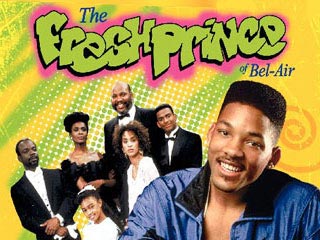
Pass the Popcorn: Fresh Prince of the Fourth

July 11, 2008

(Guest post by Greg Forster)

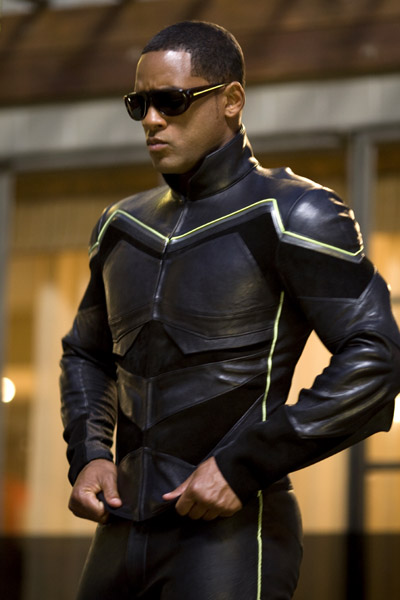
Last week’s PTP was preempted by Independence Day, so this week we get a delayed look at the latest Will Smith summer blockbuster, which opened on July 2. As it happens, we went out and saw it last night at the drive-in, so for once I’ll have actually seen the movie I’m reviewing.

But since our focus around here is generally retrospective, I want to start with a look back at the amazing career of one of the few movie stars of his generation who’s always appealing. But, like Pixar, he wasn’t always what he is now! The Will Smith summer blockbuster machine is so effective that it’s hard to remember a time when he was just the latest fly-by-night novelty act. So join me – won’t you? – in a leisurely stroll down memory lane:

(HT Press Rewind)

Love the hat in that last one!

And who could forget this immortal contribution to the novelty genre? It’s hard for me to believe this now, but when I was 15 years old, that was the funniest thing in the whole history of the world without exception.

While we’re on the subject, is there anything more amazing, and at the same time profoundly disturbing, than the fact that the army of geeks who are the Internet have taken the time and the intelligence and the energy and all the other gifts God gave them and used them all to produce not only a detailed profile of the DJ Jazzy Jeff and the Fresh Prince act, but even one of DJ Jazzy Jeff himself? Jazzy Jeff has apparently gone on to become “an R&B producer of note,” so at least one member of the act managed to save his career after the breakup.

OK, this is all good fun, but we all know how the story ends. The crashed alien ship opens and the hideous monster appears, bent on destroying all human life it can lay its tentacles on, and then the Fresh Prince decks it in one blow, pops a stogie into his mouth and says . . .

“Welcome to Earth!”


In that golden moment, a star was born.

(Too bad the movie in which it occurred was such a comprehensive stinker; of the millions of humor e-mails that used to get circulated back when the Internet was text-based, one of the funniest I ever saw was “40 Things I Learned from Independence Day.”)

Actually, looking the man up on IMDB (carefully avoiding the entries for Will Smith, art director of one TV episode in 1998; Will Smith, writer and actor for obscure cable shows; Will Smith, actor in the 2006 movie Wormwood; William Smith, sound technician on numerous movies and TV shows for 16 years; and Will Smith, frequent appearer as himself on the program “HGTV Design Star”) I am shocked to discover that the movie Bad Boys came out a full year before Independence Day – in other words, at a time when there was no Will Smith, only the Fresh Prince of Bel-Air (which show was still on the air at the time).

The next July 4 weekend came Men in Black, which has worn extremely well and remains one of the all-time best summer movies. Don’t believe me? Get it out and watch it. If you don’t laugh your pants off, I’ll give you your money back on this blog entry.

And then, in a turn of events that has become something of a theme here on Pass the Popcorn, it all started to go wrong. First came Enemy of the State, which must have been a big comedown for Gene Hackman, who starred in The Conversation, the outstanding 1970s movie that Enemy of the State would have been trying to be if it were trying to do anything but milk money from Will Smith. And then there was Wild Wild West, which subject we shall pass by unremarked upon.

But in this case, Smith found redemption. He had always had serious acting chops and the ambition to use them, as he had proved waaaaaaaay back in 1993 with Six Degrees of Separation. So he quit making stupid movies and broadened his horizons, first with The Legend of Bagger Vance and then with Ali. No one mistakes these movies for timeless classics, but for Smith they represent the path back from the brink of the abyss.

Having rescued himself from a fate worse than death, he dove back into blockbuster territory, making Men in Black II (which was fun and did the job of killing two hours pleasantly), Bad Boys II and I, Robot. Then, after a one-year transitional return to comedy with Hitch, it was back to serious acting (this time even more serious) with The Pursuit of Happyness and I Am Legend – the latter clearly with one foot in both worlds, garnering praise for his performance as well as delivering action . . . though the angsty twist ending was changed at the last minute and what they hastily threw together to replace it makes no sense at all, landing the movie alongside Blade Runner, Dawn of the Dead, Superman II and Die Hard 4 on Cracked’s list of “5 Awesome Movies Ruined by Last-Minute Changes.”

Now we have Hancock. The critics hate it, but what do they know? I had a great time.

Skimming the pans, the main complaints seem to be 1) it contains “treacle,” and 2) it could have been much better than it was. It must be admitted up front that some treacle does occur in the movie. I found that it passed by relatively painlessly. I think that’s because the treacle is just there for setup. In order to communicate the premise in time to move on and do everything this movie wants to do, it has to paint you a psychological portrait of Hancock in double-quick time. This is done by having Hancock encounter a clean-cut do-gooder who rapidly diagnoses Hancock’s dysfunctions and explains to him why he behaves the way he does. And then we’re off to the races! It could certainly have been done with more subtlety, but I found the damage limited.

“I will fight crime . . . . . . . butt . . . naked . . . before I wear that.”

And it’s also true that this movie could have been something much better than it is – again, if it had been done with more subtlety, and if more care had been taken to keep certain plot points a little more logical, particularly in the climax. But while this isn’t the great movie it could have been, it’s still quite good if you take it for what it is. There’s a lot here to enjoy. Some of it is slapstick and bull-in-the-china-shop stuff – Hancock blundering through heroics while drunk, Hancock graphically describing to a seven-year-old (in front of his horrified mother) what he should do to the school bully – and that stuff is good, but there’s also some clever wit, especially when Hancock is trying to clean up his act with the help of a PR consultant, and we watch him walk through the same painfully artificial gestures that the same PR consultants train our business and political leaders to perform in real life, except that Hancock doesn’t have the skill they have at faking sincerity and it all comes off wrong. I doubt I’ll be buying the movie, but I thoroughly enjoyed the two hours I spent watching it.


Learn to Swim by Drowning

July 10, 2008

(Guest post by Greg Forster)

So far I’ve kept largely out of the hubbub over Reading First, but I can’t resist a comment on Stephen Krashen’s “opposing view” editorial in yesterday’s USA Today.

On the merits of Reading First I offer no opinion, but Krashen’s proposal for what we should be doing instead of Reading First is a good illustration of how little the program’s opponents are offering by way of promising alternatives.

Krashen argues that we should increase literacy by spending more money on libraries. Apparently the mere physical presence of books will help people learn how to read – by osmosis, presumably.

Actually, Krashen’s real argument is that we don’t have a problem with literacy anyway. He asserts that 99 percent of U.S. adults can read and write “on a basic level.” Thus, we should be focused on increasing people’s ability to read at a higher level – in which respect he asserts that the main obstacle is a lack of access to reading material among low-income populations.

His source for the 99 percent literacy datum is the CIA World Factbook. Insert your own joke about the CIA’s “slam dunk” intelligence on Saddam’s WMD program here.

In fact, the CIA includes all persons 15 years and older in this statistic, so we’re not just talking about “adults.” The CIA is actually claiming that 99 percent of U.S. adults and teenagers can read and write.

Clearly the CIA is defining “literacy” at such a low level as to be meaningless for evaluating the need for programs like Reading First. If the CIA considers 99 percent of U.S. adults and teenagers to be literate, then it must be counting the ability to read a stop sign as literacy. Reading First is intended to address literacy problems on a slightly more serious level.

As for the idea of spending more money on libraries, if the unspecified “studies” that Krashen asserts show literacy benefits from libraries involve scientifically valid analysis of systematically collected empirical data, then by all means let’s spare a little more money for the libraries. (In Krashen’s defense on that last point, USA Today doesn’t really offer a lot of space for specifics on what studies you’re referring to and what methods they used.)

But the alleged need for more libraries really ought to be considered separately from fights over pedagogy. The relevant question for evaluating the merits of Reading First is how we ought to be teaching reading in our schools. Unless Krashen wants to quit teaching reading in schools and just lock the kids in the library until they figure out how to read, his argument for more libraries really doesn’t speak to the question at hand. He might as well argue that since Reading First allegedly doesn’t work, we should be spending the money on hospitals instead.

All of this, of course, is separate from the question of whether spending more money on libraries really would improve literacy. In response to Krashen’s editorial, I recieved an e-mail that was circulated by Martin Kozloff of the education school at the University of North Carolina-Wilmington, who gave me permission to post it here:

This [proposal to spend more on libraries] has been Krashen’s refrain for the past 20+ years. It’s hard to argue with investment in libraries, but it feels like a bait and switch argument rather than addressing instructional needs of students.

Yes, we CAN eliminate drowning simply by building more swimming pools and then immersing the kids in water-rich environments.

“Here, ya go, Billy.” [SPLASH]

“HAAALLLLP!”

“It’s alright, Billy, you are an emergent swimmer.”

Kozloff takes quotes from critics of phonics-based instruction and substitutes swimming for reading:

“Children must develop [swimming] strategies by and for themselves.”

“Saying that we are determined to teach every child to [swim] does not mean that we will teach every child to [swim]…The best we can do … is … to ensure that, if not every child [survives a rip tide], there is a minimum of guilt and anguish on the part of teachers, students, and parents.”

“We might offer students some [floating] hints at an appropriate moment when they are [drowning] and aren’t sure how to [stay afloat].”

“[Swimming] learning proceeds naturally if the environment supports young children’s experimentation with [rip currents].”

“In my view, [swimming] is not a matter of [stroking with your arms and kicking with your legs] but of bringing meaning to [drowning].”

“Early in our miscue research, we concluded.That [the middle of an ocean] is easier to [swim in] than a [raging river], a [raging river] easier to [swim in] than a [lake] , a [lake] easier than a [pool], a [pool] easier than a [bath tub], and a [bath tub] easier than a [kitchen sink]. Our research continues to support this conclusion and we believe it to be true.”

“The worst [swimmers] are those who try to [paddle and kick] according to the rules of [physics and common sense].””In my view, [swimming] is not a matter of [stroking with your arms and kicking with your legs] but of bringing meaning to [drowning].”

“Early in our miscue research, we concluded.That [the middle of an ocean] is easier to [swim in] than a [raging river], a [raging river] easier to [swim in] than a [lake] , a [lake] easier than a [pool], a [pool] easier than a [bath tub], and a [bath tub] easier than a [kitchen sink]. Our research continues to support this conclusion and we believe it to be true.”

“The worst [swimmers] are those who try to [paddle and kick] according to the rules of [physics and common sense].” 

Kozloff is, of course, a harsh critic of whole language instruction. I have no desire to step into the phonics/whole language debate as such.

But Kozloff clearly has a point when he observes that offering libraries as an alternative to Reading First is like offering swimming pools as an alternative to a program of swimming lessons. Even if the lessons in the Swimming First program aren’t effective, it’s simply a distraction to respond by talking about the need for more swimming pools.

And quite a lot of the noise about Reading First has this quality about it – by which I mean what Kozloff calls a “bait and switch” quality. No one in the national spotlight seems to be championing whole language the way they were, say, ten years ago. If the critics think whole language is the way we should go, let them say so. If not, what are their alternative models for good pedagogy?


Eduresponses to Edubloggers

July 10, 2008

My recent posts on the release of our new study on the effects of high-stakes testing in Florida and posts here and here on the appropriateness of releasing it before it has appeared in a scholarly journal, have produced a number of reactions.  Let me briefly note and respond to some of those reactions.

First, Eduwonkette, who started this all, has oddly not responded.  This is strange because I caught her in a glaring contradiction: she asserts that the credibility of the source of information is an important part of assessing the truth of a claim yet her anonymity prevents everyone from assessing her credibility.  I prefer that she resolve this contradiction by agreeing with my earlier defense of her anonymity that the truth of a claim is not dependent on who makes it.  But she has to resolve this one way or another — either she ends her anonymity or she drops the argument that we should assess the source when determining truth.

But apparently she doesn’t have to do anything.  Whose reputation suffers if she refuses to be consistent?  Her anonymity is producing just the sort of irresponsibility that Andy Rotherham warned about in the NY Sun and that I acknowledged even as I defended her.  The only reputation that is getting soiled is that of Education Week for agreeing to host her blog anonymously.  If she doesn’t resolve her double-standard by either revising her argument or dropping her anonymity, Education Week should stop hosting her.  They shouldn’t lend their reputation to someone who will tarnish it.

Mike Petrilli over at Flypaper praises our new study on high stakes testing but takes issue with referencing comments by Chester Finn and Diane Ravitch about how high stakes is narrowing the curriculum in the “pre-release spin.”  I agree with him that this study is not “the last word on the ‘narrowing of the curriculum.’”  But to the extent that it shows that another part of the curriculum (science) benefits when stakes are applied only to math and reading, it alleviates the concerns Checker and Diane have expressed. 

As we fully acknowledge in the study, we don’t have evidence on what happens to history, art, or other parts of the curriculum.  And we only have evidence from Florida, so we don’t know if there are different effects in other states.  But the evidence that high stakes in math and reading contribute to learning in science should make us less convinced that all low stakes subjects are harmed.  Perhaps school-wide reforms that flow from high stakes in math and reading produce improvements across the curriculum.  Perhaps improved basic skills in literacy and numeracy have spill-over benefits in history, art, and everything else as students can more effectively read their art texts and analyze data in history.

Andy Rotherham at Eduwonk laments that what I describe as our “caveat emptor market of ideas” doesn’t work very well.  I agree with him that people make plenty of mistakes.  But I also agree with him that “in terms of remedies there is no substitute for smart consumption of information and research…”  There is no Truth Committee that will figure everything out for us.  And any process of reviewing claims before release will make its own errors and will come at some expense of delay.  Think Tank West has added some useful points on this issue.

Sherman Dorn, who rarely has a kind word for me, says: “Jay Greene (one of the Manhattan Institute report’s authors and a key part of the think tank’s stable of writers) replied with probably the best argument against eduwonkette(or any blogger) in favor of using PR firms for unvetted research: as with blogs, publicizing unvetted reports involves a tradeoff between review and publishing speed, a tradeoff that reporters and other readers are aware of.”  He goes on to have a very lengthy discussion of the issue, but I was hypnotized by his rare praise, so I haven’t yet had a chance to take in everything else he said.


John Rawls and Education Reform

July 9, 2008

(Guest Post by Matthew Ladner)

Matthew Miller’s book The 2% Solution utilizes the philosophy of John Rawls to make the case for parental choice in education. I’m more of a Nozick guy myself, but let’s follow the Rawls rabbit-hole down to the bottom.

John Rawls’ hugely influential work A Theory of Justice argued that societal ethics ought to be decided as if we were behind a theoretical “veil of ignorance.” Behind the veil, no one would be aware of what his or her position would be in a forthcoming society. You would not know whether you would grow up the child of a billionaire or poor in the inner city. The veil creates an incentive to leave a path out of the latter scenario. While many contest Rawls’ philosophy, it is hugely influential in left of center thinking. Does today’s system of public education remotely approach the Rawlsian ideal?

No, not even close. In fact, today’s public education system closely resembles the opposite. Today’s system systematically disadvantages the poor.

Consider the expanding body of research on teacher quality. Researchers have shown that the effectiveness of individual teachers plays a huge role in student learning gains. Examining test scores on a value added basis (year-to-year gains) has revealed that some teachers are hugely effective, while others are much less so.

What we have not had before is quantifiable evidence regarding just how important high quality teachers are in driving outcomes. Researchers examined the differences between teachers succeeding in adding value (the top 20% of teachers) and the least successful teachers (the bottom 20%). A student learning from a low quality teacher learns fifty percent less than a similar student learning from an effective teacher during the same period.

The question then quickly becomes: how do we get more teachers that are effective into the classroom? Only by making big systemic changes. Teaching is a profession with many rewards, but which has been tragically divorced from any recognition of merit. The teacher who works effectively and tirelessly is paid according to a salary schedule that will treat them identically to someone who does neither.

Job security and summers off are not big lures for the capable and ambitious sorts of people we need to attract into teaching in droves. To be sure, we have such people in our teaching ranks now, but the system treats them poorly. Our public schools do not pay them according to productivity- no rewards for success, no sanctions for failure. In short, we treat teachers not as professionals, but as unionized factory workers.

Most of our capable teachers will leave the profession frustrated, or go into administration. Those that we do keep in the classroom cluster in leafy suburbs far from the children who need them most.

What does the public system do for those children losing the Rawls lottery, who find themselves growing up in poor urban school districts? All too often, it assigns them to schools with decades long histories of academic failure. These children will serially suffer ineffective instructors.

Frighteningly high percentages of these students will never learn to read at a developmentally appropriate age. Many will never learn to read. Such students fall further and further behind each year. Unable to read their textbooks, never envisioning themselves advancing on to higher education, they will begin to dropout in large numbers in late middle school.

Fortunately, it is not hard to envision a better system. Public schools today are spending beyond the dreams of avarice for administrators from previous decades. We simply need to get a much better bang for our buck. A captive audience of students sponsors and promotes adult dysfunction in our schools. We should radically expand parental choice options for parents, especially for those for disadvantaged students.

More broadly, our students desperately need a complete overhaul of the entire system of human resource development and compensation for teachers. The system we have today largely reflects the preferences of the education unions. The education unions oppose parental choice, merit pay for teachers, alternative certification or differential pay based on teacher shortages. All of these positions are rational for a union boss, but detrimental to children.Progressives have traditional ties with organized labor, including the education unions. This marriage will not last.

Ask yourself if you would risk today’s education system from behind Rawls’ veil. There’s a good chance of being forced to go to school in the Dallas, DC, Detroit, Los Angeles, Newark or the_________ (fill in the blank with the closest large city) inner city public schools.

That sickening feeling in your stomach is telling you that those schools would not equip you with the skills you need to succeed in life. Rawls would say if those schools are not suitable for you in theory, then they are not suitable for inner city children in practice. Liberals should work closely with the education reform community in order to secure equality of opportunity for all children. Progressives can either have progress, or they can have an alliance with educational reactionaries, but they cannot have both.