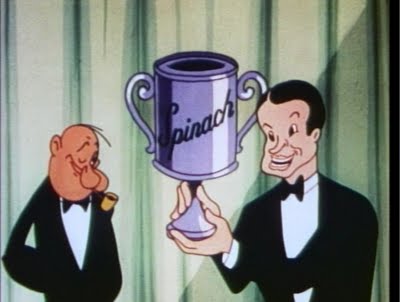
Debrilla M. Ratchford — Winner of the Al Copeland Humanitarian Award

October 30, 2009

We had several excellent nominees this year for the Al Copeland Humanitarian Award.  Each one of them has made a significant contribution to improving the human condition.  Steve Henson gave us ranch dressing,  Fasi Zaka ridiculed the Taliban,  Ralp Teetor invented cruise control, and Mary Quant popularized the miniskirt.  But this year’s winner is Debrilla M. Ratchford, the inventor of the rollerbag.

Ms. Ratchford was a flight attendant who realized that if you attached wheels and a handle to a suitcase, it would be much easier to transport baggage through airports.  She obtained a patent in 1978 for this invention, but it took almost a decade before the rollerbag became standard airport equipment.

Prior to the rollerbag people had to carry their suitcases or pay attendants with carts to get their luggage from the car to the check-in counter.  Dragging heavy bags to and from the car and around airports was a pain.  And having to wait for (or lose) checked bags was as much of a pain.  The rollerbag allows us to zip through airports and avoid checking bags.

This invention didn’t just ease our aching backs and save us time, it facilitates commerce.  Making it easier to travel, all things equal, means that there will be more travel.  More travel means more business transactions, which adds to our wealth.  Debrilla M. Ratchford didn’t just invent a handy device and make some money for herself.  She also benefited others by reducing the hassle of carrying around luggage and contributing to economic growth.  That makes someone a great humanitarian.

A central purpose of the Al Copeland Humanitarian Award is to highlight the fact that a humanitarian can be someone who benefits him or herself while also benefiting others.  There is no necessary tension between self-gain and improving the human condition.  On the contrary, when people are monetarily rewarded for their efforts, they are more likely to do things that benefit humanity.  The entrepreneur and inventor isn’t a necessary evil, he or she has a morally positive role in society.

This is what Al Copeland did, which is why this award is named in his honor.  As I wrote:

Al Copeland  may not have done the most to benefit humanity, but he certainly did more than many people who receive such awards.  Chicago gave Bill Ayers their Citizen of the Year award in 1997.  And the Nobel Peace Prize has too often gone to a motley crew including unrepentant terrorist, Yassir Arafat, and fictional autobiography writer, Rigoberta Menchu.   Local humanitarian awards tend to go to hack politicians or community activists.  From all these award recipients you might think that a humanitarian was someone who stopped throwing bombs… or who you hoped would picket, tax, regulate, or imprison someone else.

Al Copeland never threatened to bomb, picket, tax, regulate, or imprison anyone.  By that standard alone he would be much more of a humanitarian.  But Al Copeland did even more — he gave us spicy chicken.”

I decided against Steve Henson because I didn’t want to give the impression that only gastronomic innovation improves the human condition (although cool ranch Dorritos are pretty awesome).  I decided against Fasi Zaka because he has not yet achieved the improvement in the human condition he is seeking — making the Muslim extremists seem uncool in the Muslim world.  We wouldn’t want to give an award just for the hope of future accomplishment.  I decided against Ralph Teetor because I personally almost never use cruise control, so the improvement in the human condition seems less impressive to me.  And while Mary Quant was a close second, I decided against selecting her because, like my concerns with making this award too gastronomic, I didn’t want to suggest that improving the human condition was primarily sensual (although Quant also added to freedom — particularly the freedom to run for a bus more easily).

Congratulations to Debrilla M. Ratchford and Happy Halloween!


Public Education and its Enemies

October 29, 2009

(Guest Post by Matthew Ladner)

In the final scene of Shakespeare’s Henry V, the French sue for peace after Henry’s triumph at Agincourt. While the French king is away negotiating the final terms, Henry uses the opportunity to woo the King’s daughter Katherine to become his Queen.

Katherine is cool to this idea, but slowly warms to the notion under the glare of Henry’s charm. Finally, she asks “May it be possible zat I should love zee enemy of France?”

Henry replies:

“No Kate, it is not possible. For in loving me, you shall love the friend of France. For I love France so much that I will not part with a village of it.”

I think of this line often when K-12 reactionaries try to play the “well, I support public education” card. This you see, is supposed to put a reformer on a defensive and get them to scramble to say that they support public education too!!!

Nice try, but for my part, I have this to say: don’t tell me how much you love public schools unless you are willing to do what it takes to make them work for kids.

Yesterday Marcus Winters released a study showing that charter schools in NYC improve public school performance, especially for disadvantaged children. The effect sizes were modest, but what more can you expect given that the state still has a cap for the number of charters? The cap should be removed, and private choice options created.

Research has firmly established that ineffective teachers severely harm the education of children. Who is the enemy of public education- those who want to preserve tenure at all costs, or those who want to remove ineffective teachers from the classroom?

Last year, I was at a conference in Arizona. A philanthropist spoke movingly about the need to raise Arizona academic standards to internationally competitive levels. An assistant Superintendent of a tony school district said “We can’t meet the standards we have now, the last thing we should do is raise them.”

Who is the enemy of public education- the philanthropist or the administrator?

Later in that same meeting, I made a presentation about Florida’s success in improving public education, including the curtailment of social promotion to compel literacy training. One of the educators in the audience replied “I don’t want to see 9 year olds rolling on the ground crying because they don’t get to advance with their grade.”

That, you see, would be inconveint to her. It would be much less messy to simply pass the child along illiterate until he or she drops out in the 8th grade.

Who is the enemy of public education- me or her?

The reactionaries cleverly try to equate pouring more money on this broken system as compassionate. Balderdash. It is the goals of public education that people should be committed to, not any particular delivery mechanism, nor the employment interests of the adults working in the all-to-often dysfunctional system. We’ve tried the pour money method for improving public schools, and it failed miserably.

Show me don’t tell me how much you love public schools, apologists. As your critics multiply across ideological lines, the time has come to put up or shut up. I love public schools so much that I am willing to put in the right incentives and policies to make them work for a far larger number of children.

How about you?


Marcus Wins! Big Deal, So Does Everybody.

October 28, 2009

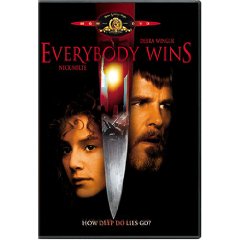
Everybody Wins

NOT the cover of Marcus’s new study

(Guest post by Greg Forster)

Well, I made no secret of who I thought was the winner in the Marcus/Murray deathmatch over college education.

But it turns out it’s no big deal, because Marcus says “Everyone Wins!”

In his new study of that title, I mean. Marcus finds that charter schools are improving regular public schools in NYC by creating healthy competitive incentives. The effect is small, fitting the overall pattern in the research – charters typically don’t give you as big a boost as vouchers, but having them is better than not.

For all you Rawlsians out there in JPGB-land, Marcus also finds that the lowest-performing students in NYC’s regular public schools benefit from charter competition; in fact, while the benefits for the overall population are statistically certain only in reading, they’re certain in both reading and math for low performers.


Swine Flu Socialism

October 28, 2009

robotinsurance2

Courtesy of the World Health Organization

(Guest post by Greg Forster)

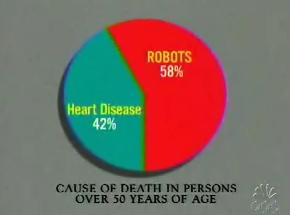
Further to Jay’s post below on how the supposed swine flu “pandemic” is sounding a lot like the ad for Old Glory Robot Insurance:

Michael Fumento, who has made a career out of calling BS on the political abuse of medicine, reports on just how bogus the swine flu panic is – and more importantly, the agenda behind it.

The World Health Organization’s old definition of “pandemic” required an outbreak not only to consist of multiple epidemics around the world, but also to pose an unusually severe threat to life and health before it could be called a pandemic. This was important because plain old ordinary flu causes multiple simultaneous epidemics around the world all the time, but it’s no cause for alarm because the plain old ordinary flu is a routine problem.

But just before swine flu was declared a pandemic, the WHO quietly rewrote the definition of “pandemic” to remove the necessity of an unusually serious threat.

Why’d they have to do that? Because the swine flu is actually less deadly – by orders of magnitude – than the regular flu:

Medically, the pandemic moniker is unjustifiable. When the sacrosanct World Health Organization (WHO) made its official declaration in June, we were 11 weeks into the outbreak, and swine flu had only killed 144 people worldwide — the same number who die of seasonal flu worldwide every few hours. The mildest pandemics of the 20th century killed at least a million people worldwide. And even after six months, swine flu has killed about as many people as the seasonal flu does every six days…

In Australia and New Zealand, flu season has ended, and almost all cases have been swine flu. Yet even without a vaccine, these countries are reporting fewer flu deaths than normal. (In New Zealand, that’s just 18 confirmed deaths compared with 400 normally.) Swine flu is causing negative deaths! [ea]

Update: When I originally posted this I forgot to include this wonderful tidbit. One of the very classy methods being used in the media to hype the swine flu is to report the total number of cases of all types of flu, including even undiagnosed cases with “flu-like symptoms.” Then the total figures for flu deaths and flu cases are falsely reported as swine flu figures.

Why would the WHO want to gin up a baseless panic about swine flu? Partly because they had already over-hyped avian flu and wanted to use a new panic over swine flu to retroactively justify the old panic over avian flu. “The world can now reap the benefits of investments over the last five years in pandemic preparedness,” boasts WHO’s director-general.

And partly it’s for the same reason the Old Glory Insurance Company wants you to believe in robot attacks – money. Apparently WHO makes a living off phony disease scares:

Yet this [CYA for the avian flu scare] doesn’t explain why the agency hyped avian flu in the first place, nor why it exaggerated HIV infections by more than 10 times, or why it spread hysteria over Severe Acute Respiratory Syndrome (SARS). That disease ultimately killed a day’s worth of seasonal flu victims before vanishing.

But the SARS scare was enough, leading to a broad expansion of WHO powers, including a degree of direct authority over national health agencies. It’s now using that to leverage more authority and a bigger budget. No shocker there.

But at least the Old Glory Insurance Company only wanted to take your money. They didn’t want to take your freedom as well. Not so much can be said for the WHO:

What may be surprising is that it wants to use that power to help bring about a global economic and social revolution–and that Director-General Chan was so blunt about it in a speech in Copenhagen last month.

She said “ministers of health” should take advantage of the “devastating impact” swine flu will have on poorer nations to tell “heads of state and ministers of finance, tourism and trade” that:

  • The belief that “living conditions and health status of the poor would somehow automatically improve as countries modernized, liberalized their trade and improved their economies” is false. Wealth doesn’t equal health.
  • “Changes in the functioning of the global economy” are needed to “distribute wealth on the basis of” values “like community, solidarity, equity and social justice.”
  • “The international policies and systems that govern financial markets, economies, commerce, trade and foreign affairs have not operated with fairness as an explicit policy objective.”

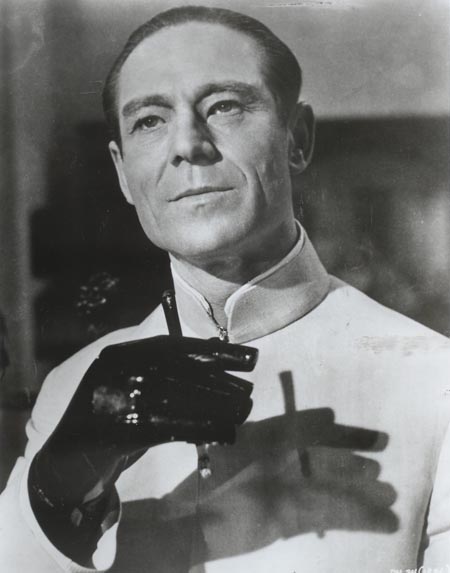
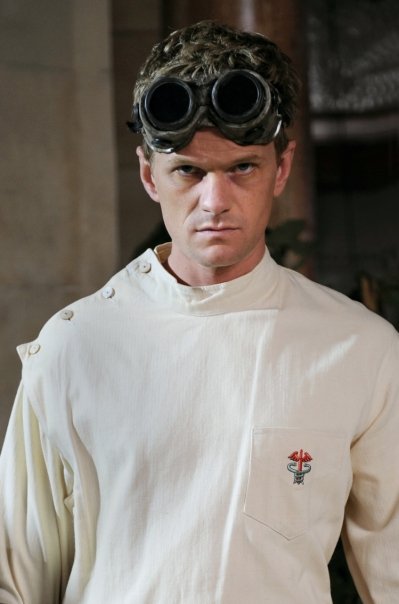
In related news, the WHO has announced a new panel of doctors to wield those “special emergency powers” we need to sweep away “bureaucratic obstacles” and combat swine flu. Here they are:

Dr No

Dr Horrible

Dr Doom

Dr Octopus

Dr Evil


Why Did They Make the Roadblocks?

October 27, 2009


President Obama’s declaration of a national emergency regarding swine (H1N1) flu reminds me of the Saturday Night Live fake ad for robot insuranceObama’s declaration was described by the AP as having “the goal … to remove bureaucratic roadblocks and make it easier for sick people to seek treatment and medical providers to provide it immediately.”  This raises the question, why were there bureaucratic roadblocks in the first place?

Similarly, in the SNL fake ad for robot insurance, Sam Waterston is the spokesman for Old Glory Insurance Company.  Their policy offers to protect anyone over the age of 50, regardless of previous health condition, against robot attacks.  One elderly woman in the ad wonders: “I don’t know why the scientists make them.” 

I guess we have bureaucratic roadblocks to medical care for the same reason scientists make robots that attack old people and eat their medicine for fuel — so that someone can protect us against these problems.

The good news, according to Mickey Kaus, is that the spread of the swine flu might not be as bad as media outlets are reporting.


No Instant Replay

October 26, 2009

It’s a bad call.  No doubt about it.   Of course, I mean introducing instant replay into baseball as well as the call in the Angels-Yankees game. 

Yes, the ump should have called both Yankee players out rather than just one because neither had a foot on the bag when tagged.  But to introduce instant replay to fix this or other errors in baseball officiating would make things worse than the problem it is meant to correct.

Officials are human and will make mistakes.  In the absence of corruption or bias (and there is no reason to assume that the men in blue are generally corrupt or biased), errors will be distributed randomly.  In the long run, they should even themselves out and no team should have a particular advantage.

It’s true that a particular call made at a particular moment will seem to alter the outcome of a game, series, or championship.  But the truth is that every call in every game has some minute effect on the outcome of that game and potentially a series or championship.  If any call went a different way, players and coaches could make different decisions about pitches to throw, ways to swing, players to substitute, etc…  Life is a string of choices; changing any one — no matter how small — might change all subsequent ones — including big ones.  In general, the best we can hope for is that errors in officiating are rare and unbiased.

Introducing instant replay might correct some errors, but it certainly wouldn’t be practical to try to use it to review all potential errors in officiating.  And since any call — even the one not at what seems like the pivotal moment — can alter the outcome of the game, the outcome can still be altered by errors unless all calls are reviewed.  And even if they are reviewed, there can be errors in the review.  In short, there is no way to remove errors from officiating.

Even if we tried to reduce error by reviewing certain calls, we couldn’t always know which calls really would influence the outcome of the game.  What’s more, instant replay reviews significantly slow down a sporting event and interfere with the play and enjoyment of that sport. 

People need some perspective.  It’s a game.  It’s meant as entertainment.  We should no sooner have instant replay reviews of baseball calls than judges’ votes in So You Think You Can Dance.  Let’s just assume that officials are acting in good faith and errors are a matter of chance, just as chance can influence whether the ball hits a seam and bounces in a strange direction.

But I suspect that discomfort with chance in life is part of the demand for instant replay.  To many people randomness feels like injustice — especially when that randomness goes against their interests.  There are no accidents in this view of the world, someone is responsible for everything that happens, and all wrongs must be righted.  An unwillingness to accept the reality of chance can lead to a headlong pursuit of justice that causes much more injustice.


Rhode Island Eliminates Tenure

October 25, 2009

(Guest Post by Matthew Ladner)

Check it out on this video. The unions are going ape- no one consulted them! They are going to sue! (HT Whitney Tilson)

First Michelle Rhee lets RIFs teachers without regards to tenure, and now her former protege strikes a blow against the indefensible practice in Rhode Island.

You go girls! Any men out there brave enough to follow suit?


Winters v. Murray Deathmatch on College

October 22, 2009

BelushiCollege

(Guest post by Greg Forster)

Today on NRO Marcus Winters throws down the gauntlet before Charles Murray and others who have made the increasingly common argument that too many kids go to college these days. As the economy requires workers to have more and more knowledge for good jobs, more kids should go to college, not fewer, Marcus argues; the research on teacher quality and school choice shows that improvements in K-12 education can increase the number of high school graduates who are genuinely able to handle college work; and the wage premium of a college degree is not going down, but up – because the K-12 system hasn’t kept pace with the increasing demands of technological development, and college does make students more productive workers (contrary to Murray’s claim that it serves mainly as a sorting mechanism).

Over on AEI’s blog, Murray responds, calling Marcus a “romantic,” going over a lot of research that doesn’t really address the point at issue, and then falsely claiming that Marcus presents only anecdotes about “a miracle school in the inner city” but offers no “interpretable data.” Anyone who reads Marcus’s piece will see that Marcus points to the eminently interpretable data of the broad research on teacher quality, school choice, and economic outcomes.


It Takes a Union of Millions to Keep Poor Kids Down

October 22, 2009

(Guest Post by Matthew Ladner)
I double dare Congressional opponents of the DC Opportunity Scholarship Program to watch this video to the end.

The aspirational ideals of the Democratic party, or for that matter any decent person, simply cannot be reconciled with the filthy reality of repealing the program.


Submit Your Nominations by Halloween!

October 22, 2009

Al Copeland with Popeye

(Guest post by Greg Forster)

For those of you who have been following the announcements over the past week of this year’s nominees for the Al Copeland Humanitarian of the Year Award – we want to hear from you!

Whom would you nominate to recieve “the Al” – what person has made the largest net contribution to the happiness of humanity in a field of endeavor not traditionally recognized by the people who give out awards as contributing to the happiness of humanity?

Just leave a comment on any of the Al Copeland nomination posts with your nomination. If your suggestions strike our fancy we may compose a new post featuring your nomination. And make sure you tell us why you think that person is worthy of “the Al.”

Oh, and let us know which of this year’s nominees you think should win! Our panel of prestigious judges (well, OK, Jay) is not bound to respect the majority vote, any more than the Nobel committee is bound to respect basic common sense. But unlike the Nobel committee, our judges are at least interested in hearing what you think!

Get your nominations in by WEDNESDAY, OCTOBER 28. Why that deadline? Because in honor of the Halloween holiday, we plan to announce the winner of “the Al” on Friday, October 30.

popeye-costume-01

Halloween captures the spirit (so to speak) of the Al Copeland Humanitarian of the Year award almost perfectly. It’s a ton of fun and it’s harmless, and it therefore makes a large net positive contribution to the happiness of humanity. Yet the snobs and the do-gooders – whom Michael Miller of the Acton Institute once remarked should be called “mean-wellers” because on balance they rarely do more good than harm – don’t value that as a contribution to humanity.

Germanetti___Popeye's_20th_Anniversary

So reserve your seat at the head table, get your tux out of mothballs, and get ready to join us for the big awards banquet next Friday.

And until then, don’t miss your chance to make your voice heard!