
Onay Ildchay Eftlay Ehindbay

February 18, 2009

dr-evil-zip-it

(Guest post by Greg Forster)

Education Secretary Arne Duncan has signaled he’s open to changing the name of No Child Left Behind. (HT Eduwonk)

Conspiracy theory time! Is this:

1) A cheap way of giving the unions a symbolic victory, to make it easier to deny their more substantial demands?

2) The opening maneuver in the long-awaited rollback of the ridiculous promise to reach 100% student proficiency?

3) A red herring desgined to keep us busy with conspiracy theories and “name that law” contests so no one will notice that the administration isn’t going to do anything substantive on education policy, despite extravagent campaign promises?

4) All of the above?

The betting pool is now open.

But since we have a storied tradition of acronym contests here on JPGB, we can’t pass over the opportunity to come up with a replacement name for NCLB. And of course it has to start with “smart.” Zip it!

How about Smart And Clever Kids, Overcoming Fallacious Canards, Really Achieve Perfection? There’s an acronym for you.


Get Lost 10

February 13, 2009

christian-locke

(Guest post by Greg Forster)

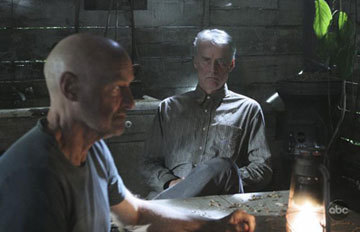
For a while during this week’s episode I was thinking that using the time-travel plot device to go back and fill in all the continuity holes (e.g. what was up with Rousseau and her teammates getting “sick”?) is really, really good for the show – in fact, I started to think that it works a little too well. It’s very convenient that the Island ’s flashes just happen to bring Jin to the right place at the right time to see Rousseau’s team get attacked, and then her later elimination of the “sick” team, and then – supreme convenience! – meet up with the other castaways.

But then it dawned on me that this “too convenient” dynamic isn’t a problem at all – because it returns us to the central theme of the first season, which began to trail off in the second season and has been moved to the background of the show for some time now – the theme of the Island having a plan and a purpose, rather than just being a passive natural phenomenon.

Over time, as we’ve learned more about what’s on the Island and how the Island works, the focus has been on 1) the mechanics of the Island’s power, and 2) the conflict between the various human organizations (Dharma, the Others, Widmore, and now the 1950s U.S. Army) who have striven for control of its power. The mysterious things that happen on the Island have been less and less about the Island ’s purpose and more about powers harnessed by humans for their own purposes. This goes all the way back to the season 2 button-pushing hatch, where the unimaginable power in the hatch was under human control (first by Dharma and then by castaways). Back in season 1, when stuff happened on the Island it wasn’t under the control of anyone that we know of, except the Island itself, and the power of the Island was directed not to human purposes but rather to the Island ’s purpose for the humans – getting them to confront their inner demons. In season 4 there was a little bit of the Island having its own purpose, with John getting his commission from Christian to move the Island, but that was mainly framed as part of the war between the Others and Widmore.

In this season, at long last the Island is once again its own master. Clearly someone or something with a mind of its own wanted Jin to see what he saw and then carry the knowledge back to the rest of the group. And when Christian told John, “I told you that you had to move the Island – I said you had to move it, John,” and all the ramifications of that began to dawn on me, I was overjoyed. The perfect finishing touch was when Christian said he couldn’t help John get up, and John had a moment of – panic? anger? hard to say – but then accepted it and steeled himself to drag himself up with his own strength. Because he doesn’t need to understand. He needs to carry out his orders and trust that they’re right.

And notice that after John promised not to bring Sun back, Christian emphasized to John that his orders are to bring everyone back.

So now that we’re getting answers to the questions about what kind of power the Island has, the show is going back to the questions it raised in season 1 – namely what kind of purpose lies behind that power.

And we don’t have any answers about that yet. Is the Island’s mind independent? Or is “Jacob” some kind of collective projection of the inner desires and fears of the people on the Island, such that their personal demons get reflected back to them in the Island ’s behavior? Or is the Island a gateway to the afterlife? Note that Charlotte ’s statement “the Island is death” was the episode’s title. They’re deliberately dredging up the theory that the Island is really some sort of Purgatory – but they’re not committing themselves to that theory in any way, they’re just reminding us that it’s one possibility.

Final thought: perhaps John’s death was necessary so that Sun could be recruited to return to the Island without John having to break his word. If so, John’s death could be viewed as a poetically just penalty for his making a promise to Jin that he knew he shouldn’t have made. Because he disobeyed his orders, John doesn’t get to come back to the Island – sort of like Moses’ death on the mountain, just before his people enter the promised land, was his punishment for a seemingly trivial disobedience. John’s death being a “sacrifice” doesn’t conflict with its also being a punishment, as any student of theology will tell you.

But if John’s death is arranged in any way by the Island – as a penalty, a sacrifice, whatever – that implies the Island is somehow in control of events not just on the Island, but everywhere. Perhaps through human agents loyal to it or at least under its influence, or perhaps in some other, more disturbing way.

Either way, it’s clear that this season we’re not just out to discover what lies behind the time travel, the cursed numbers, the smoke monster, etc. We’re also – perhaps we’re primarily- out to discover what lies behind the words “Jacob sent me.”


Porkapalooza

February 11, 2009

(Guest post by Greg Forster)

I just got caught up reading the last 24 hours’ worth of Jim Geraghty over on NRO, and it’s a cornucopia of posts that relate directly to a variety of topics we’ve been discussing here on JPGB:

Jim: “Say, fellows . . . when the central argument that the president uses to defend $838 billion or so in new spending is a lie, isn’t that news? Shouldn’t that be something of a big deal?”

In case the president is interested, Jay has proposed an alternative to the stimulus, although he has also noted that even doing nothing would be better than a stimulus bill.

Which I take as evidence that even the bill’s supporters don’t expect it will have a stimulative effect on the economy, as we’ve discussed; they’re supporting it because it’s a forty-year wish list of liberal fantasies and payoffs.

By which time he hopes the economy will have turned around on its own, so that the improvement can be attributed to the “stimulus,” just like Jay has pointed out.

This slander was debunked within days of the collapse, as we’ve noted. The real reason it collapsed is because “infrastructure” spending goes where politics dictates, not where there are real needs for improved infrastructure. So more spending doesn’t produce improved results.

And speaking of how infrastructure spending is really spent…

Jim reminds us that the Post, even while admitting that Murtha was a profound embarrasment, endorsed him on grounds that he delivered “infrastructure” pork to his district.


Buildingpalooza

February 11, 2009

fancy-church  shack

An underfunded regular public school; a money-draining charter school

(Guest post by Greg Forster)

I can see that school buildings are going to be a big topic for us for the foreseeable future. There’s the feds’ desperate need to blow money on something, anything, in the “recovery” bill (they’re no longer even bothering to call it a “stimulus” bill, apparently). And Jay’s post on school construction last week generated some interesting conversation in the comment thread.

Then last week opponents of the bill had a lot of fun spotlighting its provision of $89 million for school construction in Milwaukee, despite the fact that Milwaukee has had major enrollment declines leading to lots of empty and “underused” buildings, its buildings are deemed to be in good condition, the city has no plans for any construction projects, and just last year it had a major scandal centering around the waste of tens of millions of dollars in construction funding.

But here’s something I don’t think anyone outside Milwaukee has highlighted yet. In the Milwaukee Journal Sentinel’s story on the funding, somebody at the paper (presumably a bemused editor) inserted the following subtitle above a section of the story:

What is “Construction”?

Somebody get Socrates on the line, because it’s a good question. As a commenter pointed out on Jay’s post last week, once money goes into the system, we can’t be sure what it really gets spent on. We know how much money was budgeted for “construction,” but typically there’s nobody checking to see what was actually bought with those “construction” funds.

Sure enough, the Journal Sentinel quotes a state Democratic spokesperson saying that all of that yummy yummy swag for “school construction” could legitimately be spent on “school modernization.”

Next month’s headline: “What is ‘School Modernization’?”

Do these sound like conditions under which the money will be spent wisely? And don’t kid yourself that Milwaukee is somehow a special exception, and the stimulus money is going to be well spent elsewhere.

Suppose you don’t believe the vast mountain of empirical research that Jay cited last week. Let’s just drop all that science into the toilet bowl and flush. Even so, can anyone believe that money will be well used when it’s handed over to a system that has no real transparency, much less effective oversight, never mind accountability for results – and that is run by people who also just happen to derive political power by diverting school funding into an enormous gravy train of featherbedding, pork, etc.?

If we’re dumb enough to hand over the money under those circumstances, why would they not divert it to the gravy train? I’m amazed the schools in the government monopoly system aren’t even worse than they are.

But wait. There’s yet another school building story on the horizon. This one broke out in the edreformblogosphere just yesterday.

stlouisarch

They built it with surplus “school construction” money

Like Milwaukee and pretty much every other city, St. Louis has long-term declining enrollment, but that didn’t stop it from pouring tons of money into school construction over the past few decades. Now St. Louis has a bunch of empty school buildings it needs to unload, so it’s going to sell them off.

But not everyone is allowed to bid on the empty school buildings. Joanne Jacobs puts it succinctly: “The school board has banned sales of buildings to liquor stores, landfills, distilleries, sex shops and charter schools.”

Read that again: Liquor stores, landfills, distilleries, sex shops and charter schools.

Not much more to say, is there? Charters are the one sector of the government-owned education system that is 1) growing fast, 2) willing to take on the most disadvantaged, toughest-to-teach kids, and 3) producing improved results, and they do it with less money – especially less construction money! – than the regular system. But they aren’t allowed to buy – not take for free, but buy, as in purchase at market value, by paying actual money – the city’s empty buildings.

drive-thru-liquorlandfill

distilleryPT006149

Some typical St. Louis charter schools

I’m with Matt – if the system’s defenders don’t realize they’re destroying millions of children’s lives in order to funnel money to a corrupt gravy train, it’s only because they don’t want to know.


On School Spending, Palin’s Palein’ Again

February 4, 2009

sarah-palin

(Guest post by Greg Forster)

Back in October, I gritted my teeth and, against my inclinations, pointed out that as governor, Sarah Palin cozied up to the teachers’ unions and loved to brag about how much money she threw at schools. Never mind that the schools never got better; it played well to the media, and even more to the great “mushy middle” (in Charles Krauthammer’s wonderful phrase) that likes to make public policy based on what feels good, not on what gets results.

Then she endorsed vouchers and directly promised to push for a specified voucher plan if elected, which of course was big news. Vouchers have consistently produced academic gains whenever they’ve been tried and scientifically evaluated, and are by far the most promising reform for improving education for all students, as everyone who cares to know already knows. I tried to do justice to both sides of the story by noting that both Palin and Obama were trying to have it both ways on education.

Now she’s going back to her roots. She’s not for the stimulus, and she’s not against it (UPDATE: oops, see below). Her only position on the stimulus is that the bill doesn’t throw enough money at Alaska, and specifically that “the stimulus package rewards states for not planning when it comes to prioritizing for things like education, as Alaska has planned ahead by forward-funding 21 percent of our General Fund dollars for this very important priority. It appears only those states that did not plan ahead with education will benefit. States like Alaska should not be punished for being responsible; yet that’s what the plan means for Alaska right now” (HT Jim Geraghty).

Meanwhile, as Alaska faces a billion-dollar shortfall, she’s pushing to build a road to Nome that will cost up to $2 billion. I’m sure that has nothing to do with a desire to have “shovel ready” projects at hand, ready to shovel into the maw of the federal “stimulus” sugar daddy.

National Review‘s Greg Pollowitz was the first to dub it the “road to Nome-where.”

I hate being the designated Palin critic of the education reform movement. When I’m with my education reform comrades, I’m usually the only Republican in the room. And I’m much more Sarah Palin’s kind of Republican than, say, Mitt Romney’s, much less John McCain’s. But somebody’s got to point this stuff out.

Does anybody want to take over the job?

UPDATE: I wanted to check on this before posting it. I’ve confirmed that, in addition to usually being the only Republican in the room when I’m working on education reform, I’m also the only Republican on this blog. (Matt specifically requested that I describe him as a “disgusted former Republican.” Duly noted.)

UPDATE to the UPDATE: Wouldn’t you know it? She just put out a statement saying she agrees with the decision of Alaska’s Senators to vote “no” on the stimulus. I saw it just two hours after I posted this. But she adds that a stimulus “is needed” and plumps again for mo money, mo money, mo money!


Get Lost 8

January 30, 2009

110898_043

“The name is Faraday. Daniel Faraday.”

(Guest post by Greg Forster)

 I’m finally caught up on the new season of Lost. Some thoughts:

1) From “Libby says hi” to “Nice to meet you,” Lost is worth the investment for the humor value alone.

2) Once again, I rejoiced in the return of the real Hurley.

3) Jay is right that we shouldn’t try to suss out the “rules” of the show’s universe. Unfortunately, the show itself seems to feel the need to gesture in that direction – hence Juliet explains that “whatever you have with you” travels with you through time. That’s just asking for trouble. What counts as something you have with you? Do you have to be touching it? What about the backpacks? Their clothes touch the backpacks but they don’t – and of course if you say that anything touching your clothes also goes, why does “stuff you have with youness” traverse clothing but not other objects (say, for example, the Island itself)?

They’d have been better off taking an attitude more like this:

4) Why was Ben lighting a candle in the church?

5) Did you notice that Richard wears eyeliner? It’s pretty blatant. Maybe that’s the fashion for men some time in the future and he forgot to take it off when he came back. Or maybe he’s not really ageless at all – he just looks permanently youthful (like Dick Clark used to) because he has great makeup.

6) In the Lostverse, judges will issue court orders requiring people to give blood samples without revealing who’s asking for the sample or why – but if you walk into Oxford University off the street and ask to go through their employment records, they’ll open them right up for you.

7) Once again, for a man with unlimited cash and an army of goons who’s made tons of enemies and tampered with terrifying occult powers, Widmore’s security really bites.

But I don’t get that scene. How come Desmond thought Widmore would give him the address? How come Widmore gave it to him? I thought the whole reason Desmond and Penny were on the run was because her father was hunting them down. Why didn’t Widmore grab him and turn him over to the goons to beat Penny’s location out of him? If they’re not running from Widmore, why are they hiding? “Somebody toss me a frikkin’ bone over here!”

8 ) Forster’s Iron Law of TV Nerds: If a merely “recurring” nerdy comic relief character becomes a regular fixture of the show, he will gradually morph into a badass action hero who wins the affections of smoking hot chicks. This law derives its inexorable operation from the fact that all TV shows are written by people who are themselves nerdy comic relief characters in real life.

Mark my words, by the time Lost is over, Daniel Faraday will have killed some bad guys, and at least one other attractive female will demonstrate affection for him.

Also known as the Wesley Wyndam-Price Axiom.

nerdy-wwpwesleywyndampryce

Wesley Wyndam-Pryce, Feb. 1999; Wesley Wyndam-Pryce, May 2004

HT Buffy Guide and Wikipedia


School Unions Impeached, Removed

January 30, 2009

blagojevich

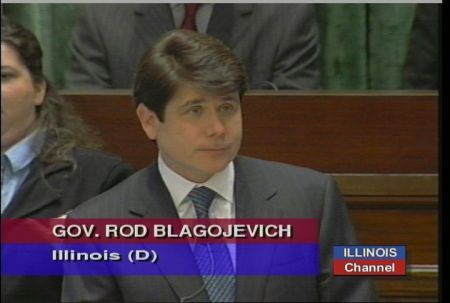
“At least they’re not as corrupt as I am” – Rod Blagojevich gives a dramatic last-minute speech defending the unions.

(Guest post by Greg Forster)

WASHINGTON – In an unexpected turn of events, yesterday morning the U.S. House of Representatives voted to impeach the nation’s teacher and school-staff unions. By the end of the day, the U.S. Senate had convicted on all charges, removing the unions from office.

In the bill of impeachment, the unions were charged with the “high crime and misdemeanor” of “destroying the futures of millions of American children in order to keep the gravy trains running on time.”

“Once we all got together and decided to put our selfish desire for re-election aside and make education policy on the merits, the rest was obvious, so we said, ‘Why wait?’ ” said Speaker of the House Nancy Pelosi (D – Ca.).

Senate Majority Leader Harry Reid (D – Nv.) added that universal vouchers, merit pay, the abolition of tenure, principal control over personnel rules and decisions, and objective evaluation of curricula would all be enacted by the end of the day today.

“They’re all no-brainers,” he said. “We’ve known all along, of course, but at last we can finally say it, and do what’s right for our children.” Pelosi added, “It’s so liberating!”

The sudden change is sending shockwaves through the education policy world.

“What are we going to do with ourselves now?” asked Robert Enlow, president of the Friedman Foundation for Educational Choice, at a press conference. “The battle’s over. I’ve just gotten word from the board that me and all my staff are fired. And nobody can get jobs in this economy.”

“I hear Wal-Mart is hiring,” said noted researcher Jay Greene at the same conference.

Congressional leaders attributed the change of direction to the accumulated power of the idealistic rhetoric of recently-inaugurated President Barack Obama.

“We’ve just heard so much about setting aside partisanship and doing the right thing for so long,” said Pelosi. “Two years of constant bombardment finally broke through our cynical shells. We all just cracked.”

The president was quick to issue a statement on the unions’ removal.

“I am committed to schools,” he announced. “We all must be committed to schools. We must hope for change without changing our hopes. We must bridge the divides without dividing the bridges.”

“Yes, we can!” the president added.


All Hail!

January 29, 2009

all-hail

(Guest post by Greg Forster)

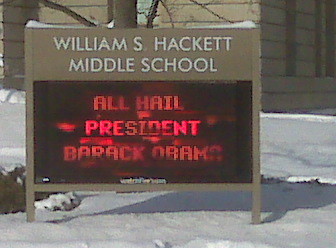
I guess they heard how much money is going to be thrown at schools in the stimulus.

Hat tip to Jim Geraghty, who quips, “I would have preferred a zombie warning.”


Cincinnati Enquirer on EdChoice: Good Story, Bad Headline

January 28, 2009

(Guest post by Greg Forster)

On Saturday the Cincinnati Enquirer ran a story on how Ohio is sitting on a bunch of student outcome data for the EdChoice voucher program and neither doing anything with them nor releasing them to researchers who could do something with them. I’m told it was picked up by AP.

The story is generally good. Transparency is always preferable. Student privacy concerns do limit the extent to which the state can release data to the general public, but the state ought to be able to release a lot more than it has, and it also ought to license private researchers to use more sensitive data on a restricted basis, just as NCES does.

The story’s author, naturally enough, wanted to provide what little data are available. So she provided the number of EdChoice students who failed the state test in each subject.

Readers of JPGB probably already know this, but any outcome measurement that just takes a snapshot of a student’s achievement level at a given moment in time, rather than tracking the change in a student’s achievement level over time, is not a good way to measure the effectiveness of an education policy. A student’s achievement level at any given moment in time is heavily affected by demographics, family, etc. Growth over time removes much of the influence of these extraneous factors (though obviously it doesn’t remove absolutely all the influence, and further research controls or statistical techniques to remove these influences more are preferable).

Moreover, EdChoice program is specifically targetd to students in the very worst of the worst public schools. These are students who are starting from a very low baseline. We should expect these students’ results to remain well below those of the general student population even if vouchers are having a fantastically positive effect. So the need to track students over time rather than simply take a snapshot of their achievement levels is especially acute here. Only a rigorous scientific study can examine whether the EdChoice voucher program is improving these students’ performance – and to do that we’d need the data that the state is sitting on.

Also, a binary measurement of outcomes (pass/fail) is never as good as a scale. The state is sitting on scale measurements of the students’ performance, but from the Enquirer story it appears that it won’t release them.

And the Enquirer was only able to obtain these pass/fail results for 2,911 students out of about 10,000 served by the program.

All that said, I don’t blame the Enquirer for reporting what few data were available. The story is focused on the state’s stinginess with data, not the performance of the program as such.

But what headline did the paper put on the story?

“Ed Choice Students Failing.”

Of course the story’s author doesn’t choose the headline. And the person who did choose the headline almost certainly had to do so under intense deadline pressure, without much space to work with, and with no knowledge about the issues other than what could be gleaned from a very quick and superficial reading of the story. Still, since the story clearly focuses on the issue of the state’s sitting on valuable data without using them, you would think they could come up with something like “Voucher Data Not Used.”


Excavating the Little Rock

January 28, 2009

the-little-rock

HT Wall Street Journal

(Guest post by Greg Forster)

Continuing the Arkasas theme, the Wall Street Journal has a fascinating story today about the little rock for which Little Rock was named.

And continuing the theme of government spending, the story notes that $650,000 is about to be spent to excavate the remains of the original little rock for public display. $350,000 of the money was privately raised, the city is kicking in $100,000 from bonds, and the county is kicking in $200,000.

My more libertarian-leaning friends may scoff at that, but I’m for it. Even Adam Smith insisted that it’s important for government to spend money to “maintain the dignity of the state.” He meant all the lavish pomp that surrounds the king and Parliament, but this is the American equivalent of that – it’s affirming the role of our shared past (even in the form of a rock we dug up out of the mud of the Arkansas River) in the foundations of our nationhood.

UPDATE: Of course, it’s not my money, so it’s easy for me to support spending it.