Jay: Wake Up and Smell the Incentives

September 14, 2009

(Guest post by Greg Forster)

Well, it seems to be op-ed day for friends of JPGB today. Below, Matt appreciates Robert Enlow as a man who has “the whole package” – and delivers it in today’s Indy Star. Meanwhile, over on NRO, Jay has a column on the perverse incentives that artificially drive up special ed diagnoses:

Schools have discovered that they can get extra funding from state and federal ‎governments for small-group instruction to help lagging students catch up if they say that ‎the students are struggling because of a processing problem in their brains. School officials who admit that the students are lagging because of poor previous instruction or a difficult ‎home life, by contrast, are left to pay the costs of small-group instruction entirely out of ‎their own budget.

If you’ve been reading JPGB, that part is all old hat to you by now. If not, this NRO piece is a good (though very brief) introduction to the topic.

The NRO piece does make one point I hadn’t thought of before:

In New Jersey, for example, 18 percent of all students are ‎classified as disabled, but in California the rate is only 10.5 percent. There is no medical ‎reason why students in New Jersey should be 71 percent more likely to be placed into ‎special education than students in California.

Indeed.


Still More Lefties for School Choice

September 9, 2009

Monopoly - Pennybags

Can you sell school choice to monopolists?

(Guest post by Greg Forster)

We’ve been tracking the increasing movement on the political left toward school choice.

Now, Arianna Huffington repackages school choice for the lefty crowd, connecting it to the health care debate by calling choice “single payer for education,” i.e. you choose the provider and government pays.

The association is distasteful, given that the pending government takeover of healthcare is a knife at the throat of our freedom. But if this is how some people need to think about it in order to see the point about school choice, that’s fine as far as it goes – in education, moving to a “single payer” system would be a step in the right direction, as opposed to a step in the wrong direction as with health care.

HT Eduwonk


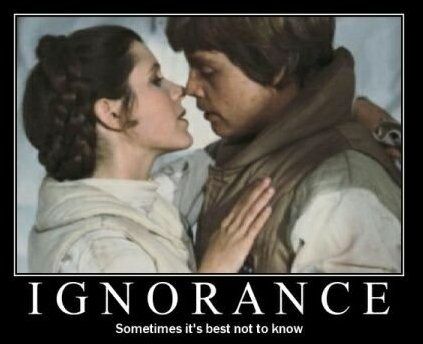
Ignorance May Be Bliss, But It Makes Bad Policy

September 4, 2009

ignorance-is-bliss

(Guest post by Greg Forster)

ALELR draws attention to some problematic details in the Gallup/PDK poll finding on Americans’ support for charter schools.

 I hate to draw attention to the PDK poll, since its voucher support question has been shown to be misleading in a way that drives down the appearance of voucher support by an astonishing 23 percentage points. But I feel pretty safe because the PDK voucher question has lost so much credibility that it’s not really very dangerous any more.

So back to the charter school question. PDK finds 64% of Americans support charter schools. That’s the topline. But guess what else you find if you look below that?

A majority of Americans don’t think charter schools are public schools.

57% believe charter schools charge tuition.

71% believe charter schools can select their own students.

Perhaps vouchers and charters were separated at birth.

Bear that in mind the next time you hear charters are more popular than vouchers. First of all, I doubt that it’s true – I’ve seen plenty of polls with around 64% support for vouchers. But on top of that, how sure are we that when people say they support charters they don’t think they’re supporting sending children to private schools of their choice using public funds, which is the very definition of a voucher?

Image HT I Think I Believe


Pass the Popcorn: Ponyo

August 28, 2009

ponyo

(Guest post by Greg Forster)

Quick, before it leaves theaters, go see Ponyo, the latest film from Japanese visionary Hayao Miyazaki. As I’ve written before, Miyazaki’s movies fall into two categories: family features and challenging epics. Ponyo is definitely on the family side of the equation. But I went without kids and loved it as a grown-up, so don’t be deterred. There’s plenty here to enjoy.

Well, OK, maybe not everyone should rush out to see it. If you’re the kind of person who would go to to a movie about the fantastic adventures of a five-year-old whose chance encounter with a magical fish-girl threatens to upset the balance of the magic and human worlds, possibly destroying both, and spend the whole time saying to yourself things like, “Hey, no five-year-old could push something that size on his own! And how come he has the vocabulary of a twelve-year-old?” maybe Ponyo is not for you.

But everyone else should go.

If you plan to see it, stop here. I’m not going to spoil the ending, but the movie reveals itself slowly (as many Miyazaki movies do) and you’ll probably enjoy it more if you don’t know much about it going in.

If, however, you need to be convinced, read on.

Ponyo is the daughter of a sea-wizard and lives with him at the bottom of the ocean. Her father hates the human world and forbids her to see it, which naturally makes her eager to go. But she gets into trouble (of course) and is rescued by a five-year-old boy named Sosuke, who protects her and takes care of her until her father comes to take her back to the sea.
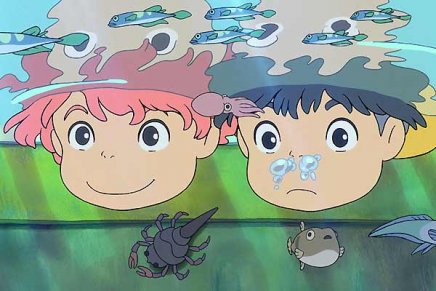
ponyo-sosuke

Ponyo, starved for love in the house of her hard-hearted father and awed by the self-giving kindness of Sosuke, decides she’d rather be human. She gets into her father’s magical works and manages to open a rift in the barrier between the magical and human ecosystems, allowing her to change herself to assume a human form – but also causing a catastrophic disruption of the human ecosystem that leaves an entire town underwater and threatens to do worse.

After her transformation, Ponyo has a foot in both worlds – though she appears human, she can still work magic. Much of the movie’s charm comes from the shared delight of mutual discovery between Ponyo and Sosuke. Sosuke marvels as Ponyo turns a toy boat into a real boat and fixes broken household appliances with a glance; Ponyo is equally blown away by the delights of flashlights, ham sandwiches, and warm towels straight out of the dryer.
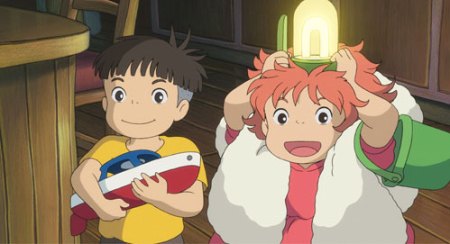
ponyo-sosuke toys

But back in the sea, her sea-wizard father and her mother (whose identity I’ll keep under wraps) determine that the only way to close the rift she’s opened and save the human world from destruction is for Ponyo to become entirely one thing or the other. She must either return to the sea, or else complete the transformation, giving up her magic and becoming fully human.

Of course they know Ponyo will be miserable if she returns to the sea, but to become fully human she must be drawn across the divide by a human love – by Sosuke. However, in the process of drawing Ponyo over that love will be tested. Does Sosuke really take care of Ponyo because he cares about her well-being? Or is he just interested in her because she’s magical and fascinating? If Sosuke fails the test, Ponyo’s desire to become human will destroy her.

Ponyo’s mother has faith in the genuineness of human love and thinks it’s better for Ponyo to risk death than to abandon her desires, so she arranges for the transfer. But her father hates humans and fears Sosuke’s love will fail the test. He may or may not be laying plans to interfere.

But all this plot is really irrelevant to the joy of the film. What Miyazaki is giving us here – besides gorgeous visuals and a delightful story in its own right – is a vision of how the world of humanity relates to the world of nature. “Magic” in this movie is symbolic of the spiritual significance most of us attribute (on some level) to nature.

Don’t get me wrong! The bad, human-hating kind of environmentalism is condemned pretty clearly. (This is a big step for Miyazaki, who has not been so enlightened about this in the past.) Ponyo’s sea-wizard father not only hates humans, but actually dreams of one day wiping them out – because he hates their impact on the environment. Those who see the ecosystem as something with its own inherent integrity apart from humanity, such that any impact of humanity’s existence on the natural world is bad simply as such, are implicitly wishing for humanity’s annihiliation.

In fact, we learn at one point that the sea-wizard father was born human and has somehow himself crossed the very same border Ponyo wants to cross, only in the other direction. The desire of some humans to get into nature – which drives so much of what now passes for environmentalism – is really a desire to get out of humanity. As the wizard says, they need to abandon humanity to serve the earth.

wizard

What do you know about humans? They treat your home the same way they treat their fithly black souls! I was human myself once. I had to leave all that behind to serve the earth.

But what if the shoe were on the other foot? What if we could “become one with nature” not by dragging humanity down, but by pulling nature up?

That’s the thought I couldn’t stop having as I watched the extended scene in which the rift opens between the human and magical worlds. The way Miyazaki does it, it’s breathtaking. Everyday things in our everyday world suddenly become magical. Not magical like wands and rings and such D&D fantasies – magic as a tool for humans to use – but magical with its own life and its own distinct nature. The road Ponyo’s mother drives down to get to work every day, with the forest on one side and the sea on the other, suddenly becomes bursting with little gods and goddesses all around them.

That’s what Ponyo’s desire to become human represents – against her father’s cold, self-loathing desire to have nature instead of humanity, her desire for love drives nature to come up alongside humanity, with its own personality, wanting to love us the way we love it. And on those terms we really can become one with nature.

Tree-huggers have got the wrong idea, because there’s nothing in a tree that can recieve a hug. There’s nobody else there, so you’re basically hugging yourself. But what if the trees hugged back?

We do – most of us, anyway – love nature and feel that somehow our relationship with it is disrupted and needs to be repaired or reestablished. There are, of course, some people for whom a forest is nothing but a source of lumber and a dog is nothing but an annoyance. But they’re pretty rare. Just to take one example, how many millions of people keep pets? How many millions more would like to keep them if not for the hassle, cost, allergies, etc.? And why do we want pets? There’s no explanation other than a desire to have some part of nature that is personal enough to have a relationship with. We want to love nature, so we seek out something in nature that can love us back.

And love, the movie very wisely percieves, is the unique quality of humanity which nature utterly lacks. Sheer force is something nature has in plenty, as we see when the flood destroys the town. Beauty nature has in spades. Even intellect is present in nature to some extent, as many animals are capable of some degree of calculation. We can, of course, out-calculate them. But what really makes humanity stand out next to mere nature – the smallest taste of which is enough to drive Ponyo to turn the whole world upside-down rather than go without it – is love.

Ponyo-Sosuke kiss

And let’s be clear that by “love” I’m not talking about mere gushy emotion or seniment. I mean a genuine desire for the good of others. In nature, mothers care for their young, and in one sense that’s love. But they only care for their young, not for others generally, and they do it in obedience to the maternal instinct. Doing good to another not because of any relationship we have with that other or to satisfy some instinct or desire of our own, but simply because we will the good of others – that’s something you’ll never find in nature. 

Or should I say, something you’ll never find in nature except where humanity has affected it. Try getting a wild dog to love you. But tame the dog and it will love you as well as any person – because in the taming, the influence of human love pulls it upward into a real (though of course limited) state of personhood.

Naturally, humans being only human, we are never perfectly selfless and all our behavior is mixed with some level of wrongful selfishness. That’s what gives the cynics, like the sea-wizard, their excuse for disbelieving in the reality of love. And of course in some particular cases the cynics turn out to be right – many behaviors that look like love from the outside really aren’t. That is Sosuke’s test – does he really want Ponyo to have what’s good for Ponyo simply because it’s good for Ponyo and he desires Ponyo’s good as such?

It’s not a perfect movie. Just like in Miyazaki’s last work, Howl’s Moving Castle, the ending of Ponyo is rushed and forced. Miyazaki has bittten off so much he can’t quite resolve it all in the time he has available. And, I regret to say, over the years I think he has become increasingly hesitant to let anybody’s story end sadly – not just the heroes but anybody at all. In his greatest work, Princess Mononoke, good triumphs in the end and utter destruction is averted, but many good things are lost and the hero and heroine must give up something they dearly love in order to save their respective peoples. Even in his earlier family movies, there was loss and regret. But more recently Miyazaki has tried to arrange for everybody to end up well, and that gives his endings a false note.

But, like I said, plot is not the reason to go see Ponyo, and thus I think the problems with the ending detract little from the movie. Even if you get nothing but the fun story and the amazing visuals, it’ll be well worth the price of admission. And I think there’s a lot more than that to be had.


Obama Serenades Rabbis: “Deutschland Uber Alles”

August 27, 2009

Obama at AIPAC

“Deutschland, Deutschland, uber alles . . . uber alles in die welt!”

(Guest post by Greg Forster)

Getting a lot of attention: Barack Obama’s statement, during a national conference call with a thousand rabbis on the subject of the proposed government healthcare monopoly, that “we are God’s partners in matters of life and death.”

Not getting a lot of attention: While waiting on hold for the call to begin, the rabbis were serenaded with the traditional German folk tune “Deutschland Uber Alles.”

Deutschland Uber Alles

No, I didn’t make that up. His staff makes a blunder like this and he still thinks government can run the whole nation’s health care?

On the other hand, maybe he’s trying to tell us something. What was that again about “death panels”?

HT Kausfiles


Pass the Popcorn: Memento

August 21, 2009

memento2

(Guest post by Greg Forster)

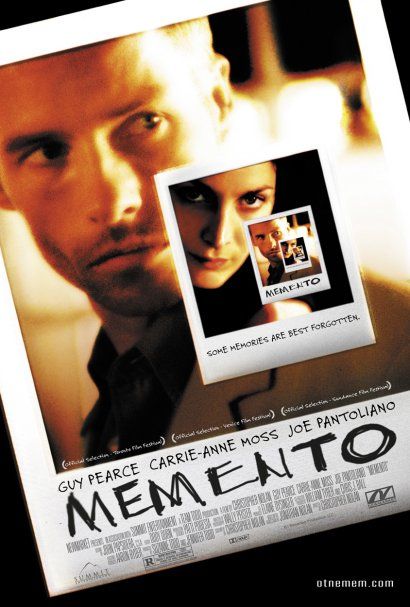
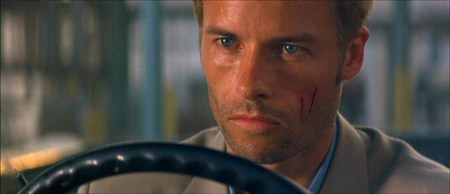
Hey, remember Memento?

No you don’t. You remember a really clever novelty act where they put you in the shoes of a man who can’t remember things that happen to him by telling most of the story backward. But memory is unreliable, remember?

memento

Back when you saw it, you realized that it was – in addition to being a clever novelty act, which of course it was as well – a profound meditation on the nature of human identity – on the sources of knowledge, motivation, and “habit” or “instinct,” which together make up who we are.

But since then you’ve forgetten all that. What you retain all these years later is:

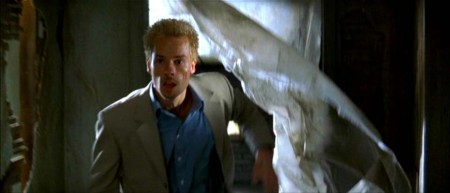
Okay, what am I doing? I’m chasing this guy.

memento17

No, HE’S chasing ME!

Which is just about the cleverest gag on film, I admit. But that’s a dog and pony show compared to this, which you don’t remember:

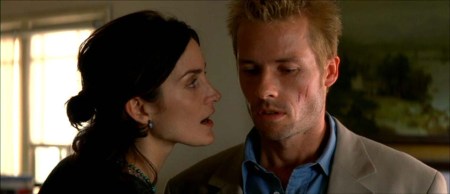
Just because there are things I don’t remember doesn’t make my actions meaningless. The world doesn’t just disappear when you close your eyes, does it?

memento21

You can question everything. You can never know anything for sure.

There are things you know for sure…Certainties. It’s the kind of memory you take for granted.

Of course, “earlier” (which is to say “later”) in the movie Leonard deprecates memory to Teddy. Memory is unreliable. You want facts, not memories. But now look at what Leonard tells Natalie – certainties are the kind of memory you take for granted. What is your knowledge of “the facts” but a bunch of memories? In which case, how can you know anything? As Augustine demonstrates at length in chapter 10 of the Confessions, memory comprises virtually all of the human personality.

memento11

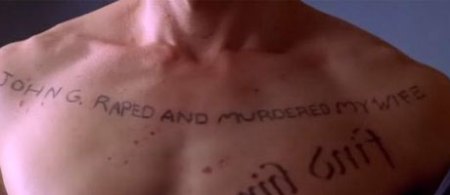
It all comes down to whether or not you can take it for granted that there’s a real reality out there. Because if you can’t take it for granted, there’s no way to prove it. You can either assume it and be sane, or doubt it and go mad. That theme winds through everything in the movie. As Leonard tells Teddy at the “end” (which is to say at the “beginning”), whether or not he’s got the right John G. makes all the difference. It’s the only thing that matters.

But why? Teddy says we all just lie to ourselves to be happy. But Leonard knows that theory doesn’t hold water. If you really were lying to yourself, it wouldn’t make you happy. The fact that his quest for the killer does in fact motivate him proves that he’s not just interested in giving himself a purpose. He really wants to find the killer.

To Natalie, he simply asserts that the world doesn’t go away when you close your eyes. At the “end” (which is to say at the “beginning”) he pushes away the doubts Teddy has planted by insisting to himself that “I have to believe in a world outside my own mind.” That’s the rub. If you take that seriously – not “I have to believe” in the sense that I want to, so I’ll lie to myself to be happy, but “I have to believe” in the sense that my mind actually cannot function in any other way – it solves the problem.

To take a parallel example, no one can prove that two contradictory statements can’t both be true, for the simple reason that the activity of proving things itself assumes that two contradictory statements can’t both be true. The law of noncontradiction can’t be argued for or supported; we believe it because our minds simply will not function unless we do. You can either assume it unquestioningly or go mad; ultimately there are no other options.

But why, then, does the movie end (i.e. begin) the way it does? (For the sake of those benighted souls who may not have seen the movie, or for those who may have forgotten the details and may want to go back and see it again, I won’t spoil the central twist.) I think it’s simply that Leonard’s exchange with Teddy makes him realize that a man in his condition is unable to do what he’s trying to do, so he’ll do the next best thing – rid himself of the person who’s using him.

memento19

At any rate, I don’t think we’re meant to accept the claims we hear at the end about Leonard’s past. The movie itself undermines this in several ways. For starters, when those new “memories” start flashing into Leonard’s head, we get this image:

memento20

Which is obviously absurd and impossible. That’s the point – mere suggestion can produce new “memories” that feel accurate but can’t possibly be real. Which is why we have no reason to accept the new “memories” at the end.

Also, think about that pivotal image of Leonard lying on the bed when his wife says “ouch!” (If you don’t remember what I’m talking about, for goodness’ sake what more excuse do you need me to give you to go back and see this movie again!) If the new “memories” are real, then the revised version of this image must be the true one and the original version a construction. But the original version makes sense and the new one doesn’t. Why on earth would he do that in that contorted position? If he were going to [activity deleted to avoid spoiling the twist] he wouldn’t do it lying on the bed at a ridiculously awkward angle while she read a frikkin’ novel. But that’s exactly the kind of absurd image your mind would invent under a false suggestion.

Well, like my interpretation of the end or hate it, Memento is still one of the most profound movies out there, and it’s well worth a reviewing if you haven’t seen it since 2000.

Oh, and I hear Chris Nolan’s made some other interesting movies since then. Guess I should check those out.

HT Movie Images for most of these shots, Beyond Hollywood for the one at the top


Death Panels for College Kids!

August 21, 2009

Monopoly - Pennybags

(Guest post by Greg Forster)

Pardon me while I toot my horn that the editors of the Wall Street Journal have picked up on the story that federal student loans illustrate how a “public option” inevitably becomes a single-payer government monopoly. Remember, you read it here first! (Well, OK, not really. You read it on NRO first. But we had it before the Journal!)

And please please please do yourself a favor – read Andy McCarthy’s incisive NRO article today on the probability of, and implications of, an Obama victory on health care. It’s a sobering corrective to the undue optimism many of us (myself included) have begun to feel over the past few weeks.

The spectre of James Madison has been doing yeoman’s work in DC this summer. If you want to know why the Democrats had to neuter the early-year provisions of Cap and Trade and are now struggling so hard over health care, just read Federalist 10. Madison built the walls of the Constitution high and thick to repulse precisely this sort of assault. Thank God for that man!

But it’s all too easy to assume that justice must prevail when the facts and the rights are clear, and McCarthy’s analysis (though I don’t agree with every particular of it) has sobered me up.

People do, in fact, sell their freedom. It happens every day. And not just in far-flung corners of the globe but in your neighborhood, on your block. Why do you think the founders got so animated and hyperbolic about the monstrosity of selling your freedom every time the subject came up? Not because it couldn’t happen here, nor even because it could, but because it did. Repeatedly. To sell your freedom is the fundamental tendency of man’s fallen nature. (Read Federalist 8. Or Federalist 51. Or, for that matter, Federalist 4, 6, 10, 15…)

McCarthy is right: “We could still lose this thing.” And there is nothing to stop the consequences from being as dire as he foresees them being.


The Return of the Bogus “Excellence” Complaint

August 20, 2009

(Guest post by Greg Forster)

Fordham’s Fun Fact Friday feature, now in its sixth week, is a weekly one-minute video production that takes some fact about the education system and presents it using an interesting or unusual visual. The creators have been pretty consistently clever in coming up with ways to make obscure facts visually intuitive.

Unfortunately, the facts chosen to be presented are not always so cleverly chosen. When Fordham picks an important fact to visualize, such as the gap between spending and achievement growth or international comparisons of student-teacher ratios, the results are, well, superawesome. But when it chooses, say, a comparison of the US education budget with the GDP of some smaller countries, the visual presentation is still clever, but the result is kind of pointless. Is anyone really impressed by the point that a huge country like the US spends more on education than the GDP of, say, Indonesia? What does that prove? Some kind of argument or point was needed.

Last week they missed again. They decided to resurrect Fordham’s complaint from last year (dissected here and here) claiming that accountability systems make our schools more “equal” but less “excellent” because they create incentives for schools to increase the amount of attention they pay to low achievers, reducing the amount of attention they pay to high achievers. Never mind the fact that – according to Fordham in the very same report – the low achievers are benefiting from this diversion and the high achievers don’t seem to be losing any ground.

That would seem to me to be pretty clear evidence that schools were devoting too much attention to high achievers – perhaps because their parents are more likely to be influential – and that the incentives created by accountability were educationally healthy because they forced schools to focus their attention where they could create more improvement.

It’s obviously possible that in the long run accountability could push this too far and become counterproductive by focusing too much attention on low achievers at the expense of high achievers. That’s an argument for improving the design of accountability systems to preclude that result. But so far, on Fordham’s own evidence, we don’t seem to be having that problem.


The Moral Case for Capitalism in CRB

August 12, 2009

Monopoly - Pennybags

He’s not just ineffective. He’s a thief.

(Guest post by Greg Forster)

The summer issue of the Claremont Review of Books, which just went live for subscribers, contains my essay on the moral case for capitalism. Some articles will be made public one at a time over the next few weeks; I’ll be sure to post here if they make mine available.

Here’s a free sample to motivate you subscribers to head over there and check it out:

Some time last fall, the debate over bank stabilization metastasized into a frontal assault on the principles of capitalism itself. Demagogues whose policies were largely to blame for the crisis trotted themselves out as saviors who would deliver us from the depredations of Wall Street greed. Flushed with victory at the polls, they set to work putting whole sectors of the economy under government control.

During those crucial months, the public heard little counterargument. Capitalism’s defenders in academia, journalism, and think tanks went strangely mute, right at the moment their voices could have made a real difference. A short delay might have been excusable—all of us needed time to absorb and understand an extreme breakdown in financial markets that struck with breakneck speed. However, as the months rolled on and the threat of a socialist resurgence became more real, and still the self-appointed defenders of capitalism remained silent, it became clear enough that many of them were actually suffering a deeper crisis of confidence. By the time they finally started finding their voices, it was too late; the turn to Big Government was a fait accompli.

At the same time, some of capitalism’s traditional political allies began defecting. Social conservative opinion leaders, especially evangelicals, have been shifting leftward on economics for some time. It is now common to hear even the most naïve and undigested liberal clichés circulated among evangelicals as though they were profound discoveries. Savvy socialists like Jim Wallis, who have learned how to dress up their materialistic economic reductionism in religious language, have become big draws on evangelical campuses. Last year, evangelical voters lined up behind Mike Huckabee, whose populist proposals made economic conservatives apoplectic. And, of course, socially conservative Catholics remain deeply ambivalent about capitalism—as exemplified in the latest papal encyclical on the subject.

The diffidence of capitalist intellectuals and the disaffection of their social conservative allies are not two different problems. They are two sides of the same problem—a crisis in capitalism’s moral philosophy.


New Study on Florida Tax Credit Scholarships

August 6, 2009

FL survey table

(Guest post by Greg Forster)

Today the Friedman Foundation releases a new study I co-authored with Christian D’Andrea on the Florida Tax Credit Scholarship Program. You may recall that program as the subject of last month’s rush to judgment.

At the top of this post you can see what the parents participating in the program report about the services they previously received in public schools, and the services they are now receiving in the school choice program. The study conducted a survey of over 800 families randomly selected from the entire population participating in the program, excluding only those who had no prior public school experience (because their children entered the program in kindergarten).

The numbers tell the story. Public schools didn’t deliver for these kids, and school choice does – in spades.

Obviously this doesn’t answer all questions about the program. Indeed, as the first empirical study ever completed on a tax-credit scholarship program (that is, the first to empirically measure the outcomes of such a program measured against a relevant standard of comparison), it hardly could. We all look forward to the completion of the official evaluation when it’s ready. Until then, however, we have to take the information we have. And, if I do say so, I think this is some pretty important information.

Here’s the executive summary:

This study examines the Florida Tax Credit Scholarship program, one of the nation’s largest school choice programs. It is the first ever completed empirical evaluation of a tax-credit scholarship program, a type of program that creates school choice through the tax code. Earlier reports, including a recent one on the Florida program, have not drawn comparisons between the educational results of public schools and tax-credit scholarships; this study is therefore the first step in evaluating the performance of this type of school choice.

The Florida program provides a tax credit on corporate income taxes for donations to scholarship-funding organizations, which use the funding to provide K-12 private school scholarships to low-income students. Over 23,000 Florida students are attending private schools this year using these scholarships. Similar programs exist in Arizona, Georgia, Iowa, Indiana, Pennsylvania and Rhode Island.

Studying a tax-credit scholarship program using traditional empirical techniques presents a number of methodological challenges. To overcome these difficulties, the study used a telephone survey conducted by Marketing Informatics to interview 808 participating parents whose children attended public schools before entering the program. It asked them to compare the educational services they received in public and private schools.

The results provide the first ever direct comparison between the education participants received when they were in Florida public schools and the education they receive in the school choice program.

Key findings include:

• Participating parents report that they receive dramatically better educational services from their current private schools than they previously received in public schools.

• 80 percent are “very satisfied” with the academic progress their children are making in their current private schools, compared to 4 percent in their previous public schools.

• 80 percent are “very satisfied” with the individual attention their children now receive, compared to 4 percent in public schools.

• 76 percent are “very satisfied” with the teacher quality in their current schools, compared to 7 percent in public schools.

• 76 percent are “very satisfied” with their schools’ responsiveness to their needs, compared to 4 percent in public schools.

• 62 percent are “very satisfied” with the student behavior in their current schools, compared to 3 percent in public schools.

• Most participating parents were dissatisfied with their public school experiences on most measurements, and are overwhelmingly satisfied with their current private schools.

• 58 percent had been “dissatisfied” or “very dissatisfied” with the academic progress their children were making in public school, compared to 4 percent in their current private schools.

• 64 percent had been “dissatisfied” or “very dissatisfied” with the individual attention their children received in public schools, compared to 3 percent in their current schools.

• 44 percent had been “dissatisfied” or “very dissatisfied” with teacher quality in public schools, compared to 3 percent in their current schools.

• 59 percent had been “dissatisfied” or “very dissatisfied” with school responsiveness in public schools, compared to 3 percent in their current schools.

• 62 percent had been “dissatisfied” or “very dissatisfied” with student behavior in public schools, compared with 5 percent in their current schools.

• Asked to rate their schools on a scale from one to „„ ten, 94 percent of participants gave their current private schools at least a seven, and 54 percent gave them a ten. Only 18 percent of parents rated their public schools seven or higher, and just 2 percent rated them at the highest level.

• Of the 128 parents whose children are not likely to be in the program again next year, 81 percent said that dissatisfaction with the program played no role at all in their decision, and 100 percent – all 128 of them – said the program should continue to be available for others even though they were not likely to use it again next year themselves.