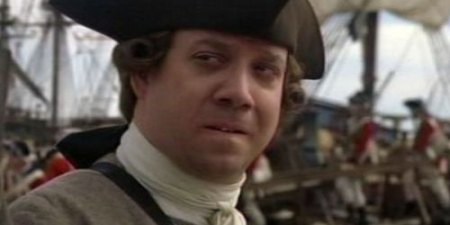
Pass the Clicker: John Adams

October 2, 2009

Adams

(Guest post by Greg Forster)

Recently I finally got around to watching the HBO mini-series John Adams. It’s very good and you should watch it!

But I think this material would have been better as, say, three or four separate movies rather than one long story. Because three or four separate stories is pretty much what you’ve got here. There is some overlap, especially between Adams’s political career and his marriage. But the multiple storylines would have come out better if we’d been able to focus on one at a time.

I’ve increasingly come to think that the “biopic” is a poor format for storytelling, becasue no human life meets the demands of narrative structure perfectly enough. Instead of focusing on “the life of John Adams and the big stories that he saw,” what you want is to tell each of the stories.

Adams & Washington

One of the stories is about Adams’s political career, and here you have the makings of both classical tragedy and triumphant epic rolled up into one narrative. Tragedy, in that Adams had the makings of a great statesman but he was constantly undermined by his own vanity and stubbornness. Triumphant epic, in that he repeatedly disregarded his own self-interest to accomplish great things for his country. From his first significant political act (defending the innocent British soldiers falsely accused in the “Boston Massacre” case) to his last (keeping America out of an unnecessary war with Napoleon), he repeatedly chose to do the right thing in the teeth of extreme pressure from popular opinion and political interests alike.
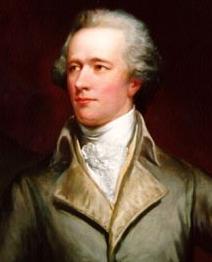
Real Hamilton 1Hamilton 1

One story I especially enjoyed seeing was the gradual development and then explosion of the scorpions-in-a-bottle rivalry between Adams and his keep-your-friends-close-and-your-enemies-closer political ally, Alexander Hamilton. It’s a story I don’t think anyone else has ever taken a crack at on the screen, and it’s well worth seeing. I have to say Hamilton gets something of a bad rap in a show where our sympathies are meant to lie with Adams. But the exceptionally talented Rufus Sewell makes Hamilton into an effectively menacing villain.

John & Abigail

The second story, also combining triumph and tragedy, is Adams’s family life. Just his famous marriage to Abigail alone would be more that sufficient to carry a movie by itself, and Laura Linney’s outstanding performance matches Paul Giamatti’s step for step.


Real AbigailJohn & Abigail at meeting

Different productions have chosen different approaches to the John and Abigail relationship. The musical and movie “1776” went the cereberal route, depicting the relationship through the letters they famously exchanged (inevitable, perhaps, given that the story takes place while they were separated) with an emphasis on how these two equally sharp minds fenced and parried with each other.

John & Abigail alone

The HBO production, by contrast, periodically references Abigail’s intellectual impact on John, but focuses on two other aspects of their relationship. The first – and here is the overlap with the strictly political story – is the way she effectively tempered John’s fatal political weaknesses. When John and Abigail are living together, his ego is kept in check. She persuades him to minimize the rhetorical excesses of his defense speech in the Boston trial. She advises him to drop his extremely ill-advised campaign to add a quasi-royal honorific (“his excellency,” “his majesty,” etc.) to the presidency. But when they are apart, as they frequently are for extended periods, John’s demons keep rising to the surface.

The other focus is on John and Abigail’s role as parents, another story I don’t believe anyone has told on screen before. John’s stern insistence on controlling his children’s lives (especially his eldest son John Quincy) and his extended absences from the family both create extreme emotional burdens for Abigail and the children alike. As is well known, John Quincy turns out as well as his father, but we are made to see the dreadful price his father made him pay for it; as is not well known, his other children lived broken lives, his son Charles dying of drink and his daughter marrying a man with a tendency to lose money on speculation, and who ends up having to flee his bad repuation by moving west and starting over while his wife and children remain behind.

 Jefferson, Adams & Franklin

The third – and perhaps fourth, depending on how you count – story concerns the friendship and rivalry of Adams, Jefferson and Franklin. Here is where the series really shines; we see how these three very different men – Adams the blunt man of law, piety, and conservatism; Jefferson the quiet man of philosophy, romance, and radicalism; and Franklin the wry man of science, humor, and sensuality – at first become brothers bound by a common cause, and are then slowly but surely forced into opposition against each other by the divergent demands of their consciences. By far the two best scenes in the movie occur when Jefferson arrives in Paris, where Adams and Franklin have been serving as diplomats. Jefferson, after the deaths of his wife and child, is becoming cold and (even more) distant; Franklin and Adams have become rivals since Franklin felt he had no choice but to ask Congress to remove Adams from the French delegation due to his ineptness at diplomacy.
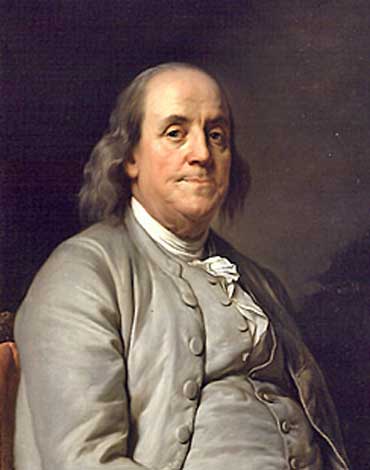
Real FranklinFranklin

Tom Wilkinson absolutely steals the show as Franklin. It’s hard to make Franklin fresh to an American audience, but Wilkinson does it, aided of course by the scriptwriters.

You could count the Adams/Jefferson/Franklin friendship as either one or two stories, since Franklin’s death leaves us with only the famous Adams/Jefferson relationship on screen, and the dynamic changes. Meanwhile, the Adams/Franklin story is equally worth telling, and (yet again) a story I don’t think we’ve seen on screen. On the other hand, the rivalry that develops later between Jefferson and Adams isn’t dramatically interesting unless it’s preceeded by their friendship, and Franklin was central to that part of the story.

Real JeffersonJefferson

Regarding the later rivalry between Jefferson and Adams, the thesis of the movie is that Jefferson hardened his heart after the deaths of his wife and daughter, and this is what led him to shrug his shoulders and make excuses as the French Revolution became more and more barbaric, distrust his former friend Adams as a liar and a cheat when their disagreements over France became politically critical, and ultimately permit his retainers to print scandalous lies about Adams in order to secure his election in 1800. I have always preferred Adams over Jefferson, even before it was cool, but it must be said that this storyline, while it works as drama, is unfair to Jefferson. It is clear in the record that he recovered emotionally from his wife and daughter’s deaths, as his famous “dialogue between my head and my heart” love letter to a French lady shows pretty clearly.

The case against Jefferson was much more effectively made in the David McCullough book on which the HBO series is based. McCullough tells us that when Jefferson was born, he was placed on a pillow and carried out of the room by a slave, and “he was carried by slaves for the rest of his life.”

As Matt might say: BOOOOOOOM!

Someday, someone needs to make a movie of the Adams/Jefferson relationship. “Thomas and John” would make a great title. (Get to work on that, Hollywood readers.)

There’s so much more packed into this mini-series that I can’t hope to include it all. There are constant little touches history buffs will smile at and history novices will find intriguing – in fact, some of the eccentricities of the real historical characters have actually been softened so that they could be presented without seeming implausible. The stiff and uncomfortable formality of Washington, the shyness of Jefferson, and the eccentricity of George III have all been noticeably toned down so that they could be presented without the audience feeling like they had been exaggerated.

It will take a significant chunk of your time to watch it. And it is not thrill-a-minute stuff. But if you make the investment, you will be rewarded.

Especially if you plan to take the citizenship exam.


Jay & Marcus in NR

October 2, 2009

NR cover (Jay & Marcus article)

(Guest post by Greg Forster)

In the new National Review, Jay and Marcus review the research on special education funding incentives, including the findings of their recent study on the impact of vouchers in Florida.

Financial incentives are particularly important in low-level disability categories like SLD, where a diagnosis is easily fudged. While you need pretty solid evidence to diagnose a child with a traumatic brain injury or other severe disabilities, schools have plenty of leeway on SLD. Some research suggests that public schools use low achievement alone to serve as an indicator of SLD. Studies dating back to the 1980s found that SLD students are indistinguishable from low-achieving regular-enrollment students, with one study estimating that over half the students identified as SLD in Colorado did not fit either federal or state definitions for SLD.

Digital subscribers go here; paper-only subscribers go here; non-subscribers go here.


Car Buyers Hate Bailouts

October 2, 2009

The Homer

(Guest post by Greg Forster)

You, the taxpayer, spent billions of dollars bailing out Chysler and GM.

Great news!

GM’s sales are down 45% from last September (when sales were already bad enough to drive the company into banrkuptcy). Chrysler is down 42%. Ford is only down 5%. Car buyers are clearly punishing the two bailout recipients brutally. Robert Farago of Truth About Cars predicts that GM and Chrysler will both “go down by the end of next year” without a second, new federal bailout. The only question, he says, is whether the two bailed out manufacturers will need the cash before the 2010 midterm elections.

Why is that great news? Because maybe it will help a few legislators learn their lesson for next time.

HT Kausfiles


EdWize’s Racial Libel

September 28, 2009

Race Card w watermark

(Guest post by Greg Forster)

On EdWize, Jonathan Gyurko finds himself forced to acknowledge that Caroline Hoxby’s recent blockbuster study is good news for charter schools. He then starts desperately groping for any excuse he can find to neutralize the good news.

Most of his claims will be familiar to those who have seen the teachers’ unions try to spin away gold-standard empirical evidence that their positions are wrong. We’ve read all these cue cards before.

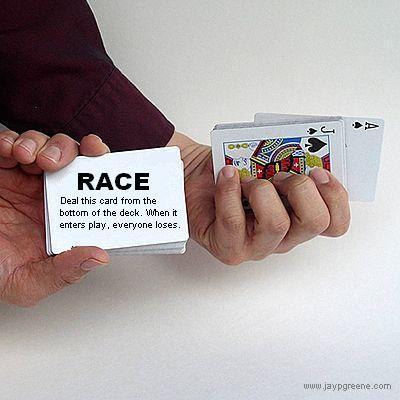
But one of his claims deserves more attention. Like many before him, Gyurko tries his hand at racial demagoguery to make parental choice seem like a scary throwback to Jim Crow:

Such a dramatically-presented conclusion is sure to feature prominently in charter advocates’ efforts to expand the number of charter schools across the city and state. And if it’s true, then why shouldn’t we? The answer actually depends on how policymakers weigh the goal of improved student achievement against other worthy goals, such as greater educational equity and meaningful diversity. And on these other objectives, nagging questions dog the charter sector.

For example, Hoxby finds that 92 percent of charter students are black or Hispanic, compared to 72 percent in district schools and concludes that “the existence of charter schools in the city therefore leaves the traditional public schools less black, more white, and more Asian.” Such racial segregation is consistent with research on charter schools in other states including North Carolina, Texas and elsewhere.

Although this statistic is likely to be a function of charter schools’ location in largely black and Hispanic neighborhoods, Hoxby also reports that fewer white students are applying to the charters; although 14 percent of residents in the charter school neighborhoods are white non-Hispanic, only 4 percent are applying.

There are two claims made here:

1) If the citywide aggregate population of all charter school students is more heavily minority than the citywide aggregate population of district school students, charters must be increasing segregation.

2) If charter school applicants who live near the charter schools are disproportionately minority, charters must be increasing segregation.

Both claims are transparently bogus.

On the first claim: citywide aggregate figures tell us nothing whatsoever about the impact charters are having on segregation, for the simple reason that citywide aggregate figures can tell us nothing whatsoever about segregation in any context, even aside from the whole charter question.

Imagine for a moment that New York is made up of 50% green children and 50% purple children. Let’s look at two scenarios:

Perfect segregation scenrio: All the green children go to fully segregated schools made up exclusively of green children, and all the purple children go to fully segregated schools made up exclusively of purple children.

Perfect integration scenario: All children attend perfectly integrated schools made up of half green children and half purple children.

Now, let’s take a look at the citywide aggregate figures we would get under these two scenarios.

Perfect segregation scenario: Citywide aggregate 50% green, 50% purple.

Perfect integration scenario: Citywide aggregate 50% green, 50% purple.

You see? Aggregate figures are intrinsically incapable of providing any information about school segregation. To find out whether schools are segregated, you must look at the individual schools.

Let’s apply that principle to the real world. Hoxby finds that the citywide aggregate population of district school students is 72% minority. But does that mean every individual school is 72% minority? Of course not. You could very well have all the white children going to perfectly segregated exclusively all-white schools, all the black children to perfectly segregated exclusively all-black schools, all the Hispanic children going to perfectly segregated exclusively all-Hispanic schools, etc., and the citywide aggregate figure would remain unchanged.

And, in fact, the reality on the ground is a lot closer to that dystopian hypothetical than it is to the utopian scenario of ideal racial balance. But Gyurko’s argument relies on the unspoken assumption that the reality on the ground in district schools is utopian.

Meanwhile, the citywide aggregate for charter schools is 92%. As with district schools, the aggregate figure tells us nothing about the actual racial balance in any individual school. Supposing for a moment that New York’s district schools are very heavily segregated – which they are – it is quite possible that the actual charter schools on the ground are better integrated than the district schools even though their aggregate population figure is disproportionately minority.

And, in fact, given that the primary cause of school segregation is housing segregation, the fact that charters can break down neighborhood barriers and draw students from other neighborhoods with different demographics makes it highly likely that they are, in fact, better integrated. That’s the reality in voucher programs, where the empirical evidence unanimously shows parent choice improves integration.

But at any rate, the data to which Gyurko appeals don’t tell us either way.

Once the essential sham behind the first claim is exposed, the second claim is much easier to refute. What counts is not how the local applicant pool differs from the local resident population, but how the final makeup of each charter school differs from the final makeup of each district school. Once the process of parents making choices is completed, are the individual charter schools more segregated? This datum tells us nothing about that.

Ironically, Gyurko’s argument on this second claim really implies that he wants charter schools to represent the racial balance of their local neighborhoods. That would imply endless racial segregation, given that neighborhoods are so racially homogeneous. Any serious attempt to break down racial segregation in schools must begin by acknowledging that schools representing their neighborhoods is the problem.

That’s why hyper-arrogant courts forced us to go through the disastrous failed experiment with forced busing. That was a terrible idea, just like anything that robs parents of their freedom. But at least those tyrannical judges understood the source of the problem correctly.

If parents want to send their children to their local neighborhood schools, they should be allowed. But anything we do that forces them to send their children to school locally is – among so many other evils – going to increase racial segregation. Assigning students to schools by ZIP code is not only educationally bankrupt, it’s racially poisonous.


First Amendment Repealed, Part Two

September 23, 2009

Pravda

(Guest post by Greg Forster)

No sooner do I put up a post on the death of the First Amendment than along comes Jim Geraghty with more free-speech funeral news.

On the floor of the Senate, Sen. Tom Carper appears to have openly and explicitly confirmed that legislators made an illegal quid-pro-quo deal with PhRMA to design health care legislation a certain way in return for a commitment to run ads supporting the bill.

Geraghty is focused on the bribery aspect – PhRMA bought a legislative outcome in exchange for money (spent on ads the legislators wanted). But it’s also a speech issue – congressional leaders used their power over the laws to bend political speech into the shape they wanted it.

The health care people just can’t destroy our freedom fast enough.


The First Amendment Is Hereby Repealed

September 23, 2009

Pravda

(Guest post by Greg Forster)

Items in the news this week:

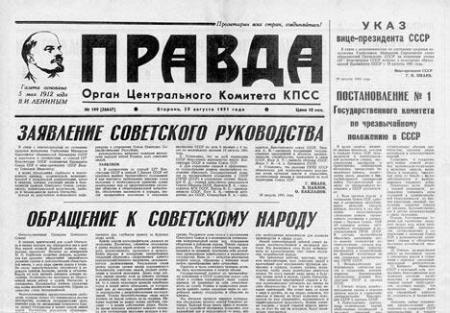
1) The president signals he’s open to a government takeover of the newspaper industry. No word on whether government-supported papers will be required to change their names to PRAVDA.

If you’ve been told that the bill in question doesn’t set up direct government funding for newspapers, you’ve been misled. It doesn’t set up federal funding for newspapers, but it does everything possible to grease the skids for state and local government funding – and who’s prepared to bet that won’t happen once the opportunity is available?

As I wrote back in April:

Since the law already allows nonprofits to publish and distribute their own newspapers if they want to, the only possible rationale for Sen. Cardin’s proposal is that it allows newspapers to continue charging money to cover their costs while also recieving tax-free subsidies. And who would be doing the subsidizing? Even if government (at the state and local level) doesn’t do it directly, it’ll do it indirectly. Politicians have lots of wealthy friends who would love to have their own pet newspapers.

In fact, Cardin’s proposal is actually worse than a direct government subsidy. At least a direct subsidy would be on the books and subject to disclosure, oversight, and some level of accountability.

Cardin invokes the old Jeffersonian saw that it would be better to have newspapers without government rather than government without newspapers. Yes – but either of those would be better than having government newspapers.

I also wrote that “the proposal is obviously going to go nowhere because it fails the laugh test.” But the laugh test is one exam that’s been pretty radically dumbed down over the past six months; these days anyone can pass it.

2) Meanwhile, the latest development in the health care debate: The U.S. government is now openly using the criminal law to censor core political speech solely because the speech in question advocates a position the government opposes.

When I say “censor” I don’t mean they’re regulating donations and spending levels or imposing restrictions on the when, where and how. I mean they’re threatening to impose criminal sanctions for having said a certain thing, simply because it’s something they don’t want said.

And, of course, once the threat is made there’s no real need to prosecute. The threat itself is sufficient to censor all future speech on the subject.

I’ve written before that health care reform is a knife at the throat of our freedom. I had no idea the enslavement process would move so quickly. Care to place bets on which clause of the Bill of Rights will be the next to go?

UPDATE: Yet another health-care-destroys-free-speech story.


Pass the Popcorn: Finding Solace

September 18, 2009

Bond - QOS ending

(Guest post by Greg Forster)

Not long ago I watched Quantum of Solace for the second time. When I first saw it I thought what Marc Forster (no relation) had done with the series gave it extremely high potential, so I tried to moderate my expectations. But it wasn’t enough; I couldn’t place the film any higher than “Passable” on the rubric of my unified field theorem of Bond movies.

Well, the second time I liked it better. Not a lot better – all my basic criticisms still stand – but I think I get more clearly now what they were going for, and I see some more subtle ways in which some parts of the movie work better than I thought.

Some of the subtlety I missed before is in the action sequences, whose poor handling in the editing room did so much to kill this movie’s potential. For example, in the foot chace through the Italian city early in the movie, they reverse the foot chase in Africa that took place early in Casino Royale. Then, the bad guy (a nobody bomb-maker) was stronger and more agile than Bond, and Bond had to beat him by being smarter and trickier. This time, the bad guy is working for the shadowy super-conspiracy, so he’s actually trickier than Bond; Bond beats him by being stronger and more agile.

Also, throughout the movie – in both action and non-action sequences – when the camera is showing us Bond’s perspective it frequently mimics the perspective of a head turning the way Bond’s head is really turning. It works well.

I said before that the movie had lots of fine moments. Well, I can appreciate them more now that the movie’s flaws aren’t hitting me in the face (because I’m ready for them). And there are actually a lot of them.

One other subtlety I missed is that the movie implicitly emphasizes, as Casino Royale did more explicitly, that Bond really doesn’t mind killing people to save the world. Yes, they emphasize the emotional price he pays to be what he is; that’s part of the main subject of QoS. But it’s very clear that the price is worth paying. If you really do need to kill people to save the world, then killing people to save the world is right and you shouldn’t feel bad about doing it, and we should be thankful that there are people willing to pay the price Bond pays to be what Bond is.

I see now much more clearly what the movie is really about – Bond needs to learn to forgive, but forgiveness isn’t in his nature because of the kind of man he is (and needs to be to do his job). The main tension of the movie is supposed to be the suspense created by the ambiguity of Bond’s motivation. Is he saving the world, or is he on a vengeance trip, and if that happens to involve saving the world that’s a nice bonus?

I missed this (well, I didn’t fully appreciate it) because I was looking for the movie’s substance in the wrong place – in the villains and their plot and Bond’s quest to foil them, all of which was flubbed so badly by the filmmakers. And part of the flubbing of the plot involved making the action sequences far too long, leaving less time for the filmmakers to develop what was really the movie’s core – Bond’s motivation.

In fact, it didn’t feel at all like there was any ambiguity about Bond’s motives. It was clear he was on a vengeance trip. I think the filmmakers wrongly assumed that “saving the world” would be our default assumption for Bond’s motivation, and we would need to be pushed to see that he’s out for vengeance. But the opposite is the case – Casino Royale set up the vengeance plot so brilliantly that that was our default.

The ambiguity, in fact, comes at the very end – where it was supposed to be resolved. I believe that Bond’s final act just before the credits roll, which is so shocking and stunning, was meant to demonstrate that he was saving the world all along, that the vengeance trip was just a temptation he was struggling with but was never his real motivation. Unfortunately, because they’d been pushing us in the vengeance direction the whole movie, the final act actually has the effect of introducing ambiguity. He says he “never left” MI6’s service – did he really? Was he only holding on to the necklace and the photo of Vesper’s boyfriend just because they were the evidence he needed to bring the boyfriend down, thus saving the world? I think the final image was meant to resolve these questions (with a “yes”) but in fact what it did was raise them for the first time.


LAUSD “Reform” Not What It Seems

September 17, 2009

(Guest post by Greg Forster)

This morning Pajamas Media carries my column on the much-ballyhooed plan to put the management of up to 250 LAUSD schools up for bid. Back when the city school board was voting on the policy, it was sold as though it were a school choice plan – but the devil was in the details:

Earlier that day, Mayor Antonio Villaraigosa, a Democrat, stood outside the school district’s offices and told 2,000 charter school parents and other supporters that “we’re here today to stand up for our children.” Standing under a banner reading “Parent Revolution,” the name of an organization backed by charter organizers, he said: “I am pro-union but I am pro-parent as well. If workers have rights, then parents ought to have rights too.”

For good measure, he added: “This school board understands that parents are going to have a voice.”

So somehow, people got the crazy idea from all this that the reform in question involved school choice and empowering parents. “We are here to support parents’ ability to make choices,” said one parent attending the rally.

That parent got the wrong idea. The policy before the school board that day had nothing to do with school choice. It only said that contracts to manage schools could be bid out to non-profits. And bidding out the management of public schools without changing the underlying dynamic of the system has always proven to be a recipe for failure in the past.

Sure enough, when the first draft of the bidding rules came out recently, it contained a provision designed to ensure that the schools in question will not become schools of choice.

Improving public schools by bidding out the management contract is like trying to improve a baseball team with an incompetent owner by changing the team manager. As long as you have the wrong guy in the head office, you won’t get real change because no matter how good the management is, it always has to answer to the dunce at the top. To turn the team around, you need a change of ownership, not a change of management.

The same goes for schools. Right now, the government monopoly owns all public schools. Nothing major will change until we get new owners — namely parents, via school choice.

Matt was right to tout this as a slap in the face to the unions and an admission that the union-dominated status quo is catastrophic. It’s also further confirmation (if further confirmation were needed) that much of the left is turning against the unions. But that’s about where the good news ends.


What Is “Merit”?

September 16, 2009

(Guest post by Greg Forster)

As JPGB’s friend Marcus Winters notes on NRO today, the Obama administration has been staying the course on this issue, denying “Race to the Top” funds to states that disallow the use of objective measurement in evaluating teachers. Marcus also rightly links this to the topic of merit pay, which the president repeatedly embraced during the campaign. One of the biggest obstacles to enacting real merit pay is making sure that the measurement of “merit” really measures merit. Too many experiments with “merit pay” have really been experiments in peer evaluation pay, grade inflation pay, and so on. Check out Marcus’s article for more.


Peer Review, DC Style

September 16, 2009

Harvey

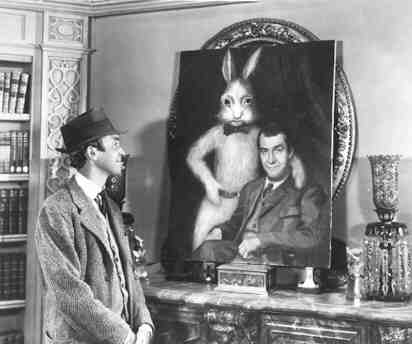
Elwood Dowd admires a painting of himself with the DOE peer reviewer

(Guest post by Greg Forster)

Eduwonk reports that Arne Duncan and his Race to the Top team are discovering just one of the many fun flaws of “peer review”:

A lot of behind the scenes chatter and concern and I’d say even worry that it’s going to be hard to get “Race to the Top” proposal peer reviewers who know a lot about school reform – and proposals like this are complicated.  There are a lot of conflicts among the usual suspects.  After all, teachers’ unions have to sign on off the applications and can benefit from them so they’re self-interested, most wonks outside of government are helping various states get together ideas and applications, and states themselves are pretty self-interested, obviously.  Add on to that the generally meager rewards of peer reviewing in the first place and this issue has a lot of folks chattering about exactly who can do this work in a high-quality way…

So it sounds like the standard they’ve set for themselves is to find reviewers who know a lot about school reform but have no vested interest in school reform. How many people did they think were going to fall into that category?

Ben Stein in Ferris Bueller (wide)

Anyone? . . . Anyone?

Maybe “peer review” wasn’t really an appropriate rubric for evaluating government grant proposals. Has anyone ever suggested, say, peer review for Pentagon contracts?

But then, if they don’t put some kind of academic-sounding veneer on it, the thoroughly politicized nature of the process will be too embarrassingly transparent.

Of course, when they do “peer review” in academia they have the best of both worlds. The process is just as corrupted by the self-interest of the participants – mostly not in terms of politics but in terms of their desire to promote research that agrees with their own findings and suppress research that might call their own findings into doubt – and yet because the reviewers are professional academics everything is assumed to be done in the interests of scholarship.