Jonathan Gruber for the Higgy

April 15, 2015

(Guest Post by Matthew Ladner)

An ongoing plea to think twice, and even three times, before buying into the wonders of central planning and/or technocrats more broadly stands as one of the underlying themes of JPGB. Given that we primarily discuss American education policy here, and that if rules, regulations and earnest bureaucrats were a solution America would long ago ceased to have had K-12 problems, this ought not to require elaboration. Technocrats sadly have a funny habit of either exacerbating problems or creating new problems under the best of circumstances. At their worst, such people hide behind a false cloak of science in order to boss other people around while rationalizing away their ill effects in the name of some higher good. Each year we honor a select few of such people with a Higgy nomination.

It is my distinct pleasure therefore to nominate Jonathan Gruber for the 2015 Higgy.

It is no accident that the two broad fields with the heaviest government funding and regulation- education and health- have seen a truly incredible combination of rampant cost inflation in return for nebulous quality improvements. No one in their right mind would voluntarily pay higher prices for dubious quality improvments- only a truly convoluted system of indirect payment could deliver such an outcome. Health care comes with some additional difficulties of price inelastic demand (“nah don’t even try life saving heart surgery I don’t want to pay that much” is not a phrase often heard in America) and information asymmetries between doctors and patients.

In the end of the day the demand for health care exceeds our ability to supply it, which raises the difficult subject of rationing. There are two general methods for rationing a scarce good or service- by price or by bureaucrat. Europeans long ago embraced bureaucratic methods in various ways. The United States however created a hybrid system that in essence denied the need to choose in creating a convoluted system of tax subsidies and public programs that led to decades of rampant cost inflation. In the immortal words of the late Massachusetts Senator Paul Tsongas, America became the only country dedicated to the proposition that death is optional. The American left yearns for a European system but must face an American health care culture (largely of their own creation) that has operated without any type of rationing for many decades.

All of this predates Dr. Gruber, but Gruber has been deeply involved in fashioning both state and federal public policies designed to double down on third-party payers in order to treat a symptom of America’s health care dysfunction. Rampant and long-lasting health care inflation far above that in the consumer price index has, needless to say, made insurance more expensive. Increasing the price of any good or service decreases the pool of people able and willing to purchase it. Thus the percentage of those carrying insurance has been in decline, and the cost of private and public insurance programs have steadily increased.

What to do? How about a fine to compel people to buy health insurance? This of course would do nothing about the underlying problem per se, so Gruber and company engaged in an elaborate deception in the “Affordable Care Act.” CNN helpfully ran down several of Gruber’s greatest hits:

Gruber’s gloating on video regarding the various deceptions of Obamacare deservedly generated deep hostility manipulation of the scoring of the bill: obfuscation of the use of taxes, an attempt to obscure what amounts to a massive transfer of wealth. Gruber’s gleeful recounting of just how clever in deception Congressional Democrats and the Obama Administration had been represents a damning indictment all its own.

Jonathan Gruber perfectly symbolizes the dangers of “scientific progressivism” in my mind because by Gruber’s own admission very little has been done to address the real underlying problem.  In one of his videos, Gruber laments the fact that it was necessary to pretend to “bend the cost curve” and name the bill the “affordable care act” because controlling costs represents an overwhelming concern while expanding coverage to the uninsured does not. It was necessary to deceive the American public, you see, because the American public lacks virtue and cares more about controlling costs than expanding coverage.

The unwashed masses seem to understand much more clearly than our MIT technocrat that controlling costs represents the only sustainable method for expanding access to care. Expanding coverage cannot and will not be sustained without addressing the fundamental issue of rampant cost inflation.  The United States of America had trillions of dollars in unfunded entitlement liabilities before Gruber and company began their campaign of deception in order to transfer wealth and extend coverage while doing very little about cost.  “We’ll get to that part later” on cost control represents a sickening level of irresponsibility that treats a symptom (lack of health insurance) rather than the cause (decades of cost inflation).  Gruber and our other health technocrats would like us to trust them they will address this more difficult issue of cost containment later.  This after conclusively proving that no one should ever trust anything that comes out of their mouths ever again.

William F. Buckley famously noted that he would rather be ruled by the first 1,000 names in the Boston phone book than by the faculty of Harvard. Our elites routinely display horrible judgement and a sense of entitlement to make decisions for those whom they judge to be in need of their benevolent guidance. Plato had it all wrong in the Republic, would-be “philosopher kings” deserve our unrelenting skepticism. Voluntary exchange drives human progress and innovation, not allegedly well-meaning busy bodies concealing their lies and deceptions behind a lab coat as they attempt to better order our lives for us.


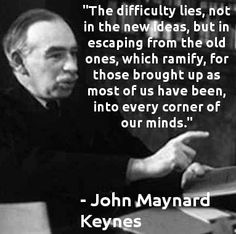
John Maynard Keynes for the Higgy

April 14, 2015


(Guest post by Greg Forster)

Last year, when commenter Allen nominated John Maynard Keynes for the highest (dis)honor known to man, the Higgy judges expressed skepticism on grounds that politicians corruptly manipulate the economy with or without the convenient excuses provided by Keynesianism. However, the judges reserved final judgment on Keynes’ Higgyworthiness because a full case had not been made.

I hereby offer a full case, on three grounds:

  1. Corrupt political manipulation of the economy has been greatly increased as a direct result of Keynes’ influence.
  2. Keynes did far, far worse things than simply give politicians a convenient excuse to corruptly manipulate the economy. 
  3. On both the above counts, Keynes not only worsened the world, but also met the more specific Higgy qualification of having “arrogant delusions” that “self-righteous proclamations” improve the world. 

Point One: As Paul Johnson documents in Modern Times, in the first half of the 20th century there was an unprecedented shift in the politics of corrupt collaboration between political and business elites. Previously, such collaboration occurred episodically, when some serious crisis arose and it could be justified as an “emergency measure.” Hence the big expansions of corrupt government manipulation of the economy occur in tandem with wars, depressions, and financial panics. After each crisis passed, however, pressure would mount to roll back these manipulations and restore the natural order. These rollbacks were never 100% successful, of couse, but in most cases far more than 50% or even 75% successful. Consider Coolidge’s rollback of Wilson’s autocratic WWI measures. 

But after WWII, everything is different. We have entered a whole new world. Corrupt government manipulation of the economy is now normalized. It is universally expected that political and business elites will get together in smoke-filled rooms and determine our fate for us. This is simply the way we live now. True, the more extreme wartime measures like rationing were recinded, and without the war as a justification the further growth of political control of the economy was greatly slowed. But, however slowly, that growth did continue. The political ground had permanently moved. The old world of merely episodic corrupt manipulation was gone; a new world of permanent, normalized corrupt manipulation had arrived.

This was almost 100% attributable to Keynes, for reasons that will become clear in Point Two.

Point Two: To understand the significance of Keynes, it is necessary to set aside our immediate policy concerns (fighting over the latest stimulus package or “economic plan”) and appreciate his role as a world-historical figure of the first rank. He revolutionized the entire discipline of economics, and by doing so, had a dramatic impact on the social order as a whole.

From classical Greco-Roman philosophy through the Patristic Era, the Middle Ages, early modernity and the Enlightenment, the study of economic phenomena was a subset of moral philosophy. It was always grounded in moral assumptions about human nature. Plato, Aristotle, Augustine, Aquinas, the Salamanca School, the Reformers, Locke, the Physiocrats and Adam Smith, though they had different moral views in some important respects, were agreed that the purpose of studying economics was to help align economic activity with virtue and right purposes – encouraging productive, thrifty, efficient, flourishing behavior, often with a particular interest in extending opportunity to the poor; and opposing greed, sloth, irresponsibility and (above all) injustice. The professional scholar of economics was par excellence the opponent of corruption and abuse of power. 

Over the course of the 19th century, however, this was changing. Especially in England, prominent economists increasingly expressed a desire to get out of the ethics business and abandon the fight against corruption. They wanted to do something that is impossible, and would be irresponsible if it were possible – to describe the world without evaluating it, to be morally neutral, to refrain from calling injustice unjust without being implicated as its accomplices.

Try as they might, however, these would-be neutral technicians could not find a way to extract themselves from the ethics business. A century of efforts to invent a paradigm of economics not beholden to morality bore no fruit.

And then came John Maynard Keynes, and the Keynesian Revolution.

Where before economists had defined the purpose of their discipline as encouraging the ethical production of wealth and well-being, Keynes taught them their purpose was to help people gratify their immediate desires – whatever those happened to be. Where before economists took self-sufficiency (producing more than you consume) as normative, Keynes taught them “the paradox of thrift” and trained them to despise the old rule that households and nations must live within their means. Where before economists took it for granted that our goal was to leave the world better than we found it, Keynes taught them that “in the long run we’re all dead” so we don’t need to worry what kind of world we leave to our grandchildren.

And where before economists thought their policy recommendations were constrained by the limits of justice, which compelled us to be concerned about the problem of corruption, Keynes taught them to treat human beings as merely irrational animals – bundles of appetites – without a transcendent dignity that needed to be respected.

Point Three: At this point you might be tempted to say Keynes isn’t Higgy material in light of the Sarnoff Codicil, which holds that the Higgy should not go to those who intend to make the world worse and succeed. It should go to those who intend to improve the world and fail – or, more specifically, to those who have “arrogant delusions” that “self-righteous proclamations” improve the world.

But Keynes passes this test with flying colors. He intended to improve the world – he had a detailed and well worked out philosophy of utilitarian materialism, and believed he was replacing the reign of superstition and barbarism with a new era of beautiful technocratic progress. He was a constant, nonstop fount of self-righteous proclamations. And all his asperations failed. The new, post-Keynes economics does not work as empirical science. It does not work as a practical guide to policy, either. And it has created sociological conditions that will, in the long run, destroy it. Keynesianism today is in the same state as Marxism in the Soviet Union in about the 1970s or so; it is a politically convenient god to whom all must still bow, but longstanding suppressed doubts about the god’s power to deliver the goods have hardened into permanent cynicism. The downfall may still be 20 years away, but it is coming.

John Maynard Keynes richly deserves the Higgy.

Image HT


Jim Ardis for the Higgy

April 14, 2015

I nominate Jim Ardis for “The Higgy.” Jim Ardis has been the mayor of Peoria, IL since 2005.  A year ago Jon Daniel created a parody Twitter account, @peoriamayor, mocking the mayor with juvenile humor suggesting that the mayor had a penchant for drugs, liquor, and prostitutes.  The mayor didn’t appreciate the humor (or the 1st Amendment).  The Chicago Tribune describes what happened next:

Within two days of the account’s creation, the city manager sent an email to Sam Rivera, the city’s chief information officer, asking for his help in getting the account taken down.

“Someone is using the Mayor’s likeness in a twitter account,” Urich wrote in a March 11 e-mail. “It’s not him. @Peoriamayor. Can you work to get it shut down today?”

Less than an hour later, Urich turned to Police Chief Steve Settingsgaard and asked him to have a detective investigate the identity of the account’s creator. Settingsgaard quickly assigned the case to Det. James Feehan, a member of the department’s computer crimes unit. By 11 a.m. – about four hours after Urich first contacted the department – Feehan expressed doubts about whether any crime had been committed.

“I looked at the comments and photographs posted by the suspect. Nothing contained within amounts to criminal violations,” Feehan wrote in an email to his chief. “However, there are tweets posted by the individual which amount to defamation. Without a subpoena issued to Twitter to obtain the IP address of the account creator, there is not much else we can do. I did send Twitter the report of the impersonating account and requested it be removed asap.”

Settingsgaard passed the detective’s findings along to the mayor, though he doubted whether Ardis could meet the legal threshold for a defamation suit.

“This phony Twitter account does not constitute a criminal violation in that no threats are made,” the chief wrote. “I’m not sure if it would support a civil suit for defamation of character. I’m not an expert in the civil arena but my recollection is that public officials have very limited protection from defamation.”

Ardis was undeterred. He sent an email the next day to Urich, Rivera and Settingsgaard, urging them to get the account taken down.

“Any chance we can put a sense (of) urgency on this?” Ardis asked.

Urich echoed his boss’ wishes in a reply sent three minutes later.

“Quickly please,” he wrote.

Feehan and Rivera, however, already had separately reported the fake account to Twitter, which allows for parody accounts as long as they’re labeled as such.

In the meantime, Feehan continued to research the law regarding impersonation and came across a new state statute that prohibits people from falsely identifying themselves as public officials. Though it was only a misdemeanor crime, it would give the department the legal muscle it needed to force Twitter’s cooperation in shuttering the account.

If Ardis wanted to prosecute, they would proceed with taking a formal complaint.

“i absolutely will prosecute,” Ardis wrote in an email to Settingsgaard. “bring it on. thanks chief.”

Ardis’ decision allowed police to subpoena Twitter, which turned over the IP address used to access the account and temporarily suspended the account. With that information secured, the department subpoenaed Comcast for the account holder’s name and address.

On April 15 – more than three weeks after the @peoriamayor account was suspended – Peoria police raided the home where Daniel lived. Four officers tore the house apart, as records show they searched for any and all electronics capable of sending the offensive tweets. The search warrant also allowed officers to scour the house for drugs, as they believed “cocaine, heroin, (or) drug paraphernalia” could be present in the home because one of the tweets included a picture of a “white powdery substance” being cut by a razor blade.

In the end, police confiscated four computers, four iPhones, an iPad and two Xboxes belonging to several people who lived at the house. They also found a “broken black ashtray with green seedy substance” and a “large gold gift bag with five sandwich bags containing a green leafy substance,” according to police reports. Tests showed the seedy substance was marijuana, officials said.

Authorities charged Jacob Elliott, whose name was on the home’s Comcast account, with possession of marijuana. His case is pending.

Daniel, who was not home during the raid, showed up at the police station later that evening and declined to answer questions without a lawyer present. He later acknowledged he created the Twitter account, but he was never arrested….

Three days after the raid, with the public backlash gearing up, the would-be case against Daniel unraveled completely. In an email sent to Ardis and Urich entitled “Twitter problem,” Settingsgaard broke the news to his bosses.

“Det Feehan is going to review with (State’s Attorney Jerry) Brady on Monday but there may be an internet exception to the impersonating statute,” he wrote. “If it is exempt, everyone missed it from the investigators to the SAO (the state’s attorney’s office) and the judges.”

There are so many things wrong with this story that it’s hard to know where to begin.  You know what, I’m not even going to try to list what is wrong with what Ardis and other city employees did other than to emphasize that they ended up using a SWAT team to raid someone’s house over Constitutionally protected free speech on the pretext that it was a misdemeanor violation for impersonating a public official when it turns out that the statute actually exempts the internet from such violations (leaving aside the 1st Amendment stuff).

I think this qualifies Ardis for “The Higgy.”  As the award’s criteria state: “‘The Higgy’ will not identify the worst person in the world, just as ‘The Al’ does not recognize the best.  Instead, ‘The Higgy’ will highlight individuals whose arrogant delusions of shaping the world to meet their own will outweigh the positive qualities they possess.”  Jim Ardis is not the worst person in the world.  I’m sure he loves his family and (in the spirit of Al Copeland) the O’Leary’s Restaurant he used to own may serve a delicious fried chicken (even if it is only as chicken tenders.)

Despite these possible positive qualities, Ardis is still a tyrant who chips away at our liberty by using the authority of the government to persecute people who offend him.  You might even call him a Petty Little Dictator.

The delicious justice is that Ardis’ thuggery has not been effective.  When he once was being mocked by a single, obscure parody account on Twitter, there are now more than a dozen.  And Jon Daniel has filed a civil suit seeking damages.


Wildflower Fever

April 10, 2015

(Guest Post by Matthew Ladner)

So I am struggling not to nominate the most blindingly obvious choice for the Higgy this year….must……resist!

In the meantime, I decided what this blog needs this Friday is a late 20th Century folk-revival tune…enjoy!


Nevada Joins School Choice Family

April 7, 2015

(Guest Post by Matthew Ladner)

The Nevada Senate approved a scholarship tax credit today, initially capped at $5m with annual cap increases of 10%, sending the measure to Governor Sandoval. This puts the enactments from out West at 3 (corporate tax credit expansion in AZ, ESA expansion in AZ, new corporate credit in NV). Down south I’m aware of the Arkansas legislature passing a special needs voucher bill and Alabama increasing the tax credit cap.

Greg 5, Mathews 0


The High School Musical Attracts a Broader Audience

April 6, 2015

High school musicals used to attract parents and friends of the cast and crew, but as the Wall Street Journal tells us, the audience has expanded.  The entire article is worth reading, but here is a taste:

With high-school musical season under way, moms and dads are cheering for their favorite Pippins, Annies and Tevyes in auditoriums across the country.

Buried in the crowd, trying to blend in, is a different sort: the adult with no connection to the school whatsoever….

Long a springtime ritual, the high-school musical has never been known widely as must-see entertainment. But high-school shows have become increasingly elaborate—with Broadway-worthy sets, local competitions for best actor and actress and R-rated choices like “Rent.” Fans seek out the student performances for cheap entertainment or a chance to see a musical that otherwise might not be performed locally. Some even follow the teenage thespians as though they were A-list stars….

How good are these shows?

It doesn’t really matter, said Scott Delman, a tough critic in his normal life. He has won four Tony Awards for producing such Broadway hits as “The Book of Mormon” and “Death of a Salesman” and sometimes attends secondary-school interpretations with business associates who want to show off a son or daughter. When he goes to a high-school show, “I don’t even focus on the quality,” he said. “I am swept away by the energy and the enthusiasm.” Occasionally he congratulates performers after a show, disclosing his day job so they know it is more than just a parent’s biased view.

So, don’t worry if you don’t know anyone in the upcoming Fayetteville High School production of Little Shop of Horrors.  Just go to enjoy fun and reasonably priced entertainment.


It’s Time for “The Higgy”

April 3, 2015

William Higginbotham

It is time once gain to solicit nominations for the William Higinbotham Inhumanitarian Award.  Below I reproduce portions of the first announcement of “The Higgy” in 2012, so you have an understanding of the historic significance and criteria for this dishonor.

——————————————————————–

As someone who was recognized in 2006 as Time Magazine’s Man of the Year, I know a lot about the importance of awards highlighting people of significant accomplishment.  Here on JPGB we have the Al Copeland Humanitarian Award, but I’ve noticed that “The Al” only recognizes people of positive accomplishment.  As Time Magazine has understood in naming Adolf Hitler, Joseph Stalin, and Ayatullah Khomeini as Persons of the Year, accomplishments can be negative as well as positive.

(Then again, Time has also recognized some amazing individuals as Person of the Year, including Endangered Earth, The Computer, Twenty-Five and Under, and The Peacemakers, so I’m not sure we should be paying so much attention to what a soon-to-be-defunct magazine does.  But that’s a topic for another day when we want to talk about how schools are more likely to be named after manatees than George Washington.)

Where were we?  Oh yes.  It is important to recognize negative as well as positive accomplishment.  So I introduce “The Higgy,” an award named after William Higinbotham, as the mirror award to our well-established “Al.”

Just as Al Copeland was not without serious flaws as a person, William Higinbotham was not without his virtues.  Higinbotham did, after all  develop the first video game.  But Higinbotham dismissed the importance of that accomplishment and instead chose to be an arrogant [jerk] by claiming that his true accomplishment was in helping found the Federation of American Scientists and working for the nonproliferation of nuclear weapons.  I highly doubt that the Federation or Higinbotham did a single thing that actually advanced nonproliferation, but they sure were smug about it…

I suspect that Al Copeland, by contrast, understood that he was a royal jerk.  And he also understood that developing a chain of spicy chicken restaurants really does improve the human condition.  Higinbotham’s failing was in mistaking self-righteous proclamations for actually making people’s lives better in a way that video games really do improve the human condition.

So, “The Higgy” will not identify the worst person in the world, just as “The Al” does not recognize the best.  Instead, “The Higgy” will highlight individuals whose arrogant delusions of shaping the world to meet their own will outweigh the positive qualities they possess.

We will invite nominations for “The Higgy” in late March and will announce the winner, appropriately enough, on April 15.  Thanks to Greg for his suggestions in developing “The Higgy.”


Research Finds: Learning Styles are Bunk

April 3, 2015

(Guest Post by Matthew Ladner)

Another widely held belief bites the dust when put to the test.


What Passover Can Teach Us About Education Reform

April 2, 2015

(Guest Post by Jason Bedrick)

This week, Jews around the world will celebrate Passover, the Festival of Freedom.

Part of the genius of the Jewish tradition is its recognition that sustaining a free society requires education. “Freedom begins with what we teach our children,” wrote Rabbi Jonathan Sacks, chief rabbi emeritus of the United Hebrew Congregations of the British Commonwealth. And nowhere is the centrality of education in Judaism more evident than on Passover, “when the entire ritual of handing on our story to the next generation is set in motion by the questions asked by a child.”

The Jewish tradition has much to teach the world about education, and Jews who seek the peace of the city and land in which they dwell would be doing their neighbors a disservice by keeping it to themselves. Fortunately, America is a society that welcomes a diversity of views and religious traditions. In their wisdom, America’s Founding Fathers created, in Thomas Jefferson’s words, “a high wall of separation between church and state.” But while religious groups and institutions were appropriately denied power, the constitutional right to freedom of religion guarantees them the space to influence public policy.

Citizens should be skeptical of religious (or secular) figures who make specific policy recommendations without any particular expertise in those areas. However, while we should not turn to clergy to devise economic or tax policy, they have an important voice in the discussion of the ends which public policy should seek to achieve. Religious traditions can help society orient its goals—respecting the dignity of every person, seeking the welfare of the poor and downtrodden—while economists, social scientists, and policy experts debate how best to achieve those goals.

With its rich and enduring tradition, Judaism has much to offer society, especially in the realm of education. Jews are, in the words of Rabbi Sacks, “a people whose passion is education, whose heroes are teachers and whose citadels are schools.” The ideal education system, in the Jewish view, provides universal access and individualized instruction while placing the needs of students above all.

Universal Access

Any discussion of the Jewish view of education policy must begin with one man: Yehoshua ben Gamla. The Talmud exhorts us to remember him favorably, “for were it not for him, the Torah would have been forgotten by Israel.” (Bava Basra 21a)

Ben Gamla served as the Kohein Gadol (High Priest) in the first century B.C.E., a period of turmoil when the Jews lived under Roman occupation. Concerned that the children of poor families—particularly orphans—did not have access to a quality Torah education despite a series of education reforms by the sages, Ben Gamla mandated that every Jewish community hire teachers to educate every child from the age of six or seven on up.

Ben Gamla’s vision—heartily endorsed by the sages—was universal access to education. As the late Rabbi Aaron Levine explained, “The objective of [Ben Gamla’s] ordinance was that Torah education for the youth should reach the rich child, the poor child, and, especially the child who has no father to worry about his spiritual needs.” A child’s family circumstances should not determine his or her access to education.

Individualized Instruction

Universal access, however, does not imply uniform instruction. Rather, the guiding principle of Jewish education is chanoch l’naar al pi darko. (Proverbs 22:6) The full verse is often translated as “Teach a child the way he should go, and even when he grows old he will not depart from it,” but Hebrew grammar allows another translation: “Teach a child according to his way…” implying individualized instruction for each child. Indeed, this understanding of the verse is so widespread that Jewish day schools ubiquitously invoke it in this manner.

There is no greater example of the chanoch l’naar approach to education than the Passover seder. The entire ritual—the use of symbolic foods, ceremonial dipping and leaning, etc.—is designed to provoke questions from the children in attendance. Central to the seder is the concept of the four different types of children, whose personalities are reflected in the types of questions they ask. There is the wise child, the rebellious child, the simple child, and the child “who does not even know how to ask.”

As the Passover Haggadah details, each child’s question (or lack thereof) requires a different response, an answer tailored to his particular temperament and level of maturity. The wise child’s thoughtful question merits a discussion of the laws of Passover. The rebellious child’s passive-aggressive question is met with a rebuke. The simple child’s earnest question elicits a retelling of the Passover story. The final child’s inability to formulate a question at all requires the tender and patient assistance of parents to stir his curiosity.

Even the seder itself is a cholent of different rituals reflecting different pedagogical approaches. The wise child might be stimulated by the Haggadah’s biblical exegesis while the simple child is confused. The simple child may enjoy the storytelling while the child “who doesn’t know how it ask” is bored. That child may nevertheless enjoy the singing, while the rebellious child is annoyed. And even the rebellious child may enjoy the food. At the seder table—Judaism’s ultimate classroom—there is something for everybody.

Prioritizing Students and the Role of Competition

On the very page following Yehoshua ben Gamla’s universal vision, the Talmud discusses whether an established teacher could prevent a newcomer from teaching in his vicinity. Though Jewish law generally favors competition, in certain circumstances it empowers an established business to block a would-be market entrant, if it were likely that the entrant would put it out of business. However, the sages never restricted competition among educators because, they said, “kinat soferim tarbeh chokhmah” (“jealousy among the scholars increases wisdom”).

Two aspects of this ruling are worth highlighting. First, the sages’ primary concern was that students receive the best possible education, even if that meant that one teacher lost his livelihood because his students flocked to a superior teacher. In the realm of education, the needs of students came before the needs of adults.

Second, the sages recognized that competition among teachers proved beneficial for students. In a competitive environment, each teacher was motivated to perform as well as possible because his students had other options. The sages saw choice and competition as stronger guarantors of educational quality than the good will of the teachers alone.

Contemporary Education Policy and the Jewish Tradition

Jewish tradition provides three guiding principles for designing an education system: there should be universal access to a quality education; instruction should be tailored to meet the particular needs of individual students; and the needs of students should take precedence. The sages also believed that competition among educators was a means to ensure quality—a testable hypothesis discussed more below.

So how well does America’s contemporary education system live up to these principles? Unfortunately, not very well.

America’s system of district-based public schooling was designed to provide universal access to education. Every child is guaranteed a seat inside a classroom in his or her community, no matter their race, religion, or parents’ income. However, the guarantee of a seat is no guarantee of quality. And since students are assigned to schools based on the location of their homes, their access to schooling depends on the home their parents can afford. Students from low-income families often have no financially viable options besides their assigned district school—and those schools tend to be the lowest performing.

Moreover, even a generally high-performing school might not be the best fit for all the students who just happen to live nearby. District schools are designed to meet the needs of the median student. These schools often struggle to meet the needs of students who don’t fit the typical mold.

Likewise, while students of all religions and creeds are guaranteed a seat at a district school, those schools are not necessarily aligned with the values and beliefs of all the families who happen to live in a given district. When schools are held accountable to elected officials, education policies are subject to political decision-making. A zero-sum political system creates winners and losers, forcing citizens into conflict with one another. Accordingly, the schools tend to reflect the views of the majority, leaving minorities in the untenable position of compromising their values or paying for both the “public” school and schools for their children. District schools promise universal access in theory, but fail to provide it in practice.

Unfortunately, too many district schools also fail to put the needs of students first. Last year’s Vergara v. California decision highlighted how district policies and union rules protected low-performing teachers at the expense of students’ education. Most of the rules were likely enacted with the best of intentions—protecting teachers from capricious administrators or political payback. But many of the rules—such as guaranteed permanent employment or “last-in, first-out” policies—have long outlived their usefulness and have even become counter-productive. As the judge found in the Vergara case, there is compelling evidence that such policies “disproportionately affect poor and/or minority students” in such a negative manner that it “shocks the conscience.”

A Better Way Forward

A substantial body of evidence suggests that the best education system yet devised to achieve the sages’ preferred ends employs the very means that they favored: choice and competition. Educational choice laws—such as school vouchers, scholarship tax credits, or education savings accounts—provide universal access to education while empowering parents to choose the provider that best meets their child’s particular educational needs. That in turn creates an incentive for educators to seek to meet those needs.

A 2009 global literature review of within-country studies on the effects of different types of school systems found that the freest and most market-like education systems performed the best. Out of more than 150 statistical comparisons of outcomes including academic achievement, efficiency, parental satisfaction, student attainment, and subsequent earnings, private schooling had a statistically significant advantage over government schooling in about 10 to one. In addition, market-like education systems—in which parents chose their child’s school and bore some direct financial responsibility and educators were free to determine their own curricula and pedagogy, set their own wages and tuition, and to earn a profit—beat monopolistic, government-run systems by about 15 to one.

Likewise, 11 of 12 domestic randomized-controlled trials—the gold standard of social science research—found that educational choice laws produce positive outcomes for scholarship recipients, including improved academic performance, higher high school graduation rates, and greater college matriculation. One study found no statistically discernable impact and none found harm.

Additionally, 22 of 23 empirical studies found that educational choice laws had a positive impact on the performance of students attending their assigned district schools—implying that competition spurs schools to improve. Once again, only one study found no statistically discernable impact and none found harm. These findings provide compelling evidence the sages were correct: kinat soferim tarbeh chokhmah. In modern parlance: competition among education providers improves student outcomes.

Passover teaches us that education is required to sustain a free society, and social science teaches us that educational freedom is required for a well-functioning education system. Those who share the Jewish vision of universal access to education, individualized instruction, and the prioritization of student needs would do well to heed the evidence. A free society should have an education system that respects and reflects that freedom.

Jason Bedrick is a policy analyst at the Cato Institute’s Center for Educational Freedom.


Arizona Legislature Sends ESA expansion to tribal lands bill to Governor

April 2, 2015

(Guest Post by Matthew Ladner)

Arizona Senator Carlyle Begay succeeded today in passing SB 1332, which will expand eligibility to the Empowerment Scholarship Accounts program to all children living on tribal lands. Senator Begay bravely faced a great deal of hostility from his own party on this issue, but correctly noted in committee testimony that the state ought to be seeking every possible way to get better results in Arizona’s tribal schools, and there was no reason to expect a mass exodus.

NAEP backs this position up completely:

Az American Indian NAEP

Congratulations to Senator Begay for leading on an important and difficult issue for the children in his district.  Congrats also for the Arizona choice coalition that worked very hard through an especially trying legislative session.

UPDATE: Senator Begay stated the following in a recent column“Serving in the Arizona State Legislature is not a popularity contest, nor is it a platform for grandstanding. I am here to serve my district, serve my state and uphold the progressive values that keep me moving forward.”

Two additional Democrats in the Arizona Senate joined Senator Begay in voting for final passage.

!!BOOOOOOOOOOOOOOOOOOOOOOM!!