Guess Who Wants A Bailout

November 25, 2008

A major industry has gotten in line to receive a bailout.  It directly employs more than 6 million people.  That’s a lot of people considering that there are a total of 300 million men, women, and children in the US of whom 137 million are currently employed (excluding farmers).  So the workers in this industry constitute about 4% of all workers in the US.

Those 6 million workers directly serve almost 50 million customers.  While recent figures are not available, the industry had revenue of about $536 billion as of 2006 when total US GDP was $13.13 trillion.  So this industry constitutes about 4% of total US GDP.

Despite its size and importance, this industry has a notorious track record of performance.  It fails to complete more than a quarter of the products it starts.  Even among those it does finish, almost 40% fail to meet basic standards for quality.  Quality has not improved a smidge in over three decades despite more than doubling the average cost of production.  And foreign competitors are cleaning our clocks.  In a comparison of 21 industrialized countries, US quality exceeded only that of South Africa and Cyprus.

And this industry has huge and understated pension liabilities that, failing a miraculous improvement in the returns on investments, will inevitably have to be paid by taxpayers.  These “legacy” costs are consuming an increasing share of resources and distorting labor markets, hindering an industry turnaround.  But the unionized workforce continues to press for increased pay and benefits while opposing restructurings that might address quality-control problems.

Despite an unwillingness to correct its structural weaknesses, either controlling costs or improving quality, captains of this industry are appealing to politicians for a bailout.  As one recently said, “‘The most commonly heard solution out of Washington these days is a bailout where the federal government intervenes to safeguard key industries and in the process, the quality of American life.  If that’s the rationale, than I cannot think of a more strategic investment than safeguarding the quality of [our industry].”

Are we talking about the US auto industry?  It sounds like we could be, but I’m sure most of you have guessed that the industry described here is the US K-12 public education industry. 

And who is it that is requesting the bailout on behalf of K-12 public education?  None other than Alberto Carvalho, the superintendent of Miami-Dade schools.  This is the same Alberto Carvalho who manipulated a romantic relationship with a Miami Herald reporter to advance his career.  I guess when he’s not busy with naughty text messaging, he’s making the case for an education bailout: ”The question in my mind is this: At a time when we’re continuing the bailout of key industries, at what point do we have a bailout of public education?”

Watching folks scramble for bailout funds is like watching pigs at the trough.  It’s only a matter of time until Starbucks gets in line.  After all, the US economy needs liquidity.

(edited to note that it is K-12 public education)


Moe in WSJ

November 24, 2008

Terry Moe has an excellent piece in the Wall Street Journal today.  He suggests that the Democrats (including himself as an early Obama supporter) are the logical source of education reform.  He writes:

“If children were their sole concern, Democrats would be the champions of school choice. They would help parents put their kids into whatever good schools are out there, including private schools. They would vastly increase the number of charter schools. They would see competition as healthy and necessary for the regular public schools, which should never be allowed to take kids and money for granted.”


Education Next Ranks the Blogs

November 21, 2008

Mike Petrilli has a piece in the new issue of Education Next that ranks some of the most prominent education policy blogs.  The JPGB (that’s Jay P. Greene’s Blog) was ranked 10th according to Technorati’s authority measure, which counts the number of links to a web site in the last 180 days.  JPGB came in just behind Flypaper, to which Petrilli contributes and which was started at about the same time as JPGB.

But Education Nextis part of the dead wood media and the numbers are out of date.  They’re like so two months ago.  Rob Pondiscio over at Core Knowledge has more current numbers and added some other blogs to his list based on what was in his bookmarks.  Here is what he found:

Blog                Technorati Rank       Google Rank

Joanne Jacobs              217                    6
Eduwonkette               167                    6
Eduwonk                     146                    7
Campaign K-12           125                    6
The Education Wonks  119                    6
Flypaper                       95                     5
Jay P. Greene          93                 6
The Quick and the Ed  87                      6
Matthew K. Tabor         85                     6
Core Knowledge     84                  5
This Week in Education  79                   5
Edwize                         74                     6
Intercepts                   69                      4
Schools Matter           68                       5
Bridging Differences   66                      6
D-Ed Reckoning        56                        5
Edspresso                  46                        5
NCLB Act II                40                        5
Sherman Dorn           39                        5
Eduflack                    29                        5
Swift and Change Able 27                     5
Thoughts on Education Policy 25          4

UPDATE:  I’ve added the Google Page Rankings, which you can identify for any web site here.  Unlike Technorati, which just counts links to a site, Google Page Rank weights links by how many links the other sites receive.  This seems like a better approach but unfortunately the Google Page Ranks are only provided on a 1 to 10 scale.  Using it, Eduwonk is the king of the education policy blogs, not Eduwonkette.


Pass the Clicker: House of Cards

November 20, 2008

(Guest Post by Matthew Ladner)

If you’ve never watched the BBC House of Cards series, you need to rectify this gaping hole in your life immediately. Go to Netflix, type in House of Cards, get them delivered. Watch them. The second installment is called To Play the King, and the third The Final Cut. Get started without delay.

Michael Dobbs- a former aid to Prime Minister Thatcher- provided the source material. Ian Richardson, a stage veteran and founding member of the Royal Shakespeare Society, turned in a performance for the ages as the completely-evil-but-appealing Machiavellian Francis Urquhart. Known simply and appropriately by his initials “FU”, Dobbs and Richardson created one of the most delightfully sinister characters you’ll ever have the chance to secretly root for, whatever your feelings of guilt for doing so.

FU is the Chief Whip of the British Conservative government who cheats, lies, steals, bullies and murders his way to the top with ice cold precision and with aristocratic gentility, humor and style. The series debuted on the BBC just as the Conservative Party had thrown out Thatcher and replaced her with John Major. It quickly became a national sensation. FU’s frequent refrain “You might very well think that. I couldn’t possibly comment” entered into the British pop lexicon and remains there to this day.

Try it sometime. It actually is a handy phrase.

In this scene, FU makes his move against the weak John Major like Prime Minister who he has dutifully served but consistently undermined. Ben Landless, a media mogul, is readily identifiable as a character based upon Rupert Murdoch.

Richardson’s portrayal can only be described as inspired. FU frequently addresses the audience en route to perform some new work of villiany. His knowing smiles to the camera are simply priceless. One reviewer noted:

His depiction defines menace and cold cunning but his ultimate success lies in his ability to make Urquhart simultaneously loathsome and likeable. The audience may be repelled by his ruthlessness, but his wit, coolness, preening intelligence and conspiratorial asides to camera combine to make this minister a strangely charismatic monster.

In one scene, FU has done something terrible- had some of his aides killed and made it look like an IRA bombing, or something worse. FU isn’t too fussy to occasionally perform an occasional murder himself, or to order troops to open fire on unarmed crowds.

Riding in the back of his Jaguar limo after some such offense , he looks at the camera and chides you for getting “squeamish.” Urquhart intones with what came to be known in Britain as “the voice”:

Britain needs strong leadership. You voted for strong leadership, and everything I do, you partake of it.

If that doesn’t make you want to take a shower, well, nothing will. Usually I recommend things that are so bad they are good, but this is just good. Very, very good.


Retiring at 55 While The Rest of You Work to Pay My Pension

November 20, 2008

Pictured above is a group of retired teachers celebrating in Georgia after they blocked efforts to change the automatic rate of increase in their pension benefits.  According to the Atlanta Journal Constitution, since 1969 teachers in Georgia have enjoyed twice-annual automatic increases of 1.5% in their pension benefits.  After losing $11 billion since July 1 in the $41 billion pension fund, Governor Sonny Perdue floated the idea that the rate of increase might need to vary depending on economic conditions.  No dice, said outraged teachers.  We paid in and are entitled to that money. 

Never mind that because teacher pensions are usually defined benefit plans, the amount they receive can be substantially more than what they paid in plus the return on that money.  This is especially true when the returns on investments have been lousy, as has been the case recently.  And if the pension funds come up short the taxpayer is on the hook to pay the benefits.  The angry teachers don’t care.  Gimme!

And politicians have incentives to promise too much in pension benefits because of electoral threats from teacher unions.  The AJC piece nicely documents the electoral pressure: “Steve Jackson, 62, a retired Villa Rica social studies teacher, held a sign at the entrance of the Retirement System Offices. It read ‘betrayal’ and ‘teachers never forget.’  ‘We feel like Sonny (Perdue) wouldn’t be governor without the teachers support,’ Jackson said. ‘He promised things to the teachers. We feel very betrayed.’”

Notice that Jackson is retired for we don’t know how long at the age of 62.  In fact, teachers in most states can retire with full benefits in their mid-fifties.  In Missouri, for example, a teacher can retire in her mid-fifties with 30 years of experience and receive 75% of her highest three years of salary (plus increases for inflation) for the remainder of her life.  And since a woman at the age of 55 can expect to live another 28 years, she can expect to receive pension benefits for about as many years as she worked.

Meanwhile, the rest of us have to work longer before retiring, both to compensate for losses we may have experience in our defined contribution plans and to pay the taxes to bail out the excessive promises made to teachers.  Just picture this:  there are people who will have to work well into their seventies to pay for teachers who retire in their mid-fifties.


Burn Baby Burn!

November 19, 2008

(Guest Post by Matthew Ladner)

The University of Texas system has emphasized transparency in recent years. The following table comes from a UT Austin report, comparing UT finances to peer institutions.

State Appropriations plus Tuition & Fees per Full Time Equivalent Student, Fiscal Year 2006

University of Texas at Austin $13,560
UC Berkeley $23,470
UCLA $25,210
University of Illinois Urbana $16,060
University of Indiana Bloomington $16,710
University of Michigan Ann Arbor $23,830
Michigan State University $17,370
University of Minnesota Twin Cities $23,200
University of North Carolina Chapel Hill $26,220
Ohio State University $19,850
University of Washington Seattle $18,270
University of Wisconsin Madison $16,580
DCPS $24,600

Ok, so this isn’t precisely the table- something has been added. While most of these are first rate public universities, one of them is one of the nation’s most dysfunctional school districts-the District of Columbia Public Schools (DCPS). The number for DCPS is a spending per pupil figure computed by Cato Institute scholar Andrew Coulson.

So don’t hurry off to the comment section to complain that universities have other sources of revenue-granted they do- research grants, private gifts, etc. But I think any fair minded person would have to concede however that modern American universities spend money in ways that would make a drunk sailor blush. Paragons of frugality they are not. Universities are also engaged in an activity inherently more expensive teaching K-12 skills- no school district needs to hire legions of people holding Doctorate degrees in order to be successful. The total spending per pupil are much higher for these universities, but much of that spending has next to nothing to do with student education.

Notice however that the money spent per pupil in DCPS would cover all the tuition, fees and state appropriations to send expenses for all of these institutions other than UCLA and UNC Chapel Hill, where it comes very close.

Take the least expensive option on the list. UT Austin ranked as the 15th best University in the world according to the Times of London in 2004. UT Austin employs 2,300 full time faculty members, 51% who were tenured, including Nobel Prize winners, etc. etc. UT Austin has esoteric departments with few students, and things like atom smashers and a nuclear reactor, seven on campus museums, seventeen libraries with 8 million volumes, a Gutenberg bible and many other obscenely expensive ornaments.

And yet…almost two students can attend UT Austin for spending per pupil in DCPS. I could dwell on just how bad DCPS test scores are, but that would be cruel. As the Joker burned his cash bonfire, he told stunned onlookers “It’s not about money, it’s about sending a message.”

With absurdly high spending and tragically low scores, what message does DCPS send?


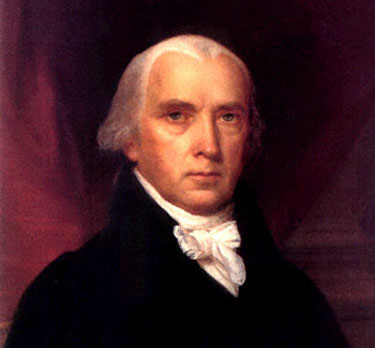
James Madison’s Case for Federal Education “Mandates”

November 19, 2008

madison

If you’re looking for an education secretary, Mr. Obama . . .

(Guest post by Greg Forster)

In a letter to Wall Street Journal on Friday, Pete Hoekstra follows the well trod path of populist conservatives who demonize “federal” interference in education and demand that power be handed back to “local schools.” (To his credit, Hoekstra also mentions school choice.)

Populist right-wingers need to learn that teachers’ unions and their allies laugh all the way to the bank when conservatives demand “local control” and romanticize the “local school.” The unions have a hammerlock on local school politics. The further you go down the chain geographically, the more power they have. Nobody votes in school board elections except school employees and their families and friends. They hold the elections at inconvenient times precisely to produce this result. Thus, local communities typically have little practical control over their own school boards. The school boards consider the staff unions representing teachers and other school employees to be their primary constituents. When the demands of school staff interfere with the needs of students, the school boards favor the staff.

If you want to know why so many of our schools are run as jobs programs and don’t produce a decent education, “local control” is how it’s done.

There are worthy criticisms of NCLB. Interference with local control isn’t one of them.

The “mandates” of NCLB aren’t even mandates. They’re conditions for funding. The federal government gives states tons of (my) money to participate in NCLB. Doesn’t it – don’t I – have a right to ask states to provide transparent data reporting and measurement of outcomes in return? And if the states are getting a bad deal, they can stop taking the money.

Whenever I point this out, the critics respond that states can’t be expected to turn down federal money no matter what terms it’s offered on. Well, if so, then the problem here isn’t with the federal government, is it?

But there’s a larger philosophical issue here. People think that pure, unsullied federalism requires not only that the federal government excercise no coercive power over areas of state authority, but that it exercise no form of influence whatsoever.

This is false, and for my authority I appeal to the original “federalists”: the authors of the Federalist Papers.

Federalist #47 and #48 take up an argument advanced by “the more respectable adversaries to the Constitution” – namely, that the Constitution fails to create a true separation of powers among the legislative, executive, and judicial branches because it allows each brach to influence the others. The president can veto legislation, the Senate gets to vote on cabinet members, etc.

Madison points out that there can be none of those crucial “balances and checks” between the separate branches if they exercise no influence over one another. A proper separation of powers not only permits but requires that each branch have some substantial beachhead of influence within each of the other branches:

Unless these departments be so far connected and blended as to give to each a constitutional control over the others, the degree of separation which the maxim [that powers must be separated] requires as essential to a free government can never in practice be duly maintained . . . . It will not be denied that power is of an encroaching nature, and that it ought to be effectually restrained from passing the limits assigned to it . . . . Will it be sufficient to mark, with precision, the boundaries of these departments in the constitution of the government, and to trust to these parchment barriers against the encroaching spirit of power?

This passage is the indispensible context – the “backstory,” as they say in Hollywood – for understanding the much more famous Federalist #51.

In #47 and #48, Madison shows that “pure” separation of powers is insufficient. In #49 and #50 he considers and rejects Jefferson’s position that government encroachments can be resisted by frequent appeals to the people. In #51, he draws the conclusion: true separation of powers requires not that powers be totally separate but precisely that they must be separated and then mixed or blended:

As all these exterior provisions are found to be inadequate, the defect must be supplied by so contriving the interior structure of the government as that its several constituent parts may, by their mutual relations, be the means of keeping each other in their proper places . . . . The great security against a gradual concentration of the several powers in the same department consists in giving to those who administer each department the necessary constitutional means and personal motives to resist encroachments of the others.

Whereupon he launches into the famous passage about ambition counteracting ambition, etc.

The real argument of Federalist #51 is not that we need a separation of powers – that argument comes in #47 – but that we need a certain kind of separation of powers. Specifically, the kind that allows each branch to have some power over the other branches.

Now, obviously this is all in the context of the separation of legislative, executive, and judicial powers, not the division of powers among local, state, and federal governments. But it seems obvious to me that the same principle applies – it would be dysfunctional for each level of government to have no influence over the others.

Of course, most of the founders did not envision the federal government influencing states and localities by offering them money. But it was always one of the very few great weaknesses of the original Constitution that it failed to clearly deliniate the boundaries of local, state, and federal responsibilities, and to provide institutional mechanisms to shore them up. It seems to me that in the phenomenon of what might be called “conditional federal subsidies,” like NCLB, we have stumbled unwittingly into a not-too-bad mechanism for allowing the federal government to influence states without directly taking over their operations.

As I said, there are legitimate criticisms of NCLB. The 100% proficiency promise is absurd. My own position has always been that the really valuable contribution of NCLB has been the mandate for transparent data reporting and testing.

But to say that it violates federalism to have the federal government attach conditions when it offers subsidies strikes me as not only incorrect, but an open door to unchecked power for “local” constituencies like the unions.


Reading First Final Report

November 19, 2008

The final report of the U.S. Department of Education commissioned evaluation of Reading First was released yesterday.  According to Russ Whitehurst, the USDOE’s director of the Institute for Education Sciences: “I don’t think anyone should be celebrating that the federal government has spent $6 billion on a reading program that has had no impact on reading comprehension.”

For more perspective on Reading First, people may want to check out Reid Lyon’s posts on the program on this blog, including this one.  I also have commentary here.


They’ll Do Everything But Kiss

November 18, 2008

In the movie Pretty Woman (a movie whose appeal has always mystified me) Julia Roberts plays a prostitute who is as pure as the driven snow.  Sure she has sex with guys for money, but we know she’s pure because she doesn’t kiss. 

The think tank fellows and Republican leaders who supported the bailout are trying to follow this model.  Sure they just handed out over a $1 trillion in cash and loan guarantees to the financial industry, but they are attempting to retain their free-market purity by resisting the $25 billion give-away for the auto industry.  They’ll do everything, but they won’t kiss.  And if they play their cards right, they just might get taken out for a shopping spree!

In case any of you buy the argument that a bailout was necessary for the financial but not the car industry because the former posed a systemic risk to the economy, let me remind you of the hysterical and false claims that were made about the need for the $700 billion+ bailout.  We were told around September 20 that if Congress did not pass the bailout immediately the financial world would collapse.  We heard all sorts of metaphors involving fires, abysses, clogs, freezes, etc…, but almost no actual analysis of why the problem required a giant expansion in government activity in the economy.

As it turns out Congress did not act right away and the world did not end.  They didn’t pass a bill until October 3, almost two weeks later.  And when they were pushing passage of the bill, supporters once again warned that the world was going to end unless we coughed up the money.  Banks desperately needed the government to buy illiquid assets from them to clean up bank balance sheets and restore liquidity.

Guess what?  The feds never got around to buying any of those assets and the world still didn’t end.  Instead the Treasury department decided to buy direct stakes in financial companies, but they’ve been doing it gradually and are nowhere near deploying the full $700 billion.  I thought the world was going to end if those assets didn’t get off bank balance sheets ASAP.  Nope, apparently the issue was being hyped again.

It’s true that Libor rates, the rates at which banks lend to each other, had spiked to very high levels around September 20, indicating that banks were unwilling to lend to each other.  But credit was still being extended to consumers and non-financial institutions at reasonable rates.  Banks had made a ton of bad loans and some investment banks and insurance companies had made some awful bets.  And no matter what, those losses were going to have to be realized eventually and there was going to be a lot of pain.  But the entire credit market had not seized up. 

Some folks were proposing that Libor rates could be reduced and inter-bank lending restored without handing out $700 billion; instead we could address these problems by improving transparency on the health of various banks.  Banks were afraid to lend to each other because they were afraid that some of them wouldn’t be able to repay.  Greater clarity on which banks were going to fail and which were not, could have reduced that uncertainty and allowed the (healthy) banks to lend to each other again.

My point is that we didn’t have to go down the path of the ginormous bailout.  And holding the line on bailing out the auto companies doesn’t atone for the earlier errors.  Bailout backers should be held accountable for pushing us into an unnecessary and huge expansion in government responsibility over the economy.


Let Them All Talk

November 18, 2008

Starting today and ending Thursday I’m moderating an online discussion on whether we should “scrap” NCLB over at the NewTalk web site.

Here is a list of participants:

Elaine Gantz Berman Colorado State Board of Education
Jay Greene University of Arkansas
Eric Hanushek Hoover Institution, Stanford University
Richard Kahlenberg The Century Foundation
Sandy Kress Akin Gump Strauss Hauer & Feld LLP
Neal McCluskey Cato Institute’s Center for Educational Freedom
Andrew Rotherham Education Sector
Richard Rothstein Economic Policy Institute
Martin West Brown University
Joe Williams Democrats for Education Reform
Everyone is welcome to comment on the discussion, both on this site and at NewTalk.
And to get you in the mood for the discussion, here’s Elvis Costello urging us to “Let Them All Talk.”