NYT on Tenure Reform

February 4, 2011

(Guest Post by Matthew Ladner)

Nothing quite signifies the intellectual bankruptcy of the unions better than this article. Faced with a significant national trend towards revoking tenure, the President of the NEA fires back with: an absurd story about an attempt to fire an Arizona teacher 30 years ago based upon a speech impediment that was actually an accent!

Mr. Van Roekel of the teachers’ union disagreed. Recounting a story that had the burnish of something told many times, he recalled that around 1980, when he was a union leader in Arizona, he had arranged to have a speech pathologist assess a teacher whom a principal was trying to fire because of a speech impediment. The pathologist determined that the teacher had a New York accent.

“She would say ‘ideer,’ instead of ‘idea,’ ” Mr. Van Roekel said. “The principal thought that was a speech impediment. Without a fair dismissal law, that principal could have fired her arbitrarily, without citing any reason.”

Riiiiiiiiight….

Could it be that I am the only one who has noticed that, despite all of the complaining that unions do about administrators, that the vast majority of them come straight out of the teaching ranks?  Furthermore, the state of school accountability in Arizona 30 years ago would have been zilch, either in the form of testing or parental choice. Such a dearth of transparency and competitive pressure would enable the arbitrary firings of staff of even effective staff. Oddly though, zilch in the way of accountability, whether in the form of testing with teeth or parental choice is the prefered policy stance of the NEA.

Strange that.

Further, the debate over tenure that I am watching involves complex discussions about methods for measuring teacher effectiveness rather than proposals for arbitrary and capricious firing. I wonder what debate Van Roekel has been watching.


Ladner and Burke win a Bunkum Award!!!

February 3, 2011

(Guest Post by Matthew Ladner)

The NEA’s “academic” mouthpiece have awarded a Bunkum Award to both me and Lindsey Burke! 

Here it is:

The If I Say It Enough, Will It Still Be Untrue? Award, to the Heritage Foundation’s Closing the Racial Achievement Gap, by Matthew Ladner and Lindsey Burke. The award notes Ladner’s success in repackaging in many different venues and media his spurious claim that a series of Florida reforms, including tax vouchers and grade retention, “caused” racial achievement gaps to narrow in the Sunshine State. “Ladner’s fecundity isn’t really what sets this work apart. It’s his willingness to smash through walls of basic research standards in his dogged pursuit of his policy agenda,” according to our judges. “Nothing in the data or analyses of Dr. Ladner or the Heritage Foundation comes even close to allowing for a causal inference.”
See http://nepc.colorado.edu/thinktank/learning-from-florida

First, I would like to thank the academy, and the Heritage Foundation for giving me a chance to win this wonderful honor.  The scorn of reactionaries is a treasure to cherish. Given that our critic, bless her heart, unknowingly included a table in her report that completely undermined her thesis, I was delighted to see it published.

As to this “inference issue” Dan Lips and I published an article years ago in the nation’s most influential education policy journal examining a number of possible alternate explanations to Florida’s remarkable academic gains. Our critic not only ignored this article, she essentially recreated the argument of another education school professor who we addressed in the piece. She didn’t cite his work either. Oh, and she started her critique off by complaining that Burke and I failed to perform a literature review.

In any case, both Burke and I will have to continue to work hard to earn more of these awards. I hope that we haven’t peaked too early…


Erin Dillon and Bill Tucker on Online Learning

February 3, 2011

(Guest Post by Matthew Ladner)

Dillon and Tucker weigh in on virtual learning at Education Next. The Ed Sector duo make a number of good points drawing from the experience of the charter school movement.

I am especially struck by the problem they point to in determining appropriate funding levels for virtual schools. An education savings account funding method for virtual schooling would create a market mechanism for determining cost per course, driving productivity gains. If given the wrong set of incentives, providers will have their profits determined by the success and failure of their lobbying efforts rather than by parental demand.

Of course, high-quality and free online learning tools have appeared on the scene.  Public funding schemes could limit development if compensation systems are not carefully considered.


Education in Obama’s State of the Union

February 2, 2011

(Guest Post by Bill Evers)

President Obama said the United States is currently having a Sputnik moment and wants to rally us to support his education programs and spending on that basis. With that in mind, it is worth recalling that the launching of the pioneer Russian space satellite back in the late 1950s had a quite important impact on American school curriculum.

American panic over Sputnik led directly to the unteachable New Math of the 1960s – an approach (set theory, number systems not based on 10) that baffled parents, teachers, and students alike and was wittily satirized in a song by comedian Tom Lehrer.

President Obama’s Sputnik moment has led his administration to push untried national academic-content standards and national tests on American schools.  For example, these standards would impose methods of teaching key components of geometry (similar and congruent triangles) that have never succeeded in any country, state, or local district.

These national standards, which the President promoted in his State of the Union address, have retreated from the decades-long consensus that we should strive to match top-performing countries by teaching Algebra I in eighth grade to as many students as we successfully can.

In contrast, the new national standards endorsed by Obama’s Education Department expect Algebra in ninth-grade and have, for example, thrown a monkey wrench in California’s longstanding effort at eighth-grade Algebra (now reaching 64% of students). California’s eighth-grade math teachers will in future be impossibly burdened with trying to teach two years of subject-matter content in one year — No thanks to President Obama’s Sputnik moment.

In the State of the Union address, President Obama misleadingly described his administration’s heavy stimulus spending on education. He said that his administration didn’t “just pour money” into the existing system that, as he said, is “not working.” But in fact, that is exactly what Congressional Democrats and Obama’s administration did. Close to eighty percent of that stimulus spending has been spent to shore up the status quo and relieve states and districts from having to make changes – under financial pressure – in ways that would improve productivity.

The Obama Education Department has awarded reform grants to states, and these grants deserve credit for encouraging states to remove caps on the number of charter schools and for encouraging school districts that need to improve to look at test scores of low-performing students and at who their teachers have been.  But his reform grants plainly went to some states that didn’t deserve them (Hawaii, Maryland, Ohio) and didn’t go to some states that did (Louisiana and Colorado). The formula for choosing the winning states was weighted in favor of teacher-union “buy-in” and thus was a formula for maintaining the status quo.

Before the State of the Union address, Republican U.S. House Speaker Boehner endeavored to test President Obama’s calls for bipartisanship by asking the President to join in a bipartisan effort to continue the opportunity scholarship program in Washington, D.C, — a program that rigorous studies have shown is improving the schooling of African-American students. But President Obama did not take up this offer.

In sum, the President set forth many of his old, usual rhetorical themes in education, pushed more spending and dubious reforms (national standards and tests), and missed an opportunity to advance reform in new and substantive ways.

=====

Bill Evers is a research fellow at Stanford University’ Hoover Institution and member of the institution’s Koret Task Force on K-12 Education.  He served as U.S. Assistant Secretary of Education from 2007 to 2009 and was a member of the California Academic Standards Commissions in the late 1990s and again in 2010.


Gloom and Gloomier

February 1, 2011

The editors at Education Next have two essays on the state of education reform that remind me of Woody Allen’s never-delivered university commencement speech:

More than at any other time in history, mankind faces a crossroads. One path leads to despair and utter hopelessness. The other, to total extinction. Let us pray we have the wisdom to choose correctly.

In one essay, Paul Peterson, Marci Kanstoroom, and Chester Finn reject my rosy assessment of progress in the war of ideas about education reform, saying “It’s way, way too early to declare victory. Atop the cliffs and bastions that reformers are attacking, the opposition has plenty of weapons with which to hold its territory…. It’s dangerous to think a battle is over when it has just begun.”

In the other essay, Frederick Hess, Martin West, and Michael Petrilli go even further in their gloom, arguing not only that the war has hardly begun, but that the reform warriors are really the enemy:

First, reform “support” resides with a mostly uninformed, unengaged public—one that isn’t especially sold on their ideas and that, in any event, is often outmatched by well-organized, well-funded, and motivated special interests. And second, and more unfortunately, many reformers are eagerly overreaching the evidence and touting simplistic, slipshod proposals that are likely to end in spectacular failures. In short, some forces of reform are busy marching into the sea and turning notable victories into Pyrrhic ones. To quote that wizened observer of politics and policy, Pogo: We’ve met the enemy, and he is us.

That’s funny.  I thought the enemy was a monopolistic, bureaucratized 19th century school system propped up by teacher unions and their allies who place the interests of adults over the needs of children.  I guess I was wrong in not understanding that it is really the opponents of that system who are the problem.

In truth, I don’t really disagree with much of what either essay has to say.  It is all just a matter of emphasis and framing. In my declaration of victory I was careful to acknowledge that the war over policy has barely begun and reformers have a long and difficult road ahead:

We won!  At least we’ve won the war of ideas.  Our ideas for school reform are now the ones that elites and politicians are considering and they have soundly rejected the old ideas of more money, more money, and more money.

Now that I’ve said that, I have to acknowledge that winning the war of ideas is nowhere close to winning the policy war.  As I’ve written before, the teacher unions are becoming like the tobacco industry.  No one accepts their primary claims anymore, but that doesn’t mean they don’t continue to be powerful and that people don’t continue to smoke.  The battle is turning into a struggle over the correct design and implementation of the reform ideas that are now commonly accepted.  And the unions have shown that they are extremely good at blocking, diluting, or co-opting the correct design and implementation of reforms.

Rick Hess correctly demonstrated how important design and implementation are almost two decades ago in his books, Spinning Wheels and Revolution at the Margins.   And it is always useful for him and others to remind reformers of the dangers that lurk in those union-infested waters.  But for a moment can’t we just bask in the glow of our intellectual victory — even if our allies are a new crop of naive reformers?

Yes, there is a danger in thinking that the policy war is over when it has barely begun.  And yes, there is a danger in over-promising and over-simplifying reform ideas.  But there is also a danger in reform burn-out.  The struggle over school reform has been going on for decades and will almost certainly take several decades more.  Donors have grown frustrated and advocates have jumped to ill-conceived quick fixes that would set the cause of reform back significantly, like adopting national standards and assessments.  If we don’t periodically note our policy progress and intellectual victories, we will have great difficulty sustaining the reform movement.

My view does not really differ substantially from the two essays in Education Next except that they see a greater danger in over-confidence and I see a greater danger in burnout.  And I don’t mind being used as the straw man for their arguments.  The Straw Man had a brain.


The Way of the Future: ESA over KKK

January 31, 2011

 (Guest Post by Matthew Ladner)

The United States began as an experiment in freedom, but has at times struggled with intolerance. America’s culture wars surrounding the assimilation of Catholic immigrants represented just such a struggle in the 19th and early 20th Century. In the 1920s, the Ku Klux Klan successfully abolished private schools in Oregon. The KKK, you see, wanted to standardize Oregon Catholics into “real Americans.” If that thought frightens you, and it should, read on. It’s not enough to reject having the KKK standardize children, we need to embrace a customized education for all children.

The KKK aimed to do this in Oregon with a public school curriculum of which they approved and by banning private school attendance. Thankfully, the U.S. Supreme Court struck down this incredibly illiberal measure in 1925. Today we should not only reject discrimination in schooling, but more fundamentally the notion that one size fits all. Americans can embrace customized education for all children and improve our 19th Century factory-like model of public schooling. We can do this by directly funding students through education savings accounts controlled by parents.

Looking past the ugly religious discriminatory intent of the attempt to ban private schools, this effort reflected a broader problem: an intolerant belief in a “one true way” to educate children. The Klan is not alone in having sought to control schools for their own purposes. Today we see groups on both the left and the right engaged in a never-ending battle over school curriculum. From Creationism to environmentalism to “Heather Has Two Mommies,” the struggles never cease. Worse still, American public schools fail to educate far too many of our students to an internationally competitive level.

Milton Friedman proposed a solution to these problems in the 1950s: separating the school finance from the operation of schools. This would allow parents far greater freedom to choose the sort of education they want, and reflects a liberal “to each their own” system. Over the years, advocates of greater parental choice have carried Friedman’s concept forward in the form of school vouchers and tuition tax credits. Vouchers are essentially state funded coupons that parents can redeem at public or private schools. Tax credits provide indirect aid for parents bearing the expense of a private education in addition to paying their public school taxes. The first modern voucher program began in Milwaukee in 1990, and over 26 voucher and tax-credit programs operate around the country.

Empirical research confirms significant benefits to parental choice, including Friedman’s central claim that it can serve as a catalyst for public school improvement. The need for improvement could not be clearer. Although America has a large number of excellent public schools, the recent PISA exam found that Hispanic and Black American 15 year olds score little better in literacy than their peers in Mexico. Mexico spends a mere quarter per pupil of the American average, and has substantially lower average family incomes. Those receiving the least from the status-quo have the most to gain from reform.

Last week,  Nick Dranias and I released a study for the Goldwater Institute proposing public donations to education savings accounts as a strategy for improving education outcomes. Parental choice supporters in multiple states have proposed public contributions to education savings accounts. Education saving accounts can serve as a new and more powerful method for expanding parental freedom and improving public schools. Parents should have full control over the education of their children, down to the penny, and multiple options in seeking the best possible education for their child.

ESA contributions represent a substantial improvement over school vouchers as a parental choice mechanism. Rather than simply choosing between schools, parents should be free to choose from a growing array of education services from a variety of providers. Today, students take classes online, can seek private tutoring, or enroll in community colleges or even universities for coursework.

Accounts for education and health care serve as important precedents upon which to build. Lawmakers must construct strong systems of state financial oversight and provide for the auditing of accounts. Near bankrupt states can save money by fashioning contractual agreements with parents to provide greater flexibility in return for smaller overall per pupil subsidies.

With control over funding, parents could purchase full enrollment at public or private schools. Alternatively, our parents might choose to have their child attend classes at a variety of providers, public, private or virtual. Allowing parents to save funds for later college and university expenses would provide a powerful incentive to consider cost-effectiveness from all types of providers, whether public or private.

Contrary to the demonstrably mistaken fears echoing through the parental choice debate, our existing public schools would grow stronger as a result. Public schools will always be the bedrock of our education system, but might evolve to resemble the course-by-course offerings of our universities, especially at the high-school level.

American parents deserve their own experiment in freedom. The question is not whether we should have public schools, but rather who should be in charge of them, and how many other options should our system provide. I believe the answers to these two questions are “parents” and “as many as possible.” Students all have unique needs and aspirations they are not widgets to be mass-produced. The time has come to let go of our attempts to standardize the educations of children, and instead give parents the liberty to customize them.


McKay Scholarship Mom Goes to War with Tenure in Florida Video

January 29, 2011

(Guest Post by Matthew Ladner)

W*O*W, watch the video.


Education’s Long Forgotten Vision

January 28, 2011

(Guest Post by Sandra Stotsky)

An illuminating essay titled “Education’s Forsaken Vision,” by Avner Molcho, an Israeli historian, appeared in the Autumn 2010 issue of Azure, a publication of the Shalem Center in Jerusalem. In it he presents an assessment of the shift in educational philosophy he has observed in Israeli public education since Israel’s founding. Evolving from a mission to serve the civic needs of a new nation as well as the mathematical, scientific, and other intellectual needs of a modern society—a mission that enhanced social cohesion despite wide differences in student achievement–the reigning view he sees today emphasizes student rights instead of shared civic values and promotes upward social mobility for students from low-income families as the chief purpose of public education.

Molcho’s purpose is to suggest that Israeli society would benefit from a revival of the central features of a classical education—its stress on intellectual goals and civic virtues. As justification, he points to the failure of the new mission for education to stimulate academic achievement in poor students or their upward mobility, despite increasing resources dedicated to these ends. In fact, he notes, achievement gaps between children of low- and high-income parents seem to have grown even as they all learn less, according to international test scores.

However, Molcho omits mention of the most recent expression in U. S. public policy of this problematic mission for public education, an expression that is likely to have undreamed-of negative effects on the school curriculum, academic achievement, and American society as a whole. U.S. educators have long looked for ways to improve the academic achievement of students from low-income families and, hence, their social mobility. The American public needs to learn what signposts U.S. education policy makers are following on the yellow-brick road to Oz. Otherwise, “Education’s Forsaken Vision” may soon become “Education’s Long Forgotten Vision” in both countries.

As is well-known, the original formulation of “equal educational opportunities” did not imply equal outcomes or the repudiation of intellectual and civic goals by the schools. Equity was understood to mean a fairer distribution of resources to raise poor children’s achievement. But as it became clear by the late 1990s that the increasing flow of federal and other funds to improve their “basic skills” was not changing the demographic profile of low achievers quickly, if at all, U.S. educators and policy makers redefined equity to mean equal outcomes for all demographic groups (except for boys and girls) and altered the goal line.

Stressing the “closing of demographic gaps” as the supreme goal of the schools, the 2001 No Child Left Behind Act set forth a utopian goal: proficiency for all students by 2014 as determined by state assessments. An additional accountability criterion required “adequate yearly progress” for each demographic group. However, no practically significant increases in achievement at higher grade levels resulted for low-performing groups after accountability was added to the formula (although there has been progress on basic skills in the early grades). And serious problems elsewhere were ignored by policy makers.

Not unexpectedly, schools focused on what mattered to NCLB–getting low-performing students to pass state tests. But NCLB offered no reward at the same time for, for example, increasing the number or percentage of students, regardless of demographic category, who moved from Proficiency to Advanced, or completed an authentic Algebra I course in grade 8, or passed more advanced mathematics courses in high school. Yet, the need to pay attention elsewhere was clear. On TIMSS 2007, only 6% of U.S. students were at the advanced level in grade 8 mathematics, compared to, e.g., 40% of the students in South Korea. As a November 2010 report noted, “the U.S. trails other industrialized countries in bringing its students up to the highest levels of accomplishment in mathematics.”[1] The report did not identify “any single cause of the relatively small percentage of students in the U.S. who are performing at a high level of accomplishment,” although the shortage of academically qualified mathematics teachers looms as a major cause.

Despite the stunning comparisons of percentages at the highest performance level, no alarm bells were set off and no policies incentivizing increases in mathematics and science achievement at higher performance levels were forthcoming. Instead, the new mission for education drove public policy in the Obama administration to higher utopian heights than the Bush administration had aimed for, with an even more intense focus on low-achievers and little attention to anyone else.

While early advocates of “equal educational opportunities” wanted more poor students reaching high academic goals, not a change in these goals, supporters of the goal of social justice were quick to see an idiosyncratic and shrunken secondary curriculum (as content-free as possible), accompanied by changes in pedagogical practices and classroom organization, as a quicker means to their desired ends. If academic credentials (i.e., a college degree) are what promote social mobility, then what needed fairer distribution to get low-achieving groups moving upward were the credentials, not necessarily what they were designed to reflect.

The first step in facilitating a more equitable allocation of academic credentials was development of national standards in English and mathematics loosely tethered at the secondary level to their traditional content. That step was completed with the help of the Gates Foundation, which paid for the development, review, post-facto validation, and promotion of the reading and mathematics standards Common Core released in June 2010, and which also influenced the selection of most of the personnel involved. Public officials and the media were repeatedly told by the developers of the standards that they were research-based and internationally benchmarked, even though independent subject matter experts and researchers indicated this was not the case.[2] To clinch the first step, the U.S.D.E. ensured state adoption of these skills-oriented standards (about 45 states so far) with the lure of Race to the Top competitive funds.

The next crucial step is the development of tests based on Common Core’s standards and the working out of important matters such as the quality and difficulty of the test items and the level of the passing scores. The U.S.D.E. is funding and supervising this step directly. So far as we now know, the U.S.D.E. also wants, in a re-authorization of NCLB, schools to ensure that all their high school graduates are “college ready” as determined by the passing score on high school level tests. If so, schools will be held accountable for a greater utopian reach than was expected in 2001.

Efforts are already underway to make sure that all “college ready” students can be successful in their freshman college courses. Public colleges are being asked to “align” entrance requirements and the content of freshman courses to Common Core’s secondary standards, not the other way around. And, to ensure that “college ready” students can graduate from a college degree program in record time, all of their freshman courses must be credit-bearing, not tagged as remedial. (Otherwise, these students could not be called “college ready.”)

This means, in effect, that those who pass the national high school tests, which are to be first given at the end of grade 10, can go right to a college that accepts them and earn college credit for the content of the grade 11 or 12 courses they skipped, if the content is deemed necessary for their degree program.

Does anyone doubt that public colleges will be under pressure to admit “college ready” students and produce equal group outcomes in retention and graduation rates? Like high school teachers, public college instructors will find it in their interest to produce equal group outcomes no matter how the outcomes are related to the content of what individual students know.

Once upon a time, making students “college ready” meant strengthening, not weakening, the high school curriculum. Selective colleges in the U.S. will likely be able to fill their freshman classes with students from schools in, say, South Korea, Japan, and Singapore. But how long can any modern society sustain itself if it ignores both the intellectual and civic goals of public education and believes that able students come only in a few colors.


[1] http://www.hks.harvard.edu/pepg/PDF/Papers/PEPG10-19_HanushekPetersonWoessmann.pdf

[2] See http://nepc.colorado.edu/publication/college-and-career for a critical review of the research base for Common Core’s standards, by Diane Ravitch and William Mathis for the National Education Policy Center.

See also the letter sent by Sandra Stotsky explaining why, as a member of the Validation Committee, she could not sign off on the final draft of Common Core’s secondary English language arts and reading standards, at http://www.doe.mass.edu/boe/docs/0710/item1.html?printscreen=yes&section=stotsky;

See also Appendix B, an analysis by mathematician R. James Milgram of the problems he sees in the final draft of Common Core’s mathematics standards, at http://www.pioneerinstitute.org/pdf/common_core_standards.pdf


Wonk Action Shots!

January 27, 2011

(Guest Post by Matthew Ladner)

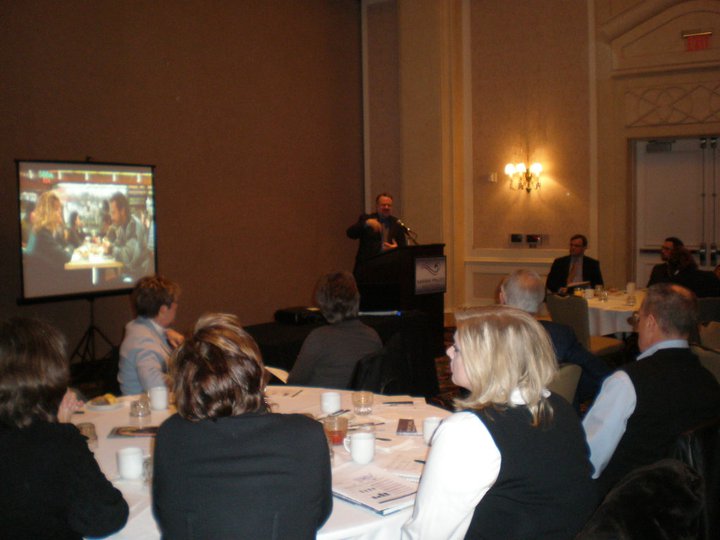
I just returned from a series of events put on by the Kansas Policy Institute and the Foundation for Educational Choice. Long suffering readers of JPGB might possibly recognize the topic if they turn their intuitive discernment nob to “11”:

Need another hint? Well, okay….

I met great people in Kansas, and had them ask very good questions. The NAEP shows that on average Kansas schools are good when compared to American states. The scores for disadvantaged student populations, including the growing Hispanic population, must improve if Kansas is going to go from good to GREAT.

Story in the Wichta Eagle here and a television news report here.


Reason TV for School Choice Week Part Deux

January 27, 2011

(Guest Post by Matthew Ladner)

My residual self image is having a hard time looking at this guy with gray hair…