The Moynihan Challenge: 5 Years Later

May 24, 2011

(Guest Post by Matthew Ladner)

Five-years ago yesterday, I posed a “Moynihan Challenge” to school choice opponents: provide a couple of random assignment studies showing academic harm resulting for private choice programs and I will buy you a steak dinner.

The response from choice opponents after 5 years:

Daniel Patrick Moynihan inspired the challenge with a story from his book Miles to Go. During testimony to Senator Moynihan asked Laura D’Andrea Tyson of the Clinton Administration for two supportive studies justifying the hundreds of millions of dollars spent on a favored program.

Moynihan received two studies the following day, but Moynihan did something strange and actually read the studies. Moynihan noted that both studies actually concluded similar programs had failed to produce any positive results.

In response, Moynihan wrote the following in a letter to Tyson:

In the last six months I have been repeatedly impressed by the number of members of the Clinton administration who have assured me with great vigor that something or other is known in an area of social policy which, to the best of my understanding, is not known at all. This seems to me perilous. It is quite possible to live with uncertainty, with the possibility, even the likelihood that one is wrong. But beware of certainty where none exists. Ideological certainty easily degenerates into an insistence upon ignorance.

Faced with a choice critic at the Arizona Republic displaying what I regarded as an insistence on ignorance, I invited him to put up or shut up. I could produce multiple random assignment studies showing academic gains associated with private choice programs, if the critic could produce merely two I would pay him out a delicious steak dinner. I wrote:

If opponents of school choice can offer no proof to back their assertions, they deserve neither my steak nor anyone’s confidence, leaving everyone to wonder: where’s the beef?

I repeated the challenge to the nation on NRO without receiving anything resembling a serious reply.

Ah well, 5 years have passed, and the number of random assignment studies finding positive results from choice programs have continued to increase.

The opponents?

The technical term to describe what they have in terms of high-quality evidence: still zilcho.


Running Up the Score: Choice Goes to Eleven

May 20, 2011

(Guest post by Greg Forster)

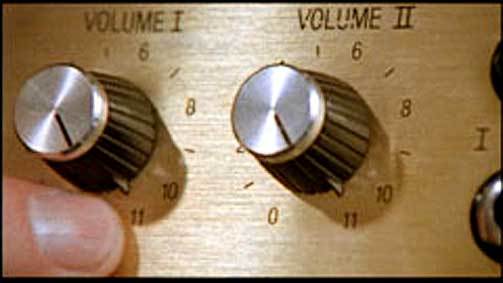
Matt Ladner’s awesomeness goes to eleven! And so does school choice with the expansion of Georgia’s tax-credit scholarship program making eleven school choice “enactments” this year.

Jay Mathews bet me we wouldn’t have seven enactments, and we now have eleven. Where do you think he’ll buy me dinner?


Running Up the Score: Make That Ten

May 20, 2011

Thou shalt not dismiss the viability of school choice!

(Guest post by Greg Forster)

Earlier this week I celebrated the Oklahoma Eight Ball, the first school choice program passed after the Indiana Triple Play gave me the seven enactments (new or expanded programs) needed to win my bet with Jay Mathews.

Or so I thought! Somehow I missed the Florida Twofer. Florida expanded funds available for its tax-credit scholarship program and made a larger population of students eligible for the McKay voucher program for special needs students(thus expanding the total size of the program because McKay has no cap on total participation).

That puts my score at ten out of seven.

At least six states are still in play according to my sources: Pennsylvania, Ohio, Wisconsin, Iowa, New Jersey, and South Carolina.


Texas K-12 Reform: Restart the Engine

May 19, 2011

(Guest Post by Matthew Ladner)

So yesterday I received notice that the Nederland Texas High School Class of 1986 would be having a 25th year reunion. I thought that they must surely be off on the math, but a quick calculation revealed a denial problem on my part rather than a math error on theirs.

As I will argue below, I am not the only Texan with a denial issue.

Parental choice supporters in Texas have crafted a very broad parental choice program designed to help the state with a Texas-sized budget deficit. Choice supporters have announced their intention to attach Taxpayer Savings Grants as an amendment to a larger fiscal savings bill.

I am a Texas expat living abroad until such time as I can return to the glorious nation of my birth, and one who has been involved in a number of Texas choice efforts in the past. George Orwell once said something to the effect that to understand London, one must live in Paris. Strangely enough, I feel that my seven years of separation from Texas has deepened my understanding of the place.

Texas has a very cautious political culture, which overall is a highly desirable trait for a state political class. Over the years some of the national players in the parental choice movement have expressed dismay that Texas has done so little, especially given that the state is so “conservative.” What these people fail to appreciate is that the Texas political class is “conservative” in the sense that they are cautious regarding change. If you are looking for the “Wild West” don’t stop in Austin.

Overall, this serves Texas quite well. Texas has the lowest spending/taxes per capita in the country, and has been an engine of job growth. Texas will gain four new Congressional seats during the current redistricting, with no other state gaining more than two. Companies and people have been moving into the state.

That’s the good news. The bad news is that a cautious political culture can be quite the bad thing when it comes to K-12 reform. The Texas K-12 system from which I matriculated 25 years ago has changed remarkably little, while the state has changed profoundly. Anglos now only comprise 33.3% of public school students and Hispanics are nearing the 50 percent mark. Most people don’t seem much bothered by this in Texas, much to the credit of the state.

Texas has for some time had among the highest NAEP scores for Hispanic students, but that’s not good enough, and the ranking has slipped. Having Hispanic scores a bit higher than the national average simply doesn’t cut it when the national average for Hispanics is closer to Mexico’s national average than South Korea’s.  Florida’s Hispanic students now outscore the statewide average for all Texas children on the NAEP 4th grade reading exam. The reason why is clear: Florida has been bolder than Texas on K-12 reform, including but not exclusive to choice.

Those supporting the Taxpayer Savings Grant program will be grappling with both the cautious Texas political culture and the power of the education union and administrators. It’s an uphill climb. Texans have accomplished some admirable things in K-12 reform, but find themselves lagging behind on the reform-minded states such as Indiana and even Oklahoma.

You cannot imagine how much it pained me to write that last word, but it is true.

Texans are not big on accepting also-ran status. If however the biggest strength of the political class continues to be their biggest weakness on the reform front, further plateau of NAEP scores will be about the most we can hope for. The world has radically changed since 1986, but I could stroll into Nederland High School today and find things much the same. Texas will require a continuously improving system of public schools to adopt to the enormous economic and demographic changes of the next 25 years.

Saddle up Texas- it is time to rise to the occasion.


OMG, Fordham on Vouchers Has Me ROTFLOL

May 6, 2011

Twitter must be infecting the brains of Washington and NY education policy “analysts.”  I say this because I can’t figure out what else could explain the short and inexplicable missives emanating from Fordham these days.  For example, The Education Gadfly declares with Twitter-length analysis: “While Gadfly supports the expansion of school choice to families in higher income brackets, he can’t help but wonder if the Year of the Funding Cliff is the right time for this idea to come of age.”  That’s it.  No other explanation, justification, or analysis is provided.

Uhm, don’t the folks at Fordham know that the voucher and tax-credit-funded scholarship plans being adopted during the current legislative session save states money?  They have generally set the voucher or scholarship amount less than per pupil spending in traditional public schools precisely so that states would save money given the Funding Cliff that states are facing.  That is an important part of the appeal of these programs to some state policymakers.

Another example of a Fordham analysis with all of the depth of a “Tweet” can be seen in  Michael Petrilli’s email response to Don Boudreaux’s op-ed in the Wall Street Journal.  Boudreaux critiques public education monopolies by asking: “What if groceries were paid for by taxes, and you were assigned a store based on where you live?.”  He continues the analogy to how we provide public education by answering: “Being largely protected from consumer choice, almost all public supermarkets would be worse than private ones. In poor counties the quality of public supermarkets would be downright abysmal. Poor people—entitled in principle to excellent supermarkets—would in fact suffer unusually poor supermarket quality.”

Mike’s complete and penetrating analysis in his email response to this piece is: “Clearly Don Boudreaux hasn’t visited a Safeway or a Giant in an inner-city neighborhood, or else he wouldn’t have gone with this analogy. ”

It’s short enough for Twitter, but does it make any sense?  Yes, urban grocery stores tend to be less nice, but there is no doubt that they are better than if they were operated as local government monopolies.  There is ample evidence that markets help deliver better services at lower cost even for the very poor.

Why would someone as smart and nice as Mike make this stupid, one-line retort?  Why does Fordham’s Gadfly dismiss expanded vouchers with the mistaken and one-line claim that they cost more money and so would not be affordable with tight state budgets?

I fear that the brains of the people at Fordham have been shrunk by over-use of Twitter.  Everything is a one-line quip.  No need for facts, evidence, analysis, etc… Everything is a catty little fight.

Diane Ravitch is now tweeting about 60 times per day, but Mike Petrilli is not far behind at about 30-40 per day.  And their tweets are some of the dumbest, ill-conceived things I’ve ever seen from such intelligent people.  Seeing how Tweeting is rotting their brains makes me worried about whether I should give up blogging before I become similarly shallow.


Awwwwwwwwwwwwwwwww . . . FREAK OUT!

May 5, 2011

(Guest post by Greg Forster)

Adam Schaeffer is freaking out over the Indiana Triple Play. It’s the largest school choice program ever enacted, and thus the biggest threat to the government school monopoly ever to achieve fruition – but apparently Indiana also has a handful of silly regulations that private schools will have to follow if they want to participate.

For example, participating schools will have to own a copy of the “Chief Seattle letter” from a 1972 movie.

♪♫♪ Awwwwwwwwwwwwwwwwwwwww . . . FREAK OUT!  ♪♫♪

And they’ll have to take the state test.

♪♫♪ Awwwwwwwwwwwwwwwwwwwww . . . FREAK OUT!  ♪♫♪

And they’ll have to provide “good citizenship instruction.”

♪♫♪ Awwwwwwwwwwwwwwwwwwwww . . . FREAK OUT!  ♪♫♪

All this may be a very effective way for Cato to frighten its hardcore libertarian base for purposes of product differentiation in the market of ideas, but it’s not sound analysis.

  1. Most private schools in Indiana already give the state test. This is partly because it’s required for accreditation, but even many non-accredited schools give it. (By the way, the percentage of private schools in Indiana that are accredited is 50% according to the Indiana Non-Public Education Association, not 40% as Adam claims.) Since not all schools will participate in the new program, and the schools that don’t give the state test are overwhelmingly going to be more likely to be the ones who don’t participate, the new law represents no important change from the status quo. Obviously it would be better if the state’s accreditation requirements were changed, but that’s just not the same issue.
  2. Schools don’t have to participate. If they don’t like these rules, they’re as free as they were before. Now they also have the option to participate if they want to.
  3. Where’s the beef? Adam describes the “good citizenship” curricular requirement as “extensive and detailed,” but doesn’t produce much to support that. From what I can make out in his post, it looks like a lot of not much.
  4. The state already has virtually unlimited authority to regulate private school curricula, especially in the name of “good citizenship.” The Supreme Court has given states more or less a blank check to control private school curricula, and the state has especially strong authority to require, and control the content of, “citizenship” education. The existence of a voucher program changes little in this regard.

Concerns that regulations on school choice programs not be allowed to become onerous are perfectly legitimate. But to call the enactment of a voucher program for 600,000 students a “defeat” is going way too far. This isn’t just making the perfect the enemy of the good, it’s making the perfect a nuclear bomb that destroys everything.


Indiana Triple Play Delivers the Win

May 5, 2011

(Guest post by Greg Forster)

Aaaaaaaaaaaaaaaaaaaaaaaaaaaaand that’s seven.

Gov. Daniels has just signed into law three – count them – three school choice “enactments” according to the terms of my notorious bet with the Washington Post‘s Jay Mathews.

  1. A new voucher program – bigger than any existing school choice program
  2. A new tax deduction for education expenses (including private schooling)
  3. An expansion of Indiana’s existing tax-credit scholarship program

Add that to the list of previous enactments this year…

  1. Utah’s Carson Smith voucher expansion
  2. Douglas County, Co. new voucher program
  3. Arizona new ESA program
  4. DC voucher expansion

…and that smells like a really fancy dinner at one of Milwaukee’s finest restaurants.

In the comments here, “allen” suggests that whether or not there’s an “end zone” in the war or terror, we should definitely seek to “run up the score.” I heartily agree – and I’m not above running up the score on Mathews, either.

A little bird tells me these states are still in play for enactments this year:

  1. Oklahoma
  2. Florida
  3. Georgia
  4. Wisconsin
  5. Ohio
  6. Pennsylvania
  7. Texas
  8. New Jersey
  9. North Carolina
  10. Iowa

I’ll take Texas with a grain of salt – sorry, Matt, but we’ve been promised a program in Texas too many times over too many years for me not to be skeptical. But hey, as you put it, 2011 is already setting a new standard for education reform. Why not Texas, too?

Fact: Chuck Norris can enact a Texas voucher in every state.

Kong & Mario image HT The Pitch


Governor Mitch Daniels Lays Out His Education Vision at AEI

May 4, 2011

(Guest Post by Matthew Ladner)

Governor Daniels lays out his education reforms at an American Enterprise Institute. If Indiana can sustain these reforms with prolonged high-quality implementation, they can become the new Florida. Indiana 2011 stands as the best reform session since Florida 1999 in my book.


Verdict in the WSJ: “School Vouchers Work”

May 3, 2011

Wall Street Journal columnist, Jason Riley has a must-read piece in the WSJ today.  The piece features the work of my University of Arkansas colleague, Patrick Wolf, JPGB’s very own Greg Forster, as well as a reference to the competitive effects study that Ryan Marsh and I conducted in Milwaukee.  There are too many highlights, but here is a (big) taste:

‘Private school vouchers are not an effective way to improve student achievement,” said the White House in a statement on March 29. “The Administration strongly opposes expanding the D.C. Opportunity Scholarship Program and opening it to new students.” But less than three weeks later, President Obama signed a budget deal with Republicans that includes a renewal and expansion of the popular D.C. program, which finances tuition vouchers for low-income kids to attend private schools.

School reformers cheered the administration’s about-face though fully aware that it was motivated by political expediency rather than any acknowledgment that vouchers work.

When Mr. Obama first moved to phase out the D.C. voucher program in 2009, his Education Department was in possession of a federal study showing that voucher recipients, who number more than 3,300, made gains in reading scores and didn’t decline in math. The administration claims that the reading gains were not large enough to be significant. Yet even smaller positive effects were championed by the administration as justification for expanding Head Start….

The positive effects of the D.C. voucher program are not unique. A recent study of Milwaukee’s older and larger voucher program found that 94% of students who stayed in the program throughout high school graduated, versus just 75% of students in Milwaukee’s traditional public schools. And contrary to the claim that vouchers hurt public schools, the report found that students at Milwaukee public schools “are performing at somewhat higher levels as a result of competitive pressure from the school voucher program.” Thus can vouchers benefit even the children that don’t receive them.

Research gathered by Greg Forster of the Foundation for Educational Choice also calls into question the White House assertion that vouchers are ineffective. In a paper released in March, he says that “every empirical study ever conducted in Milwaukee, Florida, Ohio, Texas, Maine and Vermont finds that voucher programs in those places improved public schools.” Mr. Forster surveyed 10 empirical studies that use “random assignment, the gold standard of social science,” to assure that the groups being compared are as similar as possible. “Nine [of the 10] studies find that vouchers improve student outcomes, six that all students benefit and three that some benefit and some are not affected,” he writes. “One study finds no visible impact. None of these studies finds a negative impact.”

Such results might influence the thinking of an objective observer primarily interested in doing right by the nation’s poor children. But they are unlikely to sway a politician focused on getting re-elected with the help of teachers unions.

“I think Obama and Duncan really care about school reform,” says Terry Moe, who teaches at Stanford and is the author of a timely new book, “Special Interest: Teachers Unions and America’s Public Schools.” “On the other hand they have to be sensitive to their Democratic coalition, which includes teachers unions. And one way they do that is by opposing school vouchers.”

The reality is that Mr. Obama’s opposition to school vouchers has to do with Democratic politics, not the available evidence on whether they improve outcomes for disadvantaged kids. They do—and he knows it.


Cateaux!

April 22, 2011

(Guest Post by Matthew Ladner)

Quick response from Andrew Coulson. I suspected that the Cato Institute might, like Cato the Manservant, prove unwilling to call off their attack. I can hear Peter Sellers’ French accent in my head “Cateaux!!?!? Cateaux?!!??! I know zat I ordeured you alvays to attack, but I rescind zee ordeur! CATEAUX?!?!?”

Andrew has primarily refered back to his litany of why he likes tax credits better than vouchers. I have already conceded that tax credits enjoy some benefits over vouchers in the last post, so I don’t see this as on point. The question isn’t “tax credits good vouchers bad?” but rather whether tax credits are up to every school choice task we might assign to them. My request to examine the case of children in large families, children in poor families and/or children with disabilities in large poor families has gone unanswered as of yet.

Andrew offers the fact that the Step Up for Students tax credit serves a greater number of students than the McKay Program in Florida as evidence that tax credits could be up to the job of providing education for children with disabilities. Children with disabilities however require more costly services than general education students. The most recent figures show that Step Up for Students raised $106m while McKay spent $138m. Spend the entire tax credit amount on children with disabilities, and about a quarter fewer of them would be served and 29,000 low-income kids currently served by the SUFS program would be SOL.

When one considers the still small fraction of Florida special needs children served by the richer and easier to scale McKay Program, I hold it as self-evident that even the mighty Step Up for Students program, the nation’s largest of its kind, would fall completely short of the task assigned to McKay. I am happy that both programs exist, and I have never heard a peep of complaint from private schools in Florida about burdensome regulation associated with the McKay program.

I also think that Andrew should broaden his view of the word “savings.” An advantage of the ESA approach lies in exposing the opportunity cost involved in possible private school cost inflation: an allowable use of the ESA funds in Arizona include putting money in a College Savings 529 account. Higher education provides a cautionary tale of mixing subsidies and education: hyperinflation. The evidence of this from K-12 choice programs is limited, but no one has really studied the matter, and the potential obviously exists.