This just about sums it up — that is zero-sums it up.
The Obama Administration to Date
October 4, 2009
 2 Comments |
  politics | Tagged: Jay Greene, Jay P. Greene, Obama |
  Permalink
 Posted by Jay P. Greene
First Amendment Repealed, Part Two
September 23, 2009
(Guest post by Greg Forster)
No sooner do I put up a post on the death of the First Amendment than along comes Jim Geraghty with more free-speech funeral news.
On the floor of the Senate, Sen. Tom Carper appears to have openly and explicitly confirmed that legislators made an illegal quid-pro-quo deal with PhRMA to design health care legislation a certain way in return for a commitment to run ads supporting the bill.
Geraghty is focused on the bribery aspect – PhRMA bought a legislative outcome in exchange for money (spent on ads the legislators wanted). But it’s also a speech issue – congressional leaders used their power over the laws to bend political speech into the shape they wanted it.
The health care people just can’t destroy our freedom fast enough.
Leave a Comment » | economics, politics | Tagged: free speech, Greg Forster, PhRMA, Tom Carper | Permalink
Posted by Greg Forster
The First Amendment Is Hereby Repealed
September 23, 2009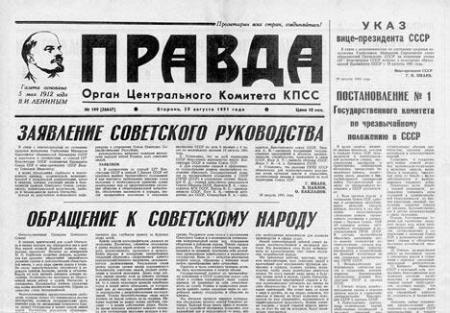
(Guest post by Greg Forster)
Items in the news this week:
1) The president signals he’s open to a government takeover of the newspaper industry. No word on whether government-supported papers will be required to change their names to PRAVDA.
If you’ve been told that the bill in question doesn’t set up direct government funding for newspapers, you’ve been misled. It doesn’t set up federal funding for newspapers, but it does everything possible to grease the skids for state and local government funding – and who’s prepared to bet that won’t happen once the opportunity is available?
As I wrote back in April:
Since the law already allows nonprofits to publish and distribute their own newspapers if they want to, the only possible rationale for Sen. Cardin’s proposal is that it allows newspapers to continue charging money to cover their costs while also recieving tax-free subsidies. And who would be doing the subsidizing? Even if government (at the state and local level) doesn’t do it directly, it’ll do it indirectly. Politicians have lots of wealthy friends who would love to have their own pet newspapers.
In fact, Cardin’s proposal is actually worse than a direct government subsidy. At least a direct subsidy would be on the books and subject to disclosure, oversight, and some level of accountability.
Cardin invokes the old Jeffersonian saw that it would be better to have newspapers without government rather than government without newspapers. Yes – but either of those would be better than having government newspapers.
I also wrote that “the proposal is obviously going to go nowhere because it fails the laugh test.” But the laugh test is one exam that’s been pretty radically dumbed down over the past six months; these days anyone can pass it.
2) Meanwhile, the latest development in the health care debate: The U.S. government is now openly using the criminal law to censor core political speech solely because the speech in question advocates a position the government opposes.
When I say “censor” I don’t mean they’re regulating donations and spending levels or imposing restrictions on the when, where and how. I mean they’re threatening to impose criminal sanctions for having said a certain thing, simply because it’s something they don’t want said.
And, of course, once the threat is made there’s no real need to prosecute. The threat itself is sufficient to censor all future speech on the subject.
I’ve written before that health care reform is a knife at the throat of our freedom. I had no idea the enslavement process would move so quickly. Care to place bets on which clause of the Bill of Rights will be the next to go?
5 Comments | economics, politics | Tagged: censorship, free speech, Greg Forster, health care, newspaper bailout, Pravda | Permalink
Posted by Greg Forster
The Echo Chamber of Public Input
September 17, 2009
The Fayetteville school board and district leaders fully supported a plan that was soundly rejected by the voters this week. How did school officials so badly mis-read what voters wanted? It’s especially puzzling how school officials could have seriously misjudged their constituents given the years of deliberations, countless hours of public meetings and charrettes, and even a commissioned opinion poll.
Unfortunately, these countless rituals of public input are exactly what misled school officials to support an unpopular plan. They were misled because these rituals of public input are better indicators of the views of the self-selected, small minority of people with the most intense (and often the most extreme) preferences than they are indicators of what the electorate would want. School officials mistook the opinions of this self-selected few as the voice of the people.
School officials also hired consultants to lead these public conversations, but in doing so they were steering discussions in a pre-determined direction. Bringing in education consultant Tony Wagner and requiring all school employees to read his book steered the plan toward a high school divided into small learning communities. That idea didn’t come from the voters. It came from certain school officials, was made the topic of discussion in schools and community events, and then was echoed back to school officials.
Similarly, the design “charrettes” led by consultants from New Orleans were not truly open brain-storming sessions about a new high school. If they were, how did several small break-out groups independently arrive at the same Trail of Tears design concept?
There is nothing inherently wrong with holding public discussions on important decisions or with bringing in expert consultants to inform and direct those conversations. The problem is in falsely believing that what results from those discussions is in fact the opinion of the community. They are more like echo-chambers, repeating back the preferences that school officials had going into them.
But school officials saw the community discussions as a sign of general public support for their vision. They even went so far as to describe the plan that was developed from these events as “The People’s Plan.” And then when asked why voters should support the millage, the advocates and editorial writers told us that it was The People’s Plan and had come from us so we should support what the community had developed.
This People’s Plan campaign strategy almost felt like bullying. If you weren’t among the tiny, minority of atypical people who could spend evening after evening in community discussions, you had lost your chance to have a say. It was time for you to get in line and support what the involved people had already determined.
Perhaps for this reason opponents of the millage stayed generally quiet during the campaign. Yes, there was a handful of active letter writers and a Facebook group with fewer than ten members, but there was no organized opposition, no “vote no” yard signs, and a string of elite (even if tepid) community endorsements. But in the privacy of the voting booth, people clearly felt free to open-up and clearly say no. Once the result had been announced, opponents discovered that they weren’t so isolated, and Facebook pages began to light-up with people explaining their reasons for opposing the millage despite their commitment to education and their understanding of shortcomings of the existing facility.
The solution is not to hold even more public input rituals to scale back the cost of the project but leave all other decisions in place. Presumably, the $116 million price tag followed from all of the design and policy decisions that had preceded it. If all of the design and policy goals could have been met for a lower cost, why wasn’t the initial millage for a lesser amount?
Instead, the solution is to stop the echo-chamber decision-making of meetings, charrettes, and consultants, and start with real leadership. School officials should step-up and tell us what they think would be educationally desirable at a reasonable cost. Of course, it is difficult for them to gauge what the community would consider a reasonable cost without public input, but the election result has given them better feedback than any town-hall discussion or charrette ever will.
Superintendent Vicki Thomas is particularly well-positioned to offer her vision of our educational future. She bears no responsibility for the development of the failed millage plan and can start with a fresh slate. We hired her to lead our schools and leadership is what we need. She has enough information from voters and past public meetings to assess the community’s priorities. Now she can give us a new plan and convince us that it is what she thinks is best, not what she thinks we told her to say.
3 Comments | Fayetteville, politics | Tagged: Fayetteville High School, Jay Greene, Jay P. Greene, millage | Permalink
Posted by Jay P. Greene
LAUSD “Reform” Not What It Seems
September 17, 2009(Guest post by Greg Forster)
This morning Pajamas Media carries my column on the much-ballyhooed plan to put the management of up to 250 LAUSD schools up for bid. Back when the city school board was voting on the policy, it was sold as though it were a school choice plan – but the devil was in the details:
Earlier that day, Mayor Antonio Villaraigosa, a Democrat, stood outside the school district’s offices and told 2,000 charter school parents and other supporters that “we’re here today to stand up for our children.” Standing under a banner reading “Parent Revolution,” the name of an organization backed by charter organizers, he said: “I am pro-union but I am pro-parent as well. If workers have rights, then parents ought to have rights too.”
For good measure, he added: “This school board understands that parents are going to have a voice.”
So somehow, people got the crazy idea from all this that the reform in question involved school choice and empowering parents. “We are here to support parents’ ability to make choices,” said one parent attending the rally.
That parent got the wrong idea. The policy before the school board that day had nothing to do with school choice. It only said that contracts to manage schools could be bid out to non-profits. And bidding out the management of public schools without changing the underlying dynamic of the system has always proven to be a recipe for failure in the past.
Sure enough, when the first draft of the bidding rules came out recently, it contained a provision designed to ensure that the schools in question will not become schools of choice.
Improving public schools by bidding out the management contract is like trying to improve a baseball team with an incompetent owner by changing the team manager. As long as you have the wrong guy in the head office, you won’t get real change because no matter how good the management is, it always has to answer to the dunce at the top. To turn the team around, you need a change of ownership, not a change of management.
The same goes for schools. Right now, the government monopoly owns all public schools. Nothing major will change until we get new owners — namely parents, via school choice.
Matt was right to tout this as a slap in the face to the unions and an admission that the union-dominated status quo is catastrophic. It’s also further confirmation (if further confirmation were needed) that much of the left is turning against the unions. But that’s about where the good news ends.
3 Comments | charter schools, politics, teacher union | Tagged: Greg Forster, LAUSD, Pajamas Media | Permalink
Posted by Greg Forster
Millage Defeated
September 16, 2009
For those readers of JPGB who care (and I mean to include both of you), the Fayetteville millage was defeated by a margin of 59% to 41%. You can get the latest news and analysis at Mid-Riffs.
6 Comments | Fayetteville, politics | Permalink
Posted by Jay P. Greene
Peer Review, DC Style
September 16, 2009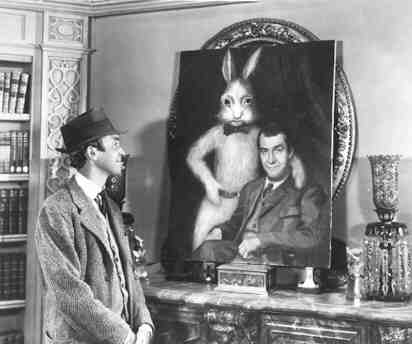
Elwood Dowd admires a painting of himself with the DOE peer reviewer
(Guest post by Greg Forster)
Eduwonk reports that Arne Duncan and his Race to the Top team are discovering just one of the many fun flaws of “peer review”:
A lot of behind the scenes chatter and concern and I’d say even worry that it’s going to be hard to get “Race to the Top” proposal peer reviewers who know a lot about school reform – and proposals like this are complicated. There are a lot of conflicts among the usual suspects. After all, teachers’ unions have to sign on off the applications and can benefit from them so they’re self-interested, most wonks outside of government are helping various states get together ideas and applications, and states themselves are pretty self-interested, obviously. Add on to that the generally meager rewards of peer reviewing in the first place and this issue has a lot of folks chattering about exactly who can do this work in a high-quality way…
So it sounds like the standard they’ve set for themselves is to find reviewers who know a lot about school reform but have no vested interest in school reform. How many people did they think were going to fall into that category?

Anyone? . . . Anyone?
Maybe “peer review” wasn’t really an appropriate rubric for evaluating government grant proposals. Has anyone ever suggested, say, peer review for Pentagon contracts?
But then, if they don’t put some kind of academic-sounding veneer on it, the thoroughly politicized nature of the process will be too embarrassingly transparent.
Of course, when they do “peer review” in academia they have the best of both worlds. The process is just as corrupted by the self-interest of the participants – mostly not in terms of politics but in terms of their desire to promote research that agrees with their own findings and suppress research that might call their own findings into doubt – and yet because the reviewers are professional academics everything is assumed to be done in the interests of scholarship.
1 Comment | politics | Tagged: Andy Rotherham, Eduwonk, Greg Forster, Race to the Top | Permalink
Posted by Greg Forster
School Board Democracy
September 2, 2009
Over at the Education Next Blog, my second blogging home, Peter Meyer has an excellent post about what school board democracy really looks like.
He describes how a gadfly like him could only manage to slip onto the board through a “stealth” campaign. Normally boards are dominated by those backed by current school district employees or other status quo forces. Those with the greatest vested interest in the status quo are the most motivated to turn-out during the intentionally inaccessible school board elections scheduled on off-election days. But the low turn-out also allows a stealth candidate like Peter to get elected every now and then. Don’t worry, now that he’s no longer stealth it’s very likely that a well-funded and organized challenger will unseat him next time around.
Peter then describes how the school board repeatedly blocked his efforts to open up school district decisions to greater scrutiny and public discussion:
And, after being sworn in, they went out of their way to keep me in the dark. If the superintendent recommended hiring a new teacher and I asked to see the candidate’s resume, a motion was quickly made that school board did not want to see said resume. It passed, 6 to 1. When a special board meeting was called to approve $25 million in construction contracts, I asked to see the contracts. “I make a motion that the board does not look at the contracts,” said one of my colleagues. “I second that, said another.” Another defeat, 6 to 1…. My orientation consisted of the board president and superintendent sitting me down and saying, “You’re not getting anything.”
Ahh, democracy in action.
Oddly, Peter’s faith in school board democracy remains unshaken: “There is much debate in policy chambers and think tanks across the country about the value of school boards. I am here to say we need them. And we need more of them. They remain a kind of last hope for democracy, where a rogue can actually be elevated to position of authority, bringing a flashlight –- and, sometimes, a pulpit — to the process.”
I emphasize “faith” because it is hard to understand Peter’s commitment to the value of school boards given his experiences without attributing to him a religious-like devotion to it. In the comments section of his post I objected that his examples support the position that school boards are a dead-end for reformers. Rather than rely on the phony democracy of low turnout and insider controlled school boards, reformers should rely on markets. Yes, we need democracy to set the rules for the markets, but that can be done by state legislatures. We don’t need democratically elected boards to run schools. Charter schools, for example, do just fine operating in markets without democratically elected boards to run them.
I fear that Peter’s committment to school board democracy despite all evidence that should dissuade him of his view is part of our national secular religion of public school. It’s actually more like a cult. We falsely believe that the public school is the foundation of our democracy when in fact our democracy preceded it by more than a century. We wrongly believe that the public school is the main engine of civic progress when we know that public schools were segregated by law for most of their existence. We wrongly believe that public schools are best at teaching political tolerance and other civic values, when the evidence shows that private schools actually serve these public goals better.
Until we shake this cult-like devotion to public schools, expect more education pundits dancing through the airport singing their hare krishna song about the democratic virtues of public schools.
CLARIFICATION — I din’t mean to suggest that Peter is one of those cult members who worship at the true church of the public school. I was just suggesting that these ideas pervade our thinking so that even very sharp reformers like Peter are dragged into praising school board democracy.
5 Comments | politics | Permalink
Posted by Jay P. Greene
Have Fun Storming the Castle!
August 6, 2009
(Guest post by Greg Forster)
Checker Finn, just returned from a vacation during which he apparently read something about the Constitutional Convention, writes on NRO today that “we need a revolutionary refounding” in education. Reformers should direct their efforts toward scrapping the existing education system entirely and creating a new one from scratch.
Think it’ll work? It would take a miracle.
“Can we afford not to try?” he asks at the end. Well, in fact, yes.
Checker either does or does not want reformers to divert effort and energy away from goals that are more gradual, more incremental – in other words, more achievable. If he does, he’s urging us to sabatoge efforts that achieve significant tangible results, in order to join him on a fool’s errand with no chance of success. If he doesn’t, he’s wasting our time with a lot of pointless hot air.
Unless, of course, the Fordham Institute has a holocaust cloak.
But if it does, why didn’t he list that among their assets in the first place?
3 Comments | politics | Tagged: Checker Finn, Chester Finn, Greg Forster, NRO | Permalink
Posted by Greg Forster
The People’s Front of Judea Merges with the Judean People’s Front
July 31, 2009
This item just in from the AP:
Anti-Wal-Mart groups merge
Two union-backed groups that have spent years criticizing Wal-Mart Stores Inc.’s wages and benefits say they’re going to merge.
Wal-Mart Watch, backed by the Service Employees International Union, the United Food and Commercial Workers Union’s WakeUpWalmart.com announced Friday they’ll combine efforts to pressure the world’s largest retailer.
The new group will be called Watch Wal-Mart Wake Up, or something like that. If only they could work on helping Reggie become a woman.
UPDATE: I sit corrected. It was Stan, not Reggie, who wanted to become Loretta and have babies. Thanks to The Minnesota Kid for pointing out my error.
3 Comments | politics | Tagged: Jay Greene, Jay P. Greene, seiu, Walmart | Permalink
Posted by Jay P. Greene

 Jay P. Greene's Blog