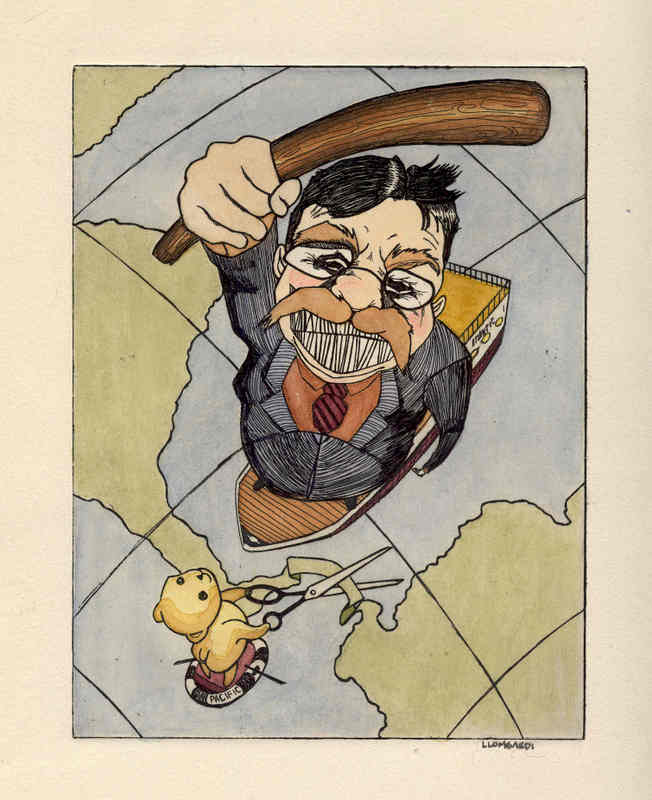
Want to Pass A Local School Tax Increase? Open Charters

November 3, 2008

Here’s a neat piece of research posted at Heny Levin’s National Center for the Study of Privatization in EducationThe study is actually by Arnold Shober and it examines whether the presence of charter schools in a district affects the likelihood that voters will support a local school tax increase. 

It has been getting more and more difficult to obtain local support for school tax increases.  But, Shober wonders, might it be easier to pass a school tax referenda in communities that have more options paid by tax dollars?  Maybe people more satisfied with the quality and diversity of publicly-financed schools, including charter options, are more willing to provide extra tax dollars for all schools.

As it turns out, Shober finds that they do.  He analyzed data from 1,111 school tax referenda in Wisconsin between 1998 and 2005.  He concludes:

“Adding one charter school to the district that has none increases the likelihood of passage 4.1 percent; increasing the number of charter schools from 0 to 8 (the maximum for these data) increases the likelihood of passage 30.2 percent second only to the effect of a college-educated electorate (below). This suggests that charter schools do have some bearing on how votes perceive a school district’s responsiveness to active-parent demands. Indeed, authorizing charter schools is the only variable in this analysis that a school district’s administration could directly manipulate (save the actual ballot request).”

It seems that restricting families’ options and forcing them to attend dirstrict schools whether those schools serve their kids well or not is not the best strategy to get those same families to cough up more dough for the public school system.  People are more likely to be supportive of a public school system that helps them find schools that work for their kids — even if those schools are charters.


Just a Mint? One Mint?

October 1, 2008

(Guest post by Greg Forster)

Great news! Our schools are saved.

Billionaire Eli Broad is spending $44 million to start up a new Harvard center to figure out what’s wrong with public schools.

That’s right; the first $500 billion a year we spend on K-12 education didn’t do the job, but spending another $44 million (not per year but only once) will put us over the top.

Just like that after-dinner mint in the Monty Python sketch, I guess.

Larry Summers will head the center’s board. The Wall Street Journal reports that Summers was asked whether opening the new center was a rebuke to all the other education research centers which have been doing exactly the same thing for decades and have produced no tangible improvements in education to show for it.

Summers replied: “It’s not a rebuke to any individual.”

With respect to the fine people who work at these cushy “education laboratories,” the real education laboratories are the private and charter schools taking advantage of school choice programs to experiment with new approaches to education.

Milton Friedman always used to comment that education is the only thing we still do the same way we did it 100 years ago. Innovation in education has been stifled not because we lack comfortably endowed research centers but because education is controlled by a government monopoly. He would go on to comment that the real innovation in education won’t come until school choice programs are expanded to include all students – because only with universal choice will you get a more robust market that will produce bigger innovations. And once free-market schools begin discovering better educational techniques, others can copy them. Doctors improve care by copying other doctors who devise new and better treatments – and it’s not the doctors who work for the free, government-issue providers who devise new and better treatments, but the doctors who serve the middle and upper classes and have the opportunity to make more money if they provide better treatment.

The best thing we can do for the education of the poor, Milton would conclude, is to extend school choice to the middle class. Schools for the poor can’t improve service until the education sector as a whole figures out how to improve service, and that isn’t going to happen without a universal market.


Good Schools Don’t Reward Students . . . Except When They Do

September 10, 2008

(Guest post by Greg Forster)

Last week I ran a column on Pajamas Media defending the practice of providing students with tangible rewards, including money, for academic achievement. At almost the same time that went live, Fordham’s latest Gadfly came out with a column by Liam Julian attacking the practice.

In his column, Julian wrote that a “recalcitrant youngster . . . requires strict discipline, not bribes. David Whitman’s fine new book, Sweating the Small Stuff, illumines the wonders such discipline can work.”

To start with, I feel perfectly comfortable juxtaposing Julian’s paean to the stick with my defense of the carrot: “To train students at all, you need to motivate them primarily with something that they understand. That means either ‘bribes’ or punishments for failure. Bribes are the more humane option.” I didn’t intend that to mean that there should be no discipline – of course student misconduct requires punishment – but discipline should not be the motivator for success.

Nor is it, I believe, in the schools profiled by Sweating the Small Stuff. I think that in these schools, the real motivator is promising kids they’ll have a better, more prosperous, more successful life if they get with the program. And, as I argued in my column, promising kids prosperity later in life if they study hard now is not really different, in principle, from giving them tangible rewards now. The only difference is the time lag.

More important, I thought Julian’s remark was a little funny, seeing how the “neo-paternalist” schools praised by Fordham’s Sweating the Small Stuff rely so heavily on providing kids with immediate tangible rewards for success. KIPP schools even give kids a weekly allowance, which is reduced if they don’t behave.

I had planned to write a post this morning making this point to Julian. But it appears that Michelle Rhee, whose plan to establish rewards for success in DC is what set off Julian’s original article, has beaten me to it. On Flypaper, Julian writes:

I’m told that Michelle Rhee, who moments ago wrapped up a “Reporter Roundtable” here at the Fordham offices (I knew I noticed a soft glow emanating from our conference room), defended her plan to pay students for right behavior by pulling out the KIPP Card.

Julian is not impressed:

First, let’s make the obvious distinction between KIPP dollars and American dollars, the former being valid tender only at KIPP-operated enterprises that stock wholesome inventory and the latter easily traded for 64-ounce buckets of cola and pornographic magazines. To be clear: There is a not insignificant difference between rewarding 12-year-olds with school supplies and cutting them each month a $100 check (as Rhee’s plan would do), which they can spend on whatever savory or unsavory products or activities they please.

But KIPP dollars are good for more than “school supplies.” For example, kids don’t get to go on big school trips to fun destinations – trips the kids really want to go on – if they haven’t got enough money to pay for it. So Julian isn’t quite playing fair here – KIPP does reward students with things they want.

And that’s not even the real problem. The real problem is that Julian is tacitly conceding the main point he defended in his original article: that kids need discipline, not bribes. Now, apparently, the new line is that it’s perfectly fine to provide kids with tangible rewards for success as long as you do it in the right way.

Well . . . OK then! So much for the position that all these kids really need is a good hard smack of “discipline.” Turns out they need tangible rewards, too. Julian just objects to what kind of reward Rhee wants to give them. That’s a carrot of another color.

Sure enough, Julian goes on to insist that some tangible rewards are “bribes” and others are not:

Second, Rhee’s plan is bribery and KIPP’s is not. To be clear: Rhee’s plan is engineered such that D.C. pupils who habitually miss class and refuse to do their work may, encouraged by offers of payment, deign to act as they already should. At a KIPP school, a consistent truant who balked at books wouldn’t be paid, wouldn’t be bribed—he’d be disciplined and maybe expelled. KIPP uses its KIPP Dollars as rewards for the good behavior that is already expected, not as an incentive to generate such behavior that wouldn’t otherwise be present. KIPP Dollars are simply one reminder among many to pupils that they shouldn’t act out, that they should be conscientious and decorous.

So rewards are not bribes when they are used to reward good behavior, but they’re bribes when they are used to reward the absence of bad behavior? I’m afraid Julian is simply manipulating the definitions of words in order to bring his condemnation of “bribes” into conformity with his praise of “neo-paternalism.” But you can’t redefine your way out of a flat contradiction. Obviously KIPP schools (and not only them) provide tangible rewards as a motivator. If this is OK with Julian, he should stop talking about “bribes” as though he had some kind of principled, across-the-board case to make against motivating students with rewards, and instead frame his case in terms of what kinds of rewards are acceptable in what kinds of situations.

Moreover, in a public school system where the kids have not chosen to be there, you don’t have the option of simply expelling everyone who doesn’t fall right into line. Obviously this is yet another argument for universal vouchers (if more arguments were needed), and someday when all students can choose where to go to school, schools (including government schools) will be able to demand more from the students who go there. But until that day comes, Rhee has to work with the system she’s got. Telling her to just do things the way KIPP does them is not a serious option for public schools.

Let me put that another way. In his original article, Julian said that rewarding students for showing up and behaving themselves is inappropriate because school attendance is supposed to be compulsory. Now he’s praising KIPP schools for expelling students if they don’t show up and behave themselves. Well, does he think public schools should start doing that? If so, then attendance at public school would no longer be compulsory, would it?

Does Julian really think that our approach to kids who don’t currently want to show up and behave themselves should be to tell them to stop showing up? If not, what does he propose to do to change their motivation, if not rewarding them for changing their behavior?

What this all really comes down to is the difference between coercion and choice. You can change people’s behavior by offering them something they want in return for doing what you want, or else by brute force. In terms of both effectiveness and ethics, rewards beat brute force eleven times out of ten.


PJM on Merit Pay in D.C.

September 8, 2008

(Guest post by Greg Forster)

Today, Pajamas Media carries my column on Michelle Rhee’s push for a limited, voluntary merit pay system in Washington D.C.:

To see how much has changed, just consider the amazing fact that about one out of every three public-school students in D.C. attends a charter school — government-owned but non-unionized, privately operated, and (most important of all) chosen by parents — instead of a regular public school. “We lost 6,000 students last year,” says Parker, referring to the number of students who moved from regular schools to charters. Six thousand students is over 13% of the city’s remaining enrollment in regular public schools — in one year.

Rhee isn’t the force behind charter schools or vouchers in D.C. She’s in charge of the regular public system. But the same widespread mandate for reform that made charters and vouchers successful have allowed Rhee to succeed with reforms like closing schools that were only there to create patronage jobs, introducing curriculum innovation, and taking on the unbelievable amount of bureaucratic waste in the system. And as vouchers and charters have sent a message that the system can’t take students for granted any more, the pressure for reform has only increased — strengthening Rhee’s hand.

By coincidence, the Washington Post‘s Marc Fisher has a column today emphasizing how the explosion of charter schools in D.C. was decisive in bringing the unions to the bargaining table, even on the issue of reforming the structure of teacher pay. Just as competition from globalization forced the private sector unions to start the long, slow process of giving up the ridiculous extravegances that they won from management in the 1960s and 1970s, thus rescuing the American economy from disaster, now competition in schooling is forcing the teachers’ unions to start the same process of giving up their own ridiculous extravegances – the biggest of all being a system of hiring, firing and pay that bears no serious relationship to job performance.


Denial Isn’t Just a River in Middle Earth

August 20, 2008

(Guest Post by Matthew Ladner)

Goldwater Institute Economist Byron Schlomach and I coauthored this piece about the need for state policy innovation in last Sunday’s East Valley Tribune:

Economy on Edge

Director Peter Jackson began his “Lord of the Rings” saga with an ominous message: “The world is changed. I feel it in the water. I feel it in the earth. I smell it in the air,” Cate Blanchett darkly says. “Much that once was … is lost.”

We have the same sense of foreboding when considering Arizona’s unresolved budget crisis, without the Hollywood ending. Arizona has been fortunate to have a vibrant economy and falling poverty rates, but a series of bad policy decisions now puts this at risk.

Arizona has seen booms and busts in state revenues before. Old Capitol hands have what some regard as a tried-and-true method for dealing with recession: borrow money, resort to accounting gimmicks, and pay back accounts on the rebound.

Lawmakers tried this again with the most recent budget, but it may not work this time. Arizona’s economy may have reached a tipping point.

HARD TIMES ARE HERE

Two important factors make the current situation different. First, the nationwide housing bust has slowed the migration of people to Arizona from other states. It is hard to move when you can’t sell your house, and it shows in the economic statistics.

University of Arizona economist Marshall J. Vest recently wrote that Arizona homebuilding is experiencing one of the sharpest corrections on record, consumer spending is in full retreat, and “measure after measure of economic activity is at recessionary levels.” With fewer new residents moving in, fewer new houses need to be built, and fewer new taxpayers are contributing to government coffers.

Second, Arizona lawmakers have spent several years increasing spending in a way that would make a drunken sailor blush. Despite a 39 percent increase between 2005 and 2007, the recent budget reduced General Fund spending by only 3 percent.

Hard times are here, and a combination of legislative actions and proposals on this year’s ballot could make matters worse. The Legislature effectively decided to raise property taxes this year by failing to extend the 2006 repeal of the state property tax. One ballot initiative seeks a 17.8 percent increase in the state’s sales tax to pay for roads, bike paths and mass transit. Raising taxes is almost always a poor economic idea, but especially so during an economic downturn.

Another ballot initiative seeks to keep the state from selling hundreds of thousands acres of state trust land. This proposal will not only cost the state future revenue, but will also kick the housing industry while it’s down.

Without land available to build new communities, homebuilding won’t have the opportunity to contribute to our economy like it has in the past.

If economic growth manages to return to historical averages despite all of this, lawmakers have already allocated the revenue. This year’s $200 million in new borrowing, along with voter-approved automatic annual program increases of $600 million, more than eat up the $700 million in annual revenue growth.

CALL FOR CREATIVITY

If we get creative, we can address these challenges. The state spends hundreds of millions of dollars each year building new schools. Charter schools, however, make up nine out of the top 10 high schools in the greater Phoenix area and receive no funding for buildings. Why not have a moratorium on new school construction, and encourage school districts to authorize new charter schools when they need additional seats?

Furthermore, Arizona has allowed thousands of private school seats to sit unused while piling up billions in district school construction debt.

Businesses would be willing to pay the state for the privilege of building new highways in exchange for the opportunity to collect tolls on those roads. Letting the private sector pick up the tab for new road building would turn a current cost into a source of revenue for the state.

State revenues boomed during the property bubble, and policymakers established new spending baselines as if this temporary boom was permanent. As this fantasy comes crashing down, they have raised taxes and added to the state’s already high debt.

The need for innovative and courageous leadership has never been greater. Unless we recognize our changed situation, much that once was great about Arizona may indeed be lost.


Fear and Loathing Abates in Carson City

August 14, 2008

(Guest Post by Matthew Ladner)

Back in the misty origins of the JPGB (okay a few months ago) I posted on the Nevada Board of Education’s absurd 8-0 vote to impose a moratorium on the approval of new charter schools. Board members told the press that the freeze was necessary because the state Education Department is being “overwhelmed” by 11 charter applications.

Arizona’s State Board for Charter Schools oversees 482 Arizona charter schools with a staff of 8. Nevada has 22 charter schools. Somehow, Nevada taxpayers manage to fund a board overseeing hair salons with 14 full time employees. In addition, the Nevada legislature created a funding stream for charter school oversight of 2% of the per student funding. Charter school oversight would be self-funding if they would, ahem, approve some applications.

Now comes the happy news that that the Nevada Board of Education has voted 6-2 to lift the moratorium. Congratulations to the Nevada Policy Research Institute and other Silver State charter supporters who fought the decision.


The Establishment Mindset

June 16, 2008

(Guest post by Jonathan Butcher)

In education policy, as with any policy area, when discussion turns to reform, there are some basic questions: what are the problems that need fixing?  Who are the interested parties—what is at stake?  Should the change come from the bottom up or from the top down?  Is it raining?  Did I leave my car’s top down?  Do I own a convertible?

Actually, those last few questions only come up if the discussion is taking place inside a government building in Washington because, as everyone knows, there is no place to park in Washington.  So if you left your top down and it starts to rain there is no way you will make it back to your car in time to put it up.  You probably had to park in a metro lot in some swanky Northern Virginia suburb where gas cost $5 before the recent spike in oil prices and there are more Lexus LX’s per capita than any place in the world.  

Change to large systems such as public education can be frightening—but it is often simply because the ideas are misunderstood.  Take a story in the Washington Post last week about charter schools in Louisiana, for example.  New Orleans is now the first city of its size where more than half of the students attend charter schools.  Certainly this is a drastic change: 

“For these new schools with taxpayer funding and independent management, old rules and habits are out. No more standard hours, seniority, union contracts, shared curriculum or common textbooks. In are a crowd of newcomers — critics call them opportunists — seeking to lift standards and achievement. They compete for space, steal each other’s top teachers and wonder how it is all going to work.”  

Hold the phone!  Replacing a system the Post said had a “dismal record and faint prospects of getting better” with new management and scrapping portions of the old system that helped drive it to such a dismal state?  And using public dollars to create this change?  This sort of reform hasn’t happened since…well maybe it was…let me get back to you.

Critics of this change offer a revealing look at the establishment mindset.  One critic charges that “Louisiana school authorities have ‘opened a flea market of entrepreneurial opportunism that is dismantling the institution of public education in New Orleans.’”  Note that this quote uses the word “entrepreneurial” and the idea of taking apart New Orleans’ public education system as though they are bad things.  Well yes, please, bring back union contracts, students sure missed them.  

These charter school operators are “opportunists” in the sense that they are taking advantage of an opportunity to open schools for children whose lives were throttled by Katrina.  One charter school was open for business six weeks after the storm hit, while a public school bureaucracy with more levels than Halo 3 was still looking for its PlayStation.  These charter schools are actually competing for talented teachers in an effort to make the best educational opportunities possible available to students―compare that to an establishment mindset that wistfully refers to the days of payscales.

There are sure to be some challenges for these new charter schools, and as with any change in public policy, the results may be less than perfect.  But students in New Orleans deserve something better than an otherwise “dismal” record.


The Way of the Happy Warrior

May 30, 2008

(Guest Post by Matthew Ladner)

Last week, I gave a commencement speech for the BASIS middle school. Newsweek recently named the BASIS Tucson the nation’s top high school. Charter schools took 10 out of the top 100 spots, which is far out of proportion with their numbers.

I had no idea of what to talk about, so I researched commencement speeches on the internet. There seemed to be two models: first you can quote a philosopher and give advice. Second, you can talk about whatever happens to be on your mind.

I chose model 1. For my philosopher quote, I used this nugget that I have seen attributed to Zen Buddhism:

The Master in the Art of Living makes little distinction between his work and his play, his labor and his leisure, his mind and his body, his education and his recreation, his love and his religion.

He hardly knows which is which.

He simply pursues his vision of excellence at whatever he does, leaving others to decide whether he is working or playing.

To him he’s always doing both.

When I first saw that quote, I said to myself “WOW- that’s what I want to be when I grow up!”

Let’s face it though, I’m not in much danger of growing up, so it remains only an aspiration for me.

The quote however perfectly describes my colleague at the Goldwater Institute Clint Bolick. The magazine Legal Times recently honored Clint in compiling “The 90 Greatest Washington Lawyers of the Last 30 Years” to mark the magazine’s 30th anniversary. The list honored attorneys for upholding the legal profession’s core values and “fighting to expand liberties and protect civil rights.”

Congratulations to Michael and Olga Block and their BASIS team, and the other charter schools making the list. Congratulations also to Clint, the only person I know getting lifetime achievement awards at the age of 39 (Ok, 39ish) and happily spending his time doing what he loves- suing bureaucrats.


Catholic Schools Can Survive

May 15, 2008

(Guest Post by Matthew Ladner)

The Thomas B. Fordham Foundation recent presented a study of the future of inner city Catholic schools reached mostly dreary conclusions. Catholic schools face a number of problems, but there is a bright spot that Fordham missed where Catholic schools are flourishing, even the inner city schools: Arizona.

I began to investigate the state of Catholic schools in Arizona when Education Next published the article “Can Catholic Schools Be Saved?” This article posed the provocative question: Will charter schools finish off inner city Catholic private schools? Preliminary evidence suggests that charter schools are actually threatening to help close inner city Catholic schools. A RAND Corporation study focusing on the impact of charter schools in Michigan found that private schools were taking a bigger hit from charter school competition than public schools on a student for student basis. “Private schools will lose one student for every three students gained in the charter schools,” the study concluded.

Ronald Nuzzi, director of the Alliance for Catholic Education Leadership Program at the University of Notre Dame asserted that charter schools “are one of the biggest threats to Catholic schools in the inner city, hands down. How do you compete with an alternative that doesn’t cost anything?” Inner-city Catholic schools are in a deep and tragic crisis, especially in Michigan. Sadly, Michigan’s constitution essentially forbids private school choice of any sort, and the Diocese of Detroit has witnessed a 20 percent decline in enrollment since 2002 and currently faces another round of school closures. Overall, 29 Diocese of Detroit schools have already closed.

A fully scaled system of charter schools for inner-city areas may represent an existential threat to inner-city Catholic schools already struggling with the loss of religious staff and the movement of parishioners to the suburbs. In many inner city areas, Catholic schools have been the only high performing schools for decades. Catholic schools have an especially strong record in successfully educating disadvantaged students and sending them on to college. It would be tragic and absurd to help drive these schools out of business by publicly funding student attendance to both public and charter schools, but not to private schools.

Writing in the Journal of Catholic Education, I detailed a more hopeful example than Michigan: Arizona. Total charter school enrollment is 12.5 percent higher in Arizona than in Michigan, despite the fact that Michigan’s population is far larger than Arizona’s. Arizona, however, has two factors working for it that Michigan does not. Arizona has both a growing student population and private school choice programs (two tax credit programs and two voucher programs).

Catholic education is anything but wilting in Arizona. Between 2004 and 2006, schools in the Diocese of Phoenix saw a two percent increase in enrollment against a national decline. Two new Catholic schools opened in the 2006-2007 school year, with four more scheduled to open. Marybeth Mueller, superintendent of Catholic schools for the Diocese of Phoenix stated that the tax credit program has been “critical to keeping financially struggling families in the Catholic school system.” The tax credit programs provide about half of the states Catholic school students limited financial assistance.

Arizona private school attendance has increased outside of the Catholic schools as well. Despite the opening of hundreds of charter schools, the percentage of Arizona children attending private schools increased by 23 percent between 1991 and 2003, according to the National Center for Education Statistics.

Parents must pay public school taxes even if they do their fellow taxpayers the service of placing them in a private school at their own expense. If parents decide to seek an education they find a private for their children, they effectively pay twice- once when they pay taxes, another when they pay tuition and fees. Both tax credits and school vouchers can reduce this double payment penalty, expanding access to private schooling. In the process, competition will improve the performance of public schools by expanding competition for students, and (in states like Arizona) reduce public school overcrowding.

Arizona and Michigan have both enjoyed the large benefits of charter schools. The starkly different trends in private schooling suggest strongly that choice supporters must redouble their efforts on the private choice side.


Fear and Loathing in Carson City

May 8, 2008

(Guest Post by Matthew Ladner)

I authored a study released by the Nevada Policy Research Institute this week on the Silver State’s education system. Nevada’s education system must address two urgent problems: an ever-growing quantity of students and the low average quality of schools. In spite of these problems, Nevada’s State Board of Education has moved to clamp down on a reform which could help with both problems: charter schools.

Between the year 2000 and the year 2005, Nevada’s school age population increased by 21 percent. This decade began with about 340,000 school age children, but will be nearing 550,000 by 2016.

Nevada is struggling to keep up with these demands. Nevada’s public school spending going for capital outlay in 2003 was over 40 percent higher than the national average on a per pupil basis.

Nevada’s school quality issue represents an even more serious problem. According the Nation’s Report Card from 2007, 43 percent of Nevada 4th graders scored “Below Basic” in reading.

Research shows that children who fail learn basic reading skills in the early grades very often fall further and further behind grade level with each passing year. Moving into middle school, they can scarcely read their textbooks. They begin dropping out in larger numbers in 8th grade.

In other words-the Nevada dropout class of 2015 is moving through the pipeline.

Nevada’s quality and quantity problems are interrelated. The need to construct new public school facilities ultimately draws educational funds out of the classroom. Likewise, the percent of per pupil funding going to service school debt was over sixty percent higher in Nevada than the national average.

A comparison between Nevada and its neighbor, Arizona, however proves that there are solutions to both the quantity and quality problems. Like Nevada, Arizona’s surging population has required a large increase in the supply of schools.

Despite similar rates of enrollment growth, Nevadans spent almost twice as much per student on capital costs as Arizonans in 2003-$1,468 compared to only $776 per pupil in Arizona. Arizona’s interest payments per pupil were also about half of what is paid in Nevada.

How has Arizona managed to manage its quantity problem so much more successfully than Nevada?

In 1994, Arizona lawmakers passed legislation creating choice between public schools and districts, and also one of the nation’s most liberal charter school law.

In 2007, Arizona has 482 charter schools educating over 112,000 children. Arizona charter schools have proven to be extremely diverse- focusing on everything from the arts to back to basics academics to the veterinary sciences.

In addition in 1994, Arizona lawmakers passed a very robust open enrollment law which thousands of students use to transfer between district schools and between school districts.

In 1997, Arizona passed the nation’s first scholarship tax credit law. This program gives individual taxpayers a dollar for dollar credit against state income tax for donations to nonprofit groups giving private school scholarships. In 2007, this program raised $54,000,000 and helped almost 25,000 students attend 359 private schools around the state. Arizona lawmakers created three new private choice programs in 2006.

Arizona’s ability to keep capital costs below the national average came about largely because of this embrace of parental choice in education. Choice options have relieved the need for Arizona’s school district to incur debt in the process of absorbing the increase in the student population.

What has parental choice done for school quality in Arizona? Charter schools comprise an amazing nine of the top 10 publicly funded high schools in the greater Phoenix area. The lone non-charter school on the list is a magnet school, also a choice based school.

Nevada, by comparison, has been hesitant in expanding parental options. In the five states surround Nevada (Arizona, California, Idaho, Oregon and Utah) and these states have 482, 710, 30, 81 and 60 charter schools respectively, collectively educating hundreds of thousands of students. With only 22 charter schools, Nevada is the tortoise of the region.

On November 30 of 2007, the Nevada Board of Education voted 8-0 to impose a moratorium on the approval of new charter schools. Board members told the press that the freeze was necessary because the state Education Department is being “overwhelmed” by 11 charter applications.

Arizona’s State Board for Charter Schools oversees 482 Arizona charter schools with a staff of 8. Nevada’s board overseeing cosmetology currently has 14 full time employees.

In addition, the Nevada legislature created a funding stream for charter school oversight of 2% of the per capita funding. Nevada policymakers must come to recognize the dire need for new high quality schools. Currently, even ultra-high quality charter school operators like KIPP are frozen out of opening schools. If those top 10 schools from Phoenix wished to replicate their success in Nevada, they would be shut out, an absurd denial of opportunity for children.

Nevada policymakers should loathe the status quo and fear the future unless they can radically improve learning, especially for the state’s rapidly growing Hispanic population. They shouldn’t fear or loathe charter schools.