
Creative Destruction in Public Schooling

March 9, 2009

(Guest Post by Matthew Ladner)

The Center for Education Reform released The Accountability Report – Charter Schools today. Lots of interesting information about the state of the charter schooling movement, including state by state information. For example, my state of Arizona has 510 charter schools operating, but since the charter law passed here in 1994, 96 Arizona charter schools have closed.

I suspect that some of those 96 schools never actually opened, but that is okay. Let’s face it, there are district schools we wish we had never had open as well, based on their long track records of abysmal test scores.

One out of five new school closing may not be the cold howling wind of the market for restaurants, but it is something. Creative destruction and competition for students provides focus, which helps to explain why 9 out of the top 10 public high schools, as ranked by their reading scores, in the greater Phoenix area are charter schools. Check it out for yourself here.

Plenty of interesting information in the report, well worth a look.

UPDATE: Kara Hornung Kerwin of CER, the first and only woman to ever have a bachlorette party thrown on her behalf by a group of education policy geeks in Jackson Hole Wyoming, wrote me to say that in fact all 96 of those schools opened and closed. The school market is a bit more savage than I thought.

Notice the titles here and with the recent Fordham Report on standardized testing. The Accountability Report-Charter Schools vs. The Accountability Illusion.

Things that make you go hmmmmm…..


Andy’s Just Plain Wrong

March 5, 2009

Andy Rotherham is a great guy.  And he’s often right.  But I’m afraid that on vouchers he’s just plain wrong.

Andy responded to my post, which was a response to an earlier post he wrote on vouchers.  Let me just run through his arguments:

First, Andy wants to argue that vouchers have stalled politically.  I pointed out that there are now 24 voucher or tax-credit programs in 15 states serving more than 100,000 students.  And two new programs were adopted last year and a third significantly expanded. 

No fair, Andy cries, including tax-credit programs “creates a false sense of scale for intentional choice plans.”  What’s false about counting tax credit programs, like the one in Florida which functions as the largest voucher program in the country?  The program gives vouchers — excuse me — “scholarships” to students from organizations that are funded with dollar for dollar tax credit donations from corporations.  This is virtually identical in financing and effect as the state simply giving vouchers to students.  The only difference is that the tax credit is treated better by the courts (don’t ask why) because the money never enters the state treasury before going right back out the door as a voucher.

But let’s say we grant Andy his odd position that tax-credit programs don’t count.  We still have 13 voucher programs in 10 states serving about 50,000 students.  And the two new programs adopted last year were both voucher programs.  Wish as he might, Andy still can’t show that vouchers have stalled politically.

Second, Andy rightly says, “Reasonable people can review the cumulative literature about choice plans and disagree on how substantively significant or transformative these effects are (or could be at scale) and what that means for vouchers as a policy. ”  While reasonable folks could disagree about the magnitude of the effect of expanded school choice on public school performance, no reasonable person could disagree with the observation that the research literature supports at least some positive impact.  Given how hard it is to find any policy intervention that raises student achievement, consistently finding a positive impact from the systemic effect of vouchers should be treated as a big deal.  It isn’t to Andy. 

Third, Andy concedes that the more frightening prospect of vouchers helped spread charters, at least in the early stages of the charter movement.  But now that charters have reached critical mass, they may well do just fine without the viable threat of new and expanded voucher programs.  Folks who are really sincere about charters shouldn’t get so comfortable.  Just look at the unionization of the KIPP charter in NY or the constant effort to regulate charters to death in many states.  Dropping vouchers from your arsenal would be like confronting a resurgent Russia after dismantling all of your nuclear weapons.  You may think your conventional forces are up to the task, but ask the Poles how they would feel about it.

I’ve never understood why people would support charters but oppose vouchers.  The theory that expanded choice is good for the participating student and helps spur improvement in traditional public schools is required for both reforms.  Yes, charters are more easily subject to regulation than private schools receiving vouchers, but healthy charter programs require light regulation and states have not been shy about applying similar light regulation to voucher programs. 

The only reason I can imagine that folks would support charters but oppose vouchers is for political gain since the theory and evidence for both are essentially the same.  And I understand why politicians invent these false distinctions to prove their moderation and good sense by opposing the one they artificially dub as radical.  But we aren’t politicians.  We don’t have to lie or invent false distinctions to please constituencies.  Universities, think tanks, and the blogosphere should be refuges for reasoned inquiry and dispute, not rhetoric for political advantage.  As it says on the great seal — Veritas.

UPDATE — Andy’s a nice guy.  I tried to make my post as hyperbolic as possible and he responds kindly and reasonably.  Damn, he’s good.

UPDATE TO UPDATE — Just to be clear, I still think Andy is just plain wrong.  The fig leaf that Andy uses to be pro-charter while anti-voucher is the concern that vouchers sever “the connection between avenues of democratic input into schooling decisions and those decisions.   In other words, for some people the issue isn’t choice, rather it’s accountability in a broad sense.”  The reality is that there is as much opportunity for democrat input in the  design and operation of voucher programs as charter schools or traditional public schools for that matter.  The public can place whatever regulations it deems necessary on voucher schools as a condition of receiving those funds, just as it does with charter and traditional public schools.  Of course, all of these systems would operate best with minimal regulation.  If regulation were the answer to school effectiveness our public schools would already be fantastic.


Beltway Confusion

March 3, 2009

(Beltway edu-analysts discuss the world over brandy and cigars.  Note where they are headed.)

I feel sorry for my education colleagues within the DC Beltway.  I don’t know if it’s all those wine and cheese receptions or box lunch lectures that addle their brains, but they are clearly confused.  They confuse political analysis for research.  And they confuse their political preferences for political analysis. 

Look, for example, at the recent post by my friend Andy Rotherham at Eduwonk on vouchers, which states:

“Now, paradoxically, the school choice experience since the early 1990s has lessened the allure of vouchers as a scalable education reform but at the same time made these smaller “pilot” type initiatives like the one in D.C. seem less toxic and more harmless among an increasing number of players.   Opponents don’t even really have a slippery slope to point to in any of the early adopter sites for vouchers.  There’s not one in D.C.  There it’s the public charters not the vouchers that are taking over and not in the other cities/states, even Milwaukee, where vouchers have been tried and the effects have been modest.  In other words, vouchers are not destroying the public schools.  Rather, systemically, they’re not really doing much of anything at all.”

Andy concludes that “systemically” vouchers aren’t “much of anything at all” because they aren’t expanding very rapidly.  This is a political analysis on the appeal of larger voucher programs, not a summary of research on the effects of vouchers on public school achievement.  If Andy had wanted to talk about the research on the systemic effects of vouchers he would have referenced this literature, which clearly shows that expanding choice and competition through vouchers improves public school performance.  So, Andy substitutes political analysis for research.

But he also substitutes his political preferences for political analysis because he ignores the steady growth in vouchers over the last two decades.  There are now 24 voucher or tax-credit programs in 15 states serving over 100,000 students.  Just last year two new programs were adopted, in Georgia and Louisiana, and the tax credit program in Florida was significantly expanded.  Andy may wish the voucher movement to be stalled, but a clear political analysis would reveal that vouchers continue to move forward.

Now, it’s true that there have been setbacks in the voucher movement.  And it’s true that each new program encounters a blizzard of opposition, making each step forward seem inordinately difficult.  But vouchers are just the spearhead of a broader choice movement that includes the more rapidly expanding charter movement.  If not for the viability of voucher programs, charters would have been the target of this onslaught of opposition. 

Vouchers have made the world safe for charters.  And the moment that vouchers really do stall, the enemies of school choice will redirect their fire at charters, strangling them with regulation and repealing charter gains.  To say that vouchers haven’t really done much of anything politically because charters are really where the action is ignores how much charters owe their political strength to the credible threat of new and expanded voucher programs.

It may be fashionable at Beltway receptions to dismiss vouchers as everyone is eager to be seen as championing the latest DC fad proposal.  But real analysis of research and politics show that the expansion of school choice, led by vouchers, will have a greater impact on education reform than building new school buildings, expanding pre-school, adopting a 21st century curriculum or whatever folks there are now talking about.

(edited for typos)


KIPP RIP Continued

February 18, 2009

You…administrator…bastards…still…can’t…fire me!!!!

(Guest Post by Matthew Ladner)

Leo over at EdWize asks “What is it about teacher voice that so frightens the denizens of the far right, that even the prospect of democratic teacher input into decision-making in the educational workplace should be met with such rhetorical ferocity?”

Two words: RUBBER ROOM!

UPDATE: Now Leo disavows any union responsibility for the rubber room. Ohhhhhhh sure…he’s shocked SHOCKED to hear someone suggest that the union’s making it prohibitively expensive  to let a teacher go has anything to do with the rubber room. Round up the usual union baloney and meet me at EdWize…


KIPP RIP

February 11, 2009

(Guest Post by Matthew Ladner)

As I’m sure you’ve heard by now, two KIPP schools in New York have had a majority of their teachers vote to unionize under a card check type provision. New York Times story here.

Andy Rotherham attempts to downplay the whole incident. Nice try Andy, but forget about it. KIPP should pull the plug on these schools at the end of the school year, burn down the buildings and plow salt into the ground upon which they once stood. This would be tragic for the people that no doubt worked very hard to bring these schools to life, but let’s face it, their efforts would be much better rewarded in other states.

The whole idea of running a KIPP academy along with a thousand page union contract is absurd. Half-days on Saturday? Not on your life. On call to help with homework? Are you kidding? KIPP has earned many donors, but can they afford a rubber room? Need to change a light bulb in your classroom? Page 844, paragraph 5 clearly states that you must call a union electrician. You kids sit quietly with your heads down in the dark until he arrives. It will be any day now.

KIPP has a methodology and a hard earned brand to protect, and there are plenty of other kids in other states to help. If Congress is misguided enough to pass a national card check, it will be up to individual states to ban the practice. Those that do may find themselves rewarded by the opening of some very high quality schools.

UPDATE Andy has posted a hopeful reply that the first generation of union agreement with KIPP may be benign due to the threat of closing the school, which he views as a PR nightmare. The unions seems nigh immune to bad PR to me, and the best way to get leverage is to display your willingness to use it. Let’s see how events unfold.


Buildingpalooza

February 11, 2009

fancy-church  shack

An underfunded regular public school; a money-draining charter school

(Guest post by Greg Forster)

I can see that school buildings are going to be a big topic for us for the foreseeable future. There’s the feds’ desperate need to blow money on something, anything, in the “recovery” bill (they’re no longer even bothering to call it a “stimulus” bill, apparently). And Jay’s post on school construction last week generated some interesting conversation in the comment thread.

Then last week opponents of the bill had a lot of fun spotlighting its provision of $89 million for school construction in Milwaukee, despite the fact that Milwaukee has had major enrollment declines leading to lots of empty and “underused” buildings, its buildings are deemed to be in good condition, the city has no plans for any construction projects, and just last year it had a major scandal centering around the waste of tens of millions of dollars in construction funding.

But here’s something I don’t think anyone outside Milwaukee has highlighted yet. In the Milwaukee Journal Sentinel’s story on the funding, somebody at the paper (presumably a bemused editor) inserted the following subtitle above a section of the story:

What is “Construction”?

Somebody get Socrates on the line, because it’s a good question. As a commenter pointed out on Jay’s post last week, once money goes into the system, we can’t be sure what it really gets spent on. We know how much money was budgeted for “construction,” but typically there’s nobody checking to see what was actually bought with those “construction” funds.

Sure enough, the Journal Sentinel quotes a state Democratic spokesperson saying that all of that yummy yummy swag for “school construction” could legitimately be spent on “school modernization.”

Next month’s headline: “What is ‘School Modernization’?”

Do these sound like conditions under which the money will be spent wisely? And don’t kid yourself that Milwaukee is somehow a special exception, and the stimulus money is going to be well spent elsewhere.

Suppose you don’t believe the vast mountain of empirical research that Jay cited last week. Let’s just drop all that science into the toilet bowl and flush. Even so, can anyone believe that money will be well used when it’s handed over to a system that has no real transparency, much less effective oversight, never mind accountability for results – and that is run by people who also just happen to derive political power by diverting school funding into an enormous gravy train of featherbedding, pork, etc.?

If we’re dumb enough to hand over the money under those circumstances, why would they not divert it to the gravy train? I’m amazed the schools in the government monopoly system aren’t even worse than they are.

But wait. There’s yet another school building story on the horizon. This one broke out in the edreformblogosphere just yesterday.

stlouisarch

They built it with surplus “school construction” money

Like Milwaukee and pretty much every other city, St. Louis has long-term declining enrollment, but that didn’t stop it from pouring tons of money into school construction over the past few decades. Now St. Louis has a bunch of empty school buildings it needs to unload, so it’s going to sell them off.

But not everyone is allowed to bid on the empty school buildings. Joanne Jacobs puts it succinctly: “The school board has banned sales of buildings to liquor stores, landfills, distilleries, sex shops and charter schools.”

Read that again: Liquor stores, landfills, distilleries, sex shops and charter schools.

Not much more to say, is there? Charters are the one sector of the government-owned education system that is 1) growing fast, 2) willing to take on the most disadvantaged, toughest-to-teach kids, and 3) producing improved results, and they do it with less money – especially less construction money! – than the regular system. But they aren’t allowed to buy – not take for free, but buy, as in purchase at market value, by paying actual money – the city’s empty buildings.

drive-thru-liquorlandfill

distilleryPT006149

Some typical St. Louis charter schools

I’m with Matt – if the system’s defenders don’t realize they’re destroying millions of children’s lives in order to funnel money to a corrupt gravy train, it’s only because they don’t want to know.


The Growing Charter School Consensus

January 15, 2009

A string of high quality studies is finding that students benefit academically from attending a charter school rather than a traditional public school. 

First we had a random-assignment study of Chicago charter schools by Caroline Hoxby and Jonah Rockoff that found “that students in charter schools outperformed a comparable group of lotteried-out students who remained in regular Chicago public schools by 5 to 6 percentile points in math and about 5 percentile points in reading.” 

Then Hoxby conducted a random-assignment study of charter schools in New York City and found: “that the average effect of the charter schools on math is 0.09 standard deviations for every year that a student spends in his or her charter school. The average effect on reading is 0.04 standard deviations for every year that a student spends in his or her charter school.” 

Then Kevin Booker (Mathematica), Tim Sass (Florida State), Brian Gill (Mathematica), and Ron Zimmer (Rand)used a well-designed instrumental variable analysis to see whether charter middle-schoolers who continue to charter high schools are more likely to graduate.  They are. 

And most recently a random-assignment analysis of charter schools in Massachusetts led by Tom Kane at Harvard and Josh Angrist at MIT found that charter school students accepted by lotteries significantly outperformed their counterparts in traditional public schools, unless the charter school was operated by the teacher unions.

In light of these high quality studies, it is harder to oppose charter schools on a scholarly basis.  And with the clear support of charters from the incoming Obama administration, it is getting harder to opposed charter schools on a political basis — at least at the national level.

But don’t expect to see the teacher unions waving a white flag despite their losses in research and national politics.  They don’t need facts or the support of the US Department of Education so long as they continue to dominate local school politics. 

And that is exactly why they have focused on organizing local charter schools to neutralize the threat to their grip on local school politics.  As my colleague Marcus Winters writes today in the New York Post, the unions managed to organize two successful charter schools in New York City.  The fact that union-run charter schools in Massachusetts trailed the non-union charters in performance is not of concern to the unions.  It isn’t about student achievement; it’s about keeping their hold on power even as the facts pile up against them.


Charters Work, Unions Don’t

January 7, 2009

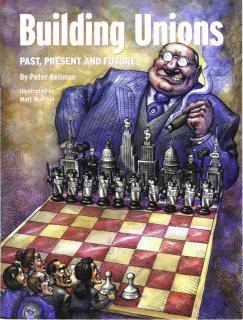
building_unions

(Guest post by Greg Forster)

On Monday the Boston Foundation released a study by researchers from Harvard, MIT and Duke, examining Boston’s charter schools and “pilot” schools using a random assignment method (HT Joanne Jacobs).

Pilot schools were created in Massachusetts in 1995 as a union-sponsored alternative to charter schools, which came to the state a year earlier. Pilot schools are owned and operated by the school district. Like charter schools, pilot schools serve students who choose to be there (though it’s easier to get into a charter school than a pilot school; see below). Like charter schools, pilot schools have some autonomy over budget, staffing, governance, curriculum, assessment, and calendar. Like charter schools, pilot schools are regularly reviewed and can be shut down for poor performance.

There are two main differences between charter schools and pilot schools. First, the teachers’ unions. Pilot schools have them, and all the shackles on effective school management that come with them. Charter schools don’t.

Second, some pilot schools are only nominally schools of choice, not real schools of choice like charter schools. Elementary and middle pilot schools – which make up a slender majority of the total – participate in the city’s so-called “choice” program for public schools, and thus have an attendance zone where students are guaranteed admission, and admit by lottery for the spaces left over.  So while on paper everyone who goes to a pilot school “chooses” to be there, some of them will be there only because the city’s so-called “choice” system has frozen them out of other schools. The students compared in the study are all lottery applicants and are thus genuinely “choice students” – they are really there by choice, not because they had no practical alternatives elsewhere. However, the elementary and middle pilot schools are not “choice schools.” (Pilot high schools do not have guaranteed attendance zones and are thus real schools of choice.)

The Boston Foundation examined two treatment groups: students who were admitted by lottery to charter schools and students who were admitted by lottery to pilot schools. The control groups are made up of students who applied to the same schools in the same lotteries, but did not recieve admission and returned to traditional public schools.

As readers of Jay P. Greene’s Blog probably know already, random assignment is the gold standard for empirical research because it ensures that the treatment and control groups are very similar. The impact of the treatment (in this case, charter and pilot schools) is isolated from unobserved variables like family background.

The results? Charter schools produce bigger academic gains than regular public schools, pilot schools don’t.

The two perennial fatal flaws of “public school choice” would both seem to be at work here. First, public school choice is always a choice among schools that all partake of the same systemic deficiencies (read: unions). Choice is not choice if it doesn’t include a real variety of options. And second, public school choice typically offers a theoretical choice but makes it impossible to exercise that choice in practice. In this particular case, if each school has a guaranteed-admission attendance zone, the practical result will be fewer open slots in each school available for choice. (Other kinds of public school choice have other ways of blocking parents from effectively using choice, such as giving districts a veto over transfers.)

Charter schools are only an imperfect improvement on “public school choice” in both of these respects. Charters have more autonomy and thus can offer more variety of choice, but not nearly as much as real freedom of choice would provide. And with charters, as with public school choice, government controls and limits the admissions process.

But charters are an improvement over the status quo, even if only a modest one, as a large body of research has consistently shown.

There are some limitations to the Boston Foundation study, as with all studies. Pilot high schools are not required to admit by lottery if they are oversubscribed, while charter schools are. (Funny how the union-sponsored alternative gets this special treatment – random admission is apparently demanded by the conscience of the community when independent operators are involved, but not for the unions.) Of the city’s pilot high schools, two admit by lottery, five do not, and one admits by lottery for some students but not others. Thus, the lottery comparison doesn’t include five of the pilot high schools. It does include three high schools and all of the elementary and middle schools.

As always, we shouldn’t allow the limitations to negate the evidence we do have. Insofar as we have evidence to address the question, more freedom consistently produces better results, and more unionization consistently doesn’t.


Ohio Charters Save Money for Public Schools and Taxpayers

November 14, 2008

(Guest post by Greg Forster)

It’s raining studies! After this one and then this one comes a study out today from Matthew Carr and Beth Lear of the Buckeye Institute. It’s a fiscal analysis of how charter schools impact the finances of regular public schools in Ohio’s “Big 8” cities.

When a student leaves a regular public school for a charter school (or a private school for that matter), the district loses the state revenue stream associated with that student, but it gains on the local revenue side because local revenues don’t go down, allowing the district to take that student’s share of local funds and redirect it to funding the education of the students who remain behind. The net fiscal impact depends on which is bigger, the state revenue stream per student or the local property taxes per student.

Carr and Lear find that in Ohio’s Big 8, the regular public schools are fiscal winners when students leave for charter schools. The biggest savings are in Cincinnati, where the net gain is $4,030 per student; the lowest is in Canton, where the net gain is $918 per student.

Charters in Ohio’s Big 8 also keep overall educational costs down by providing a better education (as Carr’s previous work in Ohio has shown) for less money per student.


Charter School Students More Likely to Graduate High School, Attend College

November 13, 2008

The National Center for the Study of Privatization in Education at Columbia University’s Teachers College has posted a new study on charter schools by Kevin Booker (Mathematica), Tim Sass (Florida State), Brian Gill (Mathematica), and Ron Zimmer (Rand).  The researchers look at whether attending a charter high school in Chicago and Florida increases the likelihood that students would graduate high school and go on to college.  The short answer is that it does.

The paper’s abstract states:

“We find that charter high schools in Florida and in Chicago have substantial positive effects on both high school completion and college attendance. Controlling for observed student characteristics and test scores, univariate probit estimates indicate that among students who attended a charter middle school, those who went on to attend a charter high school were 7 to 15 percentage points more likely to earn a standard diploma than students who transitioned to a traditional public high school. Similarly, those attending a charter high school were 8 to 10 percentage points more likely to attend college. Using the proximity of charters and other types of high schools as exogenous instruments for charter high school attendance, we find even stronger effects in bivariate probit models of charter attendance and educational attainment. While large, our estimates are in line with previous studies of the impact of Catholic high schools on educational attainment.”

But I can already hear doubters wondering how you could compare students in charter schools to other students when the kinds of students who self-select into charter schools could be very different from those who do not. 

But never fear.  These researchers are pretty bright and they worried about this problem as well.  So they came up with three novel strategies to address the possibility of selection bias.  First they try the usual (and not entirely persuasive) technique of controlling statistically for any observed differences between the charter and non-charter students, including race/ethnicity, gender, disability status, family income, and — most importantly — 8th grade student test scores. 

But what about the unobserved (and uncontrollable) qualities of students who choose charters?  Well, their second technique to address potential selection bias is that they compare students who were all in charter schools in 8th grade.  The treatment group went on to a charter high school while the control group went to a traditional public high school.  Since both groups began as charter-choosers, the unobserved qualities of people who choose charters should be present in both groups.  As the authors describe it, “If there are unmeasured student/family characteristics that lead to the selection of charter high schools, these unmeasured characteristics ought to also lead to the choice of a charter school at the middle school level.”

But wait, they did one more thing that really nails the potential problem of selection bias.  They took advantage of the fact that not all students who attend charter middle schools live within a reasonable distance of charter high schools (especially in Florida) to create an “exogeneous” instrument for predicting whether students would attend a charter high school.  That is, they could obtain an unbiased estimate of attending charter high school based on geographic distances and then use that unbiased estimate of charter attendance to obtain an unbiased estimate of the effect of attending a charter high school on graduation and college-attendance.  If you don’t trust me that this technique works to correct for selection bias, you can trust the Nobel prize in economics, which was awarded to James Heckman at the University of Chicago for having developed this technique.

This study comes on the heels of positive results from Caroline Hoxby’s random-assignment evaluation of charter schools in New York City.  Random-assignment corrects for potential selection bias because the students accepted into the charter schools by lottery.  Only chance distinguishes the students in the treatment group (charters) from those in the control group (traditional public).  Hoxby’s analysis finds:

“What is the main result or the bottom line for the grade 3-8 tests? New York City’s charter schools raise their third through eighth graders’ math scores by 0.09 standard deviations for every year they spend in the school. Remember, these gains are in addition to whatever gains the students would have been expected to make in the traditional public schools, had they been lotteried-out. This result is statistically significant with a high level of confidence. (The p-value, shown in parentheses, is less than 0.001.) That means that we are very confident, more than 99% confident, that the effects of New York City’s charter schools on math achievement are not zero or negative…. New York City’s Charter Schools raise their third through eighth graders’ reading scores by 0.04 standard deviations for every year they spend in the school. Remember, these gains are in addition to whatever gains the students would have been expected to make in the traditional public schools, had they been lotteried-out. This result is statistically significant with a high level of confidence. (The p-value, shown in parentheses, is 0.016.) That means that we are very confident (98% confident) that the effects of New York City’s Charter Schools on reading achievement are not zero or negative…. What is a standard deviation? A standard deviation or “effect size” is a conventional way of expressing test scores that works for all tests. If students’ scores rise by one standard deviation, it is a large change in achievement. On most tests it corresponds to more than a grade’s worth of learning and more than a performance level.”

So we now have some very well-designed studies to address selection concerns and they are finding significant benefits from attending charter schools.