Get Lost (If You Don’t Want to See Me Gloat)

June 2, 2010

“They teach you to predict the weather at a box company?”

(Guest post by Greg Forster)

Sorry I’m so late to the party. I just saw the finale last night.

First let me gloat that I made (I believe) only one specific, concrete prediction, and after over a year of appearing to be falsified it was at long last fulfilled in the finale. The Axiom conquers all.

(OK, OK, it was only sort of fulfilled. But we all know that “moving on” for Daniel is going to include killing bad guys and winning Charlotte. Right?)

More generally, I feel vindicated in having maintained for so long that the real key to the whole show is the question of whether Locke was right to put his faith in the fundamental goodness of “the island.” I didn’t really get it all articulated at the time, but that was the reason I was struggling near the end to figure out, in retrospect, how Smokey fit in with Locke’s story over the course of the show. I wanted to know why they had chosen to incarnate Smokey in Locke’s body. Why remove Locke from the show when he was the lynchpin holding it all together? Now I see – they did it to set up the confrontation in the end between the spiritual Locke (Jack) and the physical Locke (Smokey). Jack had to finally admit, to himself and everybody else, that Smokey wasn’t Locke because he (Jack) was Locke.

On one level, I got what I wanted out of the finale. What I wanted was 1) a knock-down, drag-out knife fight for the fate of the world on the edge of a slowly crumbling cliff, and 2) a noble death. Check and check. I’m a happy guy.

But I think the ending is satisfying on a deeper level, too. I don’t need to know anything more than I now know about Dharma, Widmore, childbirth, chosen ones, etc. (It still bugs me that Walt appeared to Locke, but I can deal.) Those were all just skins the show shed, one after the other. On a show like this, it’s foolish to expect too much from the skins. What you have to do is follow the snake. Or maybe a better image is the old cups and balls routine – the ball moves from cup to cup, but it’s the ball you need to keep your eye on.

Jay is right that the soap opera stuff can’t hold up the show by itself. You need a larger drama to give the soap opera stuff meaning. Well, the larger drama was whether the island was good or bad, and on that it delivered just fine.

I’m not saying it’s the ending I would have written myself. I happen to think that “rejoining your loved ones” and learning to “move on” from the past, simply by themselves, is a contemptible vision of heaven. Even if that’s just the prelude to whatever “comes next,” what makes the afterlife attractive on this vision is having a chance to start again – a do-over. But what makes you think you won’t just screw it all up again – especially given infinite time – and just end up in the same place? Jacob committed the same folly – he kept bringing people to the island to show Smokey that people are basically good, and the people disappointed him every single time. You aspire to an eternity of endless do-overs? That’s the Buddhist conception of hell. I happen to believe that there’s a hell even worse than that, but the Buddhists are right when they say that if the afterlife is just more of the same forever, with periodic opportunities to start over with a fresh slate, then existence is suffering and annihilation is heaven. (It’s ironic that the show had the symbols of all the world religions in the church window. The world religions don’t really all teach the same thing, but there are some things they do all agree on, and the repudiation of this show’s vision of heaven is one of them. They all, in radically different ways, claim to offer an escape from the hell that is our own broken nature.)

But none of that detracts from my enjoyment of the show, because I don’t watch shows to have my own worldview affirmed. The enjoyment of narrative lies precisely in having the opportunity to explore a universe other than the one we really live in. Achilles is a horrible monster committing barbarism motivated by egocentrism in the service of unjust aggressors, but that doesn’t detract from my enjoyment of the Illiad. (I have gotten much help on this subject from C.S. Lewis’s An Experiment in Criticism.)

And if you don’t like my analysis, here’s my wife’s, which I think may find some agreement. “I figured out the secret ending,” she said to me this morning. “It’s the subliminal messages they put in the finale that say BUY ALL THE EPISODES ON DVD AND YOU CAN FIGURE IT ALL OUT.” She suggests that they put in references to all the world’s religions “not so that they’ll be equally happy but so that they’ll all be equally frustrated.”


It’s True, She Really Doesn’t Make $83K!

May 28, 2010

(Guest post by Greg Forster)

Don’t miss this solid gold story of Chris Christie v. the dishonesty of activists claiming to represent teachers.

Buildup: Teacher in the audience challenges Christie’s statements about teacher pay, saying if his figures were right she’d be making $83,000, and she doesn’t make nearly that much. Christie replies that she does if you count benefits. She fires back that she has a master’s degree and lots of experience and she isn’t adequately paid for these. Christie remarks that if she doesn’t think she’s paid what she’s worth, she’s free to do something else with her life, and moves on to the next questioner.

Kicker:  Public records show that the teacher in question makes just under $85,000 base salary. Oops.


Excellence . . . in Political Campaigns!

May 26, 2010

(Guest post by Greg Forster)

Is it me, or has the primary and special-election season that is now winding down down represented a major leap forward in excellence for the quality of campaign communications? I don’t just mean production values, although after the introduction of the “Demonsheep” those did go up dramatically. I mean, in addition, at least in some places there was a puncturing of the ordinary cheap and forumlaic insincerity. This was shocking and refreshing, and I’d like to honor it. So I’m giving out the following three awards.

The John Adams Award

For excellence in the strategic use of ironic self-effacement to embarrass your egomaniacal jackass of an opponent

If you took U.S. History 101, you probably know that in 1800 John Adams and Thomas Jefferson allowed their surrogates in the press to circulate truly horrible fictions about one another. At one point, Jefferson’s papers circulated the rumor that Adams had sent one of his functionaries over to England to collect four women, two of whom were to serve as Adams’s mistresses and two for the functionary (as his compensation for making the trip).

Rather than blow a gasket and work himself into high dudgeon, Adams commented, “If it is true, then he has cheated me out of my two and kept them all for himself!”

In that spirit, I bestow the John Adams award upon Mickey Kaus, blogger turned candidate for the Democratic Senate nomination in California, for his deftly ironic use of candid self-effacement to repeatedly humiliate his opponent, Barbara Boxer. His public statements have been consistently barbed and effective, but this and this were what moved me to create an award to give him.

“The box was on the defensive for the entire debate.”

The Gen. Anthony McAuliffe Award

For candor above and beyond the call of duty

Before the Battle of the Bulge, Gen. McAuliffe recieved the following communique:

To the U.S.A. Commander of the encircled town of Bastogne

The fortune of war is changing. This time the U.S.A. forces in and near Bastogne have been encircled by strong German armored units. More German armored units have crossed the river Our near Ortheuville, have taken Marche and reached St. Hubert by passing through Hompre-Sibret-Tillet. Libramont is in German hands.

There is only one possibility to save the encircled U.S.A. troops from total annihilation: that is the honorable surrender of the encircled town. In order to think it over a term of two hours will be granted beginning with the presentation of this note.

If this proposal should be rejected one German Artillery Corps and six heavy A. A. Battalions are ready to annihilate the U.S.A. troops in and near Bastogne. The order for firing will be given immediately after this two hours term.

All the serious civilian losses caused by this artillery fire would not correspond with the well-known American humanity.

The German Commander

McAuliffe sent back the following reply:

To the German Commander

NUTS!

The American Commander

In that spirit, I bestow the Gen. Anthony McAuliffe award upon Les Phillip, candidate for the Republican nomination for the U.S. House in Alabama District 5.

Test yourself:

How many of the references did you catch? (Jim Geraghty says that’s William Ayers’ wanted poster they flash near the end.)

The Ronald Reagan Award

For fearlessness in the mocking of buffoonery

Reagan won a close election in 1980 in large part because he wasn’t afraid to display his contempt for Carter’s contemptible behavior. This was captured in our historical memory in that famous debate, when Carter repeated for the umpteenth time his shameless lies about Reagan’s record on Medicare, and Reagan smiled and said, “there you go again.” (Never mind that we’d be living in a much better world now if Reagan really had wanted to slash Medicare; the fact is, he didn’t, and people knew it.)

In that spirit, I bestow the Ronald Reagan award upon Carly Fiorina. The Demonsheep was clever and funny, and it broke a lot of conventions in a way that got everybody paying attention, but it was also deeply amateurish and forced. The follow-up ad, though, was far superior.

Congratulations to the winners. My fervent hope is that I’ll have more awards to give out come November!


Enlow: It’s Bailout v. Vouchers

May 25, 2010

(Guest post by Greg Forster)

Need an antidote to Whinegarten in the Journal? Try Robert Enlow in USA Today:

If this president and Congress really wanted to help children and benefit teachers, it would emancipate students so their parents could use their own tax dollars to obtain educational services wherever they wanted — at charter schools, virtual schools or with a voucher to transfer to the private school of their choice. But that’s not really what they want. Instead, they want to maintain a status quo that is designed to benefit the adults rather than brighten the future of children.

It’s not just this $23 billion bill, it’s the whole stinking system that’s one big slow-motion perpetual bailout. What are the odds you’ll get serious change without school choice? 3,720 to none.


Never Tell Her the Odds

May 20, 2010

(Guest post by Greg Forster)

Today’s Journal wastes precious op-ed space on Randi Weingarten’s whiney pitch for an education bailout. It’s tough out there for a public school bureaucrat trying to keep his (or her) fiefdom from shrinking – but they should have thought of that before setting off on a multiple-decade teacher overhiring binge. Of course there are teacher layoffs!

Whinegarten wants $23 billion. With the enormous geyser of money we pour into the system every year, will a piddling $23 billion make any difference to performance? Forget about 3,720 to one – not even C-3P0 can calculate those odds.

Delightful schadenfreude bonus: Some mischievous elf in the Journal‘s offices decided to place the Whinegarten piece directly below Daniel Henninger’s column singing the praises of Christo Rey. Are they laying off teachers? I would ask whether they’re likely to hire any of the teachers who got laid off from the public system, but I won’t – because the public system is so dysfunctional it’s more likely to lay off good teachers than bad ones.


Greece Ordered to “Consider” Privatizing Health Care

May 19, 2010

(Guest post by Greg Forster)

Under the latest amazing plan, it’s not just the Germans who will be paying for 45-year-old Greek hairdressers to retire to the beaches of the Agean. You and I have that privilege now, too, via a special deal that funnels US taxpayer dollars to the Greece bailout via the IMF.

But it gets better. Real Clear Markets (with story attribution to Investor’s Business Daily) reports the following jaw-dropper:

Greece was told that if it wanted a bailout, it needed to consider privatizing its government health care system. So tell us again why the U.S. is following Europe’s welfare state model.

The requirement, part of a deal arranged by the IMF, the European Union and the European Central bank, is a tacit admission that national health care programs are unsustainable. Along with transportation and energy, the bailout group, according to the New York Times, wants the Greek government to remove “the state from the marketplace in crucial sectors.”

Let’s save the schadenfreude for another time. (Like maybe a time when we might be more able to rise to the challenge of resisting the temptation to indulge our schadenfreude.) Inquiring minds want to know: who demanded this requirement?

The Obama administration?

The Germans?

The French?

The EU bureaucracy?

Is there anyone who could plausibly be behind this without being an astonishing hypocrite?


Blogs at Ten Paces!

May 17, 2010

(Guest post by Greg Forster)

Over the weekend, ALELR ran the numbers on Technorati and posted the Top 20 Education Blogs on his blog, Intercepts. Coming out on top – Joanne Jacobs. But what do you expect given that she’s married to royalty?

Tied for #10? Jay P. Greene’s Blog and . . .  Intercepts.

I say we settle this like men – on the field of honor. There can be only ten!


Pass the Popcorn: Iron Man Inverted

May 14, 2010

(Guest post by Greg Forster)

My first movie post here on JPGB made the controversial assertion that Iron Man was good but Speed Racer was better, so I’ve been looking forwrad to blogging on Iron Man 2. (Alas, I’ll never get to blog on Speed Racer 2.)

Iron Man 1 got all the little things right, but the big thing right smack in the middle of the whole movie – Tony Stark’s psychology – was poorly handled. As I argued two years ago, the reason was marketing; Tony’s motivation could be read as either left-wing or right-wing, and they didn’t want to alienate half the audience by clarifying the issue.

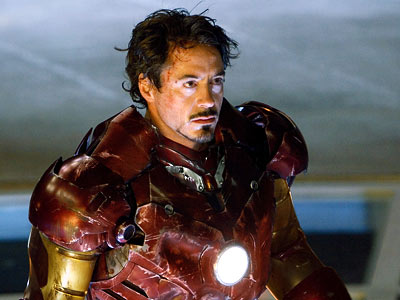
I was pleasantly surprised by Iron Man 2. I was expecting that they would no longer get all the little things right – and that expectation was borne out. Iron Man 2 has lots of amazingly dumb moments. But what I wasn’t expecting was that this movie would have a clear message at the heart of it. This time, they got the big thing right. By which I don’t mean that they chose to make him right-wing or left-wing, but rather that they had something worth saying and they came out and said it in a satisfying way. Iron Man 2 is Iron Man 1 inverted – the dumb quotient is ratcheted way up, but the palladium arc generator implanted in the movie’s chest is now running at full power.

First, on all the little things they got wrong, let me be content to give you just one example.

Early in the movie, the bad guy, Whiplash, has managed to pin down Tony Stark – alone, no weapons, no armor. Over and over again, Whiplash comes at Tony with his deadly high-tech weapons. Each time, Tony finds a cunning way to force Whiplash back or escape his attacks.

And each time, I kept thinking . . .

     . . . with all of Whiplash’s amazing technological weaponry . . .

          . . . it’s a good thing he’s too dumb to bring a lousy GUN!

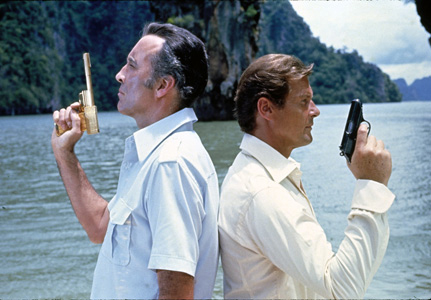
Iron Man v. Whiplash, 1981 version

Also, while I’ll probably need another viewing before I’m sure I’ve judged this right, I think the Tony/Pepper relationship didn’t deliver as much this time. I certainly didn’t walk away feeling like it was an important part of the movie, as I did after Iron Man 1. But then, they do some subtle things with the relationship this time (I won’t spoil them) so it may be that on a second viewing I’ll get more out of those scenes.

But all of that is really as nothing next to the thought-provoking issue at the heart of this movie, which is: can superheroes be trusted with power any more than anybody else?

Just as Chris Nolan’s movie The Dark Knight borrowed extensively from Frank Miller’s comic The Dark Knight Returns, Iron Man 2 is drawing on a deep well – although in this case not from the same franchise. A while back Warren Ellis launched a comic called The Authority, in which a bunch of supers team up and use their powers not only to fight off super-powered world-threatening bad guys, but also to fight more ordinary injustices. They knock off tinpot dictators, force Russia to withdraw from Chechnya, and so forth.

At one point the president calls them up to give them grief about all the havoc and instability they’re causing. People will blame America for their actions and attack it in retaliation, he argues. They tell him they’re only doing what any decent people would do if they had the power.

“You just watch your step,” says the president.

“Frankly,” replies the team leader, “we could say the same to you.”

But later, the heroes get drunk on power and start partying all the time and behaving irresponsibly. Bad guys start winning again. The popular and political tides turn against them.

Grant Morrison summed up The Authority very nicely with one question: Superman always puts the flag back on top of the White House. What if he didn’t?

Iron Man 2 is not The Authority. It is, of course, a Hollywood movie, and (as has been noted) is dumb in many respects. Yet it’s asking the same interesting question. The plot revolves around the Pentagon’s anxiety that rogue states or terrorists will develop technology parallel to Tony’s. They want him to hand over his tech so that America will be ready to defend itself. He (of course) gives them the finger. He tells them that his tech is his, and if the government can take away his most cherished possessions at will, then citizenship is actually just “indentured servitude.” Plus, he argues that it’s better to break the government monopoly on protecting the public from dangerous threats: “I have privatized world peace!”

But then Tony starts partying all the time and behaving irresponsibly. His friend the Air Force colonel (remember him?) tries to stick up for him at the Pentagon, but when Tony gets out of control, he steals one of Tony’s suits and becomes War Machine – a government superhero.

The point of the movie: Governments are prone to corruption and must be held accountable to the people. But individuals who claim to speak for “the people” are also prone to corruption and must be held accountable. For that matter, each individual person is prone to corruption and must be held accountabile. Individual liberty and collective accountability must coexist; you can’t have one without the other.

Oh yeah, and Samuel L. Jackson is Nick Fury.

“Does he have a superpower?” my wife asked me. “Yes,” I replied. “He’s a badass. His superpower is badassery.”

If you have a high tolerance for Hollywood schlock – much higher than was required to enjoy Iron Man 1 – I recommend this movie wholeheartedly.


Whoever Wins, We Lose

May 14, 2010

(Guest post by Greg Forster)

A judge in LA has ruled that doing layoffs strictly by seniority is illegal because it denies low-income students their right to an education under the state constitution. The lawsuit, brought on behalf of three inner-city schools by civil rights groups, has the backing of Gov. Schwarzenegger, Mayor Villaraigosa (whose nonprofit operation manages two of the plaintiff schools), the state board of education, the city superintendent, and I don’t know who-all else.

The unions are saying they can’t comment because they spent the last several decades endorsing this kind of legally bogus judicial power grab and now it’s come back to bite them in the they haven’t read the decision yet.

I honestly don’t know whom to root for, the judicial tyrants who will cut down all the laws to do their will (which in this case happens to be good except for the cutting-down-all-the-laws-to-do-it part) or the unions, who are of course execrabale, but who, for once, are the legitimately aggreived party here.

You remember what Sellar and Yeatman wrote about the Cavaliers and the Roundheads, right?

HT Whitney Tilson


Yet Another Dem for Choice

May 12, 2010

(Guest post by Greg Forster)

In today’s Journal, a candidate for Pennsylvania governor offers a hard-hitting argument for school choice. And this is no “lifeboats for the worst off” argument for rinky-dink vouchers. He denounces the money myth and argues that every institution needs competition to thrive – the argument for universal choice.

Oh, did I mention he’s Democrat Anthony Williams?

The unions are still strong, but every day they’re a little bit less strong. And this is how it happens – the social justice folks are waking up to realize what the unions are all about, and they’re starting to contest the unions’ hammerlock on the Democratic party. What was it Danny DeVito said in Other People’s Money? “Obsolescence . . . down the tubes, slow but sure.”