(Guest post by Greg Forster)
I’m late getting this up, but check out yesterday’s battle royale on the op-ed page of the Milwaukee Journal Sentinel.
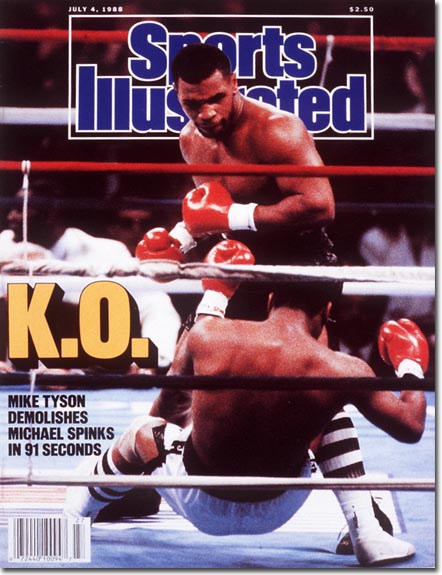
In this corner, the title holder – the champion of choice, the vizier of vouchers, the BMC of ESAs – Robert Enlow!
And in this corner, the challenger – the canard kid, the defenestration of education, the unionbomber – O. Ricardo Pimentel!
The subject: Gov. Walker’s proposal to lift the income restriction on the Milwaukee voucher program from 175% of the poverty level to 325%, or $72,635 for a family of four. Walker has an eye toward eventually lifting both the income restriction and the cap on the number of participants – which would make Milwaukee a universal voucher program.
They’re getting mental in the Sentinel!
There’s the bell, and here comes the champ!
CHOICE PLAN PUTS KIDS FIRST
Looks like he’s confident. Now we’ll see what the challenger’s got.
YES, YOU WERE ALL DUPED BY CHOICE
Ouch! That snooty condescention is going to cost him. But he’s on fire and the hits start coming:
Now, $72,635 is not what it used to be, but it’s not low-income…
The champ fires back:
There are almost 210,000 households in Milwaukee, with more than 90% of them earning less then $100,000. That’s less than the average Milwaukee Public Schools teacher earns in annual compensation, according to the Journal Sentinel.The point isn’t to attack teachers but to show that what many consider “poverty” to qualify for a school voucher is not the same amount of income it actually takes to survive – and thrive – in America.
The challenger’s reeling under the punishment. But he comes back with another attack!
If schools need fixing, the community needs to pull together to do that. Walker’s budget cuts $834 million in school aids. MPS says it will have to cut $74 million from its preliminary budget.
This prompts a round of stunning brutality from the champ:
School choice saves taxpayers big bucks. The per-pupil cost to educate a child in Milwaukee is $13,229, according to the National Center for Education Statistics. Yet the voucher program funded by the state is about half that at $6,442, which covers a good portion of tuition at many parochial and private schools.
The challenger’s down! No, wait, sorry, he’s just looking for his teeth.
Okay, now he’s back in the fight.
Bet on it: If families that aren’t precisely low-income “need” help here in Milwaukee, it is just a matter of time that he’ll reason they need help in other communities with challenged school districts or perhaps even those in higher-performing districts.
So, this begs the question: Were low-income students – mostly youngsters of color – just useful pawns for the right?
Wow, he must really be hurting to play the race card so flagrantly. Still, there’s something vaguely resembling an argument in there somewhere. Let’s see how the champ handles it.
With a ceiling on the number of students who can participate, the program’s impact has been limited although still positive. That’s why Walker’s plan to open the program to all students is welcome news, as unrestricted freedom will work even better to improve MPS and increase the academic achievement of children.
For example, if a large grocer has a monopoly in a neighborhood and a convenience store opens on the corner selling milk and bread, there isn’t enough competition to force the large grocer to offer better products. However, if three convenience stores and two other larger grocery stores open, customers suddenly will see an improvement in the products available. The same happens in education, as parents always win with multiple education choices. Such will be the case in Milwaukee when all parents have the choice of a private or public school.
How is the challenger still on his feet? An amazing sight, ladies and gentlemen!
I never would have thought Robert Enlow was capable of brutalizing another human being so totally. Why isn’t the ref putting a stop to this inhumanity?
It looks like the challenger can’t even see where he’s punching. He’s just flailing now.
Gov. Scott Walker is on the cusp of making the much desired entanglement of public dollars and private schools – many of them religious – an unassailable reality.
Yes, unassailable. See what happens if middle-class folks are given vouchers and some subsequent governor or Legislature tries to take them away. Won’t happen…
Choice made sense as a matter of equity for low-income children with no options in a district that demonstrably served them poorly…
Yes to choice – but for those who really have none. And if extended for families beyond that? We can consider ourselves duped.
Did I hear that right? Vouchers violate the separation of church and state – but only when rich white kids use them. When poor black kids use them, they’re fine. And remember, it’s voucher supporters who are using poor black kids as political props.
And, sure enough, the challenger’s self-contradictory idiocy has prompted the ref to step in. Clearly this is one fighter who’s taken a few too many hits.
Enlow is carried out of the ring by a cheering throng of supporters!
No, wait – that’s the mob of union protestors who were bussed in from Madison to watch the fight. I guess Robert is headed for an “undisclosed location.”
And now over to Jay and Matt for the post-match show.

 Jay P. Greene's Blog
The grocery analogy is an interesting one. Are you familiar with the report “Food for Thought” put out by Education Sector (http://www.educationsector.org/publications/food-thought-building-high-quality-school-choice-market)? It talks specifically about the challenges with grocery stores in low-income areas, indicating that simply creating a “free market” doesn’t necessarily lead to improved choices for consumers, particularly low-income consumers.
I think the “competition works in other sectors, so it would have to work in education” argument can become so generalized that it ignores many of the nuances in service-oriented markets, and the K-12 sector specifically. I think we are being naive if we think that simply opening up education markets will automatically create better opportunities and outcomes for everyone. My bet is that things would get much more complicated and complex pretty quickly.
Parry
So if you have a program targeting benefits for the poor, the poor are the pawns of people advocating the program?
Sorry Parry but a carefully thought out misrepresentation of the workings of the free market doesn’t undercut the working of the free market. It just provides a rationale for people who detest the free market to throw stones at it.
Such nuances as there are to the service-oriented markets are the desperately important province of those who make their livings from the service-oriented free market and of no great importance to those in the government supported service.
How could it be otherwise?
The fast food joint in a poor part of town had better provide an acceptable level of service or the other fast food joints in a poor part of town will eat its lunch. You think poor people are too stupid to differentiate between the place with lousy service and the place with good service?
As for how even a moderately free market for education would work in poor areas, the information’s in on that as well. Turns out poor people don’t like to be treated badly or have their children treated badly by institutions of education so when they have the option of abandoning the school that’s doing a lousy job for the school that’s doing a good job, they do. Evidently the nuances don’t trouble those poor people at all.
Excellent points, Allen. From what I gather from Parry’s posts in general, I suspect that yet another subtle criteria which frequently motivates the left may also be in play. Specifically, it is not enough for the rising tide of competition to lift all boats — it must lift them equally at precisely the same time no matter where they rest in the harbor — or else dam the inlet and leave them equally in shallow water for sake of “fairness.”
Never mind that the worst hospitals today provide better care than the most advanced of a century ago primarily due to competition. Never mind that the “best-practices” in standards of all human activities are always raised unevenly simply because some enterprising pioneer acted first. When all competitors are truly free to fail, emulation of such success is so swift that no “five year plan” could ever keep pace. But never mind that.
If today instead marked the year 2311 and we were discussing how more competition among personal interplanetary vehicles can allow broader access to better paying jobs on Martian colonies, the left would not marvel over how awesome that opportunity would be, but would complain instead over the unfairness — since the pioneering technology is allowing others better jobs on the moons of Saturn.
Allen,
First, a side point. I am a practicing educator, having dedicated the last 17 years of my professional life to working with kids and families in public schools. I have worked with poor families, with rich families, and with families in between. I come to this blog because I find the ideas here interesting, and they push me in my own thinking as I try to become a better educator and better serve my students and families. I don’t agree with everything said on this blog, I don’t disagree with everything said on this blog, but I love the exchange of ideas.
In response to my comment you asked me, “You think poor people are too stupid to differentiate between the place with lousy service and the place with good service?” I suggested nothing of the sort, nor do I believe anything even remotely similar to that. To be honest, I find comments like that insulting and entirely counter-productive. I am quite happy to engage in a debate about ideas related to education, and I enter that debate with an open mind. I also assume that the people making posts on this blog and the people making comments on this blog bring a similarly open mind. I am not here to prove points, I am here to think and learn, and to do so in a respectful way.
To the substance of your comment, I would first say that I am not sure what you mean by a “carefully thought out misrepresentation of the workings of the free market.” I am not an economist, so my understandings of the free market are not particularly complex, but I am not sure where in my post I misrepresented the workings of free markets. I would appreciate a more thorough description of what you mean.
You also say that “The fast food joint in a poor part of town had better provide an acceptable level of service or the other fast food joints in a poor part of town will eat its lunch.” I agree. But to extend the analogy a bit, what we don’t want in K-12 education is a bunch of fast food schools, particularly in lower-income neighborhoods. What the article suggests is that, in order to ensure high-quality services in low-income neighborhoods (i.e., more than just fast food), policy-makers and entrepreneurs have to do more than just trust the market, they have to understand the details of markets at the micro-level in different environments.
So far, there have been some experiments with market-like reforms in education in low-income neighborhoods, with some promising results. But we have never tried true markets at broad levels for broad ranges of students and families. That leaves me very cautious about the possible ramifications of programs such as universal vouchers. Not pessimistic, just cautious.
Parry
Your final points don’t make any sense…
If policymakers and entrepreneurs have to understand the local micro-level market in order to provide high quality service why on earth would a monopoly that faces little to no competition and receives funds regardless of whether students attend or not even bother itself to provide a high quality service?
Don’t you think the entrepreneur would try very hard to understand what his customers want? His customers have choices of where to send their children, thus the dollars given to him by the parent send him signals about the value of the product he’s offering. When he loses dollars he has to figure out how to retain existing customers and attract new customers. Often this is done by improving services or product quality (especially in a highly competitive market).
What you seem to be missing are the very important signals dollars play in the market. Those signals are completely lost on a bloated education monopoly blob where dollars are controlled by a central commissar who allocates resources without regard to need or how it can best serve customers.
Great points, Patrick. To be fair though, Parry did admit forthrightly that he is not an economist. I do get the sense that he is being genuine, and I believe his questions also provide valuable insight into the perspectives of other bright and thoughtful people who are not economists. Perhaps our greater task is to step back and evaluate how effectively we are communicating across a chasm we often forget exists and take for granted. I struggle with this as much as anyone, so please forgive me, Parry, if I ever come across as dismissive or abrasive.
The carefully thought out misrepresentation of the workings of the free market was in the article you referenced – “Food for Thought” – and in your unsupported assertion that “that simply creating a “free market” doesn’t necessarily lead to improved choices for consumers, particularly low-income consumers.”
Yeah, actually a free market – and scare quotes suggest a certain bias in regards to the free market – does lead to improved choices. For everyone regardless of income.
It’s also not necessary to be an economist to understand the basics of a free market.
A free market is where voluntary exchanges of considerations of value takes place. Not so tough.
So a poor mommy, who doesn’t understand the nuances of education but does understand when she’s being treated like dirt is liable to make her decision on the basis of how she’s treated. In a free market the school that’s educationally terrific but can’t be bothered to extend common courtesy will suffer. Too bad. The voluntary nature of the free market exchange means that a meeting of minds is required before the exchange takes place. When you’re the best school, or restaurant, in town you may be able to get away with treating parents, or customers, shabbily but you’d damned well better have earned the privilege by cooking up a mean steak.
Where we do have a meeting of the minds is in the approach to the introduction of universal vouchers or, better yet, the privatization of education.
Carried out poorly some significant period of chaos would inevitably result before market forces sorted out what were important considerations and what weren’t and how those considerations should be measured and displayed. But sooner is better then later and an excess of caution favors the public education monopoly which is wasteful of public money and children’s lives.
Wait, who’s that entering the ring? Is that Rowdy Roddy Piper?!! He’s carrying a steel chair, and he’s whallopping everyone in sight with it, including the ref and the announcers!! He’s beating them senseless for not pointing out that Walker failed to raise the voucher amount to a reasonable level! It’s pan-de-f#&@*-monium!!
By holding the voucher amount at $6,442, Walker is virtually guaranteeing that these schools will be crappy grocery stores. Adjusted for inflation, $6,442 is the lowest value of a voucher in Milwaukee since 1998. In 2008, Milwaukee Public Schools received over $14,000 in revenue per student.
Nationally, private school tuition averages about $7,500, and parents can “top off” the voucher. That’s why private schools are already competitive with public schools even with vouchers worth under $7,000. Private schools can do better with fewer resources. Raising the voucher amount would only incentivize the growth of bureaucratic bloat in the private schools.
Moreover, it’s desireable – all other things being equal – for parents to have some skin in the game. It keeps them better incentivized as well.
Add the fact that if you want to fund the vouchers above the state funding level, you have to have the state messing with local municipal finances – and that greatly multiplies the political challenge. Legal challenges, too – Colorado’s voucher plan was struck down by state courts on grounds that it violated the state constitution’s provisions protecting local governance from state interference.
Of course, the best case scenario would be to raise the voucher amount and tranisition to Matt’s ESA approach, which allows parents to keep whatever they don’t spend on tuition and apply it to college later.
Evidence suggests that there is a limited pool of education providers (those with a sense of mission) that will provide quality education so cheaply (and even at $7500, your example is $1000 higher than what Milwaukee’s providing. And with all the Catholic school closings we’ve seen recently, it looks like even those providers are drying up. $6,442 certainly isn’t enough for a program trying to go to scale.
If you expect choice to work, then you need to advocate for a reasonable amount of funding.
Says who?
In 1959 schools were spending around $3,000 per pupil in 2007 dollar values…
So obviously it can be done…
Plus we have this cool thing called computers and the internet..
We didn’t educate everyone in 1959, especially those who were most difficult to educate. But, differences in the composition of students (and overall quality of education and facilities) aside, you should read up on Baumol’s cost disease before you stick a 1959 per-pupil dollar amount into your inflation calculator.
That said, the situation in Milwaukee isn’t some academic exercise in what it should or shouldn’t cost to educate students. It’s a real place with a real labor market. Money buys talent, and when the Milwaukee Public Schools are getting twice as much per student, they are able to attract more talented teachers. Why, I ask, should we put the choice schools at such a disadvantage?
You mention technology, and rightly so. If education is to become more cost-effective, it will have to do so through technological advancements, just as we have seen in nearly every other area of the market. But we’re not there yet.
If you really think it can be “obviously” done today for $3,000 a student, you should move to Milwaukee and open a school, quick! They’ll pay you more than twice that amount. Just think, if you enroll a mere 100 students, you’ll net over a quarter million dollars a year! That’s pure profit! What are you waiting for?
A lot of meat to this conversation. Thank you to everyone for taking the time to respond to me.
Let me see if I understand the general argument that I believe Allen and Patrick are making. Free markets always produce improved choices for consumers, regardless of income (Allen didn’t use the word “always”, so maybe that is an assumption on my part). Therefore, by opening up education and making it a free market, we will necessarily see improved K-12 education options and improved outcomes for kids. Experiments with vouchers seem to have produced some positive results, so expanded use of vouchers should result in additional positive results.
I believe I have explained this previously on this blog, but I am a principal in a public school. My school system incorporates some levels of parent choice, such that parents have some options in terms of where their children go to school. Over half of the students at my school are there because their parents have explicitly chosen to send their children to my school, i.e., my school was not their default option. So I am very familiar with how parent choice plays out at the micro-level, and I have found parent choice to have a positive impact on my school. My operating budget depends directly on the number of parents whom I can convince to send their children to my school, so I have first-hand experience with Patrick’s point about educational entrepreneurs needing to understand what customers want.
Here is where I become cautious and skeptical. Allen made the point that “The fast food joint in a poor part of town had better provide an acceptable level of service or the other fast food joints in a poor part of town will eat its lunch.” The report I linked to suggests that, when it comes to grocery stores or banking services, things don’t always work out exactly that way in practice. I think health care is another example (and particularly apt since it focuses on services, similar to education). In our current health care system, a lot of low-income customers get screwed. I do not believe that is an argument for government-run health care (Allen seems particularly worried that I have a subversive intent to advance a “liberal” argument), but rather a cautionary lesson that different types of customers experience different levels of quality in service-based markets. With education vouchers, we are not talking about customers spending their own money, we are talking about them spending public money. In addition, the public has a vested interest in children growing up to be productive members of society, and I think that makes education more complicated than a situation in which a consumer is spending his/her own money solely for his/her own benefit, i.e., public money is being spent on children’s education in part to benefit all of society, not just the individual child.
Daniel raises an important concern when he says “I suspect that yet another subtle criteria which frequently motivates the left may also be in play. Specifically, it is not enough for the rising tide of competition to lift all boats — it must lift them equally at precisely the same time no matter where they rest in the harbor — or else dam the inlet and leave them equally in shallow water for sake of ‘fairness’.” I absolutely do not believe that we should ignore possible improvements simply because they do not help everyone equally. I do believe, however, that any large-scale changes to the way we educate children in this country should explicitly seek to address our biggest challenge in K-12 education: namely, the high number of low-income children who fail to graduate from high school and receive a low-quality level of education. I am all about improved educational opportunities for all kids (my own daughter is a smart, high-achieving kid, and I certainly expect that her teachers and school are going to challenge the heck out of her and help her grow), and I am persuaded by the existing evidence on how voucher programs have helped low-income kids. I continue to believe, however, that universal voucher programs would be exceedingly complicated affairs that would create unintended consequences (most likely some good, most likely some bad). The devil is always in the details, so I am a big proponent of thoughtfully developed voucher programs that anticipate a wide range of possible outcomes, and that draw on the best thinking and evidence we have.
So I am not sure I am disagreeing with anyone, but I am not sure I am entirely agreeing, either.
Parry
Parry, Dr. Tooley’s work in Nigeria, Kenya, India and China show that, yes, in fact the private schools for low-income kids (yes they exist) outperform the state schools.
So if the poorest parents on the planet can pay tuition at a private school serving mostly other poor students and those students outperform the students in the better equipped, better funded public schools then it is entirely reasonable to assume the same can be done in the U.S.
No.
What you say may be true, I may even agree, but it’s a mistake to get there by relying on Tooley.
It comes down to what it means to be poor. Here, in the United States, our economic system rewards people on the basis of merit and ability. It certainly isn’t a perfect system, but on average, I think we can at least agree that income is highly correlated with ability. We have a competition-driven sorting mechanism. So, for us, the term “low-income” means more than just “people with less money.”
In the places Tooley studies, nearly everyone is poor. But by and large, they are not poor as a result of a competitive sorting mechanism. They are poor because the places they live suck, and political boundaries restrict them from going to places that don’t suck. As a result, it’s mistake to generalize
their condition to the United States.
Among numerous philosophical problems you touched on, such as whose money it is, etc., all of which we have dealt with on this topic ad nauseum for decades (just trust me on this) one that plagues your assumption, Parry, is that it still hinges on Mussolini and his appointed band of experts actually having the keenest insight into how to engineer education and society. The trains may run on time, but disruptive innovations like jet travel are delayed — if ever even imagined. Quite simply, government may occasionally answer a question correctly, but it rarely asks the right ones to begin with. Such nimble thinking lies instead in the realm of the marketplace. Ultimately, the harbor still ends up dammed to a trickle and children’s formative years are squandered in the wait, not to mention genuine cutting-edge societal progress.
Of course, speaking of disruptive innovations in education, it’s really alright if you and others don’t agree. Government can only delay the creative genius in the human spirit for so many generations. Being a tragedy of the cluster of generations of our time, eventually the human thirst for innovation and liberty will prevail, even if in some other century. Fortunately, significant disruptions of the current paradigm appear to be surfacing now in ways that the masses will demand in spite of bureaucratic interference. We may yet live to see it.
Daniel,
At a philosophical level, I entirely agree with you: free markets are far more innovative than governments. I do not believe that improved school choice will likely lead to huge innovations in K-12 education—we have had a private education system for decades, and private schools still look remarkably like public schools—at least not in the short term. I do think there are some real possibilities for web-based education and improved K-12 education software to increasingly change how we think about education, and I could see non-profit or for-profit schools potentially leading that charge. Again, as a principal in a school of choice, I am a fan of parents having broad choices in picking their kids’ schools.
I guess I sometimes see the school voucher argument framed in South Park terms:
Step 1 – Provide universal vouchers
Step 2…
Step 3 – Improved learning for all!
Step 2 is supposed to be “market forces work their magic”. I’m not saying they wouldn’t. I’m just nervous about jumping into the deep end without doing as much as we can to ensure that everyone has a good chance of swimming.
Thanks for the conversation, and I look forward to more in the future!
Parry
The operative, words for market forces to work, Parry, are “truly free to fail.”
Everyone. 100% at the mercy of parents. With “consumer reports” organizations rising up to demand the ruthless transparency of the information age we are entering.
That’s when markets transform swiftly.
Imagine the disruption of both private and public paradigms just from this tiny little tip of the iceberg to come. http://www.ted.com/talks/salman_khan_let_s_use_video_to_reinvent_education.html
Fact is, with or without us, an avalanche of change is on its way. The public will demand the liberty to shape its own destiny.