(Guest post by Greg Forster)
If you didn’t like my take on Iron Man 2, try this one on for size:
Part of the long-running series.
(Guest post by Greg Forster)
If you didn’t like my take on Iron Man 2, try this one on for size:
Part of the long-running series.
 2 Comments |
  Pass the Popcorn | Tagged: Continuity, Greg Forster, Iron Man, Iron Man 2 |
  Permalink
 Posted by Greg Forster
(Guest post by Greg Forster)
Don’t let anyone tell you Pass the Popcorn doesn’t take accountability seriously. Opinion about pop culture is so ephemeral, it’s easy to get away with writing crud because you know nobody will remember it in ten minutes anyway.
So to hold myself to a higher standard, here’s a retrospective of my 2008 movie posts, along with an updated opinion with the benefit of 20/20 hindsight (including home viewing where applicable).
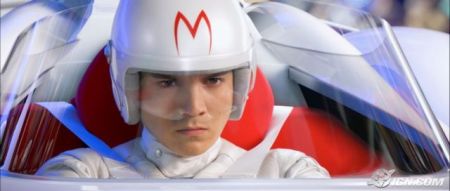
Speed Racer
What I thought last year: Fantastic. Much more than a thrill ride – an exceptionally well constructed and executed melodrama. One of the best movies I’ve seen in years. But I probably won’t enjoy it as much on a small screen.
What I think this year: Boy was I wrong about that last part.
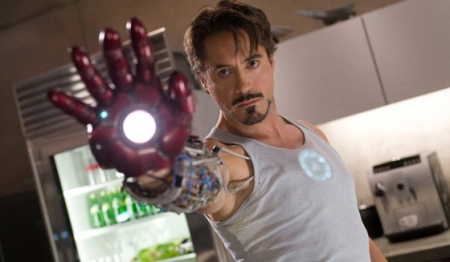
Iron Man
What I thought last year: A better-than-just-good movie that could have been great, except the marketing suits wouldn’t allow the movie to be either clearly pro-weapons-makers or clearly anti-weapons-makers, so the central character development around which the whole movie is built is left ambiguous. That and the climactic battle is lame.
What I think this year: The ambiguity isn’t as bad as I had thought – there are some subtleties that I missed. What’s driving Stark’s crisis of conscience is not that making weapons was bad per se, but that his weapons are being abused. So I’ll upgrade the movie from better-than-just-good to really good. But the battle is still lame.
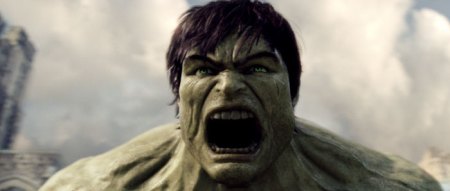
The Hulk
What I thought last year: The last Hulk movie really stank in spite of having been made by one of the few really great moviemakers of the 1990s, and this one doesn’t look any better. The Hulk character is probably unfilmable; the emotional intimacy you get in comics and (to a lesser degree) on TV isn’t available in the movie format, so the character’s dependence on anger probably just can’t be well exploited on film. I’m going to skip it.
What I think this year: No regrets.
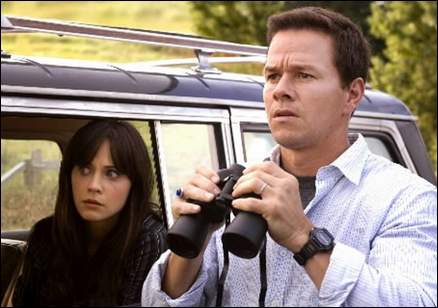
The Happening
What I thought last year: Shyamalan got lazy and his work has gone precipitously downhill. Early reports indicate this doesn’t look like the movie that will turn him around. Skip.
What I think this year: No regrets.
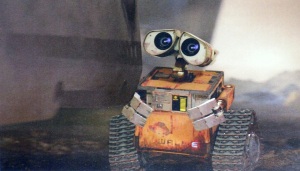
Wall-E
What I thought last year: It’s an “A” movie about a lonely robot who discovers companionship, wrapped in a “C” movie about the evils of consumerism.
What I think this year: The more I watch it, the easier it gets to ignore the “C” movie.
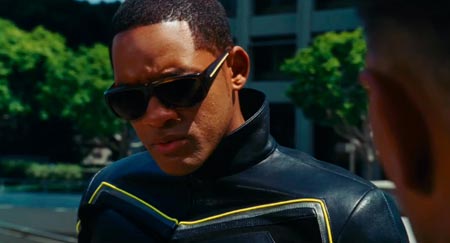
Hancock
What I thought last year: Boy, it’s fun to remember Will Smith’s early-90s novelty act. And this was a fun movie. But not one I’d feel the need to see again.
What I think this year: Yup.
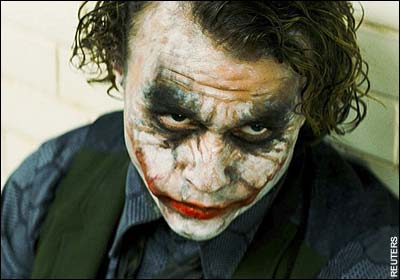
The Dark Knight
What I thought last year: Well, I wrote about it six times (here, here, here, here, here and here) so that gives you an idea of what I thought.
What I think this year: Was six posts really enough?

Quantum of Solace
What I thought last year: Fantastic potential. Squandered.
What I think this year: Can’t wait for the next movie. Can wait to buy this one.
4 Comments | Pass the Popcorn | Tagged: City of the Dark Knight, Greg Forster, Hancock, Iron Man, James Bond, M. Night Shyamalan, Quantum of Solace, Speed Racer, The Dark Knight, The Happening, The Hulk, Wall-E, Will Smith | Permalink
Posted by Greg Forster
(Guest post by Greg Forster)
(Guest post by Greg Forster)
With no Get Lost feature this week – the episode was postponed on account of soap opera – I figure this blog is a week shy on geekdom and it needs some ballast. So I’m going to pull on my flameproof shorts, put my affairs in order, kiss my wife and daughter good-bye, and tell the world what it needs to know:
Speed Racer is better than Iron Man.
(I don’t intend to spoil anything big here, but in deference to the prime directive of geekdom, I hereby warn you that if you want to be absolutely unspoiled for these movies, you’d be a moron to even start reading a post entitled “Speed Racer Is Better than Iron Man.”)
Don’t get me wrong; Iron Man is a good movie. But it’s missing something.
John Podhoretz (in the May 19 Weekly Standard) is right – Iron Man is not a superhero movie, it’s a 1930s screwball comedy about the wacky hijinks of a billionaire playboy. Flying around in a tin can is just another of his wacky hijinks.
Not that there’s anything wrong with that! I love “Cold Comfort Farm,” “Amelie” and “Down with Love,” so nobody can accuse me of screwball snobbery. And Iron Man works very well for what it is. (Which is a dignified way of saying that I laughed my pants off – and that’s saying a lot for a movie.)
It even manages to rise above the level of screwball in its evocation of the complex relationship between the male and female leads. Robert Downey Jr. and Gwyneth Paltrow earned every cent of the millions they’re going to make on this franchise. I went away thinking, “This is what that lousy Superman movie could have been like if they had hired an actor instead of a mannequin to play Lois Lane.”
But the tin man at the center of this movie has no heart – the psychology of the main character, which the structure of the movie intentionally draws our attention to, is never developed. The plot hinges on Tony Stark having a traumatic change of heart about his profession. But what exactly was this change? Does he repent of making weapons altogether? Some of the dialogue hints a little in this direction. But his first act of pennance is to make a big weapon and fly around using it to kill people.
So what then does he really repent of? I can see at least two other possibilities. He repents of making weapons for the US government, or perhaps making them for government (any government), or perhaps making them for anyone at all but himself. Again, a few lines of dialogue seem to point in this direction, but then the subject is dropped. Or, on the other hand, he repents of not keeping an eye on the weapons he makes and allowing them to fall into the wrong hands – but not of making weapons in itself. His actions after his repentance – making a big weapon and flying around killing people with it – seem to point toward this interpretation.
You can see why the movie never tells you which it is. If the first, then the movie is implicitly anti-war, and the conservative half of the audience is alienated. If the second, then the movie is implicitly pro-war, and the liberal half is alienated. You get bigger ticket sales by just letting each moviegoer mentally supply his or her own preferred interpretation of Stark’s psychology.
Trouble is, this turns Stark into a cipher. His motivation, his whole psychology, is truncated. That might not matter in a lot of superhero movies; Michael Keaton is a cipher in Tim Burton’s Batman, and it’s still a great movie. But the whole structure of this particular movie demands more psychology than the studio’s marketing suits are willing to permit. Iron Man could have been a tormented anti-war warrior, battling to undo the damage his life’s work has done to the world by enabling war. Or he could have been a warrior plain and simple, waging a just and noble personal war to put right the deadly consequences of his own arrogance. As it is, he falls between two stools and is . . . nothing in particular.
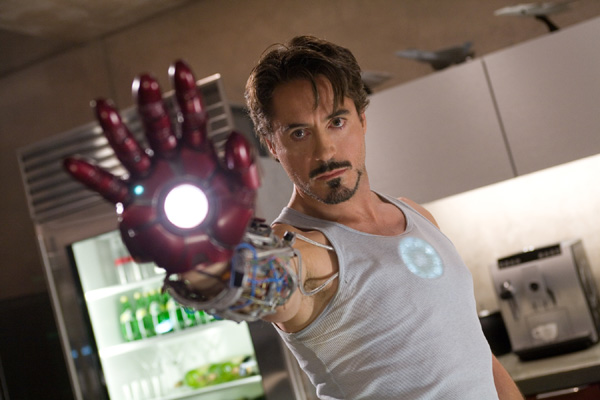
Winner of the 2008 Vaguest Midlife Crisis Award
OK, you might say, but do you really prefer a brainless light-show movie? Come on.
If you said, that, you’d clearly be in good company. The critics seem to agree that it’s a stupid movie. But I think the critics went into Speed Racer determined to dislike it, or at least not to like it unless it conformed to their preconcieved notion of what a “good” light-show movie is like, which it obviously doesn’t.
Critics don’t like what computer graphics have done to the movie business. And with the enormous number of lousy movies where the story is nothing but a lame excuse to show you a bunch of computer graphics, who can blame them?
To someone who sees things through that lens, if a movie has a lot of computer graphics, it had better also have a complicated plot, brilliant dialogue, gay cowboys eating pudding – something that could pass muster in an arthouse movie. If so, they get to look high-minded by praising the movie in spite of its having a lot of special effects. (“The effects serve the story” is the universal code phrase for “All of us snobs have permission to like this movie.”) Otherwise it goes in the “light show” trash bin.
Speed Racer doesn’t have anything you would ever see in a theater where the coffee at the concession stand is brewed fresh every hour. The plot is simple to the point of melodrama, and the dialogue does its job in advancing the plot, but no more.
But that doesn’t make it dumb! Simple is not the same as stupid. Melodramatic plot devices are cheap and tacky when they appear in narratives that are not otherwise melodramatic. But that’s not because melodrama itself is bad. It’s because melodramatic plot devices don’t belong in narratives that aren’t melodramas.
A well constructed melodrama satisfies a deeply rooted need in human nature. Anyone who denies this is kidding himself. Much of what passes as “serious” drama is really melodrama, but isn’t called that because the people who like it are too snobbish to think that anything they enjoy could be melodrama. And how else do we explain the near-universal popularity of melodrama? Why, for example, does practically every TV news outlet turn practically every story it covers into a melodrama?
And ultimately this same function – satisfying a universal human need – is the only claim that the allegedly more serious forms of drama have on our attention. Augustine, caught up in a violent overreaction against his own youthful obscession with “serious” drama, wrote that he understood the appeal of comedy but thought that tragedy was disgusting and perverse. Why go to the theater to intentionally make yourself miserable? In ethics and metaphysics I’ll take Augustine over Aristotle any day, but here, Aristotle knew better. We go because we must. Our spirits demand tragedy (and comedy) as our bodies demand food. That’s just how we’re built. And it’s the same with melodrama.
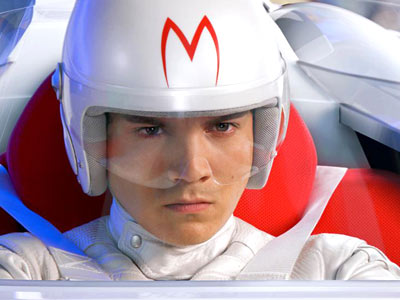
Speed Racer is the best melodrama I’ve seen in years. No doubt you already know the plot: Speed is a young racing prodigy who looks set to become the greatest racer of his time. But as soon as he wins his way into the big leagues, he discovers that the outcomes of the major races are fixed. He’s too clean to be bought and too good to be beaten, so the only way the fixers can ensure that their chosen racers win is by cheating – attaching hidden weapons to their cars. So Speed has to be twice as good to win. Cue fantastic racing-battle scenes.
Honestly, what more do you need? No doubt you could make a lousy movie out of that story. But you could also make a terrific movie out of it. And that’s what Speed Racer is.
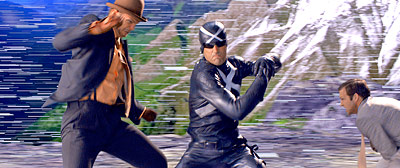
If you want to know why it’s suddenly snowing horizontally, you’re missing the point.
Another reason people probably think Speed Racer is stupid when they shouldn’t is because it demands a full surrender to the narrative world. In the speedracerverse, everybody drives racecars, even to go shopping; monkeys are semi-intelligent; the hero’s actual, legal name is “Speed Racer” and his mother and father are named “Mom Racer” and “Pops Racer”; even the incorruptible Eliot Ness figure who helps Speed bring down the bad guys is named Inspector Detector. And no explanation is offered. The movie says, in effect: Here is the world where our story takes place; you can come in and join the party or you can go see some other movie.
Which is exactly as it should be. Every story must show you how its narrative universe differs from the real world, but trying to explain why its narrative universe differs from the real world is a fool’s errand.
And then there are the brazen plot devices. For instance, Speed is attacked while racing across a desert. Giant hammers and morningstars pop out of the cars. And just as you’re wondering how all this could be going on without the race officials noticing these giant honking weapons flying around, we cut to the TV announcer saying, “Wow, with all that sand being kicked up, it sure is hard to see what’s going on out there.”
Cheap? Stupid? It would be if it happened in an ordinary narrative, because it wouldn’t belong there. But in Speed Racer, that kind of thing is the narrative. “Stupid” stuff happens all the time in Monty Python, but nobody complains – because the stupid stuff is the whole point of Monty Python. And so, in that context, it’s not stupid at all; it’s brilliant comedy. Same here.
Or if Monty Python is too lowbrow for you, consider the point Dorothy Sayers makes, in another context, in The Mind of the Maker. If you’re writing a novel and you can’t figure out how to get your hero out of the jam he’s in, it would be stupid and wrong to end the novel by writing “Joe suddenly inherited a fortune from a wealthy relative he didn’t know he had, and he used the money to solve all his problems.” On the other hand, you could write a really great novel that opens with the same sentence – a novel about a man who suddenly inherits a fortune. If something brazen and outrageous is stuck on arbitrarily to resolve a problem because you’re too lazy to resolve it in a way that’s organic to the plot, that’s poor storytelling. But there’s nothing wrong with having something brazen and outrageous in your story if that’s what the story is about.
Finally, there is the innovation in the way the digital effects are used. The filmmakers decisively abandon visual realism to an extent that is probably unprescedented for a mainstream movie. During moments of intense conflict, the background fades away, leaving only the main characters surrounded by lights and colors. Things children imagine become momentarily real. A scene will suddenly become a visual montage (complete with people floating randomly across the screen, delivering dialogue) and then return to the scene. And in the final race, once Speed has dispatched the main villain, the rest of the race goes by in a chaotic blur. I think this last scene must be what the critics are thinking of when they complain that the effects are so heavy-handed you can’t tell what’s going on; at least it was the only scene where I couldn’t tell what was going on. But that’s clearly intentional. Once Speed has beaten the bad guy, it’s a given that he’ll win the race. So the fimmakers spare us the tedium of watching it.
To a critic worried about the negative effect of computer effects on filmmaking, all this must come across as reductive – effects intruding into scenes where they don’t belong. But the surreal visual style serves the melodramatic narrative very well. The whole point of melodrama is to clear away all the inevitable complexities of the real world in order to isolate and focus our attention on the stark, even painfully simple moral realities that always lie behind those complexities. People are always a complex blend of good and bad, but good and bad themselves are always simple. The point of melodrama is to tap into that simpler level of truth so that we can experience it, in narrative form, free of the complexities that always cloud it in the real world. What better way to visualize that experience than to have the background fade away as Speed struggles to overcome a thug sent to kill him?
Obviously all this explication is negative – an explanation of why Speed Racer is not dumb. None of that establishes that it is any good.
Fortunately, the producers have spared me a lot of effort by releasing the first seven minutes of the movie for free on the web:
If that doesn’t sell you on the movie, nothing I write will. Do yourself a favor and give it a chance.
But don’t miss Iron Man, either.
11 Comments | Pass the Popcorn | Tagged: Best of Greg, Greg Forster, Iron Man, Pass the Popcorn, Speed Racer | Permalink
Posted by Greg Forster

 Jay P. Greene's Blog