“When You’re in the Red, Listen to Fred”

December 2, 2008


fred-thompson-hunt

“This bailout will get out of control. It will get out of control and we’ll be lucky to live through it.”

(Guest post by Greg Forster)

Fred Thompson on nonstop bailouts: “If you work in New York in a tall building making millions of dollars every year, it’s called ‘leverage.’ If you’re livin’ anywhere else, it’s called ‘living above your means.'”

Jim Geraghty quips: “When you’re in the red, listen to Fred.”


Sidwell Friends, America’s Worst School

November 26, 2008

sidwell-friends

Sidwell Friends Middle School Building

“Brand new, but built to look obsolete and run down!”

(Guest post by Greg Forster)

Two weeks ago, Jay ruffled a few feathers by arguing that we shouldn’t care where President Obama’s children go to school. His point was that it isn’t necessarily hypocrisy for school choice opponents to send their kids to private schools, if they believe that private education is valuable (and thus something they’re willing to pay to acquire) but not the kind of thing government should subsidize to ensure equal access.

At the time, my response was that I totally believe Obama opposes school choice because he thinks government shouldn’t be in the business of ensuring that rich and poor alike have equal access to valuable goods and services, and I eagerly look forward to seeing this prinicple applied to his positions on welfare, health care, housing, labor policy, the environment, economic bailouts, entitlements, farm subsidies, taxes . . .

This morning, Jonah Goldberg argues that yes, Obama’s choice of Sidwell Friends while he opposes school choice makes him a hypocrite – but hypocrisy is overrated as a sin (this is a longtime hobbyhorse of Goldberg’s) and the real scandal is simply Obama’s (and other politicians’) opposition to choice. I couldn’t agree more.

But maybe school choice isn’t the only reason we should be interested in where the Obamas send their kids to school. This week, America’s Last Education Labor Reporter points out that Sidwell Friends is in abominable shape, and in desperate need of improvement:

It would be a shame if the Obama kids were to miss out on all these benefits, so we humbly submit these additions and subtractions to make Sidwell Friends the type of school the experts want all schools to become:

* Add a unionized workforce and a collective bargaining agreement. NEA asserts “that the attainment and exercise of collective bargaining rights are essential to the promotion of education employee and student needs in society.” How can the Obama kids have their education needs filled without agency fee, release time, grievances, binding arbitration and strikes?


* Add geographic enrollment boundaries. The Obamas will reside 3.5 miles from one Sidwell campus and 8 miles from the other, located in the state of Maryland. What’s next, flying in the next generation of Kennedy kids via helicopter from Massachusetts? Limit enrollment to those in the immediate neighborhood.


* Subtract weak teacher benefits. According to the Sidwell web site, teachers pay 10-40% of their health insurance premiums, pay into a defined contribution retirement plan, and receive only two personal days a year.


* Add diversity. The Obama kids will become part of the 39% of Sidwell students who are racial/ethnic minorities. But the DC Public Schools are 95% racial/ethnic minorities. How can the Obama children be denied so much of the rich cultural mix our nation’s capital provides?


* Subtract religion. The Quaker tradition is part of daily life at Sidwell Friends, including weekly worship meetings for all students, Quaker or not. This isn’t very inclusive of the Catholics, Muslims, Hindus, Wiccans and animists among the student body. Religious beliefs should only be studied from an academic standpoint and never practiced within a school’s walls.


* Add to the curriculum. Grades PreK-4 emphasize things like phonics, handwriting, vocabulary, comprehension, grammar, fractions, algorithms, geometry, and American history. Upper grades are heavy with English literature, advanced math, history, science, foreign languages and the arts. There isn’t much “getting information from television, film, Internet, or videos” or “Represent multiplication as repeated addition” for lower grades, or “Identify the countries, such as Italy, Poland, China, Korea, and Japan, where large numbers of people left to move to the United States at the end of the 19th and early 20th centuries” for upper grades. We don’t want to saddle a 21st century President with an 18th century curriculum.


As patriotic Americans, how can we stand by while our president’s family gets such substandard services?

Or maybe we shouldn’t be worried. After all, family and environmental influences are the only real determinants of educational outcomes. And clearly the Obama children are well blessed in that respect.

Or maybe we should be worried. After all, the Obamas did pick this shockingly substandard school, even though they had the opportunity to go with the nation’s most lavishly funded and heavily unionized schools in the D.C. public system, so how smart can they be?


James Madison’s Case for Federal Education “Mandates”

November 19, 2008

madison

If you’re looking for an education secretary, Mr. Obama . . .

(Guest post by Greg Forster)

In a letter to Wall Street Journal on Friday, Pete Hoekstra follows the well trod path of populist conservatives who demonize “federal” interference in education and demand that power be handed back to “local schools.” (To his credit, Hoekstra also mentions school choice.)

Populist right-wingers need to learn that teachers’ unions and their allies laugh all the way to the bank when conservatives demand “local control” and romanticize the “local school.” The unions have a hammerlock on local school politics. The further you go down the chain geographically, the more power they have. Nobody votes in school board elections except school employees and their families and friends. They hold the elections at inconvenient times precisely to produce this result. Thus, local communities typically have little practical control over their own school boards. The school boards consider the staff unions representing teachers and other school employees to be their primary constituents. When the demands of school staff interfere with the needs of students, the school boards favor the staff.

If you want to know why so many of our schools are run as jobs programs and don’t produce a decent education, “local control” is how it’s done.

There are worthy criticisms of NCLB. Interference with local control isn’t one of them.

The “mandates” of NCLB aren’t even mandates. They’re conditions for funding. The federal government gives states tons of (my) money to participate in NCLB. Doesn’t it – don’t I – have a right to ask states to provide transparent data reporting and measurement of outcomes in return? And if the states are getting a bad deal, they can stop taking the money.

Whenever I point this out, the critics respond that states can’t be expected to turn down federal money no matter what terms it’s offered on. Well, if so, then the problem here isn’t with the federal government, is it?

But there’s a larger philosophical issue here. People think that pure, unsullied federalism requires not only that the federal government excercise no coercive power over areas of state authority, but that it exercise no form of influence whatsoever.

This is false, and for my authority I appeal to the original “federalists”: the authors of the Federalist Papers.

Federalist #47 and #48 take up an argument advanced by “the more respectable adversaries to the Constitution” – namely, that the Constitution fails to create a true separation of powers among the legislative, executive, and judicial branches because it allows each brach to influence the others. The president can veto legislation, the Senate gets to vote on cabinet members, etc.

Madison points out that there can be none of those crucial “balances and checks” between the separate branches if they exercise no influence over one another. A proper separation of powers not only permits but requires that each branch have some substantial beachhead of influence within each of the other branches:

Unless these departments be so far connected and blended as to give to each a constitutional control over the others, the degree of separation which the maxim [that powers must be separated] requires as essential to a free government can never in practice be duly maintained . . . . It will not be denied that power is of an encroaching nature, and that it ought to be effectually restrained from passing the limits assigned to it . . . . Will it be sufficient to mark, with precision, the boundaries of these departments in the constitution of the government, and to trust to these parchment barriers against the encroaching spirit of power?

This passage is the indispensible context – the “backstory,” as they say in Hollywood – for understanding the much more famous Federalist #51.

In #47 and #48, Madison shows that “pure” separation of powers is insufficient. In #49 and #50 he considers and rejects Jefferson’s position that government encroachments can be resisted by frequent appeals to the people. In #51, he draws the conclusion: true separation of powers requires not that powers be totally separate but precisely that they must be separated and then mixed or blended:

As all these exterior provisions are found to be inadequate, the defect must be supplied by so contriving the interior structure of the government as that its several constituent parts may, by their mutual relations, be the means of keeping each other in their proper places . . . . The great security against a gradual concentration of the several powers in the same department consists in giving to those who administer each department the necessary constitutional means and personal motives to resist encroachments of the others.

Whereupon he launches into the famous passage about ambition counteracting ambition, etc.

The real argument of Federalist #51 is not that we need a separation of powers – that argument comes in #47 – but that we need a certain kind of separation of powers. Specifically, the kind that allows each branch to have some power over the other branches.

Now, obviously this is all in the context of the separation of legislative, executive, and judicial powers, not the division of powers among local, state, and federal governments. But it seems obvious to me that the same principle applies – it would be dysfunctional for each level of government to have no influence over the others.

Of course, most of the founders did not envision the federal government influencing states and localities by offering them money. But it was always one of the very few great weaknesses of the original Constitution that it failed to clearly deliniate the boundaries of local, state, and federal responsibilities, and to provide institutional mechanisms to shore them up. It seems to me that in the phenomenon of what might be called “conditional federal subsidies,” like NCLB, we have stumbled unwittingly into a not-too-bad mechanism for allowing the federal government to influence states without directly taking over their operations.

As I said, there are legitimate criticisms of NCLB. The 100% proficiency promise is absurd. My own position has always been that the really valuable contribution of NCLB has been the mandate for transparent data reporting and testing.

But to say that it violates federalism to have the federal government attach conditions when it offers subsidies strikes me as not only incorrect, but an open door to unchecked power for “local” constituencies like the unions.


Ohio Charters Save Money for Public Schools and Taxpayers

November 14, 2008

(Guest post by Greg Forster)

It’s raining studies! After this one and then this one comes a study out today from Matthew Carr and Beth Lear of the Buckeye Institute. It’s a fiscal analysis of how charter schools impact the finances of regular public schools in Ohio’s “Big 8” cities.

When a student leaves a regular public school for a charter school (or a private school for that matter), the district loses the state revenue stream associated with that student, but it gains on the local revenue side because local revenues don’t go down, allowing the district to take that student’s share of local funds and redirect it to funding the education of the students who remain behind. The net fiscal impact depends on which is bigger, the state revenue stream per student or the local property taxes per student.

Carr and Lear find that in Ohio’s Big 8, the regular public schools are fiscal winners when students leave for charter schools. The biggest savings are in Cincinnati, where the net gain is $4,030 per student; the lowest is in Canton, where the net gain is $918 per student.

Charters in Ohio’s Big 8 also keep overall educational costs down by providing a better education (as Carr’s previous work in Ohio has shown) for less money per student.


Dallas ISD Caught Faking SS Numbers – And Keeps Doing It

November 14, 2008

scot_free_mug

HT Scot Free

(Guest post by Greg Forster)

The Dallas Morning News is reporting that Dallas ISD was caught making up Social Security numbers for illegal immigrants in order to get them on the payroll quickly, especially as bilingual ed teachers.

Specifically, they were caught in 2004. And told by the state that it was illegal. And naughty. And they should stop.

And they’re still doing it right now.

But remember, public schools are transparent and accountable to the community, while private schools are unregulated and dangerous, and don’t have strong civic values!

Like most websites, the Dallas Morning News site automatically provides links to related stories. Here’s what comes up as related to this one:

“Unused Workbooks Are Tossed Out at Dallas School, Violating Policy”

“Dallas ISD Announces $64M Budget Shortfall”

Maybe they could make up that shortfall if they hired some of the geniuses here in Wisconsin who invested all the school funds in shady securities. None of them is going to face any kind of disciplinary or legal ramifications for their malfeasance with public funds, so there’ll be no smudges on those resumes that might make it hard for another school system to hire them and benefit from their services.


Pass the Popcorn: You Know His Name

November 14, 2008

silhouette-roulette

HT Web Design Library

(Guest post by Greg Forster)

After the U.S. entered World War II in 1941, it was formally at war with Germany, but American attention was primarily focused on the Pacific theater. This was only natural given that the impetus for our engagement was Pearl Harbor, but another contributing factor was widespread anti-British sentiment among American elites. This animus against Britain had been one of the key causes of America’s prewar isolationism, and Churchill worried that he would have difficulty drawing the U.S. into full engagement in the European theater.

Casting about for some way to counteract this problem, Churchill lit on the idea of rounding up some charming and sophisticated English gentlemen – some of whom weren’t previously contributing much to the war effort, or anything else for that matter – and sending them to Washington on a combined charm offensive/intelligence gathering mission. Led by Roald Dahl (yes, that Roald Dahl) their job, recently recounted in Jennet Conant’s The Irregulars, was to wine and dine the American elites in order to 1) improve their impression of Englishmen and 2) keep their ears open for any useful rumors. Whether the Charge of the Aristo Brigade accomplished much for the war effort is doubtful, but there is at least one respect in which the program had a major impact on world history.

One of the men sent to Washington on this “espionage as aristocratic glamorfest” mission was Ian Fleming. The rest is history.

In his paean to Fleming, Mark Steyn observes that all the basic elements that make Bond what he is were present right from the beginning in the first book, Casino Royale – and that the 2006 “reinvention” of the Bond movie franchise in the film version of Casino Royale consists in the filmmakers having done away with all the cornball stuff that the earlier movies had added to that basic foundation over the years, allowing the core Bond to shine through. As the title song says, “The coldest blood runs through my veins/You know my name.”

Now, from what we can tell in the previews of the new film, it appears that Marc Forster (no relation, alas) is adding another innovation to his vision of Bond – storylines that span multiple movies. Bond has had recurrent villains before, of course, but never an ongoing storyline. The rise of epic storylines has recently done wonders for network television, after having been pioneered on high-quality niche shows like Farscape and Buffy the Vampire Slayer. And at about the same time network TV was noticing the narrative power of season-long story arcs, The Lord of the Rings proved that movie audiences were open to ongoing storylines across multiple movies. Now Forster wants to take things to the next level and try doing it with movies that aren’t growing out of a preestablished book series (like The Lord of the Rings) where the epic story arc is already well established and has a fan base. It’s daunting, but it’s the next natural step to take.

And where better to try it than with James Bond? Nobody realized it until now – well, nobody but Marc Forster and the rest of his creative team – but with hindsight, the franchise has always been begging for this. And nowadays, when it’s so much harder than it used to be to get audiences to see espionage as material for epic drama, it’s a genius move. I can’t seem to find it now, but one clever fan put together a desktop image for the new movie consisting of flames formed into a ghostly image of Vesper Lynd, with the tagline “payback’s a bitch.” (If you get the reference, you’re a true Bond fan.) Bond has pursued villains, even Blofeld himself, out of vengence for a girl before, but making that the whole ongoing reason for his neverending war with SPECTRE is absoultely brilliant. 

Though of course it hasn’t been called SPECTRE for a long time now, due to an inconclusive legal battle 47 years ago (no kidding) over the rights to the movie Thunderball – ironically, one of the worst Bond films ever made. Or perhaps it’s more karmic than ironic: when the producers allowed Bond to become nothing more to them than an excuse to make money, they incurred divine wrath, manifested in the loss of the SPECTRE name.

When I was a teenager, I played the official James Bond role playing game and they called the criminal conspiracy TAROT, and each of the organization’s divisions was named after a Tarot card. (I forget what TAROT stood for.) In the video game based on From Russia With Love a few years ago they were calling it Octopus. In the new movie it’s now called Quantum. But we all know it’s really SPECTRE.

The producers waiting for resolution of this same legal battle is also the reason there were no Bond films between License to Kill (1989) and Goldeneye (1995). And it wasn’t until 2001 that the rights to the James Bond character were unambiguously settled on one rightsholder. But they still only got the character – the other material from Thunderball, such as SPECTRE, is still too radioactive to touch.

Shudder to think that about half the country wants the judges to rule us, even though the judges can’t even look after James Bond properly. I mean, if they can’t be bothered to provide a clear resolution of a conflict when something as important as James Bond is on the line, why are we surprised that they have trouble deciding whether or not it makes sense to require American servicemen to die for the sake of a paperwork error?

In this edition of Pass the Popcorn I forego the traditional review of the franchise from its origin to the present day, not only because the task is too great for me, but also because I’ve already offered a unified field theorem of the Bond franchise and there’s no need to reinvent the wheel.

Expectations for Quantum of Solace are, of course, enormous. That’s more or less inevitable when you make a sequel to a groundbreaking film. So, my fellow Bond fans, the name of the game now is anticipation control. The great secret to movies is to just go in and enjoy what’s there, if there’s anything at all to be enjoyed. Critical evaluation can come later. It’s hard enough to do when expectations are low, as the critical response to Speed Racer showed. It’s all the harder when expectations are high.

Alas, I won’t be able to see it opening weekend. But it looks like I can probably contrive to see it next weekend. Until then: arm yourself, because no one else here will save you.


Grading New York

November 13, 2008

(Guest post by Greg Forster)

Our old friend and colleague Marcus Winters has just released a study on New York City’s school grading program:

In 2006-07, New York City, the largest school district in the United States, decided it would follow several other school systems in adopting a progress report program. Under its program, the city grades schools from A to F according to an accumulating point system based on the weighted average of measurements of school environment, students’ performance, and students’ academic progress.

The implementation of these progress reports has not been without controversy. While many argue that they inform parents about public school quality and encourage schools to improve, others contend that grades lower morale at low-performing schools. To date there has been too little empirical information about the program’s effectiveness to settle these questions.

Schools that recieve D and F grades repeatedly are subject to takeover by the city. A previous study (Rockoff and Turner 2008) found positive results from the program but lacked student-level data. Marcus’s study has got student-level data, regression discontinuity – the whole smash. Tale of the tape:

Students in schools earning an F grade made overall improvements in math the following year, though these improvements occurred primarily among fifth-graders.

Students in F-graded schools did no better or worse in English than students in schools that were not graded F.

Whatever problems NCLB may have, school accountability does work in places where state and local government have the political will to do it seriously. Even in places where the problems seem intractible, like New York City.

EMTs are standing by in case certain people’s heads explode.


More Quantification of Greatness

November 12, 2008

(Guest post by Greg Forster)

I was so excited by my effort at quantifying greatness yesterday – well, okay, I was testing Alex Beam’s assertion that Great Books tend to be prohibitively long – anyway, I was so excited I couldn’t resist counting the pages in the Great Books I had at home to add to the data set I acquired in my office yesterday.

I had thought that the books at home would be shorter since I keep some of them there for regular reading, and the ones I read regularly tend to be shorter (for obvious reasons). I forgot, however, that some of them I keep there simply because I don’t read them very often at all, and those books tend to be longer (for obvious reasons). The books in my office represent the middle of the spectrum in terms of how often I read them.

Anyway, here’s what I came up with at home. Remember, our test case is Beam’s book, a history of the Great Books movement that claims Great Books are too long to be easily accessible and that clocks in at 245 pages:

Machiavelli, The Prince: 78 pages

Havel, The Power of the Powerless: 87 pages

Lewis, Mere Christianity: 113 pages

Mill, On Liberty: 113 pages

Bunyan, The Pilgrim’s Progress*: 154 pages

Orwell, 1984: 240 pages

Chesteron, The Everlasting Man: 254 pages

Aristotle, Rhetoric: 257 pages

Dante, Inferno: 260 pages

Swift, Gulliver’s Travels: 293 pages

Augustine, Confessions: 305 pages

Pascal, Reflections: 329 pages

Marsilius of Padua, Defender of the Peace: 432 pages

Kant, Critique of Pure Reason: 628 pages

Smith, The Wealth of Nations: 1,028 pages

*I include only the original Pilgrim’s Progress, not the “second part” that he wrote years later.

Again, Beam is clearly on the shorter side of the halfway mark, but the original finding is confirmed: the broad generalization that Great Books are prohibitively long has been falsified.

Moreover, the distribution of page lengths isn’t a bell curve. It’s clustered – and Beam’s book is right smack dab in the biggest cluster:

great-book-page-lengths

Coming next: a comprehensive set of metrics that quantifies all the qualities that make a book “great,” thus allowing greatness to be expressed mathematically – just like Dr. J. Evans Prichard, Ph.D. did for poetry in Dead Poets Society.


The Misunderstood Greatness of “Great” Books

November 11, 2008

great_books

(Guest post by Greg Forster)

Yesterday’s Wall Street Journal carried a review of Alex Beam’s new history of the great books movement, A Great Idea at the Time. The reviewer, Robert Landers, approvingly quotes Beam’s statement that he wanted his history of the GB movement to be “brief, engaging, and undidactic . . . as different from the ponderous and forbidding Great Books as it could be.”

The GB movement has touched all levels of post-primary education – secondary, collegiate, and “continuing” – and it has come in for a lot of criticism, some of it justified, particularly as regards the pomposity and the (really surprising) intellectual vacuity of Mortimer Adler. Much that was written about the Great Books by some of their most prominent self-appointed champions was indeed prolix, unengaging, and didactic.

With some shame, I confess that in my excitement about great ideas during my intellectual youth, I was suckered into paying $50 for Adler’s useless cinder block of a book, the “syntopicon.” Adler’s ambition was to create a reference that would point you to everything that the great thinkers had ever thought about each of a hundred “great ideas.” Alas, the real content of the Great Books failed to line up with Adler’s preconcieved notions about what constitues a great idea, and Adler failed to realize this; consequently the book is as useless as it is long. Fortunately, thanks to the miracle of the Internet, I was able to find another sucker willing to pay me $50 to take the embarrassing thing off my hands.

But anyone who thinks the Great Books themselves are prolix, unengaging, and didactic has obviously never read one – or if he has, all the more shame on him that he didn’t pay attention to what he read.

Indeed, the greatness of Great Books consists precisely in the authors’ gift for communicating large ideas in a clear, easily understood, engaging, and undidactic way so that everyone – everyone – can benefit from them. People think that the greatness of Great Books consists in the greatness of the ideas, but this is false. Any fool can write a book about great ideas, as Mortimer Adler proved so conclusively. What takes greatness is to write a book about a great idea that makes those ideas accissible and exciting to all readers.

The issue here really goes to the heart of how we understand education when it comes to ideas as opposed to skills (like reading and math). What is the best way for people who are not themselves great philosophers to learn about great ideas? For a long time the nation’s educators have set themselves up as a parasitical priesthood class, arguing that the ordinary person lacks the capacity to recieve these things directly from the sources; they need priests to interpret for them. The GB movement argued that the great philosophers themselves were much better teachers of ordinary people than the educational priests – that is precisely what makes them so great.

C.S. Lewis – who wrote extensively about the purpose, methods, and philosophy of education – put it very concisely in an introductory essay he wrote to be included in a new edition of an old book (Athanasius’s On the Incarnation), which was subsequently published separately under the title “On the Reading of Old Books”:

I have found as a tutor in English Literature that if the average student wants to find out something about Platonism, the very last thing he thinks of doing is to take a translation of Plato off the library shelf and read the Symposium. He would rather read some dreary modern book ten times as long, all about “isms” and influences and only once in twelve pages telling him what Plato actually said. The error is rather an amiable one, for it springs from humility. The student is half afraid to meet one of the great philosophers face to face. He feels himself inadequate and thinks he will not understand him.

But if he only knew, the great man, just because of his greatness, is much more intelligible than his modern commentator. The simplest student will be able to understand, if not all, yet a very great deal of what Plato said; but hardly anyone can understand some modern books on Platonism.

It has always therefore been one of my main endeavours as a teacher to persuade the young that firsthand knowledge is not only more worth acquiring than secondhand knowledge, but is usually much easier and more delightful to acquire.

The whole essay is well worth reading for anyone who wants to think about how great ideas are communicated to ordinary people who want to know about them.

And for those of a more quantitative bent, I can’t resist examining the one quantitative claim implied by Beam’s comment – that his book, unlike the Great Books, is “brief.”

The Journal lists Beam’s book at 245 pages. I went to my office shelf and took down all the books that could be considered Great, and checked the page numbers – excluding introductions, interpretive essays, appendixes and the like (some of which occupy hundreds of pages in the volumes I have). Where I had multiple editions I picked the edition that I used regularly. I suspect the selection may be biased toward longer works because the books I keep at work as opposed to what I keep at home for regular reading are probably longer. One could argue that the selection is biased in the other direction because some books are so long that I don’t even bother to own a hard copy, and access them electronically (e.g. Aquinas’s Summa Theologica and Calvin’s Institutes). But I would argue that those longer works are not really Great Books at all, but reference works. Aquinas and Calvin never meant for anyone to sit down and read their works cover to cover; the idea was to provide a useful reference so that if you need help with some specific problem, you know where to look it up. (They’re kind of like Adler’s syntopicon that way, except they’re actually useful.)

Here’s what I came up with:

Plato, Apology of Socrates: 21 pages

Locke, A Letter Concerning Toleration: 49 pages

Rousseau, Discourse on the Origin of Inequality: 97 pages

Rousseau, The Social Contract: 144 pages

Locke, The Reasonableness of Christianity: 195 pages

Locke, Two Treatises of Government: 240 pages

Treatment case: Alex Beam, A Great Idea at the Time: 245 pages

Aristotle, Ethics: 276 pages

Niebuhr, Moral Man and Immoral Society: 285 pages

Burke, Reflections on the Revolution in France: 292 pages

Plato, Republic: 300 pages

Aristotle, Politics: 425 pages

Rousseau, Emile or On Education: 447 pages

Hobbes, Leviathan: 482 pages

Hamilton, Madison & Jay, The Federalist Papers: 494 pages

Locke, Essay Concerning Human Understanding: 678 pages

Tocqueville, Democracy in America: 705 pages

Montesquieu, The Spirit of the Laws: 722 pages

Augustine, The City of God: 1,086 pages

So it does seem fair to say that Beam’s book is on the shorter end of the distribution – but the generalization that Great Books are not “brief” is patently false. And that’s before we even get into the qualitative dimension; the Apology is more or less the Original Great Book (the educational equivalent of an OG, if you will) and in length it barely rises to the level of a pamphlet.

Bottom line: before you complain about the GB movement, try picking up a Great Book and reading it.

UPDATE: See additional data and discussion in my follow-up post.


Pass the Clicker: The Genius of Firefly

November 7, 2008

(Guest post by Greg Forster)

For years – six of them, to be exact – mankind has pondered the question: Just what is it that makes Firefly the greatest TV series of all time?

I think I have the answer.

The concept of Firefly in the conventional sense is as follows: It’s the future. Six years ago, there was a big horrible war and the good guys lost. A single central government called The Alliance, formed by the unification of the governments of the United States and China, decided to bring all humanity on all planets under its control. The Independents, who sought to resist annexation, fought back just hard enough to get a lot of people killed, but not hard enough to win. Now the remnants of the Independents – the “browncoats” – are adrift on the edges of civilization, forced to scavenge for work where they can get it and constantly hounded by a tyrannical government that’s always itching for an excuse to lock them up. One of the most bitter and disillusioned of these former soldiers, Mal Reynolds, has managed to scrape together a ship and a crew. To keep the ship fueled and flying, he takes on illegal salvage, smuggling, theft of government supplies, etc. The government is after him, and his business partners are all either betraying him or open to doing so if the opportunity arises. So every week there’s a fresh adventure waiting for him and his crew – daring heists, double and triple crosses, espionage, and always the constant struggle to keep fueled and keep flying.

The genius of Firefly is: that stuff isn’t what Firefly is really about.

firefly_cast2

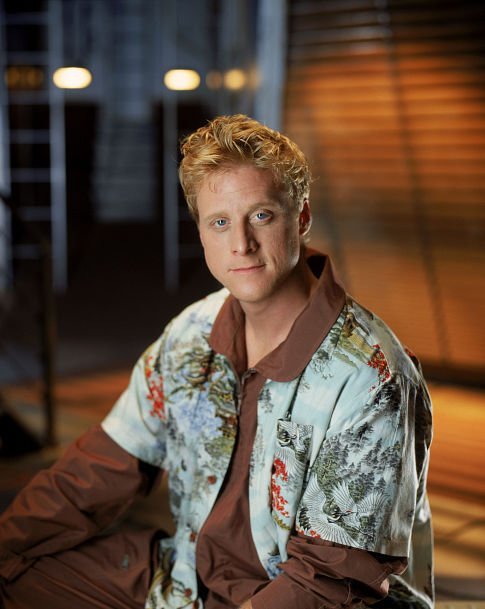
I said I was giving you “the concept of Firefly in the conventional sense.” If the network suits ask for a precis of the show, that’s what you give them. But series creator Joss Whedon made up all that stuff strictly to provide a backdrop to the real story: the story of nine people thrown together by forces outside their control and forced to find a way to live with each other and with the choices that their need for intimate coexistence foists upon them.

Here’s the thing: if you watch the whole series from start to finish, afterwards you will not know much more about the show’s fictional universe and backstory than what I’ve already told you above. But you will know these nine extraordinary (and yet, in other ways, very ordinary) people as though you had lived with them.

mal1

zoe

kayleewash

jayneinara

book

riversimon1

The genius of Firefly is that the characters are at once so real as individuals, and yet at the same time so perfectly crafted to drive the necessary interactions between them that create the plot. It must be really difficult to make both of those happen at the same time, since the former requires their personalities to seem spontaneous and undesigned, but the latter requires that they really be calculated and artificial.

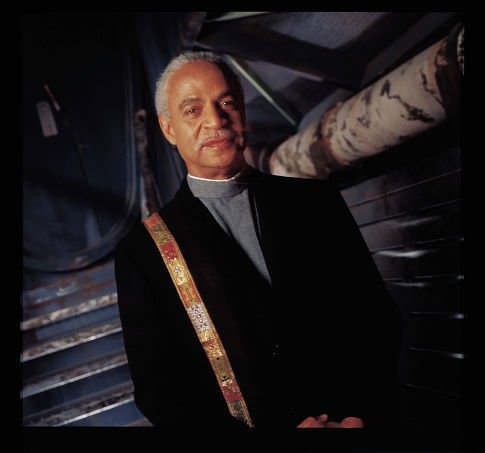
I mean this. On the one hand, you can easily imagine what it would be like to meet any of these characters in isolation from the rest of the show. If Simon Tam walked into my office right now, I can picture exactly how he would act. I would love to talk theology with Shepherd Book, but if Kaylee Frye came in I would introduce her to the engineers in my office and then find an excuse to slip away. On the other hand, all nine characters are perfectly designed such that if you put any two of them together, their personalities and backstories will immediately start generating plot opportunities. And if you stick any three of them together, you can just sit there and write a whole episode in five minutes based solely on how those three people would mesh or clash when forced to confront some difficult situation together.

In a sense, then, once Whedon had created these people, all he had to do was stick them together on a small ship where they’re always bumping into each other. And in fact, a lot of the really golden moments on the show arise without the need for any outside force like evil governments and backstabbing business partners (although those do keep things interesting).

The first time the crew has dinner together, it quickly becomes apparent that Kaylee has a crush on Simon, the ship’s doctor. She asks what kind of doctor he is and he says he’s a trauma surgeon. Jayne snorts, “Kaylee’s just sorry you ain’t a gynecologist.” Captain Mal: “Jayne, you will keep a civil tongue in that mouth or I will sew it shut, is that understood?” Jayne: “You don’t pay me to talk pretty. Just because Kaylee gets all…” Mal: “Walk away from this table. Right now.” Silence. Jayne is a violent man – that’s why he’s on the crew, because he likes to fight and he isn’t too scrupulous about the when, where and who – and no one is sure what he’ll do. But after a moment he gets up, slops an extra helping of potatoes onto his plate and stomps off to his quarters.

Simon: “What do you pay him for?” Mal: “What?” Simon: “I was just wondering what his job on the ship is.” Mal: “Public relations.”

These people haven’t known each other an hour, and already they’re off to the races.

Of course, I’m not saying this is the only reason Firefly is the greatest show ever. The dialogue is top-notch, the directors keep things pitched just right between comedy and drama, the cinemetography is boldly innovative (in a good way), and things are set up so that over time the crew is gradually being set on a collision course with that tyrannical government – adding just the right level of epic struggle to what is essentially an ensemble drama.

The Fox network infamously screwed everything up because some empty suit – or, more precisely, a suit that should have been empty – didn’t like the lack of lasers and explosions in the pilot. So the second episode was aired first and the pilot wasn’t aired until halfway through the season. Way to start the series off on the right foot! The show never found an audience beyond the Joss Whedon fan core, and was cancelled. But that’s the way things go in a spoiled world.

Fox retained the TV rights and wouldn’t let Whedon take the series elsewhere at a price that other networks were willing to pay. Great story: Somebody asked Whedon at a convention whether he had talked to the Sci-Fi network. This was just after Sci-Fi had cancelled the incomparable Farscape while retaining that show with the real-life “psychic” – not a fictional show about a psychic but an actual con artist playing his cruel hoax for a studio audience – and other, similarly un-sci-fi fare. Whedon responded that he had called the Sci-Fi Network about Firefly but they had told him it was too science-fictiony for them.

Whedon somehow managed to persuade Universal (bless them!) to make a movie, Serenity. The movie isn’t as good as the show – there are just too many difficult balancing acts going on, as Whedon tries to make things accessible to newcomers while providing big payoffs to fans of the show, and also tries to get through the entire epic confrontation with the government that he had planned for the show’s finale, and resolve all the interpersonal plotlines as well. But saying that it’s not as good as the greatest TV series of all time is not saying much against it – it’s still very good.

Unfortunately, the movie opened in the low-traffic month of September, opposite some trifle starring Jessica Alba – prominently featured in a bikini in all the publicity. (On opening day Whedon was telling interviewers: “I’ve seen that other movie. The ads are a total fraud. She wears a parka the whole time.”) Once again, Firefly just couldn’t find its audience.

Of course, as I’ve recently observed, artistic excellence isn’t subject to democracy. It’s just sad that the mass audience never got to experience the greatest TV show in history. But, like I said, it’s a spoiled world. And thanks to the miracle of technology, the show lives forever on DVD, or you can watch the whole series and the movie for free on Hulu. This is why God made the Internet.