True to Her Traditions

November 11, 2009

Yale WWI

(Guest post by Greg Forster)

The monument pictured above is quite large and centrally located on the Yale campus. When you walk into a nearby building, you enter a small atrium of solid marble walls, covered from floor to ceiling with the inscribed names of Yale alumni who have died in military service for their country.

Neither the monument nor the atrium recieve any attention from the people who walk by them every day. Students sometimes take advantage of the monument’s prominent location by taping fliers to it advertising their beer-and-sex parties.

ROTC has been banned from Yale since 1969.

Happy Veterans Day.


Pass the Clicker: The Future Lost?

November 6, 2009

flash_forward-10

ABC headquarters the day after Lost goes off the air

(Guest post by Greg Forster)

With Lost coming up on its last season, ABC has been scrambling for a new cash cow. It bet heavily on Flash Forward, a new drama with acting talent coming out of its ears and a premise with potential: everyone in the world blacks out for two minutes and experiences a “flash forward” – an intense, dreamlike vision that appears to be a glimpse of what each of them is going to be doing exactly six months later. And everybody’s visions match – if I saw myself having a conversation with you, you also saw yourself having the exact same conversation with me.

The ratings have been slipping and it’s not looking like Flash Forward is going to be the big cash cow ABC was hoping for. Which is too bad, since after a slow start the show is really finding its legs. (Disclaimer: I haven’t gotten around to watching last night’s episode yet, so if the show stank last night I’m not responsible.)

flash-forward1

They clearly invested a lot in stacking this show with talent. In addition to securing Joseph Fiennes to anchor, they rounded up Courtney Vance (known to the general public as a prosecuting attorney on one of the Law & Order shows, but the fan base for Flash Forward is more likely to remember him as “Jonesy,” the brilliant communications officer who figures out how to track the silent sub in The Hunt for Red October), John Cho (Sulu in the new Star Trek) Sonya Walger (Lost’s Penny), and cameos – with suggestions that more appearances may be on the way – from Firefly’s Gina Torres and The 4400’s Peter Coyote.

0929flash_article

Another Lost alum makes a shocking surprise appearance a few episodes into the season, and it looks like that character is going to be a recurring presence.

The show resembles Lost in that it revolves around the intersection between human drama (the “soap opera” element)and great cosmic issues. FF’s cosmic issue is similar to Lost’s, but more anthropocentric – it’s less about man confronting the larger forces in the unverse and more directly about the question of free will, which has come up on Lost but only as one of several themes. Having seen a glimpse of the future, everyone wants to know: can that “future” be changed? Or is it inevitable?

The biggest difference between Lost and FF is the latter’s stronger emphasis on plot. The heroes believe the “flash forwards” are not a cosmic fluke but are the result of some kind of human action, and are trying to track down who’s responsible and why. And so every episode of FF has suspense, thriller and/or mystery-solving elements; the show makes regular use of cliffhanger and twist endings.

This does give the show some strengths. There have been no boring episodes. And the unfolding of the “mythology” is much more well constructed and proceeds at a steady, satisfying rate. The hero has become the lead investigator because he had a “flash forward” in which he was the lead investigator, and he was standing in front of his giant bulletein board full of clues in the case. He remembers many of the clues he saw in his “flash forward” and begins to track them down in the present – and, lo and behold, they turn out to be valid. The idea is for the explanations behind all the seemingly unrelated and sometimes nonsensical clues to be slowly revealed over the course of the season. This will presumably require the writers to avoid making things up as they go.

It also provides a lot of opportunities for the writers to do clever things with the story. More plot = more opportunities for great storytelling, and the writers don’t disappoint.

Don’t get me wrong, sometimes the script can be dumb – but no dumber than Lost occasionally gets.

That said, as I indicated before, the series did take a few episodes to find its legs. The first few episodes telegraphed various underlying conflicts that were obviously going to unfold over the course of the show, but it allowed them all to simmer too long before they started to produce direct conflict among the characters. For a while, all these great actors just weren’t given enough to do.

That’s all over now, but it appears from the ratings that the show may have missed the chance to find its audience. If you like Lost, you should give this a shot.


The Destruction of a Profession

November 4, 2009

Edweekchart1_teachers_three_groups

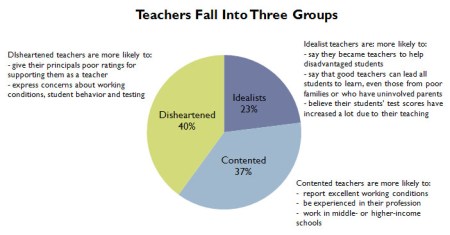
Public Agenda’s portrait of the teaching profession

(Guest post by Greg Forster)

How would you feel if you found out, the moment you were going into surgery, that 40% of surgeons were “disheartened” about their own work?

How would you feel about it if you had no right to choose your own surgeon?

That’s how parents ought to feel about public schools.

“You don’t want somebody operating on you if they’re resentful about having to do it.” I heard somebody say that last week. It’s as good a case against the current movement toward socialized medicine as I’ve heard anybody make in just fifteen words. The legislation Congress is moving right now already anticipates huge cuts in Medicare reimbursements to doctors. And rest assured that more of the same will be on the way if the bill actually passes.

That’s the way it always goes when you socialize a service. In spite of the lavish promises made to them, the people who provide the service inevitably get the shaft. Well, OK, everybody (except the politicians and bureaucrats) gets the shaft. But the service providers get it first and worst.

The good news is, we still have a chance to avoid destroying the medical profession this way.

The bad news is, a big new teacher survey from Public Agenda shows we’ve already done it to the teaching profession.

The report is bursting at the seams with horrible, horrible data about the state of the teaching profession, and I encourage you to read it for yourself. But here are a few highlihgts.

A large plurality of teachers fall into the “disheartened” category:

Members of that group, which accounts for 40 percent of K-12 teachers in the United States, tend to have been teaching longer and are older than the Idealists, and more than half teach in low-income schools. They are more likely to voice high levels of frustration about the school administration, disorder in the classroom, and the undue focus on testing…

A considerable degree of bitterness characterized the Disheartened in comparison to the other groups: Twice as many spoke of likely burnout as did the Contented and Idealists. Only two-fifths strongly agreed that “there is nothing I’d rather be doing” than teaching, compared with nearly two-thirds of the Contented and nearly half of the Idealists.

Think it doesn’t make a difference in the classroom? Think again – a shocking number of disheartened teachers think that teaching makes no difference:

Beliefs about their students and student potential also differed notably, with potentially significant implications for efforts to reshape the profession. A 22-percentage-point difference separated the Idealists and the Disheartened (88 percent to 66 percent) in their faith that good teachers can make a difference in student learning. Idealists strongly believe that teachers shape student effort (75 percent), whereas just 50 percent of the Disheartened believed that. Only one-third of the more disillusioned teachers were very confident in their students’ learning abilities, compared with nearly half among the other groups (48 percent of the Contented and 45 percent of the Idealists).

How do you suppose those attitudes affect their teaching?

“Potentially significant implications for efforts to reshape the profession.” No kidding. More than three quarters of all teachers are either “disheartened” or else “contented” – i.e. not interested in making the system any better than the lousy mediocrity it is now.

Delving through the data tables, here’s another intriguing tidbit I found. Given a choice between “I am able to create high quality lesson plans” and “I am not able to do this as much as I would like because of limited planning time,” the Contented teachers were 30 points more likely than Disheartened teachers to say they could create quality lesson plans (72% v. 52%). No shocker there. But a surprising number of Idealist teachers gave their own lesson plans a negative review – 38% say they can’t create high qualiy lesson plans as much as they’d like, while 60% say they can.

Do you suppose Contented teachers and Idealist teachers have different standards for what counts as a “high quality” lesson plan?

Which kind do you want teaching your kids?

Too bad you don’t get a choice. Government will decide which teacher will build (or destroy) your child’s future.

Unless, of course, you’re one of the ones lucky enough to have a choice.

It’s interesting that Public Agenda only surveyed teachers working in the government monopoly system. You can only find that out by wading deep into the weeds of the methodology section. In the body of the report, they just describe their survey population as “teachers.” Apparently government teachers are the only kind that count.

As it happens, federal survey data show that teachers in private schools are much, much happier with their jobs on a wide variety of measurements. That’s because, according to the same data, they’re free to teach – unlike the government monopoly, private schools give teachers autonomy in the classroom. Of course, they’re only able to do this because they’re also allowed to hold teachers accountable for results. But the much larger satisfaction figures for private school teachers – including much higher satisfaction with their school administrators! – show that this is an accountability model that works.


Everyone Wins in the Wall Street Journal

November 4, 2009

Everybody Wins

(Guest post by Greg Forster)

Today’s Journal has a hard-hitting editorial on Marcus’s new study showing that competition from charters improves regular public schools in NYC.

Opponents of school choice are running out of excuses as evidence continues to roll in about the positive impact of charter schools…State and local policy makers who cave to union demands and block the growth of charters aren’t doing traditional public school students any favors.

And where did you read about it first? Oh yeah.


Marcus Wins! Big Deal, So Does Everybody.

October 28, 2009

Everybody Wins

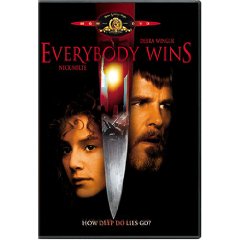
NOT the cover of Marcus’s new study

(Guest post by Greg Forster)

Well, I made no secret of who I thought was the winner in the Marcus/Murray deathmatch over college education.

But it turns out it’s no big deal, because Marcus says “Everyone Wins!”

In his new study of that title, I mean. Marcus finds that charter schools are improving regular public schools in NYC by creating healthy competitive incentives. The effect is small, fitting the overall pattern in the research – charters typically don’t give you as big a boost as vouchers, but having them is better than not.

For all you Rawlsians out there in JPGB-land, Marcus also finds that the lowest-performing students in NYC’s regular public schools benefit from charter competition; in fact, while the benefits for the overall population are statistically certain only in reading, they’re certain in both reading and math for low performers.


Swine Flu Socialism

October 28, 2009

robotinsurance2

Courtesy of the World Health Organization

(Guest post by Greg Forster)

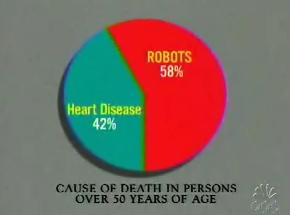
Further to Jay’s post below on how the supposed swine flu “pandemic” is sounding a lot like the ad for Old Glory Robot Insurance:

Michael Fumento, who has made a career out of calling BS on the political abuse of medicine, reports on just how bogus the swine flu panic is – and more importantly, the agenda behind it.

The World Health Organization’s old definition of “pandemic” required an outbreak not only to consist of multiple epidemics around the world, but also to pose an unusually severe threat to life and health before it could be called a pandemic. This was important because plain old ordinary flu causes multiple simultaneous epidemics around the world all the time, but it’s no cause for alarm because the plain old ordinary flu is a routine problem.

But just before swine flu was declared a pandemic, the WHO quietly rewrote the definition of “pandemic” to remove the necessity of an unusually serious threat.

Why’d they have to do that? Because the swine flu is actually less deadly – by orders of magnitude – than the regular flu:

Medically, the pandemic moniker is unjustifiable. When the sacrosanct World Health Organization (WHO) made its official declaration in June, we were 11 weeks into the outbreak, and swine flu had only killed 144 people worldwide — the same number who die of seasonal flu worldwide every few hours. The mildest pandemics of the 20th century killed at least a million people worldwide. And even after six months, swine flu has killed about as many people as the seasonal flu does every six days…

In Australia and New Zealand, flu season has ended, and almost all cases have been swine flu. Yet even without a vaccine, these countries are reporting fewer flu deaths than normal. (In New Zealand, that’s just 18 confirmed deaths compared with 400 normally.) Swine flu is causing negative deaths! [ea]

Update: When I originally posted this I forgot to include this wonderful tidbit. One of the very classy methods being used in the media to hype the swine flu is to report the total number of cases of all types of flu, including even undiagnosed cases with “flu-like symptoms.” Then the total figures for flu deaths and flu cases are falsely reported as swine flu figures.

Why would the WHO want to gin up a baseless panic about swine flu? Partly because they had already over-hyped avian flu and wanted to use a new panic over swine flu to retroactively justify the old panic over avian flu. “The world can now reap the benefits of investments over the last five years in pandemic preparedness,” boasts WHO’s director-general.

And partly it’s for the same reason the Old Glory Insurance Company wants you to believe in robot attacks – money. Apparently WHO makes a living off phony disease scares:

Yet this [CYA for the avian flu scare] doesn’t explain why the agency hyped avian flu in the first place, nor why it exaggerated HIV infections by more than 10 times, or why it spread hysteria over Severe Acute Respiratory Syndrome (SARS). That disease ultimately killed a day’s worth of seasonal flu victims before vanishing.

But the SARS scare was enough, leading to a broad expansion of WHO powers, including a degree of direct authority over national health agencies. It’s now using that to leverage more authority and a bigger budget. No shocker there.

But at least the Old Glory Insurance Company only wanted to take your money. They didn’t want to take your freedom as well. Not so much can be said for the WHO:

What may be surprising is that it wants to use that power to help bring about a global economic and social revolution–and that Director-General Chan was so blunt about it in a speech in Copenhagen last month.

She said “ministers of health” should take advantage of the “devastating impact” swine flu will have on poorer nations to tell “heads of state and ministers of finance, tourism and trade” that:

  • The belief that “living conditions and health status of the poor would somehow automatically improve as countries modernized, liberalized their trade and improved their economies” is false. Wealth doesn’t equal health.
  • “Changes in the functioning of the global economy” are needed to “distribute wealth on the basis of” values “like community, solidarity, equity and social justice.”
  • “The international policies and systems that govern financial markets, economies, commerce, trade and foreign affairs have not operated with fairness as an explicit policy objective.”

In related news, the WHO has announced a new panel of doctors to wield those “special emergency powers” we need to sweep away “bureaucratic obstacles” and combat swine flu. Here they are:

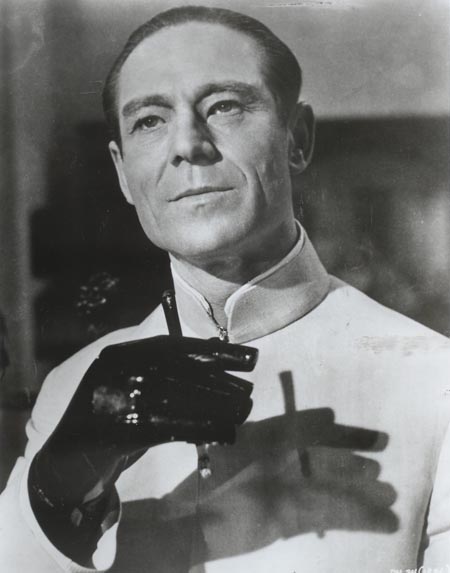
Dr No

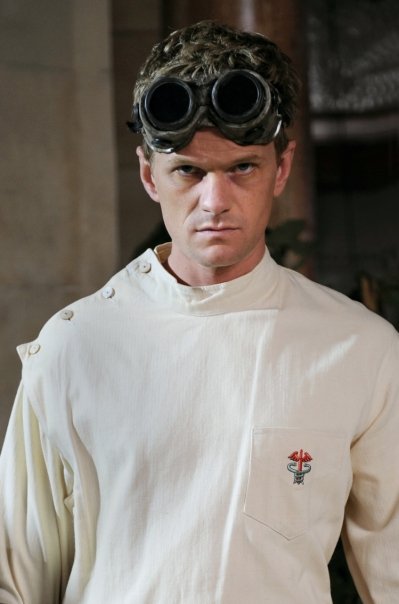
Dr Horrible

Dr Doom

Dr Octopus

Dr Evil


Winters v. Murray Deathmatch on College

October 22, 2009

BelushiCollege

(Guest post by Greg Forster)

Today on NRO Marcus Winters throws down the gauntlet before Charles Murray and others who have made the increasingly common argument that too many kids go to college these days. As the economy requires workers to have more and more knowledge for good jobs, more kids should go to college, not fewer, Marcus argues; the research on teacher quality and school choice shows that improvements in K-12 education can increase the number of high school graduates who are genuinely able to handle college work; and the wage premium of a college degree is not going down, but up – because the K-12 system hasn’t kept pace with the increasing demands of technological development, and college does make students more productive workers (contrary to Murray’s claim that it serves mainly as a sorting mechanism).

Over on AEI’s blog, Murray responds, calling Marcus a “romantic,” going over a lot of research that doesn’t really address the point at issue, and then falsely claiming that Marcus presents only anecdotes about “a miracle school in the inner city” but offers no “interpretable data.” Anyone who reads Marcus’s piece will see that Marcus points to the eminently interpretable data of the broad research on teacher quality, school choice, and economic outcomes.


Submit Your Nominations by Halloween!

October 22, 2009

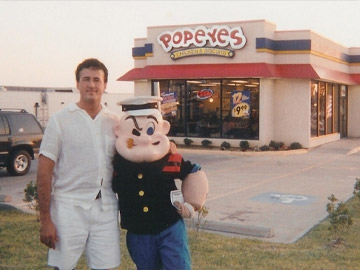
Al Copeland with Popeye

(Guest post by Greg Forster)

For those of you who have been following the announcements over the past week of this year’s nominees for the Al Copeland Humanitarian of the Year Award – we want to hear from you!

Whom would you nominate to recieve “the Al” – what person has made the largest net contribution to the happiness of humanity in a field of endeavor not traditionally recognized by the people who give out awards as contributing to the happiness of humanity?

Just leave a comment on any of the Al Copeland nomination posts with your nomination. If your suggestions strike our fancy we may compose a new post featuring your nomination. And make sure you tell us why you think that person is worthy of “the Al.”

Oh, and let us know which of this year’s nominees you think should win! Our panel of prestigious judges (well, OK, Jay) is not bound to respect the majority vote, any more than the Nobel committee is bound to respect basic common sense. But unlike the Nobel committee, our judges are at least interested in hearing what you think!

Get your nominations in by WEDNESDAY, OCTOBER 28. Why that deadline? Because in honor of the Halloween holiday, we plan to announce the winner of “the Al” on Friday, October 30.

popeye-costume-01

Halloween captures the spirit (so to speak) of the Al Copeland Humanitarian of the Year award almost perfectly. It’s a ton of fun and it’s harmless, and it therefore makes a large net positive contribution to the happiness of humanity. Yet the snobs and the do-gooders – whom Michael Miller of the Acton Institute once remarked should be called “mean-wellers” because on balance they rarely do more good than harm – don’t value that as a contribution to humanity.

Germanetti___Popeye's_20th_Anniversary

So reserve your seat at the head table, get your tux out of mothballs, and get ready to join us for the big awards banquet next Friday.

And until then, don’t miss your chance to make your voice heard!


William Higinbotham – NOT Nominated for Al Copeland Humanitarian

October 19, 2009

William Higginbotham

(Guest post by Greg Forster)

In our ongoing process of gathering nominees for the Al Copeland Humanitarian of the Year award, last week Jay nominated Fasi Zaka on grounds that ridicule of dictators (actual or aspiring) is an important part of mankind’s struggle for freedom.

Well, another important part of the struggle is serious condemnation. We must indeed laugh at dictators, because you can’t effectively undermine their support without including that element. But we must also sometimes sober up and be serious about the threat they pose.

For that reason, I am announcing that William Higinbotham, inventor of the videogame, will not be nominated for Al Copeland Humanitarian of the Year.

First, let’s dive head-first into the deeply divisive historical controversy over the invention of the videogame. (And you thought we were brave to take on the issues surrounding Christopher Columbus!)
CRTamdev-preview

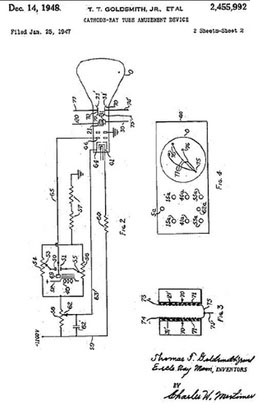
The first known electronic device created for gameplay was the Cathode Ray Tube Amusement Device (US Patent 2,455,992 granted February 1948) created by Thomas T. Goldsmith Jr. and Estle Ray Mann. The user twists a knob to guide a moving dot toward a target. But as it uses a non-representational display (rather than the graphical represntations implied by the term “video”) and is more a novelty skill test along the lines of a carnival “game” than a traditional “game” per se, it does not quite fit the meaning of the term “videogame.”

In March 1950 Claude Shannon published a program for a chess-playing game – but again without graphical representation.
NIMROD-players-prev

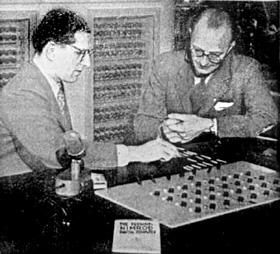
Next we get the NIM (aka “Nimrod”) computer, created by Ferranti International and presented at the Festival of Britain in 1951. It used a series of lights and buttons to play an ancient Chinese numerical game in which players manipulate “heaps” containing different numbers of objects; the player who takes the last object out of the last heap is the loser. Once again, without graphical representations we don’t yet have the “videogame.”

OXO_emulated_prev

Alexander Douglas’s tic-tac-toe program in 1952, designed as part of a Ph.D. thesis on questions of user interface design, almost gets us there. But while the display of Xes and Os on a board is a step toward graphical representation, it’s not strictly there yet – the Xes aren’t crude representations of some kind of X-shaped object, but symbols – not essentially different from the symbols chess players use to express their moves in letters and numbers. I’ll grant that the visual positioning of the symbols is an important step. But it’s not really a “video” game until you have graphical representation.

Enter, stage left, the genius of William Higinbotham. In 1958, he worked at the Brookhaven National Laboratories and often had to entertain guests waiting to take tours of the labs. To keep them occupied, he designed a tennis game (christened “Tennis for Two”) on one of the lab’s oscilloscopes.

Oscillosopes are all computer programs now, but my father used to have one of the old stand-alone units with the tiny little screen that showed waves going by. When I was a little kid he let me play with it – you could change the shape of the waves by turning the dials. I was endlessly fascinated by this. Here’s what a standard oscilloscope used to look like:

oscilloscope

And here’s what William Higinbotham got it to do:

tennis_for_two-prev

You turned a knob to change the angle of your shot and pressed a button to hit the ball – and entertainment was revolutionized forever.

tennispaddle

The modern videogame evolved into its final form with breathtaking rapidity – by 1961, MIT’s Stephen Russell led a team that created a game called “Spacewar!” The Magnavox Odessey, the first home video game system, was a functioning prototype by 1967 (dubbed “The Brown Box”) and on sale in stores in 1972. Everything after that is just the same thing better and faster.

So why would this achievement not be worthy of the Al Copeland Humanitarian of the Year award?

Because we have standards, that’s why – and William Higinbotham doesn’t meet them.

Take it away, Wikipedia:

He helped found the nuclear nonproliferation group, Federation of American Scientists, and served as its first chairman and executive secretary. . . . He is said to have expressed regret that he would more likely be famous for his invention of a game than for his work on nuclear non-proliferation. When after his death, requests for information on his game increased, his son William B. Higinbotham wrote, “It is imperative that you include information on his nuclear nonproliferation work. That was what he wanted to be remembered for.” [Emphasis added]

We shall not tarnish the sterling silver of Al Copeland’s reputation by associating it with such filth. Copeland may have offended the delicate sensibilities of many with his penchant for fast cars and boats. He may have annoyed his neighbors to the point of filing lawsuits with his extraordinary Christmas decorations. He may have failed in some busienss ventures. More seriously, he may have had a turbulent family life.

But say this for Al Copeland – he never thought nuclear non-proliferation was more important than videogames.

That’s a stick in the eye to everything the Al Copeland award stands for. And that is why William Higinbotham will never have the honor of being nominated for Al Copeland Humanitarian of the Year.

HT Pong Museum and Gamer’s Quarter for most of the images


Ralph Teetor for Al Copeland Humanitarian of the Year

October 15, 2009

ralph-teetor

(Guest post by Greg Forster)

After careful consideration of various possibilities, including:

  • Richard Belanger, inventor of the sippy cup
  • Reiner Knizia, inventor of numerous board games
  • Edward Lloyd, inventor of modern business insurance
  • Gene Roddenberry, creator of Star Trek
  • Charles V, preventor of the Ottoman conquest of Europe
  • Jay P. Greene, inventor of the Al Copeland Humanitarian of the Year award

. . . I have at last settled on my nomination:

Ralph Teetor, inventor of cruise control.

Cruise control makes driving far less burdensome, which not only makes our lives more enjoyable on a day-to-day basis, it also facilitates a great increase in long-distance travel and reduces shipping costs by reducing not only the labor burden but also the cost of gas (since cruise control is more fuel-efficient). The truckers have a bumper sticker showing a stork delivering a baby, with the tagline “everything else you have arrived by truck.” Well, if that’s true, then anything that lowers the cost of trucking must have tremendous reverberations throughout the economy – which is to say, we’ll never know just how much our lives have been enriched by it.

Oh, and it saves lives. Lots of them. The professional safety narcs strongly resisted the introduction of cruise control on grounds that it would lead to inattentive driving and more deaths. But in fact it led to more uniform driving, with everyone going the same speed and therefore a big drop in the frequency of cars passing each other, and thus a dramatic drop in deaths.

P.J. O’Rourke contacted some of the professional safety narcs to ask them whether they were sorry for having opposed something that turned out to dramatically increase safety. If memory serves, I believe they were unrepentant. No doubt they were worried they’d have to give back the Nobel Peace Prizes they’d won for opposing it.

I chose to focus on cruise control because I thought it fit the values of the Al Copeland award most closely, but it’s worth noting that Teetor was a prolific engineer and inventor – he and his cousin built their first car, with a one-cylinder engine, at age 12 – and contributed far more to our lives than cruise control. In his first job out of college he developed a better way to balance steam turbine rotors in the torpedo boat destroyers we used to kick the Kaiser’s kiester in WWI. Later he ran a company that made piston rings for car engines, supplying Packard, General Motors, Chrysler and Studebaker.

Teetor got the idea for cruise control after a jerky and uncomfortable car ride. His lawyer, driving the car, was an incessant talker and paid more attention to the conversation than the car’s speed, letting the car speed up and slow down as his attention wandered.

Teetor secured the patent for automatic car speed control in 1945, dubbing it Controlmatic. It would later be called Touchomatic, Pressomatic and Speedostat before finally being christened cruise control. The technology was first offered on three Chrysler models in 1958. By 1960 it was available on all Cadillac models.

Oh, and did I mention that Teetor did all this after being blinded in a shop accident – at age five?

I proudly nominate Ralph Teetor for the Al Copeland award.

Now if only he had developed a control for this kind of Cruise:

tom-cruise-oprah-winfrey

HT Symon Sez