(Guest Post by Matthew Ladner)

(Guest Post by Matthew Ladner)
 Leave a Comment » |
  vouchers | Tagged: Arne Duncan, D.C. vouchers, Diane Feinstein, George Voinovich, Jim DeMint, Joe Lieberman, John Cornyn, John Ensign, John McCain, Jon Kyl, Judd Gregg, Lamar Alexander, Robert Byrd, Sam Brownback, Susan Collins, Tom Coburn |
  Permalink
 Posted by matthewladner

Yesterday the New York Times profiled a school district in which the democratically elected school board is dominated by a group that places its financial interests ahead of the educational interests of children in the district. And that group easily wins school board elections because they are well-organized, have cohesive interests, and turn-out to vote in much higher numbers than parents of children in the schools.
No, the NYT hasn’t suddenly decided to publicize the money-grabbing, electoral bullying of teacher unions in large numbers of school districts all around the country. Instead the NYT is concerned about the money-grabbing, electoral bullying of a community of Orthodox Jews in Rockland County, NY.
Well, the NYT didn’t exactly describe the Orthodox Jews as money-grabbing: “Many of the Orthodox here and elsewhere feel crushed by the weight of high school taxes and private school tuition.”
The problem, as the NYT piece suggests, is the sense that schools ought be controlled by the families that send their children to those schools: “But increasingly, others are chafing at the idea that people who don’t send their children to the public schools are making the decisions for those from very different cultures who do.”
I have to say that I am sympathetic to this concern. There are problems with control over schools being located outside of the families whose children attend those schools. But, unlike the NYT, I don’t restrict my concern to instances involving Orthodox Jews.
It concerns me that President Obama, who has never sent his children to public schools, and Arne Duncan, who intentionally avoided placing his children in DC public schools, are making decisions to compel children to return to D.C. public schools.
It concerns me that teacher unions dominate school board elections all over the country, placing their financial interests ahead of the educational interests of children. In many urban school districts disproportionate numbers of teacher union members also don’t send their own children to the public schools.
The obvious solution is to increase control over schools by the families that attend them by giving those families vouchers. Empowered with vouchers, schools will be responsive to the interests of current and prospective students rather than the interests of people whose children do not attend those schools is order to attract and retain the revenue those vouchers bring.
Of course, the general regulatory framework governing schools could still be under democratic control, including non-parents. But let’s restrict the general public’s involvement in controlling schools to the broad regulatory issues that affect the public’s interests as opposed to the operational details of individual schools.
2 Comments | civic values, teacher union | Tagged: Arne Duncan, Barack Obama, Jay Greene, Jay P. Greene, NY, Rockland Country | Permalink
Posted by Jay P. Greene

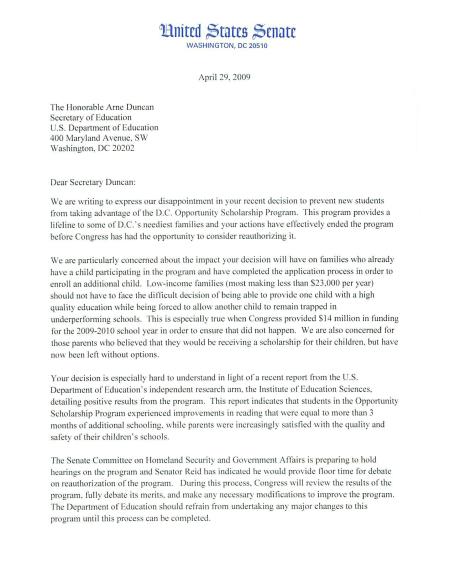
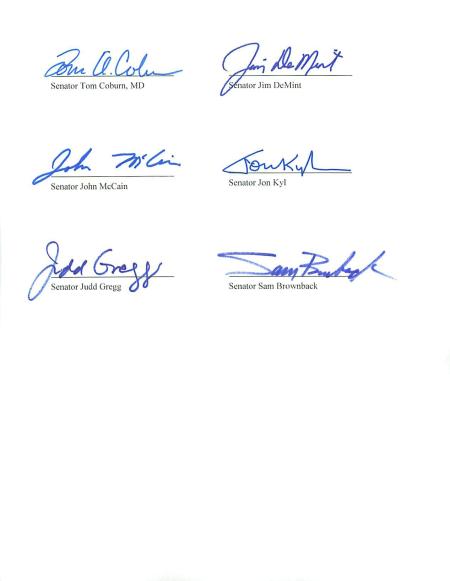
(Guest Post by Matthew Ladner)
In a bipartisan appeal, Senators Joe Lieberman and Susan Collins wrote a letter to Secretary Duncan asking him to reverse the Departments decision to rescind Opportunity Scholarships to 200 DC school children (HT Whitney Tilson).
The letter reads:
Dear Secretary Duncan,
We are following up on our letter dated March 17, 2009, asking that you refrain from making any administrative rules or policies that would disrupt the D.C. Opportunity Scholarship Program (OSP) or prevent the grantee from accepting applications and students for the 2009-2010 school year. Prior to a response to our inquiry, we were disappointed to learn that you subsequently made the choice not to allow new students to enroll in the program.
By preventing new scholarships from being awarded, you are effectively ending a program before Congress has had the opportunity to consider reauthorizing it. Therefore, we respectfully request that you consider reversing your decision.
As we noted in our letter to you, the future of the OSP is presently under consideration by the Senate Committee on Homeland Security and Governmental Affairs. We will be holding hearings on the program in May, and Majority Leader Reid has promised floor time to consider a reauthorization proposal. We respectfully request that you refrain from implementing significant changes to the program until we have an opportunity to review the program’s results, hold public hearings, and have a thoughtful debate about the future of the program.
Your recent decision to suspend the program for new entrants will hurt families who are searching for other options for their children. We understand that many of these parents had been notified that they would, in fact, receive scholarships for their children. Now that the DC Public School’s out of boundary process has been completed and the majority of public charter school deadlines have passed for the 2009-2010 school year, the suspension decision will leave these families with little or no opportunity to explore viable alternatives.
We will continue to support the D.C. Public School System in its efforts to improve outcomes for all students. However, in the interim, we must continue to provide options such as the OSP and provide families real choices in ensuring access to a quality education for their children.
We thank you for your immediate attention to this matter.
Sincerely,
Joseph I. Lieberman
Susan M. Collins
1 Comment | vouchers | Tagged: Arne Duncan, D.C. vouchers, DC Opportunity Scholarships, Joe Lieberman, Susan Collins | Permalink
Posted by matthewladner
 (Guest Post by Matthew Ladner)
Will Democrats live up to their ideals when it comes time to reauthorize DC Opportunity Scholarships, or shamefully repudiate those ideals with their actions? With a series of damning indictments piling up, none have been more accurate or pointed that this one by George Will:
As the president and his party’s legislators are forcing minority children back into public schools, the doors of which would never be darkened by the president’s or legislators’ children, remember this: We have seen a version of this shabby act before. One reason conservatism came to power in the 1980s was that in the 1970s liberals advertised their hypocrisy by supporting forced busing of other people’s children to schools the liberals’ children did not attend.
I predicted that a growing number of Democrats would not stand for this outrage, and today I am happy to say that the list is growing. Linked here is a letter sent by the chairmen of Democrats for Education Reform and the Black Alliance for Educational Options to Secretary Arne Duncan. As you’ll see, Kevin Chavous and Howard Fuller also address the subject of hypocrisy:
The one thing we know about both of you is that neither of you are hypocrites. But, by being unwilling to take a strong stand for these children and their families you are allowing yourselves to be placed in that category. It pains us to see you and the President being attacked this way. But, to be truthful it pains us more to see these children being denied the educational opportunity that the Opportunity Scholarship Program affords them.
If it has feathers, walks like a duck and quacks like a duck, chances are it’s a duck.
It’s still not too late for Obama and Duncan to redeem themselves. If however they choose to repeat the shameful practice of busing for other people’s children with choice for me but not for thee I believe they will find a growing number of Democrats actively opposing them on behalf of these children.
(edited for typos)
Leave a Comment » | vouchers | Tagged: Arne Duncan, BAEO, Black Alliance for Educational Options, DC Opportunity Scholarships, Democrats for Education Reform, DFER | Permalink
Posted by matthewladner

Despite Obama and Duncan’s best efforts to conceal their steps to kill the D.C. voucher program by acting on Friday afternoons, they have utterly failed at burying this story. The hits just keep on coming.
In the latest round we have Morton Kondrake picking up on the appeasement metaphor I used in my WSJ piece:
“In a demonstration of obeisance to union power, however, Congressional Democrats refused to re-fund a private school voucher program in the District of Columbia and the administration swallowed the decision. Obama and Duncan say they have hopes to “work with” the unions rather than openly confront them and capitulation on D.C. vouchers may have been a goodwill offering. Whether appeasement will buy cooperation remains to be seen.”
George Will seems to be channeling Juan Williams’ fury:
“As the president and his party’s legislators are forcing minority children back into public schools, the doors of which would never be darkened by the president’s or legislators’ children, remember this: We have seen a version of this shabby act before. One reason conservatism came to power in the 1980s was that in the 1970s liberals advertised their hypocrisy by supporting forced busing of other people’s children to schools the liberals’ children did not attend.
This issue will be back. In a few months, the appropriation bill for the District will come to the floor of the House of Representatives, at which point there will be a furious fight for the children’s interests. Then we will learn whether the president and his congressional allies are capable of embarrassment. On the evidence so far, they are not.”
Peter Roff writes in U.S. News and World Report:
“Former North Carolina Sen. and Democratic presidential candidate John Edwards liked to go around talking about the “two Americas.” Where education is concerned, he may have been on to something. There’s one America for the elites, like members of Congress and the President and Mrs. Obama, who send their children to private schools; and there’s one for everyone else, the regular people who, at least in the District of Columbia, are seeing the educational dreams they have for their children shattered on the altar of politics.”
And Adam Schaeffer over at Cato has given Arne Duncan an award. Unfortunately for Duncan it is the Chutzpah Award.
All of this is on top of the greatest hits collections, volume one and two, as well as a bunch of other hot singles from the Washington Post and others too numerous to mention in this 30 second commercial.
How can Obama, Duncan, Durbin, and the rest stop this pain? One easy solution is to do the right thing, follow the evidence, and renew D.C. vouchers.
2 Comments | vouchers | Tagged: Adam Schaeffer, Arne Duncan, Baarack Obama, D.C. vouchers, George Will, Juam Williams, Morton Kondrake, Peter Roff | Permalink
Posted by Jay P. Greene

Arne Duncan of Friday Night Massacres fame has an op-ed in the WSJ today.
I’m not sure how someone can take 707 words to say almost nothing of substance, but Duncan somehow manages to do it. What little he has to say seems to be this — If we improve the quality of data about low-performing public schools they will experience pressure to improve and will respond to that pressure:
“When stakeholders — from parents and business leaders to elected officials — understand that standards vary dramatically across states and many high-school graduates are unprepared for college or work, they will demand change.”
Didn’t Duncan get the cue card from his teacher union masters that it is now spelled “steakholders“?
But more to the point, does Duncan really think that the central impediment to school improvement is that we lack information about how bad things are? Really?
Don’t get me wrong. I’m all for improved data, but it seems to me that we already have plenty to understand the magnitude of the problem.
In addition, it’s not at all clear how Duncan will get us to that dreamy, far-off land “when stakeholders [sic]”, “when parents,” “when educators,” and “when community leaders” will do the various things he describes once they have improved data. Does he really think that dangling $5 billion in federal funds in front of the states will get the improved data he wants let alone all of the proper responses to the information (that all of these folks already possess)?
Lastly, Duncan has the gall to repeat: “We must close the achievement gap by pursuing what works best for kids, regardless of ideology.” Given how he willfully has ignored the D.C. voucher evidence as he moves to kill that program for ideological reasons, he isn’t exactly credible.
Leave a Comment » | teacher union, vouchers | Tagged: Arne Duncan | Permalink
Posted by Jay P. Greene
Someone should send Arne Duncan a get well card. A Friday afternoon passed without another sneaky political trick to kill the D.C. voucher program. Maybe he was sick and just couldn’t muster the energy.
Or maybe his conscience is getting to him and he could no longer betray his commitment to “do what works for kids” regardless of predisposition or ideology. Maybe he was sick before and is now getting better.
Whatever the case may be, let us wish for the physical and policy health of the Secretary so that he does what is right by D.C. vouchers with good body and spirit.
Leave a Comment » | vouchers | Tagged: Arne Duncan, D.C. vouchers | Permalink
Posted by Jay P. Greene
Arne Duncan explains to Science magazine why school choice is so important (if you are wealthy and white and can move into the suburbs with good public schools). If you are poor, Black, and live in D.C. you should wait until we get around to improving the public schools. It should be any day now.
Anthony Williams and Kevin Chavous explain in the Washington Post why “We want freedom by any means necessary.” Man, the Washington Post has been solid in support of D.C. vouchers.
Mary Katharine Ham has a piece on the Weekly Standard web site that explains why “it’s clear that, when given a choice, Democrats are more petrified of unions than they are interested in doing something that works for some of the most underserved kids in the District.”
And my colleague Bob Maranto has a piece in Front Page Magazine that explains: “By voting to kill the DC OSP, the Democrats in Congress have placed themselves in opposition to the educational needs of low-income, minority, inner-city children. If they ignore, deny, or minimize the importance of this rigorous evaluation of the program’s effectiveness, they also would be pitting themselves against President Obama, who has repeatedly called for respecting the role of science and data rather than money and lobbyists in making public policy, including education policy.”
1 Comment | vouchers | Tagged: Anthony Williams, Arne Duncan, Bob Maranto, D.C. vouchers, Front Page Magazine, Jay Greene, Jay P. Greene, Kevin Chavous, Mary Katharine Ham, Washington Post, Weekly Standard | Permalink
Posted by Jay P. Greene
(Guest Post by Matthew Ladner)
Old Illinois hands Durbin, Duncan and Obama loom large in the battle over reauthorization of the DC Opportunity Scholarship program. Today, the Chicago Tribune weighs in an editorial named Do What’s Best for Kids:
Durbin told us he’s “not ruling out supporting this” voucher program. He’ll await further evidence at hearings to be chaired by Sen. Joe Lieberman (D-Conn.)
Sen. Durbin, Secretary Duncan, the evidence is piling up on your desks. The burden of proof is squarely on you to prove why, after so few years, we should stop—and stop evaluating—a program that is showing certifiable prospects of changing the futures of disadvantaged kids. You gentlemen know the embarrassing truth of what we’ve said previously: Opponents of school vouchers don’t want to snuff the life out of this program because they think it’s failing, but because they fear it’s working.
This is an excellent opportunity for both of you to acknowledge that you’ve been too hasty—and that if vouchers do work, the Obama administration will want to expand them, not quash them. As the now-president put it, we need to do what’s best for kids.
4 Comments | vouchers | Tagged: Arne Duncan, Chicago Tribune, Dick Durbin | Permalink
Posted by matthewladner
(Guest Post by Matthew Ladner
Rotherham’s cynical take looks a little more on target this morning, while my own optimism looks a bit more naive. This morning the Washington Post ran an editorial blasting the United States Department of education for their latest attack on the DC Opportunity Scholarship program.
EDUCATION SECRETARY Arne Duncan has decided not to admit any new students to the D.C. voucher program, which allows low-income children to attend private schools. The abrupt decision — made a week after 200 families had been told that their children were being awarded scholarships for the coming fall — comes despite a new study showing some initial good results for students in the program and before the Senate has had a chance to hold promised hearings. For all the talk about putting children first, it’s clear that the special interests that have long opposed vouchers are getting their way.
Secretary Duncan seems to be taking this action simply to create, as the WaPo describes, a presumption of death about the program in advance of next year’s reauthorization effort. The decision, as the WaPo describes, is extremely disruptive to lives of many families:
It’s a choice President Obama made when he enrolled his two children in the elite Sidwell Friends School. It’s a choice Mr. Duncan had when, after looking at the D.C. schools, he ended up buying a house in Arlington, where good schools are assumed. And it’s a choice taken away this week from LaTasha Bennett, a single mother who had planned to start her daughter in the same private school that her son attends and where he is excelling. Her desperation is heartbreaking as she talks about her daughter not getting the same opportunities her son has and of the hardship of having to shuttle between two schools.
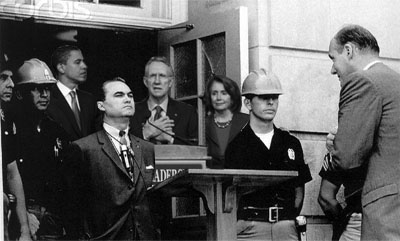
Sadly for LaTasha Bennett and her children the above photo is increasingly becoming less of a pointed joke and more of a reality. How can anyone feel anything other than dismay to watch the nation’s first African American President, himself a product of private education, enroll his own daughters in an elite private institution and then rip that same opportunity away from people like LaTasha Bennett?
This action is in stark contrast with everything for which the left allegedly stands. As George Orwell once wrote: Four legs good, two legs better! The Washington Post makes it clear why the administration is behaving so disgracefully:
It’s clear, though, from how the destruction of the program is being orchestrated, that issues such as parents’ needs, student performance and program effectiveness don’t matter next to the political demands of teachers’ unions. Congressional Democrats who receive ample campaign contributions from the National Education Association and the American Federation of Teachers laid the trap with budget language that placed the program on the block. And now comes Mr. Duncan with the sword.
Duncan and Obama should both be ashamed of themselves.
4 Comments | vouchers | Tagged: Arne Duncan, Barack Obama, DC Oppotunity Scholarship Program, Washington Post | Permalink
Posted by matthewladner

 Jay P. Greene's Blog